Women in Politics

Event on the launch of the Women in Politics study


Women in Politics: Local and European Trends

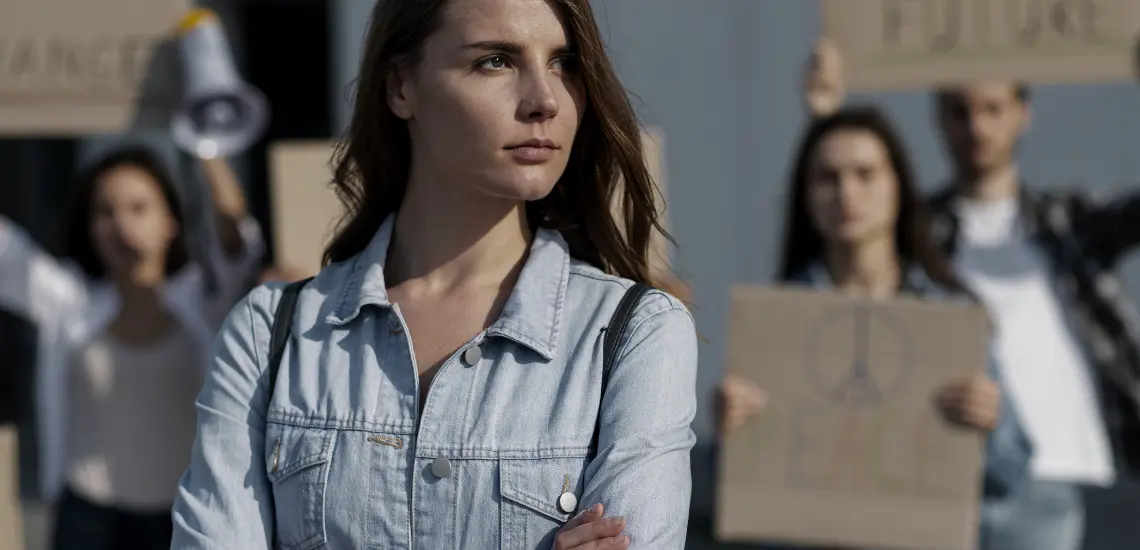
Are women truly breaking through in politics, or are they still facing invisible barriers? Is violence just a private matter, or is it also hindering women’s participation in public life?

Join us for the exclusive launch of a groundbreaking study that uncovers the latest trends shaping women’s participation in politics—both locally and across Europe. Dive into the challenges, successes, and the evolving impact of violence on women’s political leadership.

Don’t miss your chance to be part of this critical conversation shaping the future of leadership in Europe!

Nobel Prize Literature

Nobel Prize Literature - News 2024

Celebrating Han Kang’s Nobel Prize: Advancing Equality and Inclusion


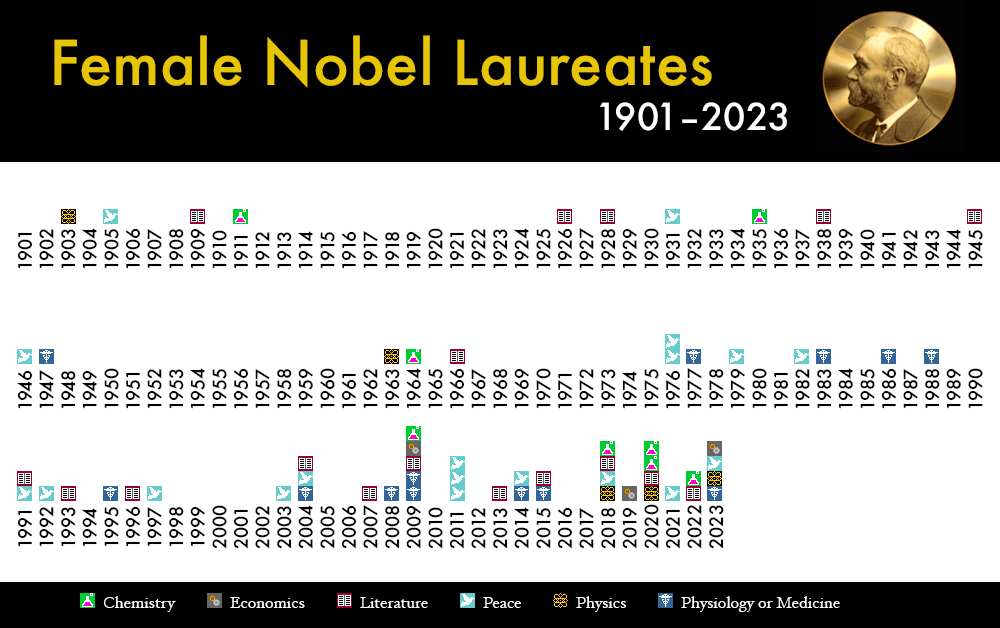
South Korean author Han Kang, known for “The Vegetarian” and “The White Book”, has become the 18th woman to win the Nobel Prize for Literature. You can see how many Female Nobel Laureates have been nominated since 1901 below.

Source: Wikipedia

Her powerful prose, recognised for confronting historical traumas and exploring human fragility, resonates deeply in today’s world. The Nobel Committee praised her innovative style and unique awareness of the connection between body, soul, life, and death.

Han Kang’s recognition highlights the ongoing struggle for gender equality in fields like literature, where women remain underrepresented. This achievement aligns with the values of the Council of European Municipalities and Regions (CEMR), which has long championed equality and inclusion. Through initiatives like the European Charter for Equality of Women and Men in Local Life, CEMR supports local governments in advancing gender equality and ensuring equal representation in decision-making.

Just as Han Kang’s work challenges societal norms, CEMR continues to advocate for a more inclusive, equal future for all.

Learn more about our work: https://charter-equality.eu.

X Budgeting – power of subnational finance

Participatory Budget - Youth

Municipalities and regions explore new approaches to budgeting, from participatory and priority-based models to green and SDG-oriented practices


Municipalities, cities and regions across Europe are at the forefront of delivering essential services, from housing and health to climate action and mobility. Yet, they face increasing financial pressures, recovering from the pandemic’s “scissor effect” of higher costs and lower revenues, and coping with inflation. In this context, how budgets are designed and allocated has become a powerful political tool.

To explore this potential, the Council of European Municipalities and Regions (CEMR) organised a training event on 23 May titled “X-budgeting – the power of subnational finance.” The session brought together experts and practitioners to share knowledge on innovative approaches to local and regional finance.

“X-budgeting” refers to a range of methods that go beyond simple accounting, transforming budgets into instruments for shaping policy and engaging citizens. These include:

  • Priority-based budgeting, aligning spending with political or community priorities rather than repeating last year’s allocations.
  • Process-based budgeting, such as participatory models that involve residents directly in decisions.
  • Green and SDG budgeting, aligning local finances with climate goals and the Sustainable Development Agenda.

Each approach offers opportunities, from fostering transparency and boosting trust to mobilising investment for sustainability, but also poses challenges, such as methodological complexity, resource needs and the demand for strong political support.

By experimenting with new forms of budgeting, municipalities and regions can make financial choices that not only keep services running but also reflect citizens’ voices and accelerate progress towards long-term goals.

Read the study here

For more information, contact:

EU Equal Representation

Gender Equality News

The Urgent Need for Equal Representation in the European Commission


As the European Union prepares to form its next Commission, a troubling reality emerges, the potential gender imbalance at the highest levels of EU decision-making. The top ranks of the European Commission, composed of one official from each of the EU’s 27 member states, could include as few as seven women. Additionally, the Commission could see a strong presence of members from the European People’s Party (EPP), raising concerns about diversity and representation.

President-elect Ursula von der Leyen has given EU governments until 30 August to nominate candidates for the new Commission. However, as the deadline approaches, it is increasingly clear that gender equality may once again take a backseat in the composition of one of the EU’s most powerful institutions.

Our Stand on Gender Equality:

At the Council of European Municipalities and Regions (CEMR), we believe that gender equality is not just a goal but a fundamental right. Women’s representation at all levels of governance is crucial for achieving a balanced and fair society. Unfortunately, the current trajectory of the European Commission suggests that we are far from this ideal.

CEMR has long been committed to empowering women and advancing gender equality. Our initiatives range from supporting women in politics to advocating for equal opportunities across all sectors. We strive to create a world where every woman can thrive, free from any form of threat or violence.

Why Representation Matters:

The European Commission plays a pivotal role in shaping policies that impact the lives of millions of EU citizens. A gender-balanced Commission is essential to ensuring that these policies are inclusive and representative of the diverse population they serve. The underrepresentation of women in all their diversity in such a critical institution not only undermines the EU’s commitment to gender equality but also weakens the legitimacy of its decisions.

Our Call to Action:

As we await the final composition of the new European Commission, we call on all EU member states to prioritise gender balance in their nominations. The EU must lead by example, showing that it values diversity and equality in its highest offices.

CEMR will continue to advocate for gender equality and support initiatives that empower women at all levels of governance. Together, we can create a more inclusive and just Europe.

Looking for Proposals

Looking for Proposals WiP - News 2024

CEMR is currently looking for an agency to design, publish and print our study on Women In Politics


CEMR is calling for proposals for external services to design and produce a publication on our study “Women in Politics”. 

For more information, you can access our Terms of Reference here.

European Charter For Equality

German Association of CEMR (RGRE) Hosts 5th National Conference on European Charter for Equality


Celebrating the 75th anniversary of the Basic Law (Grundgesetz) for the Federal Republic of Germany, the German Association of the Council of European Municipalities and Regions (RGRE) is set to host the 5th National Conference on the Implementation of the European Charter for Equality.

Initiated by CEMR in 2006, the Charter aims to empower European municipalities in their efforts to promote gender parity within their communities. It has received endorsements from over 2,000 municipalities spanning 36 European countries, with Germany contributing more than 60 signatures alone.

The two-day Conference, organised on the 25th and 26th of April, under the theme “Women – Truly equal?”, delves into the evolution of gender equality in Germany, addressing contemporary challenges amidst resurgent anti-feminist sentiments in Europe.

The conference will examine Germany’s progress and explore the broader European landscape of gender equality policies within EU institutions, focusing on gender equality-related amendments in 1994 to current anti-feminist challenges throughout Europe.

Women in Politics

A Glimpse into the Life of a Women in Politics: CEMR Unveils First Data


The Council of European Municipalities and Regions (CEMR) has released the first infographics showcasing critical insights from their latest report, “Women in Politics.”

The data offer a visual snapshot of the representation of women in elected roles across various subnational levels. Additionally, a detailed breakdown of their portfolios at the local level is provided. The second page of the infographics unveils the results of an anonymous CEMR survey involving 2 424 participants from 31 countries. Focused on elected women in local and regional European roles, the survey explores their experiences of violence in the political realm.

Annelies Coessens CEMR Gender and Diversity Officer states the importance of the report findings: “This evidence-based data will contribute valuable insights to discussions and be an important instrument to advocate for improved policies that can foster safer and a more inclusive political environment for women”.

Violence Against Women

Violence Against Women - News 2023

Breaking the Silence: International Day for the Elimination of Violence Against Women


In a world that strives for progress and equality, violence against women remains a pervasive and deeply rooted issue that affects women across the globe. The International Day for the Elimination of Violence Against Women, observed annually on November 25th, serves as a poignant reminder of the collective responsibility to eradicate the scourge of violence that continues to plague countless lives.

In recent days, Italy has been shaken by the tragic death of 22-year-old Giulia Cecchettin at the hands of her boyfriend. Close to the World Day against violence against women, Giulia was yet another victim of femicide, the 105th since the start of 2023 in Italy. However, as Silvia Baraldi, CEMR Spokesperson for Gender Equality, poignantly reminds us, Giulia cannot be reduced to a mere statistic and “none of these women should be”.

“It is urgent to give a voice to Giulia and all women, to the victims and to those who, in the silence, can tear it apart in the next few hours,” says Baraldi. On average, one woman dies every 72 hours as a victim of femicide, a chilling statistic that highlights the severity of the issue. “Violence against women is a real social plague, born from the depths of patriarchy, and it can only be combated with joint and interconnected actions between institutions, politics, schools, the family, civil society, and a vast network of men and women committed to cultural change.”

Silvia Baraldi’s call to action is a stark reminder that each woman lost to violence represents a unique life, a story, and a potential future. As we observe the International Day for the Elimination of Violence Against Women, let us echo her plea to start the change now.
 

The battle against violence targeting women transcends a single day; it necessitates continuous dedication. At CEMR, we advocate seizing this moment to contemplate our shared responsibility and strive for a future where every woman can thrive with dignity, equality, and, most crucially, devoid of violence.

Pink boxes in Poland

Pink boxes - News 2023

Poland initative to help women access menstrual products


Access to menstrual products is still a marker of inequality in the sense that it still remains limited for certain women. This is why the Polish city of Rzeszow, a member of the Association of Polish Cities (ZMP), joined a national project: the “Pink Box” initiative.

These boxes have been used for several years in other Polish municipalities, such as Sopot and Łódź. They are usually found in libraries, parks, public transportation centers or schools; Currently, 43 schools in Rzeszow have implemented them. The pink boxes contain several types and sizes of sanitary products, from wipes to tampons to sanitary napkins. They also contain information on menstrual health and hygiene.

These boxes can be restocked by institutions or private sponsors, in accordance with the project principle: take some if you need it, leave some if you have too much.

Period poverty is a significant problem in Poland. According to a report by the Kulczyk Foundation, almost half a million people in Poland cannot afford sanitary products. In addition, 21% of students are forced to leave school due to lack of products, while 10% of them do not leave their homes during their period.

“That’s why I decided to introduce pink boxes in Rzeszów,” explained Konrad Fijołek, the mayor of Rzeszów. The pink boxes are a positive step in supporting the health and well-being of women in Rzeszów. They show that small community initiatives can have a big impact on people’s lives for minimal cost: the budget for the pink boxes is less than 600 euros.

International Women’s Day

International Women's Day - News 2023

International Women’s Day: Let’s talk about human rights!


Dr. Claudia Schöning-Kalender, Member of the SPD-parliamentary group in Mannheim City Council (Germany) and chair of the CEMR Standing Committee for Equality calls on EU institutions to “effectively translate words into action” on gender equality.

Women feature prominently in Greek mythology as heroines, goddesses, and warriors. The reality for them in ancient Greece was that they had few rights and were largely deprived of political voice and agency. This incongruity doesn’t prevent ancient Athens from being frequently cited as the cradle of democratic societies despite the lack of equal rights and representation for half of its people. Throughout history, women have been considered as second-class citizens and even denied their humanity.

Times have changed since Ancient Greece, but it would be mistaken to think that development for the better is straightforward or linear. Europe has been through terrible wars and progress is frequently punctuated by setbacks in social and political life. This is sadly true for women’s rights as well.

In the course of history, we also witness that there is no unique development in all nation-states. Have a look at Switzerland: towards the end of the 19th century, it was the country where ambitious women went to study and obtain university degrees. Despite being a safe haven for women searching to gain knowledge, women’s full suffrage was granted in Switzerland only in 1971. That is almost 80 years after New Zealand, 65 years after Finland and 50 years after many current EU Member States.

Looking at history helps to understand that the development of women’s rights in our European countries doesn’t follow a simple logic of always getting better in terms of more acceptance and more equal rights. It happens in some fields and it doesn’t in others. And this is not only true when looking at Switzerland’s history, it goes for all European countries.

We have come a long and successful way in many countries in terms of equal rights for men and women in Europe, including political rights. But it is only quite recently that the disparity between women and men in decision-making has come to be viewed as a challenge to democracy. At the close of the UN’s first world conference on women in Mexico in 1975, a then-adopted action plan stated that the increased and equal participation of women at all levels of decision-making would speed up development and foster peace.

It took the international community another 20 years to assert the fact that women’s rights were an integral part of human rights and to promote specific actions accordingly to ensure respect for these rights. That was done in 1995 at the 4th World Conference on women held in Beijing.

Two decades later, UN Member States committed to Sustainable Development Goal 5 “Achieve gender equality and empower all women and girls”, a dedicated objective among the 17 SDGs to be achieved by 2030, as well as a cross-cutting thread underpinning all these Global Goals.

Equality at risk

Unfortunately, challenges and catastrophes put equality and human rights at risk. In situations of disaster and war, such as the current war in Ukraine or the recent devastating earthquakes in Syria and Turkey, the burden of keeping life going on overwhelmingly falls on women. It is mainly them who protect and feed their families, serving their communities. How is it then that they are so easily overlooked, abandoned and abused, in such circumstances?

Added to the exploitation and sexual violence perpetrated against women in crisis and conflict situations, there is an astounding lack of awareness of their hygienic, reproductive and childcare needs. To address these challenges effectively and sustainably, it is imperative that women’s voices are heard and that women have an equal seat at the table. It is they who know what the stakes are and who can chart the proper course towards safety, peace and prosperity. That is not to say that the burden of righting the world’s wrongs is upon the shoulders of women, but that we cannot continue as we have for so long, neglecting the experience, expertise and potential of 50% of the population.

My question is: how can it be that in the European Union where nine in ten people think that promoting gender equality is important to ensure a fair and democratic society (Special Eurobarometer 465, 2017), it is not more effectively translated into action?

As local elected officials, we call for the swift adoption of the current proposal for a Directive combatting gender-based violence, decisive for European women, but also for the ones fleeing wars and disasters and finding refuge in our municipalities. We also count on MEPs to embrace these issues in their upcoming innovative humanitarian aid strategy, following the new Chapter 39 of the CEMR European Charter for Equality of women and men in local life.

As countless news articles show and we, as citizens, witness, it doesn’t matter if a woman is rich or poor, lesbian or straight, non-disabled or disabled, young or old, cisgender or trans, just being seen as or perceived as a woman exposes one to discrimination or be treated as less than human. Putting this to an end is a foremost duty of European governments and civil society organisations that refer to any democratic traditions in Europe. Athena or Aphrodite may maybe part of a fabled past, but all over the globe, their battles are not a myth.

This article was first published on Euractiv.