
IncluCities

IncluCities - News 2023

Better communication makes inclusion a reality in Fuenlabrada


If you have ever been a newcomer to another city, you might know how important and difficult it is to find your way in the first weeks. Clear answers regarding administrative issues, housing or work are usually not accessible. And it’s often equally complicated to start building social ties. In Fuenlabrada, Spain, this issue has been tackled effectively – and digitally! Indeed, the municipality created an online platform called “Fuenlabrada Global” where migrants can make friends, learn languages and become a part of the community.

By taking part in the IncluCities project, the municipality of Fuenlabrada was able to evaluate its existing practices in migrant integration and identify some gaps. The first challenge was to understand how to reach the right audience. After careful evaluation, the main obstacle appeared to be the language. The beneficiaries’ needs in the first phase of integration have also been analysed; access to a health card, registration, housing and schooling were identified as the main priorities.

To solve these issues, the municipality found creative solutions. The new subpage “Fuenlabrada Global” now offers basic information for newcomers in 5 additional languages: English, French, Arabic, Romanian and French. In addition, a bot is available to answer the most frequently asked questions such as where to enrol in the school year, how to obtain a health card or where to report cases of gender violence. It is an effective way to ensure better communication with the user.

Another improvement is the inclusion of maps with contact information; these maps make it easier to find the location of the services available to migrants. Finally, intersectionality is taken into account; indeed, associations helping victims of gender-based violence or providing LGTBI+ people with support and counselling are also mentioned.

The best practices learned through the IncluCities project have allowed the municipality to take concrete steps in making information and services more accessible to its beneficiaries. Check the new and improved “Fuenlabrada Global” webpage to learn more about this inclusive and user-friendly strategy.

Bridges of Trust Cooperation

Bridges of Trust Branding - News 2024

Korosten mayor praises its Lithuanian twin city: “We have found true friends”


After the sudden Russian invasion of Ukraine in February of last year, the city of Korosten had to break its twinning relations with a few cities in Siberia and Belarus. “They became our enemies”, declares the Mayor of Korosten. However, that was not the case for its Lithuanian twin Urkmerge who became a close ally of the Ukrainian city. 

In the framework of the “Bridges of Trust” project, the Ukrainian city of Korosten signed a cooperation agreement with the Lithuanian city of Ukmerge. The municipalities have already exchanged visits of their delegations: “There were more Ukrainian flags than the Lithuanian ones,” recalls Volodymyr Moskalenko, Mayor of the city based in the Zhytomyr region in the northwest of Ukraine. In an interview with the U-LEAD, he describes how the cooperation has helped many Ukrainians so far.

“Initially we asked for medicines and long-term food packages,” he says. However, Urkmerge keeps offering this kind of help even after the initial support. In addition to medicine and food, the Ukrainian city has also received generators, a large bus, and trench candles for the military. 

As their Baltic counterpart is advanced in the use of alternative energy, Moskalenko wonders about utilising their experience to help bring this kind of energy to Ukraine. Russian attacks are often directed towards the energy infrastructure, which shows the importance of the capacity of a municipality to address these kinds of needs on its own according to the Mayor.

He mentions the positive attitude of the Lithuanians towards Ukraine and its citizens. “Each of our conversations comes down to the question ‘How can we help you?’. We are impressed,” Moskalenko says. He assures that the cities intend to further develop their cultural cooperation and exchange: “We have found true friends.”

However, that wasn’t the case in some of Korosten’s former twin cities in Russia and Belarus. On the day of the Russian invasion in February, the city council had a session and immediately broke the twinning relations with Mozyr from Belarus and two cities from Siberia in Russia: “What twinning relations can we have with them if they are our enemies?” ponders Moskalenko

However, he thinks that it is worth mentioning that the invasion was the catalyst for uniting national cultures in Ukraine, as Ukmerge isn’t the only city that has expressed the desire to become Korosten’s twin. “Bourges in France contacted us. They hosted 200 women and children from Korosten,” informs the Mayor while declaring that they are keeping in touch with them. They are also in contact with cities in Great Britain, China, and Japan. “But just contacts so far,” concludes Moskalenko

Source: U-LEAD

Inclusive Migration

Inclusive Migration - News 2023

How user-friendly platforms make municipalities more inclusive


Settling down in a new country can be frightening. Especially if you don’t speak the language(s) and don’t have a supportive community to guide you. Administrative issues, different rights and duties, the local job market… Where and how do you even start?

In Schaerbeek, a municipality of the city of Brussels, newcomers found the answer to this question in the form of VIA asbl. VIA is a reception path that welcomes and supports newly arrived immigrants. This programme helps them understand how Belgian society works so that they can live independently and better participate in the social, economic and cultural life of their new home.

VIA has an online platform that offers all the information on the reception programme. In collaboration with BRULOCALIS and with the support of the IncluCities project, they have updated some features and made improvements to make it more inclusive.

First, they translated the website into eleven further languages: Farsi, Dari, Pashto, English, Arabic, Turkish, Spanish, Russian, Romanian, Portuguese and Dutch. Second, they also made it more easily readable and didactic. For example, as data shows that many migrants coming to the city cannot read, they added an audio option. They also used pictograms to illustrate the content. Finally, they created a new page with concrete, useful information and addresses. With this additional page, any newcomer has access to useful information, whether or not they decide to participate in the reception path programme. Thanks to the newly improved VIA website – the IncluCities one-stop-shop – the Schaerbeek municipality is becoming even more make inclusive and welcoming for every newcomer.

If you want to know more about this inclusive project, check out the new online platform (in French).

Inclusive society

Inclusive society guidebook - News 2023

New handbook to guide the development of age-friendly cities


We are all getting older… Take Norway for example. By 2040, it is estimated that every third inhabitant in the county councils will be above 70 years old. As of today, 17 % of the Norwegian population is above 65 years old. This development poses several challenges for cities, counties and communities.  

That is why the Norwegian Association of Local and Regional Authorities (KS) has published a new handbook on best practices in terms of Universal design and age-friendly communities. From a flower garden to help access memories to outdoor lighting that creates a sense of security, all the initiatives participate in building a sense of safety and belonging for everyone.

Universal design is about creating good, inclusive communities where everyone can participate. By learning from each other, local and regional authorities can create better communities that are inclusive for everyone.

Over the past few years, KS has developed networks in both the area of age-friendly local communities and Universal Design. They have gained considerable insight from learning about best practices and pertinent tools. They gathered all of this information in a number of publications and videos that they made available for their network of municipalities and partners.

In the newly translated booklet on Universal design and age-friendly communities, KS presents some of the many inspiring and innovative initiatives carried out by Norwegian municipalities and county councils. The purpose is to give everyone better access to outdoor spaces, meeting places and buildings. Furthermore, the project aims to create opportunities for everybody to learn from one another so that local and regional authorities can make inclusivity a reality.

Free Meal App

Free Meal App - News 2022

A mobile app for free meals


“Young people in Türkiye try to receive education under very challenging conditions. Supporting young people is one of the most important responsibilities we bear, because we do not want our youth to be destitute of education due to the high cost of living and limited opportunities. With the ‘MealsForStudents’ application, we have implemented a project that has not been available in Turkey so far. Together, we will protect young people’s right to be young.”, stated Rıza Akpolat, Mayor of Beşiktaş.
 
To fight student poverty, the Turkish municipality Beşiktaş in cooperation with TURYID (Turkish Restaurant and Entertainment Association), developed the application Öğrenci’Ye, which translates to “Meals For Students”.
 
This one-of-a-kind mobile application is a solidarity ecosystem project launched in 2020. Students living in Beşiktaş and/or studying at the universities in Beşiktaş can all benefit from this program. They can reserve a meal, in any of the partner restaurants, through the application and get it for free.  Students are also able to be informed about the available menus of restaurants, how long the meals are reserved, and how many guests the restaurant accepts. Thousands of students have received free food since the beginning of the project.

Solidarity with Ukraine

Solidarity with Ukraine - News 2022

Building partnerships to empower municipalities


From March 2021 to November 2022, the Council of European Municipalities and Regions and PLATFORMA have been implementing a project “Empowering Municipalities in Ukraine and the European Union through building municipal partnerships” within the framework of U-LEAD with Europe’s initiative “Bridges of Trust” and with the support of U-LEAD with Europe. 

Based on a careful matching process, which included analysis of the socio-economic factors and sectors of development of the EU municipalities, the Initiative matched 10 Ukrainian municipalities in 7 regions with municipalities in Estonia, Lithuania, Latvia, Poland and Slovakia. Online bilateral meetings between partners allow to launch the partnerships, identify common interests as well as plan joint activities such as study visits to exchange best practices.

After the start of the Russian war, some European municipalities, upon request of their Ukrainian partners, provided humanitarian and financial assistance. Such support from European partners is extremely valuable. For example, Šiauliai district municipality in Lithuania sent eleven tons of humanitarian aid to the Dolyna community in the Ivano-Frankivsk region. The total amount is approximately 100 thousand euros. The same partner organised a summer school for 36 children from Dolyna.

“Through such projects, we are trying to link those Ukrainian municipalities, especially small and medium size, that need support but might have no experience in international cooperation, with municipalities in the EU that are motivated and ready to help. We remember the important role peer-to-peer cooperation and twinning played in the post-WWII reconstruction of Europe. It should also help Ukraine recover, rebuild, renew, and become a member of the EU family. These are the real and long-term bridges that CEMR together with our Associations, and with the support of actors like the U-LEAD, are helping to build”, – says Fabrizio Rossi, Secretary General of the Council of European Municipalities and Regions. 

Following the Russian invasion of Ukraine, an important objective of the project became organization of the solidarity events, in close cooperation with the Associations of Local Government and the U-LEAD with Europe, in order to communicate about the wartime realities and the needs of Ukrainian municipalities and to motivate other EU municipalities to engage and establish new partnerships. 400 participants took part in the Poland-Ukraine, Slovakia-Ukraine and France-Ukraine Solidarity Forums. Ukrainian mayors presented the realities of both destroyed and formerly occupied municipalities as well as those that have accepted internally displaced people but have not suffered damages to the physical infrastructure. The EU municipalities have also presented concrete actions of support.

“For us at U-LEAD, the “Bridges of Trust” is not just another initiative, not just one of numerous projects we do every day. It is literally one of the main pillars of our work. We constantly wish to bring Ukrainian municipalities closer to their counterparts in the EU. The importance of the “Bridges of Trust” during the Russian invasion hasn’t decreased in the slightest, but, quite the opposite, it has become even more crucial. The forums that we’ve had over the last months have been more than an opportunity for international cooperation – they provided a perspective to Ukrainian municipalities and thus a bit of hope to their citizens. But in the long run the aftermath of our work will be even much more valuable, for the partnerships we have facilitated will turn from bridges to foundations – the foundations of the future European local self-government. There is so much work that is still ahead of us, but for getting this far I am sincerely grateful to all our partners who made the “Bridges of Trust” possible: the Council of European Municipalities and Regions, the European Coalition of cities and regions PLATFORMA, the Ministry for Communities and Territorial Development, and, of course, all the municipalities that participated”, – Bastian Veigel, GIZ Programme Director of U-LEAD with Europe

The project has also contributed to the understanding of key success and failure factors for the international municipal cooperation of Ukrainian municipalities. The publication prepared in the framework of the project provides an annotated mapping of existing partnerships between Ukrainian and EU municipalities; an analysis of key success and failure factors of international municipal cooperation with a special focus on cooperation between Ukrainian and EU municipalities and recommendations for future sustainable cooperation between Ukrainian and EU municipalities.

The Council of European Municipalities and Regions will continue its work in supporting cooperation between local governments in Ukraine and in the EU member states.

To see more stories of support consult this page

Money makes the world go round

Women Academy - News 2022

Frankfurt’s Mixed Leadership Academy


Studies have testified that despite incomes being above average in Frankfurt, women are still under-represented in top positions and with top incomes. There is still a lot of work to be done concerning career choices and the work-life balance when re-entering the workforce. Furthermore, women with immigrant backgrounds have even fewer opportunities to participate. 

Change urgently required

For this reason, over 100 experts from local government, urban society, politics, and academia came together to form a so-called “Community of Practice” – initiated and coordinated by the Women’s Office Frankfurt. More than 80 organisations and companies from business, the service sector, research, local government, and institutions from the social sector took part in drawing up the action plan, which was adopted by the city council in 2015. 

The Thomas phenomenon

Companies staff their management according to a principle of similarity. As a result, there are more members of management boards called “Thomas” than there are women overall, which the AllBright Foundation once described as the Thomas Circuit. Whereas, companies do not benefit at all – as studies confirm – from the Thomas monoculture, but from diversity. Especially in boardrooms. 

This means that work and corporate cultures, predominating role stereotypes and mentality patterns that impede women’s career paths are not only unfair but also inefficient. 

A study by the International Labour Organisation (“Women in Business and Management, 2019”) for example has proved that more women in management positions, and gender diversity in boardrooms, improve business performance. Further, employees were more satisfied and productive. These facts led to the idea of building up a management academy. 

Academy to accelerate change through diversity

Over the years, the working group, composed of professors, city councillors, representatives of companies, associations and educational institutions, have worked out a to-do list for the academy.

The objective is to make it a centre of excellence to strengthen management expertise, contribute to diversity in management, break down stereotype role models and pursue the principles of gender sensitivity, diversity and innovation. For this purpose, it should empower women and support them to take on additional management tasks and drive forward change in organisational and leadership cultures. 

The Mixed Leadership Academy would be located precisely where top executives of the future will be trained and thus where the future of the working world will be decided: at the Frankfurt University of Applied Sciences. Now, the benefits of diversity will be communicated there – which means not just the benefits of a higher proportion of women, but also those of a general openness to gender-diversity. 

The academy is equally financed by the Women’s Office of the City of Frankfurt am Main and the Frankfurt University of Applied Sciences to become self-financing in about five years. It is a result of the work done by Frankfurt since signing the Charter for equality of women and men in local life in 2012.

Ukraine Solidarity

Ukraine flag - News section

​Reims and Chernihiv eye long-term partnership to strengthen ties further


Cities across Europe mobilise for Ukraine… Yesterday, Arnaud Robinet, the French mayor of Reims, a city home to 180,000 inhabitants, greeted the secretary of the city council of Chernihiv located 150 km north of Kyiv.

On the agenda: the sealing of a partnership to improve relations and networking between the two cities in 2023. Representatives from both cities got around the table to identify core areas of action. 

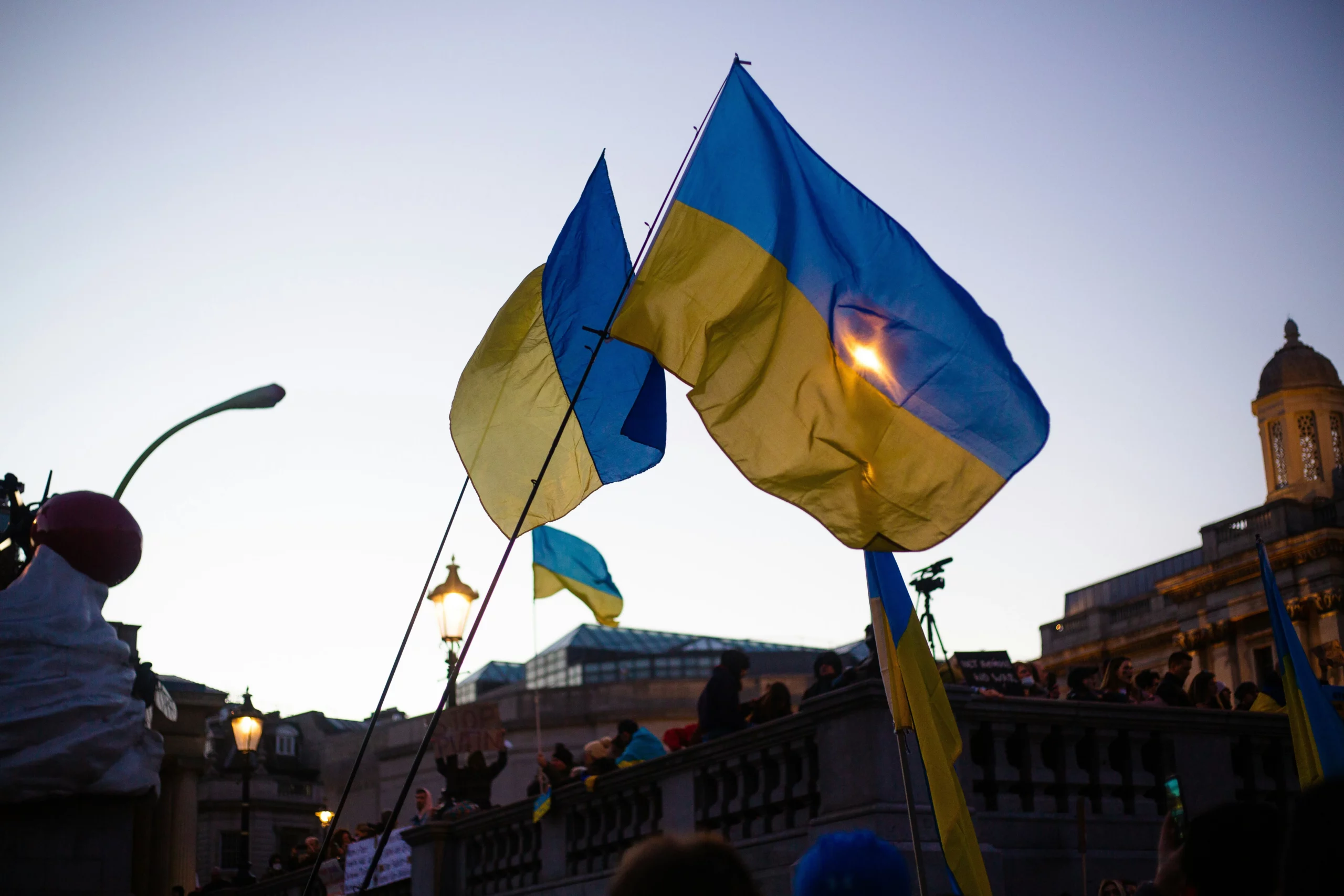
Beyond the symbolic gesture of flying the Ukrainian flag from the town hall, Reims committed to supporting the Ukrainian people by taking concrete actions, including in the fields of youth, public services and culture. 

Reims officials are also planning to invite teenagers from Chernihiv to take part in summer programmes focusing on culture, sports and art. They also committed to helping restore Chernihiv once the war was over. 

Cities across Europe mobilise for Ukraine

Throughout Europe, cities are showing solidarity with Ukraine. To turn this into concrete measures, an online platform, Cities4Cities, was created to help Ukrainian cities. Launched at the initiative of the mayor of the city of Sindelfingen Bernd Vöhringer, also president of the Chamber of Local Authorities of the Congress of Local and Regional Authorities, the platform aims to match Ukrainian and other European cities to provide help and support local infrastructure in Ukraine. The platform is supported by the Congress and the CEMR. 

To find out more about how local governments support Ukraine, just click here.

Solidarity with Ukraine 

Bridges of Trust Branding - News 2024

Building Bridges of Trust between Zboriv- Joniškis


On 23-27 October 2022, representatives from the Ukrainian municipality, Zboriv, visited their Lithuanian partner, the district municipality Joniškis. The visit was organised in the framework of the CEMR-PLATFORMA project “Bridges of Trust: Empowering Municipalities in Ukraine and the European Union through building municipal partnerships“. The project is supported by the U-LEAD with Europe programme.

During the visit, working meetings between the Ukrainian representatives, the Mayor of Joniškis, Vitalijus Gailius, and the municipal officials responsible for different sectors such as social services, communal services, youth, education, and healthcare.

In the Open Youth Center of Joniškis School of Art, the participants of the visit got acquainted with the centre’s activities, its volunteers, and the ongoing projects. The delegation also visited the Joniškis Agricultural School, where the director of the school, Juventa Jurgelienė, presented the training centre, educational farm, and modernized laboratories. In the Child and Family Welfare Center, the provided services were presented, and similarities and differences between the provision of such services in Joniškis and Zboriv were discussed to highlight best practices to implement in the future.

A particularly insightful part of the trip was a visit to the Seimas and the Government of the Republic of Lithuania, organised by Joniškis for the partners from Ukraine. The delegation exchanged with the politicians on humanitarian support, the reception of Ukrainians fleeing the war in other countries and other relevant issues.

IncluCities

IncluCities - News 2022

Being an inspiration for others is the best recognition of our work


IncluCities continues the series presenting the key people behind the project with a special double interview. Vincent Vanhalewyn, alderman responsible for social cohesion in Schaerbeek, and Janaki Decleire, Director of VIA association, a vital project partner, answer questions on the integration of migrants and the impacts of the Ukrainian refugee crisis on the municipality of Schaerbeek, an IncluCities mentor city.

Schaerbeek is one of the 19 municipalities of the Brussels-Capital Region. A rich cultural diversity characterises its population of over 133,000 inhabitants. Where are the newcomers from?

Janaki DECLEIRE:

Schaerbeek is indeed a cosmopolitan municipality. Over one-third (37%) of the population is of foreign nationality, not counting people who have just become Belgians.
Those who come to our BAPA VIA reception office – which is tasked with welcoming newcomers – do not only come from the municipality of Schaerbeek since our reception programme is open to anyone living in the Brussels area. Approximately one-fifth comes from Schaerbeek and another 18 per cent from Molenbeek, and the rest from other municipalities. These people are mainly from Syria, Morocco, India, Afghanistan and Guinea.

Schaerbeek is the fourth-most densely populated municipality in Brussels. How does this affect city life?

Vincent VANHALEWYN:  

Schaerbeek’s population has continuously grown – despite 2020 being an unusual year, with the lowest growth recorded in the Region since 1998 – and higher growth is expected to resume, albeit to a lesser extent. We have a multicultural population, with over 100 nationalities in 2019.

This situation is both an asset and a challenge regarding public infrastructure, with a significant need for nurseries, schools, housing, etc. To meet these needs, we have launched several urban projects, notably with the support of the Region in the framework of the neighbourhood contracts, to improve public space, develop social infrastructures and housing and, to a lesser extent, develop our economic and social fabric. 

Since the 1960s, Schaerbeek has also developed an important and active network of associations, which helps to create links within the neighbourhoods and improve the coexistence of people with diverse backgrounds.

If managing migration is a national competence, it becomes a local responsibility as soon as people arrive in a specific territory. What are you responsible for?

Vincent VANHALEWYN:

Indeed, the municipality intervenes at different levels in the reception of migrants, from keeping and updating the civil register to the registration of new arrivals in the register of foreigners. The objective is also to ensure citizens’ well-being and make sure that everyone finds their place.

With its neighbourhood service and Urban Prevention Programme (PPU), it seeks to create a close relationship with the population to establish a dialogue and improve community life in Schaerbeek. Since 2016, the municipalities of Schaerbeek and Molenbeek have promoted the opening of a Reception Office for Newcomers (BAPA), one of the central actors in integrating newcomers in the Brussels Region, giving Schaerbeek a significant role in the reception of migrants.

We’ve witnessed a united feeling in welcoming Ukrainian refugees across European cities, including in Brussels. How did you manage the first few months of the Ukrainian refugee crisis? What is the trend, and what are the most pressing issues?

Vincent VANHALEWYN:

In the first couple of months of the crisis, the Municipality provided a webpage with basic information for Ukrainian refugees regarding accommodation, administrative procedures and rights, including the existence of the CPAS (the Brussels welfare agency). A temporary coordinator has been appointed at the municipal level to centralise the information and to answer questions from people, both refugees and Schaerbeek citizens.

Thanks to a regional grant, the support has been formalised since July, with two additional municipal officers offering refugees and anyone else involved in the reception process all the basic information, including psychosocial support for Ukrainian refugees.

While waiting for the Region’s provision of collective housing, the municipality had to rely strongly on volunteers to host the refugees during the first months of the crisis.

Janaki DECLEIRE:

VIA reacted very quickly to the arrival of many Ukrainian people and this was done without undermining the reception capacity towards other newcomers. Thanks to the financial support from the French Community Commission, we were quickly able to hire new Russian- and Ukrainian-speaking colleagues to organise 15-hour information sessions adapted to this new audience in their language, thus offering them the same service as any other person coming to our offices.

As part of the IncluCities project, Schaerbeek is participating in a mentoring process with the Latvian city Jelgava. What can you offer them, and what is the most important lesson from this process for you? 

Vincent VANHALEWYN:

In the IncluCities project, we are in a mutual learning process with the city of Jelgava. This allows us to think strategically about the integration of newcomers and evaluate our practices. Thanks to this project, we were able to look into the relevance of creating a digital information tool for newcomers, such as a smartphone application, and to learn from what other local authorities have done in Belgium and beyond. The city of Mechelen has done excellent work, for example, with their Welcome App. The non-profit organisation DUNE has created a special app, Le Bon Plan, listing all of Brussels’ diverse social and medical support services. The project’s funding did not allow us to go further in developing a mobile application; nevertheless, these experiences inspired us to update the VIA website in the framework of the project.

Jelgava has recently had to bravely deal with a large migratory flow due to the war in Ukraine. The municipality of Schaerbeek has already had to deal with numerous migratory flows in the past. We wanted to share this expertise with our Latvian partners by showing them what we have done, hoping to give inspiration in a medium and long-term perspective on integration.

One of the outcomes of this project is also a One-stop-shop, an improved online platform for newcomers in the municipality – can you present the main elements of this website and its objective?

Janaki DECLEIRE:

With the budget allocated by the IncluCities project, we could rework the page on our website BAPA VIA describing the welcome path and make it more accessible to all. The route is explained more playfully and intuitively than before. The content is also translated into ten languages and is available in a spoken version for people with reading difficulties because there are many people who do not read or have very little school education among the newcomer population. We have also created a new page offering an essential directory of services helpful to any newcomer in various fields, such as social assistance and legal services, health, children’s services and French language courses. This way, people who do not wish to start a reception process at VIA will have helpful addresses to find answers to their questions

The IncluCities project is coming soon to an end. What has been the main benefit for you?

Janaki DECLEIRE:

The most significant benefit is the exchange between the different partners of the project. Participating in a programme that brings together eight different cities that share their own experience of welcoming newcomers is inspiring. Even if their context and reality are different, understanding these various realities and seeing what they have been able to put in place, what worked well and what did not, allows us to feed our reflection and enrich our work.

The role of a mentor has also made us even more conscious of the road we have travelled since 2016 when VIA was established.  If we can radiate and inspire other actors in the field of integration of migrants, it is an excellent recognition of our work.

Schaerbeek is described as being “as stubborn as the donkey” (the symbol of Schaerbeek) and “as fertile as the land on which the cherry trees grow”. What do these sayings mean?

Vincent VANHALEWYN:

In the past, the people of Schaerbeek, who grew cherries, had the privilege of taking donkeys to the Brussels market to sell them to the brewers who made beer (Kriek!). When they arrived, the people of Brussels would exclaim: Hei! doë zên die êzels van Schoerebeik (in dialect: Here come the donkeys of Schaerbeek!).

Even today, Schaerbeek is called the “City of Donkeys”, and its inhabitants are proud of it!  New projects regularly flourish in Schaerbeek, like the cherry trees. It is a breeding ground to bring the municipality to life and enhance its value on various levels: community life, solidarity and its rich heritage.

Janaki DECLEIRE:

I agree and can add that our work illustrates this notion of fertility. We are constantly setting up new projects to respond to the needs expressed by our beneficiaries, whether it is the creation of our immersion house the setting up of the volunteering project or the PEPA programme (an entrepreneurial pathway for newcomers). In this way, we draw on the exchanges that we can make, but also, in a co-creative approach, on the needs expressed by the newcomers with whom we work. They are truly the ones who are the basis of all our new projects and we try to be as close as possible to their needs.

As for the word “stubborn”, it perfectly illustrates our desire to keep moving forward and to take up the challenges that come on the way!