Ukraine Recovery

Solidarity with Ukraine - News 2022

‘Together we can do more’ – Dobrobat NGO


“For the city of Irpin, which stopped the enemy army on its approaches to Kyiv and was the most affected by hostilities in the region, “Dobrobat” volunteers have long since become not just reliable partners, but true friends.” This is how the mayor of Irpin, Oleksandr Markushyn, described the volunteer movement Dobrabat and its importance to his community.

On June 19, a Memorandum of Cooperation was signed between the city of Irpin, represented by its mayor and the funders of Dobrobat, Victor Andrusiv and Rostyslav Smirnov. Since then, over 30 houses have been repaired and saved thanks to the work of Dobrabat’s volunteers who are cooperating with the city’s communal services.

“When half of the city is destroyed, and there are simply no funds to attract commercial construction companies in the local budget, the work of Dobrobat volunteers is worth its weight in gold for us. And if we talk about it on the scale of a country that is at war, then even more so! Funds should now go to defense to protect against the aggressor!”

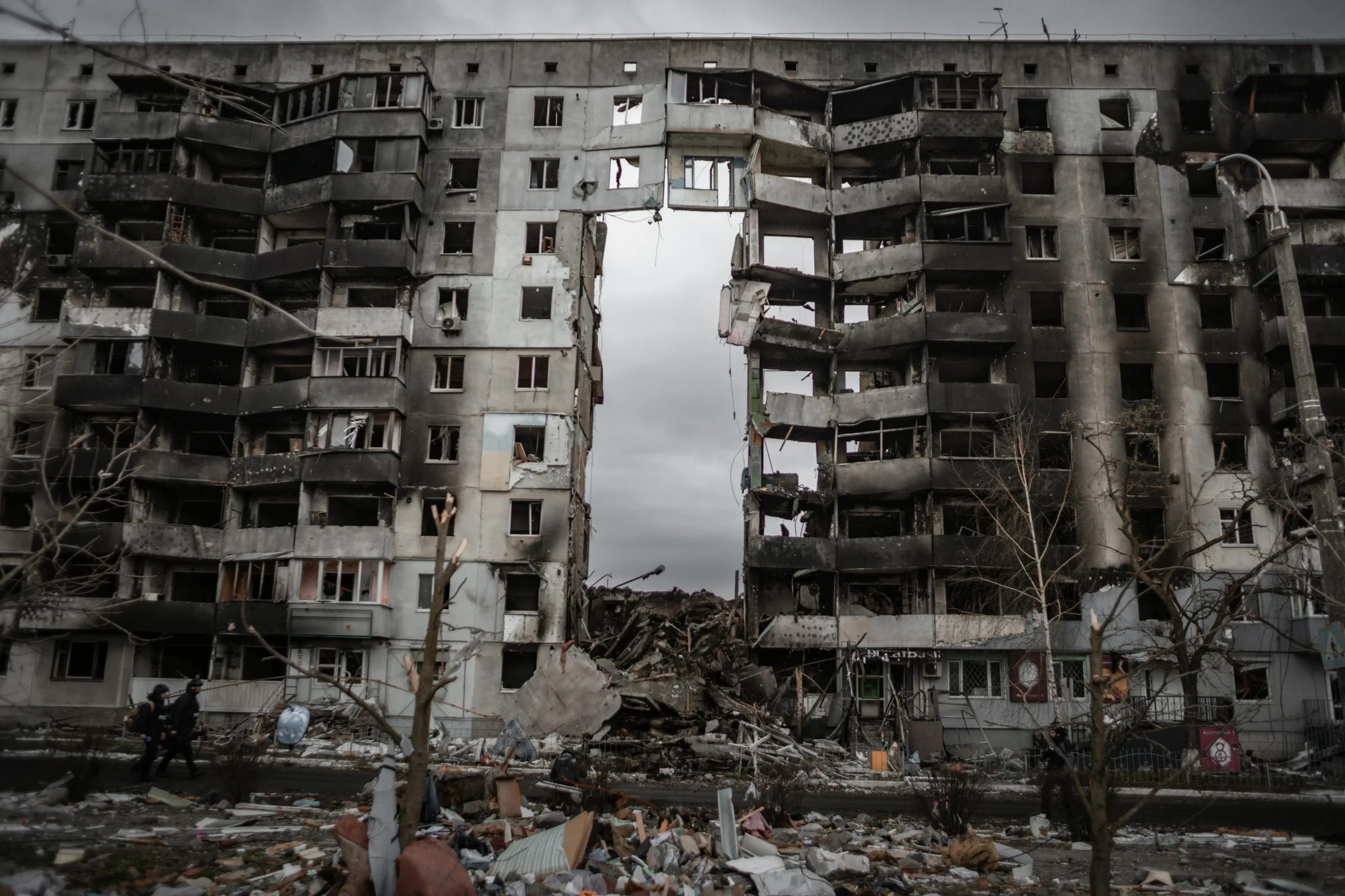
Dobrobat is a volunteer movement rebuilding homes and infrastructure in liberated cities that have been destroyed by the invading Russian forces. Volunteers remove debris and renovate buildings to make them inhabitable again. Besides the obvious practical benefits, the project carries a strong symbolic meaning of national unity harnessing Ukrainians’ grassroots horizontal organisation and mutual help. The Dobrobat volunteers are a bridge between the state and the Ukrainians who are suffering due to hostilities, as they work with both the state institutions and local authorities. For instance, in Yahidne village, they are restoring 22 houses in partnership with the Ministry of Territories and Communities Development of Ukraine. On July 13, 2022, Prime Minister Denys Shmyhal visited the village of Yahidne and praised Dobrobat’s support in the restoration of residential buildings and infrastructure.
The Dobrobat volunteers have already helped the Ukrainians in 30 settlements of Chernihiv, Sumy, Kharkiv and Kyiv regions (repaired windows, roofs, doors, and removed debris on the territories of hospitals, schools, kindergartens, parks, and private houses). Today Dobrobat has received 37,000 applications from volunteers from all over the country who are ready to come to the liberated cities to work there. From those, they have engaged 7,000 volunteers who are helping the reconstruction of their country as well as learning a new trade that can help them in the future. Despite the already 300 trips that have been organized within four months, requests from settlements are still flooding in.

To be as effective as possible, a map was developed to register private and public buildings that need to be repaired, with detailed pictures and estimated work. This map is available in English to widen the potential of donors for the organisation that deeply needs financial and logistic support. To ensure transparency they will provide a report on how the donated funds have been used with photos of the renovated building. Every donor knows exactly what their donation helped restore.

Solidarity with Ukraine

Mayors in Ukraine - News 2023

Bridges of Trust partner-municipalities, Fastiv and Druskininkai, meet in person for the first time


On 3-7 October 2022, a delegation from Fastiv municipality in Kyiv region travelled to Lithuania to visit their Bridges of Trust partner-municipality Druskininkai.

The two partners first met in November 2021 through the Bridges of Trust project, implemented by CEMR, PLATFORMA and supported by the U-LEAD with Europe Programme. Following online bilateral meetings and presentations of municipalities, the visit to Druskininkai was organized to meet in person.

The visit had the following main goals:

  • physically meet the partners for the first time;
  • discover the best practices of the Druskininkai partner municipality with a strong focus on rehabilitation;
  • discuss the possibility of a joint project in the field of rehabilitation and the future of the cooperation.

According to Yuliia Kazakova, medical director of the Fastiv hospital, paediatrician, and Head of the project “Psychological and medical assistance to children and their families affected by the War”:

“For me personally, the visit to Lithuania, to the picturesque town of Druskininkai, has been important, because of the incredible support of the European community and of every Lithuanian. Once again it strengthened my confidence that Ukraine is not alone, we are part of the European family, prosperity and well-being await our country.

From a professional point of view, I express my sincere gratitude to my Lithuanian medical colleagues. Their experience in providing complex rehabilitation services to adults and children will help us in organizing the rehabilitation of our own children and their families suffering from war. I hope that future cooperation and joint projects between Fastiv and Druskininkai municipalities will be fruitful and effective.”

To this, the Secretary of the Fastiv City Council, Liudmyla Rudiak, stressed his confidence in the utility of such visits to rehabilitate Ukrainian cities:

“I can confidently say that I received a lot of motivation to use the acquired knowledge for the development of our community. The Druskininkai team shared their experience in the field of rehabilitation, social, youth, and educational initiatives. It is clear that good project management and access to European funds make it possible to develop and expand the capabilities of the local self-government. Special thanks to Druskininkai for the hospitality, openness, willingness to cooperate and support Ukraine.”

The partners are now exploring opportunities to apply for EU funding to support a joint project in the sphere of healthcare and rehabilitation.

Podgorica

Podgorica - News 2022

Podgorica delivers 100 websites for local businesses


The COVID-19 pandemic has significantly slowed down the growth of many local companies across the world.

By being tech-savvy and present online, companies can cushion the impact on brick-and-mortar businesses and be more resilient in the face of future crises.

That’s whyPodgorica, the capital of Montenegro, created the “100 websites project” (100sajtova.me), which, as the name suggests is providing 100 free websites for 100 local business.

After checking the applicants’ submitted documentation, visuals and data for the website, all websites that met the specified requirements were created by city employees. You can check them out here.

Through this digital platform, Podgorica has provided local businesses free website development, as well as a free domain and hosting for a period of one year.

The city also provided workshops to help businesses learn the basic knowledge needed to maintain their newly made websites. Many websites have since then been updated and supplemented.

The development environment used allows the parameters to be easily modified to find solutions adapted to other needs. The successes of “100sajtova.me” highlights how our communities’ local businesses can be digitalised to be fit for the future.

Urban renewal

Urban renewal - News 2022

Cadde54 Bazaar: Relaunching urban life after the pandemic


Revitalising urban life has become particularly important in the wake of the coronavirus pandemic. Shopping centres create jobs and businesses by providing useful goods and services, but they can also energize a neighbourhood and give it a unique identity.

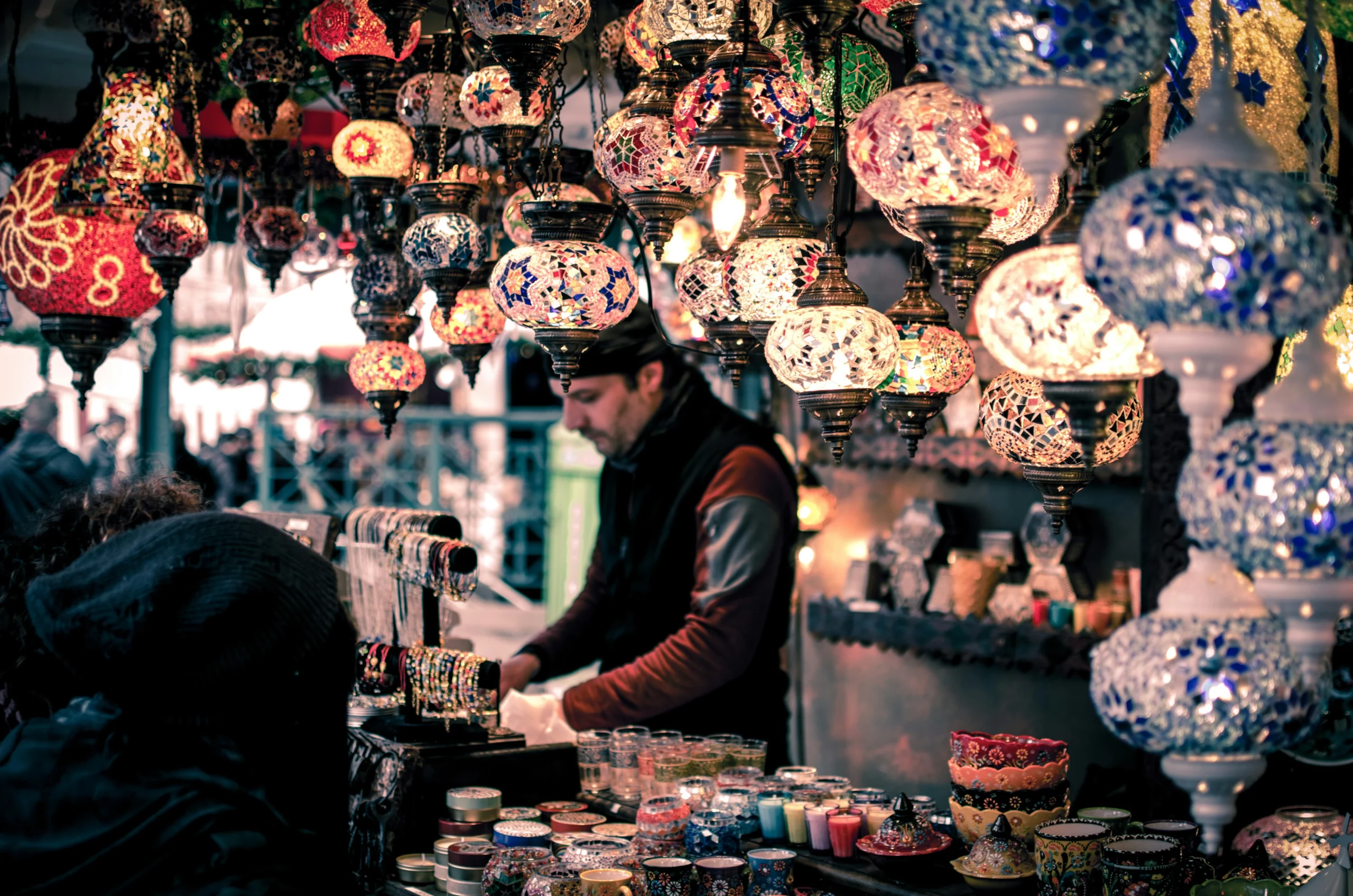
That was the ambition of the “Cadde54 Bazaar Project” in Serdivan, a city of 160,000 people in northwest Turkey. Cadde54 combines the logic of a Turkish bazaar with cultural and social functions. Visitors can walk around several open-air plazas or spend time in cafes where they can taste local and international cuisine.

It is noteworthy that Cadde54 Bazaar’s launch coincided with the post-pandemic period. Lockdowns and the closing of public buildings left people longing to spend time in open spaces. Unlike indoor shopping centres, at Cadde54 visitors can walk in the open air in pleasant and healthy conditions.

The project has led to the creation of new office spaces, businesses and jobs. The centre brings together, for the first time in Sakarya Province, local tradesmen and world-class companies under the same roof.

Cadde54 Bazaar also contributes to a healthy and sustainable lifestyle. The centre features a vegetation-rich green roof and greywater recycling to limit environmental impact. The area is pedestrianised and features a sports centre. The project has also included the creation of new accommodation in the area.

​The project, completed in April 2022, received 1.5 billion Turkish lira (82 million euros) in investments from the municipality.

Reduce Energy Consumption

Municipal partnerships - News 2022

Three game-changing recommendations to reduce energy consumption in cities


How can municipalities achieve significant energy savings? The Union of Cities and Municipalities of Wallonia (Belgium) outlines a set of actions to tackle the energy crisis.

The recommendations, all available on the Union’s web section dedicated to energy, include measures for street lighting, public swimming pools and the use of computer equipment.

Energy measures for street and Christmas lighting

With an estimated cost of €79 million, the total consumption of municipal public lighting in Wallonia in 2021 amounted to 197 million kWh. The UVCW experts estimate that shutting off street lights for five hours every night would result in an overall saving of 44% of the total, that is to say €35 million of saving annually for the Walloon municipalities.

Tuning off Christmas lighting, however, would not necessarily achieve significant savings, explains the Union. By way of comparison, the city of Innsbruck, in Austria, estimates that Christmas lighting accounts for 0.0007% of total annual consumption. Nevertheless, despite the low energy impact, the city has decided to set an example by turning the lights off earlier in the evening and turning them on later in the morning.

Reducing swimming pool energy consumption

Referring to a practical guide published by the SPW on energy performance in Walloon swimming pools, the UVCW identifies potential savings to be made. These include better management of pool cooling and heating systems, especially given that public pools are open to swimmers only half of the time. By adopting such measures and others, energy savings may range from 5 to 15% of the total consumption.

Unplugging electronic devices

Keeping computers in standby mode does not result in massive savings, the UVCW shows. The game-changer, however, is whether computers are left powered on 24/7, or eight hours per day, five days a week. The difference in consumption is estimated at 453 %.

Pushed by an unfolding energy crisis, municipalities, cities and regions across Europe are deploying a wide range of actions to reduce energy consumption. While there is no one-size-fits-all approach across Europe, there is a common need to act. Only by acting simultaneously on the ground, in our streets and communities can we find a way out of this emerging crisis.

Municipal partnerships

Polish municipality gives aid to Ukrainian partner and paves the way for cooperation


As part of the Bridges of Trust, project bringing together EU and Ukrainian municipalities, Polanica-Zdrój in Poland and Polyanytsya in Ukraine are deepening their partnership through a formal Cooperation Agreement. Local officials in the southeastern Polish town welcomed a delegation of their Ukrainian colleagues from 13 to 16 September. This was an occasion to sign the agreement and provide financial assistance to Polyanytsya.
 
All good cooperation takes time to develop. Municipal officials first met online back in November 2021 and were able to explore each side’s development challenges and the potential areas of cooperation. The Russian invasion of Ukraine imposed a brutal change of perspective: emergency support became paramount. Polanica-Zdrój offered to provide shelter to anyone fleeing the war from their partner municipality.
 
Almost a year later, officials from Polyanytsya were able to visit their Polish partner. Local officials showcased Polanica-Zdrój’s achievements, especially regarding waste management and economic infrastructure, and held an official ceremony for the signature of the two municipalities’ Cooperation Agreement.
 
Mayor of Polanica-Zdrój Mateusz Jellin handed the Ukrainian delegation a symbolic cheque of 8,000 EUR collected with the help of their German twin city, Telgte. The money will be spent to address the Ukrainian people’s urgent emergency or humanitarian needs.
 
“The knowledge we gained during the visit will be a good experience for us for the further development of our municipality” said Antonina Mirus, head of Polyanytsya’s Legal Department. “And most importantly, we found new friends.”
 
The Ukrainian officials thanked Polanica-Zdrój for its openness and support in the face of war. In turn, Mayor Jellin will visit Polyanystya in the coming months.
 
The partnership between the two municipalities is part of the “Bridges of Trust” project, implemented by the Council of European Municipalities and Regions (CEMR), PLATFORMA and supported by U-LEAD with Europe. The Association of Polish Cities (ZMP) also played an important role in matching the municipalities.

Municipal partnerships

Solidarity with Ukraine - News 2022

Slovakia’s Sol’ and Ukraine’s Solotvyno show how municipal partnerships can drive reconstruction


Josef Berta, mayor of Sol’ in Slovakia, knew right away that he wanted to partner up with Solotvyno in the neighbouring Zakarpattia region of Ukraine. Both municipalities share a history connected to the salt deposits present in both territories. The partners first met online in the fall of 2021 and decided to cooperate and set up joint activities to exchange best practices and develop local officials’ capacities.

After the Russian attack on Ukraine on 24 February 2022, the spring visit to Sol’ was postponed and the focus was shifted to emergency needs. Firefighters from this Slovak village, together with some local officials, were among the first to arrive on the border to meet and provide help to the thousands of Ukrainians who were fleeing the war. At this time, Solotvyno was also welcoming internally displaced people who were arriving from other regions of Ukraine that were under attack.

The opportunity to meet in person came in September. Sol’ has a very impressive record of winning EU funding and is number two in the region in terms of the number of EU grants received per capita. Mayor Berta and his team presented the details behind the projects to the Ukrainian delegation and showcased results with visits to the school, a renovated historical building, the volunteer firefighters brigade and more.

The delegation also visited a local business that received funding from the EU for a project that aimed to boost entrepreneurship and create job opportunities in the area. The partners also discussed the possibility of applying for funding to implement joint projects under cross-border cooperation or other EU programmes.

“We are extremely impressed with the visit to Sol’”, said Bohdan Makusii, Head of Affairs of the Solotvyno Village Council. “We hope for the establishment of close and long-term cooperation between our communities and the implementation of joint projects that will improve the lives of the population of the two communities and quickly integrate Ukraine into the European Union.”

Solotvyno representatives learned about the surrounding Prešov region and the current drivers of economic development in the area. The delegation was also invited by the mayor of Vranov nad Topľou to take part in a ceremony recognising locals’ professional and personal contributions. On this occasion, the Director of the Cultural House also presented cultural projects that were funded from the EU grants.

Taken together, the cooperation between Sol’ and Solotvyno shows how municipal partnerships can be a driver of reconstruction in Ukraine: by sharing local expertise, capitalising on EU opportunities and bringing people closer together across borders.

Bridges of Trust is implemented by the Council of European Municipalities and Regions and PLATFORMA, and is supported by the U-LEAD with Europe programme, a multi-donor action of the European Union and its member states Germany, Poland, Sweden, Denmark, Estonia and Slovenia.

Video of visit highlights.

Normandy – free jackets

Normandie - News 2022

A small town in Normandy offers fleece jackets to school children as the heating temperature lowers to 19 ºC


While French local governments step up efforts to combat the energy crisis amid skyrocketing prices, some municipalities have adopted energy restraint measures.
 
In Périers, a small town in the Manche department with a population of over 2,000 inhabitants, its mayor Gabriel Daube has decided to cut costs by turning down the heating to 19 degrees in all municipal buildings, including its school. To compensate, each of the 350 school children will be offered a fleece jacket.
 
With a total budget of €6000, this initiative should be seen as an investment, explains Gabriel Daube. Périers is indeed expected to reduce its energy bill by €20,000 this winter. Additionally, those jackets will be produced in France to contribute to the local economy and production industry while reducing the town’s energy consumption costs.
 
This initiative complements a series of other long-term measures to decrease the town’s environmental footprint and energy bill, including in the field of public lighting and thermal insulation.

Mobility Week

Mobility Week - News 2022

​How cities are turning their streets over to cyclists


Did you know? Each year, buses, trams and metros carry 50 billion passengers in cities, saving 100 million car trips every day.

But bicycles are also a convenient and environmentally friendly way to travel. Copenhagen, for example, is known for being a city of cyclists. Its residents ride because it’s safe, fast and easy to get around by bike. They also do it because Copenhagen is designed and built for cycling. By 2025, 50 per cent of all trips to work and education in the city are expected to be made by bike. 

So what is the recipe for turning cities around bicycles? Some say it all starts with the creation of segregated bike lanes and ‘slow streets’. Others claim making public transport compatible with cyclists is key. 

All around the world, cities are taking steps to drive sustainable mobility, including by widening pavements, closing streets to cars and setting up traffic light signalling that prioritises people travelling by foot or bike. 

But as the European Commission states, the worst enemies of the bicycle in urban areas are not cars, but longheld prejudices connected with the use of the bicycle as a regular mode of transport. For example, few car owners are really aware of what their car costs them and of the considerable savings to be made by cycling. Awareness-raising campaigns are therefore key to informing the population on the objective qualities and advantages of cycling.

On their own, all those local initiatives led by cities can make a difference, but together they can transform our urban future and make mobility less environmentally and socially harmful, more efficient and cleaner.

To find out more about how cities are tackling the challenge of mobility, visit the European Mobility Week website. Also, take a look at the infographic produced by the CEMR on this occasion.

MENTOR Programme

MENTOR Programme - News 2022

How the Marmara Municipalities Union is boosting local expertise by partnering up with towns


From pandemic management to sustainable development, local governments need to share expertise if they are to successfully tackle the challenges of today.

That’s why the Marmara Municipalities Union (MMU) in Turkey created the MENTOR Programme in July 2020. The initiative enables inter-municipal cooperation and the development of municipalities’ capacities and municipal employees’ competencies. 

The MENTOR Programme provides municipalities with an opportunity to learn from the experiences of others within their own limits in terms of financial and human resources. Municipal staff who need expertise in a particular topic are matched with staff from another municipality that is already experienced in that area.

Municipalities seeking and offering indicate their interest by filling out online forms. The MMU then matches municipalities and sets up online or face-to-face meetings between municipal staff.

Following the first meetings, municipalities can either keep up the communication on their own or ask MMU to maintain its coordinating role. The municipalities can also request staff exchange with their counterparts if useful.

The MENTOR programme gathers and shares expertise in all thematic areas relevant to municipalities, including planning, transportation, disaster management, financial affairs, migration, environmental management, localisation of the UN Sustainable Development Goals (SDGs), institutional procedures, human resources and so on.

As part of this, MMU is thus building a pool of experts who can be consulted whenever needed.

Having started among MMU member municipalities, the programme has expanded to enable international cooperation. Members of MMU can now be matched with their peers in Turkey or foreign countries.

As of August 2022, 24 meetings have been held as part of the MENTOR Programme. These meetings have increased municipal staff’s knowledge on different subjects, contributed to capacity building and fostered inter-municipal relationships.

The programme has also resulted in concrete outcomes. For instance, two mentee municipalities, who sought expertise on Voluntary Local Reviews (VLRs) on the localisation of the SDGs, have since begun preparing their VLRs.

The programme contributes primarily to SDG 11 “Sustainable Cities and Communities” by empowering the local governments to build more sustainable cities by increasing the capacities of their staff and SDG 17 “Partnerships for the Goals” by encouraging the exchange of knowledge and experience as well as cooperation between local governments.