Preliminary findings of ODELL point to rising violence against local politicians across Europe
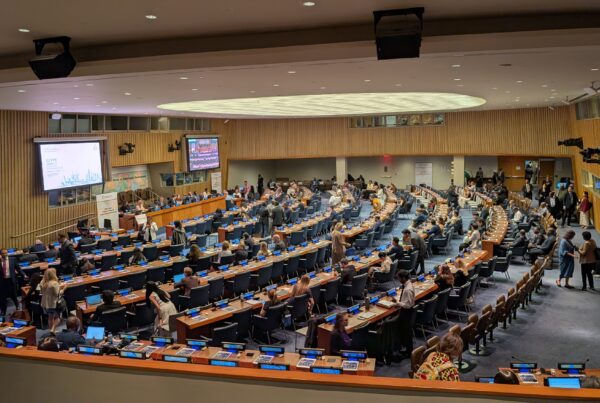
Early results presented at the European Observatory for the Defence of Democracy at the Local Level (ODELL) webinar on 21 May 2026 indicate that violence and intimidation against local elected representatives is increasing across Europe, with attacks frequently directed at politicians’ homes and other property and a growing concern about the under‑recorded scale of online abuse. The discussion brought together policymakers, researchers and local politicians, combining emerging evidence from Bocconi University with testimony from elected representatives and institutional actors working on democratic resilience and safety in political life.
A visible phenomenon, but only the “peak of the iceberg”
The dataset currently being assembled for the first ODELL annual report draws on local news and national report archives to capture documented incidents such as assaults, threats and arson attacks against local politicians. Explaining the approach, Gianmarco Daniele, Executive Director of the CLEAN Unit at Bocconi University and Associate Professor at the University of Milan, warned that the numbers are robust for severe incidents but cannot systematically include online abuse: “This is the peak of the iceberg as violence includes other types of attacks, like online attacks” but those are usually underreported.
More than 1,000 attacks — and rising
Daniele said the data shown so far is “based on more than 1,000 violent attacks in Europe in the last six years,” stressing that this is not only a European issue but a global one. In the European sample presented, Italy records the highest number of incidents, followed by France, with Germany, Greece and Ukraine also appearing among the countries with high totals. He also described an increase over time, including a rise in 2023 that was “mostly driven by France”.
Property attacks dominate
The patterns presented suggest that intimidation often reaches politicians through their personal environments. “The most common type of attacks is against the private property of politicians, typically arson attacks against the house or the car,” Daniele said. “The second type is attacks against government property and assaults against politicians” comes next.
For Filiz Ceritoğlu Sengel, Mayor of Selçuk and CEMR Spokesperson on Local Democracy, this reflects a structural vulnerability at the closest tier of governance: “Local elected representatives are the closest democratic link to citizens. They are accessible, visible and accountable, but this makes them increasingly vulnerable.”
Women face significantly higher risks
While gender information is often missing from incident descriptions, Daniele highlighted evidence from a separate Italian study: “Women mayors are three times more likely to be attacked than men, and this is especially true right after they are elected.”
The effect on political participation was echoed by Flo Clucas, Member of Cheltenham Borough Council and Chair of CEMR’s Standing Committee on Equality, who linked intimidation – particularly online, to decisions about whether to continue in office: “That is where democracy begins and that is where, if we are not careful, democracy will end.” She added: “So many local politicians are no longer standing: some 56% in the UK might not stand again.”
Election periods increase risks – depending on institutional strength
Another trend discussed was electoral timing. Daniele explained that early analysis suggests attacks are more likely “right before and right after elections,” but the pattern depends on context: “There is a strong correlation, but this is conditional on the strength of democracy in the country.”
Online abuse amplifies the threat
Several speakers underlined that online harassment is widespread yet remains poorly captured by systematic reporting. Daniele noted that for online attacks, “a very small share is reported to the police.” Clucas described how everyday digital exposure can be weaponised: it gives those who want to intimidate councillors “a method with no mechanism for us to find out who they are.” She drew a line between democratic debate and harassment: “There are times when freedom of speech is not freedom of speech but intimidation… it’s threatening… it’s bullying.”
From the Council of Europe perspective, Bryony Rudkin, Deputy‑Leader of Ipswich Borough Council and Co‑Rapporteur of the Congress of the Council of Europe’s resolution ‘Tackling violence against local and regional elected representatives’, warned that online hate speech reflects a broader climate: “People hide behind the anonymity of a keyboard and say whatever comes into their head.”
Improving data and policy responses
Participants stressed that solutions depend on evidence, even when it is hard to gather. Fabrizio Rossi, Secretary General of the Council of European Municipalities and Regions (CEMR), argued that the difficulty is precisely why the initiative matters: “The gathering of data is challenging. But this is why ODELL exists. We are being innovative.” He added that the goal is to “provide evidence” and “start collecting data and intelligence to shape the right solutions.”
From the European Commission, Daniel Fleischer‑Ambrus, (Team Leader for Democracy at DG JUST in the European Commission, said: “Safety in politics is a key priority for us,” pointing to the European Democracy Shield and the European Commission’s current work on practical tools. He highlighted that guidance, checklists and toolkits should “emerge before the end of this year.”
A direct impact on democracy
Sharon Pia Hickey, Programme Officer, Constitutional Governance and Rule of Law, International IDEA, placed the problem within broader democratic trends, thanking ODELL for “bringing to light the scale and the severity and the typology and the nuance” of what elected officials face. She described violence against elected officials as “a key manifestation of democratic backsliding, especially at the local level.”
Sengel also warned of the democratic consequences when intimidation pushes people out of public life: “When elected representatives are pressured into silence, discouraged from standing for office, or forced to withdraw, the functions of local democracy are weakened.”
A collective responsibility
Closing the event, Eider Inuntziaga, Councillor of the City of Bilbao and CEMR Spokesperson on Local Democracy, said the session had helped clarify “the scale and the patterns” behind the issue and build a shared space for solutions. She framed political safety as a condition for participation: “Local democracy only works if people feel safe to defend democracy and to raise their voices because otherwise no one will ever dare to make any opinion or any decision public.”
Inuntziaga added that intimidation has consequences well beyond the individual: “All those issues shape the way we do our work; they take away energy from where it should be focused and affect the quality of our decisions and the quality of democracy.” She added the first annual report will present the project’s first-year results in Bilbao on 2 October 2026.
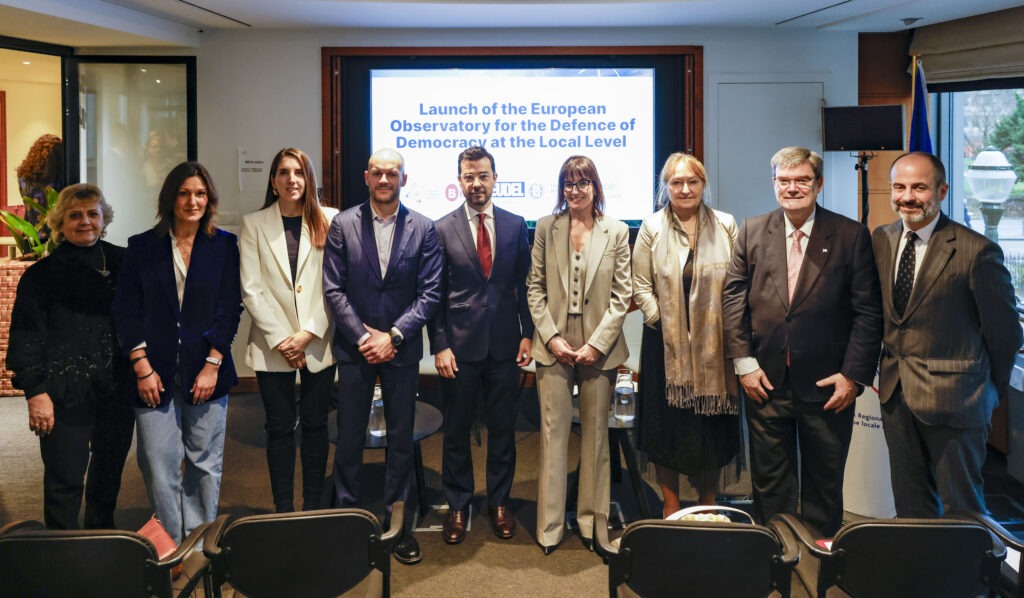
About ODELL
The Observatory is a partnership between the Council of European Municipalities and Regions (CEMR), the Municipality of Bilbao, and the Association of Basque Municipalities (EUDEL), with the scientific partnership of Bocconi University, and with the support of the Basque Government. It works to raise awareness of this growing challenge by generating reliable data and evidence, sharing best practices in good governance, promoting coordinated institutional action, and fostering collaboration among local and regional elected representatives.
For more information, contact:

Senior Adviser, Governance, Gender Equality, Local Democracy