
Artificial Intelligence and local governments

AI training article 2026

CEMR partners with 28Digital to provide AI training for local and regional governments


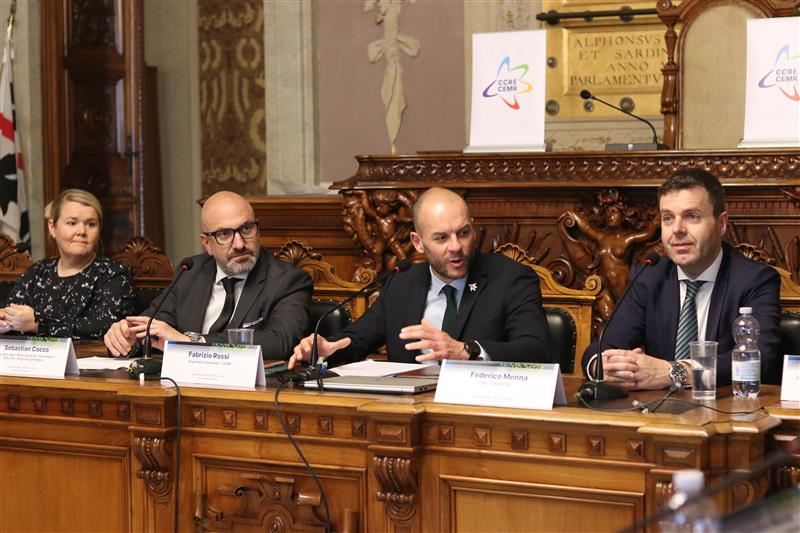
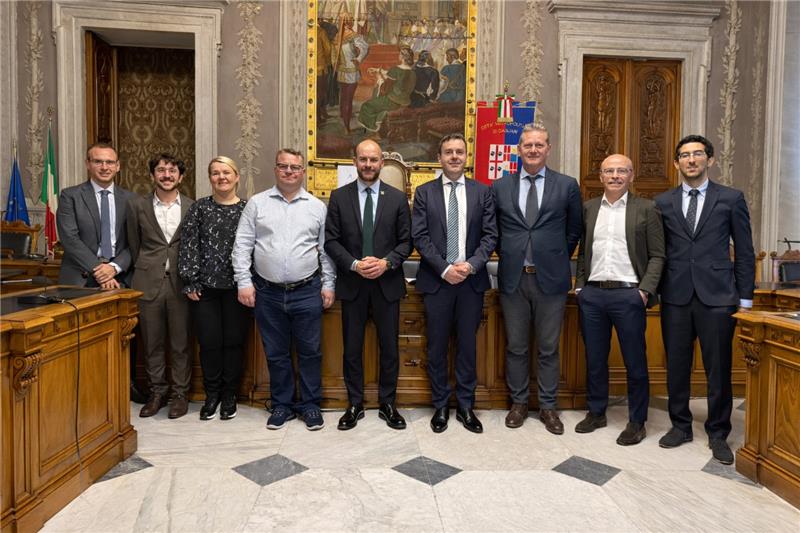
Local and regional leaders gathered in Cagliari to discuss the growing political impact of artificial intelligence (AI) at the roundtable “Opportunities and Challenges of Artificial Intelligence for Local and Regional Governments”, hosted at Palazzo Regio.

Organised by the Council of European Municipalities and Regions (CEMR) together with AICCRE, PLATFORMA and 28DIGITAL, the event focused on how AI is reshaping public services, democratic participation and multilevel governance.

Speakers stressed that while AI offers significant opportunities for innovation, it also raises key political issues such as transparency, accountability, and fairness.

AI training article 2026

During the gathering, participants also learnt about concrete initiatives supporting local leaders in the digital transition, including the project “Empowering Local Leaders through AI”, as well as 28DIGITAL’s work on education, skills and capacity-building for public administrations, presented by experts from Gofore, 28DIGITAL and Politecnico di Milano.

The roundtable that followed was moderated by Fabrizio Rossi, Secretary General of CEMR, and included contributions from Piero Comandini, President of the Regional Council of Sardinia; Massimo Zedda, Mayor of the Metropolitan City of Cagliari; and Federico Menna, CEO of 28DIGITAL.

AI training article 2026

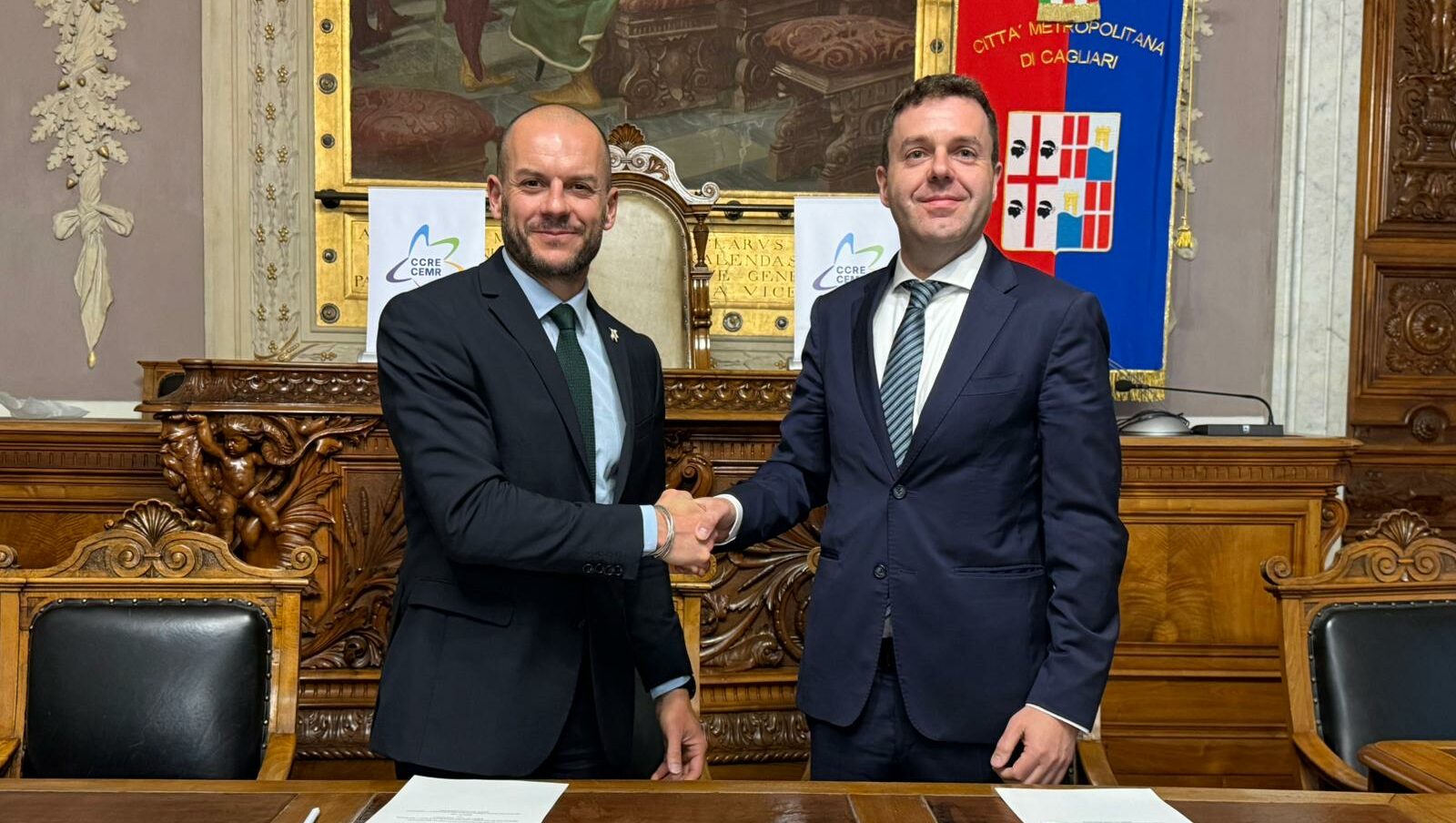
A central outcome of the event was the signing of a Memorandum of Understanding between CEMR and 28DIGITAL, launching a new training programme on AI for local elected representatives. The initiative aims to strengthen political competence and informed decision-making on AI at a territorial level.

Commenting on the agreement, Jork Cardeneo, CEMR spokesperson on digitalisation, underlined the importance of political leadership:

“If local leaders are expected to govern AI responsibly, they must first understand it. This memorandum marks a decisive step towards empowering elected representatives to lead the digital transition, rather than merely react to it.”

The Cagliari meeting confirmed the role of cities and regions as key political actors in ensuring that AI supports more democratic, inclusive, and innovative governance.

For more information, contact:

Digital local and regional governments

Digital transition - News 2022

How Europe’s municipalities and regions can drive an inclusive, secure and people-centred digital transformation


Local and regional governments are at the heart of Europe’s digital transformation. As the public authorities closest to citizens, they deliver services such as healthcare, education, transport, social support and broadband deployment, all increasingly shaped by EU digital legislation. Their role is essential to ensure that digitalisation remains inclusive, sustainable and accessible to everyone. Yet many local and regional governments still face major obstacles: unequal access to digital infrastructure, insufficient financial and human resources, cybersecurity risks, and widening gaps in digital skills.

Across Europe, disparities in connectivity and digital access disproportionately affect rural and remote areas, low-income households and vulnerable groups. These inequalities threaten territorial cohesion and limit citizens’ ability to participate fully in digital society. To make digital public services truly accessible, digital solutions must follow inclusive design principles and remain complemented by in-person service options for those who cannot or prefer not to use digital channels.

Cybersecurity has become an increasing concern as local authorities manage sensitive public data and critical infrastructure, often without sufficient expertise or funding to meet growing EU requirements such as those under the NIS2 Directive. Smaller municipalities, in particular, lack the resources to implement robust cybersecurity measures, respond to incidents or comply with complex regulatory frameworks. Reinforced cooperation, simplification of rules and sustainable financial support are essential to strengthen local resilience.

Skills development remains another pressing challenge. To implement new EU digital policies, including those related to artificial intelligence, interoperability and data governance, local administrations need staff trained to oversee digital systems, maintain human oversight, and ensure ethical, transparent and fair use of technologies. At the same time, strengthening digital literacy among citizens through lifelong learning and community-based initiatives helps build trust, inclusion and participation. Cooperation between municipalities and across regions also accelerates innovation and avoids fragmentation by enabling the exchange of best practices and common solutions.

A Call for Stronger EU Support

To ensure a fair, secure and inclusive digital transition, CEMR calls on European institutions to reinforce investment in digital infrastructure, especially in underserved regions; provide technical and financial support for accessible digital public services; maintain non-digital access to essential services during the transition; facilitate public-private partnerships to expand connectivity; and offer tailored guidance, capacity-building and long-term funding to help local and regional governments strengthen their cybersecurity and digital skills. Europe’s digital future depends on empowering the actors closest to citizens: its municipalities, cities and regions!

Read the position paper here

For more information, contact:

Digital Inclusive Future

EPSU CEMR - News

CEMR and EPSU Release New Report on Digital Transformation in Local Governments 


The Council of European Municipalities and Regions (CEMR) and the European Public Services Union (EPSU) are pleased to announce the release of “Local, Social, Digital” – a report examining the impact, opportunities, and challenges of digital transformation across Europe’s Local and Regional governments. Co-financed by the European Commission, the report gathers insights from extensive research and contributions by CEMR and EPSU members across Europe. 

Digitalisation is reshaping public service delivery, enhancing accessibility, efficiency, and adaptability. However, it also presents challenges, from ensuring supportive working conditions and safeguarding privacy to addressing skills gaps. This report highlights both the opportunities and the complexities digitalisation brings, presenting key findings from research, social partner agreements, and project discussions. 

Key areas include: 

  • Teleworking and Remote Work: Outlines best practices to ensure fair working conditions, health, safety, and the right to disconnect. 
  • Digital Skills and Employment: Details agreements that support lifelong learning, equipping municipalities to meet digital demands. 
  • Privacy, Surveillance, and AI: Proposes policies that respect human dignity and privacy as AI becomes more integrated. 
  • Gender Equality: Examines the gendered impact of digitalisation, supporting inclusive strategies for a diverse workforce. 

CEMR Secretary General Fabrizio Rossi stated: “These findings underscore the importance of a balanced approach to digitalisation that safeguards workers’ rights while advancing technology. Our members are committed to using digital tools to improve public services, ensuring this transformation aligns with the values and well-being of all employees and citizens.” 

The Local, Social, Digital report is now available for download. The report supports ongoing policy initiatives, fostering collaboration between local governments and public service unions to create a digitally inclusive and socially responsible future. 

Local, social, digital – digitalisation impact

Digital transition - News 2022

A joint CEMR–EPSU project explores how digitalisation is transforming local and regional governments across Europe and its impact on workers, services and governance 


Digital transformation is reshaping local public services across Europe, from how services are delivered to how public employees work and engage with citizens. To understand these changes and support effective responses, the Council of European Municipalities and Regions (CEMR) and the European Public Service Union (EPSU) launched a joint project: “Local, Social, Digital”, co-funded by the European Commission and implemented between 2023 and 2024. 

This initiative explored the challenges, opportunities and impact of digitalisation in local and regional governments (LRGs), with a particular focus on working conditions, skills development, social dialogue, and inclusive governance. 

At the heart of the project is a comprehensive research report prepared by an independent expert, based on desk research, interviews with national CEMR and EPSU affiliates, and key insights from international conferences and webinars held in Cagliari, Tallinn and online. 

The research revealed a wide range of digital practices and challenges across European LRGs. Digital tools are enhancing flexibility, accessibility and efficiency, but also raising important questions around workers’ rights, surveillance, data privacy, and fair access to training and upskilling. The study also found growing awareness around the gendered impact of digitalisation, particularly following the COVID-19 pandemic. 

Key themes included: 

  • Telework and hybrid work: The shift to remote working has been widely adopted, but requires clearer frameworks on rights, disconnection, and workplace safety. 
  • Digital skills and employment: There is a pressing need to train and support public employees in using digital tools, with strong involvement from both trade unions and employers. 
  • Ethics and AI: The use of Artificial Intelligence in local governance raises new ethical challenges and calls for stronger social partner dialogue. 
  • Smart cities and services: Digitalisation of public services must remain people-centred, focusing on inclusiveness, accessibility, and transparency. 

Many national and local social partners have already launched strategies, tools and agreements to manage this transformation, including practical guidelines, awareness-raising events and training programmes. 

As Europe enters its Digital Decade, local and regional governments stand at the forefront of this transformation. The “Local, Social, Digital” project reinforces the crucial role of social dialogue in managing digital change, ensuring fair working conditions, and promoting inclusive public services. 

CEMR and EPSU call for continued EU support and structured collaboration among employers, trade unions and institutions to empower local administrations in navigating digital change, sustainably, socially, and with dignity. 

Read the study here

For more information, contact: 

Local, Social, Digital

Local Social Digital - News 2023

Tallinn Conference on the “Local, Social, Digital” Project


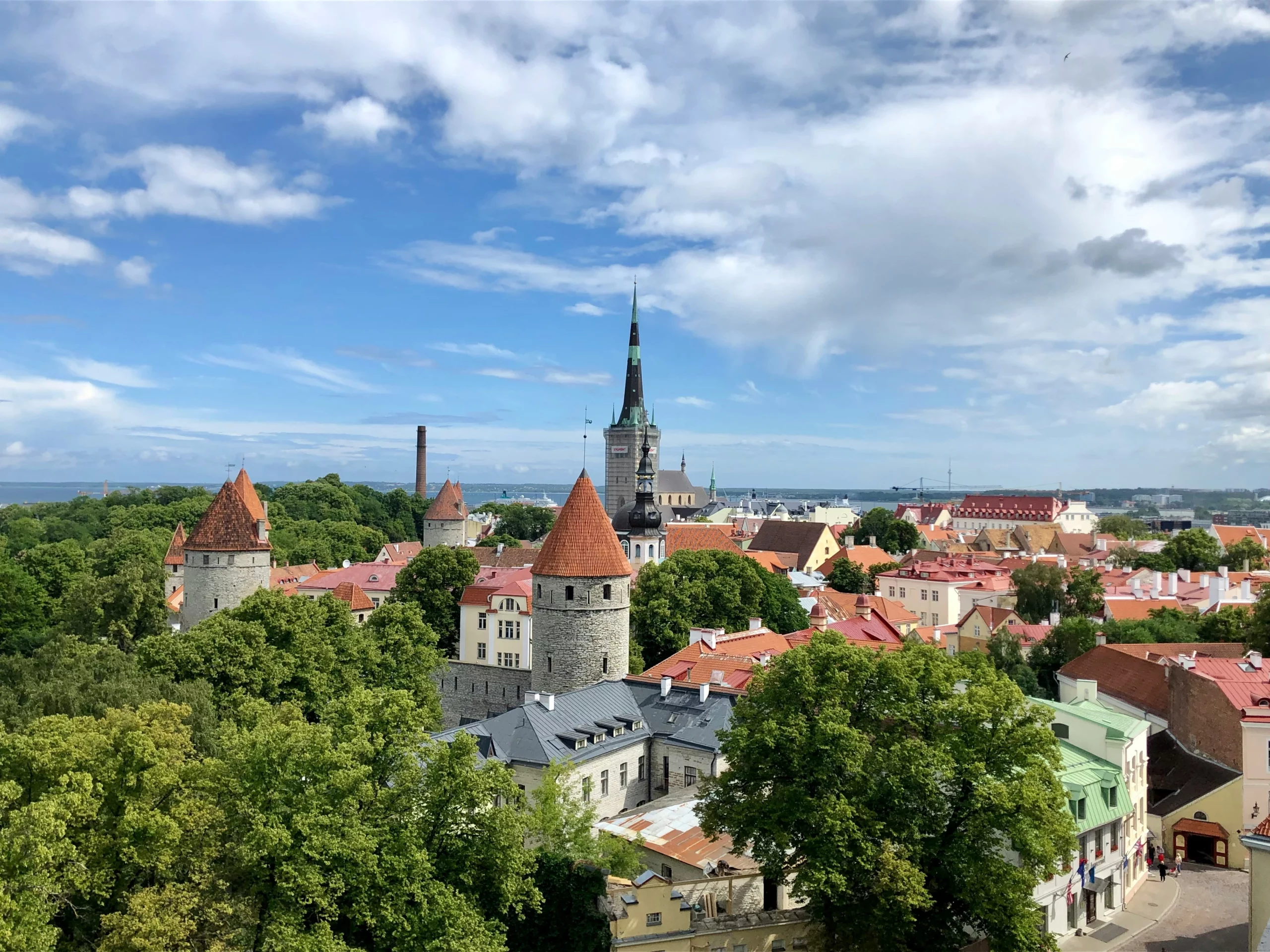
On February 16, 2024, Tallinn, Estonia, will host the second conference of the “Local, Social, Digital” project, a collaborative effort by CEMR and EPSU. The project addresses the challenges from the digital transition and evolving work patterns highlighted by the COVID-19 crisis. This transformation significantly influences employer-worker relations and working conditions within the local and regional government sector.
 
Initiated to foster European coordination and secure appropriate funding, the CEMR-EPSU project seeks to enhance the understanding and capacity of employers, trade unions, and workers’ representatives on various issues related to digitalisation and automation. The conference will serve as a crucial platform for stakeholders to share insights and navigate the challenges posed by the evolving landscape.

Digitalisation

Digitalisation - News 2023

Bridging the Digital Divide: Social Partners Convene for Local and Regional Government Transformation


Social partners from the local and regional government sector gathered in Cagliari, Italy on 16th June 2023 for the inaugural conference of the EU-funded project “Local, Social, Digital.” The initiative is jointly led by the Council of European Municipalities and Regions (CEMR) and the European Federation of Public Service Unions (EPSU). It aims to enhance the capacity of national social partners by facilitating the exchange of information and knowledge, including good practice examples, technical expertise, and policy planning, in the context of the digital transformation of the EU’s public sector.

The digitalisation of local public services and administration will significantly impact working conditions and how public services are delivered in local and regional governments. The social partners representing these sectors have a vital role to play in expediting digitalisation efforts and ensuring a smooth transition that improves working conditions.

The conference was attended by representatives from the Directorate-General for Employment, Social Affairs and Inclusion of the European Commission, Eurofound, SGI Europe, the European Trade Union Confederation, and social partners from the Education Sector.

Fabrizio Rossi, Secretary General of CEMR, inaugurated the conference and outlined the organization’s vision for the digital transformation of the EU’s public sector. He emphasized the urgent need for local and regional governments to spearhead digital transformation initiatives that serve all communities, leaving no territory behind.
During the conference, social partners from Italy, Denmark, Norway, and Estonia had the opportunity to showcase their best collective bargaining practices related to digitalisation. A significant portion of the conference was dedicated to Italy, where a recent collective bargaining agreement on digitalisation was presented.

Representatives Ms. Tatiana Cazzaniga (FP-CGIL) and Mr. Jacopo Massaro (National Association of Italian Cities) highlighted the key features of the agreement on behalf of the Italian social partners from the local and regional government sector. They also emphasized the importance of increased involvement from both parties within the European Sectoral Social Dialogue Committee on Local and Regional Governments.

As part of the project, CEMR and EPSU affiliates will continue their collaborative efforts over the next two years to develop sectoral guidelines that support the digital transition within local and regional public administration.

MUNIWORD 2022

MUNIWORD - News 2022

Take part in MUNIWORD 2022, a global brainstorming on urban innovation


Join hundreds of local representatives and engage in a global brainstorming on urban innovation. Taking place from 6 to 8 December, in Tel-Aviv and Jerusalem, MUNIWORD 2022 is the go-to event for anyone involved in local innovation and smart cities.

This one-of-a-kind conference will serve as a platform for sharing visions, methodologies, and best practices for promoting municipal and global sustainability, resilience, and innovation that will serve Municipalities worldwide. The event is organised by the Federation of Local Authorities in Israel (FLAI), Masham, in partnership with the city of Jerusalem.

Speakers at the conference will include government Ministers mayors, senior stakeholders, and key figures from the business sector, government, and academia.

MUNIEXPO 2022,the Local Government Exhibition for Innovation

MUNIWORLD 2022 is part of MUNIEXPO 2022, the annual event on Municipal Innovation held by the FLAI.

Attended by 9,000 Director Generals and Managers of 258 local authorities in Israel, the Expo provides a platform for collaborations to impact millions of citizens’ daily lives directly.
International MUNIWORLD participants are granted full access to all the events of MUNIEXPO 2022 and will enjoy exclusive tours of the exposition and special networking events.

Practical info

The FLAI kindly offers to provide two nights of accommodation in the prestigious Orient Hotel in Jerusalem for all Mayors, as well as an exemption from registration fees. This exemption from registration fees will also be provided to an additional member of each Mayor’s delegation.

Participation in the event includes an opening gala evening in the presence of the Prime Minister and President of the State of Israel, tailored-made urban innovation tours in Jerusalem, an international plenary session and panels in Tel Aviv on topics of the global municipal agenda, a guided visit of the exhibition, an exclusive meeting at the President’s House for Mayors, and a festive dinner hosted by Mr. Moshe Lion, Mayor of Jerusalem.

Discover last year’s MuniWorld with a short vidéo.

For more information please visit the MuniWorld 2022 website or contact the Federation of Local Authorities in Israel via email.

Podgorica

Podgorica - News 2022

Podgorica delivers 100 websites for local businesses


The COVID-19 pandemic has significantly slowed down the growth of many local companies across the world.

By being tech-savvy and present online, companies can cushion the impact on brick-and-mortar businesses and be more resilient in the face of future crises.

That’s whyPodgorica, the capital of Montenegro, created the “100 websites project” (100sajtova.me), which, as the name suggests is providing 100 free websites for 100 local business.

After checking the applicants’ submitted documentation, visuals and data for the website, all websites that met the specified requirements were created by city employees. You can check them out here.

Through this digital platform, Podgorica has provided local businesses free website development, as well as a free domain and hosting for a period of one year.

The city also provided workshops to help businesses learn the basic knowledge needed to maintain their newly made websites. Many websites have since then been updated and supplemented.

The development environment used allows the parameters to be easily modified to find solutions adapted to other needs. The successes of “100sajtova.me” highlights how our communities’ local businesses can be digitalised to be fit for the future.

Political Debate on AI

AI - News Section

AI and local adaptation: an essential antidote to climate chaos


From automatic translation and the detection of cancer cells to the promise of self-driving cars, artificial intelligence (AI) is already transforming work and processes in many areas of life. But this revolution, which will only intensify in the coming years, also concerns public services and, in particular, local and regional governments.

This is particularly true in the area of climate change adaptation, given that meteorological risks are as diverse as the patchwork of the world’s territories. That’s why CEMR held a political debate on AI and climate adaptation in Bologna on Monday (4 July), featuring national, regional and local political leaders, as well as academic and international experts.

Stefano Bonaccini, the president of CEMR and of the Emilia-Romagna Region, highlighted Bologna’s hosting of the supercomputers of the European Centre for Medium-Range Weather Forecasts (ECMWF). “This is a data centre for the entire European Union, containing some of the most powerful supercomputers in the continent”, he said. “By forecasting meteorological risks, the Centre contributes to shaping the most appropriate local and regional actions to adapt to an increasingly unstable climate.”

Such data will be sorely needed. European territories are increasingly being devastated by wildfires, floods and other extreme weather events. Andreas Wolter, the Mayor of Cologne, underlined that last year floods in Germany and Belgium killed almost 250 people and inflicted €20-40 billion in damages. The summer of 2021 was also the hottest on record in Europe, reaching 48.8 degrees Celsius in Sicily in August.

Patrizio Bianchi, the Italian Minister of Education, stressed the importance of AI and data to developing local, national and European responses to climate change and potential disasters. “We need data, data, data, and more data! And the capacity to elaborate on this data”, he said. “We are using this data to improve our capacity to live well and healthily, as well as to avoid war and disasters.”

Minister Bianchi stressed that Bologna’s data centre is one node in a pan-European system of climate simulations and that cooperation at all levels is key. He also emphasised that AI cannot substitute for human collective intelligence and civic responsibility: “The only real danger is human stupidity. We can avoid this by returning to the basic values of our democracies.”

Combined European and local action

Reports from the Intergovernmental Panel on Climate Change (IPCC) increasingly suggest that we will not achieve the Paris Agreement’s goal of limiting the global rise in temperatures to 2 degrees Celsius. As such, local climate adaptation will be necessary in addition to mitigation through reduced global emissions.

The European Union is taking numerous actions to anticipate and adapt to climate risks. These include the Copernicus Earth satellite observation programme, the Destination Earth digital model of our planet’s environmental system and a barrage of legislation and funding as part of the European Green Deal.

One European project particularly concerning local and regional governments is the Covenant of Mayors. The towns and regions making up the Covenant’s 11,000 signatories, covering 341 million inhabitants, all commit to taking measures to decarbonise their economies and proactively adapt to climate change.

The European Commission’s scientific body, the Joint Research Centre (JRC), regularly produces data-based studies on local climate risks and adaptation. These notably help identify the most coherent and effective actions to be undertaken in different localities, as well as flagging sometimes neglected issues such as social inequalities.

Public data and models are key to designing effective local adaptations

Enrico Biffis, Associate Professor of Actuarial Finance at Imperial College London, stressed the importance of data and accurate climate models to take the most relevant local adaptation actions. “If we don’t get it right the costs are going to be huge. Some of these projects are multi-year, 10, 20, 30 years”, he said. “You cannot just backtrack 10 years down the line. It’s imperative to get it right.”

Mayors and other local and regional elected leaders shared their experiences and challenges regarding climate adaptation. Michaël Quernez, Mayor of Quimperlé, Vice-President of Brittany and Secretary General of CEMR’s French association (AFCCRE), cited the problems of climate data becoming privatised. “In France, for a mayor like me to access to data from Météo-France (a public weather forecaster), he must buy it”, he said. “What can we do to ensure this is public data and it is not marketized?”

This is just one of the issues that local and regional representatives can raise among national and European policymakers. One thing is for certain: we need accurate information and cooperation at all levels if Europeans are to fight and adapt to climate change.

Principles for a digital transition for all

Digital transition - News 2022

Is the EU’s new approach in tune with local and residents’ needs?


Digital services, online platforms and electronic devices have become part of our everyday life, bringing us countless new opportunities for professional and personal development. However, innovation can come at a cost. Continuous access to information and data can put our privacy at risk and expose us to misinformation, fraud and discrimination.

For this reason, the European Commission recently issued a “Declaration on Digital Rights and Principles for the Digital Decade” with guidelines to ensure a fair and inclusive digital transition. The document will shape future EU digital rules, such as the upcoming Data Act on sharing of information between businesses and governments.

CEMR provided its input during the Commission’s consultation preparing the digital decade declaration. In fact, we recently adopted our own position paper “Digital Services for All: Principles for a digital transition in European local and regional governments”. The paper outlines CEMR members’ views on the digital transition, a trend which is transforming the role and activities of local and regional governments.

Several of the principles put forward by CEMR members were also reflected in the Commission’s Declaration, notably on the importance of user-centred digital services, consultation between levels of government for setting standards and the upgrading of digital skills among citizens. Read our take on the declaration and what’s in store for local governement.

Interoperable and transparent data management

Digital Services for All outlines the conditions needed for local and regional governments to provide effective and inclusive digital services for all citizens.

These include the development of open international standards through dialogue between all levels of governments – European, national, regional and local – and between the public and private sectors. Only through dialogue with all stakeholders can solutions suitable to all be found.

Public and private actors must bear in mind that the interoperability of services and systems is crucial to ensuring smooth data exchange. Data management must be transparent. To this end, local and regional governments comply with GDPR and other regulations on accessing public-sector data. 

Inclusive digital services

Digitalisation of public services is useless if the people concerned, our citizens and users, cannot access them. That is why CEMR strongly advocates a non-discriminatory approach for the deployment of digital public services, taking into account economic and social barriers.

Awareness of intersectionality – the interaction of these economic and social barriers – means always ensuring public services are accessible and usable by everyone, regardless of the conditions they face. Proactive actions are needed to make sure that elderly people, persons with disabilities, marginalised and vulnerable individuals are not excluded.

Finally, we can only reap the full fruits of digitalisation if people have the skills needed to participate. We need coordinated action to further develop digital skills and literacy among public officials, citizens and indeed all users. Only an informed society and a digitally literate public will be able to make the most out of digital services.

Read the position paper here

For more information, contact: