
Local finance and housing crisis

Fiscal tools must play a central role in tackling the housing crisis


On 10 June 2026, CEMR held an online event that brought together policymakers, local leaders, researchers, EU institutions and financial experts to explore how local and regional public finance shapes housing affordability, availability and investments.

A key message emerged from the discussion: Europe’s housing crisis cannot be addressed through planning or construction policy alone. It also depends on whether local and regional governments have the fiscal room, investment tools and policy flexibility to act.

Opening the event, Ellen van Selm, Mayor of Purmerend (The Netherlands) and CEMR spokesperson on housing, underlined that housing must be approached as an integrated territorial challenge rather than a single policy field. “There are as many housing markets as there are local realities,” she said, warning against one-size-fits-all solutions. Her intervention set the tone for the discussion: local governments are on the frontline of housing pressures, yet they do not always have the resources, instruments or flexibility needed to respond effectively.

Why local solutions are a must in the housing crisis

Benedikt Herrmann from the European Commission’s Joint Research Centre invited participants to look more closely at the incentives created by local tax systems. His key point was that local finance does not simply support housing policy: it can also shape it in unexpected ways. Property taxation, often seen as a stable and appropriate local tax, may create unintended incentives when municipalities depend on rising property values for revenue. “Local taxes can play a fundamental role for mitigating local housing crisis. The property taxes on residential property can be a hidden catalyst of local housing crisis,” he noted. 

Building on this framing, CEMR presented the first results of its survey on the links between local finance and housing. The preliminary findings point to a familiar but important contradiction: towns, cities and regions hold many of the practical responsibilities related to housing, but their room for manoeuvre often remains limited. In many countries, local governments rely heavily on property-related taxes, but within national limits that constrain their ability to use such tools strategically. At the same time, more targeted instruments, such as taxes on vacant dwellings or short-term rentals, remain fragmented, underdeveloped or unevenly available across Europe.  

…And why so is multilevel governance

The panel discussion confirmed that housing is fundamentally a multilevel governance issue. Bringing the OECD perspective, Yugo Kimura highlighted both the scale of subnational involvement and the need for stronger coordination. Across OECD countries, local and regional governments account for a very large share of public expenditure linked to housing and community amenities. Yet many of them struggle to access funding, mobilise their own revenues, or navigate fragmented support structures. “Housing is not only cross-sectoral, it spans many policy sectors as well, but it’s also a multilevel governance issue,” he said. 

This point resonated strongly with Michaela Haga, Councillor of the Region Stockholm and CEMR spokesperson on local finances, who brought the conversation back to the political reality faced by towns, cities and regions. In her intervention, she stressed that local and regional governments are expected to deliver housing solutions while also financing the wider ecosystem that makes housing liveable: transport, schools, care services, utilities and social infrastructure. The real question is whether all places have the tools and resources they need to respond to their own realities,” she argued. Her final message was also one of the clearest takeaways of the day: match responsibilities with resources, make investment easier and more strategic, and trust local governments more and equip them better.   

From EU frameworks to local realities

The event also offered a timely look at how housing is moving up the EU agenda. Edit Lakatos, from the European Commission’s Housing Task Force, explained the significance of the 2026 European Semester, which for the first time includes dedicated housing annexes in the country reports and a stronger housing dimension in the policy guidance to Member States. For local and regional governments, this matters because it opens a new channel to connect national reforms, investment priorities and local housing realities. She also pointed to the work under way on the Affordable Housing Act, which is expected to provide a framework for public authorities in areas under housing stress, including the possibility to address the impacts of short-term rentals. 

This EU-level perspective found a strong echo in the contribution from Marlies Stubits, from the Austrian Association of Cities and Towns, who showed how Austrian cities combine fiscal instruments, regulation and investment strategies to respond to housing and tourism pressures. She pointed in particular to the Viennese model, where public land policy, limited-profit housing and long-term investment help the city to actively shape the market rather than merely react to it. At the same time, she highlighted the specific difficulties faced by smaller tourist municipalities in dealing with vacancy, holiday homes and short-term rentals. “The most effective Austrian approaches combine regulation, taxation and investment,” she said, insisting that taxation alone is not enough without a broader and more coherent housing strategy

From the European Investment Bank, Grzegorz Gajda focused on the practical conditions needed to turn policy ambitions into housing delivery. Access to finance remains a major challenge, especially where local governments or housing providers struggle to build robust project pipelines or meet creditworthiness requirements. At the same time, he stressed that European-level decisions on state aid, procurement and debt treatment can make a decisive difference for what becomes possible locally. His message also added an important nuance to the debate: tools alone are not enough if decision-makers are not incentivised to use them. “We really need to work on both ends,” he said: both on the tools available, and on the motivations and incentives shaping local action. 

The path forward

One conclusion stood out across all interventions: housing policy cannot be separated from local finance. Whether through land policy, taxation, transfers, investment rules, planning, or social infrastructure, the financial frameworks around housing shape what local and regional governments can actually do. If Europe wants more affordable, sustainable and inclusive housing, it must give local governments not just expectations, but also the means to act.  

The discussion will now feed into CEMR’s ongoing analytical work on local finances and the housing crisis, with a publication expected in fall 2026. By connecting evidence, practice and policy, CEMR aims to continue strengthening the case for a housing agenda that fully recognises the role of cities, towns and regions in delivering solutions on the ground.  

For more information, contact:

Amendements to the EU budget

Shaping the future of EU Cohesion Policy: CEMR’s amendments to the proposed National and Regional Partnership Plans


The EU’s place-based approach to policymaking — which recognises territorial diversity and builds on the role of local and regional governments — is under critical pressure. The European Commission’s proposal for the next Multiannual Financial Framework risks weakening this approach by centralising investment decisions and blurring the distinct objectives of EU policies with very different territorial logics.

CEMR has therefore developed targeted amendment proposals to the regulation establishing the National and Regional Partnership Plans. These proposals aim to preserve place-based policymaking across EU investments, strengthen democratic and territorial governance, and ensure that policies designed in Brussels and capitals continue to deliver concrete, long-term benefits in cities, towns and regions. 

The main messages driving CEMR amendments

1. Safeguarding cohesion as a core EU priority
CEMR calls for a stronger budgetary commitment to economic, social and territorial cohesion. Reducing the relative weight of cohesion policy — while expanding access to funds to all private actors — risks undermining public services, increasing competition for limited resources, and weakening Europe’s capacity to deliver resilient territories and communities. 

2. Putting territories and people back at the centre
Cohesion policy must work across all regions and respond to territorial diversity. Our amendments reinforce the territorial dimension of EU investments, ensuring that no region or community is left behind and that the objectives of the EU Treaties are fully respected. 

3. Making partnership and multilevel governance real
While the Commission proposal refers to partnership and multilevel governance, it lacks strong guarantees. CEMR proposes clear obligations, monitoring mechanisms and consequences to ensure that local and regional governments are genuinely involved in the design, implementation and monitoring of national plans — not merely consulted in name. 

4. Preventing over-centralisation of EU investments 
Recent experiences with the Recovery and Resilience Facility and other national plans have shown the risks of centralised approaches. CEMR therefore calls for mandatory regional and territorial chapters in national plans, ensuring place-based strategies and meaningful involvement of subnational governments throughout the programming period. 

5. Strengthening integrated territorial development 
Integrated territorial approaches — in urban and non-urban areas — bring Europe closer to citizens and have proven their value on the ground. CEMR proposes a minimum 30% earmarking of national allocations for integrated territorial development, supported by higher EU co-financing and increased pre-financing to enable local authorities to participate fully. 

6. Supporting rural areas, cities and functional territories 
Our amendments reinforce support for rural development, sustainable urban development, urban-rural linkages and functional areas. These approaches are essential to tackling demographic change, climate challenges and social inequalities in a coherent and coordinated way. 

A call for a stronger, fairer cohesion policy

CEMR’s amendment proposals are guided by a clear conviction: Europe’s resilience, prosperity and democratic strength depend on strong local and regional governments and on cohesion policy that is ambitious, inclusive and place-based

We call on the European Parliament and Member States to take these proposals seriously and ensure that the future EU cohesion policy delivers for all territories and all citizens. 

👇 We invite you to consult the full set of CEMR amendment proposals for a detailed overview of our recommendations and legal changes to the Commission’s proposal.

More information:

Implementing the Global Gateway

Global Gateway - Event news

Towns, cities and regions call for a stronger partnership in advancing the Global Gateway


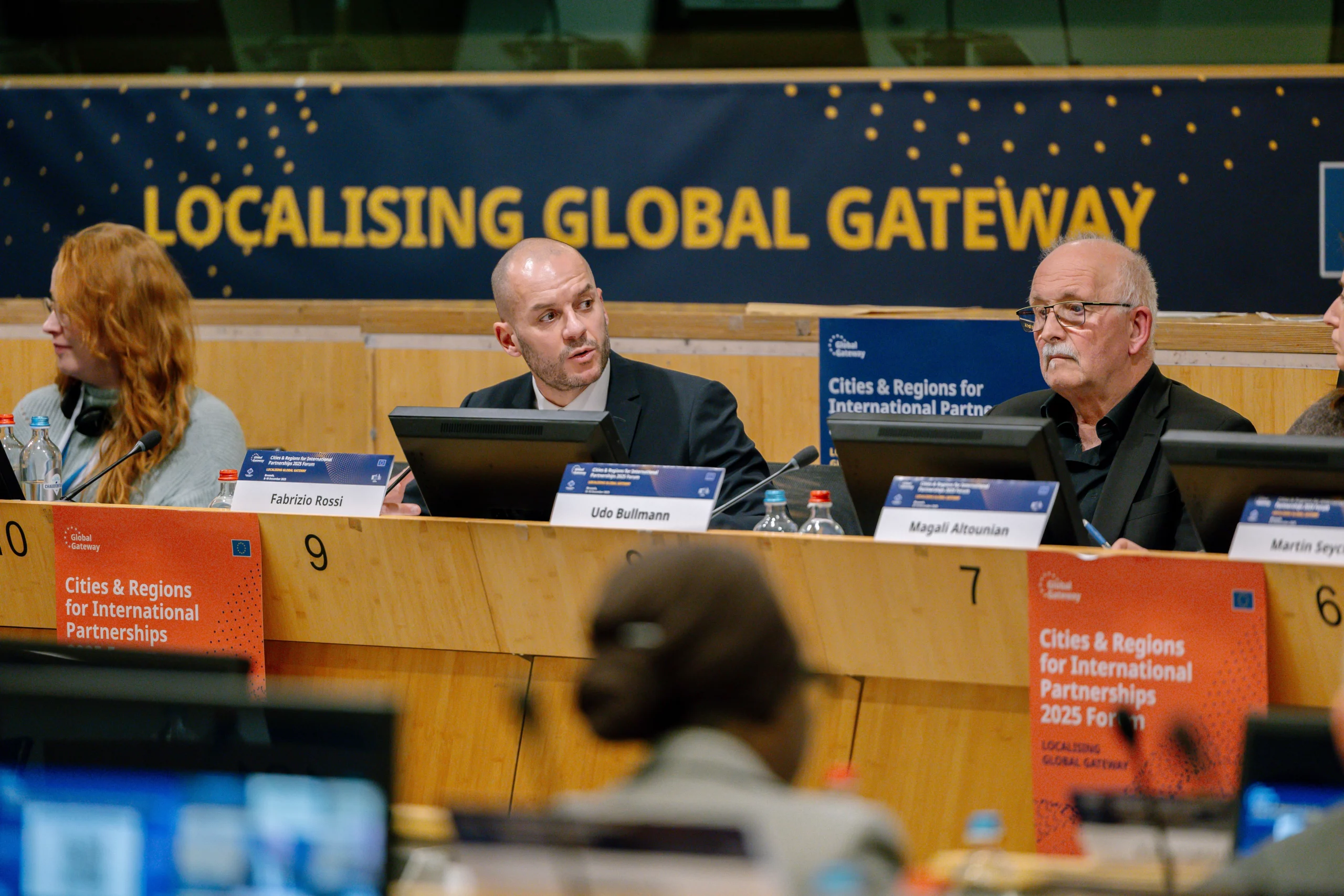
International networks of towns, cities and regions have issued a joint Declaration yesterday [10 December 2025] in Brussels, calling for a stronger and more structured involvement of local governments in the implementation of the European Union’s Global Gateway strategy. Representing thousands of towns, cities, regions, and local government associations worldwide, the signatories stress that partnering with local and regional governments (LRGs) is essential to ensure the legitimacy, sustainability, and long-term impact of Global Gateway investments.

This Declaration was handed over on behalf of the signatories by Joseph Bernard Wagner, Mayor of Belize City (Belize) and Chairperson of the Commonwealth Local Government Forum (CLGF), to Koen Doens, Director-General at the European Commission Directorate-General for International Partnerships (DG INTPA), during the Plenary Session of the Committee of the Regions, marking the end of the 3-day “Cities and Regions for International Partnerships” 2025 Forum.

Local and regional governments are recognised by the EU as distinct development actors and play a central role in shaping inclusive economic growth, delivering public services, and connecting communities to global opportunities. Their leaders warn that without systematic engagement of towns, cities and regions, Global Gateway projects risk missing their full development potential.

A joint call for a more inclusive Global Gateway

The declaration is signed by the leaders of four major global networks of local and regional governments:

  • Fabrizio Rossi, Secretary General, Council of European Municipalities and Regions (CEMR) – PLATFORMA
  • Lucy Slack, Secretary General, Commonwealth Local Government Forum (CLGF)
  • Emilia Saiz, Secretary General, United Cities and Local Governments (UCLG)
  • Frédéric Vallier, General Delegate, International Association of Francophone Mayors (AIMF)

Together, they call on EU institutions, partner countries, and development actors to recognise towns, cities and regions as co-creators of the enabling environment needed for sustainable, inclusive and democratic investment.

Quotes

It is critical that local governments are around the table in the context of investments being made through Global Gateway. After all, we are responsible for all development in our territories, and should be recognised as partners in planning and delivery,” Joseph Bernard Wagner, Mayor of Belize City (Belize) and Chairperson of the Commonwealth Local Government Forum (CLGF) stressed in his speech.

Local and regional governments should be involved in the designing phase of the Global Gateway. As CEMR and PLATFORMA, we see ourselves as the enabling institutions, and we are there to harvest learning and data, to monitor and evaluate the actions,” CEMR Secretary General Fabrizio Rossi earlier said during the Forum.

Decentralised cooperation is a real lever for solidarity and development that serves the interests of local communities. However, it can only be effective if decentralisation itself is effective and if our local authorities have secure financial and human resources. The Global Gateway is an important opportunity to support us in this regard,” Dieudonné Bantsimba, Mayor of Brazzaville, Vice-President of the AIMF.

The mobilisation of our members at the Forum of Cities and Regions shows the strong commitment of local and regional governments to cooperation and city diplomacy. Yet the localisation of the Global Gateway will only be possible if local governments are fully recognised as strategic partners,” Emilia Saiz, UCLG Secretary General

Towns, cities and regions are the link between investments and citizens. As first ports of call to citizens, they bring legitimacy, ownership and long-term sustainability to Global Gateway projects,” the signatories emphasise. 

Local and regional governments are indispensable partners for making the Global Gateway a strategy that truly works for people,” the signatories stress.

Towns and regions: Essential partners for sustainable impact

In their declaration, associations of local and regional governments highlight that LRGs hold wide-ranging mandates across Global Gateway priority sectors, including digitalisation, climate and energy, transport, health, education and research. By grounding investments in local realities, they ensure projects respond to the needs and priorities of communities, reinforce policy coherence, and foster inclusive economic ecosystems involving SMEs, investors, CSOs, academic institutions and citizens.

The declaration also underscores the decisive role of local governments in fragile and conflict-affected contexts, where they are often the only functioning public institutions capable of coordinating local stakeholders and delivering basic services.

Key recommendations to strengthen the Global Gateway

To unlock the full potential of local authorities as partners for sustainable investment, the signatories put forward three main recommendations:

  1. Engage directly with local governments and give them direct access to funding within Global Gateway investments.
    This includes dedicated calls for proposals, tailored evaluation criteria, specific funding streams similar to the former “Partnerships for Sustainable Cities” programme, and country-level mechanisms to ensure structured dialogue between EU Delegations, Teams Europe and LRGs.
  2. Ensure systematic involvement of governments in all phases of Global Gateway projects.
    Clear guidance should be provided to EU Delegations and Teams Europe to meaningfully include local authorities in planning, implementation, monitoring and evaluation processes.
  3. Support national associations and international networks of local governments.
    These organisations—signatories of Framework Partnership Agreements with the EU since 2015—are crucial in coordinating LRG participation, sharing knowledge, and scaling innovations across borders.

Read the full Declaration.

Read PLATFORMA note on Global Gateway.

Photo: © European Union 2025 / Emile Windal

CEMR inputs for EU agenda for cities

Matchmaking Platform - Launch

Towards an inclusive EU Agenda for cities of all sizes 


As the European Union prepares to shape its next urban strategy, CEMR has published a new input paper calling for a truly inclusive EU Agenda for Cities — one that recognises the vital role of Local and Regional Governments (LRGs) in shaping Europe’s future. 

LRGs are the first responders to many of Europe’s most pressing challenges. From tackling the energy crisis to investing in sustainable mobility and managing public services, cities and regions are not just implementing EU policies — they are innovating, adapting, and delivering results on the ground. Their proximity to citizens places them in a unique position to foster trust, ensure inclusive governance, and respond effectively to the evolving needs of their local communities. 

Yet too often, EU policies are developed without fully engaging the very authorities responsible for delivering them. Over 70% of EU legislation is implemented at the local and regional level. Despite this, subnational governments still lack a formal role in shaping that legislation. 

CEMR’s paper sets out a vision for a new EU Agenda for Cities that is not only inclusive of every territory — from smaller municipalities to major metropolitan areas — but also equipped with the governance mechanisms, funding tools, and institutional recognition to deliver real impact. 

Key proposals include: 

  • Establishing a permanent, structured process for multi-level governance consultations for any new EU regulation proposal that could have an impact on LRGs. 
  • Using the “reforms” component of the next EU structural investment policy to ensure LRGs have the capacities (financial, technical, human) to implement EU regulations. 
  • Streamlining and simplifying access to EU funding, and including a 15% earmark for sustainable territorial development in the next EU budget period, CEMR also calls for greater alignment between EU funding opportunities and local realities, simplifying access and strengthening the administrative capacity of subnational governments. As the paper makes clear, the time has come to transition from fragmented engagement to a systemic approach that incorporates local and regional voices at every stage of the EU policy cycle — from design to implementation. 

The new EU Agenda for Cities presents an opportunity to bridge the gap between ambition and implementation. With the right tools and governance in place, LRGs can power Europe’s green and digital transitions, drive economic resilience, and make the promise of inclusive, sustainable communities a reality for all. 

CEMR will present these ideas at the Cities Forum in Krákow, taking place from 17 to 19 June 2025. Our Secretary General, Fabrizio Rossi, will join the discussion on the Agenda with the Executive Vice-President of the European Commission, Raffaele Fitto. 

Read the full input paper here

For more information, contact:

For more information, contact:

New Mandate, Funding Crossroads

New EU Mandate: Navigating a Crossroads in European Funding and Governance


With the confirmation of the European Commissioner College, the second mandate of Ursula von der Leyen is ready to start. If you are wondering on the direction the EU will turn, especially when it comes to what is coming next for local governments, the hearings of Commissioners-designate provide valuable insight into the mindset, priorities and challenges of the next EU Executive. It is evident that addressing these challenges – boosting European competitiveness and improving citizens’ lives – will require more than ambition. Vision needs to be translated into action through effective policy implementation and ensuring funding meets the Europeans everywhere. It will also be crucial to avoid learning the wrong lessons from past experiences, especially when it comes to fund management and policy implementation.  

What did the interviews with College candidates at the European Parliament reveal? 

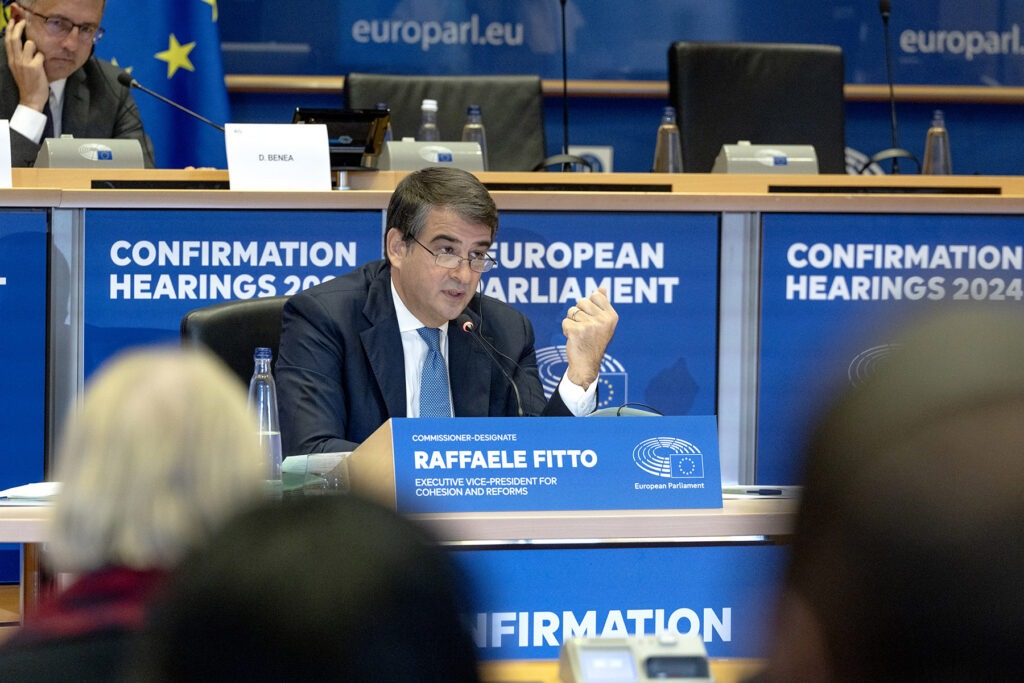
© European Union, 2024 – Source: EP – https://www.europarl.europa.eu/news/en/press-room/20241029IPR25049/hearing-of-executive-vice-president-designate-raffaele-fitto

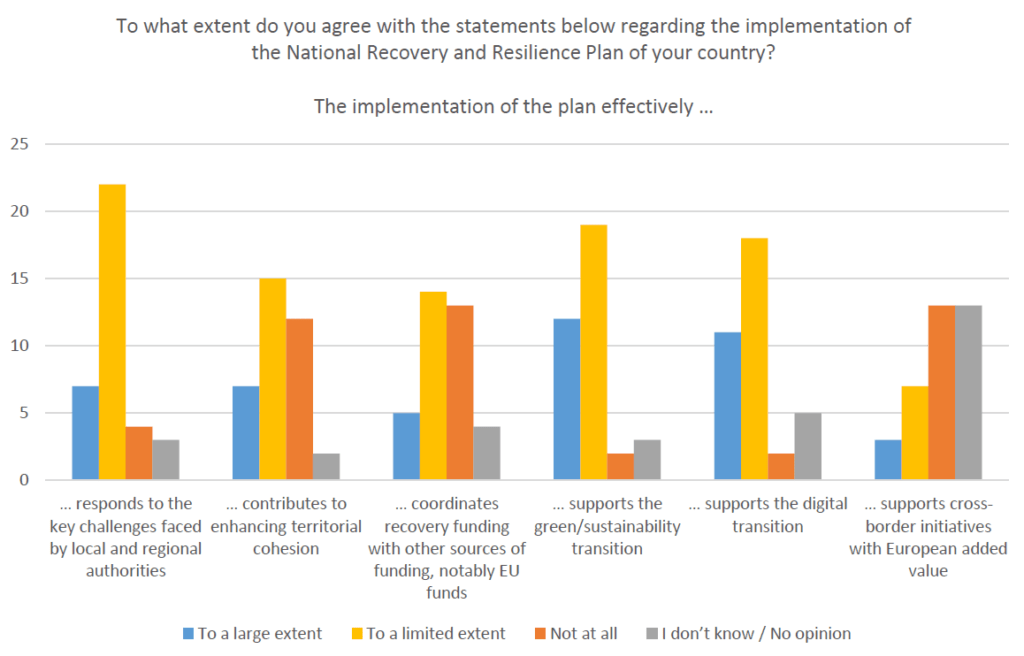
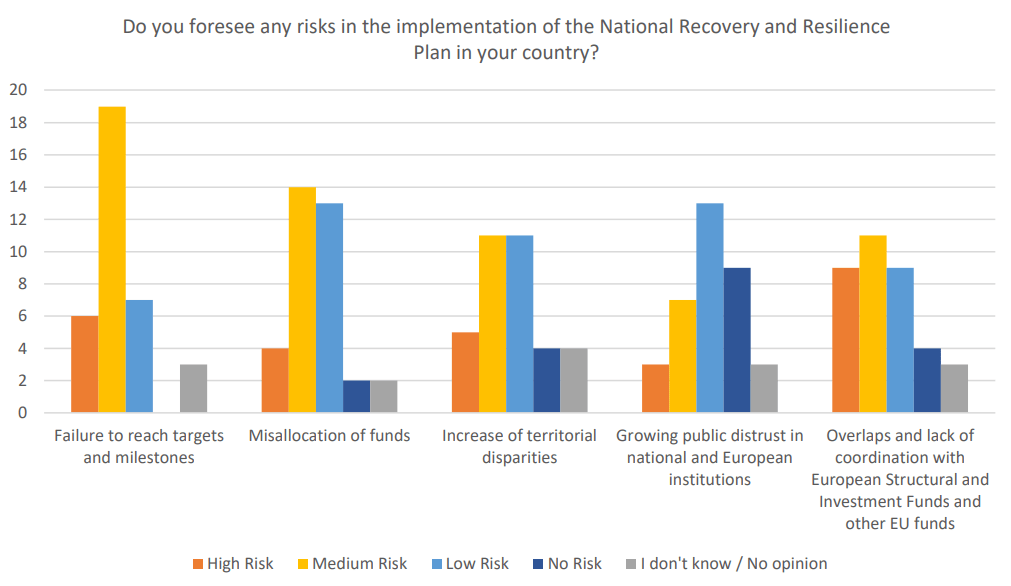
Yet the hearings offered little reassurance for local governments. The centralisation intentions clearly outlined in Commission President Ursula von der Leyen’s political guidelines, which propose replacing the Recovery and Resilience Facility (RRF) with “fewer programmes and a plan for each country linking key reforms with investment”. The RRF, the centrepiece of the EU’s €800 billion NextGenerationEU recovery package, revealed the pitfalls of the performance-based, cash for reform approach. From the outset, CEMR, in partnership with the Committee of Regions (CoR), has closely monitored the RRF’s rollout, consulting with stakeholders to assess local and regional governments participation. The findings are clear: the exclusion of those closest to understanding local needs has hampered the RRF’s effectiveness. The lack of involvement of local governments has led to misaligned priorities, with some reforms and investments failing to address local needs or capitalise on the unique insights and expertise of regional authorities. With the risk of not only missing the RRF community targets but also displacing other essential funding streams, such as cohesion funds, further compromising the EU’s territorial cohesion goals. 

Data from CCRE-COR consultation on the RRF implementation.

The hearings of the Commissioner-designates echoed these concerns. Commissioner-designate Valdis Dombrovskis faced sharp criticism for the RRF’s shortcomings, with Members of the European Parliament (MEPs) expressing frustration over the performance of the RRF to date. Mr Dombrovskis conceded that stronger partnerships with local governments are essential for the RRF to have a transformative impact, and this needs to be addressed as we go forward. In his hearing Commissioner-designate for Budget Piotr Serafin backed the idea, expressed in von der Leyen political guidelines, of single national plans for investment and reforms but also emphasised the central role that regions should play in the elaboration of these plans. On the other hand, Vice-President and Commissioner-designate for Cohesion and Reforms Raffaele Fitto did not substantively address MEPs concerns regarding the risks of centralisation. However, he expressed that a single national plan would not be problematic, provided that local and regional governments are consulted – demonstrating at least a recognition of multi-level governance. 

We need to make room for learning complex lessons  

Designed to foster a greener, more resilient, and innovative Europe, the delays in implementing national recovery plans have worsened the governance conversation surrounding the RRF, casting doubt on its ability to meet its goals. However, the proposed cure risks misusing EU resources and undermining the critical green and digital transitions essential for towns, cities, and regions. 

CEMR is committed to promoting evidence-based evaluations of funding performance, ensuring that critical development policies are not subject to hasty adjustments. Local governments, which implement 70% of European legislation—including key policies for the green transition—cannot be excluded from these discussions. They are on the frontlines of delivering climate action, digital innovation, and social transformation. Their unique territorial knowledge ensures that EU funding aligns with real, localised needs rather than blanket national strategies that often overlook regional disparities. As we learnt from the RRF, neglecting this level of expertise risks inefficiencies, missed opportunities, and a failure to meet citizens’ expectations. Discussions on the next major EU funding package must acknowledge the lessons from the RRF’s shortcomings. Decentralising funding management will not only enhance transparency but also ensure resources are channelled where they can make the most significant long-term impact. 

From the roundtable: Local and Regional Perspectives on the Recovery and Resilience Facility (RRF)

As the new Commission takes office, CEMR will continue pushing for transparent monitoring of the RRF’s performance, emphasising the need for territorial expertise to shape EU funding policies. Ensuring that those with the greatest knowledge of their localities have a say in how resources are allocated is not just a matter of fairness—it is the key to delivering sustainable, transformative outcomes across Europe.

Resilient Cities and Regions

Resilient Cities and Regions Seminar - News 2023

CEMR Advocates for Robust Public Investments at ‘Resilient Cities and Regions’ Seminar


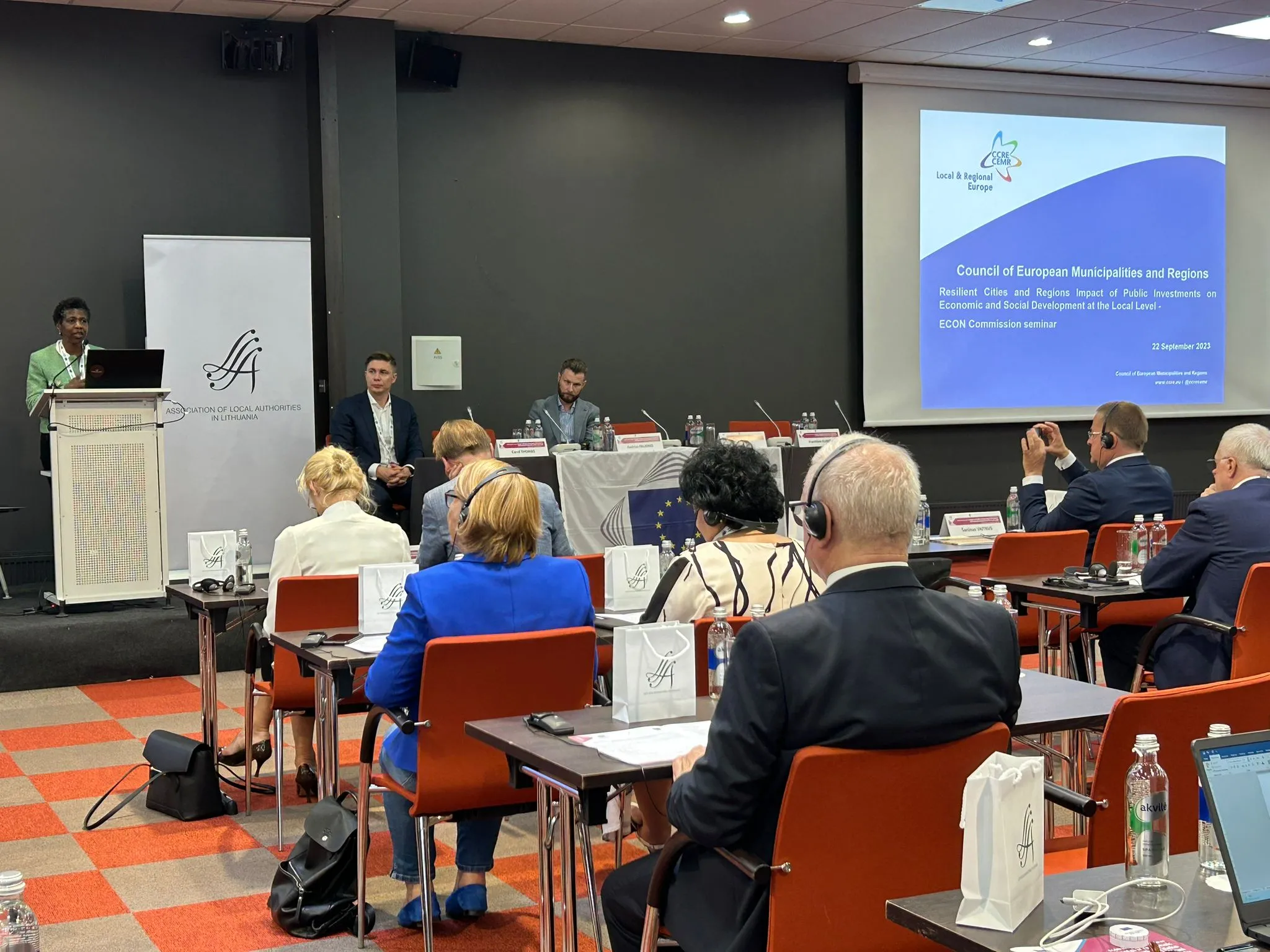
The Council of European Municipalities and Regions (CEMR) actively participated in the event “Resilient Cities and Regions: Impact of Public Investments on Economic and Social Development at the local level,” organised by the Committee of the Regions. The seminar’s primary focus was to assess the influence of public investments on the economic and social growth of cities and regions and to exchange insights and experiences on local public investment, green infrastructure development, and digitalisation scaling within the European Union.
 
The event gathered esteemed experts, policymakers, and representatives from various regions and municipalities across the EU engage in discussions and share their perspectives on the critical role of public investments in shaping sustainable development.
 
Carol Thomas, Interim Director of Policy at CEMR and speaker at the event, emphasised the significance of effective governance in partnership for achieving favourable policy outcomes. Drawing on CEMR’s research, Thomas highlighted that local and regional governments play a substantial role, accounting for 64% of investments linked to climate and environmental actions.
 
Carol stated: “CEMR’s studies have shown the importance of robust governance-in-partnership for effective policy outcomes. Local and regional governments account for 64% of investment linked to climate and environment actions, and their contribution is essential if we want to achieve the objectives of the green and digital transition.”
 
Furthermore, she insisted on the vital role of local finances, asserting that investments in local infrastructure and public finances are pivotal in bolstering Europe’s recovery: “Shoring up our local finances is not just a nice to have. Investment in local infrastructure and public finances is key to boosting Europe’s recovery and reducing the innovation gap”.

Local Finances

Local Finance - News 2023

How to unleash local public investments for the green transition


As the EU struggles to find ways to pay for industry transition towards a carbon-free economy, the finances of local governments play an often-neglected role in delivering the needed investments, argues a report by the Council of European Municipalities and Regions (CEMR).

The report retraces the development of local finances over the past decade and how they can influence the ability of municipalities to finance the green transition.

For example, the report found that countries with a more decentralised structure further decentralised their public finances in the past decade, while those with more centralised public spending became even more centralised.

“Federal countries, for example, Germany, went towards more decentralisation,” CEMR’s Vincent Furlan told EURACTIV.

According to the report, this polarisation is relevant because countries with decentralised public finances tend to invest more in the green transition.

“More centralised countries have lost some margin of manoeuvre in terms of investments as a part of their total expenditure,” Furlan said. However, he stressed that this was not necessarily a causal relation between the two as the lower investment appetite of countries with more centralised public finances may be caused by other factors.

Unrelated to centralisation, Furlan stressed that “local and regional governments have a significant weight in investment expenditure”.

“Local and regional governments invest in areas determinant for the green transition.”

For example, local transport infrastructure or waste management facilities are often governed locally and can have a significant environmental impact.

However, municipalities and regions are often constrained in their ability to invest in the green transition as fiscal rules, and the lack of access to financial markets can make it hard for regional governments to undertake the necessary investments.

The issue that too-strict fiscal rules can affect investments has long been a topic of debate at the EU level. However, this debate usually focused on national rather than regional or local, finances. Then, in November this year, the European Commission announced its intention to reform the national fiscal rules and allow member states to invest more in the green transition.

Yet, the local level is often forgotten in these discussions. In a position paper, CEMR argued that the EU’s current fiscal rules constrain local finances since local government debt is included in the calculation of total national debt.

“More flexibility should be granted for local and regional governments, particularly when investing for long-term and sustainable development,” the paper reads.

However, excluding local debt from the national debt calculations could incentivise governments to reallocate their expenditure and their debts to local governments, which might give local governments more leeway to invest, but which also might undermine the effectiveness of the fiscal rules.

Another obstacle to the green investments of local and regional governments is the lack of access to financial markets. In contrast to national governments, local and regional administration cannot count on the same investor appetite for their debt issue and have more difficulty accessing funding.

And as their debt is usually considered riskier, they will also have to pay higher interest rates.

But better access to financial tools might expand the options for local governments to fund themselves. “Because local governments can make a large contribution to the green transition, granting them more access to financial instruments would be beneficial,” Furlan argued.

This article was first published on EURACTIV‘s website.

Sustainable local finances in Europe

Sustainable local finances - News 2022

CEMR releases landmark study on local finances in European countries


People depend on quality local public services and infrastructure every day. Reliable buses, insulated public housing, good schools or clean energy: all of these and more depend on healthy and sustainable local public finances to be developed and maintained.

That’s why the Council of European Municipalities and Regions (CEMR) is releasing a fully-fledged online report and tool entitled Local Finances and the Green Transition in Europe. This one-of-a-kind study provides data and analysis on the trends in local and regional finances in 40 European countries over the past 10 years. The study offers a bird’s eye view of both changes in subnational finances and the remarkable diversity of national situations.

This report is essential reading for policymakers, politicians and academics. Only by understanding local public finances and unlocking futher investments can we achieve the sustainable and resilient societies our people and planet need”, said CEMR Secretary General, Fabrizio Rossi, who added: “If this report shows one thing, it is that well-funded municipalities, counties and regions are essential to taking care of our people and realising the environmental transition“. 

Revealing figures and trends as observed over the last decade

The study reveals for instance that despite making up 25% of all public spending, local and regional governments finance 54% of all public investment. This reflects the leading role of municipalities and regions in investing in areas such as energy efficient housing, smarter public transport and local environmental protection. The climate and energy transition will only happen by working with local and regional governments.

Also noteworthy is that subnational government debt is at a manageable level in the 36 countries where comparative data was available. In fact, local debt is low and stable, a mere 4.8% of GDP on average. By way of comparison, general government debt increased by the middle of the decade to 67% of GDP (and to 81% in 2020).

While browsing through the online study, you will also come across a special section on the impact of the EU’s €720-billion post-COVID recovery plan on local and regional governments. This chapter looks in particular at the implications for the green transition and territorial cohesion.

The data shows clearly that the share of green transition among the main RRF spending areas is higher in the decentralised countries. Stronger local and regional governments can support more recovery and resilience programmes and actions.

A dynamic and interactive online tool

“Local Finances and the Green Transition in Europe” is available as an interactive online tool  as well as in PDF  format. The online tool contains:

The study is currently only available in English. The French version is under development.

The study was launched on 10 November 2022 at the occasion of a seminar bringing together representatives of many of CEMR’s member associations, the OECD, KDZ and the study’s co-author Gábor Péteri.

For more information:

OECD Conference

Promoting the Global Goals - News 2023

Conference to launch the new SNG-WOFI


The OECD and United Cities and Local Governments (UCLG) are organising an in-person conference to launch the third edition of their World Observatory on Subnational Government Finance and Investment (SNG-WOFI).

The goal of the Observatory is to increase knowledge, promote dialogue on multi-level governance and subnational finance around the world as well as to monitor the implementation of the Sustainable Development Goals.

This 2022 edition includes data from 135 countries, covering almost 90% of the world surface area, 93% of the world population and 94% of global GDP.

The conference will bring together national and subnational governments, international organisations and stakeholders from around the world involved in this wide-ranging project, to present the key findings of the new edition and to discuss current challenges related to subnational finance and multi-level governance, in light of new data and analysis.

CEMR’s Finance Spokesperson, Flo Clucas, will take part in the Session 3 on : How can subnational government access to external resources be improved to finance infrastructure investment?

For more information and to register, please fill in this online form. If you have any questions, please contact Leslie Greenhow

Boosting public investment for recovery

Cohesion Policy Alliance - News 2021

CEMR calls for investment-friendly EU economic governance reform


The COVID-19 crisis exposed vulnerabilities in Europe’s economic governance and the need to rethink how EU rules support long-term, sustainable investment at all levels of government. In its 2022 position, the Council of European Municipalities and Regions (CEMR) argues that the reform of the EU’s economic governance framework is a vital opportunity to unlock local and regional investment capacity.

Local and regional governments, which account for 45% of public investment in the EU, were heavily impacted by the crisis. While they expanded essential services and supported communities, they also faced falling revenues and limited fiscal space. CEMR warns that without urgent reform, municipalities risk being held back from investing in vital green, digital, and social transitions.

CEMR proposes several key changes:

  • Strengthen multi-level governance: Local and regional voices must be involved in economic coordination, including through a reformed European Semester with mandatory application of the partnership principle.
  • Recognise investment as a priority: The new framework must distinguish between current spending and long-term, sustainable investment to avoid penalising municipalities for future-oriented projects.
  • Grant borrowing flexibility: Local and regional borrowing for structural investments should not be constrained by national debt calculations under the Stability and Growth Pact.
  • Establish a European municipal and regional bank: This new facility within the EIB would support local investment, particularly through pooled resources and tailored green or social bonds.
  • Support local capacity building: Municipalities need the tools and skills to plan and deliver strategic investments, especially in health, care, and infrastructure.

CEMR also highlights the importance of maintaining local leadership in the implementation of National Recovery and Resilience Plans. Without adequate autonomy, funding, and engagement, the EU’s sustainable recovery goals, particularly those of the Green Deal, risk being delayed or derailed.

Ultimately, CEMR calls for a governance framework that enables, not restricts, local ambition, empowering municipalities and regions to invest in the future of Europe’s communities.

Read the position paper here

For more information, contact: