Who Decides Europe’s Future? The Battle Behind the EU’s Next Budget
Who decides Europe’s future—the Member States, the EU institutions, or the cities and regions that implement policies on the ground?
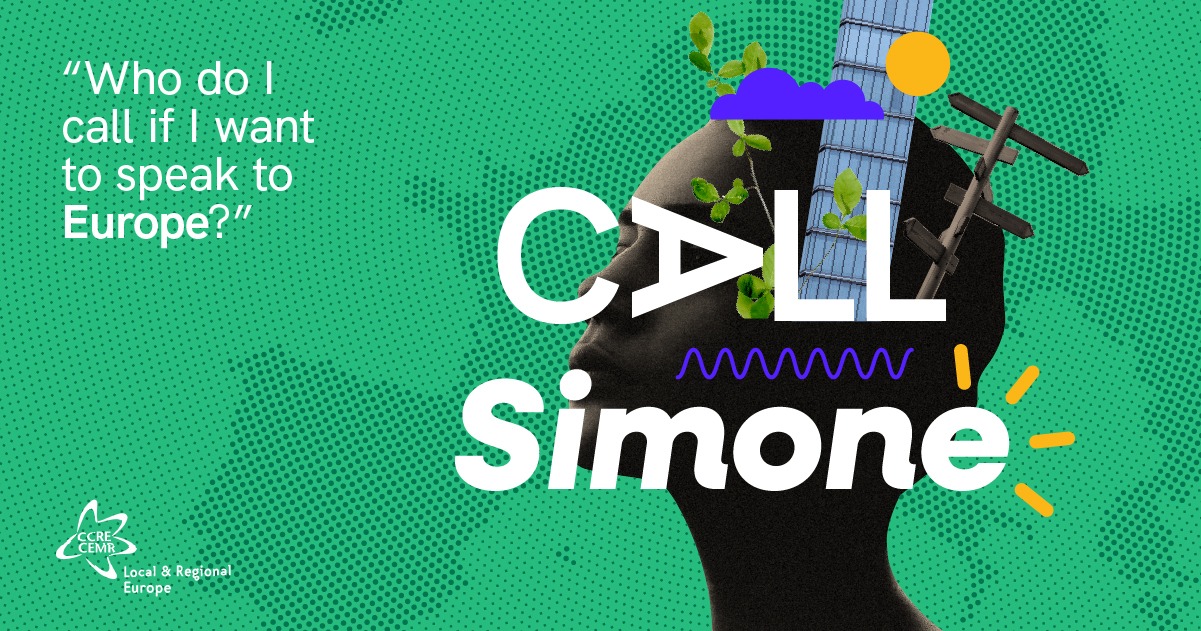
This is the question at the heart of the negotiations for the European Union’s next long-term budget (2028–2034), and the starting point of the latest Call Simone episode with Jan Olbrycht, former Member of the European Parliament and one of the most experienced figures in EU budget negotiations.
What may appear as a technical discussion about figures and funding lines is, in reality, a political struggle over power, priorities, and governance. And it comes at a moment when Europe must define what it wants to become: a more centralised political actor, or a union that remains fundamentally different from the United States—more negotiated, more decentralised, and ultimately dependent on consensus.
A budget under pressure
As Olbrycht explains, the next Multiannual Financial Framework (MFF) is being shaped by an unusually heavy context: war at Europe’s borders, growing global competition, the repayment of pandemic-era debt, and the prospect of enlargement.
The European Commission has proposed a significantly larger budget—potentially close to €2 trillion. But this ambition depends on new sources of revenue. Without them, the EU risks financing new priorities by cutting existing ones, turning the negotiation into a zero-sum game.
A shift in how Europe spends and governs
One of the central points raised in the discussion is that the most controversial change is not the size of the budget, but its structure.
Rather than organising spending around established policies like cohesion and agriculture, the proposal introduces broader categories and national plans that bundle different funding streams together. According to the Commission, this is meant to simplify the system and make it more flexible in times of crisis.
In practice, however, it redistributes power.
It strengthens the role of national governments while allowing the Commission to impose mandatory priorities—such as minimum spending on climate or support for less developed regions. As Fiorella Lavorgna, host of the podcast points out in the conversation, this creates a hybrid system that raises a key question: is this simplification, or a new form of centralisation?
The real fault line: who gets a say
This leads to one of the clearest political fault lines discussed in the episode: governance.
Will cities and regions be co-authors of these national plans, or merely consulted?
For organisations like CEMR—where Jan Olbrycht also served as of the vice presidents between 1995 and 2001—this is a red line. The experience of recent instruments, such as the Recovery and Resilience Facility, showed that consultation without real involvement risks weakening both effectiveness and accountability.
The European Parliament has taken a relatively strong position in favour of reinforcing the role of local and regional authorities. But within the Council positions remain divided, reflecting different national governance models.
Competitiveness vs cohesion
Another key tension highlighted in the discussion concerns the balance between competitiveness and cohesion.
The proposed competitiveness fund reflects a shift toward innovation, strategic industries, and investment attraction—an acknowledgement that Europe must strengthen its global economic position. This raises concerns about the future of cohesion policy, which has long been central to reducing regional disparities.
This is not simply a budgetary trade-off. It is a political one: a more competitive Europe that deepens internal inequalities risks undermining its own foundations.
Enlargement and the limits of unity
The conversation also touches on enlargement.
Integrating countries like Ukraine or Moldova is not only a financial challenge—it is a political one that requires unanimity among Member States. As Olbrycht stresses, enlargement ultimately depends as much on the willingness of current members as on the readiness of candidate countries.
This reinforces a central feature of the EU: its dependence on consensus.
Not a United States of Europe
When asked who one should “call” to speak to Europe in ten years’ time, Olbrycht’s answer is telling: not one leader, but several—reflecting a system where authority is shared rather than concentrated.
For him, the EU is not moving toward a single-leader model like the United States. Instead, it will maintain its own specificity: a political system built on balance between institutions and Member States, where decisions emerge from negotiation rather than hierarchy.
The next EU budget embodies this reality. It is not just a financial framework, but a test of how Europe functions: whether it can act strategically without becoming centralised, and whether it can remain cohesive without becoming fragmented.
Ultimately, what is at stake is not only how much Europe spends, but how it governs itself. And in that sense, the outcome of these negotiations will say as much about the EU’s political future as any treaty reform.
Learn more about our key asks on the EU budget 2028-2034
Download here the uncut episode transcript
For more information, please contact:

Officer – Communications