Rights of persons with disabilities 

Disabled people - News

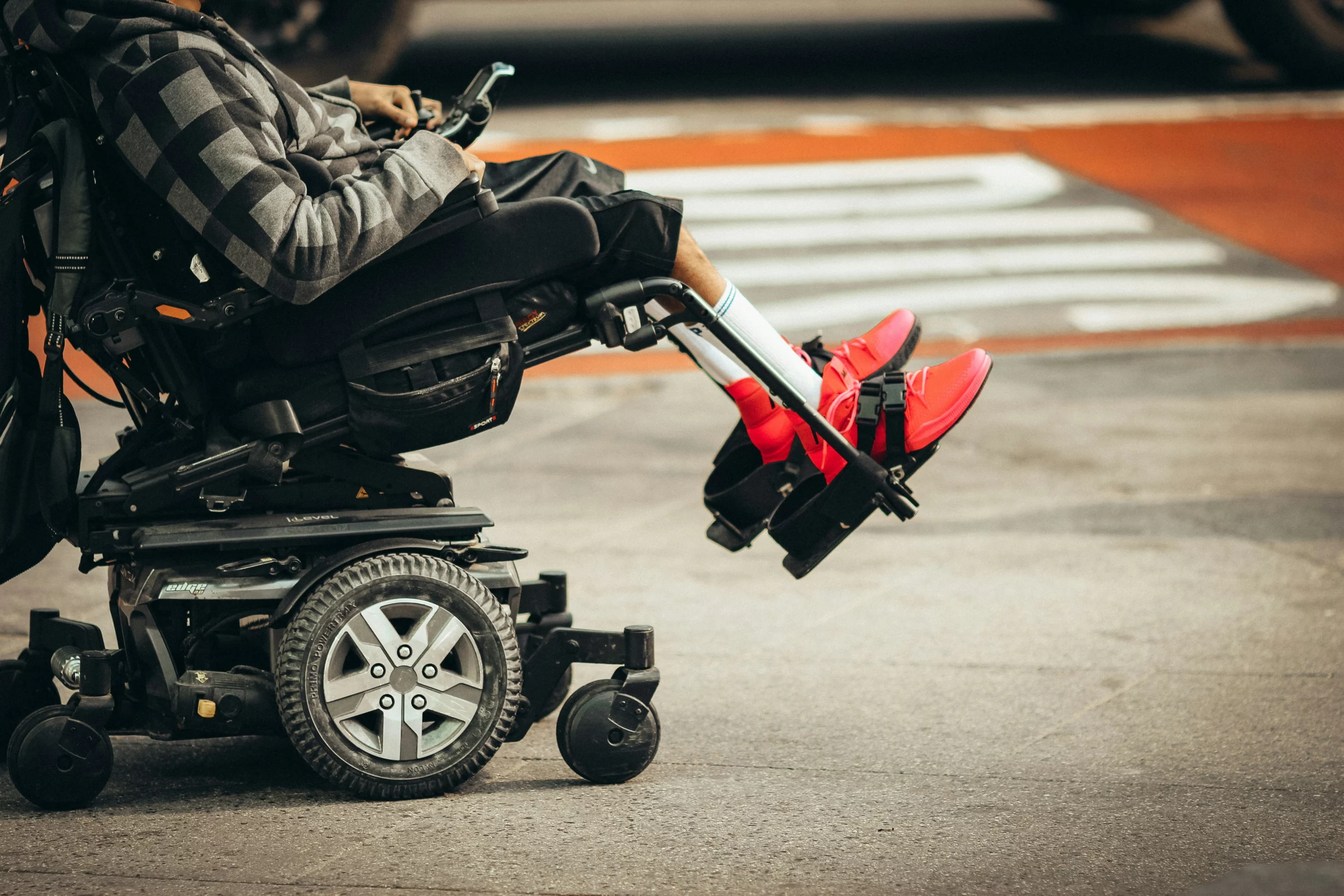
Empowering local and regional governments to uphold the UN Convention on the Rights of Persons with Disabilities (UN CRPD)  


In 2021, amid the launch of the new EU Strategy for the Rights of Persons with Disabilities (2021–2030), the Council of European Municipalities and Regions (CEMR) conducted a survey to assess local and regional governments’ awareness, involvement, and needs regarding the UN Convention on the Rights of Persons with Disabilities (UN CRPD). The initiative comes ten years after the EU’s ratification of the Convention, recognising that local and regional governments (LRGs) are essential actors in making its rights a lived reality. 

The survey, circulated in late 2020, aimed to gauge both knowledge and engagement with the UN CRPD across Europe’s municipalities and regions. It also sought to understand how the EU and its Disability Strategy could better support local efforts. A total of 34 responses were received from 10 countries including Iceland, Romania, Scotland, the Netherlands, and Ukraine. 

Key findings reveal that most respondents were aware of the Convention and had participated in its implementation, often via national dialogues, local projects, or action plans. However, they reported significant challenges, including: 

  • Lack of funding and staffing to develop targeted services 
  • Insufficient guidance on mainstreaming disability rights 
  • Inadequate infrastructure and facilities 
  • Complex bureaucratic barriers 

Critically, 76% of respondents expressed the need for specific EU-level support, requesting good practice guides and capacity-building tools covering accessible housing, education, transport, health, ICT, and public life, especially for under-resourced rural and urban areas. 

Even more tellingly, 91% expressed interest in peer exchange and capacity-building programmes, emphasising the value of learning from other municipalities’ experiences to improve implementation, strengthen legal frameworks, and empower disability-inclusive governance. 

Good Practices Highlighted 

  • Scotland’s Local Government Delivery Plan for the UN CRPD, developed by COSLA, aims to enable independent, dignified living through local co-production with disabled people. 
  • Romania’s City of Sibiu collaborates with NGOs and ministries to deliver inclusive services, including a multi-purpose centre for people with disabilities, offering therapy, socialisation, and housing support. 
  • Iceland’s Local Authorities Association leads awareness-raising initiatives as part of a national disability strategy aligned with UN CRPD goals. 
  • The “We Are Able!” Programme, developed by VNG International, supports inclusive governance across six African countries, linking European and Global South municipalities to promote the Local Inclusion Agenda through joint learning and capacity building. 

The CEMR survey confirms that local and regional governments are vital enablers of the rights enshrined in the UN CRPD. Yet, many of them face systemic barriers that prevent meaningful implementation. To succeed, they need EU-level support, more financial resources, and access to shared knowledge and good practices

As the EU Disability Strategy 2021–2030 progresses, it must ensure that municipalities and regions are not left behind. Supporting them is not only a policy necessity but a moral obligation to build more inclusive, accessible, and equitable communities. 

Empowering local leadership is key to transforming international commitments into everyday rights for all persons with disabilities, close to home. 

Read the study here 

For more information, contact: 

Cohesion Alliance

Cohesion Policy Alliance - News 2021

EU-wide coalition urges national governments to involve regions and cities in the preparation of post-COVID recovery plans and to avoid a “vaccine divide” in Europe


On the eve of the European Council meeting, the #Cohesion Alliance – an EU-wide alliance of 12,000 signatories advocating for a stronger cohesion policy after 2020 – calls upon member states to work in partnership with local and regional governments in the design, implementation and governance of national recovery and resilience plans.

The Cohesion Alliance also urges national parliaments to ratify the decision on own resources as soon as possible, allowing the European Commission to borrow up to EUR 750 billion on the capital markets to address the negative effects of the COVID-19 crisis. Moreover, the Alliance warns EU leaders against the risk of a competition for vaccines, as this would increase inequalities between European regions, cities and villages.  

Local and regional governments have been on the frontline of the health crisis from the outset, and will play a key role in delivering a fair, sustainable and resilient recovery across Europe. However, as member states prepare their national recovery plans, it has become clear that in many countries our regions, cities and municipalities, as well as our socio-economic partners, are not being meaningfully involved in the planning process. 

Europe’s recovery will only be as resilient as the recovery in all its regions, villages, towns and cities. Their needs are diverse, and an effective recovery is only possible if we acknowledge and address the numerous challenges and divides faced by all of Europe’s territories, from the rural and most isolated areas to the most urbanized, from islands to mountainous regions, sparsely populated and border regions. Investments need to match territorial needs. Without a real say for local and regional governments in the design, implementation and governance of the national recovery and resilience plans, there is a serious risk that many regions will be left behind. Local and regional governments are responsible for a third of public expenditure and half of public investment in the EU. The recovery will simply not happen without them on board.

European solidarity means proving with action that cohesion is a fundamental value for the EU. We therefore call upon all member states to work in partnership with local and regional governments, socio-economic partners and civil society in the design, implementation and governance of national recovery plans which are to be submitted to the European Commission by the end of April. We underline the need to fully respect the principles of partnership and multilevel governance, and for a place-based approach in this process.  

The Cohesion Alliance welcomed the creation of the EUR 750 billion recovery instrument Next Generation EU, also known as the Recovery Plan for Europe, as an historic moment for the European Union. Now it is time to translate the most powerful investment plan ever deployed by the EU into action. However, too many member states have yet to ratify the decision on own resources, the piece of legislation that would enable the European Commission to borrow up to EUR 750 billion on the capital market to address the consequences of the COVID-19 crisis. Its swift ratification by all EU countries is key to boost the recovery in Europe with fresh money. National parliaments must therefore ratify the decision as soon as possible.

Finally, European solidarity means working together to deliver a truly European vaccination campaign. A fragmented campaign benefits no one and would jeopardize the recovery by widening inequalities between Europe’s regions. This is why, ahead of the European Summit, the Cohesion Alliance warns EU leaders against the risk of a competition for vaccines on the ground. We call for close coordination between the EU, regional and national governments to make sure that the needs and expectations of all our citizens are met. 

We must put all our efforts into avoiding a ”vaccine divide” that would increase inequalities between our regions, cities and villages.

Energy performance in buildings directive

Green City - News Section

CEMR calls for flexible, well-resourced revisions to the EU Energy Performance of Buildings Directive (EPBD)


The European Green Deal aims to make Europe the first climate-neutral continent by 2050, with the revision of the Energy Performance of Buildings Directive (EPBD) as one of its cornerstones. Buildings account for a significant share of Europe’s greenhouse gas emissions, making energy efficiency and sustainable renovation crucial to the Fit for 55 package. In its response to the consultation on the EPBD revision, the Council of European Municipalities and Regions (CEMR) stresses the essential role of local and regional governments (LRGs) in ensuring a successful and fair transition. 

CEMR welcomes the ambition of the European Green Deal but underlines that success depends on proper implementation, adequate financial support, and respect for the principle of subsidiarity. Local and regional authorities are on the frontline of climate action, yet they need flexible frameworks rather than one-size-fits-all obligations. 

Among its key recommendations, CEMR highlights: 

  • Flexibility and subsidiarity: Member States and LRGs should be able to adopt integrated, territorial approaches to emissions reduction, focusing not only on building-level efficiency but also on neighbourhood and system-wide solutions. 
  • Life-cycle perspective: Regulations must take into account emissions from construction materials such as steel and concrete, as well as opportunities for circularity and reuse. 
  • Indicative, not mandatory standards: Minimum energy performance requirements and renovation targets should remain indicative to reflect local contexts, available resources, and socio-economic realities. 
  • Equal treatment of renewable energy: Energy produced on-site and energy delivered via carriers like district heating, renewable gases or electricity grids must be treated on the same footing. 
  • Financing and equity: Investment tools like ELENA must be adjusted to ensure accessibility, particularly for vulnerable households. Measures must avoid creating energy poverty or split incentives between landlords and tenants. 

CEMR also urges the Commission to reduce administrative burdens, ensure consistency between the EPBD, the Renewable Energy Directive (RED) and the Energy Efficiency Directive (EED), and reinforce cooperation across levels of governance. 

Europe’s climate-neutral future depends on a resilient and efficient building sector. Local and regional governments are central actors in achieving this transformation. To succeed, the revised EPBD must provide adequate support, flexibility, and resources while avoiding rigid, burdensome rules. By empowering municipalities and regions to act according to their local realities, the EU can ensure that the green transition delivers both climate impact and social fairness. 

Read the policy paper here 

For more information, contact: 

People first in Europe’s mobility shift

Mobility - News

Sustainable and smart mobility must be built with, not just for, cities and regions


That’s the core message from the Council of European Municipalities and Regions (CEMR) in response to the European Commission’s Sustainable and Smart Mobility Strategy. While CEMR supports the EU’s ambition to link transport policy with the Green Deal and Digital Agenda, it urges stronger recognition of the essential role local and regional governments play in achieving climate and mobility goals. 

CEMR highlights that sustainability cannot come at the expense of connectivity, accessibility, affordability, safety and health. Local authorities must be empowered to strike the right balance between environmental ambition and citizens’ everyday mobility needs, whether in dense city centres, suburbs, or rural areas. 

Key messages from CEMR include: 

  • Partnership across levels of government is vital. Local mobility strategies must be developed in coordination with national and EU institutions, with clear roles, shared responsibilities, and sufficient funding. 
  • Flexible, inclusive planning tools, like Sustainable Urban Mobility Plans (SUMPs), should be strengthened, not standardised. Cities and regions need adaptable frameworks that reflect their unique territorial challenges. 
  • More funding and clearer access are needed for local mobility infrastructure, including investments through the Recovery and Resilience Facility, Connecting Europe Facility, and Horizon Europe mission for 100 climate-neutral and smart cities. 
  • Policy support must go beyond technology. Behavioural change, active mobility, shared mobility and smart spatial planning are just as important as electric vehicles and digital tools. 

CEMR also calls for better regulation on key issues such as alternative fuels, intelligent transport systems, public transport governance, and micromobility. At the same time, it stresses the need for EU-wide data platforms and speed adaptation systems to improve safety and enforcement. 

In short, Europe’s transport transformation will only succeed if local realities shape the road ahead. Sustainable mobility starts where people live, and local governments must have a central seat at the table. 

Read the full position paper  

For more information, contact: