
“Right to Stay” strategy

Right to Stay strategy news

CEMR calls for a place-based “Right to Stay” strategy

468 words
2–3 minutes

In its contribution to the European Commission’s call for evidence on the upcoming “Right to Stay” strategy, the Council of European Municipalities and Regions (CEMR) calls for a politically ambitious, place-based framework that puts local and regional governments at the centre of Europe’s response to territorial, social, economic and demographic imbalances.

For CEMR, the right to stay means that people must be able to live, work and thrive in the place of their choice: whether in a city, a town or a rural area, without being forced away by lack of public services, economic opportunity, poor connectivity or rising living costs.

This is not just a matter of territorial cohesion. It is also a question of fairness, democracy and trust in the European project. If the EU wants to respond to growing territorial inequalities, it must start by investing in the places people call home and by recognising the governments closest to citizens as strategic partners.

In its response, CEMR underlines that there can be no right to stay without access to services, housing and opportunity. Across Europe, too many territories still face shortages in healthcare, education, mobility, childcare, energy and digital infrastructure. At the same time, rising housing costs are pushing people out of cities, while many rural and shrinking areas continue to suffer from depopulation and underinvestment.

CEMR therefore calls on the EU to strengthen support for services of general interest, affordable housing and integrated territorial development. It also stresses the need to create enabling conditions for local economic opportunities in every territory, including through better transport and digital connectivity, support for entrepreneurship, and action to tackle labour shortages in key local public services.

CEMR also highlights the growing importance of climate resilience, sustainable mobility and local energy production for territorial attractiveness and energy security. Investments in adaptation, renewable energy and accessible transport must therefore be part of any credible Right to Stay agenda.

For CEMR, Cohesion Policy must be the main delivery tool of the future strategy. In the next EU budget, the Right to Stay should be recognised as a clear strategic objective, backed by strong funding, integrated territorial instruments and genuine partnership with local and regional governments in the design of national and regional plans.

CEMR also calls for the Right to Stay to be embedded in EU governance, including through the European Semester and stronger territorial impact assessments. Europe cannot continue to shape policies for territories without systematically involving the authorities responsible for delivering them.

The message is clear: the right to stay will only be real if the EU gives territories the means to remain attractive, affordable, connected and resilient. That requires political ambition, long-term investment and a genuine multilevel partnership with local and regional governments.

For more information, contact:

CEMR Housing Task Force

EU housing news 2026

Affordable, sustainable, livable: what local governments need from the EU on housing 


The housing crisis has become one of the defining societal challenges of the 21st century, affecting communities across Europe: from major cities to rural areas, and reshaping social, economic, and demographic realities. Rising housing costs, homelessness, and chronic underinvestment are undermining equality, cohesion, and sustainability. Addressing this emergency requires integrated, place-based solutions that link housing with services, mobility, jobs, and quality of life. As frontline actors, local and regional governments must be recognised as key partners in Europe’s response, working with national and EU institutions to deliver affordable, sustainable, and inclusive homes for all.  
 
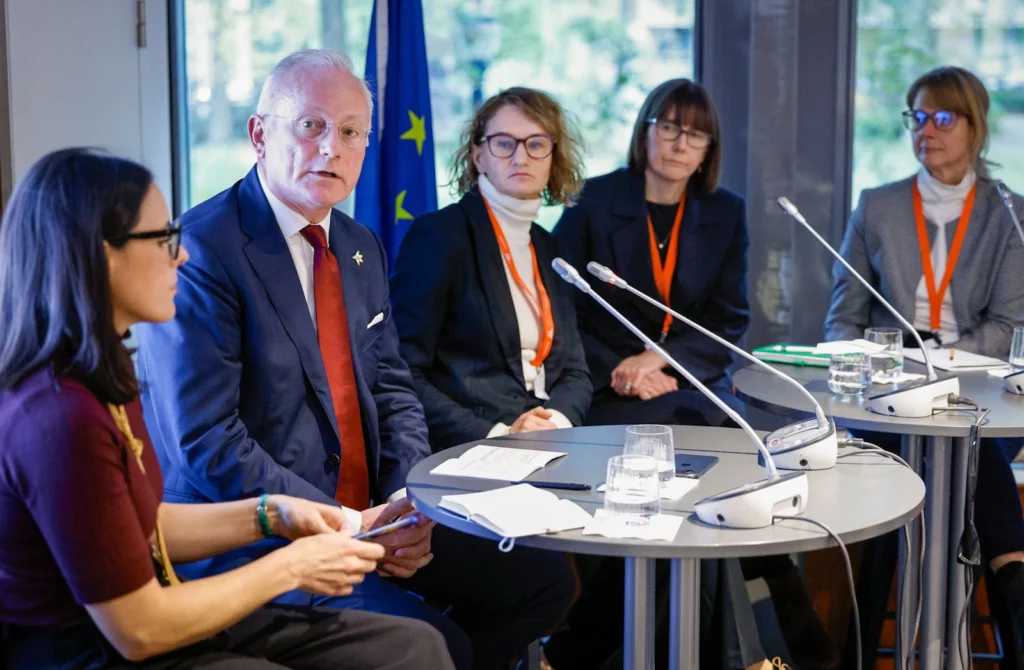
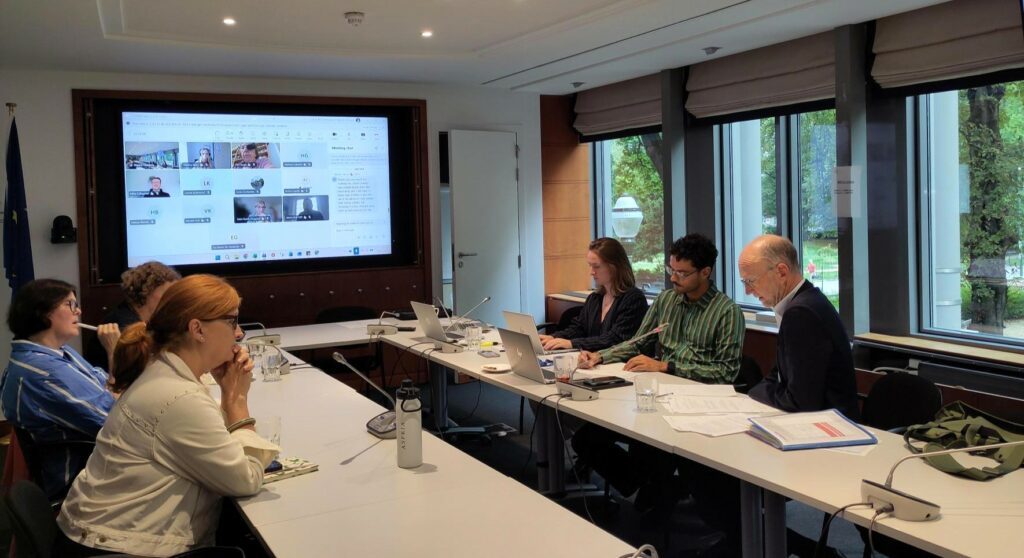
Europe’s housing crisis is felt most sharply where people live, work and study. On 9 April 2026, CEMR’s Housing Task Force brought together local and regional perspectives on how to measure affordability and how to respond to short‑term rentals and accelerate housing delivery.  

The discussion comes at a pivotal moment as the European Commission’s European Affordable Housing Plan has placed housing firmly on the EU agenda, and preparations are underway for an Affordable Housing Act aimed at supporting public authorities in addressing pressure in “areas under housing stress”, including through measures linked to short‑term rentals. With the European Parliament also intensifying its work on the housing crisis, the political momentum is clearly rising.  

Affordability beyond a single number 

A key takeaway following an exchange with Sandra Di Biaggio, Research and Policy Manager at ESPON for a presentation on the project Housing4All, was that affordability is multidimensional. It cannot be reduced to prices alone: income and residual income matter, but so do energy bills, mobility costs, access to services and housing quality. Participants also stressed that data gaps, including limited harmonised income data at the local level, can make comparisons difficult, reinforcing the need for placebased analysis.  

Tailor-made policy mixes 

The Task Force discussion underlined that no single instrument can fix affordability everywhere. Housing pressures vary widely from urbanisation and tourism to student demand and financialisation, alongside supply constraints such as rising costs and construction capacity. This calls for policy mixes adapted to local realities, where EU action adds value by enabling conditions (investment, legal clarity, better data, smart simplification) rather than prescribing uniform solutions.  

Shortterm rentals and local autonomy 

On short‑term rentals, participants highlighted the need for legal certainty for local governments when adopting policies on short-term rentals,  without undermining local competence. Overly rigid definitions in the norm risk limiting local capacity to act, especially if rules apply only within narrowly defined “stress areas”. At the same time, better enforcement of existing tools and clearer guidance on what is compatible with EU law could strengthen local action.  

Building faster and better. Finally, the Task Force discussed how industrialisation, standardisation and digitalisation in construction, alongside renovation, circularity and energy performance, could speed up delivery while supporting Europe’s climate objectives.  

CEMR will continue to bring local and regional perspectives into the EU debate as work progresses towards the Affordable Housing Act (expected for the end of 2026).  

Learn more about the CEMR position on Housing

For more information, please contact:  

Housing policy paper

Housing policy paper - News 2026

A local housing plan to strengthen the role of cities, towns and regions in addressing Europe’s housing challenges


Europe’s housing crisis has reached unprecedented levels, with direct consequences for citizens living in towns, cities and regions across the continent. The European Commission’s EU Affordable Housing Plan is a meaningful step forward, but it will only deliver if the full potential of local and regional governments is unlocked.

CEMR’s new position paper, “A local plan for housing”, sets out proposals to the EU Affordable Housing Plan, arguing that Europe’s ambitions will only translate into real results if towns, cities and regions are fully empowered to act.

To make this happen, CEMR identifies four priorities that must be unlocked so local and regional governments can deliver on the ground:

1. Mobilise investment where it matters most

Inadequate and unpredictable funding is one of the main barriers to expanding affordable and sustainable housing for towns, cities, and regions. Local and regional governments need long‑term investment frameworks. CEMR calls for:

  • Simpler and wider access to EU and national funding, including cohesion policy and EU budget 2028-2034 instruments, so municipalities of all sizes can plan and deliver.
  • Reforms to fiscal rules and modernisation of State aid, treating affordable and energy‑efficient housing as long‑term investment rather than ordinary expenditure.
  • Support to strengthen construction capacity and innovation, from skills to circular, climate‑resilient building and renovation.

2. Enable faster and more coherent planning to accelerate delivery

Fragmented, complex procedures delay urgently needed homes across Member States. CEMR urges EU and national authorities to:

  • Streamline planning and environmental assessments, reducing duplication while upholding strong sustainability standards.
  • Enable place‑based approaches, giving towns, cities and regions the flexibility to access land, regenerate brownfields and plan integrated, inclusive neighbourhoods.
  • Advance the single market for construction, harmonising technical standards to reduce delays, boost innovation and lower costs.

3. Improve efficiency through digital permitting

Digital permitting can bring faster renovation and new construction, but many local and regional governments lack resources to implement it. CEMR calls for:

  • Dedicated funding, training and technical assistance are needed for interoperable local–national–EU permitting systems.
  • Clearer guidance for applicants and developers will improve submission quality.

4. Activate Europe’s full potential through a real multilevel partnership

The EU Affordable Housing Plan will only succeed through genuine cooperation across levels of government. CEMR asks for:

  • Structured multilevel governance, with local and regional governments fully involved in design, implementation and monitoring.
  • Stronger municipal autonomy and legal clarity, ensuring responsibilities are matched with financing.
  • Adequated resources for the European Housing Alliance with structured participation of local and regional governments, which also serves to cooperate beyond the EU to address shared housing challenges.

Europe’s housing challenge demands swift and coordinated action. The EU Affordable Housing Plan sets an important framework, but its success will depend on how well it empowers the governments closest to citizens. By unlocking investment, planning flexibility, digital efficiency and genuine multilevel governance, Europe can move from ambition to delivery.

CEMR’s “Local Plan for Housing” offers a clear pathway: start locally, invest wisely and collaborate across levels of government. Only by working through cities, towns and regions can Europe ensure that affordable, sustainable and inclusive homes become a reality for all.

For more information, contact:

TERRI report: survey to members

Local Alliance - News Section

CEMR launches new study on local governments’ role, responsibilities in housing governance


In 2026, CEMR will update its flagship study on governance trends, the Terri Report. The previous edition, published in 2021, focused on the role of local and regional governments in public health. The new edition will place housing policy under the spotlight — a policy field that clearly illustrates how responsibilities are shared across levels of government and how effective coordination shapes tangible outcomes and the well-being of citizens and local communities.

For many years, CEMR has monitored territorial and governance developments across its membership, analysing what institutional and territorial changes mean for democracy and the quality of public decision-making. As governance challenges grow more complex and increasingly differ between places, traditional top-down approaches are proving less effective. Strong coordination across national, regional and local levels is therefore more important than ever.

Alongside updating data on governance structures and administrative reforms, the study will use housing as a lens to examine how competences, financial resources and implementation capacities are distributed across levels of government — and what this implies for addressing territorial disparities and delivering place-based solutions.

To support this work, CEMR’s members will receive a detailed questionnaire in early March 2026, addressed to national associations and experts with practical knowledge of housing policy at municipal or regional level. The questionnaire is structured in two parts:
• Part I focuses on governance arrangements, competences and reforms.
• Part II examines housing policy as a case study of multilevel cooperation.

This is a substantial, expert-level exercise rather than a quick survey. The evidence gathered will form a key foundation for CEMR’s advocacy on effective multilevel governance and housing policy. Members will have approximately three weeks to respond.

The study is expected to be published in autumn 2026, and CEMR looks forward to your participation in this work. Your contribution will strengthen our collective evidence base and advocacy for better governance and stronger place-based policies across Europe.

For more information, please contact:

New task force on housing

ADD ME project

CEMR strengthens the voice of local and regional governments in Europe’s housing agenda 


With housing fast becoming one of Europe’s most pressing social and economic challenges, the Council of European Municipalities and Regions (CEMR) has launched a new Task Force on Housing to shape the local and regional contribution to the EU’s forthcoming European Affordable Housing Plan but also beyond the EU agenda, to foster exchanges within CEMR membership to consolidate the voice of local and regional governments on the housing crisis. The new task force is bringing together close to 30 housing experts from 11 European countries.  

What European solutions to local challenges?  

At its inaugural meeting on 3 October 2025, participants highlighted how the housing crisis takes different forms across Europe: from overheated urban markets and speculative investment in short-term rentals, to depopulation and poor housing quality in rural areas. Despite these diverse contexts, all agreed that housing is a human right and that local governments must have the means and autonomy to act. 

Members discussed how the EU can best support local and regional efforts through more accessible financing, simplified permitting, stronger subsidiarity, and fairer fiscal rules, without replacing or duplicating existing national and local initiatives As one participant put it, “We need to define what the EU can add to national and local support systems to housing and look where local expertise could lead.”  
 
The task force also exchanged with Matthew Baldwin, Deputy Director General at the European Commission Directorate General for Energy, responsible of the Commission’s own task force on housing. He presented the European Commission’s vision for the European Affordable Housing Plan, emphasising that affordability, sustainability, and decent living standards are now recognised as core EU priorities. He invited CEMR and its members to contribute to the public consultation. 

What are the priorities of local and regional governments on housing? 

From the first meeting of the CEMR housing task force, some common messages already emerged:  

  • A multi-level governance approach, respecting subsidiarity and proportionality in all EU housing and urban policies; 
  • Long-term, flexible, and accessible financing tailored to both urban and rural needs; 
  • Reformed fiscal rules to give municipalities more autonomy and capacity to invest; 
  • Simplified permitting and planning frameworks that reduce delays without compromising democratic accountability; 
  • And a holistic view linking housing to energy efficiency, mobility, and access to public services — ensuring that every home is part of a sustainable, inclusive community. 

In the discussion that followed, participants stressed that “housing cannot be solved through construction alone. It must be part of a wider territorial vision that connects affordable homes with climate neutrality, social inclusion, and quality of life.”  

CEMR will build on these messages to consolidate a European local and regional vision to address the housing crisis. By coordinating local and regional voices, CEMR aims to ensure that Europe’s response to the housing crisis fully recognises the essential role of municipalities and regions: those who plan, build and care for their inhabitants.  

Smarter building rules in Europe

Housing - News

EPBD revision: Local flexibility and long-term planning key to success, say CEMR and Housing Europe


EPBD revision: Local flexibility and long-term planning key to success, say CEMR and Housing Europe 

The Council of European Municipalities and Regions (CEMR) and Housing Europe have joined forces to publish a set of recommendations on the European Commission’s proposal to recast the Energy Performance of Buildings Directive (EPBD). While both organisations fully support the ambition to decarbonise buildings across the EU, they warn that the proposal must better reflect the realities on the ground. 

Local and regional governments, as well as providers of public, social, and cooperative housing, are critical actors in delivering the EU’s climate objectives. But a one-size-fits-all approach will not work. 

The joint position paper outlines three key recommendations: 

  1. Respect local differences through subsidiarity and adaptability 
    The EPBD must allow member states and local authorities to tailor building codes to their own context. Setting EU-level definitions for zero-emission buildings without a clear methodology risks creating uncertainty and undermining national efforts. Other areas, such as fire safety and asbestos removal, should remain the competence of national or local governments. 
  1. Provide a stable and realistic framework for renovations 
    Renovating buildings is a long-term process that requires careful planning. The proposed EPBD introduces tight deadlines and shifting labelling systems, making it nearly impossible for local authorities and property owners to comply effectively. CEMR and Housing Europe argue for a more predictable timeline that reflects labour shortages, market dynamics, and tenant affordability. 
  1. Support zero-emission construction with energy system flexibility 
    While new buildings must meet high standards, member states should retain the freedom to choose their energy sources. That includes not only on-site renewables, but also low-carbon energy from the grid, waste heat, and energy recovery, all in line with the EU waste hierarchy. 

Ultimately, the success of the EPBD will depend on how well it enables local and regional actors to deliver results. CEMR and Housing Europe are clear: the path to climate-neutral buildings must be ambitious but flexible, fair and grounded in local realities

Read the full policy paper here  

For more information, contact: 

Energy performance in buildings directive

Green City - News Section

CEMR calls for flexible, well-resourced revisions to the EU Energy Performance of Buildings Directive (EPBD)


The European Green Deal aims to make Europe the first climate-neutral continent by 2050, with the revision of the Energy Performance of Buildings Directive (EPBD) as one of its cornerstones. Buildings account for a significant share of Europe’s greenhouse gas emissions, making energy efficiency and sustainable renovation crucial to the Fit for 55 package. In its response to the consultation on the EPBD revision, the Council of European Municipalities and Regions (CEMR) stresses the essential role of local and regional governments (LRGs) in ensuring a successful and fair transition. 

CEMR welcomes the ambition of the European Green Deal but underlines that success depends on proper implementation, adequate financial support, and respect for the principle of subsidiarity. Local and regional authorities are on the frontline of climate action, yet they need flexible frameworks rather than one-size-fits-all obligations. 

Among its key recommendations, CEMR highlights: 

  • Flexibility and subsidiarity: Member States and LRGs should be able to adopt integrated, territorial approaches to emissions reduction, focusing not only on building-level efficiency but also on neighbourhood and system-wide solutions. 
  • Life-cycle perspective: Regulations must take into account emissions from construction materials such as steel and concrete, as well as opportunities for circularity and reuse. 
  • Indicative, not mandatory standards: Minimum energy performance requirements and renovation targets should remain indicative to reflect local contexts, available resources, and socio-economic realities. 
  • Equal treatment of renewable energy: Energy produced on-site and energy delivered via carriers like district heating, renewable gases or electricity grids must be treated on the same footing. 
  • Financing and equity: Investment tools like ELENA must be adjusted to ensure accessibility, particularly for vulnerable households. Measures must avoid creating energy poverty or split incentives between landlords and tenants. 

CEMR also urges the Commission to reduce administrative burdens, ensure consistency between the EPBD, the Renewable Energy Directive (RED) and the Energy Efficiency Directive (EED), and reinforce cooperation across levels of governance. 

Europe’s climate-neutral future depends on a resilient and efficient building sector. Local and regional governments are central actors in achieving this transformation. To succeed, the revised EPBD must provide adequate support, flexibility, and resources while avoiding rigid, burdensome rules. By empowering municipalities and regions to act according to their local realities, the EU can ensure that the green transition delivers both climate impact and social fairness. 

Read the policy paper here 

For more information, contact: