Money makes the world go round

Women Academy - News 2022

Frankfurt’s Mixed Leadership Academy


Studies have testified that despite incomes being above average in Frankfurt, women are still under-represented in top positions and with top incomes. There is still a lot of work to be done concerning career choices and the work-life balance when re-entering the workforce. Furthermore, women with immigrant backgrounds have even fewer opportunities to participate. 

Change urgently required

For this reason, over 100 experts from local government, urban society, politics, and academia came together to form a so-called “Community of Practice” – initiated and coordinated by the Women’s Office Frankfurt. More than 80 organisations and companies from business, the service sector, research, local government, and institutions from the social sector took part in drawing up the action plan, which was adopted by the city council in 2015. 

The Thomas phenomenon

Companies staff their management according to a principle of similarity. As a result, there are more members of management boards called “Thomas” than there are women overall, which the AllBright Foundation once described as the Thomas Circuit. Whereas, companies do not benefit at all – as studies confirm – from the Thomas monoculture, but from diversity. Especially in boardrooms. 

This means that work and corporate cultures, predominating role stereotypes and mentality patterns that impede women’s career paths are not only unfair but also inefficient. 

A study by the International Labour Organisation (“Women in Business and Management, 2019”) for example has proved that more women in management positions, and gender diversity in boardrooms, improve business performance. Further, employees were more satisfied and productive. These facts led to the idea of building up a management academy. 

Academy to accelerate change through diversity

Over the years, the working group, composed of professors, city councillors, representatives of companies, associations and educational institutions, have worked out a to-do list for the academy.

The objective is to make it a centre of excellence to strengthen management expertise, contribute to diversity in management, break down stereotype role models and pursue the principles of gender sensitivity, diversity and innovation. For this purpose, it should empower women and support them to take on additional management tasks and drive forward change in organisational and leadership cultures. 

The Mixed Leadership Academy would be located precisely where top executives of the future will be trained and thus where the future of the working world will be decided: at the Frankfurt University of Applied Sciences. Now, the benefits of diversity will be communicated there – which means not just the benefits of a higher proportion of women, but also those of a general openness to gender-diversity. 

The academy is equally financed by the Women’s Office of the City of Frankfurt am Main and the Frankfurt University of Applied Sciences to become self-financing in about five years. It is a result of the work done by Frankfurt since signing the Charter for equality of women and men in local life in 2012.

COP 27

Environment - News

Local and Regional Governments at the COP 27


COP27 in Sharm el-Sheikh, Egypt, ended with the cover decision, known as the Sharm el-Sheikh Implementation Plan. We, as part of “The Local Governments and Municipal Authorities (“LGMA”) United Nations constituency, welcome the outcomes of this COP as there are new aspects such as the fund on loss and damage in the text, referring to the concept of climate justice. However, the outcomes leave many questions open, notably regarding national governments’ commitments to maintain the 1.5-degree objective. 

CEMR/PLATFORMA and UCLG were present in Sharm el Sheik during COP27, as were many member associations (from the UK, France, Israel, Malta, Turkey, Germany…). CEMR is part of the LGMA United Nations constituency, whose focal point is ICLEI. More than 500+ delegates represented cities, regions and other subnational governments at COP27, more than most countries. Over 40000 participants worldwide came to this COP. 

World for Ukraine

Mayors in Ukraine - News 2023

Take part in the ‘World for Ukraine’ on the role of local governance in the recovery of Ukraine after the war


European municipalities are invited to take part in the “Networking Session with Ukrainian Local Communities” that will take place on 7-9 December 2022 in Rzeszów, Poland, in the framework of the World for Ukraine Summit.

33 mayors from all around Ukraine, representing different small- and middle-sized local governance associations, and
different regions of Ukraine – both frontline, de-occupied and rear, will participate in the event and present their communities, share their thoughts on the role of local governance in the recovery of Ukraine after the war.  This includes mayors of Skadovsk, Lviv, Pokrovska, Dunayevetska, Ivankivska, among others.

This is an excellent occasion for mayors from European municipalities to meet their colleagues and launch a new cooperation.

Who is invited to participate

  • Mayor’s and local governance leaders from the EU, who express a wish to find partners in Ukraine;
  • Representatives of international organizations and projects working with local governance in Ukraine and who promote municipal partnerships as an instrument of Ukraine’s recovery.

Practical information

For more information about the programme, please see this document.

If you are interested, please contact info@unitedforua.org for more details on which costs for participation can be covered by the United for Ukraine initiative.

Ukraine Solidarity

Ukraine flag - News section

​Reims and Chernihiv eye long-term partnership to strengthen ties further


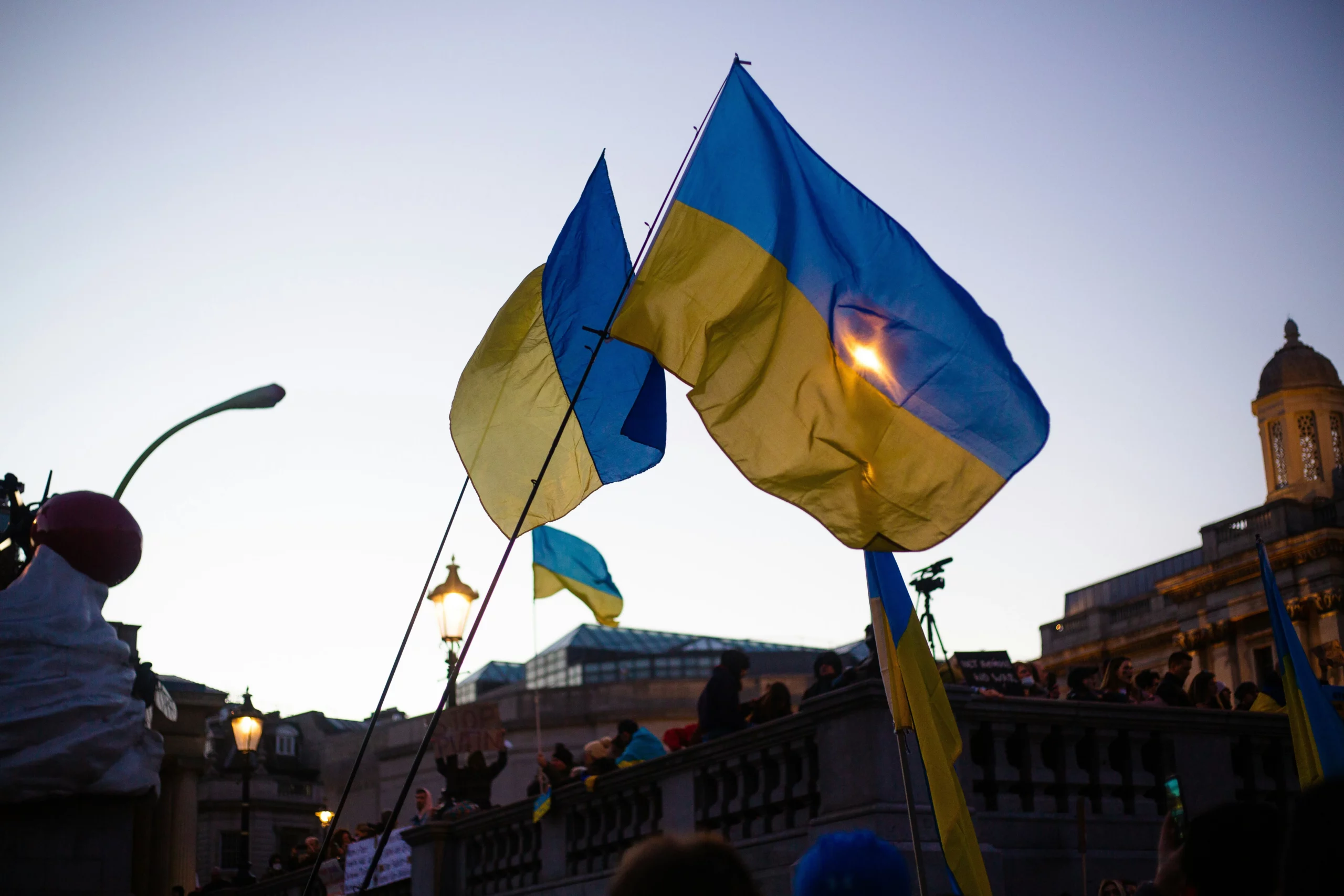
Cities across Europe mobilise for Ukraine… Yesterday, Arnaud Robinet, the French mayor of Reims, a city home to 180,000 inhabitants, greeted the secretary of the city council of Chernihiv located 150 km north of Kyiv.

On the agenda: the sealing of a partnership to improve relations and networking between the two cities in 2023. Representatives from both cities got around the table to identify core areas of action. 

Beyond the symbolic gesture of flying the Ukrainian flag from the town hall, Reims committed to supporting the Ukrainian people by taking concrete actions, including in the fields of youth, public services and culture. 

Reims officials are also planning to invite teenagers from Chernihiv to take part in summer programmes focusing on culture, sports and art. They also committed to helping restore Chernihiv once the war was over. 

Cities across Europe mobilise for Ukraine

Throughout Europe, cities are showing solidarity with Ukraine. To turn this into concrete measures, an online platform, Cities4Cities, was created to help Ukrainian cities. Launched at the initiative of the mayor of the city of Sindelfingen Bernd Vöhringer, also president of the Chamber of Local Authorities of the Congress of Local and Regional Authorities, the platform aims to match Ukrainian and other European cities to provide help and support local infrastructure in Ukraine. The platform is supported by the Congress and the CEMR. 

To find out more about how local governments support Ukraine, just click here.

Local and Regional Power

Matchmaking Platform - Launch

Interview with the new Secretary General of the Congress of Local and Regional Authorities


Mathieu Mori has just been elected as the new Secretary General of the Congress of Local and Regional Authorities of the Council of Europe for a five-year term of office. Secretary General of the Assembly of European Regions and then Director of the Interreg North-West Europe transnational cooperation programme, local and regional governments have been crucial to him all throughout his career.

Mr Mori, next January you will begin your mandate as Secretary General of the Congress of Local and Regional Authorities of the Council of Europe. In a few words, what are the priorities of your mandate?

The Congress is an institution helping the 46 Council of Europe’s member States implement local and regional democracy in line with the European Charter of Local Self-Government*. This is the Congress’ statutory mission and to achieve this mission effectively, the Congress needs to cooperate with the Member States. Developing a constructive institutional relationship between the Congress and the Committee of Ministers is therefore a priority for the Congress. Furthering institutional relationships generally, including with the Parliamentary Assembly and the European Union institutions, will be an important objective.

Furthermore, the Congress is only going to grow stronger with the backing of its members. I will strive to increase the ownership of the Congress by its members, making sure all members know how they can best contribute to the Congress’ work and what they can bring back to their citizens from their involvement with the Congress.

Finally, I will want to promote the role of young people in the work of the Congress. With its youth delegates who contribute actively to its political work, the Congress is already doing well and I want to make sure the Congress remains a leading organisation when it comes to youth engagement.

*This international convention lays down standards for protecting the rights of local authorities and requires the 46 member states of the Council of Europe – which have all ratified it – to comply with a number of principles.

Based on your personal experience with local governments, what do you think are the main democratic advances that have been made as a result of the recommendations of the congressional monitoring?

The Congress has indeed a strong and documented track record in helping Council of Europe member States implement local and regional democracy thanks to its monitoring and election observation missions.

The recommendations that follow these missions have helped many Member States foster reforms, enhance intermunicipal co-operation or strengthen mechanisms of citizens’ participation in public decision-making. 

Among major concrete achievements, we could mention:

– The activation of the role played by associations of sub-national authorities to promote and defend local self-government interests in several member States (Bosnia and Herzegovina, Hungary, Portugal, Switzerland, Iceland, Georgia, Lithuania and Poland);

– The introduction of a variety of legal instruments to promote citizens’ participation in local public affairs (Switzerland, Iceland, Georgia, Slovenia, Lithuania, Liechtenstein);

– The ratification by more and more States of the Additional Protocol to the European Charter of Local Self-Government on the right to participate in the affairs of a local authority. In September 2022, Portugal ratified this Additional Protocol;

– The recent decision by the Scottish Parliament to incorporate the Charter into Scottish domestic law;

– A decentralization strategy in Bulgaria devolving more powers to the local level while increasing municipal resources.

– The introduction of direct election of mayors in Georgia. 

On the other hand, do you see a “democratic backsliding” in a particular area or a danger for Europe?

Democracy can never be taken for granted, at national or local level. In no country can it be considered as completely achieved, and even less so in times of crises.

This is why the Congress monitors the application of the Charter in the 46 Council of Europe Member States on a regular basis.

What we see is a trend towards recentralisation in many countries. This recentralisation has taken many different forms, ranging from the refusal of some courts to apply the Charter directly, to governments’ limiting local authorities’ financial autonomy. 

Overall, the lack of consultation, inadequate distribution of competences and financial resources and excessive supervision have been identified as recurring issues that affect most of the monitored states. This leads either directly or indirectly to democratic backsliding at local and regional level.

In addition, the Congress also warns that many elected representatives have experienced at least some degree of harassment and threats of violence. Threats and attacks against local government representatives have been regularly raised during the Congress series of debates “Mayors under pressure” and received detailed coverage in the recent Congress report on the impact of hate speech and fake news on working conditions of local and regional elected representatives. This situation even leads to the lack of candidates to local and regional elected positions.

The Congress raises awareness on these issues among member States and helps find solutions.

COVID, Ukraine, the energy crisis and climate change… Europe is going through many crises. Faced with this bleak picture, how can communities sustainably strengthen their capacity to deal with these recurring crises?

Indeed, Europe is going through a multitude of crises and European local and regional authorities are at the frontline in tackling them. As seen during the Covid pandemic, the initial reaction of many governments when faced by crisis is to recentralise finances and competences given to the local level of government. This has put the exercise of local democracy under unprecedented pressure and constraints.

Yet, those European countries which did not recentralise did very well in tackling the crisis effectively, proving that multi-level governance systems do not hinder responses to crisis situations.

On the contrary, they increase the quality of decisions and allow greater flexibility in coping with emergencies as they are better suited to providing solutions tailored to specific needs. The effectiveness of response depends indeed on the right balance and interaction between centralised and decentralised capacities that must be present within the system.

The pandemic has revealed the need for a stronger system of multi-level governance in which every level – in particular local and regional – is equipped with proper competences, means and resources to respond to the emergency situation.

The Congress will therefore continue to accompany the Council of Europe Member States in implementing the Charter. 

While Ukrainian local elected officials are fully committed to their populations who are dramatically suffering from the conflict caused by the Russian aggression, how does the Congress envisage its support for Ukrainian communities in the long term?

The Congress has, from the very start, condemned the Russian aggression against Ukraine and the Council of Europe decided to expel Russia from the institution altogether. 

The Congress was also keen to facilitate concrete solidarity between local and regional authorities towards their Ukrainian counterparts by supporting the Cities4Cities platform. This online exchange tool allows local and regional authorities in Ukraine and in the rest of Europe to share their needs and offers related to local infrastructure or humanitarian aid.

What I can share from my visit to Ukraine on the occasion of their Independence Day last August is that the decentralisation process launched in 2014 under the auspices of the Congress has been key in ensuring cities and regions had the means to react to the initial consequences of the war. The martial laws in place today have recentralised the power. 

The Ukrainian local and regional authorities expect the Congress to be at their side after the war to make sure their powers are given back to them and to finalise the path to decentralisation started in 2014. 

Ukraine is also expecting the Congress to help it reach better local democracy to facilitate the country’s accession to the European Union.

Ukraine can count on the continuing support of the Congress on all these aspects.

All over Europe, cities and local authorities are involved in cooperation beyond their borders. What is the added value of this type of cooperation as opposed to that established between states?

This type of cooperation is not in opposition to the State-led cooperation but complements it. Local and regional authorities know best the hurdles they must overcome to implement effective policies and are therefore better placed to cooperate with their counterparts in other countries. 

The Congress has developed co-operation activities which provide a link between the recommendations and resolutions adopted by the Congress members and the situation on the ground.

In line with its mission and thematic priorities the Congress focuses its co-operation activities on :

– Empowering local and regional authorities and their associations

– Building the capacities of local and regional elected representatives as agents of change

– Making young people aware of the principles of local democracy and engaging them at the local level

– Learning by doing through involvement in local initiatives to improve the quality of local democracy 

By focusing on co-operation activities where the Congress has the strongest added value we make sure we do not duplicate work undertaken by other parts of the Council of Europe or by territorial organisations.

You are very familiar with local and regional government associations, such as the AER or CEMR. In what areas do you think the associations and the Congress should strengthen their collaboration?

AER and CEMR are important strategic partners of the Congress, with common values and principles. They are both “statutory partners” of the Congress and can participate in its sessions and committee meetings. Our regular exchanges allow us to complement our respective work, for example to support Ukraine, or for the achievement of the Sustainable Development Goals of the United Nations 2030 Agenda, or promoting new forms of citizens’ democratic engagement such as through deliberative democracy models, and by improving youth participation. A particular focus of the Congress co-operation with CEMR is also on strengthening the role of national associations of local and regional authorities in member States as fully-fledged partners of national authorities in the governance system.

In addition, as European networks of local and regional authorities, we can together contribute to defending and promoting multilevel governance. The Congress has a unique expertise in the local and regional implementation of democracy, the rule of law and human rights. The Congress could bring this added value to joint projects with AER and CEMR while the latter would enable more villages, cities and regions to know about the Congress work and benefit from its know-how. 

I am looking forward to furthering the good cooperation between the Congress and all territorial associations and implementing concrete partnerships for change.

Solidarity with Ukraine 

Bridges of Trust Branding - News 2024

Building Bridges of Trust between Zboriv- Joniškis


On 23-27 October 2022, representatives from the Ukrainian municipality, Zboriv, visited their Lithuanian partner, the district municipality Joniškis. The visit was organised in the framework of the CEMR-PLATFORMA project “Bridges of Trust: Empowering Municipalities in Ukraine and the European Union through building municipal partnerships“. The project is supported by the U-LEAD with Europe programme.

During the visit, working meetings between the Ukrainian representatives, the Mayor of Joniškis, Vitalijus Gailius, and the municipal officials responsible for different sectors such as social services, communal services, youth, education, and healthcare.

In the Open Youth Center of Joniškis School of Art, the participants of the visit got acquainted with the centre’s activities, its volunteers, and the ongoing projects. The delegation also visited the Joniškis Agricultural School, where the director of the school, Juventa Jurgelienė, presented the training centre, educational farm, and modernized laboratories. In the Child and Family Welfare Center, the provided services were presented, and similarities and differences between the provision of such services in Joniškis and Zboriv were discussed to highlight best practices to implement in the future.

A particularly insightful part of the trip was a visit to the Seimas and the Government of the Republic of Lithuania, organised by Joniškis for the partners from Ukraine. The delegation exchanged with the politicians on humanitarian support, the reception of Ukrainians fleeing the war in other countries and other relevant issues.

COP 27

COP 27 - News 2022

COP 27: Subnational governments must be empowered to deliver on the Paris climate agreement


On the occasion of the Solutions Day at COP27, the European Committee of the Regions, ICLEI, Regions4, the United Cities and Local Governments (UCLG), EUROCITIES, the Under2Coalition, C40 and the Council of European Municipalities and Regions (CEMR), call on national governments, the Parties and international organisations to fully support local and regional authorities in delivering climate action on the ground ​

Cities and regions worldwide are taking over political leadership at COP27 climate talks as national governments are failing to reach any meaningful agreement. As echoed in the latest IPCC report, local and regional governments have a growing role in delivering climate action. However, subnational governments – unified under the Local Governments and Municipal Authorities (LGMA) Constituency to the United Nations – still lack a formal role in global climate negotiations and in the implementation of the Paris agreement. Reinforcing multi-level cooperation, direct funds and technical assistance for subnational governments and a global system to collect and monitor cities’ and regions’ carbon emission reductions are amongst the key claims subnational governments are fighting for at COP27. ​​

The President of the European Committee of the Regions, Vasco Alves Cordeiro, said: “The energy crisis and the geopolitical situation must not hinder the much-needed increase of global ambition at COP27. The top-down approach is showing its limitations when it comes to move from commitments to achievements. Cities and regions are willing to help filling the gap, but for this they need a consistent framework for place-based sustainable development strategies, bringing together climate action, nature protection and Sustainable Development Goals. A new UN framework based on local and regional action is needed, and the European Committee of the Regions is ready to work with the Parties, UN agencies and all partner organisations towards this objective.”

The president of ICLEI – Local Governments for Sustainability, Frank Cownie, Mayor of Des Moines (United States), said: “I am proud of the leadership that the European Union and the United States continue to show for advancing the truth that collaboration across all levels of government is the recipe for success in achieving the Paris Agreement goals. In my country, the U.S. Infrastructure Bill and Inflation Reduction Act are good-practice examples for other nations to follow, precisely because they institute collaboration between cities, regions and the national government. I am further encouraged by the U.S. announcing a Subnational Climate Action Leadership Exchange (SCALE), which can be seen as complementary to the COP27 Presidency SURGe initiative. Together, we are ensuring the ICLEI and LGMA call is clear at COP27: The time for Multilevel Action has not only come—it is delivering.

The Mayor of Warsaw, Rafał Trzaskowski (PL/EPP), chair of the ENVE commission and of the Green Deal Going Local working group and member of the Political Board of the Global Covenant of Mayors, said: “While we are working to secure energy supplies and protect our citizens from high energy prices, we cannot lose sight of the climate crisis. We look into the COP27 as an opportunity to further advance climate ambition and implementation,and are hopeful that the conclusions will reflect the urgent need for multilevel cooperation and will call on national governments and international organisations to involve local and regional authorities in delivering climate action on the ground. We need direct funds and technical assistance for subnational governments and a global system to collect and monitor cities’ and regions’ carbon emission reductions. Together we can bridge the emissions gap.

The Mayor of London Sadiq Khan, chair of C40, said: “The climate crisis is the biggest challenge facing our world and it is clear that we cannot afford further delay. I have put tackling the triple threats of congestion, toxic air pollution and the climate emergency at the heart of my mayoralty. Cities are using every lever at our disposal to take meaningful climate action now by reducing pollution, investing in green public transport and sustainable energy sources – but we simply cannot avert a catastrophe of this magnitude alone. We can achieve net zero carbon by 2030 and keep the goal of 1.5 degrees within reach if city mayors and citizens are empowered to play a central role.”​​

The Mayor of Montevideo, Carolina Cosse, President of United Cities and Local Governments (UCLG), made it clear: “The solution to the ecological transformation of our planet and societies will go through our villages, towns, cities, metropolises, provinces and regions. At COP27 we will need to ensure that we continue to push for the inclusion of local and regional governments into the localization of Nationally Determined Contributions, as well as continue to advocate for the localization of climate finance, and capacity-building for all types of cities and particularly intermediary cities, specifically in Least Developed Countries and Small Island Developing States.

The Mayor of Florence and president of EurocitiesDario Nardella (IT/PES), said: “In the fight against climate change, cities are not only needed, but are the essential link between people and other layers of government. As a mayor, I am in constant dialogue with people in my city, and through initiatives such as the Mayors Alliance for the European Green Deal, I bring their voices, and realities to European and international leaders. But we need more coordinated action and global solidarity to keep the 1.5°C target alive. Acknowledging and acting on climate change must serve as the background of just about everything we do – the leaders assembled at COP27 all know this. For those that believe in really making a difference, the action needed in the conclusions is clear: think local.

Nomusa Dube-Ncube, Premier of the KwaZulu-Natal province in South Africa and Africa Co-Chair of the Under2 Coalition said: “States and regions have always been at the forefront of climate change action but they, like other non-state players, need to have a seat at the table when decisions are being made. The time for pledges and failure to honour commitments is over. We need national governments and businesses to step up. We must have decisive and united action, bolstered by strong policies and financial resources to make change happen. Importantly, resources need to be directed to where they are needed most through using science and data driven-tools, as well as public-private collaboration, in order to mitigate the impact of climate change in our local communities.

The Minister for Economic Development, Sustainability and Environment of the Basque Government and president of Regions 4 – The Network of Regional Governments for Sustainable DevelopmentAncreArantxa Tapia, stressed that: “The voice of the regions must sound loud and clear at this COP27, since regions apply 90% of the adaptation measures to climate change. We are natural leaders of some of the transformations necessary for adaptation due to our direct connection with citizens and our capacity to mobilise territorial commitments connecting all stakeholders. From ‘Regions4’, we are going to launch in this COP27 the ‘Declaration of regional governments’ that highlights our main recommendations and commitments towards a resilient future. I believe that support to regions for the effective implementation of climate actions at multiple levels is key, especially in the development of capacities, financing and technical support.”

The Mayor of Utrecht and ICLEI-LGMA Special Envoy for COP27 Ministerials , Sharon Dijksma, said “ In the past years, important steps have been taken to involve cities more in the UNFCCC agenda. With the adoption of the COP26 Glasgow Climate Pact, multilevel action is recognised as an important pillar in reaching the international climate goals. I welcome the first-ever Ministerial on Urbanisation and Climate during COP27, which puts multilevel collaboration at the heart of the debate. But I reiterate that COP27 should be the last climate conference where cities and regions are only on the informal agenda of the UNFCCC. From next year onwards, multilevel action must be an integral part of the official COP process. I am thrilled to see hundreds of mayors and other local and subnational leaders as well as other non-state actors so enthusiastically joining me in this call. I look forward to engaging these parties during COP27 and the years to come. Together we will work on accelerating climate finance to cities and regions across the world, including loss and damage.”

The Mayor of Chefchaouen (Morocco), Mohamed Sefiani, member of ARLEM and ICLEI COP27 Special Envoy, said: “ Cities and regions in Africa, as the world´s fastest-urbanising continent, call for COP27 to deliver concrete outcomes for sustainable urbanisation, multilevel action and localisation of climate finance. I am happy to hear that in the first week of COP27, the new climate finance mechanisms are starting to be delivered, including local development facilities such as LoCAL. COP27 focus is on implementation but it can only succeed if the necessary climate finance for sustainable urbanisation can be secured through multilevel action. It is therefore essential that COP27 kicks off initiatives like SURGe and ensures continuity of Urbanisation and Climate Ministerials at COPs as a legacy of the African COP27.”

Stefano Bonaccini, president of the region of Emilia-Romagna and president of the Council of European Municipalities and Regions (CEMR), said : “The implementation of the Paris Agreement is lagging behind, and it is essential to act now to achieve the goals at all levels of government: mitigation, adaptation, energy transition and safeguarding biodiversity. To do this, we need adequate resources, a supportive regulatory and governance framework, localisation and territorialisation of sustainable development goals, decentralised cooperation and exchange of experience between municipalities and regions around the world. This is a global challenge that can best be met if we all act locally and in an accountable, inclusive, fair, equitable and partnered manner.

Additional information:

Contribution to the LGMA COP28 Roadmap: Declaration “EU Green Deal: from local to global”.

There is growing international awareness that the climate battle will be won or lost in cities. By 2050, towns and cities are expected to grow by 2.5 billion people raising the urban share to 68% of the global population. Growing urbanisation and population growth, coupled with economic development and rising prosperity are expected to contribute to rising emissions in cities. New estimates from Global Covenant of Mayors for Climate & Energy show that this collective action has the potential to reduce global emissions by at least 1.4 gigatons annually by 2030.

More than 90% of the world’s urban areas are located along coastlines, where rising sea levels and storms threaten inhabitants and infrastructure with flooding and strong winds. More than 10% of the world’s physical assets and population are located in urban centers and clusters in low elevation coastal zones (less than 10 meters above sea level). Sea-level rise is already affecting more than 25 megacities severely. The more than 1 billion people who live in urban slums and informal settlements are particularly vulnerable to climate impacts, as many live along waterfronts and riverbanks that are prone to flooding.

Never before has the IPCC highlighted the role of cities for climate change mitigation and adaptation to the extent done in its two most recent reports: IPCC (2022a): Climate Change 2022: Impacts, Adaptation and Vulnerability and IPCC (2022b): Climate Change 2022: Mitigation of Climate Change.

On 17 November 2022, the Egyptian COP27 Presidency convened the first-ever Ministerial Meeting on Urbanization and Climate Change at a UN Climate Change Conference of Parties, focusing on housing, urban development, multilevel action in relation to climate change. The Ministerial Meeting reinforces the commitment of the Paris Agreement for multi-level climate action and will commit to accelerated climate change mitigation, adaptation action and local climate finance. The Ministerial meeting has launched the COP27 Presidential Sustainable Urban Resilience for the Next Generation (SURGe).

Contacts:
David Crous
Tel. +32470881037
david.crous@cor.europa.eu

Yunus Arikan
Tel. +4915150750004
yunus.arikan@iclei.org

IncluCities

IncluCities - News 2022

Being an inspiration for others is the best recognition of our work


IncluCities continues the series presenting the key people behind the project with a special double interview. Vincent Vanhalewyn, alderman responsible for social cohesion in Schaerbeek, and Janaki Decleire, Director of VIA association, a vital project partner, answer questions on the integration of migrants and the impacts of the Ukrainian refugee crisis on the municipality of Schaerbeek, an IncluCities mentor city.

Schaerbeek is one of the 19 municipalities of the Brussels-Capital Region. A rich cultural diversity characterises its population of over 133,000 inhabitants. Where are the newcomers from?

Janaki DECLEIRE:

Schaerbeek is indeed a cosmopolitan municipality. Over one-third (37%) of the population is of foreign nationality, not counting people who have just become Belgians.
Those who come to our BAPA VIA reception office – which is tasked with welcoming newcomers – do not only come from the municipality of Schaerbeek since our reception programme is open to anyone living in the Brussels area. Approximately one-fifth comes from Schaerbeek and another 18 per cent from Molenbeek, and the rest from other municipalities. These people are mainly from Syria, Morocco, India, Afghanistan and Guinea.

Schaerbeek is the fourth-most densely populated municipality in Brussels. How does this affect city life?

Vincent VANHALEWYN:  

Schaerbeek’s population has continuously grown – despite 2020 being an unusual year, with the lowest growth recorded in the Region since 1998 – and higher growth is expected to resume, albeit to a lesser extent. We have a multicultural population, with over 100 nationalities in 2019.

This situation is both an asset and a challenge regarding public infrastructure, with a significant need for nurseries, schools, housing, etc. To meet these needs, we have launched several urban projects, notably with the support of the Region in the framework of the neighbourhood contracts, to improve public space, develop social infrastructures and housing and, to a lesser extent, develop our economic and social fabric. 

Since the 1960s, Schaerbeek has also developed an important and active network of associations, which helps to create links within the neighbourhoods and improve the coexistence of people with diverse backgrounds.

If managing migration is a national competence, it becomes a local responsibility as soon as people arrive in a specific territory. What are you responsible for?

Vincent VANHALEWYN:

Indeed, the municipality intervenes at different levels in the reception of migrants, from keeping and updating the civil register to the registration of new arrivals in the register of foreigners. The objective is also to ensure citizens’ well-being and make sure that everyone finds their place.

With its neighbourhood service and Urban Prevention Programme (PPU), it seeks to create a close relationship with the population to establish a dialogue and improve community life in Schaerbeek. Since 2016, the municipalities of Schaerbeek and Molenbeek have promoted the opening of a Reception Office for Newcomers (BAPA), one of the central actors in integrating newcomers in the Brussels Region, giving Schaerbeek a significant role in the reception of migrants.

We’ve witnessed a united feeling in welcoming Ukrainian refugees across European cities, including in Brussels. How did you manage the first few months of the Ukrainian refugee crisis? What is the trend, and what are the most pressing issues?

Vincent VANHALEWYN:

In the first couple of months of the crisis, the Municipality provided a webpage with basic information for Ukrainian refugees regarding accommodation, administrative procedures and rights, including the existence of the CPAS (the Brussels welfare agency). A temporary coordinator has been appointed at the municipal level to centralise the information and to answer questions from people, both refugees and Schaerbeek citizens.

Thanks to a regional grant, the support has been formalised since July, with two additional municipal officers offering refugees and anyone else involved in the reception process all the basic information, including psychosocial support for Ukrainian refugees.

While waiting for the Region’s provision of collective housing, the municipality had to rely strongly on volunteers to host the refugees during the first months of the crisis.

Janaki DECLEIRE:

VIA reacted very quickly to the arrival of many Ukrainian people and this was done without undermining the reception capacity towards other newcomers. Thanks to the financial support from the French Community Commission, we were quickly able to hire new Russian- and Ukrainian-speaking colleagues to organise 15-hour information sessions adapted to this new audience in their language, thus offering them the same service as any other person coming to our offices.

As part of the IncluCities project, Schaerbeek is participating in a mentoring process with the Latvian city Jelgava. What can you offer them, and what is the most important lesson from this process for you? 

Vincent VANHALEWYN:

In the IncluCities project, we are in a mutual learning process with the city of Jelgava. This allows us to think strategically about the integration of newcomers and evaluate our practices. Thanks to this project, we were able to look into the relevance of creating a digital information tool for newcomers, such as a smartphone application, and to learn from what other local authorities have done in Belgium and beyond. The city of Mechelen has done excellent work, for example, with their Welcome App. The non-profit organisation DUNE has created a special app, Le Bon Plan, listing all of Brussels’ diverse social and medical support services. The project’s funding did not allow us to go further in developing a mobile application; nevertheless, these experiences inspired us to update the VIA website in the framework of the project.

Jelgava has recently had to bravely deal with a large migratory flow due to the war in Ukraine. The municipality of Schaerbeek has already had to deal with numerous migratory flows in the past. We wanted to share this expertise with our Latvian partners by showing them what we have done, hoping to give inspiration in a medium and long-term perspective on integration.

One of the outcomes of this project is also a One-stop-shop, an improved online platform for newcomers in the municipality – can you present the main elements of this website and its objective?

Janaki DECLEIRE:

With the budget allocated by the IncluCities project, we could rework the page on our website BAPA VIA describing the welcome path and make it more accessible to all. The route is explained more playfully and intuitively than before. The content is also translated into ten languages and is available in a spoken version for people with reading difficulties because there are many people who do not read or have very little school education among the newcomer population. We have also created a new page offering an essential directory of services helpful to any newcomer in various fields, such as social assistance and legal services, health, children’s services and French language courses. This way, people who do not wish to start a reception process at VIA will have helpful addresses to find answers to their questions

The IncluCities project is coming soon to an end. What has been the main benefit for you?

Janaki DECLEIRE:

The most significant benefit is the exchange between the different partners of the project. Participating in a programme that brings together eight different cities that share their own experience of welcoming newcomers is inspiring. Even if their context and reality are different, understanding these various realities and seeing what they have been able to put in place, what worked well and what did not, allows us to feed our reflection and enrich our work.

The role of a mentor has also made us even more conscious of the road we have travelled since 2016 when VIA was established.  If we can radiate and inspire other actors in the field of integration of migrants, it is an excellent recognition of our work.

Schaerbeek is described as being “as stubborn as the donkey” (the symbol of Schaerbeek) and “as fertile as the land on which the cherry trees grow”. What do these sayings mean?

Vincent VANHALEWYN:

In the past, the people of Schaerbeek, who grew cherries, had the privilege of taking donkeys to the Brussels market to sell them to the brewers who made beer (Kriek!). When they arrived, the people of Brussels would exclaim: Hei! doë zên die êzels van Schoerebeik (in dialect: Here come the donkeys of Schaerbeek!).

Even today, Schaerbeek is called the “City of Donkeys”, and its inhabitants are proud of it!  New projects regularly flourish in Schaerbeek, like the cherry trees. It is a breeding ground to bring the municipality to life and enhance its value on various levels: community life, solidarity and its rich heritage.

Janaki DECLEIRE:

I agree and can add that our work illustrates this notion of fertility. We are constantly setting up new projects to respond to the needs expressed by our beneficiaries, whether it is the creation of our immersion house the setting up of the volunteering project or the PEPA programme (an entrepreneurial pathway for newcomers). In this way, we draw on the exchanges that we can make, but also, in a co-creative approach, on the needs expressed by the newcomers with whom we work. They are truly the ones who are the basis of all our new projects and we try to be as close as possible to their needs.

As for the word “stubborn”, it perfectly illustrates our desire to keep moving forward and to take up the challenges that come on the way!

Annual Report – Cities and Regions

Hot of the press: the ‘State of Regions and Cities in the European Union’


Did you know? The Committee of the Regions published its EU Annual Report on the State of the Regions and Cities, as a snapshot of the most pressing challenges faced by regions and cities across the Union, that helps to inform EU policy decisions.
 
This year’s report focuses on the most pressing challenges that EU cities and regions are facing: the economic and social consequences of Russia’s war against Ukraine, the lasting effects of the COVID-19 pandemic and the necessary recovery, the climate emergency and energy transition, the fight against inequalities, and the future of democracy building on the conclusions of the Conference on the Future of Europe.
 
Available in 23 languages, the report will also feature its “Regional and Local Barometer”, presenting the views of elected representatives from across Europe surveyed in partnership with IPSOS.
 
One of the main findings is that 76% of local politicians said their regional or local authority receives refugees from Ukraine and at least half of respondents said that their regional or local authority sends material aid to Ukraine.
 
The crucial importance of cohesion for the EU’s local communities is fully confirmed by the results of the CoR Regional and Local Barometer: 88% of respondents agreed that cohesion should be among the key values of the European Union.
 
More startling is the fact that one in ten of the respondents stated that they were either fully involved (1%) or partially involved (9%) in the drafting of the National Recovery and Resilience Plans.

Online Survey – Ukraine

Online phone - News

Take part in a short survey on the ripple effects of Russia’s war in Ukraine


Russia’s invasion of Ukraine has triggered seismic repercussions: skyrocketing prices, energy shortages, a fast-moving refugee crisis, rising cyber security threats…

But is your city or region ready to face the challenges brought to light by the war? Does it brace for a darker winter to save energy? Have you noticed any cyber-attack in the public sector?

These are some of the questions raised in a short survey drawn up by the Association of Finnish Local and Regional Authorities (AFLRA) to which you are invited to contribute. Your responses to this survey will help shed light on cities’ and regions’ preparedness to face current and future disruptive events. They will also provide guidelines on how to bolster information sharing and cooperation among all stakeholders. Respondents will receive a summary of the results. Individual responses will not be published. The deadline for filling out the survey is 30 November. 

www.kuntaliitto.fi | www.localfinland.fi