MUNIWORD 2022

MUNIWORD - News 2022

Take part in MUNIWORD 2022, a global brainstorming on urban innovation


Join hundreds of local representatives and engage in a global brainstorming on urban innovation. Taking place from 6 to 8 December, in Tel-Aviv and Jerusalem, MUNIWORD 2022 is the go-to event for anyone involved in local innovation and smart cities.

This one-of-a-kind conference will serve as a platform for sharing visions, methodologies, and best practices for promoting municipal and global sustainability, resilience, and innovation that will serve Municipalities worldwide. The event is organised by the Federation of Local Authorities in Israel (FLAI), Masham, in partnership with the city of Jerusalem.

Speakers at the conference will include government Ministers mayors, senior stakeholders, and key figures from the business sector, government, and academia.

MUNIEXPO 2022,the Local Government Exhibition for Innovation

MUNIWORLD 2022 is part of MUNIEXPO 2022, the annual event on Municipal Innovation held by the FLAI.

Attended by 9,000 Director Generals and Managers of 258 local authorities in Israel, the Expo provides a platform for collaborations to impact millions of citizens’ daily lives directly.
International MUNIWORLD participants are granted full access to all the events of MUNIEXPO 2022 and will enjoy exclusive tours of the exposition and special networking events.

Practical info

The FLAI kindly offers to provide two nights of accommodation in the prestigious Orient Hotel in Jerusalem for all Mayors, as well as an exemption from registration fees. This exemption from registration fees will also be provided to an additional member of each Mayor’s delegation.

Participation in the event includes an opening gala evening in the presence of the Prime Minister and President of the State of Israel, tailored-made urban innovation tours in Jerusalem, an international plenary session and panels in Tel Aviv on topics of the global municipal agenda, a guided visit of the exhibition, an exclusive meeting at the President’s House for Mayors, and a festive dinner hosted by Mr. Moshe Lion, Mayor of Jerusalem.

Discover last year’s MuniWorld with a short vidéo.

For more information please visit the MuniWorld 2022 website or contact the Federation of Local Authorities in Israel via email.

CEMR code of conduct  

Building a safe, respectful, and inclusive environment at all CEMR events and activities 


The Council of European Municipalities and Regions (CEMR) is committed to ensuring that all of its activities, from high-level conferences to informal meetings, take place in an environment that is professional, respectful, and free from harassment, violence, or discrimination. 

The CEMR Code of Conduct establishes a clear, zero-tolerance approach to inappropriate behaviour. It applies to CEMR staff, members of national associations, elected representatives, and third parties who participate in CEMR events, whether in person or online. 

Harassment and discrimination can take many forms, verbal, psychological, physical, or sexual. They may be isolated incidents or systematic behaviours. Regardless of form or setting, such conduct undermines personal dignity and professional integrity and will not be tolerated. 

To ensure effective protection, the Code of Conduct outlines: 

  • Reporting procedures: Incidents can be reported verbally or in writing at any time, without fear of reprisal. Immediate steps will be taken to stop misconduct. 
  • Investigation mechanisms: An independent investigative committee, balanced in gender and composition, will review allegations within 30 days and recommend remedies or sanctions. 
  • Confidentiality guarantees: All parties’ rights and privacy will be respected, with strict confidentiality during proceedings. 
  • Remedies and sanctions: Depending on severity, actions may range from mediation and warnings to exclusion from events or referral to public authorities when criminal offences are suspected. 

CEMR has also introduced trustworthy persons, specially trained staff who act as first points of contact for colleagues facing stress, conflict, or abusive behaviour. They provide guidance, mediate issues, and ensure that concerns are raised constructively and confidentially. 

This Code is a public document, intended not only as an internal standard for CEMR but also as a model that can be adapted by other organisations. By adopting it, CEMR reaffirms its commitment to safeguarding dignity, equality, and inclusivity in every sphere of its work. 

Read the code of conduct here 

For more information, contact: 

Partnerships for Ukraine

Ukraine flag - News section

Partnerships between Ukrainian and EU municipalities in times of war


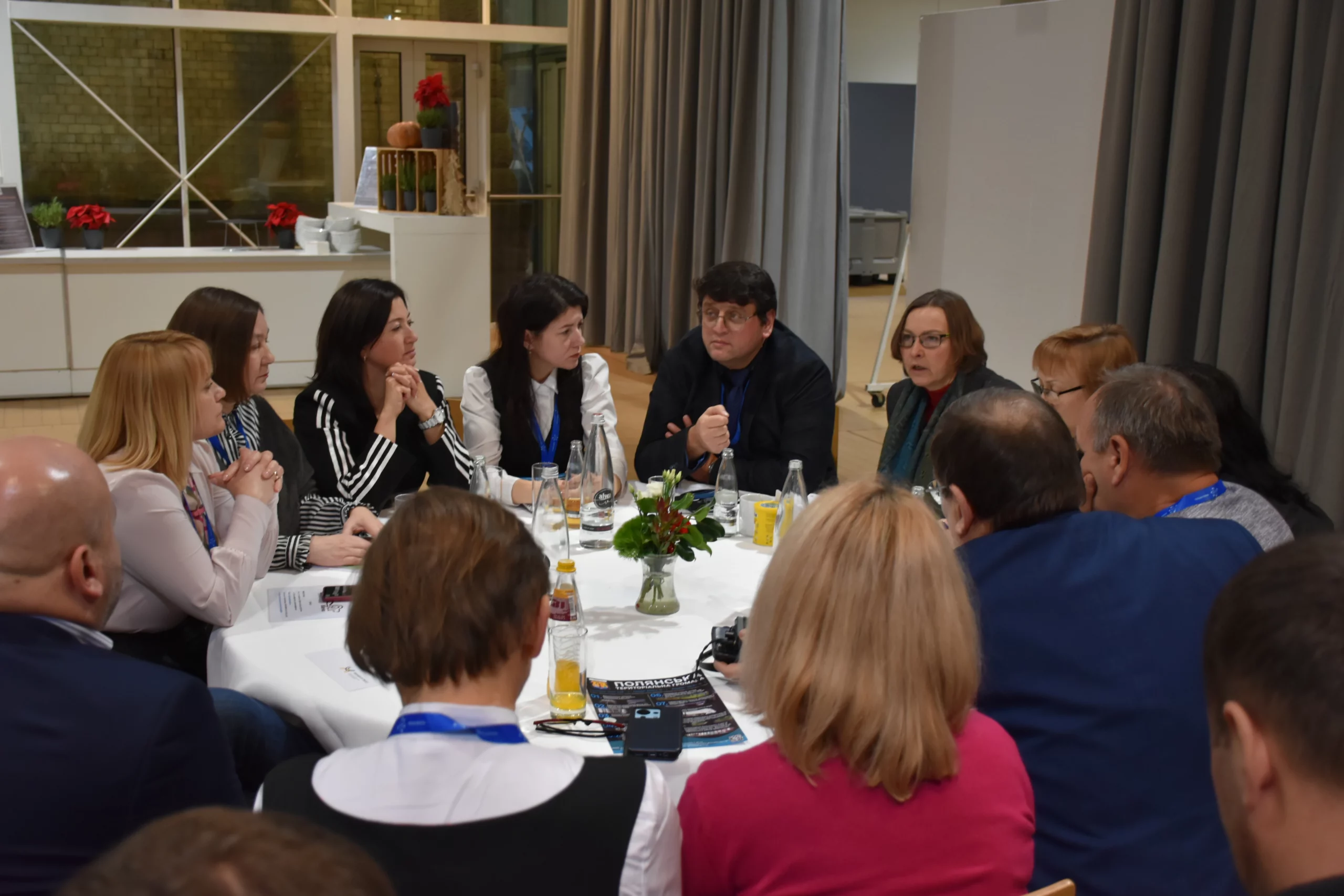
On 28 October, during an online forum “Building Bridges of Trust between Ukrainian and EU municipalities for Reconstruction and Recovery of Ukraine” the participants learned about how Ukrainian municipalities find reliable partners among their EU peers, how they overcome wartime challenges and what opportunities such partnerships bring.

In the opening speech, Fabrizio Rossi, Secretary General of the Council of European Municipalities and Regions, emphasized that the Forum is taking place when Russia is increasing its attacks on key infrastructure in Ukraine, especially its electricity and heat supply systems. “The aggressor continues to shell the Ukrainian civilians to bring chaos, confusion and fear. However, this strategy didn’t work in February and it won’t work now! Ukrainians will resist because they are defending their country and their people.”

More than 130 participants from Ukraine and EU countries took part in two sessions; the first one was dedicated to existing partnerships between Ukrainian and EU communities, which were created in the framework of the “Bridges of Trust” initiative, and the second one to European Union funding programmes.

Viacheslav A. Nehoda, Deputy Minister for Communities and Territories Development of Ukraine, believes that future cooperation between Ukrainian and EU municipalities will include, besides the reconstruction of Ukraine, European integration, namely the measures that Ukrainian municipalities have to implement since Ukraine is now an EU candidate country.

The important role of municipalities in the reconstruction of Ukraine was also emphasized by Olena Tomniuk, Deputy Programme Director of U LEAD with Europe. “The time will come to build something new and better, and the municipalities will play a key role in the reconstruction. As a result of decentralization processes the communities are stronger and able to follow the principle of subsidiarity and rebuild exactly what they need and where they need”.

The partnerships presented at the Forum were: Novohuivynske, Zhytomyr oblast – Lazdijai district municipality, Lithuania; Fastiv, Kyiv oblast – Druskininkai, Lithuania; Korosten, Zhytomyr oblast – Ukmerge District, Lithuania; Solotvyno, Zakarpattia oblast – Sol, Slovakia; Dolyna, Ivano-Frankivsk oblast – Šiauliai District Municipality, Lithuania; Polyanytsia, Ivano-Frankivsk oblast – Polanica Zdrój, Poland.

In their presentations, heads and mayors of municipalities talked about the beginning of cooperation, joint meetings, signed agreements, visits on best practices, and humanitarian and financial assistance.

Ivan Dyriv, the mayor of Dolyna, is grateful to the “Bridges of Trust” initiative, and the Šiauliai district for inviting 36 children from low-income families and families of soldiers to spend time in the summer camp in the Baltic Sea. “The best thing that humanity has come up with is cooperation. In tough times we can get assistance and support each other”, – emphasized Dolyna’s mayor. In future, at the heart of the cooperation with Lithuanian partners, Ivan Dyriv sees energy, environment and transition to green technologies.

Khrystyna Vasilkova, secretary of the Polyanytsia village council in the Ivano-Frankivsk region, visited the Polanica Zdrój municipality in Poland in September. She strives to implement innovative eco projects within the community – the construction of wastewater treatment facilities and solving the problem of waste recycling, as European partners have considerable experience in these areas. “Work of our Polish colleagues is very encouraging. They started their planning back in the 1980s, so we understand that we need to learn from their experience and develop,” – emphasized Khrystyna Vasilkova. In winter, Polish partners plan to pay a visit to the Ivano-Frankivsk region.

Interesting future projects were presented by mayor of Fastiv, Mykhailo Netyazhuk. “Two priorities for us are the hospitals repurposing for the rehabilitation of military personnel and the “Моє серденько” (“My Heart”) project for people who suffered from the war. It is valuable to have partners – representatives from Druskininkai in Lithuania, who share their experience and are ready to raise funds to realize these projects.”

Volodymyr Moskalenko, mayor of Korosten municipality, emphasized the sincere support of Ukraine by Lithuanian friends from Ukmerge – recurrent humanitarian aid to war victims, a bus for the needs of the Armed Forces of Ukraine, and even organizing in Ukmerge a very symbolic event for Korosten “Day of Derun” (deruny – potato pancakes). With Lithuanian partners, the mayor sees cooperation opportunities in the field of energy efficiency and now the partners are preparing a joint project and hope to be supported by the LIFE programme.

One of the goals of the Forum was to spread information on funding programs. The LIFE programme was presented by Maia Mikosinska, Head of Sector, LIFE Nature and Biodiversity, European Commission. Forum participants had the opportunity to ask Mrs Mikosinska, as well as other representatives of the programmes like “Digital Europe”, TAIEX Technical assistance and information exchange tool and Deputy Minister for Communities and Territories Development of Ukraine, Ihor Korkhov, who spoke about the Danube Transnational Programme Interreg.

Ukraine and the EU cooperation among municipalities will continue because Ukrainian victory is ahead and a lot of joint work on the reconstruction of the country is ahead.

Project “Empowering municipalities in Ukraine and the European Union through building municipal partnerships” is implemented by the Council of European Municipalities and Regions (CEMR), PLATFORMA within the framework of U-LEAD with Europe’s initiative “Bridges of Trust” and with the support of U-LEAD with Europe.


Партнерства українських та європейських громад під час війни

28 жовтня на онлайн форумі “Мости довіри між європейськими та українськими громадами задля відбудови та відновлення України” обговорили, як українські громади знаходять собі надійних партнерів серед муніципалітетів Європейського Союзу, як вони спільно долають виклики воєнного часу та які можливості відкриває така співпраця.

У своїй вступній промові Фабриціо Россі, генеральний секретар Ради європейських муніципалітетів та регіонів, наголосив, що Форум відбувається на тлі посилення російських атак на ключову інфраструктуру, особливо на її системи електропостачання та теплопостачання. “Агресор продовжує обстрілювати мирне населення України, щоб нести хаос, сум’яття та страх. Однак ця стратегія не спрацювала в лютому і не спрацює зараз. Українці будуть чинити опір, тому що вони захищають свою країну і свій народ”.

Більше 130 учасників з України та країн ЄС взяли участь в двох сесіях, одна з яких була присвячена партнерствам між громадами України та ЄС, які реалізовуються в рамках ініціативи «Мости довіри», а інша – програмам фінансування Європейського Союзу.

Заступник Міністра розвитку громад та територій України В‘ячеслав Негода вважає, що співпраця між українськими і європейськими муніципалітетами, крім напрямку з відбудови країни, включатиме й євроінтеграцію. Міністр наголосив, що українські громади реалізовуватимуть заходи, які є рекомендаційними для країни-кандидатки у члени ЄС.

Про важливу роль муніципалітетів у відбудові України зазначила також і Олена Томнюк, заступник директора Програми «U-LEAD з Європою» від GIZ, “Прийде час будувати нове і краще. Громади – міцніші і стійкіші завдяки децентралізаційним процесам – здатні слідувати принципу субсидіарності і відбудовувати саме те і саме так, як потрібно їхнім жителям”.

Cеред партнерств, які були представлені на Форумі: Новогуйвинське, Житомирська область – Лаздійcький район, Литва; Фастів, Київська область – Друскінінкай, Литва; Коростень, Житомирська область – Укмергський район, Литва; Солотвино, Закарпатська область – Соль, Словаччина; Долина, Івано-Франківська область – Шяуляйський район, Литва; Поляниця, Івано-Франківська область – Поляни́ця-Здруй, Польща.

У своїх презентаціях голови та мери муніципалітетів розповідали про початок співпраці, спільні зустрічі, підписані договори про співпрацю, навчальні поїздки з метою перейняття найкращих практик,  гуманітарну та фінансову допомогу.

Долинський міський голова Іван Дирів вдячний ініціативі «Мости довіри» та Шауляйському району за відпочинок 36 дітей учасників бойових дій та дітей із малозабезпечених сімей у літньому таборі в Литві на Балтійському морі.  “Найкраще, що придумало людство – це колективна співпраця. Ми можемо в складний час отримувати допомогу та підтримувати один одного” – наголосив пан Дирів. В майбутній співпраці з литовськими партнерами він вбачає акцент на енергетиці, екології та переході до зелених технологій.

Христина Васількова, секретар ради Поляницької громадина Івано-Франківщині, у вересні брала участь у візиті до муніципалітету Поляниця-Здруй у Польщі. Вона прагне до впровадження в громаді інноваційних екологічних проєктів – побудови очисних споруд та вирішення проблеми відходів. Пані Васількова наголошує, що європейські партнери вже мають вагомий багаторічний досвід: “Рівень польських колег дуже мотивує. Вони розпочали своє планування ще у 1980-х роках, тож ми розуміємо, що нам треба переймати досвід і розвиватися”. Взимку польські партнери планують здійснити візит на Івано-Франківщину.

Цікаві майбутні проєкти були представлені міським головою Фастова Михайлом Нетяжуком. “Два пріоритетні для нас напрямки – це перепрофілювання лікарень задля реабілітації військовослужбовців та проєкт “Моє серденько” для осіб, які постраждали від війни. Цінно мати партнерів – представників Друскінінкай у Литві, які діляться досвідом та готові спільно залучати кошти на реалізацію цих потреб”.

Володимир Москаленко, голова Коростенської міської громади, відзначив щиру підтримку України литовськими друзями з Укмерге – неодноразове надсилання гуманітарної допомоги для постраждалих від війни, передачу автобуса для потреб ЗСУ і навіть проведення в Укмерге такої символічної для Коростеня події, як День деруна. З литовськими партнерами міський голова бачить подальші можливості для співпраці в сфері енергоефективності, наразі партнери готують спільний проєкт і сподіваються отримати підтримку в рамках програми ЄС під назвою LIFE.

Однією із цілей Форуму було розповсюдження інформації про програми фінансування. Програму LIFE представила Майя Мікосинська, керівниця сектору, Європейська Комісія. Учасники Форуму мали можливість поставити питання пані Мікосинській, представникам програм, таких як «Цифрова Європа», TAIEX-Інструмент технічної допомоги та обміну інформацією, а також заступникуМіністра розвитку громад та територій України Ігорю Корховому, який розповів про Дунайську транснаціональну програму Interreg.

Співпраця між громадами України та ЄС буде продовжуватися,адже попереду українська перемога та багато спільної роботи із відбудови країни. 
Проєкт «Розширення можливостей муніципалітетів в Україні та Європейському Союзі через розбудову партнерств» впроваджується Радою європейських муніципалітетів і регіонів (РЄМР), PLATFORMA, в рамках ініціативи «U-LEAD з Європою» «Мости довіри» та за підтримки «U-LEAD з Європою».

Sustainable local finances in Europe

Sustainable local finances - News 2022

CEMR releases landmark study on local finances in European countries


People depend on quality local public services and infrastructure every day. Reliable buses, insulated public housing, good schools or clean energy: all of these and more depend on healthy and sustainable local public finances to be developed and maintained.

That’s why the Council of European Municipalities and Regions (CEMR) is releasing a fully-fledged online report and tool entitled Local Finances and the Green Transition in Europe. This one-of-a-kind study provides data and analysis on the trends in local and regional finances in 40 European countries over the past 10 years. The study offers a bird’s eye view of both changes in subnational finances and the remarkable diversity of national situations.

This report is essential reading for policymakers, politicians and academics. Only by understanding local public finances and unlocking futher investments can we achieve the sustainable and resilient societies our people and planet need”, said CEMR Secretary General, Fabrizio Rossi, who added: “If this report shows one thing, it is that well-funded municipalities, counties and regions are essential to taking care of our people and realising the environmental transition“. 

Revealing figures and trends as observed over the last decade

The study reveals for instance that despite making up 25% of all public spending, local and regional governments finance 54% of all public investment. This reflects the leading role of municipalities and regions in investing in areas such as energy efficient housing, smarter public transport and local environmental protection. The climate and energy transition will only happen by working with local and regional governments.

Also noteworthy is that subnational government debt is at a manageable level in the 36 countries where comparative data was available. In fact, local debt is low and stable, a mere 4.8% of GDP on average. By way of comparison, general government debt increased by the middle of the decade to 67% of GDP (and to 81% in 2020).

While browsing through the online study, you will also come across a special section on the impact of the EU’s €720-billion post-COVID recovery plan on local and regional governments. This chapter looks in particular at the implications for the green transition and territorial cohesion.

The data shows clearly that the share of green transition among the main RRF spending areas is higher in the decentralised countries. Stronger local and regional governments can support more recovery and resilience programmes and actions.

A dynamic and interactive online tool

“Local Finances and the Green Transition in Europe” is available as an interactive online tool  as well as in PDF  format. The online tool contains:

The study is currently only available in English. The French version is under development.

The study was launched on 10 November 2022 at the occasion of a seminar bringing together representatives of many of CEMR’s member associations, the OECD, KDZ and the study’s co-author Gábor Péteri.

For more information:

Next Generation EU

Cohesion Policy - News

State of Play – Recovery and Resilience Facility


In 2020, faced with the unprecedented Covid-19 pandemic, European Union (EU) leaders and the European Commission put in place an equally unprecedented response package: Next Generation EU. It allows the EU to borrow large amounts of funding from the financial markets and to allocate these to Member States. The Next Generation EU’s centrepiece, the Recovery and Resilience Facility (RRF), provides grants and loans over a period of 5 years, amounting to €724 billion (in current prices) in total, to support the rebound of EU economies following the pandemic.

EU Member States have been required to submit national Recovery and Resilience Plans (RRPs), which outline their respective investment and reform strategies for using the RRF financing. The RRPs should outline a 5-year reform and investment strategy and set the pace of transformation needed for robust and fair digital and sustainable transitions. Member States have recently been given the opportunity to adapt their national plans to consider the new challenges thrown up by the war in Ukraine and its impact on the cost of energy supplies.

Local and Regional Governments involvement

Since early on in the process, CEMR and the European Committee of the Regions (CoR) have worked together to push for the fullest and most meaningful involvement of local and regional governments (LRGs), both in the design and the implementation of the Recovery and Resilience. An initial study produced jointly by the CoR and CEMR and published in January 2021 highlighted the early efforts of LRGs to be involved in the preparation of the RRPs.

The results demonstrated the extensive problems experienced by LRGs, the lack of consultation on their national RRPs and even on the occasions where they were consulted, their contributions were often overlooked.

In May 2022 CEMR and CoR prepared a follow-up study, to explore the extent to which the situation had evolved positively and whether or not LRGs felt that their involvement in the implementation of the RRPs had improved. The results of this follow-up study were more mixed but the general feeling was that LGRs were concerned that the lack of partnership arrangements in delivering the RRPs was leading to less effective delivery of the RRPs on the ground.

Current developments

Member States are advancing with the implementation of their national recovery plans, setting out both new investments and reforms, and consequently a considerable amount of RRF funds have now been disbursed. It remains noticeable however, that a significant amount of the loans available remain unrequested by Member States. While there is potential for synergies between cohesion policy and the RRF, there is also the potential for overlap and a competition for funding due to insufficient coherence between the different instruments. Concerns are growing that prioritising the RFF could lead to a reduction of cohesion resources after 2027. There are growing calls for the opening of a serious debate on how to ensure coherence among different EU cohesion instruments, as well as which approach can deliver on EU objectives in a world where shocks have unfortunately become not only more frequent, but also more varied in nature.

At the start of summer 2022, the European Commission published its Review report on the implementation of the Recovery and Resilience Facility, setting out the Commission’s views on the performance of the RRF to date. This has since been followed by the first in a series of audits on the Recovery and Resilience Facility.

Based on a selected sample of six member States (France, Germany, Croatia, Greece, Spain and Italy), the European Court of Auditors (ECA) assessed the suitability of the RRFs for each of these countries, the guidance provided to each Member State and compliance with the RRF regulation. Overall the ECA’s felt that the Commission’s assessment was generally appropriate, given the complexity of the process and the time constraints. However, the ECA highlighted a number of weaknesses in the process and that risks to the implementation of the RRF remain.

The CoR too is preparing an opinion on the implementation of RRF following its earlier work and the publication of the European Commission’s Review report. We wait to see whether or not, a year on from its last opinion, the CoR now believes that the implementation of the RRF will enable important public funds to properly reach the needs of our communities, municipalities and regions. The CoR will adopt its opinion during the plenary session in February 2023.

CEMR projects overview  

CEMR’s externally funded projects foster cooperation, innovation, and sustainability across Europe 


Through its externally funded activities, the Council of European Municipalities and Regions (CEMR) brings local and regional leaders together to exchange ideas, test solutions, and build stronger communities. These projects are more than initiatives: they are platforms where municipalities and regions collaborate on Europe’s most pressing challenges, from climate action to equality, from digitalisation to democratic participation. 

Overview of Projects 
CEMR’s portfolio of externally funded projects reflects its commitment to innovation, sustainability, and inclusion: 

  • Reference Framework for Sustainable Cities (RFSC) – Supporting sustainable cities with a practical tool to plan and assess policies. 
  • IncluCities – Advancing migrant integration through peer learning among municipalities. 
  • Circular Cities and Regions Initiative (CCRI) – Driving circular economy solutions for cities and regions. 
  • Green City Accord – Helping European cities commit to ambitious environmental goals. 
  • Covenant of Mayors – Uniting local leaders in climate and energy action. 
  • PLATFORMA – Strengthening international partnerships and decentralised cooperation. 
  • Bridges of Trust – Building ties between Ukrainian and European municipalities. 
  • EPSU (Local Digital) – Supporting local administrations in navigating digital transitions. 
  • EPSU (Third-Party Violence) – Tackling violence against public service workers. 
  • Go.Li.EU – Promoting youth engagement and European citizenship. 

Together, these projects illustrate how CEMR channels external resources into meaningful action. By bridging local realities with European priorities, they not only empower municipalities and regions but also shape a more sustainable, inclusive, and resilient future for all. 

Read the study here 

For more information, contact: