Soil Health

Negotiations are underway on the adoption of a Soil health directive


In a continent where over 60% of soils are estimated unhealthy, it is today imperative to address soil degradation. Scientific evidence underscores the alarming trend of soil deterioration, driven by unsustainable land management practices, contamination, and the intensifying impacts of climate change. This degradation not only jeopardizes essential ecosystem services but also carries a significant economic burden, with the European Commission estimating an annual cost of at least 50 billion euros to the EU. 

Soil monitoring, already practised in several EU Member States, often involves the engagement of regions and municipalities. Public authorities frequently hold ownership of land, and they are directly impacted by soil health issues. Consequently, they play a crucial role in monitoring and managing land health within their jurisdictions. 

In July 2022, the European Commission unveiled its proposal for a Directive on Soil Monitoring and Resilience, aiming to achieve healthy soils across Europe by 2050. The directive includes three main elements: 

  • A Comprehensive Monitoring Framework covering all soils within the EU, helping Member States to undertake measures for regenerating degraded soils. 
  • Promotion of Sustainable Soil Management: Member States will define sustainable soil management practices while limiting activities that contribute to soil degradation.
  • Identification and Remediation of Contaminated Site: Member States are asked to identify potentially contaminated sites, conduct investigations, and mitigate risks to human health and the environment.  

CEMR welcomes the legislative proposal of the Commission which rightly balances ambition and feasibility for Member States. We put forward six key messages for the European Parliament and Council negotiations:  

  1. Emphasis on Monitoring: CEMR welcomes the directive’s primary focus on soil monitoring and advocates for establishing a practical monitoring framework to improve soil health.
  2. Involvement of Local and Regional Governments: CEMR underscores the importance of involving subnational authorities in the implementation of the Soil Monitoring Law, ensuring collaboration within existing national frameworks without imposing undue administrative burdens. 
  3. Flexible Implementation Framework: Prioritising flexibility at the national level is paramount to accommodate local variations and ensure effective adaptation across different Member States.
  4. Support for Risk-Based Approach: CEMR endorses the adoption of a risk-based approach, emphasising considerations such as land use in monitoring frameworks and remediation efforts. 
  5. A realistic approach to land take mitigation: CEMR advocates for establishing a compensation mechanism at an aggregated level to address the impacts of land take, tailored to local and regional specificities. 
  6. Strengthening the Polluter Pays Principle: To prevent soil pollution and achieve healthy soils by 2050, CEMR emphasizes the importance of setting pollution prevention standards alongside monitoring and remediation efforts. 

What are the next steps?
Following the publication of the legislative proposal by the Commission last year, significant strides have been made in advancing the Soil Monitoring Law. The proposal is broadly supported, notably with its adoption by the Committee on Environment, Public Health and Food Safety (ENVI) on 11 March 23. The rapporteur, MEP Martin Hojsík’s strongly contributed to include the views of local and regional authorities in the draft report. As discussions continue, we call MEPs to support the upcoming adoption of the draft report in plenary on April 10.  

Trilogue negotiations will resume post-EU elections, contingent upon the Council’s adoption of a general approach. 

Wallonia Summit 2024


CEMR Brings the Voice of LRGs to Climate Chance Europe 2024 Wallonia Summit

CEMR represented the voice of Local and Regional Governments at the Climate Chance Europe 2024 Wallonia Summit, organised by the Belgian Presidency on the 8th and 9th of February in Liege.

Eva Banos, CEMR Adviser for Global Agendas, Sustainable Development Goals (SDGs), and Climate, moderated the event session titled “Cross-border and Decentralised Cooperation – How to Strengthen Community-Based & Community-Led Adaptation to Climate Change.” During this session, the discussion focused on giving agency to citizens and communities, rethinking multi-level governance in a grassroots way.

During the summit, Marlon Hilden, CEMR Climate and Sustainable Finance Officer, presented the results of the research “Powering the Future: Driving Europe’s Climate and Energy Policies through Regions and Municipalities,” delving into critical insights expected to influence and shape Europe’s climate and energy policies at regional and municipal levels.

The event culminated with the signing of the “Liège Declaration”: a Roadmap on adaptation to climate change in Europe for non-state actors.

2040 Target 

2040 Target - News 2024

CEMR’s reaction to the European Commission’s 2040 target

The Council of European Municipalities and Regions (CEMR) welcomes the European Commission’s recommendation* for a 90% net reduction in greenhouse gas emissions by 2040—a decisive move providing predictability for Europe’s municipalities and regions in achieving climate neutrality by 2050. Local and Regional Governments (LRGs) are key enablers of Europe’s climate policies and call for an inclusive exchange with European decision-makers on the 2040 target’s implementation.

At this crucial moment, CEMR underscores the importance of ambitious goals and advocates for EU legislation that can effectively respond to the diversity of Europe’s regional and local contexts, steering clear of a “one size fits all” approach. At the same time, recent polarisations around environmental policies clearly highlight the necessity for integrated involvement from all stakeholders. The sustainable transition must be a shared responsibility, and to prevent it from being politicised, all parties involved should contribute to shaping new regulations post-election.

In this context, Local and Regional Governments (LRGs), holding a significant mandate, are responsible for implementing nearly 70% of climate and energy policies*. To ensure a successful transition, it is imperative that the EU listens to those who understand their territory’s economy best, ensuring a fair approach that fosters the cohesion of our regions.

References:

https://ec.europa.eu/commission/presscorner/detail/en/ip_24_588

NECP_Report_CEMR_2023

European Commission 

CEMR Engages in Talks with the European Commission on Green Deal Implementation at the Local and Regional Level


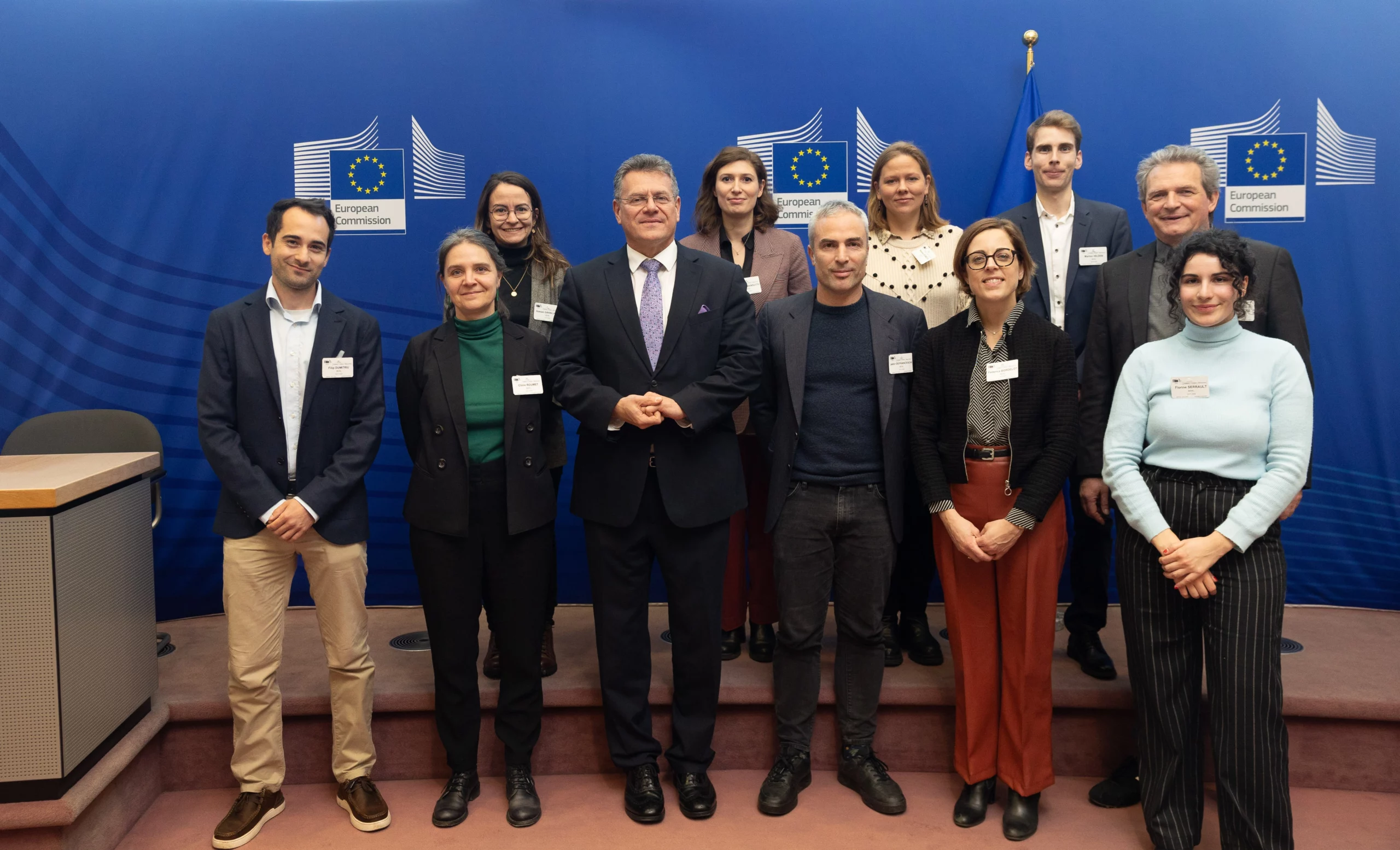
The Council of European Municipalities and Regions (CEMR) convened this week with Maroš Šefčovič, Executive Vice-President for the European Green Deal at the European Commission. The meeting was an important opportunity for CEMR to engage with the Commission to discuss the implementation of the European Green Deal at the local and regional levels.
 
Federica Bordelot, Director of Policy and Impact, and Marlon Hilden, Climate Sustainable Finance Officer, took part in the discussions. During the meeting, they highlighted the significance of Local and Regional Governments’ (LRGs) involvement in realising the goals of the European Green Deal. The CEMR delegation seized the occasion to showcase exemplary initiatives outlined in their latest studies, underlining successful models that can be replicated across European municipalities and regions. CEMR also raised concerns about the comparatively low participation of LRGs in decision-making processes and policy implementation. Addressing this issue is crucial for ensuring the inclusivity and effectiveness of environmental policies on the ground.
 
The dialogue emphasised the importance of a coordinated effort between the European Commission and local and regional entities to create a sustainable and resilient future. As discussions continue, CEMR remains dedicated to contributing valuable insights and advocating for the active involvement of Local and Regional Governments in shaping and executing environmental policies across Europe.

NECP Report

NECP Report - News 2023

“Empowering the Future: Study Reveals European Local and Regional Governments as Key Players in Climate Policy”


The Council of European Municipalities and Regions (CEMR) is proud to announce the publication of a comprehensive study titled “Powering the Future: Driving Europe’s Climate and Energy Policies through Regions and Municipalities.” 

In the wake of ongoing revisions to national climate policies, this study aims to shed light on the critical role European Local and Regional Governments (LRGs) played in implementing sustainable energy and climate policies. The research period, spanning from June to October 2023, has resulted in a wealth of insights and recommendations for the enhanced integration of LRGs into future legislative frameworks.

Marlon Hilden, CEMR Energy, Climate, Sustainable Finance Officer, emphasised the study’s significance: 

“The findings underscore the critical role of local and regional governments in energy and climate policy implementation. This highlights the imperative need for consulting regions and municipalities throughout the policymaking process.”

  • To access the full report “Powering the Future: Driving Europe’s Climate and Energy Policies through Regions and Municipalities,” click here.

Sustainable textile waste management 

Textile Waste - News

Strengthening EU Waste Legislation Through Local Collaboration and Producer Responsibility 


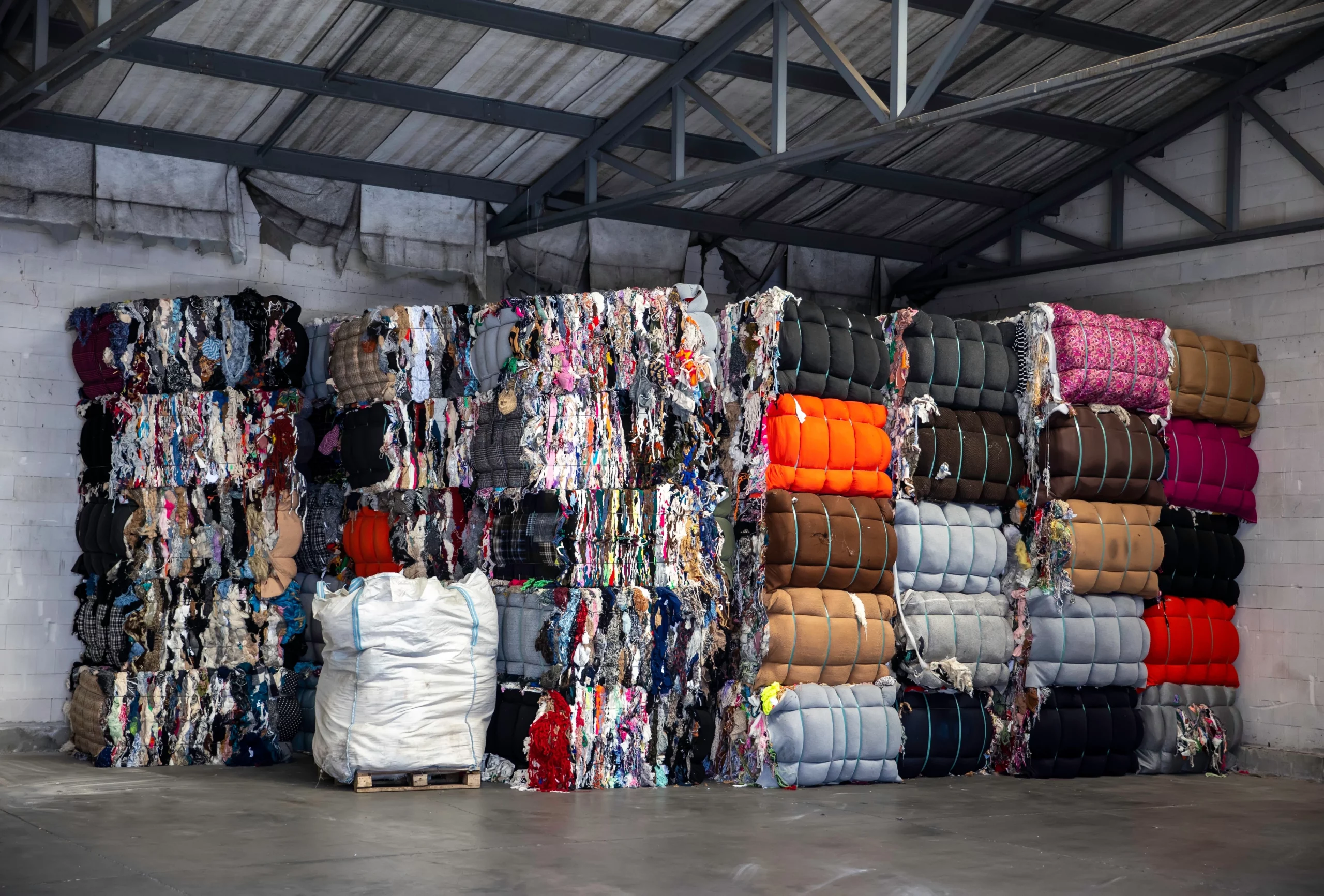
As the EU prepares to implement key provisions of the revised Waste Framework Directive, including mandatory separate collection of textiles by January 2025, the Council of European Municipalities and Regions (CEMR) calls for urgent improvements to ensure fairness, clarity, and efficiency in textile waste management. Drawing from on-the-ground experience and policy best practices, particularly France’s Extended Producer Responsibility (EPR) scheme, CEMR offers targeted recommendations to close critical legislative gaps and empower local governments in achieving sustainable waste solutions. 

1. Expand the Definition of Textile Waste 

The current directive focuses narrowly on ‘household textiles,’ excluding significant sources of textile waste from commercial and institutional settings such as hotels, hospitals, restaurants, offices, and schools. CEMR recommends a broader, more inclusive definition of ‘textile waste’ that reflects its diverse origins and aligns with the Polluter-Pays Principle. 

2. Clarify the Role of Social Enterprises 

Social enterprises play a vital role in collection, sorting, reuse, and resale of textiles. These actors must be fully recognised within the waste legislation and EPR frameworks, with fair access to funding and partnership opportunities. Their unique contributions can enhance the circular economy while delivering strong social outcomes. 

3. Strengthen Extended Producer Responsibility (EPR) for Textiles 

a) Align Implementation Deadlines 

There is currently a mismatch between the 2025 obligation for separate textile collection and the proposed EPR deadline, which may not come into effect until 2027 or 2028. CEMR calls for the EPR scheme to be implemented simultaneously with the collection obligation, and for producers to retroactively reimburse municipalities for collection-related costs from January 2025. 

b) Recognise Local Authorities as Key Partners 

Municipalities are central to waste collection and citizen engagement, yet their role is not clearly defined in the proposed EPR framework. CEMR urges mandatory collaboration between Producer Responsibility Organisations (PROs) and municipalities to ensure streamlined collection systems and cohesive public communication. 

c) Ensure Full Cost Coverage 

EPR funding must comprehensively cover not only infrastructure and operational costs, but also continuous public communication campaigns, which are critical to successful sorting and reuse. Additionally, producers should bear partial responsibility for textiles that remain in mixed waste streams, incentivising better product design and citizen behaviour. 

d) Include Unsold Textiles in EPR Obligations 

To align with the Ecodesign Regulation for Sustainable Products, which bans the destruction of unsold goods, CEMR advocates for including unsold textiles in the scope of EPR. A clear definition should be added to the directive to ensure these products are managed responsibly and transparently. 

4. Introduce Clear Measures to Prevent Textile Waste 

Overproduction and fast fashion are key drivers of Europe’s textile waste crisis. The revised directive must go beyond waste management and address prevention at the source. This includes incentives for sustainable design, extended use, reuse systems, and anti-overproduction regulations. 

Case Study: France’s “Refashion” EPR Scheme 

France’s pioneering EPR program, “Refashion,” offers a proven model. Since 2007, it has tripled the collection and recycling rates of post-consumer textiles. In 2020 alone, it engaged over 4,000 producers and allocated €36 million toward sorting, community projects, and innovation. Nearly 40% of textiles placed on the market were collected, up from 27% in 2013, with a 90% material recovery rate and 50% direct reuse. 

This success story demonstrates how producer accountability, coupled with strong public-private cooperation, can drive significant progress. However, challenges such as labour-intensive sorting and the difficulty of recycling blended fibres remain and must be addressed at the EU level. 

Conclusion 

With the right revisions, the updated Waste Framework Directive can become a powerful tool in reshaping Europe’s approach to textile waste. CEMR urges EU institutions to act decisively by aligning deadlines, empowering municipalities, and ensuring that both social and environmental responsibilities are shared equitably across the textile value chain. Only then can the EU truly advance toward a circular, fair, and sustainable future. 

Read the position paper here 

For more information, contact: 

Fixing Textile Waste

Textile Waste Management - News

CEMR calls for a stronger local role and producer responsibility in EU textile waste reforms


In response to the European Commission’s proposal to revise the Waste Framework Directive, the Council of European Municipalities and Regions (CEMR) has published key messages to ensure that local and regional authorities are central to a fair and effective textile waste management system.

The revision, which includes mandatory Extended Producer Responsibility (EPR) schemes for textiles, is welcomed by CEMR. However, urgent improvements are needed to ensure timely implementation, comprehensive cost coverage, and clearer roles for public authorities and social enterprises.

CEMR’s recommendations highlight several critical areas:

  • Broaden the definition of textile waste to include non-household sources such as hotels, hospitals, and offices.
  • Clarify the role of social enterprises and ensure they are fully integrated into EPR schemes.
  • Align deadlines for separate collection (due by 2025) with the establishment of EPR schemes to avoid unfunded obligations for municipalities.
  • Guarantee full cost coverage for collection, sorting, treatment, and public awareness campaigns.
  • Include unsold textiles under EPR rules, in line with the upcoming Ecodesign Regulation.
  • Promote prevention, especially by tackling overproduction and fast fashion.

Drawing on best practices from France’s “Refashion” scheme, CEMR shows how EPR can drive higher collection and reuse rates, stimulate innovation, and improve cooperation across the value chain, but only when properly implemented.

CEMR urges EU institutions to embed these recommendations into the revised directive to ensure that local governments can continue to lead on circular economy goals without being burdened by unfunded mandates.

For more information, contact:

Electricity market design reforms

Electricity Market - News 2023

Reforming the European Electricity Market: Priorities and Challenges


In March, the European Commission proposed a regulation to improve the EU’s electricity market. The reform is important for local and regional governments, since they play a central role as suppliers, distributers and consumers of electricity. While the current internal market for electricity has brought positive effects and lower prices, reforms are needed to address decarbonization of the electricity sector and gas shortages caused by Russia’s energy weaponization in the Ukraine conflict.

The past winter has made it clear for all Europeans that ensuring the security of supply and lower prices of electricity were top priorities for the years to come. The EU and Member States must increase both the production of electricity and their capacity in terms of energy storage. They also need to take strong measures to decarbonize the electricity sector in order to achieve climate neutrality by 2050. In other words, the European electricity market is at a crossroads: to move forward, the EU needs to take strong actions and work together with local and regional governments.

Facilitate local and regional governments’ work driving investments in renewable energy

Local and regional governments have important roles to play in changing the electricity sector. They are responsible for finding suitable locations for production, distribution and transmission; they also must speed up permitting, manage spatial planning, invest in energy companies, and enable consumers and energy communities.

Furthermore, they possess valuable insights due to their direct engagement with local communities, and are therefore essential in ensuring citizens’ acceptance of the rollout of renewable energy. Considering all these factors, local and regional governments must be key partners in the reform of an efficient, sustainable European electricity market.

Make electricity prices less reliant on short-term fossil fuel costs

It is important to offer the option of long-term contracts, including to individuals and smaller consumers. This helps protect them from high and unpredictable prices, especially until more renewable energy production at lower generation prices is available.

Keep emergency measures as permanent features of the Electricity Market Design

During periods of excessively high electricity prices, it is advisable to maintain certain emergency measures. These measures can include price caps, taxes on windfall profits, and reimbursements for consumers. However, they should only target fossil fuel and other phased-out energy sources to encourage investment in renewable energy. These measures should not discourage energy savings or flexibility.

Encourage better consumer empowerment and protection

Efforts should be made to empower and protect consumers, particularly vulnerable ones, when implementing renewable energy sources and energy efficiency measures. Support schemes, loans, and technical assistance can help achieve this goal. Moreover, regional and municipal energy providers, acting as a “supplier of last resort,” should receive adequate financial compensation from national or European funding to support vulnerable households and enterprises.

Promote efficient multi-level governance solutions and financial support

Collaboration among different levels of governance, following the principles of subsidiarity and multilevel governance, is crucial for success. Platforms like the Covenant of Mayors facilitate cooperation, knowledge exchange, and the sharing of good practices at EU, national, and regional levels.

Finally, to successfully implement changes at local and regional levels, it is important to provide financial resources and supportive measures, while avoiding excessive regulations and administrative burdens.

In conclusion, the Commission’s proposed regulation offers an opportunity to address challenges in the European electricity market. To achieve climate neutrality and ensure a secure energy supply, increasing production and storage capacities, promoting renewable energy sources, and involving local and regional governments are crucial. Collaboration, financial support, and efficient governance will contribute to a sustainable European electricity market.

To learn more about the measures proposed by CEMR, read the full position paper.

For more information, contact:

CEMR and Eurocities

CEMR & Eurocities - News 2023

In response to the European Commission’s proposed Nature Restoration Law, CEMR and Eurocities, issued a joint letter urging for amendments, in order to reach the aspired adoption by the European cities


The proposal aims to restore ecosystems, habitats and species across the EU’s land and sea areas in order to enable the long-term and sustained recovery of biodiverse and resilient nature, in addition to contribute to achieving the EU’s climate mitigation and climate adaptation objectives, and meet the international commitments. According to the proposal, these specific targets are set for 2030, 2040 and 2050 to be improved and expanded over time.
In the joint letter, CEMR and Eurocities, expressed the support for the proposal, yet they underlined the importance of a leaner, more inclusive, comprehensive targets, while taking into account the quality of the green spaces, not just the quantity.
Both organizations also proposed complementing the EU satellite data with local and national data for more accuracy in monitoring the progress of implementation of the targets . CEMR and Eurocities called for increase in the funding for the local authorities to perform the growing responsibilities.  

EU Energy Performance

EU Energy Performance - News 2023

Buildings directive: a huge deal for local governments


When the European Commission published its proposal for a recast of the EU Energy Performance of Buildings Directive more than a year ago, few anticipated the scope and breadth of its revamp on citizens and local governments.

Now that the directive has been endorsed by the European Parliament, what can we expect from it? And what impact will it have on local governments? We’ve looked into these questions of major importance to municipalities, cities and regions.

The European Green Deal moving forward

The revision of the directive – also known as the EPBD – takes place in the context of the ‘European Green Deal’, which aims to put the EU firmly on the path towards climate neutrality by 2050.

To this end, in 2021, the von der Leyen Commission put on the table its so-called ‘Fit for 55’ package, a mammoth law package of energy and climate laws aimed at reducing net greenhouse gas emissions by at least 55% by 2030.

It is against this backdrop that the European Commission decided to revise upwards the Union’s energy performance of buildings targets. As stated by the Commission, buildings in the EU are responsible for 40% of our energy consumption and 36% of greenhouse gas emissions. And almost 75% of the building stock is energy inefficient… The renovation awaiting it is immense given the millions of old buildings across Europe.

The transition to zero-emissions buildings

The introduction of the ‘zero-emission building’ (ZEB) definition in the revised EPBD is of key importance, as it refers to the new ‘A’ energy performance class. From 2028 onwards, all new buildings will have to be zero emission. According to the adopted text, new buildings must achieve the highest level of energy performance, thanks to moderate consumption and heating powered by decarbonised energy.

CEMR believes that, while it is important to focus on the energy performance of buildings, reconfiguring the whole energy system is also needed for a net zero future.

Minimum energy performance standards

According to the text, public buildings will have to achieve at least energy performance class E by 2027, and D by 2030 (Commission proposed F and E). In addition, all new buildings occupied, operated or owned by public authorities should be zero-emission from 2026.

This is a big blow for local and regional governments who will now have to renovate in droves. CEMR considers these targets too ambitious and unrealistic, even for the most advanced municipalities and regions.

While increasing the rate of renovations of energy-inefficient buildings is essential, CEMR believes it is unlikely that all class “E”, “F” and “G” buildings will be renovated by 2030.

All measures needed to achieve these targets will be established by each Member State in national renovation plans. To take into account EU countries’ diverse building stocks, the letter G will correspond to the 15% worst-performing buildings in the national stock.

For CEMR, this proposal is questionable since the EU’s energy efficiency classification system is made regardless of the initial situation concerning the quality of the buildings. In the Nordic countries, for example, a large proportion of the building stock scores high on the EU’s energy efficiency scale due to the climatic conditions.

However, in light of the heated exchanges taking place in EU capitals, it is not clear whether the minimum energy performance standards will survive mounting opposition from the Member States.

The ‘neighbourhood’ approach

The ‘neighbourhood’ approach, as opposed to individual buildings, is only mentioned twice in the proposal and therefore falls far short of its potential. This novel approach to buildings sees them as part of a broader neighbourhood rather than isolated units. By doing so, substantial economies of scale can be generated.

In CEMR’s view, the ‘neighbourhood’ approach should be reinforced in the legislation. CEMR however welcomes the possibility for Member States to grant regional and local authorities the possibility to identify “neighbourhoods” for the implementation of integrated renovation programmes.

Next steps

While the Parliament adopted its position by 343 votes to 216, with 78 abstentions, MEPs will now enter into negotiations with the Council to agree on the final shape of the bill.

CEMR will keep on monitoring developments, exchanging with its members and engaging with the EU institutions to ensure a smooth implementation of the directive on the ground. While in the short term, considerable resources will be required, in the medium and long term, the energy performance of buildings will greatly reduce energy bills.