
Green Deal Handbook

Climate Change - News Section

New toolkit for cities and regions on how to adapt to climate change


The European Committee of the Regions (CoR) has published the first Green Deal Handbook with a focus on climate adaptation.

The Handbook is an interactive toolkit that provides information on financial aid and technical instruments to deploy climate adaptation measures based on different geographical areas and regional specificities.

The objective is to equip local and regional authorities with a set of tools and recommendations to better adapt to climate change, minimise vulnerabilities and build resilience to reduce disaster risks as well as loss and damages. A Handbook is available for every EU Member State.

​Designed in a creative and interactive way, the new Handbook on climate adaptation gives local and regional authorities guidance in implementing the Green Deal on a local and regional level. It provides assistance in finding the right measures to deal with the hazards of climate change.

It offers guidance regarding case studies, financial aid and technical assistance in the fields of climate adaptation. While this first edition focuses on adapting to global warming, upcoming handbooks will be focusing on the renovation wave and biodiversity.

The climate adaptation Handbook is a component of the Committee of the Regions’ Green Deal Going Local campaign, that aims at supporting the implementation of the Green Deal at the local and regional levels. As there is no ‘one-size-fits all recipe’ for a local and regional implementation of the Green Deal, this Handbook provides step-by-step guidance and is adapted to each local context (from urban to rural, mountain and coastal areas, among others).

Click here to access the Handbook’s webpage.

This article was first published by the European Committee of the Regions. 

Mobility Week

Mobility Week - News 2022

​How cities are turning their streets over to cyclists


Did you know? Each year, buses, trams and metros carry 50 billion passengers in cities, saving 100 million car trips every day.

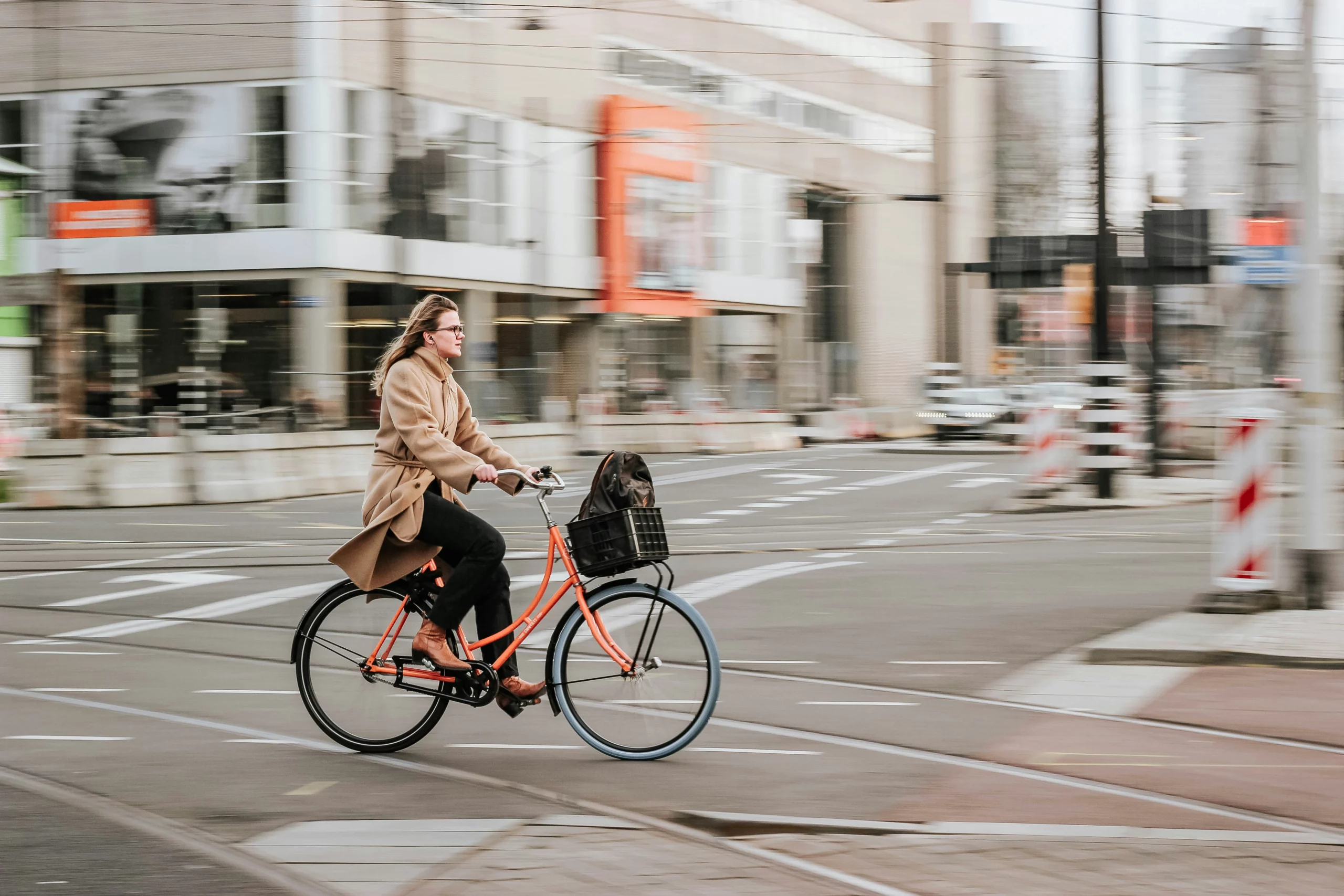
But bicycles are also a convenient and environmentally friendly way to travel. Copenhagen, for example, is known for being a city of cyclists. Its residents ride because it’s safe, fast and easy to get around by bike. They also do it because Copenhagen is designed and built for cycling. By 2025, 50 per cent of all trips to work and education in the city are expected to be made by bike. 

So what is the recipe for turning cities around bicycles? Some say it all starts with the creation of segregated bike lanes and ‘slow streets’. Others claim making public transport compatible with cyclists is key. 

All around the world, cities are taking steps to drive sustainable mobility, including by widening pavements, closing streets to cars and setting up traffic light signalling that prioritises people travelling by foot or bike. 

But as the European Commission states, the worst enemies of the bicycle in urban areas are not cars, but longheld prejudices connected with the use of the bicycle as a regular mode of transport. For example, few car owners are really aware of what their car costs them and of the considerable savings to be made by cycling. Awareness-raising campaigns are therefore key to informing the population on the objective qualities and advantages of cycling.

On their own, all those local initiatives led by cities can make a difference, but together they can transform our urban future and make mobility less environmentally and socially harmful, more efficient and cleaner.

To find out more about how cities are tackling the challenge of mobility, visit the European Mobility Week website. Also, take a look at the infographic produced by the CEMR on this occasion.

Parks and green spaces 

Green Spaces - News 2022

Podgorica: one of Europe’s greenest cities


Green spaces are a great way to have cleaner, healthier cities and encourage people to get out and about. That’s why Podgorica has been renovating old parks, building new ones and creating children’s playgrounds.
 
So far, 16 new parks and 51 children’s playgrounds have been created by the city administration. That’s 230,000 square meters of public green space created and 10,000 tree seedlings planted.
 
The city is proud that in February 2022, the European Environment Agency ranked Podgorica among the five greenest cities in Europe in the category of “urban green areas.”
 
Podgorica’s parks are varied. One features pine trees as a backdrop, with fields for football and other sports, as well as the 2.5-kilometer-long fitness track, the longest in Montenegro. Another, the forest park of Tolosi, hosts a recreational trail for all ages.
 
The development of parks and increased funds for green areas continue to be high on the city’s list of priorities.

Noise pollution 

Noise pollution - News 2022

​French cities deploy ‘Medusa’ sound sensors to tackle noise pollution


Nantes, Nice, Toulouse, Paris: many French cities and towns are setting to trial noise cameras called ‘Medusa’.

Their role? To crack down on vehicles breaking noise limits. The Medusa sound sensors are equipped with a camera and several microphones detecting vehicles such as cars, motorbikes and lorries making noises over a certain decibel level.

The sound radars are expected to be officially approved by the French Ministry of the Interior by the end of 2022 and are currently in the test phase.

The significant noise pollution’s health effects on Europeans

According to the European Environment Agency, at least one in five Europeans are currently exposed to harmful levels of noise pollution. And more than half of Europeans living in urban areas are exposed to road noise levels of 55 decibels or more.

Just as alarming, the EEA estimates that long-term exposure to environmental noise causes 12.000 premature deaths every year.

Further measures to reduce noise pollution in cities

Against this backdrop, mayors and local leaders have been deploying a wide range of other measures to reduce noise pollution in cities. These include replacing old cobbled roads with smoother asphalt, better managing traffic flows, introducing 30 km/h speed limits, or encouraging as much walking, cycling and public transport use as possible.

While reducing noise pollution to “zero” is a lost cause, many towns and cities across Europe have made noise pollution a top priority. As the EEA puts it, many EU Member States will need to do more in the future to reduce noise pollution, including by implementing the EU Environmental Noise Directive.

Good Local Practices

Renewable Energy - News Section

Welcome to the Saerbeck climate cooperative: when locals invest in a renewable and independent energy future


With its 7000 inhabitants, Saerbeck is a small German town with a big environmental ambition: to become an energy self-sufficient “climate community” by 2030. This will be achieved by maximising energy generation from renewable sources such as sun, wind, water and biomass as is consumed in private households and commercial enterprises.

Saerbeck has, since 2009, aimed to become the state of North-Rhine-Westphalia’s model climate municipality of the future. The municipal “climate concept” has since become part of the vocabulary of Saerbeck’s citizens and indeed all inhabitants are encouraged to participate in this effort to locally and sustainably produce all of households’ and enterprises’ energy needs.

In 2010, the municipality acquired an ammunition depot abandoned by the German armed forces. It is being transformed into an energy park with a mix of powerful photovoltaic systems, wind turbines, biogas plants and other innovative projects.

Currently, the Bioenergy Park produces about 2.5 times more renewable electricity than Saerbeck consumes. The CO2 footprint has thus been halved, although work still needs to be done to decarbonise transport and heating.

Threefold benefits: financial, environmental and educational

In the spirit of “thinking globally, acting locally”, Saerbeck’s citizens can directly participate and invest in these local energy projects through a citizens’ cooperative. As of 2020, the cooperative has turned a profit and has even distributed a dividend to its citizen-investors.

So far, almost 400 local shareholders have invested in the cooperative. Ultimately this means twice the benefit for locals: besides the local economic gains, the town is making a great contribution to global climate protection and local energy independence.

All projects are accompanied by numerous educational projects: energy transition starts in the minds.  An experimental school at the Bioenergy Park shows students from all over the world how renewable energies work in reality and what they are good for.

The Denim Deal

Denim Deal - News 2022

How Amsterdam is reducing emissions by boosting the recycling of textiles


As the birthplace of denim labels and a European hub for global brands, the city of Amsterdam is renowned as an international denim capital. This sense of style is now going hand in hand with a growing environmental consciousness. As part of this, Amsterdam has launched the Denim Deal, an initiative to increase the share of recycled textiles in the city’s denim products.

The goal is that by the end of 2023, three million denim jeans containing 20% post-consumer recycled textiles will have been produced. In 2030, this will lead to reduction of carbon emissions by 2,400 kilotonnes, equivalent to a small coal plant.

The Denim Deal will work towards becoming the new industry standard in the denim industry and it is hoped its approach can be scaled up and replicated in other European municipalities. Indeed, the struggle for a waste-free circular economy cannot be achieved in isolation: work needs to be done with different actors along the whole supply chain.

A milestone contributing to the deal was the development of the automated sorting machine, Fibersort, which divides large volumes of mixed post-consumer textiles by fibre composition and colour. Such fine-grained sorting allows these materials to become uniform inputs for high-value textile-to-textile recyclers.

Multi-level cooperation brings results

The project, launched in 2020 by the City of Amsterdam, the Amsterdam Economic Board, the Dutch Ministry of Infrastructure and Water Management and the Municipalities of Haarlem and the Zaanstad, is a case study in cooperation across different levels of government.

The Denim Deal brings together over 40 partners including denim brands, policymakers, recycling companies and others. The initiative enables precise monitoring of the value chain of denim products and processes in the industry.

The project has been undertaken in the context of REFLOW, an EU-funded innovation project supporting the development of circular cities through the re-localisation of production and the reconfiguration of material flows.

Amsterdam is since 2009 a signatory of the Covenant of Mayors for Climate and Energy – Europe.

European Bauhaus

Environment - News section

Win a prize for your sustainable, aesthetic and inclusive projects


Do you have a finished project or a new concept for local solutions that are aesthetic, sustainable and inclusive? If so, be sure to apply for the New European Bauhaus Prize 2022 before 28 February 2022 at 19:00 CET.

This prize, which is open to local and regional governments, rewards excellent projects completed within the last two years, as well as concepts or ideas from young talents aged 30 or less.

These projects and concepts can enter in the following categories::

  • Reconnecting with nature
  • Regaining a sense of belonging
  • Prioritising the places and people that need it most
  • Shaping circular industrial ecosystems and supporting life-cycle thinking

Winning projects will receive up to €30,000, while concepts can win up to €15,000.

For more information, check out the guide for applications, available in English as well as other official EU languages on the New European Bauhaus website.

Green Capital

Green City - News Section

Grenoble was chosen to be the European Green Capital 2022


Grenoble was chosen by the European Commission to be the European Green Capital of the year 2022. Since 2010 and every year, this prestigious title rewards cities strongly committed to transitions and pioneers of an environmentally-friendly urban ecosystem.

The official launch of this European Green Capital year, which is organised by the City of Grenoble and the European Commission, in partnership with the Département de l’Isère and Grenoble-Alpes Métropole, and with the support of the French government, will take place on Saturday 15th January.

Access the event page here: https://greengrenoble2022.eu

Climate change

Climate Change - News

Commission invites cities to take part in ”100 Climate-Neutral and Smart Cities by 2030”


It’s time to turn the tide of climate change… This, at least, is the European Commission’s ambition with its new call addressed to cities to join the mission “Climate-Neutral and Smart Cities”.

The aim of this call: to achieve 100 climate-neutral and smart European cities by 2030 and to enable all European cities to follow suit by 2050.

“Joining the mission will put the selected cities right at the innovation forefront of the transition towards climate neutrality”, reads the Commission’s website. As the fight against climate change increasingly turns to deployment of solutions, cities are best placed to be the early adopters of the policies to get to climate neutrality. In the process, it will allow them to deliver multiple benefits to their communities in terms of reduced air and noise pollution, less congestion, lower energy bills and healthier lifestyles.

Reacting to this, CEMR Adviser in charge of environment and mobility, Axelle Griffon, said: “This Mission is undoubtedly a great way to provide technical and financial support to the selected cities in their transition towards climate neutrality. But there are thousands of other municipalities and regions pulling in the same direction to do more to tackle environmental and climate challenges. A higher climate ambition comes with responsibility for delivering it and we hope they will also receive support, regardless of their size. Furthermore, the Commission should make sure to strengthen synergies and connect the dots between existing initiatives involving local and regional governments such as the Covenant of Mayors.

Cities can register for the call for expression of interest. They can respond to the call until 31 January 2022. After assessment by independent experts, the Commission will announce the list of selected participant cities by April 2022. The first cities will be able to start working on their Climate City Contracts with the support of the Mission Platform as soon as the selection process is completed.

The launch of the call took place at the Conference on European Missions at the Committee of the Regions and marks the first milestone in the implementation of the mission.

Fit for 55 – local climate transitions

Climate neutrality - News 2024

The Fit for 55 package must empower municipalities and regions to drive Europe’s energy transition 


The European Union has committed to reaching climate neutrality by 2050, with the interim goal of cutting greenhouse gas emissions by 55% by 2030. To deliver on this ambition, the European Commission presented the Fit for 55 package, a comprehensive set of legislative measures across key sectors such as energy, transport and housing. Among these, the proposed revisions of the Energy Efficiency Directive (EED), Renewable Energy Directive (RED) and the Energy Performance of Buildings Directive (EPBD) will directly affect Europe’s municipalities and regions. 

Local and regional governments at the heart of the transition 
CEMR fully supports ambitious climate and energy targets in line with Europe’s Green Deal and the UN Sustainable Development Goals. Local and regional authorities are already leading the way in driving energy efficiency and renewable energy projects on the ground, as demonstrated by initiatives such as the Covenant of Mayors. By planning, investing and engaging with citizens, they play a central role in delivering the EU’s objectives. 

However, success will depend on empowering local governments with the necessary resources and flexibility. While binding targets on greenhouse gas reduction are welcome, CEMR stresses that national contributions to renewable energy and efficiency should remain indicative. Overly prescriptive rules, such as mandatory renovation rates for public buildings or minimum energy performance standards, risk creating administrative burdens without recognising the diversity of contexts across Europe. Instead, the EU should provide technical, financial and policy support, allowing municipalities and regions to pursue tailored solutions. 

Enabling a fair transition 
CEMR highlights three priorities to strengthen the Fit for 55 framework: 

  • Financial support and flexibility: Adequate funding and capacity-building must accompany implementation, avoiding rigid one-size-fits-all obligations.
  • Integrated approaches: Local governments should be empowered to design neighbourhood- and district-level solutions, reflecting the full life cycle of buildings and energy systems. 
  • Collaboration across levels: Stronger cooperation between EU, national, regional and local levels is essential to ensure effective delivery, knowledge sharing and citizen engagement. 

Local and regional governments are indispensable partners in Europe’s journey to climate neutrality. By recognising their central role and ensuring adequate resources, the EU can enable municipalities and regions to lead fair and sustainable energy transitions, making climate neutrality a reality for citizens across Europe. 

Read the policy paper here 

For more information, contact: