IncluCities

IncluCities - News 2023

Better communication makes inclusion a reality in Fuenlabrada


If you have ever been a newcomer to another city, you might know how important and difficult it is to find your way in the first weeks. Clear answers regarding administrative issues, housing or work are usually not accessible. And it’s often equally complicated to start building social ties. In Fuenlabrada, Spain, this issue has been tackled effectively – and digitally! Indeed, the municipality created an online platform called “Fuenlabrada Global” where migrants can make friends, learn languages and become a part of the community.

By taking part in the IncluCities project, the municipality of Fuenlabrada was able to evaluate its existing practices in migrant integration and identify some gaps. The first challenge was to understand how to reach the right audience. After careful evaluation, the main obstacle appeared to be the language. The beneficiaries’ needs in the first phase of integration have also been analysed; access to a health card, registration, housing and schooling were identified as the main priorities.

To solve these issues, the municipality found creative solutions. The new subpage “Fuenlabrada Global” now offers basic information for newcomers in 5 additional languages: English, French, Arabic, Romanian and French. In addition, a bot is available to answer the most frequently asked questions such as where to enrol in the school year, how to obtain a health card or where to report cases of gender violence. It is an effective way to ensure better communication with the user.

Another improvement is the inclusion of maps with contact information; these maps make it easier to find the location of the services available to migrants. Finally, intersectionality is taken into account; indeed, associations helping victims of gender-based violence or providing LGTBI+ people with support and counselling are also mentioned.

The best practices learned through the IncluCities project have allowed the municipality to take concrete steps in making information and services more accessible to its beneficiaries. Check the new and improved “Fuenlabrada Global” webpage to learn more about this inclusive and user-friendly strategy.

Youth Matters

Youth Matters - News 2022

Youth Matters: A Step-by-Step Booklet for Building a Strong Youth Council


Youth councils enable young people to better understand democracy and take an active part in it. Unfortunately, many cities do not have a long tradition in this area and may even struggle to create and operate a youth council. Therefore, the Norwegian Directorate for Children, Youth and Family Affairs (Bufdir) and the Association of Local and Regional Authorities (KS) decided to jointly organize a workshop for young counsellors and, from this, to create a brochure for an almost “turnkey” youth council.
The youth councils of Karasjok, Alta and Hammerfest came together in the summer of 2022 to learn more about how to organize effectively, train their recruits and participate more actively in local governments.
The organisers felt it was important to exchange their different experiences so as not to have to start from scratch. Bufdir decided to focus on the participation of young people in public affairs because this is enshrined in the rights of the child and Article 104 of the Norwegian Constitution.


Don’t neglect young people
The workshop received the approval of Karasjok Deputy Mayor John Nystad. He emphasizes the importance of having a youth council in his municipality and hopes to cooperate more with young people in his municipality in the future. Mr Nystad believes that for young people’s wishes to become reality, local politicians must fully support them. The main thing is not to neglect issues that concern young people, he thinks.
During the workshop, the youth councillors shared their knowledge and exchanged advice on how to run a youth council. They advised speaking up more, contacting public administrators, following the calendar of political meetings in their municipality, and cooperating with “adult” politicians.
They also reminded us not to forget diversity and representativeness when it comes to recruiting new committed members. As Deputy Mayor Nystad said, everyone has the right to express themselves. Therefore, raising issues cooperatively with other residents keeps everyone better satisfied.

We never stop learning

Henriette Alexandra Mielonen, a member of the newly established youth council in Karasjok, expressed her satisfaction with the workshop: “It was informative.” She acknowledges that they didn’t know much about running a board before, but meeting more experienced members from other organisations helped them enormously.
“It’s always helpful to understand how others approach work,” she says; it was the old Alta council that gave them a lot of ideas. “We didn’t know we could contact the media if we were unhappy,” she adds.
But as Ms Mielonen reminds us, we never stop learning. This is why the Association of Local and Regional Authorities (KS) has produced a new brochure summarizing the learnings from the workshop. They think this brochure could help other youth councils and make their experience easier.


The brochure is available in Norwegian and English.

Bridges of Trust Cooperation

Bridges of Trust Branding - News 2024

Korosten mayor praises its Lithuanian twin city: “We have found true friends”


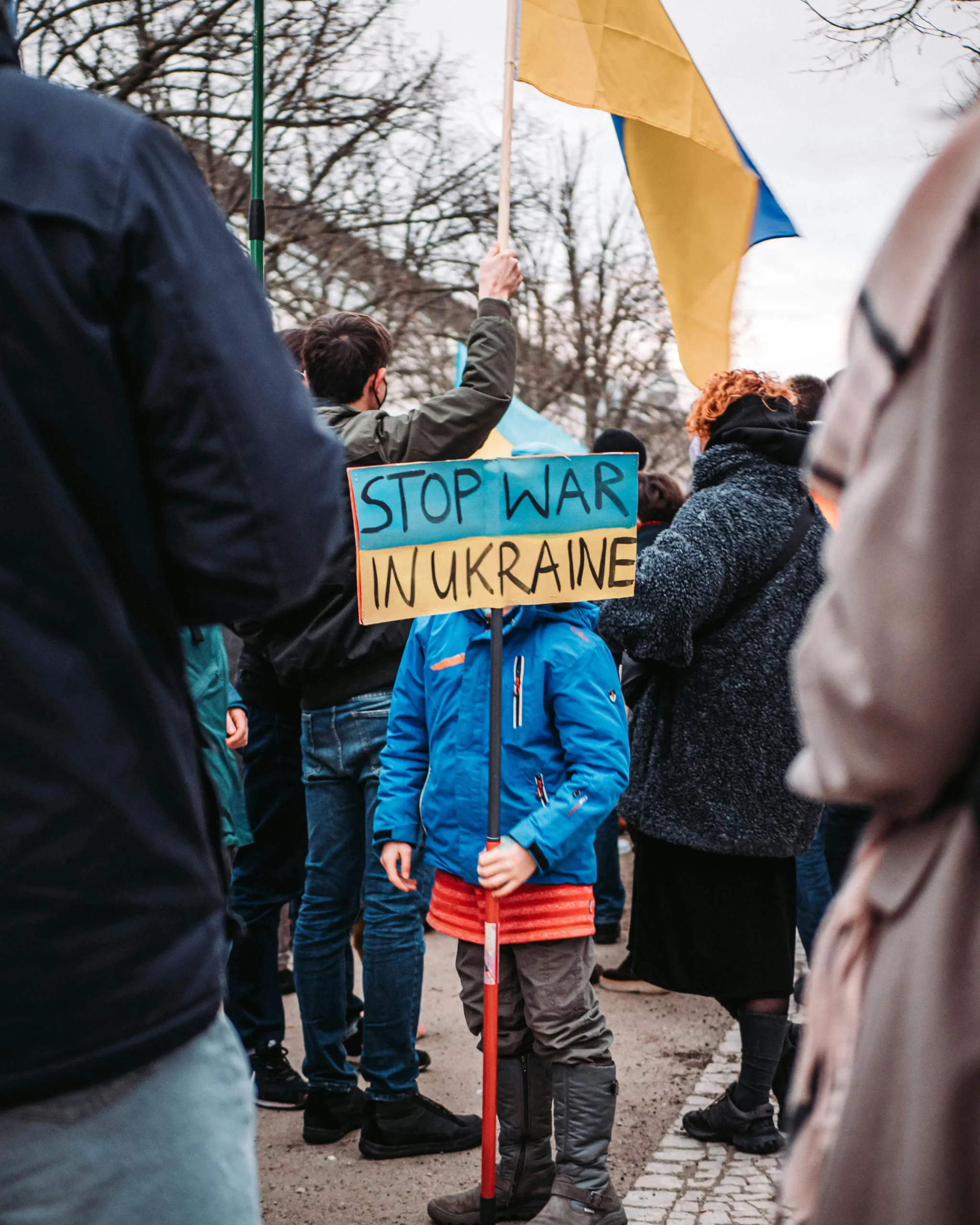
After the sudden Russian invasion of Ukraine in February of last year, the city of Korosten had to break its twinning relations with a few cities in Siberia and Belarus. “They became our enemies”, declares the Mayor of Korosten. However, that was not the case for its Lithuanian twin Urkmerge who became a close ally of the Ukrainian city. 

In the framework of the “Bridges of Trust” project, the Ukrainian city of Korosten signed a cooperation agreement with the Lithuanian city of Ukmerge. The municipalities have already exchanged visits of their delegations: “There were more Ukrainian flags than the Lithuanian ones,” recalls Volodymyr Moskalenko, Mayor of the city based in the Zhytomyr region in the northwest of Ukraine. In an interview with the U-LEAD, he describes how the cooperation has helped many Ukrainians so far.

“Initially we asked for medicines and long-term food packages,” he says. However, Urkmerge keeps offering this kind of help even after the initial support. In addition to medicine and food, the Ukrainian city has also received generators, a large bus, and trench candles for the military. 

As their Baltic counterpart is advanced in the use of alternative energy, Moskalenko wonders about utilising their experience to help bring this kind of energy to Ukraine. Russian attacks are often directed towards the energy infrastructure, which shows the importance of the capacity of a municipality to address these kinds of needs on its own according to the Mayor.

He mentions the positive attitude of the Lithuanians towards Ukraine and its citizens. “Each of our conversations comes down to the question ‘How can we help you?’. We are impressed,” Moskalenko says. He assures that the cities intend to further develop their cultural cooperation and exchange: “We have found true friends.”

However, that wasn’t the case in some of Korosten’s former twin cities in Russia and Belarus. On the day of the Russian invasion in February, the city council had a session and immediately broke the twinning relations with Mozyr from Belarus and two cities from Siberia in Russia: “What twinning relations can we have with them if they are our enemies?” ponders Moskalenko

However, he thinks that it is worth mentioning that the invasion was the catalyst for uniting national cultures in Ukraine, as Ukmerge isn’t the only city that has expressed the desire to become Korosten’s twin. “Bourges in France contacted us. They hosted 200 women and children from Korosten,” informs the Mayor while declaring that they are keeping in touch with them. They are also in contact with cities in Great Britain, China, and Japan. “But just contacts so far,” concludes Moskalenko

Source: U-LEAD

City Twinning

Twinning - News

City pairings across Europe and beyond


European city-to-city cooperation, including town twinning, is increasingly viewed as a possible solution to current challenges of sustainability as well as a way to promote best practice exchanges at the local level.

City pairings are receiving renewed attention and resources at local, national and European levels as innovative ways to tackle current challenges, boost sustainable development and promote cultural exchanges.

Earlier in January, Italian President Sergio Mattarella and his German counterpart Frank-Walter Steinmeier announced the second edition of an award for city cooperation between the two countries. The prize, first launched in 2020, will reward municipalities cooperating on civic engagement, culture, inclusion and sustainability.

“Twinnings between Italian and German municipalities represent a fundamental instrument to consolidate the friendship between Germany and Italy, deepen our relationship and face together our current and future challenges,” Mattarella said.

Meanwhile, at the EU level, the European Commission is funding several initiatives to boost city cooperation, such as the International City Partnerships matching European and third-country cities on sustainable development. It also recently published a €4 million call for 2023 for towns working together to promote intercultural dialogue and European citizenship.

Neighbouring cities

According to Lucian Zagan, mobility project coordinator at Eurocities, city partnerships benefit local governments.

“Cities need to cooperate to advance their interests at national and EU level,” he told EURACTIV, adding that municipalities often collaborate on areas of mutual interest.

For instance, Helsinki and Tallinn, which are divided by an 82 km strip of sea, have been cooperating since the 1990s and are now working together on cleaning up the Baltic Sea.

“We, as twin cities, are initiating together this campaign on cleaning the sea for all the cities around the Baltic Sea,” said Krista Kampus, who leads the work of Tallinn as European Green Capital for 2023.

While neighbouring countries often share a similar culture and needs, territorial proximity is not a prerequisite for collaboration, according to Zagan.

Long-distance cooperation

Despite the distance separating them, many European towns are currently cooperating with cities in third countries.

For instance, the Italian city of Palermo, recently launched an initiative to exchange best practices with the twin town of Sekondi-Takoradi, in Ghana. The aim of the initiative, called “Twin cities in Sustainable Partnership”, is to support urban and sustainable development processes.

Meanwhile, the city of Zaragoza in Spain established a partnership with Ounck, a small Senegalese town, to support the local production of spirulina, a food supplement that plays a key role in malnutrition.

According to Fabrizio Rossi, secretary general of the Council of European Municipalities and Regions (CEMR), these city partnerships can provide a “long-term systematic approach” to solve global challenges, “far away from geopolitical tensions” which might arise at the national level.

Networks of cities

European municipalities are also joining forces on specific issues, such as sustainable mobility and health, through networks of cities.

Tallinn, for instance, is part of the NetZeroCities partnership, which aims to promote Europe’s transition to net zero emissions, and the CIVITAS network, which fosters sustainable urban mobility.

Article published on Euractiv.

Inclusive Migration

Inclusive Migration - News 2023

How user-friendly platforms make municipalities more inclusive


Settling down in a new country can be frightening. Especially if you don’t speak the language(s) and don’t have a supportive community to guide you. Administrative issues, different rights and duties, the local job market… Where and how do you even start?

In Schaerbeek, a municipality of the city of Brussels, newcomers found the answer to this question in the form of VIA asbl. VIA is a reception path that welcomes and supports newly arrived immigrants. This programme helps them understand how Belgian society works so that they can live independently and better participate in the social, economic and cultural life of their new home.

VIA has an online platform that offers all the information on the reception programme. In collaboration with BRULOCALIS and with the support of the IncluCities project, they have updated some features and made improvements to make it more inclusive.

First, they translated the website into eleven further languages: Farsi, Dari, Pashto, English, Arabic, Turkish, Spanish, Russian, Romanian, Portuguese and Dutch. Second, they also made it more easily readable and didactic. For example, as data shows that many migrants coming to the city cannot read, they added an audio option. They also used pictograms to illustrate the content. Finally, they created a new page with concrete, useful information and addresses. With this additional page, any newcomer has access to useful information, whether or not they decide to participate in the reception path programme. Thanks to the newly improved VIA website – the IncluCities one-stop-shop – the Schaerbeek municipality is becoming even more make inclusive and welcoming for every newcomer.

If you want to know more about this inclusive project, check out the new online platform (in French).

First Capital of Democracy

European Capital of Democracy - News 2023

Barcelona becomes the first European Capital of Democracy


There are many awards celebrating outstanding cities. One certainly missing is the European Capital for Democracy. At the heart of the EU construction, this core value definitely deserves some stage light. That’s why in January 2023, a pan-European citizen jury designated the first ever “European Capital of Democracy”: Barcelona.

At the beginning of the year, several thousand citizen jurors from the 46 Council of Europe member states assessed a range of projects by three finalist cities, Barcelona, Braga, and Brussels. Barcelona convinced the jury with innovative projects such as Decidim, a digital citizen participation platform used by hundreds of cities around the world; and Superblock, an initiative to reclaim the city’s streets from cars.

‘Local government has always been the level of public authority closest to the people it serves,’ explains Marija Pejčinović Burić, Secretary General of the Council of Europe. ‘It is here that new ideas and democratic participation are best placed to flourish. The European Capital of Democracy not only recognises excellence but holds it up as an inspiration to others.’

From September 2023 until August 2024, Barcelona will host a Programme Year of events and activities to strengthen European democracy. Activities will be organised in cooperation with partner organisations and citizens. Visitors from all over Europe are invited to participate.

‘The City of Barcelona is proud to be the first European Capital of Democracy. In a global context where hate speech and authoritarian projects are on the rise, cities are the place where we can work together with citizens to strengthen democracy.’ says Ada Colau, Mayor of Barcelona.

Do you want to participate in the next European Capital of Democracy elections?

In February 2023, the call will open for cities to apply for the next title of European Capital of Democracy. Find out how your city can apply.

If you want to participate in the European Capital of Democracy as a citizen, register here.

Source

Paweł Adamowicz Award

City - News

Discover the 2022 Laureate of Paweł Adamowicz Award


On Friday 13th January, the municipality of Michałowo in Poland was announced as the laureate of the second edition of the Mayor Paweł Adamowicz Award. The small municipality was chosen to highlight the incredible work it did, alongside its inhabitants, to provide help to refugees on the border with Belarus and their support of freedom, solidarity, and equality.

“To win the Paweł Adamowicz Award is a great privilege and source of pride for me as the head of the municipality. […] Above all, I am proud of our local people because we were able put into practice the values that the European Union brings, indeed, that humanity brings, and really bring them to life.” stated the Mayor of Michałowo Marek Nazarko.

The award was created to promote the legacy built up by Paweł Adamowicz. He was the long-serving Mayor of the City of Gdańsk when he was murdered in January 2019 whilst carrying out his public duties and standing up for the values of freedom, solidarity and equality.

The jury also decided to give a special mention to Oleksandr Babych, Mayor of Hola Prystan in the south of Ukraine who was supported by CEMR this year, as a representative of all Ukrainian mayors who have been kidnapped or tortured since the beginning of the Russian invasion for trying to protect his local community. Mayor Babych himself has been held captive since March 2022. This special recognition is, as described by the President of the Committee of the Regions Vasco Alves Cordeiro, “a tribute to his courage and a signal of hope and solidarity for all Ukrainian mayors and citizens fighting for our European values”.

The award will be officially presented to the Mayor of Michałowo Marek Nazarko on 8th February 2023 during the plenary session of the European Committee of the Regions in Brussels.

Inclusive society

Inclusive society guidebook - News 2023

New handbook to guide the development of age-friendly cities


We are all getting older… Take Norway for example. By 2040, it is estimated that every third inhabitant in the county councils will be above 70 years old. As of today, 17 % of the Norwegian population is above 65 years old. This development poses several challenges for cities, counties and communities.  

That is why the Norwegian Association of Local and Regional Authorities (KS) has published a new handbook on best practices in terms of Universal design and age-friendly communities. From a flower garden to help access memories to outdoor lighting that creates a sense of security, all the initiatives participate in building a sense of safety and belonging for everyone.

Universal design is about creating good, inclusive communities where everyone can participate. By learning from each other, local and regional authorities can create better communities that are inclusive for everyone.

Over the past few years, KS has developed networks in both the area of age-friendly local communities and Universal Design. They have gained considerable insight from learning about best practices and pertinent tools. They gathered all of this information in a number of publications and videos that they made available for their network of municipalities and partners.

In the newly translated booklet on Universal design and age-friendly communities, KS presents some of the many inspiring and innovative initiatives carried out by Norwegian municipalities and county councils. The purpose is to give everyone better access to outdoor spaces, meeting places and buildings. Furthermore, the project aims to create opportunities for everybody to learn from one another so that local and regional authorities can make inclusivity a reality.

Free Meal App

Free Meal App - News 2022

A mobile app for free meals


“Young people in Türkiye try to receive education under very challenging conditions. Supporting young people is one of the most important responsibilities we bear, because we do not want our youth to be destitute of education due to the high cost of living and limited opportunities. With the ‘MealsForStudents’ application, we have implemented a project that has not been available in Turkey so far. Together, we will protect young people’s right to be young.”, stated Rıza Akpolat, Mayor of Beşiktaş.
 
To fight student poverty, the Turkish municipality Beşiktaş in cooperation with TURYID (Turkish Restaurant and Entertainment Association), developed the application Öğrenci’Ye, which translates to “Meals For Students”.
 
This one-of-a-kind mobile application is a solidarity ecosystem project launched in 2020. Students living in Beşiktaş and/or studying at the universities in Beşiktaş can all benefit from this program. They can reserve a meal, in any of the partner restaurants, through the application and get it for free.  Students are also able to be informed about the available menus of restaurants, how long the meals are reserved, and how many guests the restaurant accepts. Thousands of students have received free food since the beginning of the project.

Support for Istanbul Mayor

Istanbul Mayor - News 2022

CEMR President voices strong support for Istanbul Mayor Ekrem İmamoğlu


The President of the Council of European Municipalities and Regions (CEMR), Gunn Marit Helgesen, expresses strong support for Ekrem İmamoğlu, Mayor of Istanbul, sentenced to two years and seven months in prison.

“The Council of European Municipalities and Regions (CEMR) is deeply concerned to learn that a Turkish court has sentenced the Mayor Ekrem İmamoğlu of Istanbul to more than two and half years in prison on charges of insulting members of Turkey’s Supreme Electoral Council as widely reported in the international press.

We condemn in the strongest possible terms this conviction handed down to our colleague and furthermore, we denounce the political ban that may lead to his removal from office. Mayor Imamoglu is an elected official whose actions do not warrant this repressive and disproportionate verdict.

CEMR has been following closely events in Turkey the past years and finds the unacceptable treatment of local elected politicians highly disturbing. These events have no place in a democratic society, and we would urge the Turkish judicial system to reverse this unjust decision.

CEMR supports democratically elected politicians whose legitimate mandate stems from their election by their citizens. We stand firmly in solidarity with local leaders in Turkey and across the world in their fight for freedom of speech and local democracy.”

Read the declaration here

For more information, contact: