EU elections call to action

CEMR advocates for local and regional priorities in call to action ahead of 2024 EU elections


The Council of European Municipalities and Regions (CEMR) is gearing up for the upcoming European Parliament (EP) elections in 2024 by releasing its Call to Action, addressing the unprecedented challenges faced by Europe and the world.

In a time when national governments grapple with complex issues, such as climate change, the revision of its competition model and geopolitical shifts, CEMR and its national associations underscore their unwavering commitment to fundamental values such as democratic governance, human rights, subsidiarity, and sustainability. CEMR emphasises the critical role of local and regional autonomy in the face of re-centralisation trends and attempts to diminish power at the local level.

Fabrizio Rossi, Secretary General of CEMR, highlighted the significance of this Manifesto, stating, “Now, more than ever, it is imperative that local and regional governments actively participate in shaping policies that address the pressing challenges of our time. The upcoming EP elections provide a crucial opportunity for collaboration and co-creation with the new Members of the European Parliament (MEPs).”

CEMR EU Manifesto Four Key Advocacy Points

1. Active Subsidiarity and Multi-level Governance Cooperation:

Subnational governments are responsible for over 50% of public investment, and the involvement of LRGs in implementing EU legislation at the national level is at least 70%. CEMR emphasises the need for greater participation of LRGs at any level of decision-making to ensure the effective deployment of EU legislation, especially concerning the Green Deal package.

2. Systemic Approaches for Equitable, Inclusive, and Sustainable Societies:

LRGs are key enablers of the digital transition and, therefore, need sufficient public and private investment in digital services technologies, infrastructures, and skills to achieve this goal. CEMR urges the next European Parliament to be bold in promoting an enabling environment that supports the digital literacy of local public administrations.

3. Integrated Territorial Approach:

Urban and rural areas should be treated as mutually complementary assets, creating a reinforcing relationship that defines the concept of the urban-rural continuum. To accomplish this synergy, the upcoming EU co-legislators should advocate for appointing a dedicated Commissioner for Territorial Development within the next European Commission, scheduled to assume office in autumn 2024.

4. Open and Responsible Model of International Cooperation:

LRGs have attested to their commitment to fostering shared values and promoting openness within diverse communities through European partnerships, twinning arrangements, and city-to-city cooperation. This dedication extends to the context of EU enlargement. To amplify the impact of LRGs’ territorial diplomacy, it is imperative for EU policymakers to establish ongoing dialogues and involve local elected representatives in high-level meetings, including those convened by the United Nations and European institutions.

As the clock ticks down to the EP elections, CEMR encourages political parties to incorporate these priorities into their programs and candidate lists. CEMR believes that only through collaborative efforts with Europe’s future policymakers can meaningful outcomes be achieved on the ground.

For more information, contact:

Women in Politics

A Glimpse into the Life of a Women in Politics: CEMR Unveils First Data


The Council of European Municipalities and Regions (CEMR) has released the first infographics showcasing critical insights from their latest report, “Women in Politics.”

The data offer a visual snapshot of the representation of women in elected roles across various subnational levels. Additionally, a detailed breakdown of their portfolios at the local level is provided. The second page of the infographics unveils the results of an anonymous CEMR survey involving 2 424 participants from 31 countries. Focused on elected women in local and regional European roles, the survey explores their experiences of violence in the political realm.

Annelies Coessens CEMR Gender and Diversity Officer states the importance of the report findings: “This evidence-based data will contribute valuable insights to discussions and be an important instrument to advocate for improved policies that can foster safer and a more inclusive political environment for women”.

Analysis of twinning in Europe 

Twinning Report - News

CEMR survey highlights evolving practices, challenges and opportunities for town twinning in Europe 


Town twinning has long been recognised as a bridge between communities, fostering cultural exchange and mutual understanding. Since 1951, the Council of European Municipalities and Regions (CEMR) has championed this practice, helping municipalities and regions across Europe build partnerships that transcend borders. 

A new CEMR survey, with 315 responses from 27 European countries, reveals how twinning is adapting to today’s challenges. While cultural exchanges remain important, local and regional governments increasingly view twinning as a tool for practical cooperation, from joint projects and workshops to exchanges of best practices. Nearly 80% of respondents expressed their intent to further develop twinning activities, with national associations showing particularly high engagement. 

At the same time, the study identifies three persistent barriers: limited financial resources, shortages of staff, and gaps in knowledge or experience. Respondents highlighted the need for more structured support to help municipalities realise their ambitions. 

Looking to the future, municipalities and associations are especially interested in using twinning to: 

  • Build sustainable networks that go beyond one-off exchanges; 
  • Access and manage EU funding opportunities for joint projects in areas like economic development, agriculture, and new technologies; 
  • Strengthen local capacity through training and guidance

CEMR concludes that twinning remains a relevant and powerful practice, but unlocking its full potential requires a multifaceted approach: more funding, better information on financing opportunities, and dedicated training programmes to empower municipal staff. 

With its long-standing commitment to twinning, CEMR is uniquely placed to drive this renewed agenda, helping towns and regions use partnerships not only to connect communities, but also to advance shared European priorities, from innovation to the localisation of the Sustainable Development Goals

Read the study here 

For more information, contact: 

Violence Against Women

Violence Against Women - News 2023

Breaking the Silence: International Day for the Elimination of Violence Against Women


In a world that strives for progress and equality, violence against women remains a pervasive and deeply rooted issue that affects women across the globe. The International Day for the Elimination of Violence Against Women, observed annually on November 25th, serves as a poignant reminder of the collective responsibility to eradicate the scourge of violence that continues to plague countless lives.

In recent days, Italy has been shaken by the tragic death of 22-year-old Giulia Cecchettin at the hands of her boyfriend. Close to the World Day against violence against women, Giulia was yet another victim of femicide, the 105th since the start of 2023 in Italy. However, as Silvia Baraldi, CEMR Spokesperson for Gender Equality, poignantly reminds us, Giulia cannot be reduced to a mere statistic and “none of these women should be”.

“It is urgent to give a voice to Giulia and all women, to the victims and to those who, in the silence, can tear it apart in the next few hours,” says Baraldi. On average, one woman dies every 72 hours as a victim of femicide, a chilling statistic that highlights the severity of the issue. “Violence against women is a real social plague, born from the depths of patriarchy, and it can only be combated with joint and interconnected actions between institutions, politics, schools, the family, civil society, and a vast network of men and women committed to cultural change.”

Silvia Baraldi’s call to action is a stark reminder that each woman lost to violence represents a unique life, a story, and a potential future. As we observe the International Day for the Elimination of Violence Against Women, let us echo her plea to start the change now.
 

The battle against violence targeting women transcends a single day; it necessitates continuous dedication. At CEMR, we advocate seizing this moment to contemplate our shared responsibility and strive for a future where every woman can thrive with dignity, equality, and, most crucially, devoid of violence.

AFCCRE – European University

AFCCRE - European University - News 2023

CEMR Secretary General Delivers Keynote Address at Marseille Event on EU Enlargement and Local Partnerships


Fabrizio Rossi, Secretary General of the Council of European Municipalities and Regions (CEMR), delivered a keynote speech in Marseille during an event organised by the Université européenne de l’AFCCRE. The gathering aimed to explore the critical role of regional and local partnerships in the context of the European Union’s enlargement.

The event comes at a pivotal moment in the EU’s history, stressing the importance of examining the active involvement of regional and local entities, which play a crucial role in fostering collaboration, sharing expertise, and shaping policies that resonate with the diverse needs of communities.

In his address, Rossi highlighted the indispensable role that regional and local partnerships play in shaping the European Union’s future. He emphasised that involving these entities in policy-making and collaboration is crucial for creating policies that truly understand and address the distinct requirements of different communities.

Fabrizio Rossi summed up the sentiment, stating, “Local and regional authorities are the backbone of our societies. Their active engagement is vital for a successful and cohesive European Union. Let us join hands and work towards a stronger, more unified Europe, where the voices of local and regional entities are at the forefront of policy-making and progress.”

The Secretary expressed warm appreciation towards the Association Française du Conseil des Communes et Régions d’Europe (AFCCRE) for arranging the event and lauded their steadfast dedication to fostering dialogue and understanding regarding EU enlargement. The event acts as a platform for stakeholders to collaborate and contribute to a stronger, more unified Europe where local and regional perspectives hold significant value and are integrated.

EPRS Annual Joint workshop

EPRS meeting 2023 - News 2023

CEMR and EPRS Annual Joint Workshop: Paving the Way for a Sustainable and Cohesive Europe


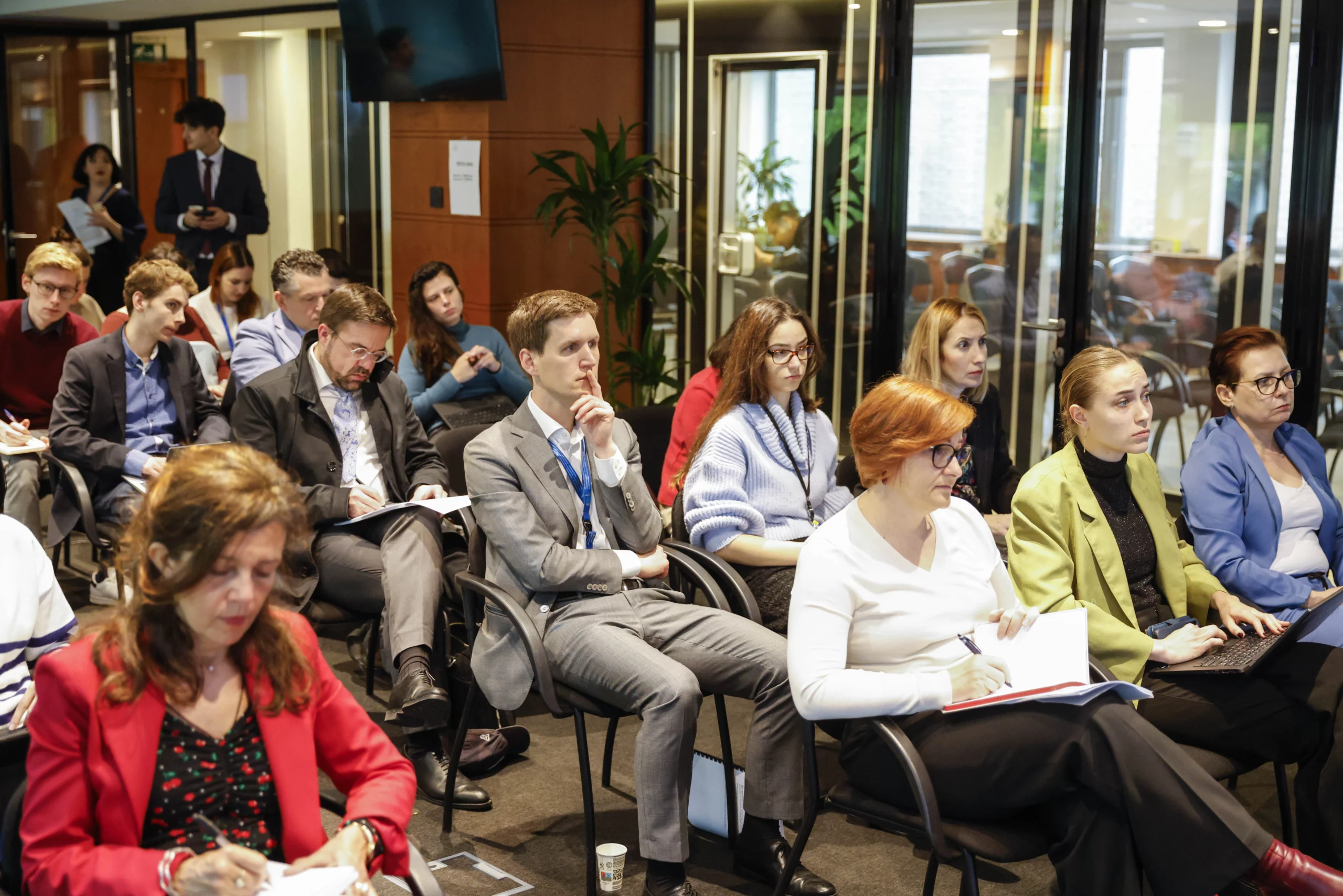
The Council of European Municipalities and Regions (CEMR) is holding the Annual Joint workshop with the European Parliamentary Research Services (EPRS) on Tuesday, October 3rd, from 10:00 to 11:45 at the CEMR Secretariat headquarters located at 1 Square de Meeûs, 1000 Brussels. This recurrent gathering provides a platform for both organisations to engage in a fruitful exchange regarding their respective priorities, delve into discussions concerning the 2024 working plan, and explore opportunities for enhanced collaboration in their shared mission.

Durmish Guri, External Resources and Knowledge Strategy at CEMR emphasised, “This meeting holds significant promise for fostering a stronger partnership and driving our joint efforts towards a more sustainable and cohesive European community, highlighting the pivotal role of territorial governments in achieving this vision.”

Participants will convene in three specialised thematic rooms, fostering an environment conducive to meaningful dialogue:

  • Cooperation and International Issues
  • Sustainable Transition
  • EU Governance and Funds
     

Colleagues from both organisations will have the chance to acquaint themselves, engage in informal exchanges concerning their ongoing projects, and share their perspectives on future plans and priorities.

Ukranian recovery strategy

Bridges of Trust Visit - News 2023

Bridges of Trust initiative helped in the cooperation between Ukrainian and French municipalities for a reconstruction plan


3 Ukrainian municipalities Apostolove, Zelenodolsk and Korosten began their study visit to partner municipalities in France with a Solidarity Forum in Issy-les-Moulineaux on 1 of July.
 
The cooperation between Ukrainian and French municipalities is being developed in the framework of the Bridges of Trust initiative implemented by the Council of European Municipalities and Regions (CEMR) together with the Association of Ukrainian Cities (AUC) and with the support of U-LEAD with Europe programme. 
 
The partnership of Bourges and Korosten is taking a new step since the first contact between the municipalities in March 2022. While Zelenodolsk and Apostolove are only at the initial stage of building partner relationships with Sceaux and La Rochelle.
 
The Ukrainian delegation was warmly welcomed during the Solidarity Forum held by AFCCRE in the framework of the National Forum on Europe, Twinning and Partnerships. The Ambassador of Ukraine to France, Vadym Omelchenko was among the speakers at the event and reiterated the important and substantial results of cooperation between France and Ukraine on different levels and in various sectors. He reminded the success of the Bilateral Conference for the resilience and reconstruction of Ukraine held by the French government in December 2022 where hundreds of French companies took part and confirmed their interest in engaging in Ukraine’s reconstruction process.
 
The representatives of 3 Ukrainian municipalities Korosten, Zelenodolsk and Apostolove had an opportunity to speak about the daily challenges they face because of the war provoked by Russia against Ukraine, their needs and the ideas of projects that can help the municipalities in the recovery process. Among the priority topics of cooperation were mentioned the exchange of knowledge and experience on water management and purification, inclusivity of municipalities towards disabled people, reconstruction of municipal infrastructure, mental health and rehabilitation. 
 
The representatives of Ukrainian local governments begin today their 3 day study visits to Sceau, Bourges and La Rochelle in order to work on joint projects of reconstruction and recovery and to strengthen partnership ties between municipalities of Ukraine and France. 

Study on SDGs localisation

Energy Behaviour Forum - image 1

Discover our new study on progress made by local governments in promoting the Global Goals


The Council of European Municipalities and Regions (CEMR) and PLATFORMA are releasing today (12 July) their annual study on the localisation of the Sustainable Development Goals (SDGs) at a United Nations special event in New York. The study is presented by CEMR President Gunn Marit Helgesen at the 6th Local and Regional Governments Forum on the 2030 Agenda, organised in the framework of the High-Level Political Forum (HLPF), the United Nations annual event on the SDGs.

The report collects data from 41 associations of local and regional governments from greater Europe and makes seven recommendations. As estimates show, 65% of the 169 targets underpinning the 17 SDGs cannot be achieved without the involvement of local and regional governments.

One more time, this report resonates as a strong call to national and European institutions to further recognise and include in their reports progress made by municipalities and regions in achieving the SDGs. More than ever, decentralised cooperation and partnerships are crucial instruments to achieve the 2030 Agenda at the local and regional levels.

“We are fast approaching the halfway point on the road to the 2030 Agenda and the implementation of the Sustainable Development Goals (SDGs), meaning there are only six summers left!” warns Gunn Marit Helgesen, CEMR President, in the foreword of the study.

The 6th Local and Regional Governments Forum on the 2030 Agenda is organised by UN DESA, the Global Taskforce of Local and Regional Governments (GTF), UN-Habitat, UNDP and Local 2030.

Mayors have a say

This year, the European delegation of local and regional governments is composed of several mayors and councillors:

  • Gunn Marit Helgesen, CEMR President and Councillor of Vestfold and Telemark, President of the Norwegian Association of Local and Regional Authorities (KS)
  • Magda Kostava, Member of Kutaisi Municipal Council, Georgia (NALAG), member of the CEMR Young elected officials committee
  • Wim Dries, VVSG President and Mayor of the City of Genk
  • Luisa Salgueiro, President of the National Association of Portuguese Municipalities (ANMP) and Mayor of Matosinhos, Portugal
  • Manueal Alvares, Councillor in the Municipality of Matosinhos, Portugal
  • Stephan Neher, Mayor, City of Rottenburg am Neckar, Germany
  • Anne-Marie Jean, Vice-President of Eurométropole de Strasbourg (CUF)
  • André Viola, Councillor, Department of Aude (AFCCRE)

Fabrizio Rossi, CEMR Secretary General, Emilia Saiz, UCLG Secretary General, Lucy Slack, CLGF Secretary General, Unai Tellería, Delegate of the Basque Government (Spain) in the United States, Leen Verbeek and Mathieu Mori, respectively President and Secretary General of the Congress of Local and Regional Authorities of the Congress of Europe are also attending HLPF and parallel dedicated to local and regional governments.

More information:

For more information, contact:

Inclusion starts locally

Inclusive Migration - News 2023

Key lessons from IncluCities to improve migrant integration through multilevel cooperation 


The IncluCities project, led by CEMR and funded by the EU’s AMIF programme, has shown how local and regional governments (LRGs) can lead inclusive migration policies when equipped with the right tools and support. Over three years, eight cities and six national associations worked together in a mentoring scheme to improve local integration strategies for third-country nationals. 

From needs assessments to action plans and training academies, IncluCities focused on real collaboration between cities and their associations, guided by CEMR. The project clearly demonstrated that peer exchange and coordinated support lead to more effective and sustainable policies. 

Turning Practice into Policy 

Based on the project experience, CEMR outlines seven key recommendations

  1. Adopt a Whole Community approach – Integration policies should benefit all residents, not just newcomers, and promote active local citizenship. 
  1. Promote inclusion over adaptation – Inclusion must be a two-way process involving the whole community, not just the integration of migrants. 
  1. Train entire ecosystems – Sustainable action requires collaboration across municipal services, civil society, and migrant communities. 
  1. Guarantee meaningful participation – Participation must be recognised as a basic right and embedded in local governance structures. 
  1. Support migrant women – Women play a key role in communities and should be at the centre of local inclusion efforts. 
  1. Improve multilevel governance – Stronger cooperation between EU, national, and local governments is vital, along with direct access to funding. 
  1. Create local support networks – Clustered partnerships help cities share knowledge and raise their voice in national discussions. 

Conclusion 

Local and regional governments are essential in managing integration, yet they remain underrepresented in EU policymaking. As the New Pact on Migration and Asylum moves forward, CEMR calls for the full inclusion of local voices in shaping migration policy, especially those of small and medium-sized cities, which are closest to the ground. 

Read the position paper here 

For more information, contact:  

Workshop

Workship in Israel - News 2023

A workshop for better community resilience in Israel


The Federation of Local Authorities in Israel will be hosting an international resilience workshop in May 2023. During three days, participants will learn about Israeli concepts and models of emergency preparedness and community resilience.
 
Individuals, families, businesses, and institutions that are prepared for tackling disasters are more likely to cope efficiently – and to recover faster. Such training reduces the risks of damage to critical infrastructure, lessens economic losses and softens the emotional impact of the catastrophe on the population.
 
Once the steps of immediate emergency response are implemented, it is up to local leadership and the municipality’s services to provide and facilitate all the necessary recovery measures. By supporting citizens and the community’s institutions, local authorities can help restore and strengthen the community’s cohesion.
 
To help communities face emergency situations better, the Federation of Local Authorities in Israel will organize an international community resilience workshop in the coastal city of Nahariya (Israel) from 17 to 19 May 2023. During the event, participants will learn about concepts and methods from experts in the fields of welfare, social work, psychology and urban security. The initiative aims to provide participants with helpful Israeli models of preparedness and resilience that have been field-tested in real emergency situations.
 
For more information on this initiative, visit the website of the Federation of Local Authorities in Israel.