Ten years of cities taking climate action

Circular Cities and Regions Initiative - image

Celebrating a decade of driving local climate action in sub-Saharan Africa

The Covenant of Mayors in Sub-Saharan Africa (CoM SSA) is the “regional covenant” of the Global Covenant of Mayors for Climate & Energy (GCoM). It is a bottom-up and voluntary initiative that invites cities to define and meet ambitious and realistic energy and climate targets.

Launched in 2015 and funded by the European Commission, CoM SSA was initially led by the Council of European Municipalities and Regions, in partnership with African and European city networks, national associations of local governments, and civil society organisations.
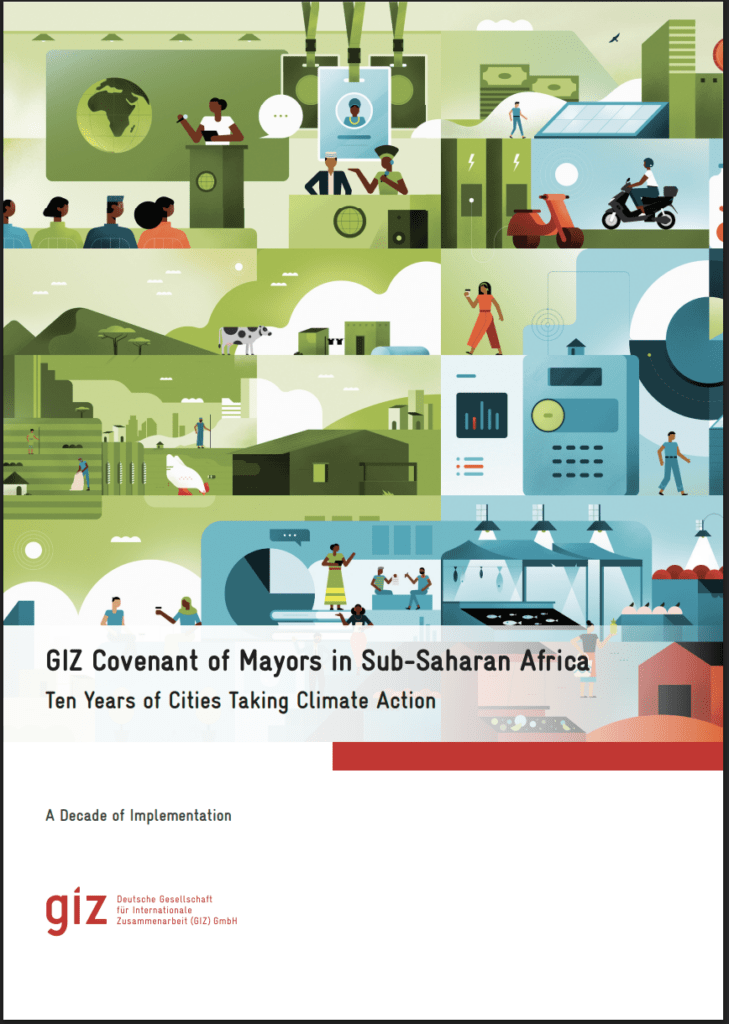
To mark this decade, the new publication A Decade of Implementation, produced by GIZ in the framework of CoM SSA, brings together reflections from cities, institutional partners, donors and long-standing experts. Combining strategic perspectives with concrete city examples, it documents how more than 400 local governments, representing over 166 million people, have moved from climate planning to implementation and investment. The publication highlights key milestones and results achieved over the past ten years, including the development of the Sustainable Energy Access and Climate Action Plans (SEACAP), support for project preparation for cities, and an increasing focus on implementation, investment and impact.

Over the past decade, CoM SSA has shown that local climate and energy actions can only be effective and sustainable when it is anchored in political ownership and supported by strong associations of local governments and city networks. By empowering mayors and local leaders, and by facilitating peer exchange and collective representation, the initiative has enabled cities to move from commitments to concrete action.

The publication includes a contribution from CEMR, authored by the Director of Projects and Programmes, Durmish Guri, reflecting on the role of national associations of local and regional goverments and networks in anchoring the Covenant politically and ensuring its sustainability, a message that remains highly relevant as reflections on the future of the Covenant of Mayors continue, including in Europe.

“We therefore call upon funders, governments and partners to continue investing in CoM SSA. Anchored in local realities and supported by diverse partnerships, it stands as a cornerstone of climate resilience in Sub-Saharan Africa.”
Durmish Guri, Director of Projects & Programmes, Council of European Municipalities and Regions (CEMR)
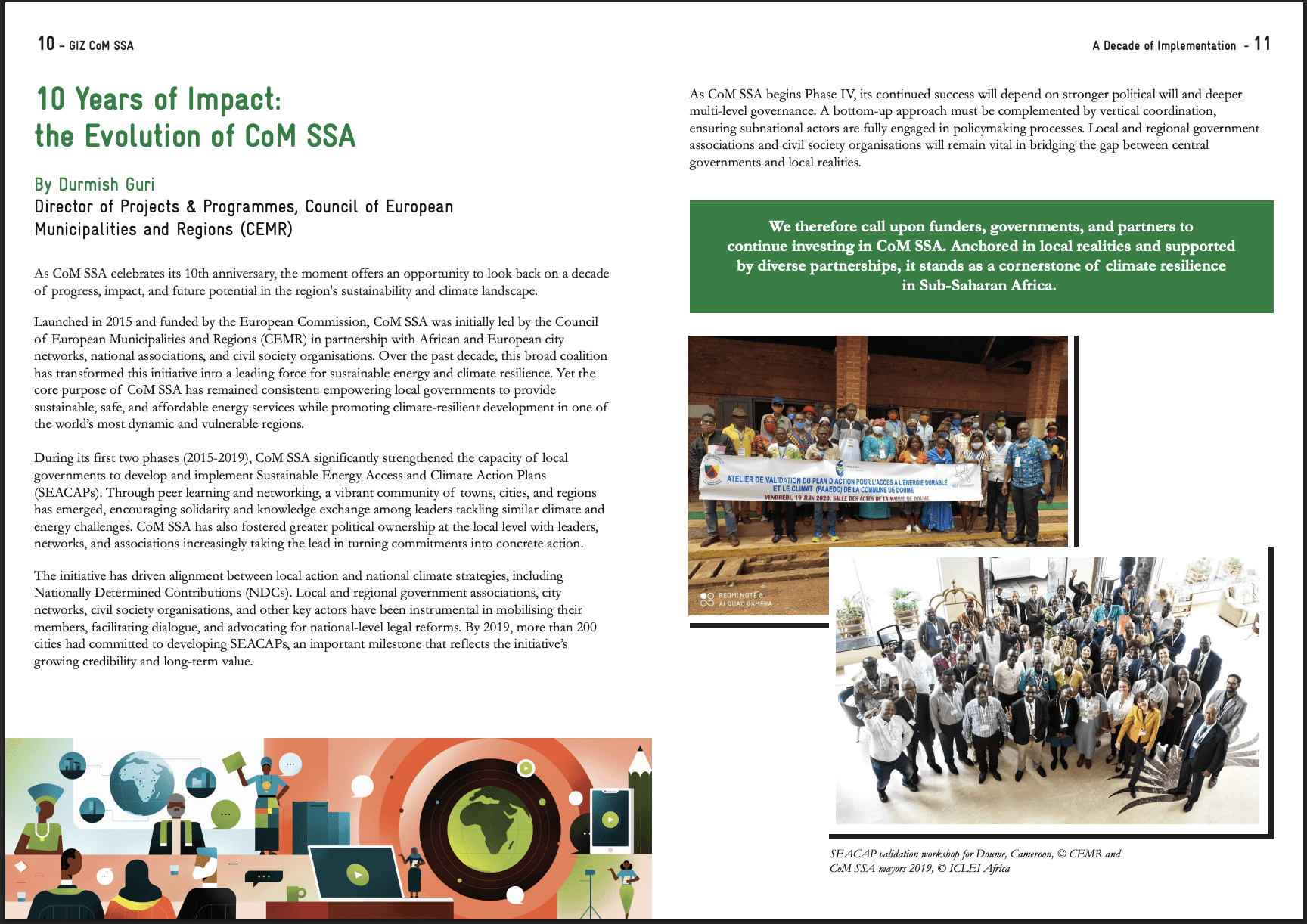
Deutsche Gesellschaft für Internationale Zusammenarbeit (GIZ) GmbH, GIZ CoM SSA – 10 Years of Cities Taking Climate Action, p.10-11.

We would like to thank our partners — Climate Alliance, Energy Cities, Environment Development Action in the Third World (ENDA), French Agency for Environment and Energy Management (ADEME), ICLEI – Local Governments for Sustainability (World Secretariat and Africa), International Association of French Mayors (AIMF), Portuguese Energy Agency (ADENE), Sustainable Energy for Africa, and United Cities and Local Governments Africa (UCLG Africa) — for their invaluable collaboration and commitment.

For more information, contact:

Call for proposals on AI 

CEMR Conferences

Call for proposals open: empowering local leaders through AI 


The Council of European Municipalities and Regions (CEMR), in collaboration with EIT Digital, is launching a new initiative: Empowering Local Leaders through AI

As Artificial Intelligence becomes increasingly central to public service delivery, local and regional governments across Europe need the skills and confidence to harness its potential. This initiative aims to bridge the gap between policy, innovation, and technology, ensuring that territorial leaders are equipped to lead the digital transformation of their communities. 

CEMR is now seeking consultancy services to develop and pilot a training programme designed specifically for local and regional governments and their associations. The project will identify training needs, map emerging AI trends, and deliver a practical, hands-on curriculum for local leaders. 

  • Deadline for submissions: 10 November 2025 
  • Contract period: December 2025 – December 2026 
  • Budget: Up to EUR 33,000 (excluding VAT) 

Interested experts or organisations are invited to submit their proposals by email to application@ccre-cemr.org with the subject line: 
“Developing and Testing a Training Programme on AI for Local and Regional Governments and their Associations.” 

Together, let’s empower Europe’s local leaders to use AI for inclusive, ethical, and people-centred governance. 

For more information, read the Terms of Reference here.

Contact:

Call for applications – Twinning

EPSU CEMR - News

Call for Applications: Research and Data Analysis Consultancy


The Council of European Municipalities and Regions (CEMR) is seeking a consultant to support the migration of data from the current Twinning website to the new Matchmaking Platform.

The consultant will verify, clean, and standardise data from around 2,500 cities, ensuring accuracy and alignment with the Sustainable Development Goals (SDGs). The assignment will take place over a two-month period in late 2025, with a maximum budget of EUR 13.000.

Applications must be submitted by 27 October 2025 at 12:00 (noon) to application@ccre-cemr.org, with “Data Analyst Expert” as the subject line. Questions may be sent to twinning@ccre-cemr.org by 24 October 2025.

Further details: Twinning | Matchmaking Platform

For more information, read the Terms of Reference here

Reinforce cooperation in Europe

EU Semester - News 2024

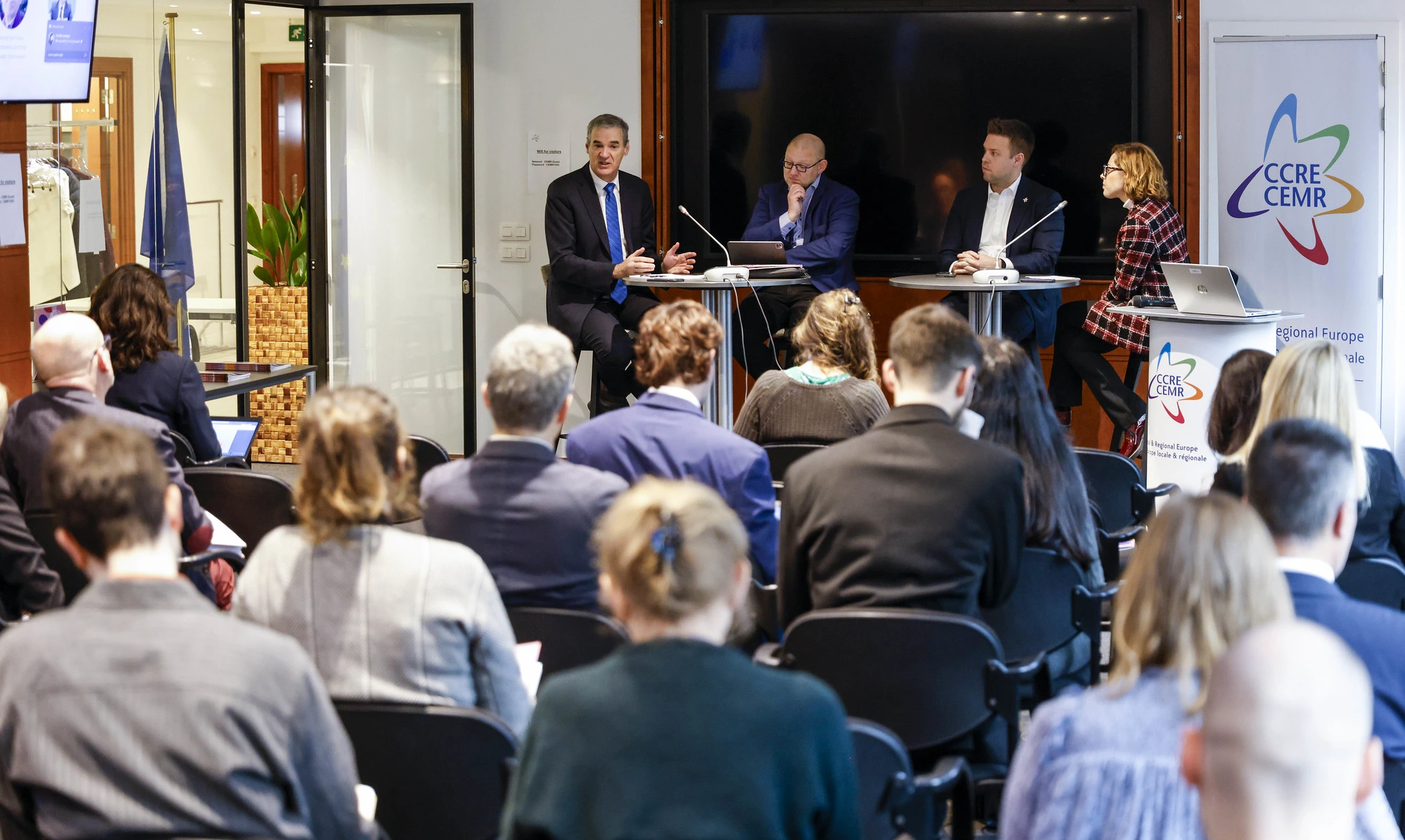
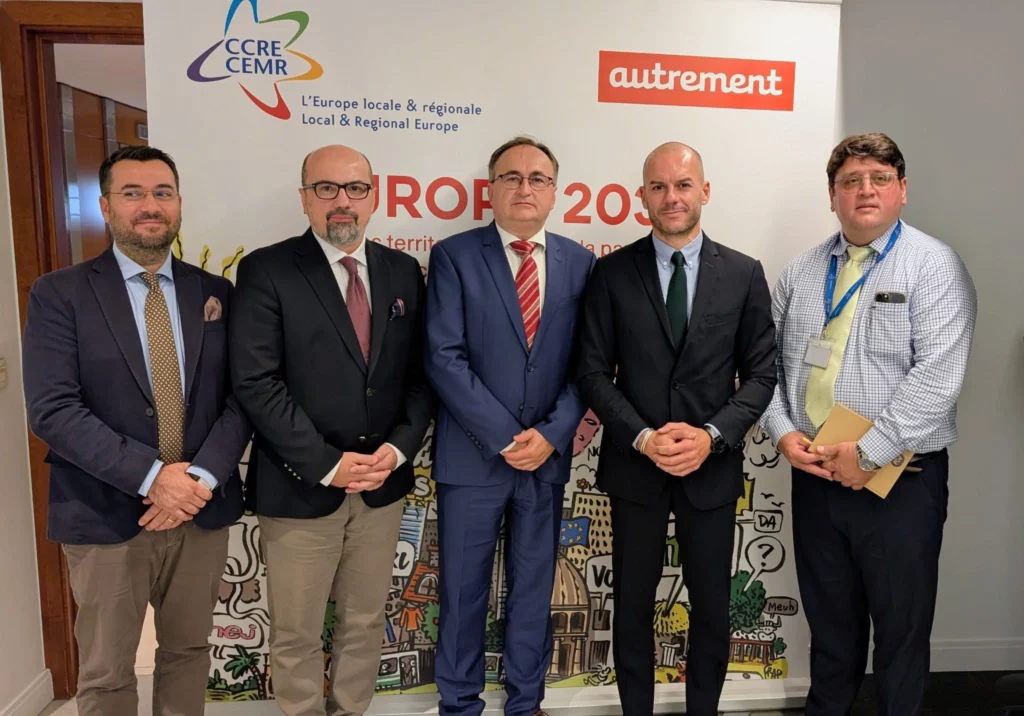
Leaders of the Council of European Municipalities and Regions (CEMR) and the Network of Associations of Local Authorities of South-East Europe (NALAS) meet to reinforce cooperation


Today, the Secretary General of the Council of European Municipalities and Regions (CEMR) met with the President and Secretary General of the Network of Associations of Local Authorities of South-East Europe (NALAS) to reaffirm the strong spirit of collaboration between the two organisations.

During the meeting, the CEMR Secretary General highlighted the longstanding partnership and the valuable role that NALAS plays in representing and supporting local governments across South-East Europe. Both leadership teams underlined the importance of strengthening the capacities of local and regional governments (LRGs) and their associations (LRGAs), building on shared membership and joint initiatives.

Looking ahead, CEMR and NALAS exchanged views on how to institutionalise their cooperation so that it is not only continued but also fully embedded within CEMR’s political structures. This step would allow for a more systematic exchange, greater representation of shared priorities at the European level, and stronger support for municipalities, regions, and their associations—particularly in addressing today’s challenges and in the enlargement process of the six Western Balkan countries and the Eastern Partnership Trio.

The meeting was followed by a strategic discussion with representatives of the European Commission’s Directorate-General for Neighbourhood and Enlargement Negotiations (DG ENEST) on how to ensure that LRGs and their associations are actively involved in the Growth Plan for the Western Balkans. This major initiative, launched by the European Union, aims to accelerate the region’s economic development and facilitate its integration into the EU’s Single Market. Both organisations stressed the importance of reinforcing cooperation and dialogue with national governments, while also demonstrating the key responsibilities that LRGs should fulfil in the enlargement and negotiation processes.

For more information, contact:

The future of town twinning

Town twinning - Village of Pyrenees in Spain

Town twinning in Europe: unlocking opportunities with AgoraEU


Since 1951, CEMR has championed town twinning as a driver of peace, democracy, and European identity. With the European Commission’s new AgoraEU programme proposed in the long-term budget, CEMR reflects on its legacy and introduces tools to further strengthen twinning, ensuring it continues to connect citizens across Europe.

Over seven decades later, town twinning remains one of Europe’s most powerful instruments for European integration and local governments diplomacy. In its long-term EU budget proposal presented last July, the European Commission (EC) included the AgoraEU programme, a promising opportunity to support and revitalise town twinning efforts. Yet, if twinning is to remain a vital bridge between Europe and its citizens, further steps must be taken to reinforce its role in today’s evolving political and social landscape.

Where does town twinning come from? Why does it still matter today? And how can the AgoraEU programme help strengthen its role in the Europe of today and tomorrow?

A legacy of connection and peace

In the mid-1990s, in cooperation with the EC, CEMR played a central role in coordinating the town twinning programme. Working closely with national associations of local and regional governments, CEMR promoted twinning, inspired thousands of initiatives and co-managed the “Star of Europe awards” with the EC to recognise outstanding partnerships. These efforts empowered thousands of small and medium-sized municipalities—particularly in rural and border regions—to build lasting bonds across borders, turning twinning into a grassroots driver of European integration. The 2002 Antwerp Congress further reinforced twinning as a vital tool for peace, democracy, and sustainable development.

A means to foster a shared European identity

Twinning has been evolving to better respond to the needs of cities, towns and municipalities facing multiple challenges in their territories. While cultural exchange and mutual understanding remain at its heart, today’s partnerships also address issues such as climate action, migration, social inclusion, digitalisation, and youth engagement. According to CEMR’s 2023 Twinning Report, municipalities of all sizes continue to value twinning highly, but smaller towns in particular face barriers in accessing funding and navigating sometimes complex EU procedures.

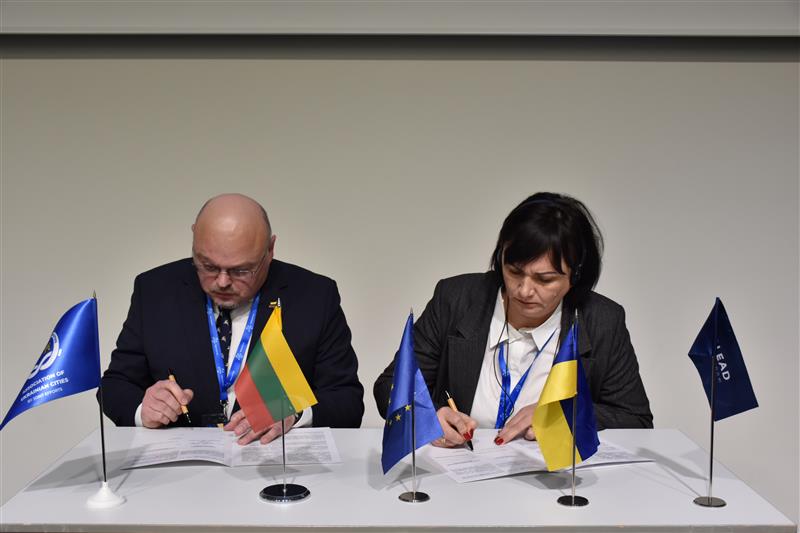
Pakruojis and Inhulka Municipalities signing Memorandum of Understanding during the Bridges of Trust Annual Gathering 2024  

Far from being outdated, twinning continues to play a vital role alongside other Europe’s mobility programmes, fostering connections that celebrate both cultural diversity and the continent’s shared heritage. For many citizens, especially teenagers, senior citizens, and residents of deprived or rural areas, town twinning remains one of the few ways to directly experience Europe. It offers a deep entry point into European construction and debates, helping to reduce the growing distance between citizens and the European Union (EU), while fostering a shared European identity and a spirit of living together.

The Matchmaking Platform: an innovative tool to tackle today’s challenges

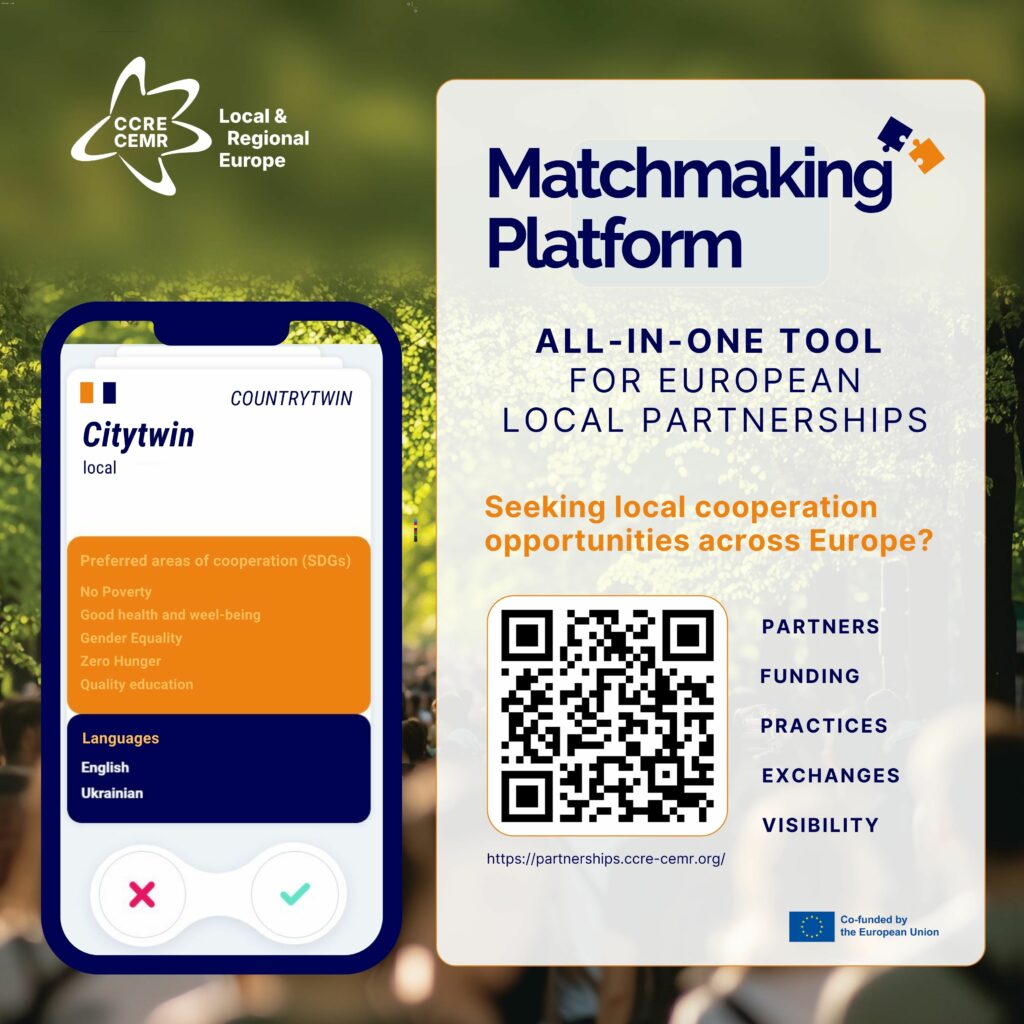
Many towns, cities, and regions face challenges in twinning, including finding suitable partners, limited opportunities for joint projects, difficulties accessing funding, and gaps in knowledge or capacity. Visibility and recognition of local initiatives can also be limited. To bridge these gaps, CEMR has launched a digital Matchmaking Platform, enabling subnational governments to:

  • Find peers and partners across Europe
  • Start joint projects with international visibility
  • Access funding and support opportunities more easily

This tool represents a modern continuation of CEMR’s long-standing role as a facilitator of exchange and cooperation between subnational governments in Europe and beyond.

A roadmap for 2028–2035

Looking ahead, CEMR calls for the revitalisation of twinning, especially for small and medium-sized municipalities by:

  • Simplifying access to EU twinning by cutting barriers and targeting support to underserved areas.
  • Strengthening national associations as local champions—reviving CEMR’s model of national correspondents to inspire and guide projects.
  • Creating a small-grants facility for new or renewed twinning between small towns, rural areas, and cross-border or enlargement partners.
  • Relaunching the “Star of Europe Awards” to celebrate excellence and raise the profile of high-impact twinning.
  •  Promoting twinning as a strategic tool to deliver EU priorities locally: democratic trust, youth participation, gender equality, climate, energy, and migrant inclusion.

AgoraEU: a timely opportunity

The European Commission’s €3.6 billion AgoraEU programme (2028–2034) shows a renewed commitment to citizen engagement. CEMR urges at least a doubling of EU support for town twinning and calls for simplified access to funding and streamlined administrative procedures, including application processes and reporting.

This support is urgently needed. Town twinning projects face growing financial pressures at the local level. Municipalities continue to invest heavily in keeping partnerships alive, yet many risk being unable to sustain them without stronger European backing. Twinning is not just a tradition, it is a living, evolving practice that connects citizens, strengthens democracy, and builds resilience across Europe.

The European Parliament and the Council will now examine the proposal. CEMR calls on both institutions to ensure that town twinning receives the recognition and resources it deserves, as one of the EU’s most effective tools to bring Europe closer to its citizens.

For more information, contact:

EPRS Annual Joint workshop

EPRS meeting 2023 - News 2023

CEMR and EPRS Annual Joint Workshop: Paving the Way for a Sustainable and Cohesive Europe


The Council of European Municipalities and Regions (CEMR) is holding the Annual Joint workshop with the European Parliamentary Research Services (EPRS) on Tuesday, October 3rd, from 10:00 to 11:45 at the CEMR Secretariat headquarters located at 1 Square de Meeûs, 1000 Brussels. This recurrent gathering provides a platform for both organisations to engage in a fruitful exchange regarding their respective priorities, delve into discussions concerning the 2024 working plan, and explore opportunities for enhanced collaboration in their shared mission.

Durmish Guri, External Resources and Knowledge Strategy at CEMR emphasised, “This meeting holds significant promise for fostering a stronger partnership and driving our joint efforts towards a more sustainable and cohesive European community, highlighting the pivotal role of territorial governments in achieving this vision.”

Participants will convene in three specialised thematic rooms, fostering an environment conducive to meaningful dialogue:

  • Cooperation and International Issues
  • Sustainable Transition
  • EU Governance and Funds
     

Colleagues from both organisations will have the chance to acquaint themselves, engage in informal exchanges concerning their ongoing projects, and share their perspectives on future plans and priorities.

Collaboration with KS

Collaboration with KS - News 2023

CEMR Strengthens Collaborative Ties with KS: A Promising Meeting for 2024 Agenda


On September 19, 2023, CEMR had the privilege of engaging in a productive meeting with KS, the Norwegian Association of Local and Regional Authorities. Co-Chaired by Mr. Frode Lindtvedt, Director of the Department of Local Democracy, European Affairs, and International Work, and Ms. Åse Erdal, Chief Adviser for Local Democracy, European Politics, and International Work, this gathering held significant promise for both organisations.

The primary agenda of the meeting was to introduce KS to the wealth of opportunities that collaboration with CEMR brings. Discussions spanned various topics, including exchanging ideas on priorities for the upcoming year and shaping the European Research agenda.

One of the core objectives was to not only strengthen the partnership between CEMR and KS but also to set an example for other associations. CEMR is keen on fostering collaborations with like-minded organisations, creating a platform where shared goals and visions can be realised collectively.

CEMR is excited about the outcomes of this meeting and looks forward to an even more dynamic and collaborative 2024.

We are eager to extend these conversations and partnerships to other associations, inviting them to join us in making 2024 a year of fruitful collaborations and significant progress.

Follow our journey as we continue to foster partnerships and share ideas that drive positive change.

Contact us to discuss further our collaboration at: durmish.guri@ccre-cemr.org

→ Learn more about KS: https://www.ks.no/

Looking for Consultants

Consultants - News 2023

Organisation/ Expert Consultant in EU Project Development


CEMR is in search of a certification organisation or expert proficient in EU project development and proposal writing. The objective will be to develop a specific training programme for the Local and Regional Governments and their associations.

  • Deadline for submissions: 22 September 2023, 12:00 (CET Time)
  • To be sent toapplications@ccre-cemr.org
  • Subject: Organisation/Expert Consultant on EU Project Development

→ For more information, click here 

Inclusion starts locally

Inclusive Migration - News 2023

Key lessons from IncluCities to improve migrant integration through multilevel cooperation 


The IncluCities project, led by CEMR and funded by the EU’s AMIF programme, has shown how local and regional governments (LRGs) can lead inclusive migration policies when equipped with the right tools and support. Over three years, eight cities and six national associations worked together in a mentoring scheme to improve local integration strategies for third-country nationals. 

From needs assessments to action plans and training academies, IncluCities focused on real collaboration between cities and their associations, guided by CEMR. The project clearly demonstrated that peer exchange and coordinated support lead to more effective and sustainable policies. 

Turning Practice into Policy 

Based on the project experience, CEMR outlines seven key recommendations

  1. Adopt a Whole Community approach – Integration policies should benefit all residents, not just newcomers, and promote active local citizenship. 
  1. Promote inclusion over adaptation – Inclusion must be a two-way process involving the whole community, not just the integration of migrants. 
  1. Train entire ecosystems – Sustainable action requires collaboration across municipal services, civil society, and migrant communities. 
  1. Guarantee meaningful participation – Participation must be recognised as a basic right and embedded in local governance structures. 
  1. Support migrant women – Women play a key role in communities and should be at the centre of local inclusion efforts. 
  1. Improve multilevel governance – Stronger cooperation between EU, national, and local governments is vital, along with direct access to funding. 
  1. Create local support networks – Clustered partnerships help cities share knowledge and raise their voice in national discussions. 

Conclusion 

Local and regional governments are essential in managing integration, yet they remain underrepresented in EU policymaking. As the New Pact on Migration and Asylum moves forward, CEMR calls for the full inclusion of local voices in shaping migration policy, especially those of small and medium-sized cities, which are closest to the ground. 

Read the position paper here 

For more information, contact: