SGD Meeting

CEMR Secretaries General and Directors Meeting (SGDs): Strengthening European Local Governance in Nicosia, Cyprus


The Council of European Municipalities and Regions (CEMR) is meeting with its member association’s Secretaries General and Directors on April 23-24, 2024.
 
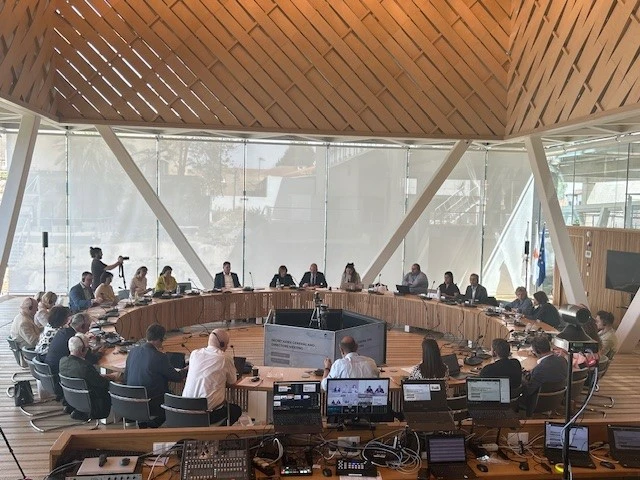
Taking place at the Town Hall of the Nicosia Municipal Council and hosted by the Union of Cyprus Municipalities, the meeting will serve as a platform for crucial discussions just ahead of the European election. Eleni Loucaidou, Councillor, on behalf of the Mayor of Nicosia, opened the session and set the agenda for the two-day meeting, which foresees intensive roundtable discussions covering CEMR’s statutory events and international relations, as well as the presentation of new CEMR activities and projects for 2024.
 
The biannual SGDs meetings bring together Secretaries General and Directors of CEMR members, fostering a sense of unity and collaboration across European local and regional governance.

Funding local services first

Funding and investment in Local Regional Governments must be protected


Europe’s sectoral social dialogue partners for local and regional government unions are concerned about the review of the EU’s economic governance rules.

The Council of European Municipalities and Regions (CEMR) and the European Federation of Public Service Trade Unions (EPSU) are concerned that the proposed reduction in public spending will negatively impact the essential services provided by local and regional governments.

The EU institutions are currently reforming the EU economic governance framework. Bruegel Institute calculations indicate that several member states will have to reduce public spending in 2025 and in the coming years, often in the billions of euros, under this mandate.  

This would not be the first time the EU sets indications to member states to reduce public spending. The effects of such measures have strongly impacted funding for local and regional governments and, therefore, their ability to provide quality services to citizens. Local governments are first responders to the immediate needs of citizens – they deliver services that allow all our communities to thrive. From public administration to housing and social services, from firefighters to waste collection: underfunding means jeopardising the delivery and quality of services to citizens.

Insufficient funding for local and regional governments exacerbates inequalities and disparities across regions and municipalities, as well as between rural and urban areas. Without adequate resources, local and regional authorities struggle to address pressing issues such as unemployment, labour and skills shortages, working conditions, social inclusion, and the digital and green transition.

Moreover, reductions in public spending hit women harder. Underfunding contributes to the persistence of the gender pay gap in the EU, given that the majority of workers in the sector are women often low pay. In addition, women are more reliant on local public services.

Furthermore, local and regional governments ensure democracy and equal access for all citizens. With just two months until European elections, it is important to recall that underfunding local governments means underfunding our democracies.

We urge European policymakers to carefully assess the implications the economic governance framework reform will have on local and regional governments in the EU. The impact of these rules cannot hinder the ability of local and regional governments to fulfil their mandates and provide essential services to citizens. As sectoral social partners in local and regional governments, we are committed to continue supporting the implementation of the European Pillar of Social Rights towards a social Europe for all. This economic reform must not constrain this European ambition.

We expect economic governance rules that protect the funding and investment that Local and Regional Governments require to serve their communities with the services which Europe’s citizens deserve.

Read the statement here

For more information, contact:

Unfair recovery fund distribution

Post-COVID Recovery Fund: centralisation and unfair distribution of resources risk harming cohesion in Europe


A new CoR-CEMR consultation shows that the territorial allocation of funds from the Recovery and Resilience Facility is widely perceived as unbalanced on the ground.

On the eve of a crucial meeting of European heads of state and government focused on competitiveness, the European Committee of the Regions (CoR) and the Council of European Municipalities and Regions (CEMR) unveil the results of their third joint survey on the implementation of the post-pandemic Recovery and Resilience Facility (RFF), which is worth €648 billion.

While the implementation of the RRF is at the halfway point, regions and cities still feel left aside from National Recovery and Resilience Plans (NRRPs). A new consultation conducted jointly by CoR and CCRE-CEMR confirms the highly centralised management of the RRF by the Member States.

Key findings

  • The territorial allocation of RRF funds is broadly perceived as unfair. Nearly half of respondents rate territorial fairness as “poor or very poor” while only a few see it as “good or very good”. And the degree of ownership at local and regional level is also unsatisfactory with significantly more respondents seeing it as “poor or very poor” than “good or very good”.
  • The green and digital transitions stand out as the two objectives supported effectively by the NRRPs, according to respondents in the consultation.
  • Conversely, fully one-third of respondents state that NRRPs do “not at all” effectively contribute to enhancing territorial cohesion, despite this being the legal basis and general objective of the RRF.
  • The involvement of local and regional authorities remains inadequately weak in the various phases of preparation, implementation or monitoring of NRRPs. The specific provisions of REPowerEU to improve the involvement of LRAs do not seem to have yielded concrete results.
  • Almost all respondents encounter barriers to their involvement in the NRRP. The main barrier identified is the national government providing an inappropriate framework for involvement.
  • The share of respondents who consider limited capacity or expertise within their region or city to be a barrier is significantly higher than in the previous consultation. This is likely linked to the higher-than-expected administrative burden of the RRF.
  • Potential overlaps and lack of coordination with cohesion funds remain the highest risk perceived by local and regional governments in the implementation of the RRF.
  • While the overall impact of projects funded by the RRF is rated positively by respondents, they are rather divided regarding its synergies with other funds, its additionality and flexibility.

Christophe Rouillon (FR/PES), Mayor of Coulaines and CoR’s rapporteur on the Mid-term evaluation of the Recovery and Resilience Facility said: “The results of the joint consultation underscore that the RRF is not the silver bullet it was claimed to be. The RRF was the appropriate response in a multi-crises context and will probably have had a positive macroeconomic impact. However, the centralisation it brought about as well as the deficiencies of the performance-based mechanism cannot be extrapolated to the future Cohesion Policy post-2027 if we do not want to put at risk that this policy remains the most efficient EU policy for delivering fair transitions throughout all EU regions.“

Kamila Bláhová, Vice-president for European Affairs, Union of Towns and Municipalities of SMOCR (CZ), stated: “The RRF and the national recovery plans of the Czech Republic have a huge potential to support the efforts of local and regional governments aimed at revitalizing the local economy and green infrastructure investments at the local level. However, the issue of administrative capacity and poor synergies between the RRF and other EU funds present significant challenges. It’s crucial to optimize how subnational governments can maximise the use of this substantial funding source and that we address any shortcomings as the RRF moves forward.”

Background

The consultation was conducted between January and March 2024, collating the views and experiences of 36 organisations representative of a variety of subnational government levels across 22 EU Member States. The respondents were from Austria, Belgium, Bulgaria, Croatia, Cyprus, Czechia, Estonia, Finland, France, Germany, Ireland, Italy, Latvia, Lithuania, Luxembourg, the Netherlands, Poland, Portugal, Romania, Slovakia, Spain, and Sweden. The geographical composition of the respondents was not identical to that of previous consultations.  Responses received from individual local and regional governments were also taken into account.

Results of the previous CoR-CEMR joint consultations (January 2021 and April 2022). 

Read the study here

Contacts:
Matteo Miglietta – CoR
Tel. (+32) 470 895382
Matteo.miglietta@cor.europa.eu

Local Alliance for the Green Deal

Local Alliance: city and regional networks urge EU to stay the course on Green Deal implementation


Eight leading networks of European cities and regions – ACR+, CEMR, Climate Alliance, Energy Cities, Eurocities, FEDARENE, ICLEI Europe and POLIS – have come together to form the Local Alliance. 

In a joint letter, the Alliance calls on EU leaders to find new ways to effectively roll out the European Green Deal at the local level. The EU must “stay the course on the European Green Deal under this and the next mandate of the European Commission,” the networks have stated.

Recent challenges, such as the passage of the Nature Restoration Law, which still languishes with the European Council, or the last-minute setbacks suffered by the internal combustion engine phase out, are undermining the Green’s Deal objectives. As the European elections approach, the EU must ensure it remains a global beacon for climate leadership.  

Given the more complicated arena for climate legislation that lies ahead, local leaders are adamant that the EU’s commitment to achieve climate neutrality by 2050 should remain a top priority, delivering a just transition that works for people and planet. 

Cities and regions are where at least 70% of the European Green Deal legislation must be implemented. European local and regional governments have already embarked on the journey to climate neutrality and started to transform European cities and regions, as well as ways of living, heating and cooling, housing, mobility, producing and consuming for millions of citizens. Today, the EU’s subnational governments mobilise around 58% of climate-significant public expenditures, surpassing their central governments. 

“Through this Local Alliance, we call on the EU institutions to listen to cities and regions that are already localising the Green Deal objectives by implementing 70% of the EU legislation. Putting the experience of local governments at the centre means prioritizing effective transition policies that will ensure fairness and acceptance of the Green Deal for all European citizens” – Fabrizio Rossi, Secretary General, CEMR.

In the letter sent to EU leaders, the Local Alliance highlights that Europe’s pace of success in achieving the Green Deal objectives will depend on the following help for cities and regions:  

  • More joined up support for investments from the EU, national and regional funds across different funding programmes and actors, which are more responsive to locally developed integrated and holistic action and investment plans. This would also be a prerequisite for creating local jobs and markets for the European green industry.   

Local leaders highlight that partnership between all levels of government is key as “Financing the local transition to climate neutrality will require mobilising the EU and national budgets.” 

  • Cities and regions need adequate in-house skills and a workforce to successfully do their part of the climate neutrality transition and by doing so, to create demand for European businesses and industries.   

“These opportunities are the best way to create local investment potential for European industry, and to share the transition benefits for all EU citizens,” say the Local Alliance leaders.

  • Establishing structured dialogues with the local and regional levels at the EU and national level will be critical to achieving the necessary transformation and societal resilience at scale in Europe.  

It is only with cities, regional and local governments on board – the closest level of government to people and the one responsible for implementing most of the European Green Deal legislation – that we can fully meet the objective of a climate neutral Europe by 2050. 

The Local Alliance further repeats its commitment to work with national governments, the European Council, the Commission, and the Parliament to turn the European Green Deal into reality for every citizen across Europe. 

For more information, contact:

Soil Health

Negotiations are underway on the adoption of a Soil health directive


In a continent where over 60% of soils are estimated unhealthy, it is today imperative to address soil degradation. Scientific evidence underscores the alarming trend of soil deterioration, driven by unsustainable land management practices, contamination, and the intensifying impacts of climate change. This degradation not only jeopardizes essential ecosystem services but also carries a significant economic burden, with the European Commission estimating an annual cost of at least 50 billion euros to the EU. 

Soil monitoring, already practised in several EU Member States, often involves the engagement of regions and municipalities. Public authorities frequently hold ownership of land, and they are directly impacted by soil health issues. Consequently, they play a crucial role in monitoring and managing land health within their jurisdictions. 

In July 2022, the European Commission unveiled its proposal for a Directive on Soil Monitoring and Resilience, aiming to achieve healthy soils across Europe by 2050. The directive includes three main elements: 

  • A Comprehensive Monitoring Framework covering all soils within the EU, helping Member States to undertake measures for regenerating degraded soils. 
  • Promotion of Sustainable Soil Management: Member States will define sustainable soil management practices while limiting activities that contribute to soil degradation.
  • Identification and Remediation of Contaminated Site: Member States are asked to identify potentially contaminated sites, conduct investigations, and mitigate risks to human health and the environment.  

CEMR welcomes the legislative proposal of the Commission which rightly balances ambition and feasibility for Member States. We put forward six key messages for the European Parliament and Council negotiations:  

  1. Emphasis on Monitoring: CEMR welcomes the directive’s primary focus on soil monitoring and advocates for establishing a practical monitoring framework to improve soil health.
  2. Involvement of Local and Regional Governments: CEMR underscores the importance of involving subnational authorities in the implementation of the Soil Monitoring Law, ensuring collaboration within existing national frameworks without imposing undue administrative burdens. 
  3. Flexible Implementation Framework: Prioritising flexibility at the national level is paramount to accommodate local variations and ensure effective adaptation across different Member States.
  4. Support for Risk-Based Approach: CEMR endorses the adoption of a risk-based approach, emphasising considerations such as land use in monitoring frameworks and remediation efforts. 
  5. A realistic approach to land take mitigation: CEMR advocates for establishing a compensation mechanism at an aggregated level to address the impacts of land take, tailored to local and regional specificities. 
  6. Strengthening the Polluter Pays Principle: To prevent soil pollution and achieve healthy soils by 2050, CEMR emphasizes the importance of setting pollution prevention standards alongside monitoring and remediation efforts. 

What are the next steps?
Following the publication of the legislative proposal by the Commission last year, significant strides have been made in advancing the Soil Monitoring Law. The proposal is broadly supported, notably with its adoption by the Committee on Environment, Public Health and Food Safety (ENVI) on 11 March 23. The rapporteur, MEP Martin Hojsík’s strongly contributed to include the views of local and regional authorities in the draft report. As discussions continue, we call MEPs to support the upcoming adoption of the draft report in plenary on April 10.  

Trilogue negotiations will resume post-EU elections, contingent upon the Council’s adoption of a general approach. 

RRF Event 

CEMR Hosts High-Level Panel Debate on “Pathways to Resilience: Local and Regional Perspectives on the Recovery and Resilience Facility”


A new CoR-CEMR consultation shows that the territorial allocation of funds from the Recovery and Resilience Facility is widely perceived as unbalanced on the ground.

The Council of European Municipalities and Regions (CEMR) is pleased to announce an upcoming in-person panel debate titled “Pathways to Resilience: Local and Regional Perspectives on the Recovery and Resilience Facility (RRF)”, scheduled for 16th April, from 9:30 AM to 12:15 PM. The event will be held at CEMR’s Secretariat in Square de Meeûs, Brussels.

In light of the upcoming Committee of the Regions Plenary on 17th and 18th April in Brussels, CEMR extends a warm welcome to elected members to register for the event.

The debate will allow to go beyond the narrative of the RRF’s milestones and targets and assess the impact of the programme at the local and regional levels. Lessons learned will be shared during the panel, as we discuss its potential to shape future EU investment programmes, particularly future Cohesion Policy initiatives.

Distinguished speakers confirmed for the event include:

  • Kamila Bláhová, Vice-President for European Affairs, SMOCR (CZ)
  • Maria Teresa Fernandez, Director at DG RECOVER of the European Commission
  • Monika Hohlmeier, Chair of the Budgetary Control Committee (CONT), European Parliament
  • Ivana Maletic, Croatian Member of the European Court of Auditors
  • Christophe Rouillon, CoR Member, rapporteur on the CoR’s draft opinion on the mid-term report on the RRF’s implementation

CEMR anticipates robust participation in this high-level event and encourages stakeholders to contribute actively.

Secretaries General and Directors Meeting

SGD Meeting - News 2024 2

CEMR Members’ Associations Meet in Nicosia, Cyprus for Secretaries General and Directors Meeting


CEMR Secretaries General and Directors (SGDs) will convene in Nicosia, Cyprus, on 23-24 April 2024. The Union of Cyprus Municipalities will host the gathering.

The agenda of the meeting will be followed by two days of intensive roundtable discussions covering CEMR’s statutory events and international relations, along with the presentation of new CEMR activities and projects for 2024.

The biannual SGDs meetings bring together Secretaries General and Directors of CEMR members, fostering a sense of unity and collaboration across European local and regional governance.

Discussion on CEMR’s activities in 2023, the EU Green Deal and the key messages as well as the findings of the project Women in Politics and many other topics will be addressed during this meeting.

Cohesion Alliance – Joint Call

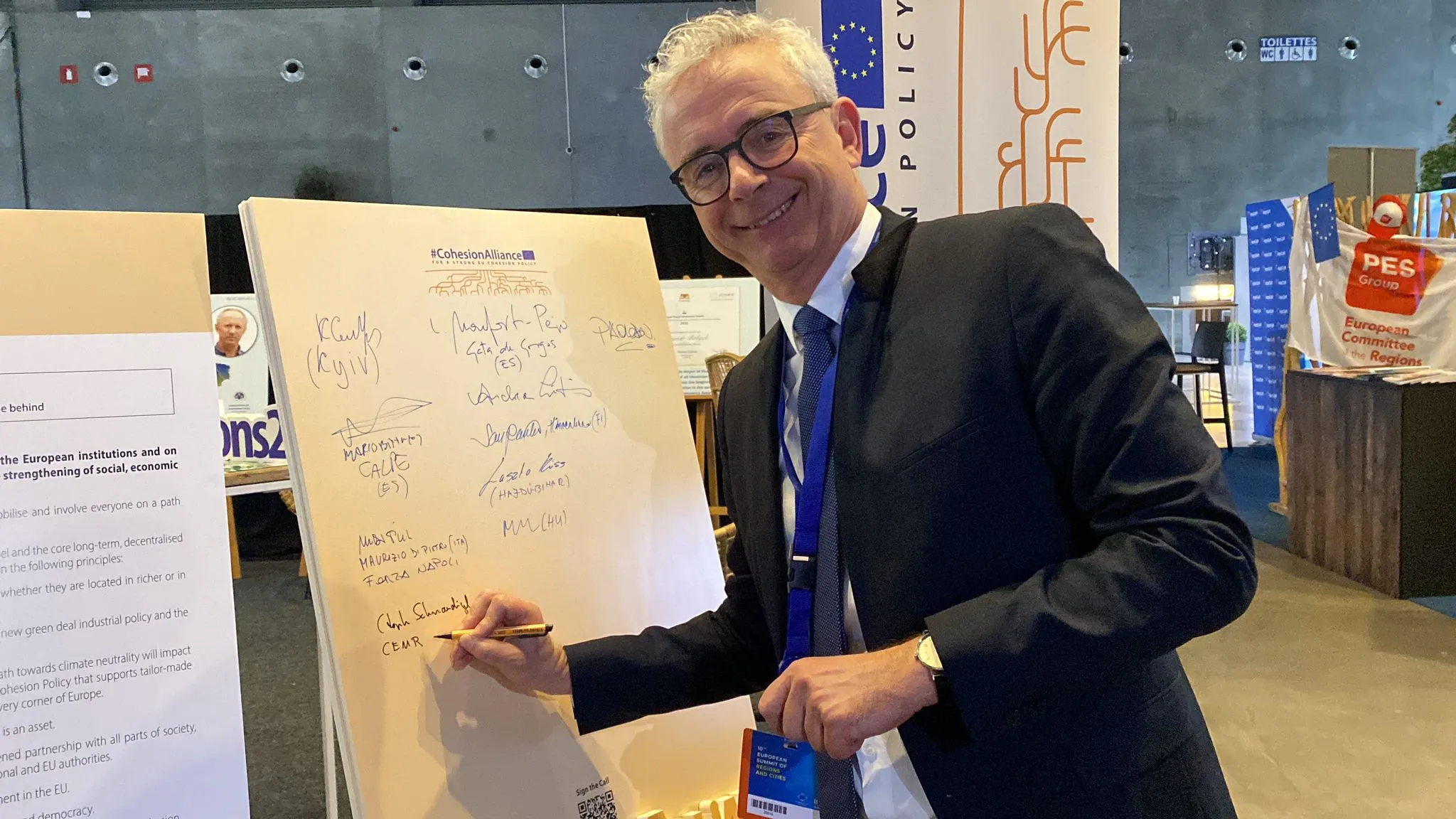
The Cohesion Alliance Join Forces in Launching Joint Call: “A Renewed Cohesion Policy Post-2027 That Leaves No One Behind”


The Council of European Municipalities and Regions (CEMR) is proud to announce the launch of the Joint Call of the Cohesion Alliance, “A Renewed Cohesion Policy Post-2027 That Leaves No One Behind.” This Declaration brings together elected representatives of regions and cities across Europe to advocate for a comprehensive EU agenda that prioritises social, economic, and territorial cohesion.

In a united effort, CEMR, the Committee of Regions and the organisations of the Cohesion Alliance call upon European institutions and national governments to devise an inclusive EU agenda that places the strengthening of social, economic, and territorial cohesion at its core, as stated in the CEMR position on the Future of Cohesion Policy.

Christoph Schnaudigel, Co-President of CEMR, remarked, “We need a Cohesion Policy that puts the Local and Regional public services and investments at the centre to make our territories resilient to face the next crises. This will allow citizens to see that the EU is placing them at the centre.”

Recognising that Cohesion Policy serves as the glue of European action, Fabrizio Rossi, CEMR Secretary-General, adds: “CEMR advocates for a dedicated Commissioner for Territorial Development in the upcoming EU Commission, recognising the vital interconnection between various EU policies and their tangible effects at local and regional levels. Such an appointment would support cohesive, sustainable growth that resonates across every corner of Europe.”

The joint call outlines several key principles for a renewed Cohesion Policy post-2027:

  1. Inclusivity: Ensuring that all regions, cities, and municipalities have access to Cohesion Policy, regardless of their economic status or geographical location.
  2. Alignment with Green Deal and Digital Agenda: Anchoring social, economic, and territorial cohesion within the EU’s Green Deal industrial policy and strategic autonomy.
  3. Just Transition: Prioritising tailor-made solutions based on the principles of just transition to address the challenges of climate neutrality.
  4. Place-Based Solutions: Recognising the diversity of territories and enabling local-level strategies within a stable and predictable framework.
  5. Shared Management Principle: Strengthening shared management, partnership, and multi-level governance to overcome fragmentation and enhance effectiveness.
  6. Culture of Trust: Fostering a new culture of trust between different layers of government in the EU to ensure Cohesion Policy’s actual impact on Europeans’ lives.
  7. Territorial Cooperation: Supporting cross-border and interregional cooperation to deliver concrete improvements in people’s daily lives.
  8. Do No Harm to Cohesion: Ensuring consistency across all EU policies to strengthen economic, social, and territorial cohesion.

The full Call to Action can be signed through this link: Cohesion Alliance Joint Call (europa.eu)

The Cohesion Alliance invite the general public, trade unions, businesses, and non-governmental and civil society organisations to join in their efforts to secure a just Europe that leaves no one behind. 

Twinning

Project Proposals Twinning - News 2024

Call for Project Proposals


CEMR is excited to announce the launch of a call for project proposals to enhance Twinning activities among its member associations.

This initiative, part of the REALISE project funded by the European Commission, seeks to promote collaboration, share best practices, and address challenges faced by local and regional governments across Europe.

Read more and fill out the forms below:

EU Elections 2024

A call to action: Europe can only succeed together with municipalities


Christoph Schnaudigel, the Co-President of the German Association of Counties and CEMR (RGRE), Vice-President of the German Section of CEMR (RGRE), and President of the County of Karlsruhe, presents a compelling call to action for the upcoming tenth direct elections to the European Parliament scheduled for June 6 to 9, 2024. Highlighting the crucial role of Europe’s municipalities, Dr. Schnaudigel emphasises the need for collaboration between local authorities and European institutions to effectively address the complex challenges facing the European Union. Touching upon issues such as Russia’s aggression, energy and migration crises, and municipal finances, Dr. Schnaudigel l underscores the significance of local governments in implementing and influencing European policies. Dr. Schnaudigel also calls for a more streamlined and less burdensome regulatory environment, ensuring that European legislation aligns with the needs and capacities of local and regional authorities. Additionally, the editorial addresses the importance of a meaningful regional policy, highlighting the necessity for funds to be allocated based on local needs and emphasising the partnership principle.

A call to action: Europe only together with the municipalities

The tenth direct elections to the European Parliament, which will take place from June 6 to 9, 2024, will also be of great importance for Europe’s municipalities. The European Union (EU) and the world continue to face profound challenges to which national governments alone cannot respond adequately. The effects of Russia’s war of aggression against Ukraine, the energy and migration crises and the pressure on municipal finances are coming up against far-reaching economic and social transformations such as the Green Deal and digitalization.
In order to proactively address these challenges, the Council of European Municipalities and Regions (CEMR) adopted a “Call for Action” at its General Assembly in Prague in December 2023. This formulates demands for a successful municipal European policy, addressed to European institutions, candidates and new members of the European Parliament.
As the most comprehensive European association of local and regional authorities, CEMR has been bringing together one million democratically elected European politicians from 60 member associations in 40 countries since 1951. Its mission is to build a united, peaceful and democratic Europe, based on local self-government, the principle of subsidiarity and the appropriate participation of citizens.
More participation in European decision-making processes: Better regulation for and with local authorities
Local authorities are important public economic, societal and political actors, they are responsible for the development and maintenance of local infrastructure, healthcare, waste disposal and local public transport. In doing so, they directly apply the European regulations on public procurement and state aid law.
However, local authorities are not only responsible for providing important public services. They and their representative associations also build a bridge between Europe and its citizens. On the one hand, they help the inhabitants of counties, cities and municipalities to understand the importance of the EU for their daily lives, and on the other hand, they communicate and convey local interests and needs to the EU and other international decision-makers.

As a result of their responsibilities, local authorities are confronted with a large number of EU initiatives. This currently applies in particular to the European Green Deal. Climate, energy and the environment are areas in which the European legislator has been very active in recent years and still is. However, the successful implementation of a climate-neutral future depends to a large extent on the municipal level, which is closest to the citizens. Local authorities are already implementing around 70% of European legislation. Land use planning for renewable energy, the implementation of mandatory renovation rates for public buildings and the restoration of local ecosystems are just a few current examples of this. 

For this reason alone, districts, cities and municipalities must be involved in the decision-making process at the European level in good time. Local know-how and experience are indispensable for the European legislative process. The model of governance in partnership in Europe, which has already found expression in cohesion policy, is an important instrument for achieving inclusive results that at least attempt to take local needs into account appropriately. 
The next European Parliament and the Commission should therefore commit to a political agenda that fundamentally incorporates local conditions on the ground into their decisions. This includes, above all, strengthening the partnership principle in cohesion policy, as well as a strict review of the subsidiarity and proportionality of new directives and regulations concerning local and regional interests.
It must be taken into account that the local level is already confronted with an almost unmanageable level of overregulation and complexity of standards. This is further exacerbated by the existing shortage of staff and the poor financial resources of local authorities in many places. With a view to future new EU regulations, we must therefore refrain from greater regulation and an excessive density of rules. It will be essential to concentrate European legislation on major issues relevant to the internal market for which European regulations also offer genuine added value. In addition, existing European regulations must be simplified and streamlined and bureaucratic hurdles removed.

A European regional policy that generates real added value on the ground!

For a meaningful and generally recognised regional policy of the EU, it is also necessary that the funds are used according to need. This in turn presupposes that the municipalities, as the level closest to the citizens, are appropriately involved in the decisions on the funding objectives and measures following the so-called partnership principle. This principle already exists but is sometimes interpreted by the administrative authorities of the federal states in such a way that local authorities are only informed about decisions and are not involved in them. For this reason, the CEMR is committed to expanding and specifying the requirements of the principle.

The participation of local authorities of all types and sizes also brings benefits to the European level by making the diversity of the local level visible and highlighting existing strengths and needs. It enables the development of location-based strategies that are better suited to the concerns of the respective local authorities. Centralist approaches based on the motto “one size fits all” must be a thing of the past.

As CEMR, we therefore also demand that European decision-makers adhere to the principle of “do no harm to cohesion” when drafting new and existing legislation. This principle essentially states that European regulations must not adversely affect socio-economic development in areas, as otherwise the effect of the funding will be lost. For example, local authorities should not be obliged to carry out extensive renovations to existing buildings without being provided with the necessary funds.
Furthermore, we encourage the next European Commission to appoint a dedicated Commissioner for Territorial Development with a clear mandate to drive forward the EU’s strategic and long-term cohesion policy. Such a bundling of competencies could, in particular, help to create guidelines that can be implemented in both large cities and rural areas. The sometimes-incoherent support for urban and rural areas must be better coordinated with each other and with the local challenges. We call on the new MEPs to set up an intergroup on public services of general interest that focuses its work on improving local and regional public services.
Systemic approaches and innovative tools for better local cooperation
However, our vision goes beyond the current political debate; it also includes systemic approaches and innovative tools to promote fair, inclusive and sustainable local societies. The European Parliament must support the promotion of digital skills in local administrations. The EU framework must be developed in line with user-centred public services to improve their quality and accessibility for our citizens.
In an increasingly interconnected world, an open and responsible model of international cooperation is indispensable. More than ever, international developments have a concrete impact on the way we live together at the local level. European decision-makers must continue to support decentralized cooperation as a proven tool to promote inclusive international cooperation and democracy.

Municipal partnerships and twinning agreements also play an important role in this context. They promote shared values and contribute to openness and a better understanding between the citizens of Europe. Financing instruments for partnership work should continue to be made available to municipalities on a decentralized basis.
In summary, the 2024 European elections provide an important opportunity for the German Association of Counties and CEMR to advocate for a Europe that listens to its local voices. The implementation of our “Call to Action” can empower the European Parliament and the next European Commission to create a basis for a responsive and citizen-centred European Union that serves all citizens. With our common messages and recommendations, we want to shape Europe together.