Policy Forum on Development 

Policy Forum on Development - News 2023

CEMR Secretary General to Address Global Meeting of the Policy Forum on Development 2023


The upcoming “Global meeting of the Policy Forum on Development 2023” is set to kick off with a keynote address by the Secretary General of the Council of European Municipalities and Regions (CEMR), Fabrizio Rossi. Starting on September 27, the three-day Conference will serve as a vital platform for discussing multistakeholder partnerships, equality, and the civic space within the context of the Global Gateway initiative.
 
The Secretary General of CEMR will address the Conference’s inaugural session on September 27, drawing upon CEMR’s extensive experience, which champions active engagement of local governments and regions in influencing policies that directly affect their communities.
 
The opening session will feature Jutta Urpilainen, European Commissioner for International Partnerships. Commissioner Urpilainen will open the session with a keynote address on the Global Gateway initiative and its role in addressing global inequalities. Her insights will set the stage for discussions throughout the Conference.
 
The “Global Meeting of the Policy Forum on Development 2023” aims to facilitate constructive dialogue on topics ranging from sustainable development goals to inclusive governance. Participants will explore innovative solutions and strategies for advancing the Global Gateway initiative, which seeks to foster international cooperation and bridge disparities on a global scale.

Resilient Cities and Regions

Resilient Cities and Regions Seminar - News 2023

CEMR Advocates for Robust Public Investments at ‘Resilient Cities and Regions’ Seminar


The Council of European Municipalities and Regions (CEMR) actively participated in the event “Resilient Cities and Regions: Impact of Public Investments on Economic and Social Development at the local level,” organised by the Committee of the Regions. The seminar’s primary focus was to assess the influence of public investments on the economic and social growth of cities and regions and to exchange insights and experiences on local public investment, green infrastructure development, and digitalisation scaling within the European Union.
 
The event gathered esteemed experts, policymakers, and representatives from various regions and municipalities across the EU engage in discussions and share their perspectives on the critical role of public investments in shaping sustainable development.
 
Carol Thomas, Interim Director of Policy at CEMR and speaker at the event, emphasised the significance of effective governance in partnership for achieving favourable policy outcomes. Drawing on CEMR’s research, Thomas highlighted that local and regional governments play a substantial role, accounting for 64% of investments linked to climate and environmental actions.
 
Carol stated: “CEMR’s studies have shown the importance of robust governance-in-partnership for effective policy outcomes. Local and regional governments account for 64% of investment linked to climate and environment actions, and their contribution is essential if we want to achieve the objectives of the green and digital transition.”
 
Furthermore, she insisted on the vital role of local finances, asserting that investments in local infrastructure and public finances are pivotal in bolstering Europe’s recovery: “Shoring up our local finances is not just a nice to have. Investment in local infrastructure and public finances is key to boosting Europe’s recovery and reducing the innovation gap”.

Collaboration with KS

Collaboration with KS - News 2023

CEMR Strengthens Collaborative Ties with KS: A Promising Meeting for 2024 Agenda


On September 19, 2023, CEMR had the privilege of engaging in a productive meeting with KS, the Norwegian Association of Local and Regional Authorities. Co-Chaired by Mr. Frode Lindtvedt, Director of the Department of Local Democracy, European Affairs, and International Work, and Ms. Åse Erdal, Chief Adviser for Local Democracy, European Politics, and International Work, this gathering held significant promise for both organisations.

The primary agenda of the meeting was to introduce KS to the wealth of opportunities that collaboration with CEMR brings. Discussions spanned various topics, including exchanging ideas on priorities for the upcoming year and shaping the European Research agenda.

One of the core objectives was to not only strengthen the partnership between CEMR and KS but also to set an example for other associations. CEMR is keen on fostering collaborations with like-minded organisations, creating a platform where shared goals and visions can be realised collectively.

CEMR is excited about the outcomes of this meeting and looks forward to an even more dynamic and collaborative 2024.

We are eager to extend these conversations and partnerships to other associations, inviting them to join us in making 2024 a year of fruitful collaborations and significant progress.

Follow our journey as we continue to foster partnerships and share ideas that drive positive change.

Contact us to discuss further our collaboration at: durmish.guri@ccre-cemr.org

→ Learn more about KS: https://www.ks.no/

UNGA 2023

UNGA 2023 - News 2023

CEMR and PLATFORMA to Showcase Local and Regional Commitment at the 2023 UN SDG Summit


The Council of European Municipalities and Regions (CEMR) is participating in the upcoming United Nations Sustainable Development Goals (SDG) Summit, scheduled for 18-19 September. This high-profile event will bring together leaders from across the globe to discuss crucial sustainability issues and progress toward achieving the SDGs.
CEMR and PLATFORMA will be leading a distinguished delegation, including CEMR Secretariat Eva Baños de Guisasola, Senior Adviser on Global Agendas, SDGs and Climate; Basque Government, Spain; CUF, Cités Unies France; DIBA – Diputació de Barcelona, Spain; ELVL, Estonia; FEMP; Association of German Cities; VNG, The Netherlands; SALAR, Sweden; UCLG.
CEMR’s main objectives at the conference are to advocate for a decentralised, bottom-up, territorial approach to SDG implementation and to emphasise the indispensable role of local and regional governments in achieving these global goals.


Key highlights of CEMR’s participation include:

  1. EU Voluntary Review: CEMR calls for clear recognition of the contributions made by different levels of governance and civil society organisations in achieving the SDGs in Europe.
  2. Localising SDGs: National governments and the EU are urged to accelerate the localisation and territorialisation of the SDGs, ensuring that local and regional governments have the necessary autonomy, means, and resources to drive change at the community level.
  3. Citizen Engagement: CEMR promotes the production of Voluntary Local Reviews (VLRs) and Voluntary Subnational Reviews (VSRs) as tools to engage citizens and enhance awareness of global challenges.
  4. Data Inclusion: CEMR advocates for including relevant disaggregated data and information at the subnational level in Voluntary National Reviews (VNRs). Emphasising the importance of local governments in monitoring and reporting SDG progress.
  5. Political Engagement: CEMR urges EU institutions and European States to engage with local and regional governments through regular dialogue and the inclusion of local elected representatives in high-level meetings.
  6. International Cooperation: CEMR seeks more support for international cooperation at the local and regional levels, emphasising peer-to-peer learning and innovative partnerships as key drivers of SDG achievement.
  7. Inclusivity: CEMR underscores the vital role of youth, women, and vulnerable groups in decision-making and activities contributing to SDG attainment.

CEMR is committed to making a significant impact at the 2023 UN SDG Summit by promoting the pivotal role of local and regional governments in driving sustainable development. We look forward to engaging with global leaders and partners to advance our shared vision for a more sustainable and equitable world. To learn more about CEMR/PLATFORMA’s SDG strategy, you can find our latest study online at this link https://local-sdgs.eu/.

“Rencontres de l’AICT” 

Rencontres de l'AICT - News 2023

Secretary General of CEMR Fabrizio Rossi to address the role of local and regional governments in solving global issues at “Rencontres de l’AICT” Conference


The Secretary General of the Council of European Municipalities and Regions (CEMR) will participate in the “Rencontres de l’AICT” Conference. This annual event, hosted by Cités Unies France, brings together thought leaders, policymakers, and experts from around the world to discuss the role of local and regional authorities in resolving major global issues.

The Secretary General, Fabrizio Rossi, will speak on Tuesday, September 19 in the plenary session. During his intervention, Mr Rossi will showcase how regional partnerships can contribute to achieving the Sustainable Development Goals (SDGs) through the prism of their international action and by presenting CEMR and Platforma’s on-field experience. 

The session will also be broadcast live via the Cités Uites France YouTube channel, with the option of asking questions.

  • Access the channel here

The Organisation will participate in the event:

  • On Tuesday, September 19, 14:30 to 15:00 – PLATFORMA workshop development education and awareness raising where the initiative “European Days of Local Solidarity” will be presented.

State of the Union 2023

State of the Union - News 2023

The Missing Piece: Local governments in President Von der Leyen’s 2023 SOTEU


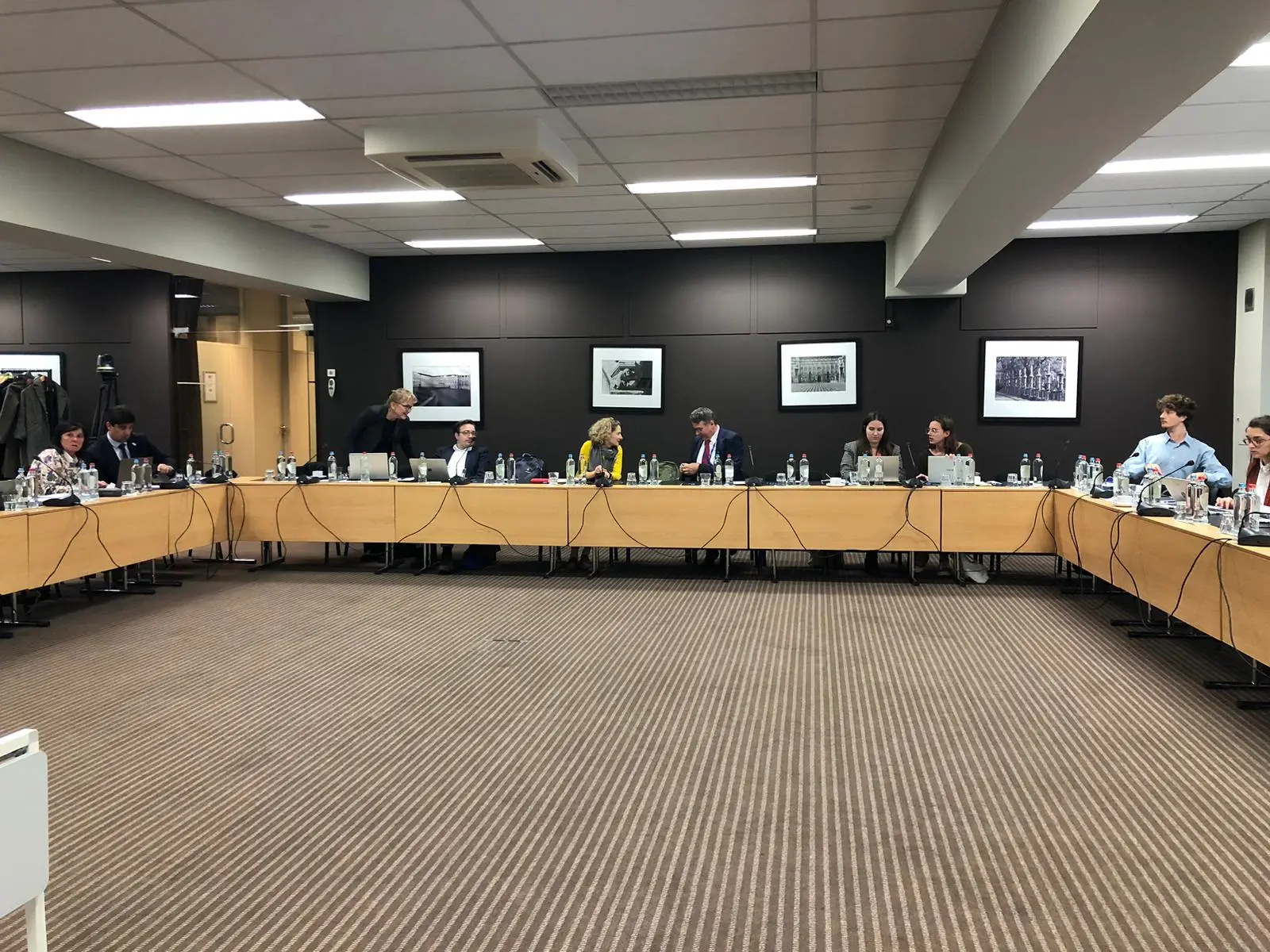
The Council of European Regions and Municipalities (CEMR) invited its member associations at the Secretariat in Square de Meeus, Brussels, to follow the State of the Union (SOTEU) address.
 
In her 2023 State of the Union speech, European Commission President, Madame Von der Leyen, highlighted the primary issues expected to influence the 2024 elections, opening her address with a call to the younger generations, implicitly encouraging them to defend the unique nature of European Democracy, particularly with a war ongoing on European soil. She placed a significant emphasis on the achievements of her mandate since 2019, such as the European Green Deal, competitiveness, AI, digital transition, enlargement, inflation, and gender equality. While we commend all the commitments and accomplishments so far, there was no mention of the strategic role that local and regional governments play in successfully implementing these initiatives.
 
Local and regional governments are instrumental in impacting the daily lives of European citizens. The President referenced the “Europe of the regions”, but European regions require more focus and investment, especially in education, minority integration, cohesion policy, and social security.
 
CEMR welcomed President von der Leyen’s commitment to revitalising the European Social Dialogue to respond to the deep-rooted shifts in technology, society and demography. However, cohesion policy needed to find a place in the address. We know that Cohesion policy is pivotal in promoting economic and social convergence across Europe while avoiding the surge of new inequalities. CEMR believes it should remain a central element of the EU’s agenda.
 
Nevertheless, CEMR remains committed to working hand in hand with the European Commission to shape a greener and fairer Europe. With its unparalleled ability to represent one million elected representatives spanning 40 countries, CEMR is a critical bridge between local governments and the European Commission. In the spirit of unity and cooperation, CEMR and its members look forward to actively participating in the ongoing dialogue to ensure that local governments’ voices are heard and considered in the EU’s future policies and initiatives.

CEMR – Development Aid

Development Aid - News 2023

CEMR and DevelopmentAid partner for a more sustainable and innovative local communities


The Council of European Municipalities and Regions (CEMR) has signed a partnership agreement with DevelopmentAid, at a time when CEMR is working to make sustainable innovation accessible to local and regional governments.
 
DevelopmentAid is an innovative membership organisation founded in 2007. It provides essential information to donors, agencies, consultancies, non-governmental organisations, and individuals working in the international development sector. With a network of 500,000 aid stakeholders, the organisation aims to bring together the international development community.
 
Under the terms of the agreement, CEMR members will benefit from a number of services, including free access to the Calls4Partners Service and the DevelopmentAid Job Board.
 
CEMR will soon provide its members with information on how to access the DevelopmentAid platform and take advantage of the partnership benefits.

Looking for Consultants

Consultants - News 2023

Organisation/ Expert Consultant in EU Project Development


CEMR is in search of a certification organisation or expert proficient in EU project development and proposal writing. The objective will be to develop a specific training programme for the Local and Regional Governments and their associations.

  • Deadline for submissions: 22 September 2023, 12:00 (CET Time)
  • To be sent toapplications@ccre-cemr.org
  • Subject: Organisation/Expert Consultant on EU Project Development

→ For more information, click here 

Call for Proposals 

Call for Proposals BoT - News 2023

Subcontracting for external services on the production of an interactive video on the journey of the “Bridges of Trust” project


CEMR is pleased to announce a call for proposals for external services to contribute to the Bridges of Trust video. The selected provider will be responsible for summarising project activities and enhancing the visibility of the project deliverables. This will be achieved through the development of an interactive video designed for promotional activities.

→ For more information, click here

Insights on cohesion policy funds

Cohesion Policy - News 2023

CEMR released in-depth study unveiling insights into European cohesion policy funds


The Council of European Municipalities and Regions (CEMR) is pleased to announce the release of its comprehensive study on European Cohesion Policy funds. This illuminating study offers valuable insights into the management and implementation of European Structural and Investment Funds, a cornerstone of the European Union’s investment strategy.

Offers practitioners and policymakers a comprehensive overview of how Cohesion Policy Funds are implemented in different countries.

European Cohesion Policy funds, also known as European Structural and Investment Funds, are pivotal to the EU’s vision of a more prosperous and sustainable continent. These funds reach every corner of Europe, supporting critical initiatives such as job creation, economic growth, sustainable development, green and digital transitions, and the building of inclusive societies. In the funding period from 2021 to 2027, eight distinct funds play a key role:

  1. European Regional Development Fund (ERDF)
  2. European Social Fund Plus (ESF+)
  3. Cohesion Fund (CF)
  4. Just Transition Fund (JTF)
  5. Asylum and Migration Fund (AMIF)
  6. European Maritime, Fisheries and Aquaculture Fund (EMFAF)
  7. Internal Security Fund (ISF)
  8. Border Management and Visa Instrument (BMVI)

However, to truly understand the impact of these funds and their operational dynamics, one must delve deeper. Questions emerge, such as who manages these funds, how Member States approach their administration, and how coordination is ensured to prevent overlap. Additionally, understanding their alignment with non-Cohesion Policy funds, like the Recovery and Resilience Facility, is crucial.

The Cohesion Policy Funds study delves into these fundamental questions. It offers a comprehensive exploration of Cohesion Policy funds for 2021-2027, shedding light on their management, coordination, and impact.
This pioneering study reveals critical insights into:

  • Centralised vs. Decentralised Management: Discover how Member States manage Cohesion Policy funds, whether through centralized, decentralized, or mixed models.
  • Sustainable Urban Development: Explore the rising emphasis on sustainable urban development, a core component of Cohesion Policy, with Member States committing an average of approximately 12%, surpassing the required 8% allocation for this purpose.

CEMR’s study is a valuable resource for policymakers, regional and local authorities, and all stakeholders invested in Europe’s advancement.
Unlock the potential of Cohesion Policy funds and their transformative role in shaping Europe’s future.

Cohesion Policy Fund graph

Read the position paper

For more information, contact: