EU Delegation study

Mindcraft study on EU Delegations 2026

EU Delegations engagement with local and regional governments: what will it take to make that cooperation more systematic?

447 words
2–3 minutes

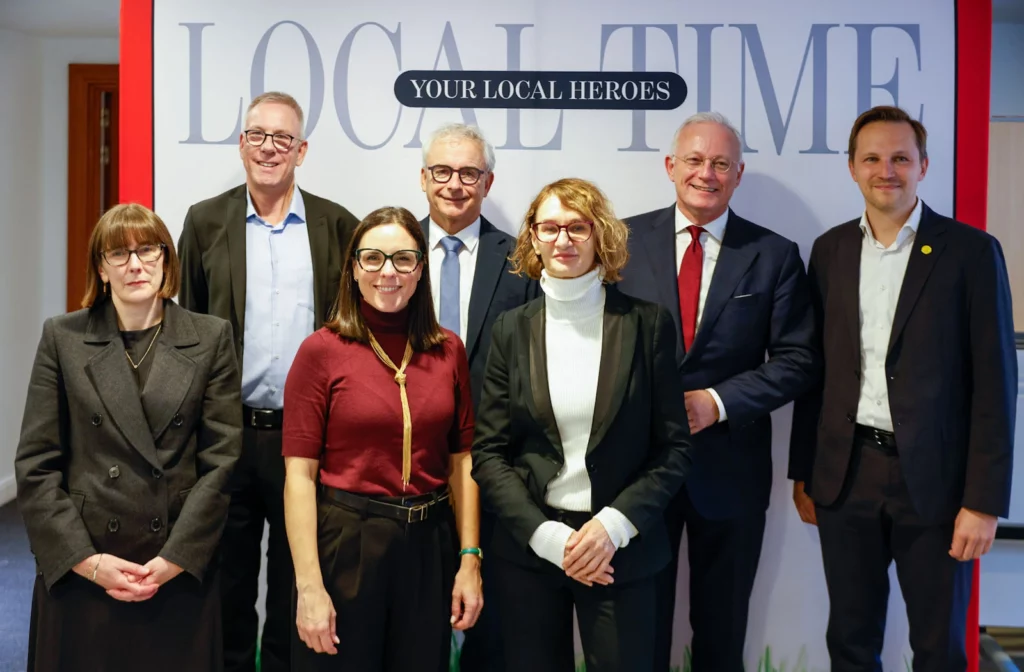
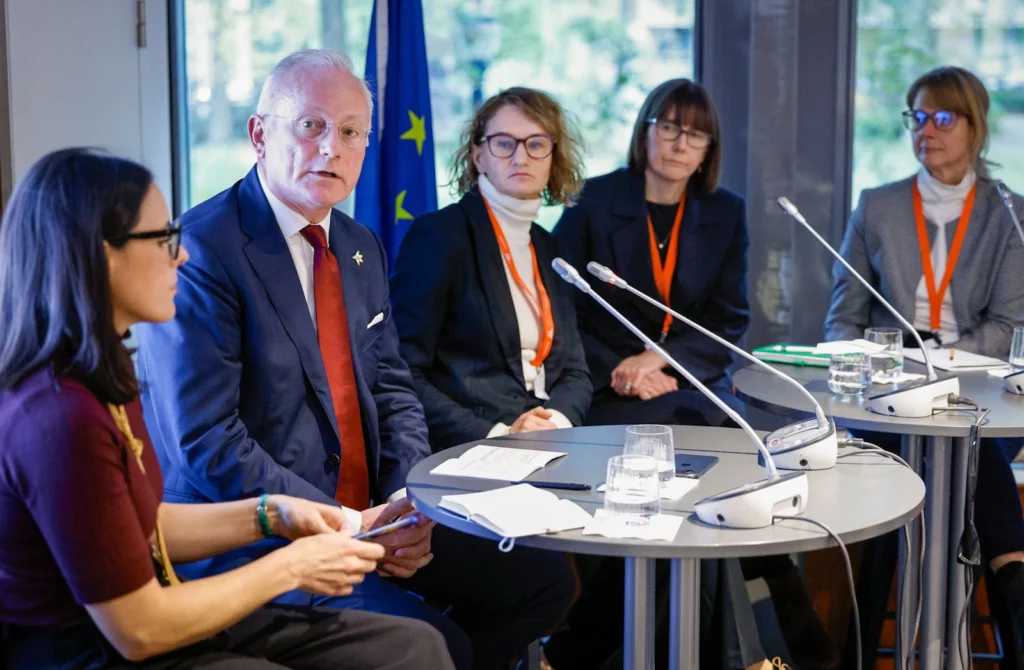
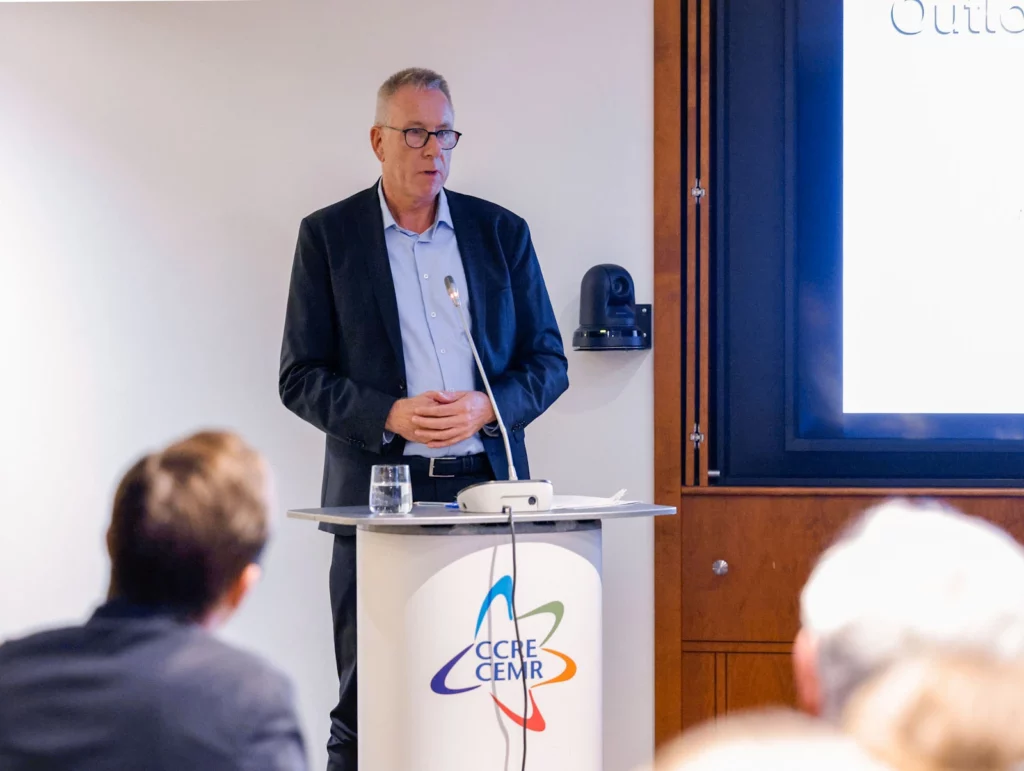
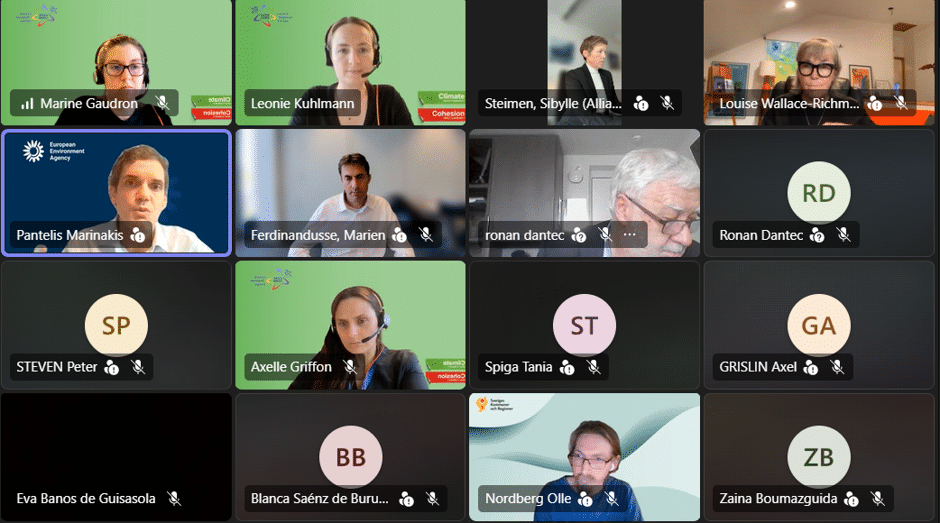
“The Work of EU Delegations with Local and Regional Governments” is a new Mindcraft publication, following on from the report published by PLATFORMA in 2021. Since 2021, the EU’s external action framework has undergone significant change. Under the Neighbourhood, Development and International Cooperation Instrument (NDICI) Global Europe and the Global Gateway strategy, EU international cooperation has moved towards a more geographic, investment-driven approach, with growing emphasis on the localisation of development cooperation.

This new study examines to what extent and how EU Delegations (EUDs) engage with Local and Regional Governments (LRGs) and their associations (LRGAs) in the partner countries. It is based on a 2025 survey of 40 EUDs worldwide and, interviews with five of them in Chad, Guatemala, Madagascar, Nepal and Zambia, as well as additional exchanges with EU Member States development cooperation agencies.

 Key findings:

  1. Enabling environment is key for LRG engagement. 62.5% of surveyed EUDs assessed the decentralisation in the partner country as favourable, and 57.5% support decentralisation efforts. Examples across partner countries show that support to local governance and public finance management helps LRGs engage in territorial development and EU-funded initiatives, though access to finance and the preparation of bankable projects remain persistent challenges.
  2. LRG engagement in EU international cooperation remains uneven and rather limited. 57.5% of surveyed EUDs stated they engage with LRGs and LRGAs under the NDICI-Global Europe, while 20% stated they engage with them under the Global Gateway strategy. EUDs point to the lack of a right framework for structured cooperation as an obstacle. 69.2% consider that a specific budget line for LRGs would help.
  3. LRG engagement can be valuable in fragile contexts. Among EUDs working in fragile settings, 76.4% consider that engaging with LRG would facilitate their work.
  4. Decentralised cooperation remains generally underused.  Illustrative examples of partnerships between European and partner-country LRGs, along with cooperation through LRGAs and their international cooperation structures, show real potential to strengthen local governance and support the localisation of EU initiatives but require greater visibility and emphasis.
  5. There is an ongoing need to strengthen EUDs capacities to work with LRGs. Only 30% of surveyed EUDs reported having received specialised training or support for engaging with LRGs, which were assessed useful for understanding territorial approaches to local development.

These findings come at a timely moment, as negotiations on the 2028–2034 Multiannual Financial Framework, including its proposed Global Europe Instrument, are underway. CEMR-PLATFORMA calls for a clear engagement framework, dedicated funding mechanisms for LRGs, and stronger support for decentralised cooperation as a route to shared development goals.

Read the full publication, available in:

  • English
  • French (available soon)
  • Spanish (available soon)
  • German (available soon)

For more information, contact:

Episode Call Simone: cities and digitalisation

Episode Call Simone cities and digitalisation

How do cities shape Europe’s digital future?

713 words
3–5 minutes

Who should Europe call to understand its digital future? How local governments are shaping Europe’s digital transformation

A European Commissioner, a tech company, a national government or the people delivering public services on the ground? That is the question at the heart of the latest Call Simone episode, which brings together two very different voices: Katrin Rajamäe-Soosaar, digital transformation expert at the Association of Estonian Cities and Municipalities, and Federico Menna, CEO of 28Digital.

Estonia’s digital success starts with the basics

Estonia is often described as Europe’s digital pioneer, but Katrin is quick to note that this reputation rests less on flashy technology than on decades of investment in shared infrastructure and a national digital identity used by citizens for over twenty years. Today, residents can complete most administrative procedures online, from anywhere.

That success is not confined to big cities like Tallinn. Estonia also has villages and islands of only a few hundred people, all expected to deliver the same digital services. The answer has been to build shared, reusable platforms with national authorities rather than asking each municipality to build its own.

A transition that can widen the gap

Despite this reputation, digital transformation in Estonia remains uneven. Some municipalities offer full self-service portals; others still rely on email or paper. As expectations grow around cybersecurity, data management and AI-readiness, Katrin warns that smaller administrations risk falling further behind; turning digitalisation into a source of new inequality rather than a solution to it.

Trust, e-voting and the limits of AI

Estonians’ comfort with digital public services, including secure, widely trusted electronic voting, shows what sustained investment in identity systems and user-friendly design can achieve over time. Traditional channels haven’t disappeared either: citizens who prefer face-to-face contact can still visit their municipal office.

Most current use is generative AI supporting everyday administrative work, with more advanced applications; such as detecting unauthorised construction from satellite imagery, still emerging. Her message is clear: AI should support decision-making, not replace it. Accountability and human oversight remain essential.

A stronger voice for local government

A recurring theme is the distance between European policymaking and local implementation. Local and regional governments are usually the ones putting EU digital rules into practice, yet they rarely help shape them upstream; a disconnect Katrin believes needs correcting if regulation is to work on the ground.

From Tallinn to Cluj-Napoca

The episode’s second guest is Federico Menna, CEO of 28Digital, who has led the organisation through a strategic transformation aimed at positioning it as Europe’s leading platform for digital entrepreneurship, talent and innovation. His work centres on strengthening Europe’s digital sovereignty and building bridges between startups, corporates, scale-ups, researchers and students across the continent.

Asked who he would call to talk about Europe’s digital future, Federico’s answer echoes Katrin’s: not a capital, but a city, specifically, the mayor of Cluj-Napoca.

For Federico, digital transformation doesn’t happen only in capitals or in the largest member states, and Cluj is proof of that. Having recently opened an office there, he describes a city that has used technology in an ethical and inclusive way to build a genuine tech ecosystem, complete with a strong presence of European institutions and, crucially, a good quality of life for its residents.

It is a combination he believes could be replicated across Europe, and one that reinforces the episode’s broader theme: that mayors, not just national governments, are central to shaping where Europe’s digital transformation goes next.

Looking ahead

Asked who Europe should call in ten years, Katrin’s answer is a city; one where digital skills are no longer confined to specialist teams but shared across every public service. Her hope, echoed throughout the episode, is for closer cooperation between local and regional governments across Europe, and for digital transformation decisions to be guided by democratic values rather than business interests alone.

Europe’s digital future, this episode suggests, won’t be decided solely in Brussels or in national capitals. It will be shaped, city by city, by the people turning policy into public service.

And as Europe navigates the opportunities and risks of digital transformation, finding the right balance between innovation, regulation and democracy may prove to be the most important challenge of all.

For more information, contact:

Voices of our 75-year history: Stefano Bonaccini

75 years - Bonaccini

Interview with Stefano Bonaccini – “A united Europe cannot exist without its diverse territorial sensitivities”

549 words
2–3 minutes

Stefano Bonaccini served as the President of the Council of European Municipalities and Regions (CEMR) from 2016 to 2022, leading the organisation through two consecutive three-year terms. With an extensive background in Italian regional governance, having served for 10 years as the President of the Emilia-Romagna region and six years as the President of all Italian regions, Bonaccini brought a deep understanding of local administration to the European stage. Today, as a Member of the European Parliament, he welcomes us to discuss his experience, the role of local governments in Europe, and the challenges ahead.

In this interview, Bonaccini looks back on the challenges and rewards of leading a continent-wide network such as CEMR. He shares his views on the importance of cohesion policy in the ongoing discussions on the EU budget and reflects on what lies ahead for both CEMR and the wider local and regional government movement within the EU project.

Building consensus across a diverse membership

Asked about his fondest memory from his six years as CEMR President, Bonaccini does not point to a particular event. Instead, he highlights what he sees as one of the organisation’s greatest achievements: bringing together local and regional governments from across Europe around a shared agenda.

Representing members from countries with different political traditions, cultures and priorities is no easy task. During Bonaccini’s presidency, CEMR brought together local and regional leaders from both EU and non-EU countries, often with very different perspectives on key issues.

Despite long debates, Bonaccini proudly recalls that nearly all major decisions and objectives were voted on and passed almost entirely with unanimity. For him, this ability to find common ground is one of CEMR’s defining strengths and a key reason why the organisation has remained an influential voice for local and regional government in Europe throughout its 75-year history.

Standing firm on the relevance of local governance in EU discussions

Drawing from his experience as CEMR President, Bonaccini stresses the importance of organisations such as CEMR in shaping European debates.

In his view, decisions taken at the EU level cannot be effective unless they take account of the realities faced by towns, cities and regions on the ground. This is particularly true for the ongoing discussions on the next EU budget, where he clearly states that “we cannot exclude cohesion policy” because “that would mean excluding regions and municipalities from the planning of European funds”. “When planned and discussed together with the territories, these policies can provide citizens with opportunities”, he concludes.

A vision for an expanded, fairer, and more cohesive continent

Looking toward the next decade, Bonaccini outlines a clear, ambitious path for the future of CEMR. His hope is to see the family of European territories, cities, and regions expand even further, welcoming more diverse local voices.

 At the same time, he believes CEMR must continue to make the case for a Europe that works closely with its local and regional governments. Whatever their political complexity, national and European leaders need to recognise that many of today’s challenges can only be addressed through stronger cooperation and solidarity across the continent.


Stefano Bonaccini is part of the CEMR Italian national association of AICCRE.

For more information, contact:

Detention of Mayor Sinem Dedetaş

Uskudar Turkyie

CEMR expresses solidarity with the detained Mayor of Üsküdar in Türkiye  

397 words
2–3 minutes

The Council of European Municipalities and Regions (CEMR), together with President Christoph Schnaudigel, voices full solidarity with Mayor Sinem Dedetaş, member of the CEMR Policy Committee, following her detention, and calls on Turkish authorities and European institutions to defend local self-government and the rule of law.  

CEMR has issued a statement expressing its deep concern over the detention today of Sinem Dedetaş, Mayor of Üsküdar and member of the CEMR Policy Committee, along with several members of her team. 

CEMR stresses that this is not an isolated case, but the latest in a sustained series of actions targeting democratically elected local representatives in Türkiye. Since the 2024 local elections, more than 80 municipalities in the country have seen their elected mayors replaced through trustee appointments, dismissals or arrests, while over 30 mayors have been detained, many remaining in prolonged pre-trial detention. 

As President of CEMR, I wish to express full solidarity with Mayor Sinem Dedetaş and with all local elected representatives affected by these developments“, writes Christoph Schnaudigel, CEMR President and President of the County of Karlsruhe (Germany). 

It should be noted that when mayors and local leaders are deprived of their liberty and unable to exercise the mandates entrusted to them by citizens, the consequences extend far beyond those directly concerned: each case leaves a community without the representatives it elected. Taken together, these developments point to a steady erosion of local democracy and a lack of respect for the will of voters in Türkiye. 

CEMR recalls the importance of the principles enshrined in the European Charter of Local Self-Government, including respect for democratic mandates and the autonomy of local governments; principles CEMR considers essential to maintaining citizens’ trust in democratic institutions at all levels. 

CEMR calls on the Turkish authorities to ensure full respect for fundamental democratic standards and the rule of law, and to guarantee that elected representatives can carry out their responsibilities freely and without undue interference. It also calls on European institutions and the international community to stand in solidarity with democratically elected local representatives in Türkiye, and to continue advocating for the protection of local self-government, democratic institutions and the rule of law. 

CEMR will continue to monitor developments closely and stand alongside its members and partners in Türkiye in their commitment to democratic local governance. 

For more information, contact:

Cities and regions in the EU Pact on Migration and Asylum

EU Pact on Migration

Why Europe’s migration reform will be won or lost in towns, cities and regions

532 words
2–3 minutes

The EU Pact on Migration and Asylum entered its application phase this year. The Council of European Municipalities and Regions (CEMR) puts a question at the centre of that transition: are the local and regional governments who will actually deliver the Pact being treated as partners in shaping it?

Drawing on a questionnaire circulated among CEMR member associations, direct exchanges with local and regional leaders, and complementary desk research, the report maps how prepared towns, cities and regions are for the Pact’s application, how involved they have been in designing it, and what they say they need to make it work.

Already central, not always recognised

The findings confirm what many mayors and regional leaders already know from experience: local and regional governments are not new to migration governance; they are already at its centre. Long before the Pact, towns, cities and regions were carrying the bulk of integration, housing, education, health and social support for migrants and asylum seekers. Regional authorities reported responsibilities in this field in 87.5% of cases, and municipal authorities in 62.5%.

A governance gap

Half of respondents said local and regional governments were not consulted at all during the Pact’s negotiation and drafting. Where consultation did happen, it was often informal, ad hoc, or limited to written contributions requested by national authorities. No country reported involving local and regional governments (LRGs) as genuine co-designers of national implementation plans, CEMR calls this a “missing link” in multi-level governance: the level expected to deliver the Pact on the ground is rarely in the room when the rules are set.

A capacity gap

Responsibility without resources is a recurring theme. Only Austria considered its LRGs “mostly prepared” for the Pact; several other countries reported no additional resources at all since 2024. Where support existed, it was sporadic: extra IT tools here, an operational manual there, rarely the stable, dedicated funding implementation requires.

A coordination gap

Information about the Pact often reached local authorities through fragmented channels — circulars, ministry emails, informal networks, even the press; and clarity about who is responsible for what varied sharply from one country to the next. This uncertainty was not a side effect; it actively hampered planning, budgeting, and staffing decisions on the ground.

Was the deadline ever realistic?

For most respondents, the June 2026 application deadline of the Pact looked difficult or uncertain, well before it arrived, held back by staff shortages, unclear national guidance, and delayed preparations. Yet the report also points to a genuine reserve of capability: local authorities’ rapid, resourceful response to the displacement of people fleeing Ukraine shows what towns, cities and regions can do under pressure — provided that effort does not have to rely on improvisation every time.

What comes next

The analysis closes with three recommendations:

  1. Formally recognise LRGs within the Pact’s governance architecture;
  2. Strengthen synergies between AMIF, ESF+ and other EU funds around a more place-based approach;
  3. Ensure the Pact’s monitoring mechanisms track local and regional implementation, not only national transposition.

CEMR will continue to bring this evidence into the EU debate as the Pact moves further into its implementation phase.

For more information, contact:

Reaction to the European Electrification Action Plan

Europe’s Electrification Plan news

Europe’s Electrification Plan can only succeed with local governments 

552 words
2–4 minutes

The European Commission has presented its Electrification Action Plan, setting out how Europe can accelerate the transition to clean electricity across buildings, industry and transport and reduce costs of future-proof solutions. For CEMR, this is an important step towards a more competitive, secure and decarbonised Europe.  

Efficient electrification is no longer a sectoral energy policy – it is becoming a defining element of Europe’s economic and territorial transformation. That is why local and regional governments must be fully involved to make the plan a success.  

The Action Plan rightly recognises the need for major investments in electricity grids, energy storage, renewable energy, electric mobility and cleaner heating systems. 

CEMR welcomes the Commission’s proposal to support local heating and cooling planning through the European City Facility. The programme will begin with €15 million to help 180 local and regional governments prepare local plans before expanding to support up to 1,000 local plans, ready for investments. 

CEMR also welcomes the focus on clean heating solutions, including heat pumps and district heating and cooling, which already play an important role in the transition in many towns, cities and regions. Local governments are leading projects and investments in these solutions and help make buildings and neighbourhoods more sustainable. At the same time, CEMR stresses that support measures and new requirements must work together in a coordinated way.  

CEMR also highlights the importance of efficient waste-to-energy use for waste that cannot be recycled. EU legislation should clearly recognise energy recovered from non-recyclable waste and ensure that emissions from the fossil part of waste are allocated fairly to producers and waste generators, rather than to district heating operators or energy users.  

While the Commission calls for simplifying permitting procedures for clean energy projects, implementation will occur locally. Every new charging station, heat pump, district heating network, energy storage facility or grid connection depends on local planning, permits and cooperation with citizens and stakeholders. Local and regional governments are therefore not only implementing the transition; they are strategic partners in shaping the transition. Efficient permitting requires locally and regionally grounded solutions and processes with early coordination among stakeholders, rather than uniform EU-wide deadlines. 

Europe’s regions also face different challenges. Solutions that work in large cities may not be suitable for rural areas, islands, or industrial regions. Recognising the skills and capacity gap at the technical and administrative level is essential. A flexible, place-based approach is key to ensure that every community can benefit from electrification.  

Since Europe’s electrification targets will ultimately be delivered in its cities, towns and regions, the local and regional governments are already investing in the infrastructure needed for the transition, from electricity grids and heating networks to electric vehicle charging stations.  

CEMR therefore welcomes the ambition of the Electrification Action Plan and its recognition of the opportunities offered by clean electricity and modern heating and cooling solutions. To make the Plan a success, local and regional governments must have the resources, flexibility and role they need as full partners in Europe’s energy transition.  

CEMR will continue to contribute to this work in the months ahead and is awaiting the European Cooling and Heating Action Plan to be announced. 

Read the European Commission’s press release: Commission boosts Europe’s competitiveness, decarbonisation and independence and the plan itself: eur-lex.europa.eu/legal-content/EN/TXT/PDF/?uri=CELEX:52026DC0595 

Pour plus d’informations, veuillez contacter :

The future of the SDGs is local

High Level Policy Forum news 2026

The future of the 2030 Agenda should be local, or it won’t be

1,701 words
7–11 minutes

More than 15 European mayors and local leaders dominated the stage this week in New York. They run from one session to another at the UN High-Level Political Forum (HLPF) on Sustainable Development to defend the role of towns, cities and regions in delivering the 2030 Agenda and helping define what comes next. Through various events, mostly co-organised by the Global Task Force of Local and Regional Governments led by UCLG, European local leaders took the floor more than 50 times. 

With only four years to go until 2030, the clock is ticking to implement as much as possible the Sustainable Development Goals (SDGs), but also to shape their future. During the UN-proofed Local and Regional Governments Forum, but also the Global Task Force Local and Regional Governments Day, and the CEMR-PLATFORMA meeting with the EU Delegation in New York, mayors and local leaders gave examples and ideas on how to implement the 2030 Agenda from the ground. They all asked the United Nations (UN) to deepen local and regional governments’ engagement, stressing that SDG 11 (Sustainable Cities and Communities), among many others, cannot be delivered without empowering towns, cities and regions.

Even if the Local and Regional Governments Forum is officially recognised as being part of HLPF, towns, cities and regions are absent from the final conclusions of the ECOSOC (UN’s Economic and Social Council, a platform to advance the economic, social and environmental dimension of sustainable development), responsible for the organisation of HLPF. However, the numerous UN officials who attended the various sessions all recognised the key role of local and regional governments in achieving the SDGs and defining their future shape.

High Level Policy Forum - CEMR and PLATFORMA 2026
High-Level Policy Forum – CEMR and PLATFORMA, New York 2026

The voice of European local leaders at the United Nations

The future is local

Wim Dries, Mayor of Genk (Belgium), Association of Flemish Cities and Municipalities (VVSG): “Local and regional governments are often invited only after decisions have already been made. We need a stronger role in decision-making, adequate financing, and better coordination. We connect SDGs to budgets. The SDGs will be local or they won’t be.”

Antoine Le Solleuz, Deputy Mayor of Nancy (France), AFCCRE and Cités Unies France: “For me, SDG17 (Partnerships for the goals) is not the last SDG, it’s in fact the first one. We need real commitments to meet the SDGs by 2030. We call on the UN to recognise networks of cities and regions as partners, especially in areas such as the climate crises, to strengthen multilateralism.”

Xavier García Albiol, Mayor of Badalona (Spain), Spanish Federation of Municipalities and Provinces (FEMP): “As we look beyond the 2030 Agenda, we must build on what works. SDG localisation delivers results, but we need stronger financing, partnerships, and empowered governments at the heart of implementation.”

“Housing must be at the centre of the future post 2030 Agenda. The challenge beyond 2030 will depend on how well we deliver on the commitments we have already made. Rather than setting new goals, we need to focus on the areas where implementation is still falling short and where the response has not been sufficient. The years after 2030 will be decisive in turning these commitments into tangible benefits that citizens can clearly see and experience.”

Local leaders in New York 2026
Local leaders in New York for the High-Level Policy Forum 2026

María del Mar Vázquez, Mayor of Almería (Spain), Andalusian Fund of Municipalities for International Solidarity (FAMSI): “We have developed a local plan to localise the 2030 Agenda, with over 70% achieved so far. To face our challenges, we need: real multilevel governance, financing, and stronger cooperation between different spheres of governance.”

Barbara Meyer, Mayor of the City of Saarbrücken, German Association of Cities (DST): “Cities are responsible for more than a third of the Sustainable Development Goals (SDGs). That is why cities should be the focus of the era beyond 2030.”

Eckart Würzner, Mayor of Heidelberg (Germany), Association of German Cities (DST): “We need a step forward: empowering local governments through local development banks and stronger funding mechanisms. We see more and more discussions and support from finance ministers and development banks towards local and regional governments. It is time to ensure this happens. SDG 11 should be at the centre of the future SDGs. If you focus on city diplomacy, you can be the game changer.”

Gunn Marit Helgesen, President of the Congress of Local and Regional Authorities and President of the Norwegian Association of Local & Regional Authorities (KS): “The SDGs won’t be achieved in conference rooms. They will happen within local communities.”

Quality public services and adequate funding

Localising SDGs - New York 2026
Local 2030 meeting – High-Level Policy Forum in New York 2026

Jordi Castellana, Vice President of the Barcelona Metropolitan Area, Spain: “Quality public services are how people experience the SDGs. Metropolitan governments need stronger multilevel cooperation and direct access to finance to deliver local change.”

Clare Hart, Vice-President of Montpellier metropole (France), Cités Unies France: “Infrastructure alone is never enough. Sustainable public services require strong local governance, skilled public institutions and trust —and maybe even caring— between our partners. This is why investing in territorial cooperation is also investing in the achievement of the Sustainable Development Goals.”

Marek Hudak, Member of the City of Bardejov and Member of Presov Regional Council (Slovakia), Member of CEMR Young Elected Officials Committee (YEOC), Association of Towns and Communities of Slovakia (ZMOS): “Looking beyond 2030, our cities and regions face major challenges. From a Slovak perspective, strengthening decentralisation – with adequate funding, competences and responsibilities – it is essential, especially in the context of the future Cohesion Policy and the next EU budget. At the same time, innovation will be key to keeping our regions competitive and ensuring that young people can build their futures in the places they call home.”

Stronger partnerships

High-Level Policy Forum debate in New York 2026

Ander Caballero, Secretary General for External Action, Basque Government, Spain: “Major global challenges also require responses at the regional and local levels. Systemic challenges cannot be solved in silos. Strong partnerships across all levels of government, academia and communities are essential, because how we work together is just as important as what we achieve.”

Rosanna Laconi, Regional Minister of the Autonomous Region of Sardinia (Italy): “Strong partnerships, robust evaluation and inclusive governance are key to scaling local action and delivering lasting impact.”

Clare Hart, Vice-President of Montpellier Métropole (France), Cités Unies France: “It is equally important that local governments have a voice and a seat at the table here at the United Nations, a highly symbolic place where local voices are finally being heard and where we can contribute directly to shaping our future. Let’s be optimistic about the future, with cities fully engaged as partners in delivering sustainable development for all.”

“We have the imminent end of the 2030 Agenda for the SDGs, and we are not strictly on track. Local governments are responsible for delivering 70–80% of the SDGs, which makes supporting them essential to advancing the SDGs agenda. Sharing ideas is key to accelerating progress and strengthening collaboration.”

Eider Inuntziaga, Councillor for Citizen Attention and Participation, the 2030 Agenda and International Relations and Euskera, Bilbao City Council (Spain): “Localisation is a method. Our strategy embeds the SDGs in our daily work, with a methodology focused on a transformative agenda, action plans to involve communities and developing capacities. The post 2030 Agenda has to go one step ahead.”

Bärbel Kofler, Parliamentary State Secretary to the Federal Minister for Economic Cooperation and Development, Germany: “Localising the SDGs means equipping municipalities with the resources they need to deliver. Through peer learning & partnerships like the Local 2030 Coalition, cities are driving innovation.”

The UN still needs to walk the talk

CEMR and PLATFORMA in New York for the High-Level Policy Forum 2026

Anacláudia Rossbach, Under-Secretary-General and Executive Director of the United Nations Human Settlements Programme (UNHABITAT): “Localising the SDGs is the only way to close the implementation gap. Through the Local2030 Coalition, we are working together to support cities and local governments with the tools, partnerships, and platforms they need.”

Koldo Casla, UN Special Rapporteur on the Right to Adequate Housing: “The right to housing is realised locally. From social and public housing to rent control and land policies, local and regional governments play a central role in protecting human rights & ensuring no one is left behind.”

Sarah Lister, Global Director for Governance, Rule of Law and Peacebuilding, UNDP: “The last five years of the 2030 Agenda demand stronger collaboration across all levels of government. Empowering local governments while reinforcing national-local partnerships will be essential to accelerate progress on the SDGs.”

Dario Liguti, Director, Energy, Housing & Land Management Division, United Nations Economic Commission for Europe (UNECE): “Local and regional governments need to be involved from the outsets in implementing solutions. The Global Taskforce of Local and Regional Governments makes this possible by bringing the organised voices of LRGs to the steering committee of Local 2030″

Amina Mohammed, UN Deputy Secretary-General: “SDGs must be built with local actors. The UN Secretary General’s Report sets out how the UN needs to work. The role of local and regional governments needs to be embedded in how we plan, finance and deliver. Let this Forum be a catalyst for shared solutions”

Lok Bahadur Thapa, President of the UN Economic and Social Council (UNECOSOC): “We need to strengthen local actions through Voluntary Local Reviews, to reinforce the value of local acceleration of the 2030 Agenda. The next phase needs to be defined by delivery, measurable actions, strong partnerships and local action.”

“The next phase of SDG implementation must be defined by delivery – moving from commitments to measurable action, strengthening partnerships across all levels of government, and ensuring solutions reach the communities where they are needed most. The success of the 2030 Agenda will ultimately be measured not by the ambitions we express, but by the realities people experience in their daily lives. That is why local leadership is indispensable.”

To strengthen the role of local and regional governments in the 2030 Agenda and the post‑2030 framework, CEMR and PLATFORMA, together with UCLG, will continue working closely with local leaders and with actors across the multilateral system. They will also keep producing knowledge, including reports like the one presented this year at the HLPF (European Territories Localise the SDGs), which shows how essential towns, cities and regions are to delivering the SDGs.

Check the HLPF album here

For more information, contact:

Letter to Von der Leyen on DG REGIO

European Commission image

Local and regional leaders warn Von der Leyen against marginalising DG REGIO

578 words
2–4 minutes

The Council of European Municipalities and Regions (CEMR), representing 110,000 local and regional governments and 1,000,000 elected representatives across Europe, sends a letter to the Commission President amid continuous reports of a possible weakening of Directorate-General for Regional and Urban Policy (DG REGIO)

Brussels, 13 July 2026 – The Council of European Municipalities and Regions (CEMR), Europe’s largest association of local and regional governments, has sent a letter to European Commission President Ursula von der Leyen warning of the serious consequences that could result from any move to weaken or eliminate the Directorate-General for Regional and Urban Policy (DG REGIO), following persistent reports about a possible internal restructuring.

In a letter sent on behalf of 110,000 local and regional governments and 1,000,000 elected representatives across Europe, CEMR stresses that such a move would not be a simple administrative change but would represent a major political shift in the relationship between the European Union and the cities, towns and regions responsible for delivering many of the EU policies on the ground.

Should DG REGIO be substantially weakened or its role reduced, this would send a profoundly negative political message to Europe’s local and regional governments: that they no longer have a central place in the Union’s institutional architecture”, writes Christoph Schanudigel, CEMR President and President of the County of Karlsruhe (Germany).

CEMR warns that weakening DG REGIO would undermine the expertise, territorial knowledge and long-standing partnerships that have made cohesion policy one of the EU’s most effective instruments for promoting development, competitiveness and solidarity across Europe.

The organisation also cautions that a reduced role for DG REGIO could weaken the European Commission’s ability to maintain direct contact with the Managing Authorities responsible for implementing EU funds, many of which are regional and local governments.

Rather than reducing DG REGIO’s role, CEMR argues that current challenges require stronger territorial capacity within the European Commission. In its letter, the organisation stresses that DG REGIO’s role will become even more important as the Commission prepares its proposed National and Regional Partnership Plans (NRPPs) for the post-2027 EU budget. It also points to recent Commission initiatives on islands, coastal communities, outermost regions and eastern border regions as evidence of the growing importance of place-based policymaking.

For these ambitions to succeed, Europe needs a strong institutional anchor capable of maintaining dialogue with regional and local governments and ensuring that territorial realities are reflected in EU policymaking.

The letter also recalls that local and regional governments are responsible for implementing up to 70% of EU legislation and are indispensable to the Union’s effectiveness, democratic legitimacy and capacity to deliver results for citizens.

CEMR is calling on the European Commission to clarify its intentions regarding DG REGIO and has requested a meeting with President von der Leyen and relevant Commissioners to discuss the future of the EU’s territorial agenda.

The letter, which was also addressed to Raffaele Fitto, Executive Vice-President for Cohesion and Reforms; Piotr Serafin, Commissioner for Budget, Anti-Fraud and Public Administration; and Ilze Juhansone, Secretary-General of the European Commission, was sent at this stage as, according to Politico, Valère Moutarlier, deputy director-general at the Directorate-General for Internal Market, Industry, Entrepreneurship and SMEs, who is overseeing the review of the Commission’s restructuring process, is expected to weigh in later this month. The final restructuring proposals are expected to be presented by Budget Commissioner Piotr Serafin to von der Leyen and the College by the end of 2026.

For more information, contact:

Localising the Sustainable Development Goals in Europe

Reference Framework for Sustainable Cities - image 1

European territories localise the SDGs: cities at the core of implementation

613 words
3–4 minutes

With less than four years remaining to achieve the 2030 Agenda, a new CEMR–PLATFORMA report highlights a clear message from local and regional governments across Europe: sustainable development will only succeed if cities, towns and regions are placed at the centre of decision-making, financing and implementation.

Published by the Council of European Municipalities and Regions (CEMR) and PLATFORMA at the occasion of the High-Level Political Forum on Sustainable Development (HLPF), the 2026 edition of the report European territories localise the SDGs: Cities at the core of the implementation examines how local and regional governments are contributing to the Sustainable Development Goals (SDGs) and what is needed to accelerate progress during the final stretch to 2030.

The study is based on a survey of 23 respondents from 17 countries, including associations of local and regional governments from 15 EU Member States and two non-EU countries.

Local action is essential for global goals

The report comes at a pivotal moment. As both the UN New Urban Agenda and the Urban Agenda for the EU reach their tenth anniversary, local and regional governments are reaffirming their indispensable role in translating global ambitions into concrete results on the ground.

From mobility and housing to climate resilience and social inclusion, towns, cities and regions are responsible for many of the policies that directly affect residents’ daily lives. According to the report, SDG implementation is not primarily a technical matter but a political one, requiring trust, resources and authority to be devolved to the territorial level.

The publication places particular emphasis on SDG 11 – Sustainable Cities and Communities, one of the goals under review at the 2026 HLPF. It argues that sustainable urban development cannot be achieved without strong local democracy, effective multi-level governance and meaningful involvement of subnational authorities in national and international decision-making processes.

Six recommendations to accelerate SDG implementation

Drawing on the experience of local and regional governments, the report puts forward six recommendations addressed to the United Nations, the European Union and national governments.

Among its key messages, the study calls for:

  • Reinforcing multi-level governance as a political priority for the 2026–2030 period.
  • Placing the subnational level at the centre of SDG implementation, including stronger participation of local and regional governments in global review processes and improved access to development finance.
  • Reaffirming the importance of the UN New Urban Agenda as the main global framework for sustainable urbanisation.
  • Ensuring that cities and towns remain central to Europe’s sustainable development agenda through stronger alignment between EU and UN urban policy frameworks.
  • Recognising the role of territories in the upcoming EU Multiannual Financial Framework 2028–2034, with more accessible and place-based funding for municipalities and regions.
  • Accelerating the localisation of the SDGs by fully involving local and regional governments in the design and implementation of sustainable development policies.

A contribution to the global SDG debate

Beyond policy recommendations, the report showcases good practices from across Europe and explores how local and regional governments are advancing the goals under review in 2026 (SDG 6 – Clean Water and Sanitation, SDG 7 – Affordable and Clean Energy), SDG 9 – Industry, Innovation, and Infrastructure, and SDG 17 – Partnerships for the Goals). It also includes a dedicated focus on housing and the outcomes of discussions linked to the World Urban Forum, reflecting growing concerns about affordability, inclusion and sustainable urban growth.

As the international community approaches the final years of the 2030 Agenda, the report sends a strong and consistent message: the SDGs will be achieved — or missed — at the local level. Empowering towns, cities and regions with the necessary political mandate, resources and partnerships is therefore not optional, but essential.

Discover this report also online: European Territories Localise the SDGs

For more information, contact:

European local leaders at the UN

High Level Policy Forum (HLPF) 2025

Sustainable Development Goals – European local leaders at the UN table


A delegation of more than 15 European local leaders is heading to New York next week for the High-Level Political Forum on Sustainable Development (HLPF) organised by the United Nations. There, thanks to the coordination of the Global Task Force of Local and Regional Governments (GTF) led by UCLG, they will take the floor at several high-level events to defend the key role of towns, cities and regions in localising the 2030 Agenda, but also designing its future shape. This includes, among others, the UN Habitat and Local2030 coalition annual event (14 July), UCLG Local and Regional Government Day (15 July) and CEMR-PLATFORMA breakfast meeting at the EU Delegation (16 July). 

Under the theme “Transformative, equitable, innovative and coordinated actions for the 2030 Agenda for Sustainable Development and its Sustainable Development Goals (SDGs) for a sustainable future for all”, this year HLPF will concentrate on the review of a crucial goal for local and regional governments: SDG 11 (Sustainable Cities and Communities). It will also focus on SDG 6 (Clean Water and Sanitation), SDG 7 (Affordable and Clean Energy), SDG 9 (Industry, Innovation, and Infrastructure), and SDG 17 (Partnerships for the Goals), where local and regional governments play a key role. 

Mayors and councillors will present the CEMR-PLATFORMA annual study: European Territories Localise the SDGs |Cities at the core of the implementation. With examples from 23 associations of local and regional governments, the report highlights concrete local actions supporting the SDGs under review in 2026, while stressing the need for stronger multilevel governance, financing and partnerships to accelerate progress towards the 2030 Agenda.  

A special focus on housing and territorial inequalities underlines that achieving sustainable development requires empowering towns, cities and regions, sharing good practices, and ensuring that no community is left behind. 

A large delegation of European local leaders 

Among CEMR members and PLATFORMA partners’ local leaders attending HLPF this year are: 

  • Rosa del Amo, Third Deputy Mayor of the City of Badalona (Spain), Spanish Federation of Municipalities and Provinces (FEMP) 
  • María del Mar Vázquez Agüero, Mayor of the City of Almeria (Spain), Andalusian Fund of Municipalities for International Solidarity (FAMSI) 
  • Óscar Bleda, Councilor of the City of Almeria (Spain), Andalusian Fund of Municipalities for International Solidarity (FAMSI) 
  • Wim Dries, Mayor of the City of Genk (Belgium), President of the Association of Flemish Cities and Municipalities (VVSG) 
  • Xavier García Albiol, Mayor of the City of Badalona (Spain), Spanish Federation of Municipalities and Provinces (FEMP)  
  • Clare Hart, Vice-President of Montpellier Méditerranée Métropole and President of the Crisis Group of Cités Unies France (CUF) 
  • Gunn Marit Helgesen, President of the Council of Europe’s Congress of Local and Regional Authorities and President of the Norwegian Association of Local and Regional Authorities (KS) 
  • Marek Hudak, Member of the City of Bardejov and Member of Presov Regional Council (Slovakia), Member of CEMR Young Elected Officials Committee (YEOC), Association of Towns and Communities of Slovakia (ZMOS) 
  • Eider Inuntziaga, Councillor for Citizen Attention and Participation, the 2030 Agenda and International Relations and Euskara of the City of Bilbao (Spain), CEMR Spokesperson on Local Democracy, Relations and Euskera  
  • Antoine Le Solleuz, Deputy Mayor of the City of Nancy, President of the Lebanon Country Group of Cités Unies France (CUF) 
  • Michael Maas, Mayor of the City of Pirmasens, German Association of Cities (DST) 
  • Barbara Meyer, Mayor of the City of Saarbrücken, German Association of Cities (DST) 
  • Giorgos Papanastasiou, Mayor, City of Agrinio (Greece) and second Vice President of the Central Union of Municipalities of Greece (KEDE) 
  • André Viola, President of the Aude Departmental Council (France), Cités Unies France (CUF) 
  • Dirk Wurm, Mayor of the City of Augsburg, German Association of Cities (DST) 
  • Eckart Würzner, Mayor of the City of Heidelberg, German Association of Cities (DST) 

Discover the study European Territories Localise the SDGs |Cities at the core of the implementation (also available in PDF

Access the Forum’s photos here

For more information, contact: