Bridges of Trust Cooperation

Bridges of Trust Branding - News 2024

Korosten mayor praises its Lithuanian twin city: “We have found true friends”


After the sudden Russian invasion of Ukraine in February of last year, the city of Korosten had to break its twinning relations with a few cities in Siberia and Belarus. “They became our enemies”, declares the Mayor of Korosten. However, that was not the case for its Lithuanian twin Urkmerge who became a close ally of the Ukrainian city. 

In the framework of the “Bridges of Trust” project, the Ukrainian city of Korosten signed a cooperation agreement with the Lithuanian city of Ukmerge. The municipalities have already exchanged visits of their delegations: “There were more Ukrainian flags than the Lithuanian ones,” recalls Volodymyr Moskalenko, Mayor of the city based in the Zhytomyr region in the northwest of Ukraine. In an interview with the U-LEAD, he describes how the cooperation has helped many Ukrainians so far.

“Initially we asked for medicines and long-term food packages,” he says. However, Urkmerge keeps offering this kind of help even after the initial support. In addition to medicine and food, the Ukrainian city has also received generators, a large bus, and trench candles for the military. 

As their Baltic counterpart is advanced in the use of alternative energy, Moskalenko wonders about utilising their experience to help bring this kind of energy to Ukraine. Russian attacks are often directed towards the energy infrastructure, which shows the importance of the capacity of a municipality to address these kinds of needs on its own according to the Mayor.

He mentions the positive attitude of the Lithuanians towards Ukraine and its citizens. “Each of our conversations comes down to the question ‘How can we help you?’. We are impressed,” Moskalenko says. He assures that the cities intend to further develop their cultural cooperation and exchange: “We have found true friends.”

However, that wasn’t the case in some of Korosten’s former twin cities in Russia and Belarus. On the day of the Russian invasion in February, the city council had a session and immediately broke the twinning relations with Mozyr from Belarus and two cities from Siberia in Russia: “What twinning relations can we have with them if they are our enemies?” ponders Moskalenko

However, he thinks that it is worth mentioning that the invasion was the catalyst for uniting national cultures in Ukraine, as Ukmerge isn’t the only city that has expressed the desire to become Korosten’s twin. “Bourges in France contacted us. They hosted 200 women and children from Korosten,” informs the Mayor while declaring that they are keeping in touch with them. They are also in contact with cities in Great Britain, China, and Japan. “But just contacts so far,” concludes Moskalenko

Source: U-LEAD

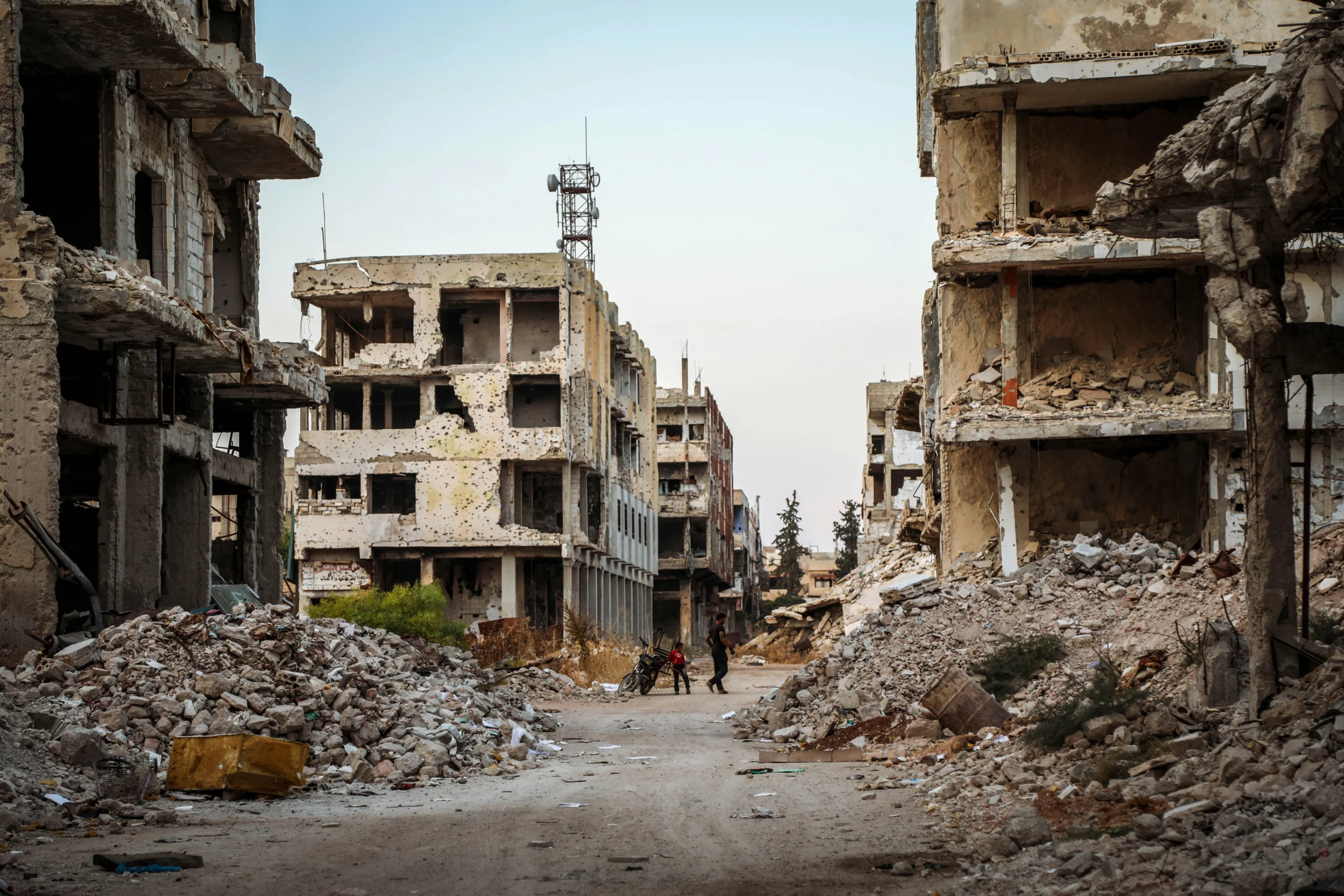
Tragedy in Türkiye

Tragedy in Türkiye - News 2023

Earthquake: CEMR expresses its support to the Turkish association TBB


With the devastating earthquake striking Turkey and Syria, the CEMR President and Secretary General addressed a letter to the President of the Union of Municipalities of Turkey (TBB), Fatma Sahin, and its Secretary General, Hayri Baraçli

The quake struck at 4 am local time at a depth of about 18 km near the Turkish city of Gaziantep, whose mayor is Fatma Sahin, also Vice-President of the CEMR.

The co-signed document states: “It was with emotion that we learned the terrible news of the earthquake at the Turkish-Syrian border today. On behalf of CEMR and its members, we wish to express our support to your association at this difficult time. We share our deepest condolences with the families of the victims and with the Turkish people for the loss of their loved ones.”

CEMR and its member associations will continue to closely monitor the situation and are ready to provide support and assistance to the Union of Municipalities of Turkey (TBB).

Safeguarding local investments 

Investing in Europe - News

Why EU economic governance reform must protect municipalities’ ability to invest 


The Council of European Municipalities and Regions (CEMR) has warned that the upcoming reform of the EU’s economic governance framework, including the Stability and Growth Pact (SGP), could risk undermining the investment capacity of municipalities and regions across Europe. 

Local and regional governments are responsible for almost half of all public investments in the EU. These investments are essential to deliver on European priorities such as the green transition, digitalisation, and resilient infrastructure. However, the proposed introduction of net expenditure ceilings risks unintentionally penalising local governments, who generally borrow only for long-term investments in capital assets. 

Reform and its implications 

The European Commission has announced plans to simplify the SGP by replacing certain rules, including the medium-term objective (MTO), with a new system of net expenditure ceilings. While CEMR welcomes the move away from the MTO, which had previously constrained local investment through deficit limits and reduced transfers from central governments, it raises serious concerns about the impact of the new ceilings. 

Applying net expenditure limits to municipalities would create three major risks

  • Higher administrative burdens arise because local governments do not use the net expenditure concept in their accounting. 
  • Political mismatches, since local electoral cycles rarely align with national fiscal programming. 
  • Cuts in public investment, as postponing infrastructure projects, are often the only quick adjustment available under tight expenditure ceilings. 

This is even though local government debt levels are prudent in every EU Member State, and are already strictly monitored under national rules. 

The solution: exclude local expenditure 

CEMR is therefore calling for the exclusion of local government expenditure from the definition of net expenditure ceilings in the reformed SGP. Much like cyclical unemployment spending is excluded, removing local investment from these calculations would ensure municipalities can continue to provide essential services, maintain infrastructure, and invest in the future without being penalised by centralised fiscal targets. 

At a time when Europe urgently needs stronger local action to address climate, digital, and social challenges, weakening municipalities’ ability to invest would be counterproductive. Protecting local public investment within the EU’s economic governance reform is not just about budgets, it is about safeguarding Europe’s capacity to deliver on its ambitions. 

Read the position paper here 

For more information, contact: 

Cohesion policy funds 2021-2027

European Town - News

Cities and municipalities in the driving seat for EU Cohesion Policy funds?


What is the common feature between the trolleybuses in Otsravian metropolitan area (Czech Republic), the local food businesses in Ljubljana Urban Region (Slovenia) and the traditional dance festival in Saint-Gervais-d’Auvergne (France)? They all benefited from the European Cohesion Policy through integrated territorial investments (ITI) or community-led-local development (CLLD).
 
Behind the term “EU Cohesion Policy” we can find a variety of programmes and fundings such as the European Regional Development Fund (ERDF), the European Social Fund (ESF) or the European Agricultural Fund for Rural Development (EAFRD) although the latter is now directly attached to the Common Agricultural Policy.
 
In practice, these funds reach thousands of towns, cities and regions, as well as other beneficiaries through the intermediation of “Managing Authorities” which can be national Ministries or Regions. But there are two lesser-known dimensions of these funds which are directly  implemented on the ground: the so-called ‘ITI’ and ‘CLLD’
 
ITI and CLLD
 
Integrated Territorial Investments (ITI) and Community Led Local Development (CLLD) are the main mechanisms used to implement European Cohesion Policy funding in an integrated and place-based manner. Using these tools to implement Cohesion Policy funds is a guarantee that local governments and local stakeholders will be closely associated in the design, implementation and monitoring of the EU funds they receive.
 
They can allow the use of different funds in an integrated way. For instance, a rural municipality interested in a social inclusion project could combine ESF and EAFRD in a single, comprehensive project.
 
On paper ITI and CLLD are great tools for local and regional governments… But how do they translate in practice?
 
In 2015, we delved into the analysis of the use of the ITI  in different Member States. A few years later, with the start of the new programming period 2021-2027, we reiterated the experiment to understand how these tools were used in practice in the previous period and what the lessons learned and changes in their implementations. Click here to read the full study.
 
To do so, CEMR reached out to some of its member associations to gather feedback on the implementation and planning of ITI and CLLD tools from the perspective of cities and municipalities.
 
Highly appreciated tools, but some difficulties in implementation remain
 
Overall, the many feedbacks we received were quite positive. ITI and CLLD are considered great instruments thanks to their adaptability to local needs and specificities. They empower local authorities, and by doing so help raise their capacities in managing EU funds. But they also strengthen multi-level dialogue between the local authorities and the Managing authorities (either the Ministry or the Region). Hence reinforcing the trust between the different governance levels.
 
All is not yet rosy either: some challenges remain for fully tapping into the potential of these tools such as the administrative burden still inherent to Cohesion policy funds in general. In CEMR’s new analysis, we also identified some recommendations to improve the uptake of ITI and CLLD in the current and future programming period.

Read the study here

For more information, contact:

City Twinning

Twinning - News

City pairings across Europe and beyond


European city-to-city cooperation, including town twinning, is increasingly viewed as a possible solution to current challenges of sustainability as well as a way to promote best practice exchanges at the local level.

City pairings are receiving renewed attention and resources at local, national and European levels as innovative ways to tackle current challenges, boost sustainable development and promote cultural exchanges.

Earlier in January, Italian President Sergio Mattarella and his German counterpart Frank-Walter Steinmeier announced the second edition of an award for city cooperation between the two countries. The prize, first launched in 2020, will reward municipalities cooperating on civic engagement, culture, inclusion and sustainability.

“Twinnings between Italian and German municipalities represent a fundamental instrument to consolidate the friendship between Germany and Italy, deepen our relationship and face together our current and future challenges,” Mattarella said.

Meanwhile, at the EU level, the European Commission is funding several initiatives to boost city cooperation, such as the International City Partnerships matching European and third-country cities on sustainable development. It also recently published a €4 million call for 2023 for towns working together to promote intercultural dialogue and European citizenship.

Neighbouring cities

According to Lucian Zagan, mobility project coordinator at Eurocities, city partnerships benefit local governments.

“Cities need to cooperate to advance their interests at national and EU level,” he told EURACTIV, adding that municipalities often collaborate on areas of mutual interest.

For instance, Helsinki and Tallinn, which are divided by an 82 km strip of sea, have been cooperating since the 1990s and are now working together on cleaning up the Baltic Sea.

“We, as twin cities, are initiating together this campaign on cleaning the sea for all the cities around the Baltic Sea,” said Krista Kampus, who leads the work of Tallinn as European Green Capital for 2023.

While neighbouring countries often share a similar culture and needs, territorial proximity is not a prerequisite for collaboration, according to Zagan.

Long-distance cooperation

Despite the distance separating them, many European towns are currently cooperating with cities in third countries.

For instance, the Italian city of Palermo, recently launched an initiative to exchange best practices with the twin town of Sekondi-Takoradi, in Ghana. The aim of the initiative, called “Twin cities in Sustainable Partnership”, is to support urban and sustainable development processes.

Meanwhile, the city of Zaragoza in Spain established a partnership with Ounck, a small Senegalese town, to support the local production of spirulina, a food supplement that plays a key role in malnutrition.

According to Fabrizio Rossi, secretary general of the Council of European Municipalities and Regions (CEMR), these city partnerships can provide a “long-term systematic approach” to solve global challenges, “far away from geopolitical tensions” which might arise at the national level.

Networks of cities

European municipalities are also joining forces on specific issues, such as sustainable mobility and health, through networks of cities.

Tallinn, for instance, is part of the NetZeroCities partnership, which aims to promote Europe’s transition to net zero emissions, and the CIVITAS network, which fosters sustainable urban mobility.

Article published on Euractiv.