Latvia-Ukraine Cooperation

Latvia - Ukraine Cooperation - News 2025

Latvia-Ukraine Municipal Cooperation: A Model for Reconstruction and Resilience 


In the face of war and destruction, rebuilding Ukraine requires more than just resources. It demands strong partnerships, knowledge exchange, and unwavering solidarity. The cooperation between Latvian and Ukrainian municipalities is a powerful example of how local governments can play a vital role in this process. 

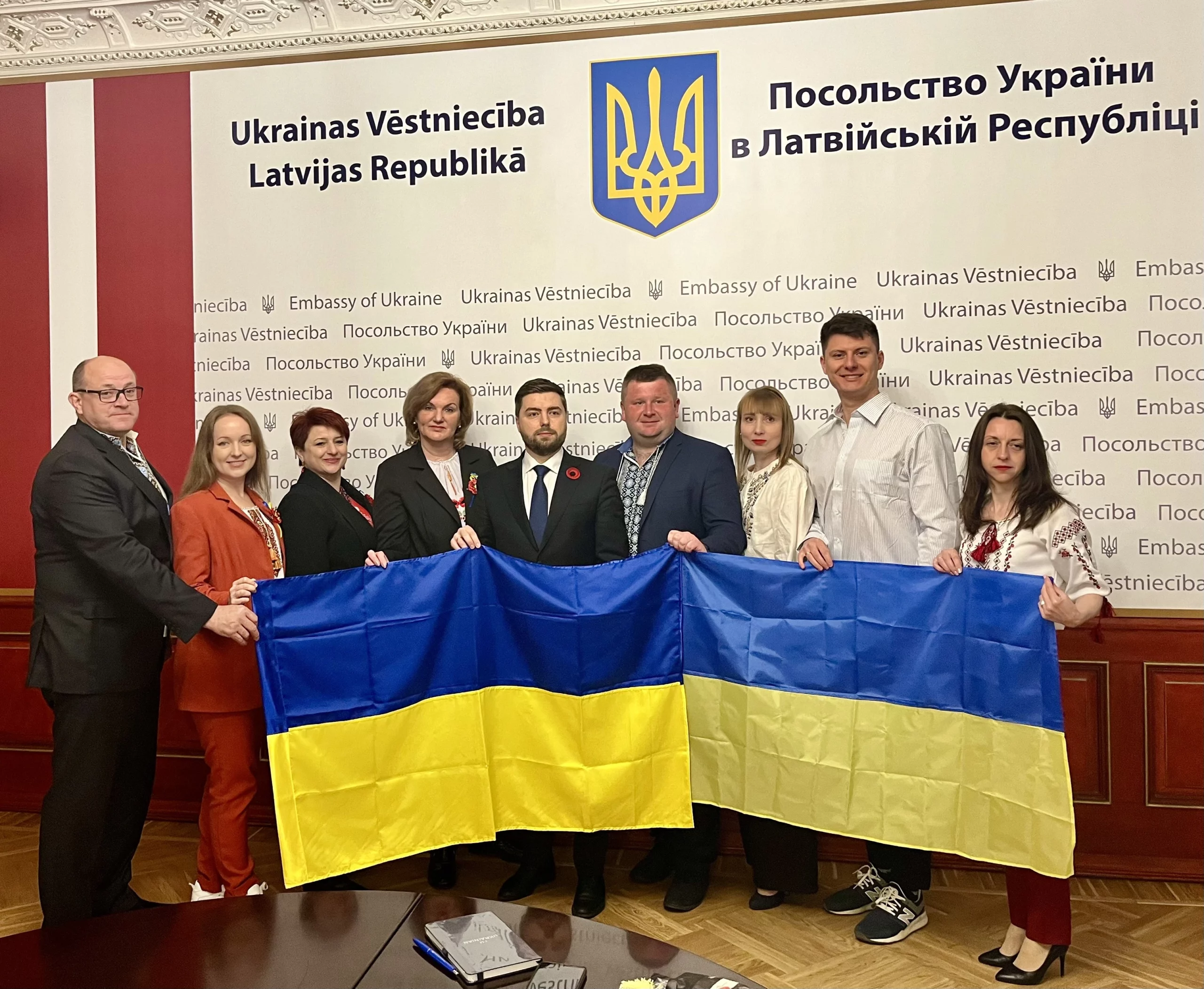
Municipalities in Kuldīga, Ķekava, and Gulbene have established lasting ties with their Ukrainian counterparts, Chuhuyiv, Novyi Bilous, and Korop, transforming initial online meetings into concrete collaboration. Despite the challenges of war, these partnerships have led to knowledge sharing in social services, digital transformation, and local governance. Memorandums of Understanding have formalised their cooperation, while study visits to Latvia have further deepened their exchanges. These initiatives’ success has also been facilitated and supported by the Embassy of Ukraine in Latvia and the Association of Ukrainian Cities, demonstrating how national and local actors can work together for long-term recovery. 

This cooperation is part of a broader effort under the Bridges of Trust project, implemented by CEMR in collaboration with the Association of Ukrainian Cities and supported by the U-LEAD with Europe Programme. Since its launch, Bridges of Trust has helped forge partnerships between more than 30 Ukrainian and 30 EU municipalities, facilitating joint projects in infrastructure, waste management, and energy solutions. Through training and capacity-building, local governments are strengthening their role in Ukraine’s reconstruction, ensuring that recovery efforts are sustainable and aligned with European standards. 

The partnership between Latvia and Ukraine is a testament to the power of municipal cooperation. By working together, local governments are not only rebuilding what was lost but also laying the foundation for a stronger, more resilient Ukraine and Europe in general.  

Learn more about Bridges of Trust:

For more information, contact:

Declaration on three years of war in Ukraine

Ukraine Declaration - News 2025

CEMR issues a declaration reaffirming support and urging international action 


After three years of Ukraine’s resistance to Russia’s full-scale invasion, local and regional elected representatives from the Council of European Municipalities and Regions (CEMR) reaffirm their unwavering support for Ukraine and its people.  

CEMR has issued a formal declaration condemning the war launched by Russia and calling for decisive international action. 

Call against attacks on Ukrainian mayors 

Local and regional elected representatives are on the frontlines of this war, ensuring that essential services continue despite difficult conditions. Yet, they have also become targets of aggression.  

CEMR denounces the abduction of Ukrainian mayors and supports the call of the Association of Ukrainian Cities demanding the immediate release of those still detained: 

  • Oleksandr Babych – Mayor of Hola Prystan (Kherson region) 
  • Ihor Kolykhaiev – Mayor of Kherson 
  • Anatolii Siryi – Starosta of Novi Borovychi (Chernihiv region) 

CEMR also condemns arbitrary imprisonment, torture and murder of Ukrainian people in Russian captivity including: 

  • Yevhenii Matvieiev – Mayor of Dniprorudne (Zaporizhzhia region) 
  • Oleksii Vynnychenko – Starosta of Hrebenykivka (Sumy region) 

Call for Ukraine’s full EU membership 

A victory for Ukraine and a just peace that will allow its reconstruction requires the full engagement of the European Union and its member states.  

CEMR is committed to fostering resilience, recovery, and democratic governance in Ukraine. In its declaration, CEMR reaffirms its dedication to: 

  • Supporting the reconstruction of Ukraine’s municipalities and regions through partnerships and exchanges. 
  • Advocating for Ukraine’s full integration into the European Union to ensure long-term stability and prosperity. 
  • Sustaining cooperation between European and Ukrainian local and regional governments through key initiatives, including: 
  • The Bridges of Trust Community, Strengthening democratic governance, fostering partnerships, advancing recovery, and supporting Ukraine’s EU integration.   

A call for action 

As the war continues, it is time for European institutions, national governments, and local and regional authorities to intensify their support for and to Ukraine. The path to peace and reconstruction requires decisive action, sustained cooperation, and a commitment to justice. 

CEMR urges the international community to stand firm in defending democracy, peace, and the rule of law. We call for Ukraine’s victory and a just peace that will allow its cities, regions, and people to rebuild their brighter future. 

Read the full CEMR declaration: 

For more information, contact: 

Public procurement to local realities

European Union - News

CEMR Releases New Position Paper on Public Procurement: A Call for More Flexibility and Less Bureaucracy


CEMR has officially released its position paper on public procurement, outlining key changes needed to ensure a procurement system that truly works for local and regional governments.

As the largest public investors and contracting authorities in the EU, local and regional governments (LRGs) play a crucial role in delivering essential public services. However, the current public procurement framework remains too complex, rigid, and burdensome, limiting their ability to act efficiently and effectively.

CEMR’s position paper highlights three key areas for reform:

  • Greater flexibility to adapt procurement to local needs
  • Simplified rules to reduce administrative burdens
  • Stronger support for SMEs to foster local economic growth

The document serves as a clear call to action for EU policymakers, urging them to shape a procurement framework that respects the autonomy of local governments while ensuring efficient public service delivery.

For more information, contact:

EU’s Green Agenda 2025

Green City - News Section

Why It Matters for Local and Regional Governments (LRGs) and What to Watch Next


From new climate targets to updated waste regulations, the European Union is rolling out policies that will shape the future of cities and municipalities. While these decisions may seem distant from everyday life, they have a direct impact on local governments—affecting everything from energy bills to public transport, water management, and waste collection.

Local and regional authorities are on the front lines of the green transition. They are the ones turning EU policies into real-life projects: renovating buildings to be more energy-efficient, upgrading public transport, and ensuring clean air and water for their citizens. But with so many new EU initiatives in the pipeline, what should local governments pay attention to in the coming months?

1. Climate and Energy: New Targets, Local Impact

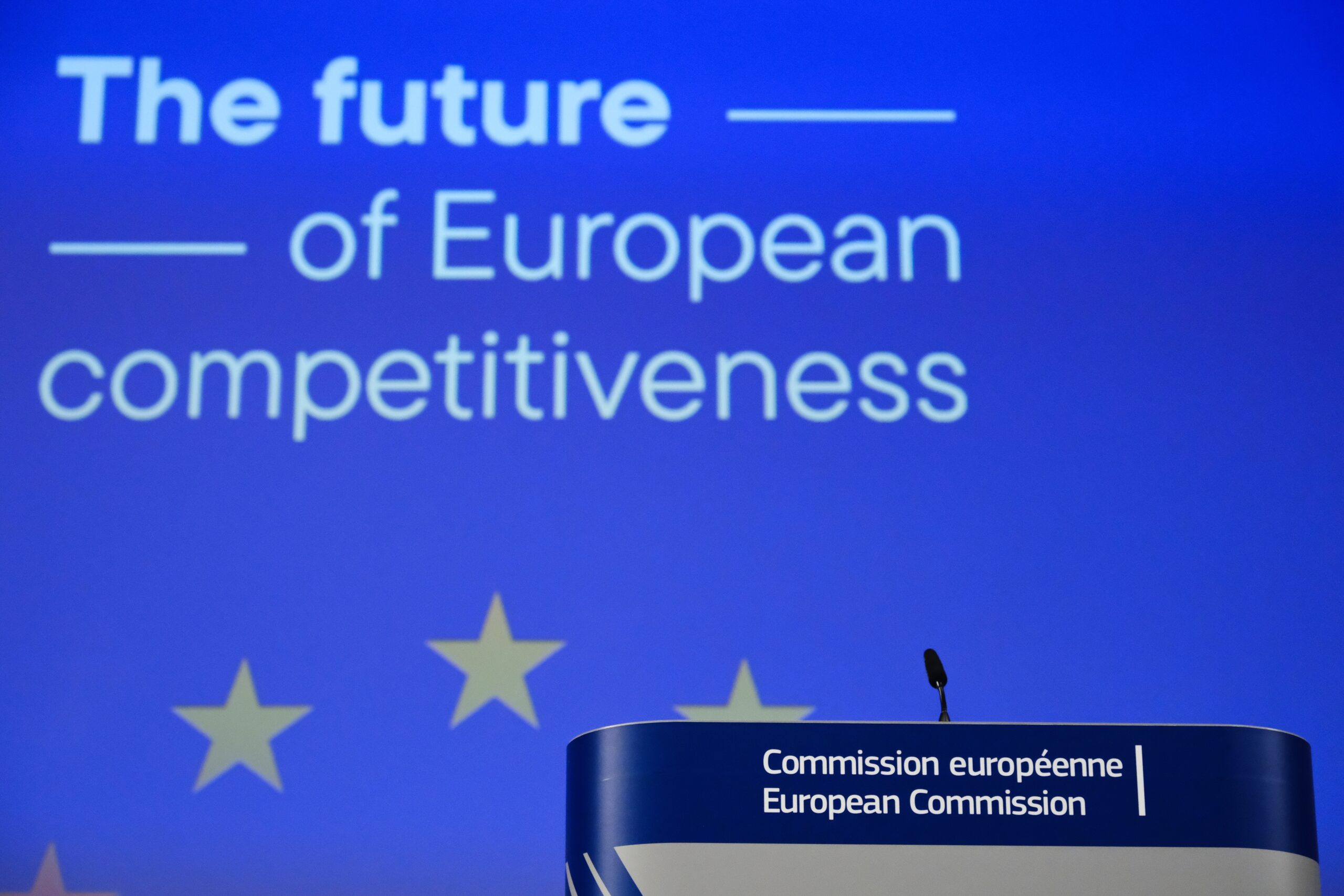
The European Commission’s Competitiveness Compass outlines key climate and energy measures for 2025, including a revised Climate Law and a Clean Industrial Deal. These will influence energy prices, local renewable energy projects, and even funding for green infrastructure.

Meanwhile, the EU is tackling energy poverty, with plans to better protect vulnerable households from rising costs. Local governments, which often manage social housing and community energy programs, will need to be prepared for these changes.

2. Water and Waste: Tighter Rules, Bigger Responsibilities

Water management is rising on the EU agenda, with the European Parliament’s Water Resilience Strategy pushing for stronger action on pollution, efficiency, and climate adaptation. This means cities may need to invest in better infrastructure to secure water supply and prevent flooding.

At the same time, the revised Urban Wastewater Treatment Directive introduces stricter water quality standards and a stronger application of the polluter-pays principle, ensuring that industries—not taxpayers—shoulder the costs of wastewater treatment.

On waste, new EU packaging rules taking effect this month will require cities to adjust collection programs to meet higher standards. Additionally, Extended Producer Responsibility (EPR) rules for textiles will require businesses to take more responsibility for the waste they create, easing some of the burden on local waste services.

3. Mobility: Changes Coming for Public Transport and Urban Planning

The EU’s Sustainable Transport Investment Plan and High-Speed Rail Plan will influence urban mobility strategies. Meanwhile, CEMR is ensuring that local governments have a say in the EU Expert Group on Urban Mobility, particularly on topics like city access for businesses and cycling infrastructure.

4. Green Finance: How Cities Can Access More EU Funding

One of the biggest challenges for local governments in the green transition is funding. The European Commission’s new Project Group on Affordable Housing will prioritise unlocking financing for energy-efficient renovations, including through the Social Climate Fund.

What’s Next? Stay Informed and Get Involved

With so many EU policies evolving, local governments need to stay ahead of the changes. The coming months will be crucial in determining how these policies are implemented—and how they affect cities and regions across Europe.

Want to know more about how CEMR advocates for local and regional governments in the green transition?

Contact Axelle Griffon (axelle.griffon@ccre-cemr.org) and Edoardo Bodo (edoardo.bodo@ccre-cemr.org)

Competitiveness Compass

Europe of the regions is dead,
long live Europe of the industries


If you were still a “Europe of the regions” believer in spite of all the signs in the direction of re-nationalisation of European policies; the latest communication from the European Commission “A Competitiveness Compass for the EU” could leave the impression that it is the final blow to the idea that the European project also takes place at the local level, closer to the citizens.

There had been many warning signals: in the last years, the EU has changed the “delivery model” of its funds towards a de facto recentralisation. After the National CAP Strategic Plans, the National Social Climate Plans and the National Recovery and Resilience Plans, there was not much doubt anymore that the European Commission is looking to simplify the life of its own administration, with a single contact point in Member States, preferably budget Ministries. Then, however the Member States decide to organise and draft the national plans, in consultation or not with the subnational government levels and the most relevant stakeholders, this is outside of the Commission’s remit.

Mayors, counties or regions’ local leaders know the best their local ecosystem and the development opportunities in their territories. The Competitiveness framework should rely on them and suggest not another centralised national plan, but territorial competitiveness plans, ensuring a broad territorial coherence of investments for growth and competitiveness.  Yet, the few mentions of local and regional governments in the communication are to say that they should play their part in the simplification efforts and acceleration of administrative procedures at the service of the private sector.

With the new Competitiveness Compass, the Union at least reaffirms a common European objective that governments, at all levels, should follow. And there is a broad consensus that industrial renewal, research and innovation, transitioning to low carbon economies are all very important priorities that could contribute to improving life of Europeans – because that is the end goal, right? But there is one element critically missing for this vision to become true: a territorial vision.

Start-ups, universities, research labs, factories, all still need to be physically located somewhere: in a municipality, city, region. Somewhere with access to a fast broadband, somewhere with efficient mobility and transport solutions for employees commuting, receiving or shipping products, somewhere with good public services, ensuring a quality of life that would attract or retain the skilled workforce needed, and somewhere the taxes on these economic activities may contribute to a municipality’s revenues and therefore effectively benefit the entire local community[1].

And while the communication clearly identifies the need for public investments to de-risk and unlock private investments, it is completely overlooking the major role of local and regional governments to drive public investments. Subnational governments are responsible for 53% of the total public investment in the EU[2], and yet they are increasingly required to contribute to the fiscal consolidation efforts of Member States, steadily reducing their investment capacities.

One of the major risks with a complete lack of territorial vision, is the major downside of the Single Market: the concentration of capital, wealth and work forces in a few already attractive places, leaving entire regions behind the competitiveness run. The Cohesion Policy was created especially to prevent this type of concentration and channel EU public investments in places that would otherwise fail to attract businesses, investments or researchers.

And the Competitiveness Compass is probably just a foretaste of what the Commission is preparing for the entire architecture of EU funds in its next multi-annual financial framework. Writing in the communication “The Multiannual Financial Framework (MFF) proposal will be the opportunity to further streamline access to and simplify EU funding instruments – currently fragmented over too many programmes – across the board”, the Commission is confirming the leak and rumours in the direction of having a single national plan (yes, another one) for all currently shared management fund (i.e. all Cohesion Policy funds, and the Common Agricultural Policy). This could be a worst-case scenario: investments and reforms priorities decided at top European level that make no sense for the people and the places where the funds are spent. This is already happening with the European Semester[3].

The only solution to reconcile the overarching European goal of competitiveness, and the actual needs and priorities of Europeans wherever they want to live, is to enshrine multi-level governance in the competitiveness agenda and the upcoming long-term budget of the EU.


[1] European Joint Research Centre, Local taxes on economic activity in municipalities in EU Member States, European Joint Research Centre, https://publications.jrc.ec.europa.eu/repository/handle/JRC129095

[2] OECD (2024) Subnational governments structure and finance, OECD, Paris, https://www.oecd.org/content/dam/oecd/en/topics/policy-issues/subnational-finance-and-investment/subnational-governments-infrastructure-finance-2024.pdf/_jcr_content/renditions/original./subnational-governments-infrastructure-finance-2024.pdf

[3] CEMR, Top level decision – local consequences: The European Semester explained, 2024 https://ccre-cemr.org/wp-content/uploads/2024/11/EU-Semester-Study-2024.pdf

For more information, contact:

FOSTER Local Training

Foster Training News 2025

Building Future-Oriented Governance for Climate Resilience


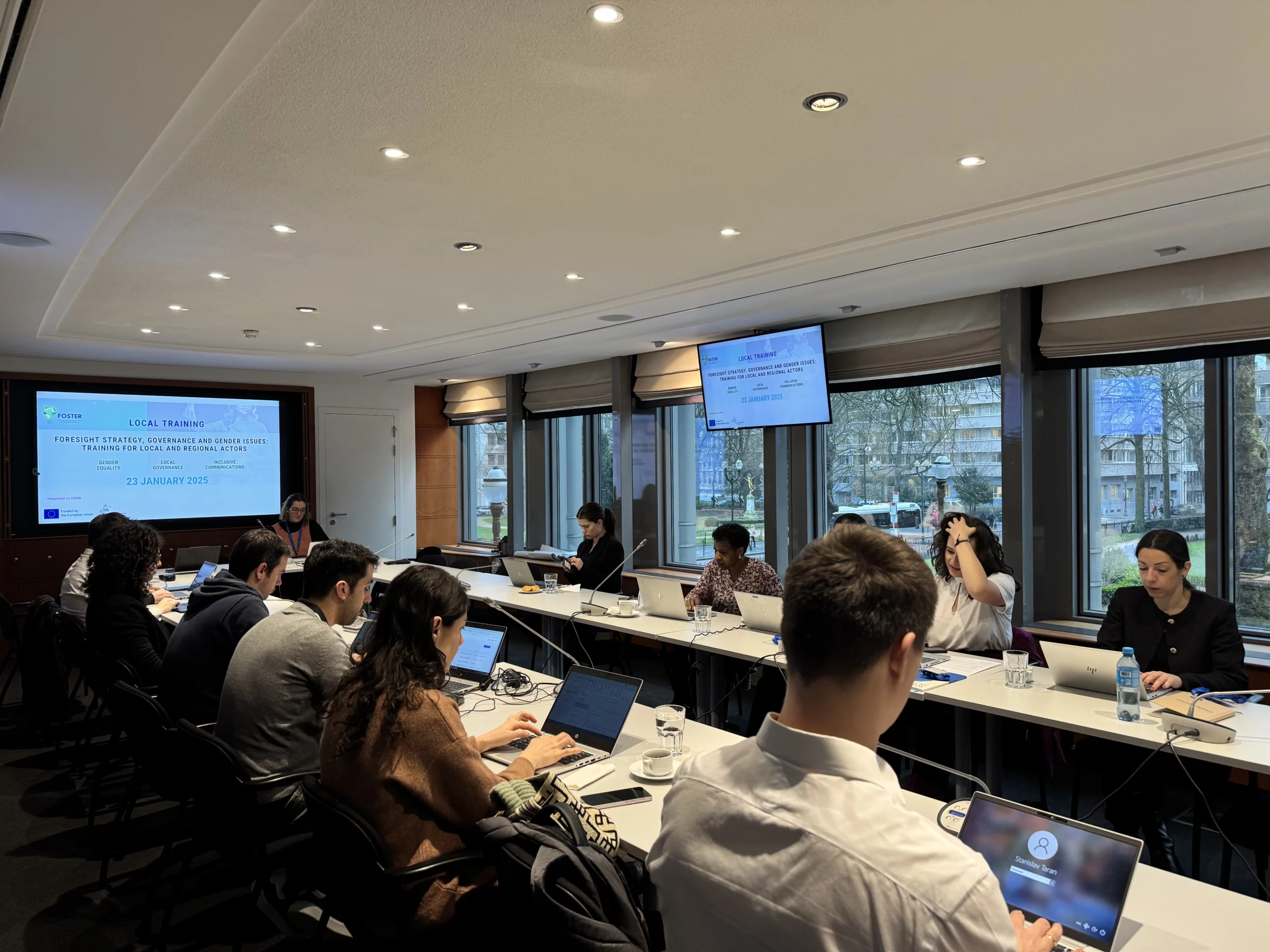
How can Local and Regional Governments prepare for the environmental challenges of tomorrow? On January 23, 2025, CEMR hosted a FOSTER Local Training, bringing together experts, policymakers, and local leaders to explore innovative governance approaches for a climate-resilient future.

FOSTER—Future Oriented Solutions Towards Environmental Resilience—is a two-year EU-funded initiative that strengthens local and regional authorities’ ability to anticipate and respond to climate challenges. Through participatory governance, strategic foresight, and inclusive capacity-building, the project empowers local actors to shape policies that reflect the needs of their communities.

Key Takeaways from the Training

During the event, participants delved into:

Inclusive Communication – How local governments can make their messages accessible and representative of diverse communities.

Participatory Democracy – Strengthening civic engagement and fostering trust between governments and citizens.

Women in Politics – A CEMR study revealing the barriers women face in leadership and strategies to promote gender equality.

Strategic Foresight & Scenario Planning – Equipping local governments with tools to anticipate future risks and opportunities.

Greening Cities – Exploring sustainable urban solutions through foresight discussions.

The training was not just about knowledge-sharing but about action. It provided local actors with practical tools to co-design policies that anticipate climate risks, engage communities, and ensure long-term environmental resilience.

📥 Download the training materials here

Subscribe to Resonance to stay tuned for more activities on climate resilience and join us in shaping the future of local governments!

For more information, contact: