Concerns over local democracy in Türkiye

Democracy in Turkyie - News 2025

CEMR issues a statement condemning escalating pressure against democratically elected mayors in Türkiye 


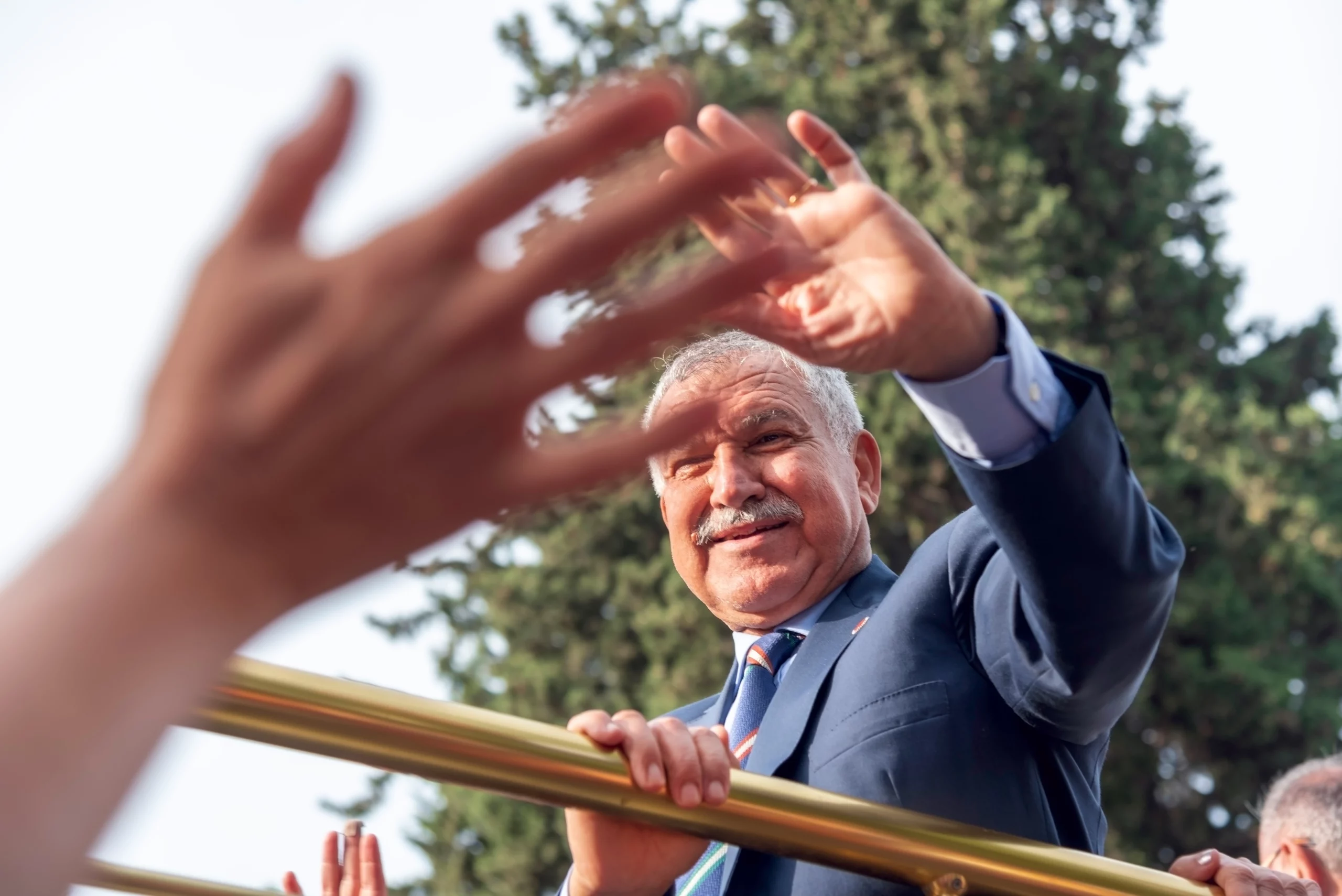
The Council of European Municipalities and Regions (CEMR) has issued a statement expressing its deep concern over the intensifying political pressure on local democracy in Türkiye, following the detention of Zeydan Karalar, Mayor of Adana and Deputy-President of the Union of Municipalities of Türkiye (UMT), CEMR’s member organisation. 

In recent months, an increasing number of opposition-affiliated mayors and staff members of the municipalities have been suspended, prosecuted, or detained in ways that obstruct their ability to carry out their democratic mandates. 

The detention of Mayor Karalar follows the earlier arrest of Ekrem İmamoğlu, former President of UMT. These successive events “risk undermining the principles of local democracy and have potentially far-reaching consequences for stability, democratic resilience, and social cohesion across our continent”. “The legitimacy of democratic governances relies on strong, autonomous local governments, and respect for political pluralism”, defend the signatories.  

CEMR calls on the European and international communities to keep the principles of democracy, the rule of law, and local self-government at the core of their engagement with Türkiye. 

“We respectfully urge the prompt release of all detained Mayors and officials and the full restoration of their rights to perform their democratic functions without fear or interference”, the signatories declare. “Democracy and local self-government cannot and will not be compromised”, they conclude. 

Signatories of this statement include: 

  • Vince Maple, Councillor of Medway, Chair of CEMR Financial Management Committee 
  • Philippe Laurent, Mayor of Sceaux, CEMR Co-President 
  • Christoph Schnaudigel, President of the County of Karlsruhe, CEMR Co-President 
  • Gunn Marit Helgesen, Member of Telemark County Council, CEMR President 
  • Jan van Zanen, Mayor of The Hague, CEMR Executive President 
  • Anders Knape, Councillor of Karlstad, CEMR Executive President 
  • Aleksandra Dulkiewicz, Mayor of Gdansk, CEMR Executive President 

Related content: 

EU enlargement from a local perspective

European Union - EU Enlargement News

EU enlargement is not sustainable without local ownership: 8 takeaways from CEMR webinar 


Empowering local and regional governments will ensure that EU integration is felt, understood, and embraced by citizens, making enlargement not only a policy success but a democratic one. This is the main lesson learned from the CEMR webinar on Empowering Local Governments on the Road to EU Enlargement, organised in collaboration with PLATFORMA on 1st July. 

Local leaders, EU officials, and representatives from candidate and EU member countries reaffirmed the essential role of local and regional governments in the EU enlargement process. They also discussed the capacity needs involved in this journey. 

Here are the 8 key findings based on the webinar discussions, which witnessed that enlargement is not sustainable without local ownership.

1. Set local and regional governments as strategic actors in the EU accession process 

  • Involve local governments early and systematically in national accession plans, screenings, and cluster evaluations. 
  • Ensure local leaders are recognised not just as implementers, but as policy co-creators, especially in areas aligned with the EU acquis. 

2. Strengthen multilevel governance structural dialogue 

  • Establish permanent coordination mechanisms between LRGs, national governments, and EU institutions. 
  • Move from consultation to co-creation platforms—especially during roadmap design, monitoring, and policy review phases. 

3. Guarantee local access to EU funding mechanisms 

  • Ensure that a minimum percentage of EU financial assistance is directly allocated to local governments (e.g., in Ukraine, it is already 20%) 
  • Simplify procedures for municipalities to access EU funds and develop capacity-building programs to support their management. 

4. Invest in capacity building and institutional continuity 

  • Develop sustained training for local officials, including in public procurement, project management and all locally implementing EU standards.  
  • Address gaps in institutional memory due to political turnover by investing in civil service professionalisation and knowledge transfer. 

5. Support peer-to-peer learning and twinning initiatives 

  • Promote city-to-city cooperation between EU member states and candidate countries (decentralised cooperation) 
  • Expand twinning programs across thematic areas such as education, green transition, disaster resilience, and digital governance (if you need tools to find partners, use existing ones such as the CEMR Matchmaking Platform). 

6. Promote inclusive participation and gender equity 

  • Encourage the participation of women leaders and marginalised communities in enlargement dialogues. 
  • Ensure that decentralisation and integration efforts incorporate diverse perspectives and address local inequalities.

7. Strengthen civic trust and communication

  • Support local and regional governments in leading public communication campaigns that explain EU values and the benefits of enlargement. 
  • Equip municipalities to become trusted messengers of the EU to citizens, countering misinformation and building democratic resilience. 

8. Leverage local and regional governments for reconstruction and sustainability goals 

  • In countries affected by war (e.g., Ukraine), prioritise local-led reconstruction and sustainable recovery as a path to integration. 
  • Align local development strategies with the Green Deal, digital transition, and social cohesion policies. 

Context: 

Nine countries are officially on a path to join the European Union in the coming years: five in the Western Balkans (Albania, Bosnia and Herzegovina, Montenegro, North Macedonia and Serbia), three in the Eastern neighbourhood (Georgia, Moldova and Ukraine), and Turkey. 

For more information, contact:

Enlargement Day – Local Action

EU Enlargement Article - News

Enlargement Day: Local Action Driving European Integration


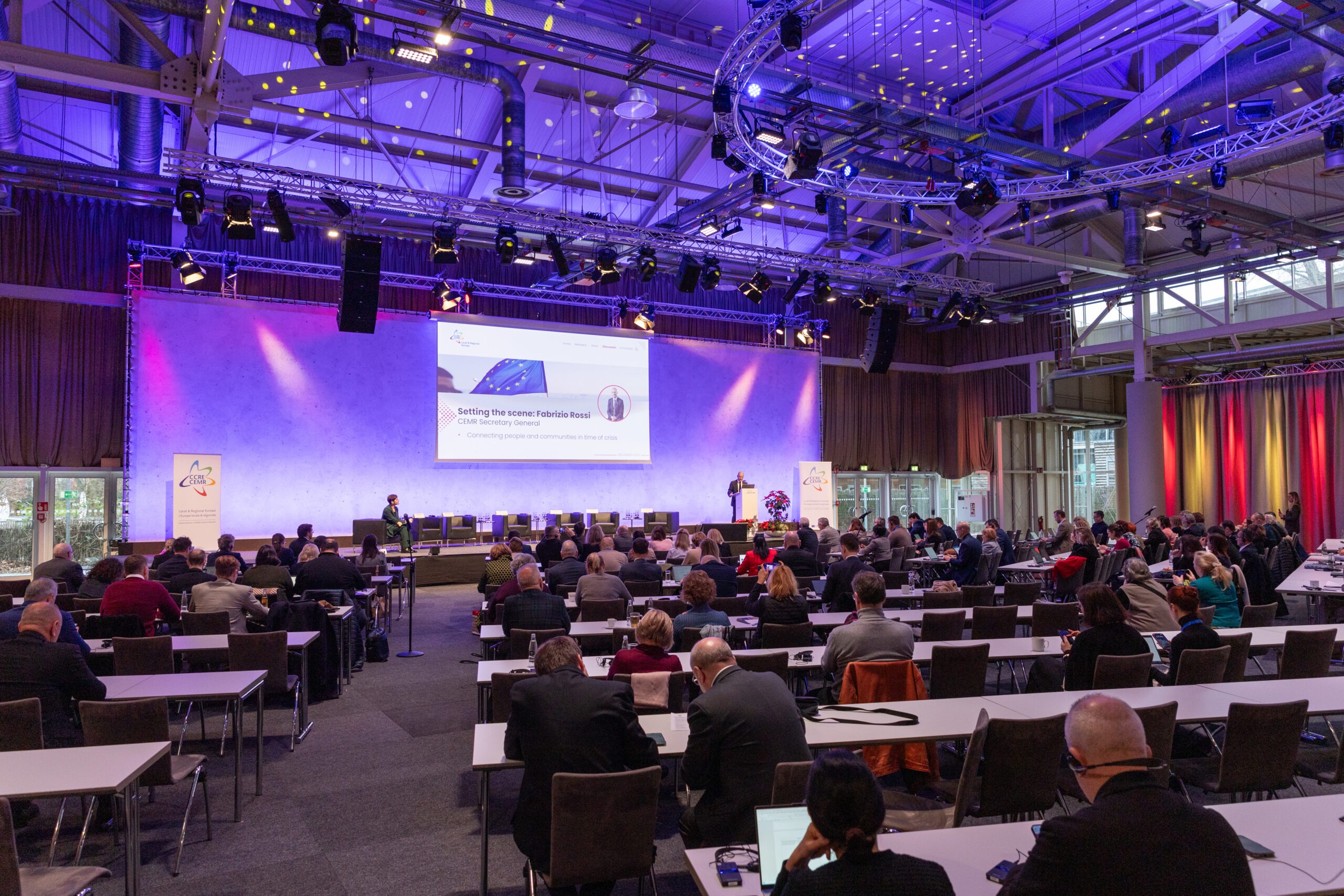
Today marks the start of Enlargement Day, the European Committee of the Regions’ flagship event on EU enlargement and local best practices. On this occasion, CEMR showcases how Local and Regional Governments actively contribute to the enlargement process through partnerships, peer learning, and sustained policy dialogue.

Since 1951, CEMR has worked across Europe, including with associations from all EU candidate countries: Albania, Bosnia and Herzegovina, Georgia, Kosovo*, Moldova, North Macedonia, Serbia, Türkiye, and Ukraine.

Through political declarations, partnerships, hands-on tools, and regular dialogue with EU institutions, we strengthen local governance, reinforce reform efforts, and support the enlargement process from the local level.

Explore our brochure to discover:

 🔹 CEMR’s engagement with EU candidate countries
 🔹 Key projects, tools, and local partnerships
 🔹 Latest policy recommendations and advocacy
 🔹 Recent and upcoming enlargement-related events

Save the date:

1 July 2025 – CEMR Webinar | Local Governments’ Dialogue on the Road to EU Enlargement


*This designation is without prejudice to positions on status, and is in line with UNSC 1244 and the ICJ Opinion on the Kosovo declaration of independence

Op-Ed on local democracy in Türkiye

Turkiye democracy - News 2025

Op-Ed on the local democracy in Türkiye co-signed by presidents of the Congress, CoR, ALDA and CEMR


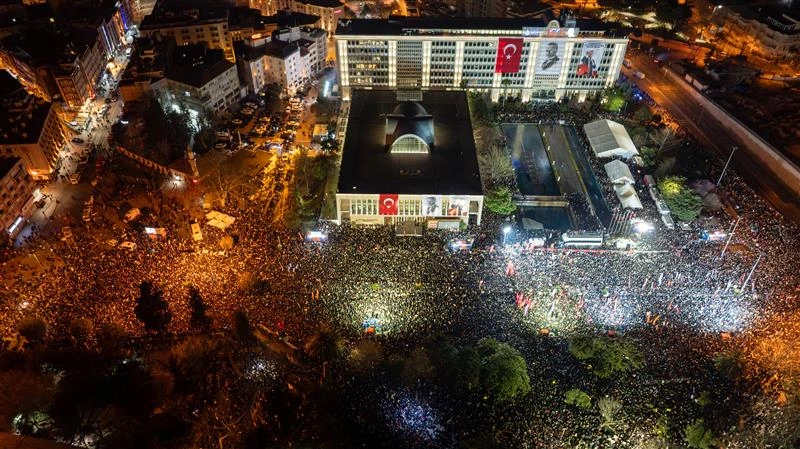
The recent arrests and dismissals of democratically elected mayors in Türkiye, and their replacement by appointed trustees, mark a dangerous turning point for local democracy, not only in Türkiye but for Europe as a whole. At its core, democracy is not just about casting ballots; it is about ensuring that those elected by the people can govern freely, without fear of persecution. The replacement of elected mayors through judicial intervention, without full transparency and due process, raises serious questions about democratic standards and political freedom. 

This is not an isolated event. It is part of a worrying trend of democratic backsliding that threatens the fundamental values upon which modern Europe has been built. From the ashes of World War II, Europe emerged with a commitment to decentralization, democracy, and human rights. The European Charter of Local Self-Government, adopted in 1985, was a direct response to past authoritarianism, ensuring that local governments have the autonomy to serve their communities without undue interference from central authorities. This principle of local self-government is a safeguard against the concentration of power and a guarantee that democracy remains rooted in the daily lives of citizens.  

Yet today, these hard-won principles are being undermined. The detention of local leaders in Türkiye is a blatant violation of the commitments the country made as a member of the Council of Europe. It is a direct assault on the principles enshrined in the Charter and an ominous signal to other governments that such actions might be tolerated.  

Local democracy is the first line of defense for our freedoms. When it is attacked, it is not just a city or a region that suffers—it is the very foundation of democracy. As local elected representatives, mayors are the bridge between national governments and citizens, the leaders who turn democratic principles into tangible actions—whether in public services, social cohesion, or crisis response.  

Ignoring the crackdown on local leaders in Türkiye is not just a failure to support our colleagues—it is a failure to defend democracy itself. If Europe allows the erosion of local democracy anywhere on the continent, it sets a dangerous precedent that could spread.  

EU institutions, together with Member states of the European Union and of the Council of Europe, must take a clear and firm stance. The defense of democracy must not be selective or conditional on political expediency. The right of people to choose their leaders—and for those leaders to govern without fear—must be upheld at all costs.  

Democracy in Europe was never guaranteed; it was built through struggle and commitment. In the face of new threats, we must show the same commitment. The free election of representatives is not a privilege; it is the foundation of a just and stable society. If we fail to defend it today, we risk losing it tomorrow. 

Signatories: 

  • President of the Congress of Local and Regional Authorities of the Council of Europe, Marc Cools 
  • President of the Committee of the Regions, Katta Tüttő 
  • President of ALDA: Nataša Vučković
  • President of CEMR: Gunn Marit Helgesen

*****

This opinion article was published on EU Observer on 15 April 2025. You can read it here

Related content:

For more information or media inquiries, please contact:

Expansion of the Schengen Area

Schengen Space - News

Bulgaria and Romania Join the Schengen Area: A Landmark Achievement for European Unity 


The Council of European Municipalities and Regions (CEMR) congratulates Bulgaria and Romania on their historic accession to the Schengen Area, the world’s largest free-movement zone. This significant milestone, marked by border ceremonies at the Kulata crossing and the Friendship Bridge, represents years of dedicated effort and collaboration among European Union (EU) member states. 

Strengthening European Integration 

With this expansion, Schengen now encompasses 25 EU member states, facilitating the free movement of over 425 million people to travel, work, and reside without internal border controls. This milestone strengthens European unity, promotes economic growth, and fosters cultural exchange. 

Celebrating Progress 

At midnight on 1 January, Bulgarian and Romanian officials symbolically lifted border barriers, marking the end of land border checks between their countries and other Schengen countries. These celebrations were a testament to the hard work and commitment required to achieve full membership. 

The Role of Local and Regional Governments 

CEMR, representing Local and Regional Governments across Europe, recognises municipalities and regions’ vital role in fostering cross-border cooperation and facilitating integration. The expansion of Schengen will strengthen local partnerships, streamline mobility for citizens and businesses, and enhance regional development opportunities. 

A Stronger Europe 

Including Bulgaria and Romania in Schengen is more than a practical advancement; it is a symbolic reminder of the EU’s commitment to unity, collaboration, and shared prosperity. This milestone paves the way for continued progress in European integration and cooperation. 

CEMR stands ready to support local and regional governments as they adapt to the opportunities and challenges of a border-free Europe. 

Learn more about Schengen and its benefits: https://ec.europa.eu/  

Matchmaking Platform

CEMR launches a Matchmaking Platform for Twinning cooperation during the Leaders’ Summit in Karlsruhe


  • CEMR launches a new Matchmaking Platform to promote city-to-city cooperation and international partnerships during the Leaders’ Summit in Karlsruhe, Germany
  • The Bridges of Trust Community is launched in partnership between CEMR and U-Lead to foster new partnerships and support international municipal cooperation
  • The CEMR Leaders’ Summit gathered over 200 international leaders from across Europe, emphasising collaboration for sustainable and inclusive development

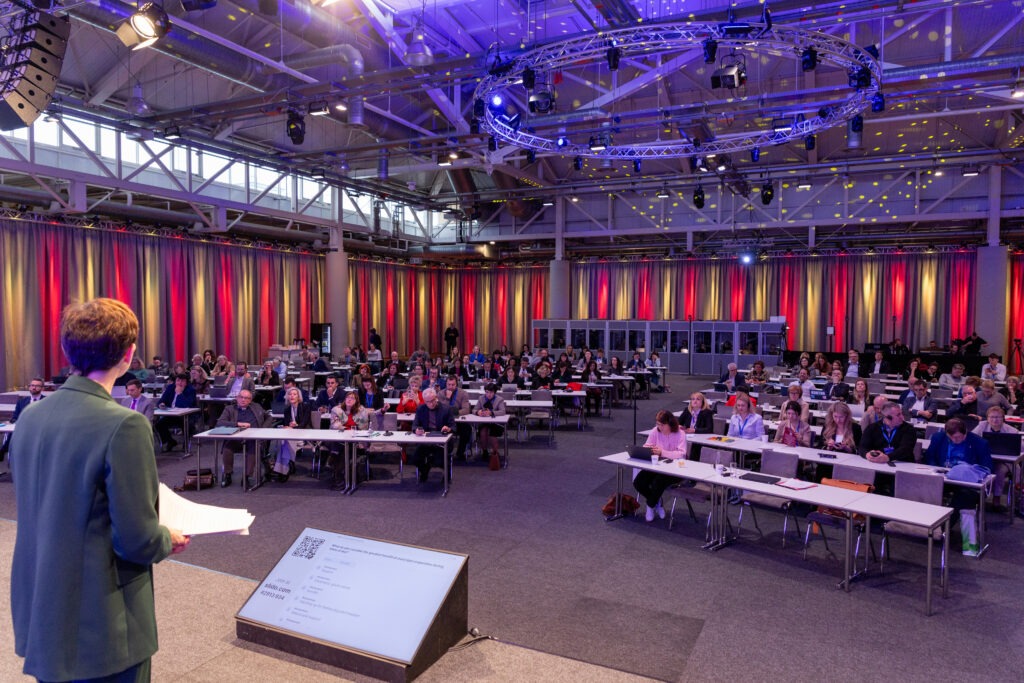
The Council of European Municipalities and Regions (CEMR) unveiled an innovative Matchmaking Platform to enhance city-to-city and local cooperation during its Leaders’ Summit in Karlsruhe. This high-profile event gathered over 200 international leaders, representing towns, regions, and cities from EU and Ukranian countries.

The platform, building on CEMR’s seven-decade legacy of town twinning, allows municipalities, cities, and regions to form partnerships sending a matching request to potential peers across Europe in just a few minutes.

First introduced at the Ukraine Recovery Conference in Berlin and now open to all local governments in Europe, the platform is also meant to strengthen partnerships with Ukrainian municipalities to secure its vital recovery support and advance through its integration into the EU.

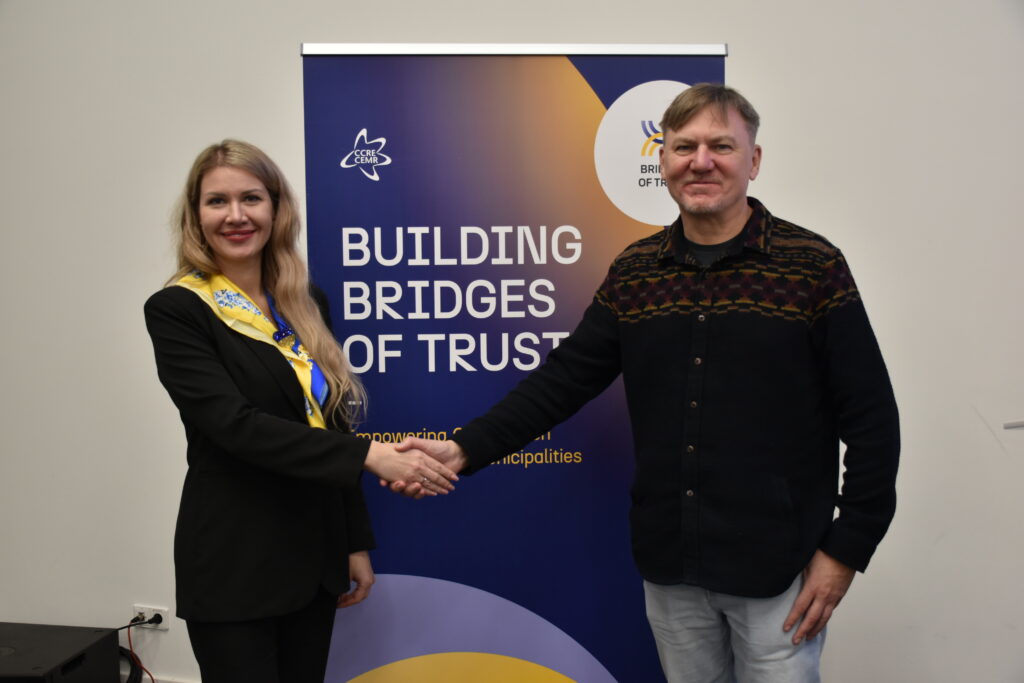
Building on its long-standing collaboration with Ukrainian local governments, CEMR in partnership with U-Lead with Europe have announced the creation of the Bridges of Trust Community. The project’s positive impact expanded beyond its initial scope, demonstrating the need for wider engagement and collaboration.

CEMR President Gunn Marit Helgesen underlined the Matchmaking Platform strategic importance: “Local leaders are at the forefront when it comes to adopting the acquis communautaire — the foundational laws of the EU. It is crucial to support them in this process to ensure it is carried out equitably, avoiding future disparities between urban and rural communities”.

Christoph Schnaudigel, CEMR Co-President, RGRE President and Mayor of Karlsruhe, highlighted: “City-to-city cooperation has already shown its power as a tool for post-war reconstruction, reconnecting people divided by war and cultural gaps, and fostering peace. Today, we are committed to putting our network at the service of every town in Europe, small or large, to connect, share experience, and work on their dream projects together.”

Stefano Poretti, Councillor of Arconate, Italy, a city twinned with the Ukranian city of Zlatopil, emphasized the Bridges of Trust impact: “In a time of growing geopolitical uncertainty, local governments remain steadfast in promoting cooperation and solidarity. Thanks to Bridges of Trust, we have exchanged knowledge and experiences that will leave a lasting mark on my political journey.”

Media opportunities:
Journalists can interview key participants, including mayors and local leaders, and explore the matchmaking platform in detail.

Register to the Platform – here

Nobel Peace Prize

Nobel Prize Peace - News 2024

Nobel Peace Prize 2024: A Tribute to the Japanese Anti-Nuclear Movement and a Call for Global Peace


The 2024 Nobel Peace Prize has been awarded to Nihon Hidankyo, a grassroots movement of survivors of the atomic bombings of Hiroshima and Nagasaki. Praised by the Norwegian Nobel Committee for their relentless efforts to promote a world free of nuclear weapons, this group has spent decades highlighting the devastating human toll of nuclear warfare through survivor testimonies. Since its founding in 1956, Nihon Hidankyo has been a powerful voice against the threat of nuclear arms, ensuring that the horrors of the past are never repeated.

The Nobel Committee’s choice is particularly poignant as 2025 will mark the 80th anniversary of the bombings that claimed over 120,000 lives and left countless more suffering from burn and radiation injuries. This recognition also arrives at a time when nuclear powers are modernising their arsenals, and the spectre of nuclear conflict looms larger than ever. As Jorgen Watne Frydnes, chair of the Norwegian Nobel Committee, warned, “A nuclear war could destroy our civilisation.”

In a world marked by increasing armed conflicts – 59 in 2023, according to the Uppsala Conflict Data Program – the message of this year’s Nobel Peace Prize resonates strongly. The recognition of Nihon Hidankyo highlights the urgency of global cooperation to prevent further destruction and the vital role of grassroots movements in shaping a peaceful future.

At the Council of European Municipalities and Regions (CEMR), we recognise that lasting peace is built not only at the international level but also through local and regional governance. Cities and regions play a pivotal role in fostering dialogue, cooperation, and understanding between communities. They are the building blocks of a peaceful society, promoting inclusivity and resilience from the ground up. By empowering local authorities and encouraging cross-border collaboration, we can create environments where peace is nurtured, and conflicts are prevented before they escalate.

CEMR continues to advocate for a better world, one where hope and cooperation bind nations together, not fear.

Democracy on bike

Democracy on Bike

From Cologne to Brussels: A Cyclist-Led Initiative for Climate Action and Democracy


In response to growing far-right influence and environmental challenges, a group of activists from 127 cities across Europe cycled from Cologne to Brussels in a remarkable initiative called Democracy On The Streets (DOTS). This movement, which originated from the German campaign “Ohne Kerosin nach Berlin”, expanded into its first cross-border edition with a clear mission: to demand urgent climate action, protect democracy, and rally support ahead of the European elections.

From 20 to 26 May, cyclists travelled from Germany to Belgium, stopping in towns and cities along the way to raise awareness about pressing environmental issues. These activists, known as cyclo-activists, held peaceful yet visible protests throughout their journey, advocating for climate justice, human rights, and democracy. Along the route, they met with citizens and politicians to create spaces for discussion and debate on critical topics. Key moments included protests at controversial sites such as the Stop Alibaba movement in Liège, which opposes the expansion of the local airport, and a demonstration against a concrete development in the rural area of Anton, Andenne.

This initiative was notable for its grassroots, community-driven approach. Participants were hosted overnight by local residents, churches, schools, and associations, reinforcing the solidarity and communal spirit of the project. It embodied the belief that united individual actions can create meaningful change. While the peloton was loud to ensure it was seen and heard, it remained entirely pacifist, with a strong focus on delivering its message in time for the upcoming European elections.

This wasn’t just a protest; it was a powerful call to action to protect both the environment and democracy. The grand finale took place in Brussels, where even more activists joined in solidarity, amplifying the campaign’s message at the heart of European politics.

If you’d like to learn more or join the movement, visit: https://ohnekerosinnachberlin.com/inscription-bruxelles-2024-fr/

Online Breakfast

EU Elections - News

Join Us for an Online Breakfast on the Future of Local & Regional Governments


Start your day with insights at our Online Breakfast on October 22, from 9:00 to 9:45 AM.

Meet with CEMR Secretary General Fabrizio Rossi and Marta Galceran-Vercher, Senior Researcher at CIDOB, as they discuss a crucial new study examining the implications of the June 2024 European elections.

This report highlights a significant shift to the right in the European Parliament and explores the election results from the perspective of local and regional governments (LRGs). It examines territorial voting disparities between urban and rural areas, as well as the local backgrounds of Members of the European Parliament and the European Commission. Key issues like policy cohesion, rural-urban connections, the European budget, decentralized cooperation, climate transition, migration, the rights agenda, and local democracy will also be addressed.

The event will be livestreamed on LinkedIn, providing a platform for lively discussion and engagement. This is a fantastic opportunity to gain valuable insights and strategic recommendations for LRGs to advocate effectively with European institutions during the 2024-2027 term.

Don’t miss out—register here to secure your spot and join us for breakfast and insights!

MEPs at the European Parliament

European Parliament - News

The Essential Role of Local and Regional Experience in the European Parliament


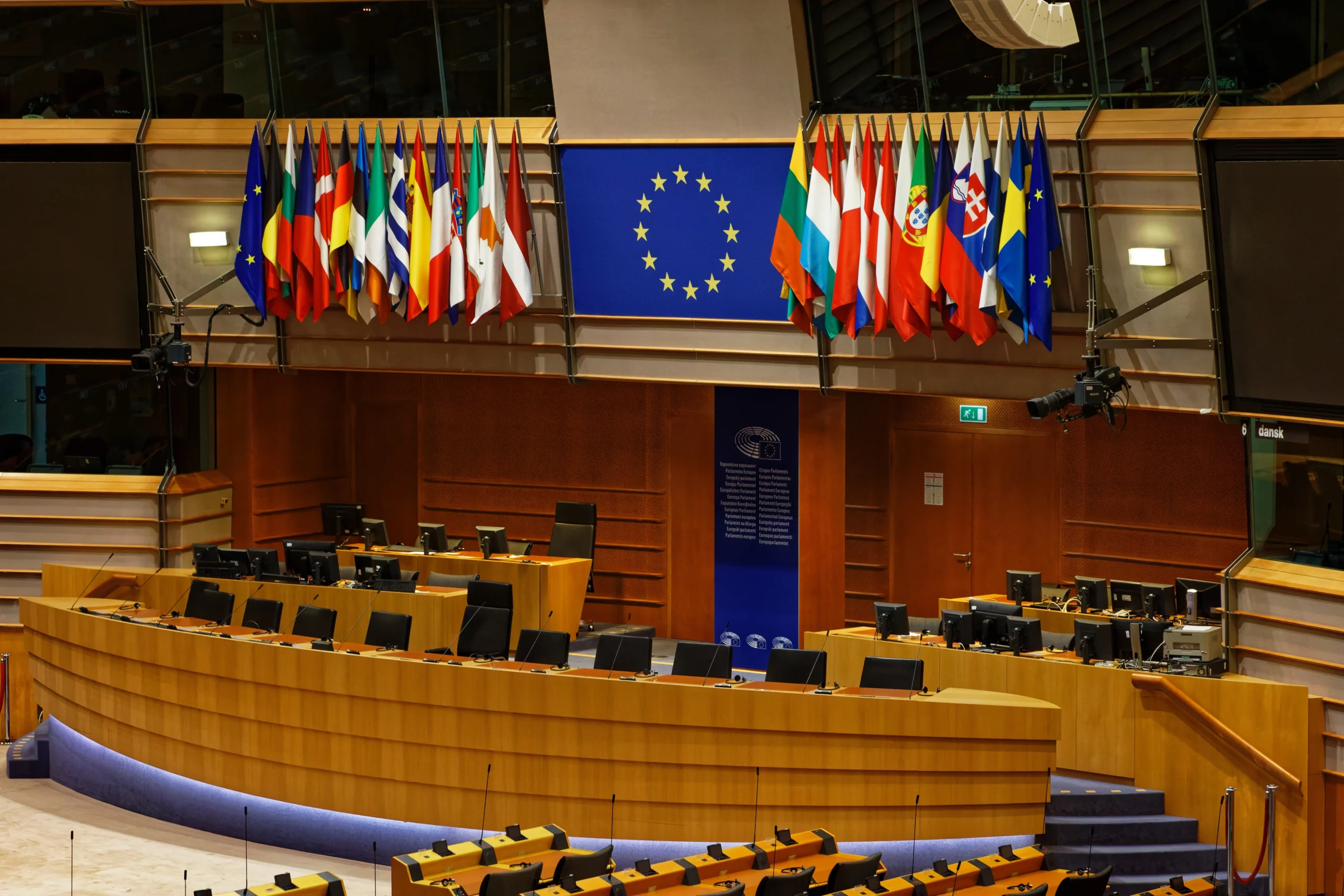
In the latest composition of the European Parliament, a significant 31.5% (227 out of 720) of the Members of the European Parliament (MEPs) have had a local or regional mandate. This highlights the vital connection between local governance and the broader European legislative process.

The European Parliament, composed of 720 MEPs elected from 27 EU Member States, serves as one of the key institutions in the European Union. Since 1979, MEPs have been elected through direct universal suffrage for a five-year term. Their decisions influence laws and policies that have a direct impact on the lives of over 447 million EU citizens.

Local and Regional governance experience equips MEPs with unique insights into the everyday challenges and opportunities faced by citizens. This background allows them to better understand the implications of EU legislation on local communities and ensures that the voices of municipalities and regions are heard at the European level.

Key Functions of the European Parliament:

  • Co-Legislation: The European Parliament shares legislative powers with the Council of the EU. Together, they adopt and amend legislative proposals, ensuring that laws reflect the diverse needs of EU citizens.
  • Budgeting: The Parliament plays a crucial role in deciding on the EU budget, and determining how resources are allocated across various sectors and initiatives.
  • Oversight: The Parliament supervises the work of the European Commission and other EU bodies, ensuring transparency and accountability.

Promoting Democracy Globally: Beyond its legislative functions, the European Parliament is a strong advocate for democratic values within Europe and globally. The Parliament actively supports the fight for democracy, freedom of speech, and fair elections worldwide.

The significant presence of MEPs with local and regional mandates in the European Parliament underscores the importance of local governance in shaping European policy. As the newly elected MEPs take on their roles, their decisions will continue to influence the European Union’s and its citizens’ future.

Learn More: To gain a deeper understanding of the European Parliament and its functions, visit the official website.