COR-CEMR Consultation 

A follow-up consultation from the CoR and CEMR on the RRF implementation


Since its launch, CEMR has monitored the European Union’s Recovery and Resilience Facility (RRF) to assess the experiences of local and regional governments in navigating this crucial funding instrument aimed at revitalizing the EU’s economy post-COVID-19. In collaboration with the Committee of the Regions (CoR), CEMR conducted a targeted consultation in 2021, engaging with associations of local and regional governments. The objective was to examine the involvement of these bodies in both the design and execution phases of the RRF. Initial findings revealed a very limited engagement of local and regional governments in the process.

This year, CoR and CEMR conducted a follow-up consultation to assess any changes in the situation. Despite the RRF being halfway through its implementation, local and regional governments express continued frustration at being sidelined from National Recovery and Resilience Plans (NRRPs). The results of the CoR-CEMR survey confirm a trend of highly centralised management of the RRF by Member States.

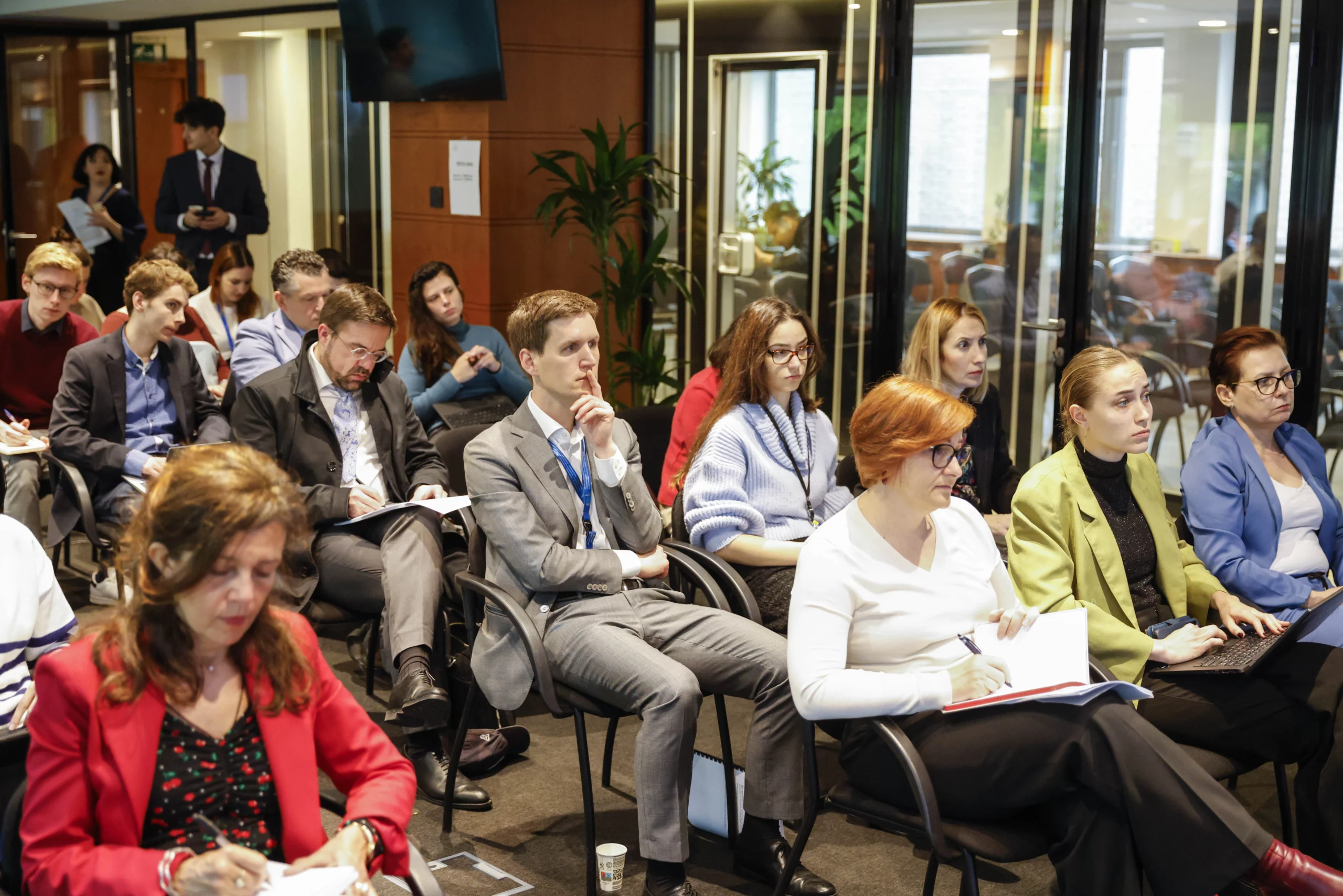
On April 16, CEMR hosted a high-level panel debate featuring representatives from EU institutions, where the key findings of the consultation were unveiled. The results of the CoR-CEMR consultation can be accessed here.

Unfair recovery fund distribution

Post-COVID Recovery Fund: centralisation and unfair distribution of resources risk harming cohesion in Europe


A new CoR-CEMR consultation shows that the territorial allocation of funds from the Recovery and Resilience Facility is widely perceived as unbalanced on the ground.

On the eve of a crucial meeting of European heads of state and government focused on competitiveness, the European Committee of the Regions (CoR) and the Council of European Municipalities and Regions (CEMR) unveil the results of their third joint survey on the implementation of the post-pandemic Recovery and Resilience Facility (RFF), which is worth €648 billion.

While the implementation of the RRF is at the halfway point, regions and cities still feel left aside from National Recovery and Resilience Plans (NRRPs). A new consultation conducted jointly by CoR and CCRE-CEMR confirms the highly centralised management of the RRF by the Member States.

Key findings

  • The territorial allocation of RRF funds is broadly perceived as unfair. Nearly half of respondents rate territorial fairness as “poor or very poor” while only a few see it as “good or very good”. And the degree of ownership at local and regional level is also unsatisfactory with significantly more respondents seeing it as “poor or very poor” than “good or very good”.
  • The green and digital transitions stand out as the two objectives supported effectively by the NRRPs, according to respondents in the consultation.
  • Conversely, fully one-third of respondents state that NRRPs do “not at all” effectively contribute to enhancing territorial cohesion, despite this being the legal basis and general objective of the RRF.
  • The involvement of local and regional authorities remains inadequately weak in the various phases of preparation, implementation or monitoring of NRRPs. The specific provisions of REPowerEU to improve the involvement of LRAs do not seem to have yielded concrete results.
  • Almost all respondents encounter barriers to their involvement in the NRRP. The main barrier identified is the national government providing an inappropriate framework for involvement.
  • The share of respondents who consider limited capacity or expertise within their region or city to be a barrier is significantly higher than in the previous consultation. This is likely linked to the higher-than-expected administrative burden of the RRF.
  • Potential overlaps and lack of coordination with cohesion funds remain the highest risk perceived by local and regional governments in the implementation of the RRF.
  • While the overall impact of projects funded by the RRF is rated positively by respondents, they are rather divided regarding its synergies with other funds, its additionality and flexibility.

Christophe Rouillon (FR/PES), Mayor of Coulaines and CoR’s rapporteur on the Mid-term evaluation of the Recovery and Resilience Facility said: “The results of the joint consultation underscore that the RRF is not the silver bullet it was claimed to be. The RRF was the appropriate response in a multi-crises context and will probably have had a positive macroeconomic impact. However, the centralisation it brought about as well as the deficiencies of the performance-based mechanism cannot be extrapolated to the future Cohesion Policy post-2027 if we do not want to put at risk that this policy remains the most efficient EU policy for delivering fair transitions throughout all EU regions.

Kamila Bláhová, Vice-president for European Affairs, Union of Towns and Municipalities of SMOCR (CZ), stated: “The RRF and the national recovery plans of the Czech Republic have a huge potential to support the efforts of local and regional governments aimed at revitalizing the local economy and green infrastructure investments at the local level. However, the issue of administrative capacity and poor synergies between the RRF and other EU funds present significant challenges. It’s crucial to optimize how subnational governments can maximise the use of this substantial funding source and that we address any shortcomings as the RRF moves forward.

Background

The consultation was conducted between January and March 2024, collating the views and experiences of 36 organisations representative of a variety of subnational government levels across 22 EU Member States. The respondents were from Austria, Belgium, Bulgaria, Croatia, Cyprus, Czechia, Estonia, Finland, France, Germany, Ireland, Italy, Latvia, Lithuania, Luxembourg, the Netherlands, Poland, Portugal, Romania, Slovakia, Spain, and Sweden. The geographical composition of the respondents was not identical to that of previous consultations.  Responses received from individual local and regional governments were also taken into account.

Results of the previous CoR-CEMR joint consultations (January 2021 and April 2022)

Read the study here

Contacts:
Matteo Miglietta – CoR
Tel. (+32) 470 895382
Matteo.miglietta@cor.europa.eu

RRF Event 

CEMR Hosts High-Level Panel Debate on “Pathways to Resilience: Local and Regional Perspectives on the Recovery and Resilience Facility”


A new CoR-CEMR consultation shows that the territorial allocation of funds from the Recovery and Resilience Facility is widely perceived as unbalanced on the ground.

The Council of European Municipalities and Regions (CEMR) is pleased to announce an upcoming in-person panel debate titled “Pathways to Resilience: Local and Regional Perspectives on the Recovery and Resilience Facility (RRF)”, scheduled for 16th April, from 9:30 AM to 12:15 PM. The event will be held at CEMR’s Secretariat in Square de Meeûs, Brussels.

In light of the upcoming Committee of the Regions Plenary on 17th and 18th April in Brussels, CEMR extends a warm welcome to elected members to register for the event.

The debate will allow to go beyond the narrative of the RRF’s milestones and targets and assess the impact of the programme at the local and regional levels. Lessons learned will be shared during the panel, as we discuss its potential to shape future EU investment programmes, particularly future Cohesion Policy initiatives.

Distinguished speakers confirmed for the event include:

  • Kamila Bláhová, Vice-President for European Affairs, SMOCR (CZ)
  • Maria Teresa Fernandez, Director at DG RECOVER of the European Commission
  • Monika Hohlmeier, Chair of the Budgetary Control Committee (CONT), European Parliament
  • Ivana Maletic, Croatian Member of the European Court of Auditors
  • Christophe Rouillon, CoR Member, rapporteur on the CoR’s draft opinion on the mid-term report on the RRF’s implementation

CEMR anticipates robust participation in this high-level event and encourages stakeholders to contribute actively.

AFCCRE – European University

AFCCRE - European University - News 2023

CEMR Secretary General Delivers Keynote Address at Marseille Event on EU Enlargement and Local Partnerships


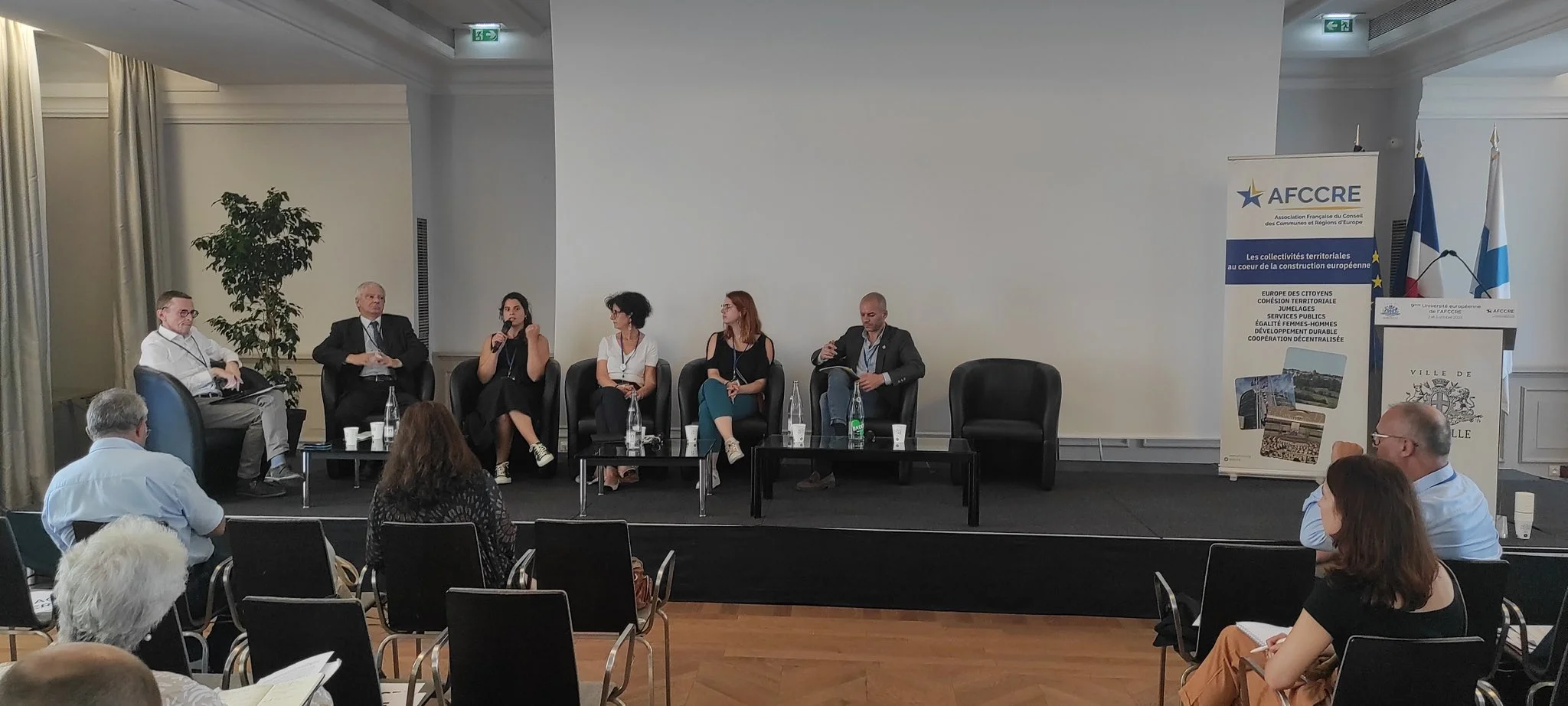
Fabrizio Rossi, Secretary General of the Council of European Municipalities and Regions (CEMR), delivered a keynote speech in Marseille during an event organised by the Université européenne de l’AFCCRE. The gathering aimed to explore the critical role of regional and local partnerships in the context of the European Union’s enlargement.

The event comes at a pivotal moment in the EU’s history, stressing the importance of examining the active involvement of regional and local entities, which play a crucial role in fostering collaboration, sharing expertise, and shaping policies that resonate with the diverse needs of communities.

In his address, Rossi highlighted the indispensable role that regional and local partnerships play in shaping the European Union’s future. He emphasised that involving these entities in policy-making and collaboration is crucial for creating policies that truly understand and address the distinct requirements of different communities.

Fabrizio Rossi summed up the sentiment, stating, “Local and regional authorities are the backbone of our societies. Their active engagement is vital for a successful and cohesive European Union. Let us join hands and work towards a stronger, more unified Europe, where the voices of local and regional entities are at the forefront of policy-making and progress.”

The Secretary expressed warm appreciation towards the Association Française du Conseil des Communes et Régions d’Europe (AFCCRE) for arranging the event and lauded their steadfast dedication to fostering dialogue and understanding regarding EU enlargement. The event acts as a platform for stakeholders to collaborate and contribute to a stronger, more unified Europe where local and regional perspectives hold significant value and are integrated.

EPRS Annual Joint workshop

EPRS meeting 2023 - News 2023

CEMR and EPRS Annual Joint Workshop: Paving the Way for a Sustainable and Cohesive Europe


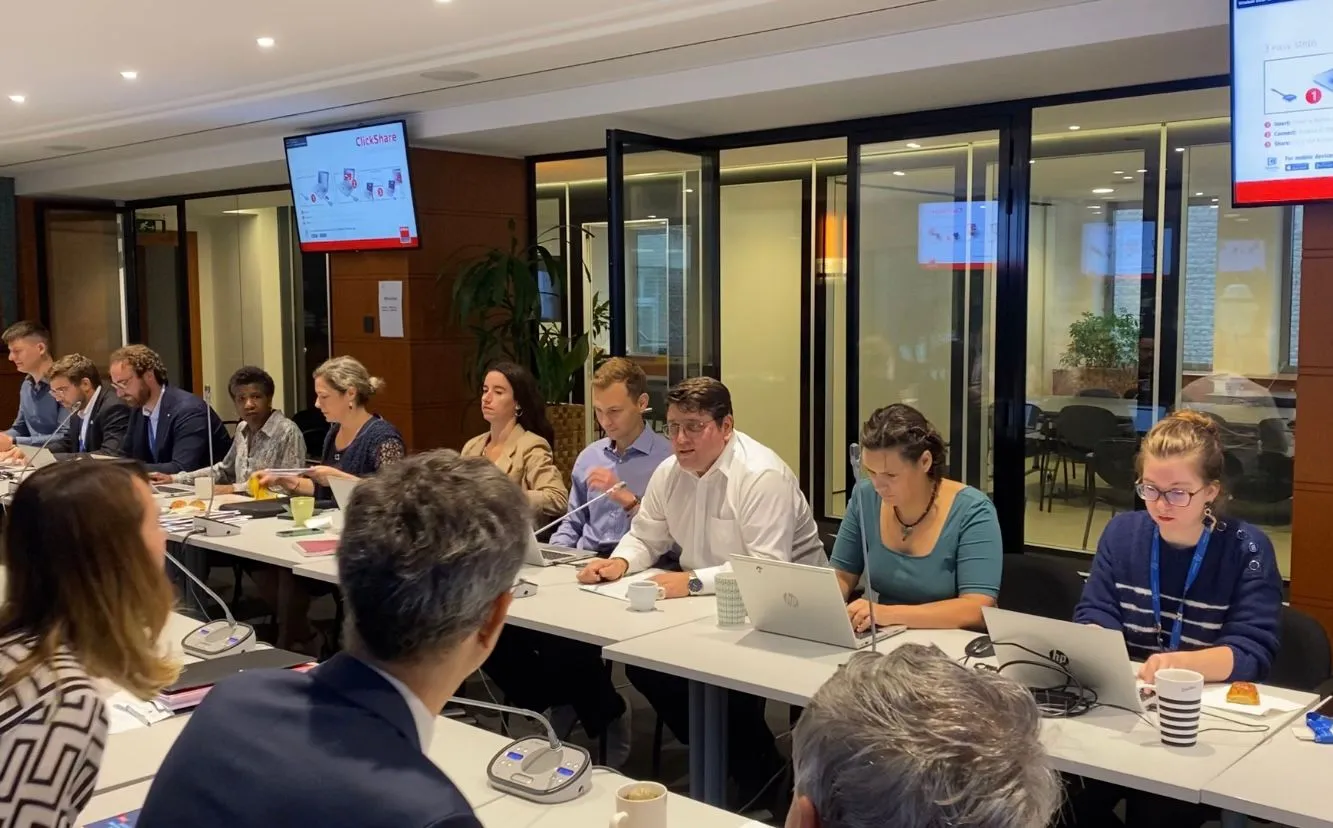
The Council of European Municipalities and Regions (CEMR) is holding the Annual Joint workshop with the European Parliamentary Research Services (EPRS) on Tuesday, October 3rd, from 10:00 to 11:45 at the CEMR Secretariat headquarters located at 1 Square de Meeûs, 1000 Brussels. This recurrent gathering provides a platform for both organisations to engage in a fruitful exchange regarding their respective priorities, delve into discussions concerning the 2024 working plan, and explore opportunities for enhanced collaboration in their shared mission.

Durmish Guri, External Resources and Knowledge Strategy at CEMR emphasised, “This meeting holds significant promise for fostering a stronger partnership and driving our joint efforts towards a more sustainable and cohesive European community, highlighting the pivotal role of territorial governments in achieving this vision.”

Participants will convene in three specialised thematic rooms, fostering an environment conducive to meaningful dialogue:

  • Cooperation and International Issues
  • Sustainable Transition
  • EU Governance and Funds
     

Colleagues from both organisations will have the chance to acquaint themselves, engage in informal exchanges concerning their ongoing projects, and share their perspectives on future plans and priorities.

Workshop

Workship in Israel - News 2023

A workshop for better community resilience in Israel


The Federation of Local Authorities in Israel will be hosting an international resilience workshop in May 2023. During three days, participants will learn about Israeli concepts and models of emergency preparedness and community resilience.
 
Individuals, families, businesses, and institutions that are prepared for tackling disasters are more likely to cope efficiently – and to recover faster. Such training reduces the risks of damage to critical infrastructure, lessens economic losses and softens the emotional impact of the catastrophe on the population.
 
Once the steps of immediate emergency response are implemented, it is up to local leadership and the municipality’s services to provide and facilitate all the necessary recovery measures. By supporting citizens and the community’s institutions, local authorities can help restore and strengthen the community’s cohesion.
 
To help communities face emergency situations better, the Federation of Local Authorities in Israel will organize an international community resilience workshop in the coastal city of Nahariya (Israel) from 17 to 19 May 2023. During the event, participants will learn about concepts and methods from experts in the fields of welfare, social work, psychology and urban security. The initiative aims to provide participants with helpful Israeli models of preparedness and resilience that have been field-tested in real emergency situations.
 
For more information on this initiative, visit the website of the Federation of Local Authorities in Israel.

Inclusive society 

Inclusive society - News 2023

A One-Stop-Shop for newcomers in Mechelen fosters inclusion


Twenty years ago, Mechelen suffered from one of the highest criminality rates in Belgium. Polarisation and deprivation were skyrocketing. Many middle-class families had no choice but to leave. However, little by little, as local authorities implemented inclusion policies, the situation started to evolve. Nowadays, the city is a vibrant symbol of inclusivity, with over 130 nationalities living in harmony. Innovative integration programmes are still being created, implemented and constantly improved. The “Welcome application” is one of them.

When the local authorities of Mechelen reviewed their tools supporting integration processes, they realised that people tend to use their smartphones more often, especially as they are on the move. It was then necessary to display information on a mobile-friendly platform. The Mechelen’s “Welcome App” was born.

With this smartphone app, newcomers can quickly find information about leisure, healthcare, housing, learning and social life in Mechelen. The information is provided in 9 different languages: Arabic, Dutch, English, French, Turkish, Ukrainian, Romanian, Russian, and Spanish. The app also displays a calendar with activities and a dictionary in which complicated words are explained. The app can easily be downloaded on the official website of the city of Mechelen.

With the support of the IncluCities project, the city identified an important issue that can affect the effectiveness of an app: outdated data. Indeed, as mobile apps can be tricky to manage, they sometimes tend to not be updated at all. Unfortunately, outdated information renders an app useless. Furthermore, adding new information manually is very time-consuming. These issues were resolved by developing an algorithm that simplifies the app updating process. As the city’s employees upload new information on a spreadsheet, it is automatically added to the app. Thus, the information on the mobile App will always be up-to-date, coherent and available in all languages.

To download the app, go to Mechelen’s official website.

War on Ukraine first declaration

European local and regional leaders reaffirm solidarity with Ukraine and call for peace, justice, and reconstruction.


On the first anniversary of Russia’s full-scale invasion of Ukraine, local and regional leaders across Europe renew their strongest support for Ukraine, its people, and its democratic institutions. 

Condemning Aggression 
The war has brought devastation to civilians, elected representatives, and essential infrastructure. The abduction of Ukrainian mayors and the ongoing detention of five of them highlight the assault on democracy and the rule of law. These acts are condemned in the strongest terms, with urgent calls for the immediate release of the detained leaders. 

Solidarity and Support 

Local and regional governments across Europe stand firmly by Ukraine. Partnerships such as the Bridges of Trust project, the Eastern Partnership programme, and the European Alliance of Cities and Regions for the Reconstruction of Ukraine are mobilising resources, expertise, and cooperation. These initiatives are not only helping communities recover but also preparing Ukraine for its future as a full member of the European Union. 

Shared Values 
This declaration is a reminder that Europe’s foundations rest on peace, democracy, and respect for international law. As the war continues, European leaders join the international community in reaffirming Ukraine’s sovereignty and territorial integrity, and in urging the Russian Federation to end its illegal war. 

A year into this unjustified conflict, the commitment of Europe’s municipalities, cities, and regions is unwavering: to stand with Ukraine, to defend shared values, and to contribute to rebuilding a peaceful, democratic future. 

Read the declaration here 

For more information, contact: 

IncluCities

IncluCities - News 2023

Better communication makes inclusion a reality in Fuenlabrada


If you have ever been a newcomer to another city, you might know how important and difficult it is to find your way in the first weeks. Clear answers regarding administrative issues, housing or work are usually not accessible. And it’s often equally complicated to start building social ties. In Fuenlabrada, Spain, this issue has been tackled effectively – and digitally! Indeed, the municipality created an online platform called “Fuenlabrada Global” where migrants can make friends, learn languages and become a part of the community.

By taking part in the IncluCities project, the municipality of Fuenlabrada was able to evaluate its existing practices in migrant integration and identify some gaps. The first challenge was to understand how to reach the right audience. After careful evaluation, the main obstacle appeared to be the language. The beneficiaries’ needs in the first phase of integration have also been analysed; access to a health card, registration, housing and schooling were identified as the main priorities.

To solve these issues, the municipality found creative solutions. The new subpage “Fuenlabrada Global” now offers basic information for newcomers in 5 additional languages: English, French, Arabic, Romanian and French. In addition, a bot is available to answer the most frequently asked questions such as where to enrol in the school year, how to obtain a health card or where to report cases of gender violence. It is an effective way to ensure better communication with the user.

Another improvement is the inclusion of maps with contact information; these maps make it easier to find the location of the services available to migrants. Finally, intersectionality is taken into account; indeed, associations helping victims of gender-based violence or providing LGTBI+ people with support and counselling are also mentioned.

The best practices learned through the IncluCities project have allowed the municipality to take concrete steps in making information and services more accessible to its beneficiaries. Check the new and improved “Fuenlabrada Global” webpage to learn more about this inclusive and user-friendly strategy.

Youth Matters

Youth Matters - News 2022

Youth Matters: A Step-by-Step Booklet for Building a Strong Youth Council


Youth councils enable young people to better understand democracy and take an active part in it. Unfortunately, many cities do not have a long tradition in this area and may even struggle to create and operate a youth council. Therefore, the Norwegian Directorate for Children, Youth and Family Affairs (Bufdir) and the Association of Local and Regional Authorities (KS) decided to jointly organize a workshop for young counsellors and, from this, to create a brochure for an almost “turnkey” youth council.
The youth councils of Karasjok, Alta and Hammerfest came together in the summer of 2022 to learn more about how to organize effectively, train their recruits and participate more actively in local governments.
The organisers felt it was important to exchange their different experiences so as not to have to start from scratch. Bufdir decided to focus on the participation of young people in public affairs because this is enshrined in the rights of the child and Article 104 of the Norwegian Constitution.


Don’t neglect young people
The workshop received the approval of Karasjok Deputy Mayor John Nystad. He emphasizes the importance of having a youth council in his municipality and hopes to cooperate more with young people in his municipality in the future. Mr Nystad believes that for young people’s wishes to become reality, local politicians must fully support them. The main thing is not to neglect issues that concern young people, he thinks.
During the workshop, the youth councillors shared their knowledge and exchanged advice on how to run a youth council. They advised speaking up more, contacting public administrators, following the calendar of political meetings in their municipality, and cooperating with “adult” politicians.
They also reminded us not to forget diversity and representativeness when it comes to recruiting new committed members. As Deputy Mayor Nystad said, everyone has the right to express themselves. Therefore, raising issues cooperatively with other residents keeps everyone better satisfied.

We never stop learning

Henriette Alexandra Mielonen, a member of the newly established youth council in Karasjok, expressed her satisfaction with the workshop: “It was informative.” She acknowledges that they didn’t know much about running a board before, but meeting more experienced members from other organisations helped them enormously.
“It’s always helpful to understand how others approach work,” she says; it was the old Alta council that gave them a lot of ideas. “We didn’t know we could contact the media if we were unhappy,” she adds.
But as Ms Mielonen reminds us, we never stop learning. This is why the Association of Local and Regional Authorities (KS) has produced a new brochure summarizing the learnings from the workshop. They think this brochure could help other youth councils and make their experience easier.


The brochure is available in Norwegian and English.