Global Goals for Cities network for sustainability and development

RFSC - News 2022

It’s finished! The Global Goals for Cities pilot network is complete!


Across Europe, the 19 cities in the network visited each other, learned from each other and developed their integrated action plans together, to better implement the Sustainable Development Goals in their strategic urban planning.

To ensure the achievement of the 2030 Agenda and the 17 goals it sets, cities are key players. With more sustainable cities, we can ensure a better planet. This is why URBACT and CEMR supported the creation of the Global Goals for Cities pilot network, aiming to accelerate progress towards achieving the Sustainable Development Goals. In this network, 19 cities were selected and showed their commitment to localizing the SDGs.

Our 19 cities also organised or participated in national and international events to present and share their experience and results.

To better understand how cities contribute to the SDGs, cities used the Sustainable Cities Reference Framework among other URBACT tools, allowing them to analyse gaps and priorities in their local strategies, identify the best actions to progress on the selected objectives and thus help build their integrated action plans and integrate the SDGs into their long-term urban strategies.

Finally, the network has developed a learning toolkit on the Global Goals for Cities*, available online, so that cities can better locate and implement the SDGs in their local strategies.

Bridges of Trust – Ukraine

How will the “Bridges of Trust” help rebuild 30 Ukrainian municipalities affected by the Russian war?


On 15 February 2023, the Council of European Municipalities and Regions (CEMR) together with the Association of Ukrainian Cities (AUC) and with the support of the U-LEAD with Europe programme (U-LEAD) presented a new phase of the “Bridges of Trust” initiative. It will run until September 2023 with 10 CEMR member associations of local and regional governments from the EU member states facilitating 30 new municipal partnerships for the reconstruction of Ukraine. During the online meeting, speakers from the European Committee of the Regions, the EU Delegation to Ukraine, CEMR, AUC and U-LEAD discussed the importance of the “Bridges of Trust” initiative as a tool to rebuild Ukrainian municipalities and a new format of international cooperation between local governments in Ukraine and the EU. 

Municipal partnerships are a way to provide concrete actions of help and support, show solidarity and build back better together. The representative of the EU Delegation to Ukraine, Mr. Tomasz Ostropolski, stated: “Such an initiative has high-level support and visibility from the European Commission and Ukraine’s top officials. Therefore, it is important for us to transfer political ideas into practice in order to contribute to local and regional cooperation between EU and Ukrainian municipalities.”

Ms. Darja Gontsarova-Parvulescu, from the European Committee of the Regions, who represents theEuropean Alliance of Cities and Regions for the Reconstruction of Ukraine emphasised: “We consider that these direct bilateral exchanges between Ukrainian and European municipalities in the framework of the Bridges of Trust initiative have a lot of impacts on the upcoming process of reconstruction of Ukraine.”

“Links of exchange and cooperation between municipalities are a driving force in the growth and development of the communities and of Europe as a whole. Bridges of Trust initiative represents an innovative and driven approach to the international cooperation in modern Europe and is a strategic priority for CEMR – noted Mr.Fabrizio RossiCEMR Secretary General.

Executive Director of theAssociation of Ukrainian CitiesMr.Oleksandr Slobozhan, expressed gratitude to the European partners for their cooperation and support of Ukrainian hromadas during the war and emphasized: The work on establishing effective partnerships between municipalities is very significant for Ukraine’s European integration in the future. Therefore, the Bridges of Trust initiative makes a significant contribution to Ukraine’s European perspective.”

In particular, Mr.Bastian VeigelGIZ Program Director, U-LEAD with Europe, noted that: Our common aim is to connect municipalities and identify interest in fostering cooperation ultimately promoting economic development from both sides.”

During the event, the representatives of the associations of local and regional governments presented ways in which they will contribute to the main goal of the initiative – reconstruction of Ukraine. It is planned that in each of the participating countries 3 small or medium sized municipalities will be selected and matched with similar Ukrainian municipalities. The representatives of partner local governments from Ukraine and the EU will therefore exchange best practices, conduct internships and study visits, organize events and develop projects with the focus on the reconstruction of Ukrainian municipalities.

The participants of the event also emphasized the need to strengthen municipal ties between the EU and Ukraine and expressed their support for the people of Ukraine, who continue to fight for their freedom and the European way of life.

Bridges of Trust Initiative

Mayors in Ukraine - News 2023

“Bridges of Trust” will help rebuild 30 Ukrainian municipalities affected by the Russian war


On 15 February 2023, the “Bridges of Trust” initiative kicked off its second phase with a hybrid event in Brussels. Until September 2023, 10 associations of local and regional governments from the EU member states will facilitate 30 new municipal partnerships for the reconstruction of Ukraine. The initiative is supported by the Council of European Municipalities and Regions (CEMR), the Association of Ukrainian Cities (AUC) and U-Lead.
 
For more information on this event, read the press release.

Conference on local solutions for a global crisis

Covenant of Mayors Event - News 2023

“Cities on the frontline of the energy crisis”: A conference to bring local solutions to light


With the rising prices of energy, the majority of the world felt the consequences of the Russian aggression in Ukraine. The local authorities especially have been the first in line to deal with the crisis. To reflect on that matter, the Covenant of Mayors will organise a conference.

Cities on the frontline of the energy crisis” will be held in the heart of the European district in Brussels on the 30th of March. The goal of the event is to gather the cities and their representatives to discuss how their efforts in changing the energy infrastructure can help in the future. Investing more in green and local energy might be crucial, especially in the light of the climate change.

Local solutions to a global crisis
So far, it has been the households and small and medium businesses that have suffered the most from the energy crisis. The rising prices and inflation have significantly impacted their way of living. However, moving from overconsumption towards a more sustainable future not only battles the ecological problems but is also a way to show support to Ukraine. Getting rid of dependence on Russian gas has been the main target of many leaders in coordination with the REPowerEU Plan.

Because the mayors and their local governments are the closest to the citizens, the Conference of the Covenant of Mayors 2023 will give these authorities the opportunity to proudly display their responses to current events. At the same time, it will offer a chance to reflect on what the European institutions and national governments can do to help the people more. 

The future of European energy
Those participating in the event can expect to meet and chat with high-level representatives from European cities and their institutions. Among those who have confirmed their attendance is the Executive Vice-President of the European Commission Frans Timmermans and the EU Commissioner for Energy Kadri Simson. They will talk about how European institutions and state governments can assist local and regional attempts to reduce Russian gas dependency and energy consumption in the future.

Mayors and representatives of several European cities will join the moderated panel discussions on the agenda. The focus will be on the challenges the local authorities had to encounter, energy savings in the context of REPowerEU, and reflections on the first winter since the beginning of the energy crisis. The government representatives will also discuss their (immediate) reactions towards the crisis, the measures they have implemented, their impact on citizens and, most importantly: What can be done next.

Register for the conference before March 23rd here.

Bridges of Trust Cooperation

Bridges of Trust Branding - News 2024

Korosten mayor praises its Lithuanian twin city: “We have found true friends”


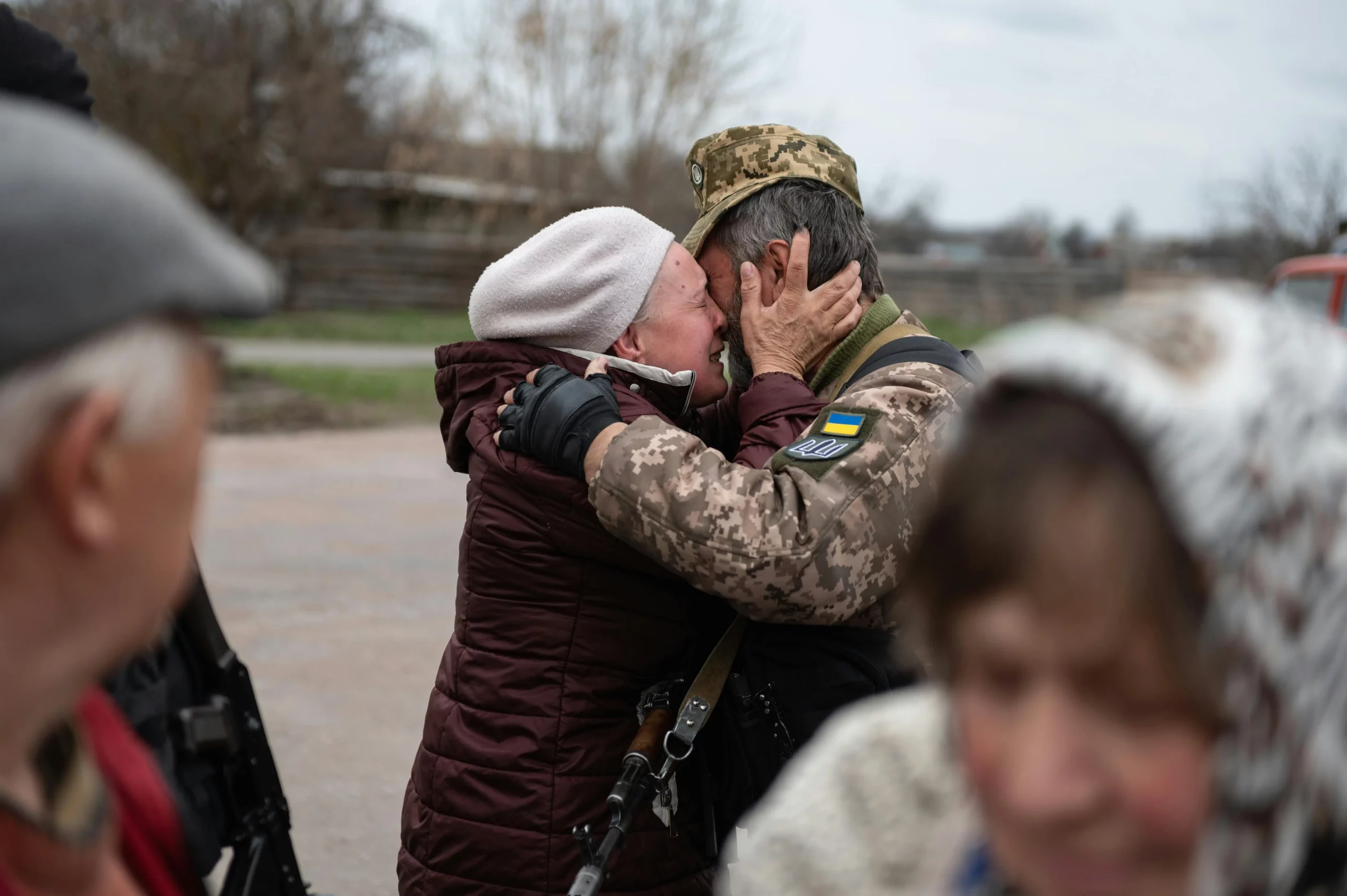
After the sudden Russian invasion of Ukraine in February of last year, the city of Korosten had to break its twinning relations with a few cities in Siberia and Belarus. “They became our enemies”, declares the Mayor of Korosten. However, that was not the case for its Lithuanian twin Urkmerge who became a close ally of the Ukrainian city. 

In the framework of the “Bridges of Trust” project, the Ukrainian city of Korosten signed a cooperation agreement with the Lithuanian city of Ukmerge. The municipalities have already exchanged visits of their delegations: “There were more Ukrainian flags than the Lithuanian ones,” recalls Volodymyr Moskalenko, Mayor of the city based in the Zhytomyr region in the northwest of Ukraine. In an interview with the U-LEAD, he describes how the cooperation has helped many Ukrainians so far.

“Initially we asked for medicines and long-term food packages,” he says. However, Urkmerge keeps offering this kind of help even after the initial support. In addition to medicine and food, the Ukrainian city has also received generators, a large bus, and trench candles for the military. 

As their Baltic counterpart is advanced in the use of alternative energy, Moskalenko wonders about utilising their experience to help bring this kind of energy to Ukraine. Russian attacks are often directed towards the energy infrastructure, which shows the importance of the capacity of a municipality to address these kinds of needs on its own according to the Mayor.

He mentions the positive attitude of the Lithuanians towards Ukraine and its citizens. “Each of our conversations comes down to the question ‘How can we help you?’. We are impressed,” Moskalenko says. He assures that the cities intend to further develop their cultural cooperation and exchange: “We have found true friends.”

However, that wasn’t the case in some of Korosten’s former twin cities in Russia and Belarus. On the day of the Russian invasion in February, the city council had a session and immediately broke the twinning relations with Mozyr from Belarus and two cities from Siberia in Russia: “What twinning relations can we have with them if they are our enemies?” ponders Moskalenko

However, he thinks that it is worth mentioning that the invasion was the catalyst for uniting national cultures in Ukraine, as Ukmerge isn’t the only city that has expressed the desire to become Korosten’s twin. “Bourges in France contacted us. They hosted 200 women and children from Korosten,” informs the Mayor while declaring that they are keeping in touch with them. They are also in contact with cities in Great Britain, China, and Japan. “But just contacts so far,” concludes Moskalenko

Source: U-LEAD

City Twinning

Twinning - News

City pairings across Europe and beyond


European city-to-city cooperation, including town twinning, is increasingly viewed as a possible solution to current challenges of sustainability as well as a way to promote best practice exchanges at the local level.

City pairings are receiving renewed attention and resources at local, national and European levels as innovative ways to tackle current challenges, boost sustainable development and promote cultural exchanges.

Earlier in January, Italian President Sergio Mattarella and his German counterpart Frank-Walter Steinmeier announced the second edition of an award for city cooperation between the two countries. The prize, first launched in 2020, will reward municipalities cooperating on civic engagement, culture, inclusion and sustainability.

“Twinnings between Italian and German municipalities represent a fundamental instrument to consolidate the friendship between Germany and Italy, deepen our relationship and face together our current and future challenges,” Mattarella said.

Meanwhile, at the EU level, the European Commission is funding several initiatives to boost city cooperation, such as the International City Partnerships matching European and third-country cities on sustainable development. It also recently published a €4 million call for 2023 for towns working together to promote intercultural dialogue and European citizenship.

Neighbouring cities

According to Lucian Zagan, mobility project coordinator at Eurocities, city partnerships benefit local governments.

“Cities need to cooperate to advance their interests at national and EU level,” he told EURACTIV, adding that municipalities often collaborate on areas of mutual interest.

For instance, Helsinki and Tallinn, which are divided by an 82 km strip of sea, have been cooperating since the 1990s and are now working together on cleaning up the Baltic Sea.

“We, as twin cities, are initiating together this campaign on cleaning the sea for all the cities around the Baltic Sea,” said Krista Kampus, who leads the work of Tallinn as European Green Capital for 2023.

While neighbouring countries often share a similar culture and needs, territorial proximity is not a prerequisite for collaboration, according to Zagan.

Long-distance cooperation

Despite the distance separating them, many European towns are currently cooperating with cities in third countries.

For instance, the Italian city of Palermo, recently launched an initiative to exchange best practices with the twin town of Sekondi-Takoradi, in Ghana. The aim of the initiative, called “Twin cities in Sustainable Partnership”, is to support urban and sustainable development processes.

Meanwhile, the city of Zaragoza in Spain established a partnership with Ounck, a small Senegalese town, to support the local production of spirulina, a food supplement that plays a key role in malnutrition.

According to Fabrizio Rossi, secretary general of the Council of European Municipalities and Regions (CEMR), these city partnerships can provide a “long-term systematic approach” to solve global challenges, “far away from geopolitical tensions” which might arise at the national level.

Networks of cities

European municipalities are also joining forces on specific issues, such as sustainable mobility and health, through networks of cities.

Tallinn, for instance, is part of the NetZeroCities partnership, which aims to promote Europe’s transition to net zero emissions, and the CIVITAS network, which fosters sustainable urban mobility.

Article published on Euractiv.

Generators for Ukraine

generators for Ukraine - News 2023

Call for cities and regions to provide generators for Ukraine


The European Commission and the Committee of the Regions have launched a humanitarian appeal to European cities and regions. Responding to an urgent request from the Ukrainian Government, they call on a joint effort to send energy supplies to Ukraine.

The escalation of Russian attacks on civilian infrastructures and residential buildings has deeply impacted the Ukrainian energy network. In consequence, only 70% of peak demand power can be covered, leaving millions of people without electricity and water in the middle of winter. To strengthen the humanitarian action of Member States and private donors, the Commission is now calling on European regions and cities to provide further assistance. 

Cities and regions can make donations of energy items both new and old, in particular power generators and heaters. The transport costs to the new “rescEU energy” hub in Poland are co-financed by the Union budget. For more information, donors are invited to contact the European Commission.

The European Commission has already been facilitating donations of energy equipment and fuel through the EU Civil Protection Mechanism (UCPM). So far, they have delivered over 55,000 energy items, including 775 power generators, provided by the Member States and private donors. As cities and regions join this common effort, more energy infrastructure will be preserved and restored, helping millions of people regain access to water and electricity.

Solidarity with Ukraine

Solidarity with Ukraine - News 2022

Building partnerships to empower municipalities


From March 2021 to November 2022, the Council of European Municipalities and Regions and PLATFORMA have been implementing a project “Empowering Municipalities in Ukraine and the European Union through building municipal partnerships” within the framework of U-LEAD with Europe’s initiative “Bridges of Trust” and with the support of U-LEAD with Europe. 

Based on a careful matching process, which included analysis of the socio-economic factors and sectors of development of the EU municipalities, the Initiative matched 10 Ukrainian municipalities in 7 regions with municipalities in Estonia, Lithuania, Latvia, Poland and Slovakia. Online bilateral meetings between partners allow to launch the partnerships, identify common interests as well as plan joint activities such as study visits to exchange best practices.

After the start of the Russian war, some European municipalities, upon request of their Ukrainian partners, provided humanitarian and financial assistance. Such support from European partners is extremely valuable. For example, Šiauliai district municipality in Lithuania sent eleven tons of humanitarian aid to the Dolyna community in the Ivano-Frankivsk region. The total amount is approximately 100 thousand euros. The same partner organised a summer school for 36 children from Dolyna.

“Through such projects, we are trying to link those Ukrainian municipalities, especially small and medium size, that need support but might have no experience in international cooperation, with municipalities in the EU that are motivated and ready to help. We remember the important role peer-to-peer cooperation and twinning played in the post-WWII reconstruction of Europe. It should also help Ukraine recover, rebuild, renew, and become a member of the EU family. These are the real and long-term bridges that CEMR together with our Associations, and with the support of actors like the U-LEAD, are helping to build”, – says Fabrizio Rossi, Secretary General of the Council of European Municipalities and Regions. 

Following the Russian invasion of Ukraine, an important objective of the project became organization of the solidarity events, in close cooperation with the Associations of Local Government and the U-LEAD with Europe, in order to communicate about the wartime realities and the needs of Ukrainian municipalities and to motivate other EU municipalities to engage and establish new partnerships. 400 participants took part in the Poland-Ukraine, Slovakia-Ukraine and France-Ukraine Solidarity Forums. Ukrainian mayors presented the realities of both destroyed and formerly occupied municipalities as well as those that have accepted internally displaced people but have not suffered damages to the physical infrastructure. The EU municipalities have also presented concrete actions of support.

“For us at U-LEAD, the “Bridges of Trust” is not just another initiative, not just one of numerous projects we do every day. It is literally one of the main pillars of our work. We constantly wish to bring Ukrainian municipalities closer to their counterparts in the EU. The importance of the “Bridges of Trust” during the Russian invasion hasn’t decreased in the slightest, but, quite the opposite, it has become even more crucial. The forums that we’ve had over the last months have been more than an opportunity for international cooperation – they provided a perspective to Ukrainian municipalities and thus a bit of hope to their citizens. But in the long run the aftermath of our work will be even much more valuable, for the partnerships we have facilitated will turn from bridges to foundations – the foundations of the future European local self-government. There is so much work that is still ahead of us, but for getting this far I am sincerely grateful to all our partners who made the “Bridges of Trust” possible: the Council of European Municipalities and Regions, the European Coalition of cities and regions PLATFORMA, the Ministry for Communities and Territorial Development, and, of course, all the municipalities that participated”, – Bastian Veigel, GIZ Programme Director of U-LEAD with Europe

The project has also contributed to the understanding of key success and failure factors for the international municipal cooperation of Ukrainian municipalities. The publication prepared in the framework of the project provides an annotated mapping of existing partnerships between Ukrainian and EU municipalities; an analysis of key success and failure factors of international municipal cooperation with a special focus on cooperation between Ukrainian and EU municipalities and recommendations for future sustainable cooperation between Ukrainian and EU municipalities.

The Council of European Municipalities and Regions will continue its work in supporting cooperation between local governments in Ukraine and in the EU member states.

To see more stories of support consult this page