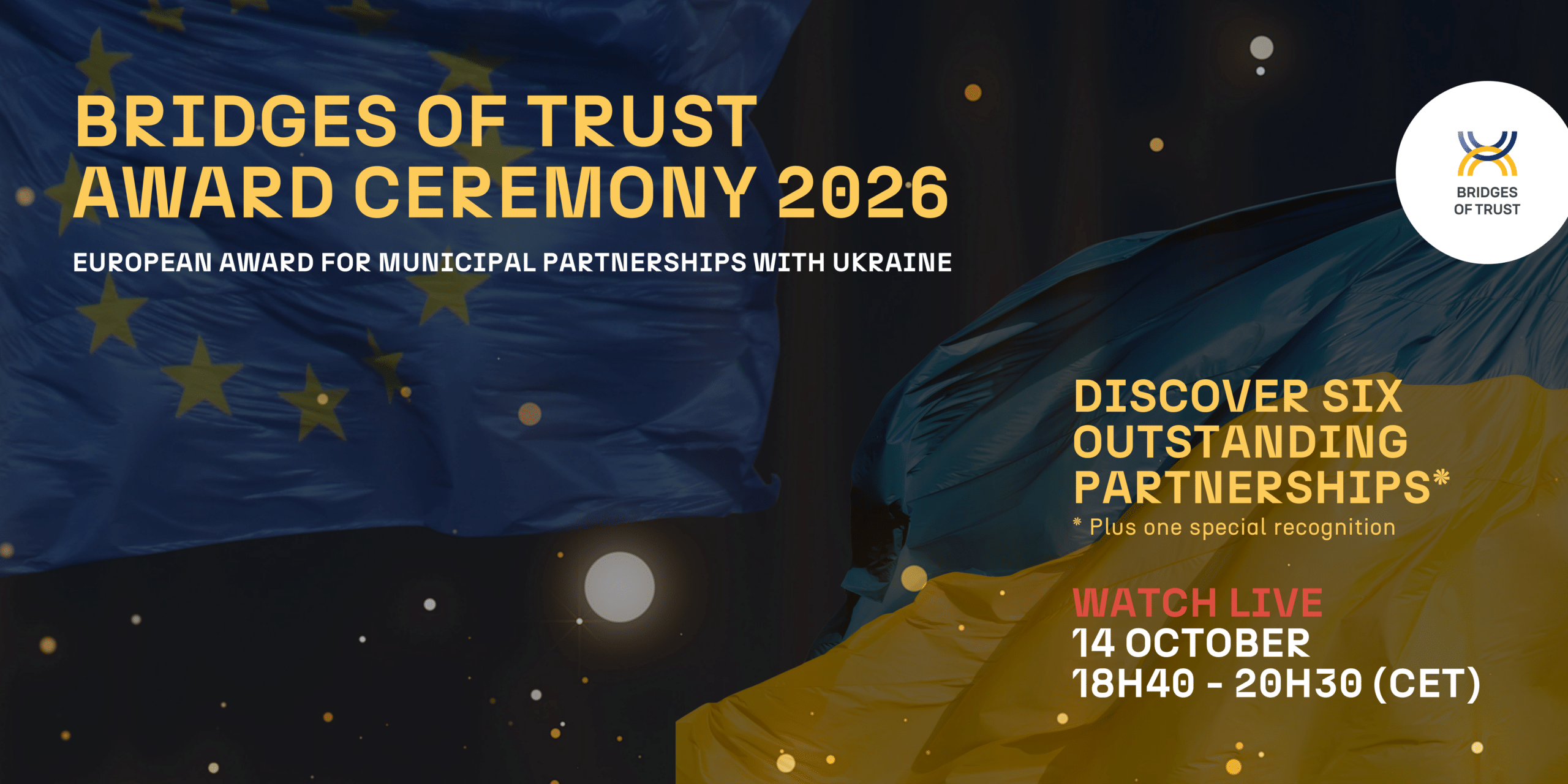
Bridges of Trust Partnerships Award 2026: Europe’s dedicated award for municipal cooperation with Ukraine unveils its Ambassadors on 14 October
366 words
2–3 minutes
On 14 October 2026, the Bridges of Trust Award Ceremony will take place in Brussels, during the European Week of Regions and Cities, celebrating the first edition of an award for outstanding municipal partnerships between Ukraine and the rest of Europe. The ceremony will reveal and celebrate the six Bridges of Trust Ambassadors 2026, along with one special recognition.
The award was launched by the European Partnership Hub Secretariat (EPHS), hosted by the Council of European Municipalities and Regions (CEMR), together with the Bridges of Trust Community. It is supported by the EU and its member states through the U-LEAD with Europe programme.
Municipal partnerships with Ukraine
Town twinning has existed across Europe for decades, connecting towns, cities and regions through exchange, cooperation and shared projects. Since Russia’s full-scale invasion of Ukraine in 2022, many of these partnerships, along with new ones formed specifically in response to the war, have become active channels of support: vehicles, generators, hospital equipment, hosted refugees and staff exchanges, organised directly between municipalities.
Several of this year’s Ambassador partnerships also show cooperation moving in both directions, with Ukrainian municipalities sharing crisis-management and civil protection expertise with their European partners.
A range of partnerships
The selected partnerships reflect the diversity the Award set out to capture: partnerships from across different regions of Ukraine and Europe, spanning small, medium and large municipalities; working across different thematic areas; and including both long-standing twinnings and partnerships formed after the full-scale invasion, many of which have moved from immediate solidarity to sustained, mutually beneficial cooperation.
The call for applications was open to Ukrainian municipalities of all sizes and their partners in Bulgaria, Croatia, France, Germany, Italy, Latvia, Montenegro, the Netherlands, North Macedonia, Poland, Romania, Slovenia and Sweden. Applications were pre-selected by national and regional associations across these countries, then assessed by a jury of representatives from CEMR, U-LEAD with Europe and the European Committee of the Regions. The four Ukrainian associations of local governments validated the final selection.
Practical information Bridges of Trust Award Ceremony 2026 14 October 2026 | 18h40 – 20h40 (CET) Brussels
Beyond 2030: How can territories help shape the future of sustainable development?
1,174 words
5–7 minutes
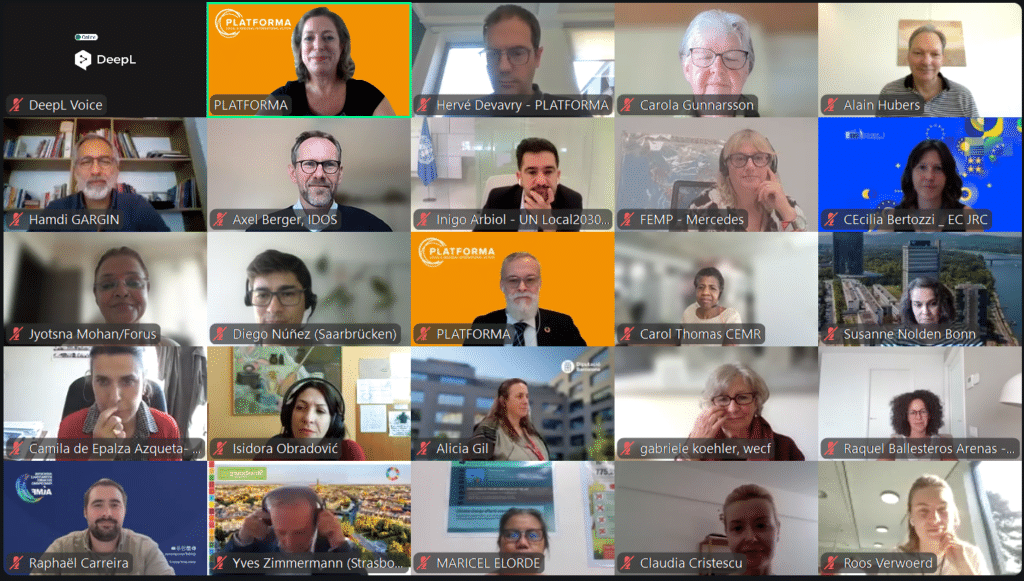
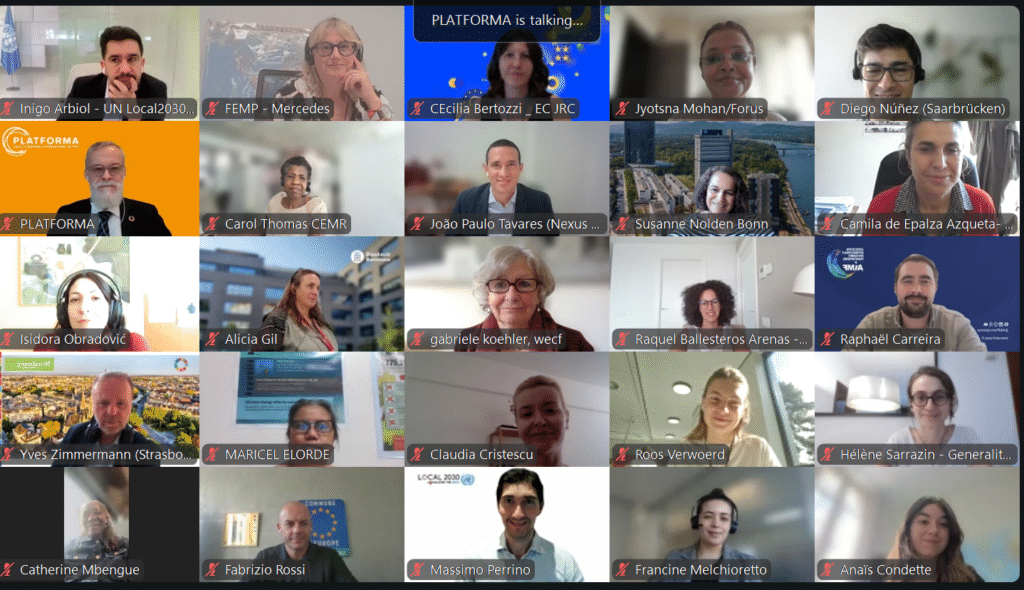
On 5 October, CEMR and PLATFORMA brought together almost 100 participants from over 50 countries for a public webinar on the future of the global sustainable development framework beyond 2030. The discussion gathered voices from research, civil society, women’s organisations and local government to answer one question: how can territories really be at the heart of the post-2030 framework?
Eleven years after the adoption of the Sustainable Development Goals (SDGs), many targets remain off track. The webinar, which followed CEMR spokespersons’ debate in June, examined lessons from SDG implementation and emerging challenges, from climate risks to technological disruption and geopolitical tensions, that will shape the next agenda.
Opening the meeting, Fabrizio Rossi, CEMR Secretary General, stressed that the SDGs remain the world’s most important shared political framework, but that implementation will only succeed if it is localised. Local and regional governments are not merely implementers of global agendas: they are political actors that turn commitments into services, investments and policies, and must be recognised as strategic partners and co-architects of the next agenda. He also called for better local data to anticipate risks, and for gender equality to move from commitment to leadership.
“The SDGs remain the world’s most important shared political framework, but implementation will only succeed if it is localised.
The local and regional governments should be part of the discussions; they should be at the table, not solely the implementers.” – Fabrizio Rossi
Four possible scenarios after 2030
Axel Berger, Deputy Director of the German Institute of Development and Sustainability (IDOS), opened the discussion with a keynote on a global sustainability agenda beyond 2030. He recalled that the SDGs have delivered real progress: 92% of the world’s population now has access to electricity, 74% of people were online in 2025 (up from 40% in 2015), and 134 countries have already met the target on under-5 child mortality.
Yet an implementation gap remains, driven by successive shocks and conflicts, a financing gap of around $4 trillion a year in developing countries, a weak implementation architecture, and eroding political ownership and trust.
“The debate should move from the number of goals to purpose and delivery, with resilience, new alliances and a role for subnational actors.”
Berger stressed that negotiations on a successor agenda will take place in a harder context than in 2015, marked by multipolarity, low trust and overlapping crises, which makes an inclusive and trust-building process even more important.
“At the moment, we are putting an emphasis on issues like competitiveness and security, and the SDGs in the Agenda 2030 falls to the wayside.”
Berger presented four possible paths: continuing the SDGs, extending them with new goals, reducing the number of goals, or building a new vision focused on delivery, resilience and new alliances, including the role of subnational actors. With the SDG Summit in September 2027 meant to launch the process, he called for negotiations that are inclusive, transparent, science-based and learning-oriented.
“Beyond pushing forward on SDG implementation, what we urgently need to do between now and September 2027 – and well beyond – is to build progressive alliances with like-minded nations and stakeholders.” – Axel Berger
Perspectives from civil society, research and women’s organisations
Jyotsna Mohan Singh, Advocacy Officer at Forus International, a network representing more than 24,000 civil society organisations, argued that putting territories at the heart means shifting power, resources and decision-making closer to people, not only localising implementation. She underlined the complementary roles of local governments, civil society and communities, including civil society’s independent accountability role, and presented Voluntary Local Reviews as a way to connect local evidence to budgets, national reviews and global accountability.
“Putting territories at the heart of the post-2030 framework should not mean simply asking territories to do more. It should mean giving territories, and the people within them, a greater voice, greater resources and greater influence over the decisions that affect their lives.”
“Local governments are not simply the last mile of implementation. They are important governance actors, with knowledge of what works, what does not work, and what people actually need.” – Dr Jyotsna Mohan Singh
João Tavares, Co-Founder and CEO of Nexus Governance, presented an analysis of 474 Voluntary Local Reviews from 359 cities in 72 countries. He pointed out that the local reviews are becoming more candid: challenges rose from 11% to 29% of reported items between 2017 and 2025. Cities name financing, institutional capacity and coordination across government tiers as their main barriers. In Europe, 45% of commitments are concrete, compared with 50% worldwide.
“Cities have already written the evidence. What we have done is make it countable: 474 local reviews, from 359 cities in 72 countries.”
“Local reviews are becoming more honest. Challenges have gone from 11% to 29% of what cities report, led by the most vulnerable territories.” – Joao Tavares
Gabriele Köhler, Board Member of Women Engage for a Common Future (WECF), warned of a global retrogression on women’s rights, with austerity and militarisation displacing social spending. She highlighted the intersecting inequalities and structural barriers, such as unequal access to resources and time poverty, that limit women’s representation and leadership. She also called for building CEDAW and Universal Periodic Review recommendations into SDG 5 accountability in a post-2030 framework.
“We need to look at the really disaggregated level to see what is happening to women and girls from disadvantaged communities, which can be anything from where they are located to their citizenship, sexual orientation, gender identity, or ethnicity.”
“I think that beyond 2030, what we really need to think about is binding accountability.” – Gabriele Köhler
The meeting was also joined by CEMR spokesperson on SDGs, Carola Gunnarsson, the Councillor of Sala Municipality and the Swedish Association of Local Authorities and Regions (SALAR).
“Trust is perhaps the most important resource we have for managing transformation.”
“If we can strengthen those partnerships and keep people at the centre of decision making, then local and regional governments will not only implement future global goals, but they will also help shape it being them.” – Carola Gunnarsson
Four key asks from local and regional governments
Closing the webinar, Boris Tonhauser, Director of PLATFORMA, stressed that the question is no longer whether territories matter for sustainable development, but whether the next framework will empower them to help shape decisions, not just implement them. He recalled the key asks that will structure the CEMR-PLATFORMA position:
Put multilevel governance into practice, giving local and regional governments a defined role in shaping, implementing and reviewing the future framework
Reflect the interconnections of today’s challenges, addressing climate, inequality, demographic change, digital transformation and peace and security in an integrated way
Match ambitions with means of implementation, ensuring access to finance, capacities, data and knowledge
Strengthen international and decentralised cooperation, recognising the contribution of local governments to global sustainable development
“The question is no longer whether territories matter for sustainable development. The real challenge is whether the post-2030 framework will empower local and regional governments to help shape decisions, not just implement them.”
“If sustainable development happens in territories, then territories must have a seat at the decision-making table. This means moving from a model of consultation to a model of genuine co-creation and shared governance.” – Boris Tonhauser
While DDC Report #1 presented a general overview of reported decentralised development cooperation (DDC), this second report digs deeper into the opportunities and challenges shaping decentralised cooperation and looks at the results that DDC partnerships aim to achieve. It also showcases a selection of DDC projects, offering illustrative examples of what effective partnerships and activities look like in practice.
Where does Europe stand when it comes to DDC?
The second DDC Report highlights:
Funding drives engagement, but limited capacities hold it back. Available funding and linguistic, cultural or historical ties (both 56.75%) are the top drivers of involvement in DDC. Yet, limited capacities (78.37%) and limited or inconsistent funding opportunities (54. 05%) appear as the biggest challenge for scaling up.
Similar goals in focus. Respondents most frequently selected the following three results that their DDC partnerships aim to achieve in both partner and home territories: empowering local leaders and stakeholders, improving local public services, and strengthening local governance. Which one takes priority, though, differs depending on the territory in focus.
A lasting commitment. The majority of respondents (78.38%) plan to continue cooperating with their DDC partners, pointing out that decentralised cooperation is seen as a long-term investment rather than a one-off exercise.
This report is part of a wider series of Mindcraft publications on decentralised development cooperation, including Country Profiles on DDC frameworks. You can find the rest of Mindcraft’s publications here.
CEMR encourages European and national authorities to strengthen the role of LRGs in development policy, not only as implementers, but also as strategic partners helping shape a more resilient, inclusive, and effective development agenda. This report is produced within the Bridging and Mapping Knowledge Gaps in Decentralised Cooperation (Mindcraft), funded by the German Federal Ministry for Economic Cooperation and Development (BMZ) and supported by the Deutsche Gesellschaft für Internationale Zusammenarbeit (GIZ).
Organised by the European Commission’s Directorate-General for Regional and Urban Policy and the European Committee of the Regions, the European Week of Regions and Cities is the biggest annual Brussels-based event during which cities and regions showcase their capacity to create growth and jobs, implement European Union Cohesion policy, and prove the importance of the local and regional level for good European governance.
If you are a CEMR member and plan to be in Brussels this week, please let us know by completing this form so we can contact you regarding visibility opportunities.
CEMR events taking place during the European Week of Regions and Cities (outside the official programme)
CEMR will organise, co-organise, or take part in several events during the Week, taking advantage of the presence of numerous local leaders in Brussels.
Strengthening the territorial dimension in the future EU Cohesion Policy
Date and time: 12 October 2026, 17:00 – 20:30 CEST
Venue: CEMR, Square de Meeûs 1, Brussels
Organisers: CEMR and the German Association for Housing, Urban and Spatial Development (DV), with the financial support of the German Federal Ministry for Housing, Urban Development and Building
This high-level Brussels event will bring together EU, national and local leaders to discuss the future of Cohesion Policy and its territorial dimension. It will focus on upcoming decisions on the EU budget and investment framework, while promoting balanced, place-based development across urban and rural areas and strengthening cooperation between key European stakeholders.
Making the freedom to stay a reality: The role of services of general interest in strengthening territorial cohesion
Date and time: 14 October 2026, 16:00 – 17:30 CEST
Venue: SQUARE Brussels Convention Centre (Mont des Arts), Brussels
Coorganised with SGI Europe and the Community of European Railway and Infrastructure Companies, this policy debate will explore how people can be supported to live and work in the places they call home. It will focus on the role of essential services such as housing, transport, energy and care in making regions more attractive and resilient.
The following speaker will contribute to the session:
Ethem Pekin – Head of Unit, Community of European Railway and Infrastructure Companies
Bouke Arends – Chair of the Netherlands delegation in the European Committee of the Regions and Mayor of Westland (NL)
Nicola De Michelis – Director, European Commission DG REGIO
Maria Elena Nevado Del Campo – MEP, REGI Committee
Local authorities and their associations are invited to join the Coalition for the Freedom to Stay Coalition for the Freedom to Stay to support the SGI Network’s effort to make the freedom to stay a core European objective.
Cohesion Alliance event
Date and time: 14 October 2026, 16:30 CEST
Venue: SQUARE Brussels Convention Centre (Mont des Arts), Brussels
The conference National and Regional Partnership Plans (NRP plans) with local and regional authorities at the centre: myth or reality? will be held on Wednesday 14 October 2026, from 16:00 to 17:30 at the European Committee of the Regions (Room JDE 52)
The Cohesion Alliance event will focus on the preparation phase of the NRP plans and discuss the extent to which local and regional authorities are being considered in the plans under development.
This event will be divided into 2 sessions:
First session: presentation of studies on the involvement of LRAs in NRP plans
Introduced by moderator (Martin Guillermo Ramírez, Secretary General of the European Association of European Border Regions)
Second session – Cohesion policy 2028-2034: debate with Cohesion Alliance partners
Building on the evidence presented on the planned involvement of local and regional authorities within the NRP plans for the 2028-2034 period – and bearing in mind the ongoing interinstitutional debate on the post-2027 multiannual financial framework and the National and Regional Partnership Plans Fund Regulation (NRPP) – this session will involve a political discussion among Cohesion Alliance partners and contributors from the floor.
The event meeting will be opened by the Committee of the Regions President, Kata Tutto, with the participation of:
Christoph SCHNAUDIGEL, President of the Council of European Municipalities and Regions (CEMR)
Joris BENGEVOORD, President of the Association of European Border Regions (AEBR)
Lilijana MADJAR, Vice-President of the Assembly of European Regions (AER)
Eugenio GIANI, Vice-President in charge of Cohesion Policy and the EU Budget, Conference of Peripheral Maritime Regions (CPMR)
The final words will be by Emil Boc and Vasco Alves Cordeiro, CoR NRPP co-rapporteur(s) (TBC)
The meeting is public and will be web streamed in EN/FR/IT/PL.
Bridges of Trust Annual Gathering
Date and time: 14 October 2026, 13:30 – 17:30 CEST
The fourth edition of the Bridges of Trust Annual Gathering will bring together partners from Local and Regional Government Associations, networks, partner organisations and EU institutions to exchange experiences, strengthen cooperation, and shape joint initiatives on international municipal cooperation between European and Ukrainian towns, cities and regions.
Bridges of Trust Award Ceremony
Date and time: 14 October 2026, 18:00 – 22:30 CEST
Venue: Les Ateliers des Tanneurs, Rue des Tanneurs 60A, Brussels
By invitation only
The Bridges of Trust Partnerships Award Ceremony will recognise five leading EU–Ukraine municipal partnerships as “Bridges of Trust Ambassadors” to celebrate their contribution to recovery, resilience, and EU integration at the local level.
EU Covenant of Mayors Ceremony
Date and time: 15 October 2026, 9:00 – 15:30 CEST
Venue: Charlemagne Building, Rue de la Loi 170, Brussels
Organiser: Covenant of Mayors for Climate and Energy Europe
From high-level political dialogue to practical workshops and peer exchanges, the Ceremony will bring together hundreds of local and regional leaders from across Europe alongside high-level representatives of the European Commission and other key stakeholders to discuss how local action is central to achieving European objectives.
Day 1 – From climate ambition to green competitiveness, what does the evolving EU agenda mean for local and regional governments?
Thursday 15 October | 16:00-17:45 CEST | Open event – In person at CEMR office
Panel discussion with CEMR spokespersons and external speakers, audience exchange and short “Territorial Spotlights” from members showcasing concrete local and regional practices of connecting competitiveness to territorial green policies, including climate adaptation, energy, circular economy, decarbonisation and clean mobility.
Day 2 – Defining CEMR green priorities for 2027
Friday 16 October | 10:00–13:00 CEST | CEMR members only meeting – In person at CEMR office & online
The second day will focus on CEMR’s internal work and priorities for the year ahead. Spokespersons and Expert Group Chairs will provide brief updates on key policy developments, ongoing CEMR activities, and expected priorities for 2027.
Are you organising an event during the European Week of Regions and Cities 2026?
CEMR members and partner associations are invited to share details of their own events taking place during the Week by completing this form, so we can help promote them and coordinate the wider CEMR agenda for the Week.
PLATFORMA is looking for a Policy Adviser to join its Brussels-based team.
About the role
As a Policy Adviser you will be responsible for monitoring of policy and legislative developments in the field of EU external action (financing instrument NDICI – Global Europe and its programming and implementation, including the EU Global Gateway strategy, territorial approach to local development, EU-AU / EU-CELAC relations, aid effectiveness, innovative financing) and advocacy towards EU institutions to include the role of and the opportunities for local and regional governments. You will also be responsible for monitoring project partners’ activities. You will report directly to the Director of PLATFORMA.
Profile
Candidates should have:
A master’s degree in international relations, political science, development studies or a related field.
At least four years of experience in policy, advocacy and project management related to development cooperation.
A solid understanding of the role as well as the functioning of local and regional governments in the field of international cooperation.
Fluent (written and oral skills) in English and another official EU language; a working knowledge of French is an asset.
An outstanding knowledge of the European Union policy-making and decision-making processes.
Availability to travel, if necessary, in Europe and/or internationally
Our offer
For this position, we offer an initial short-term contract, starting as soon as possible and ending on 31 December 2026, with a possibility to extend based on performance and funding available.
A competitive salary package (54k – 75k gross per year, depending on experience and background), including the 13th month of salary, legal and extra-legal holidays, a teleworking policy and teleworking allowance, holiday allowance (as per Belgian legal framework), lunch vouchers, eco-vouchers, medical insurance, and coverage of public transport.
How to apply
Interested candidates should send a CV and cover letter by 2 September 2026, at midnight, to:
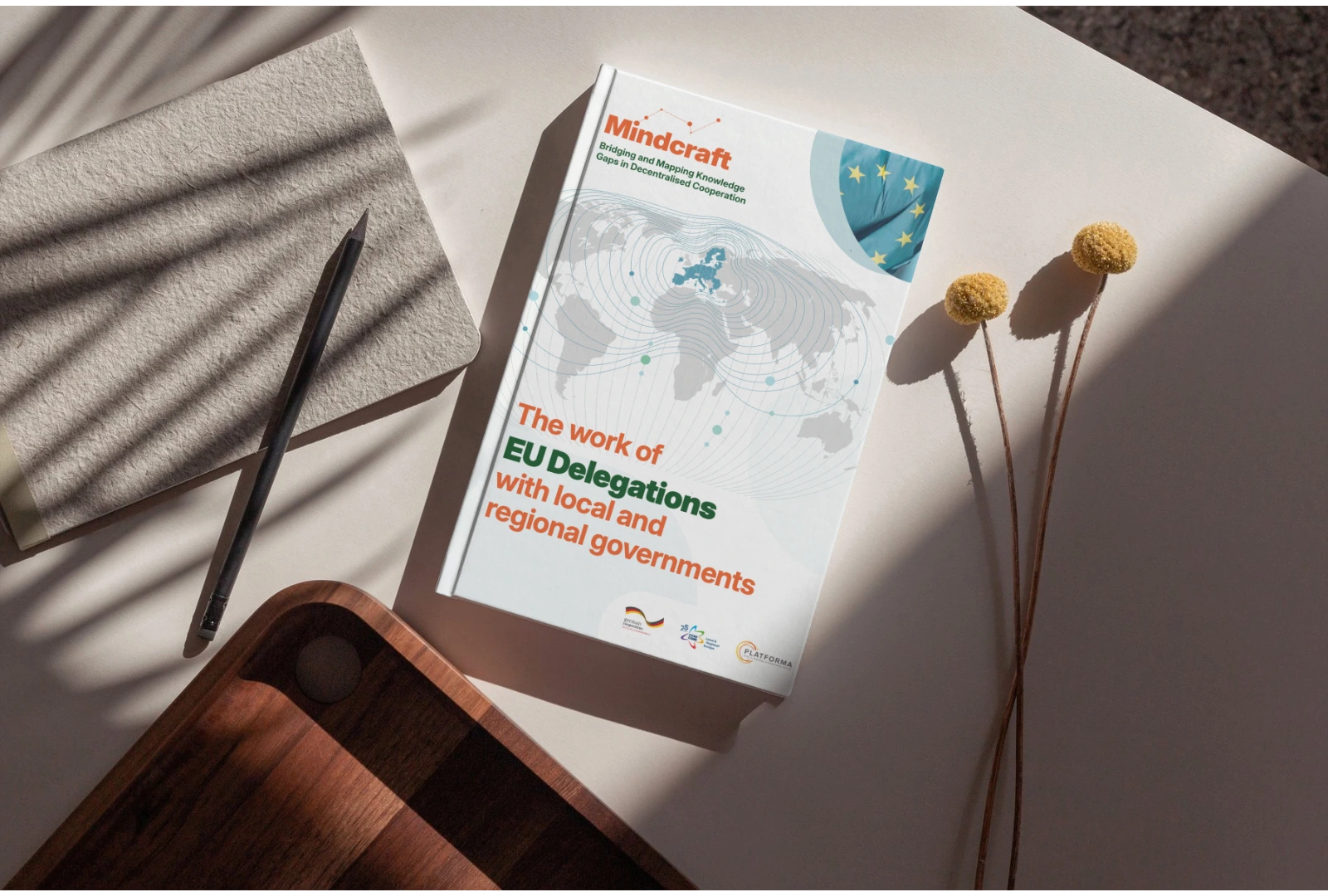
“The Work of EU Delegations with Local and Regional Governments” is a new Mindcraft publication, following on from the report published by PLATFORMA in 2021. Since 2021, the EU’s external action framework has undergone significant change. Under the Neighbourhood, Development and International Cooperation Instrument (NDICI) Global Europe and the Global Gateway strategy, EU international cooperation has moved towards a more geographic, investment-driven approach, with growing emphasis on the localisation of development cooperation.
This new study examines to what extent and how EU Delegations (EUDs) engage with Local and Regional Governments (LRGs) and their associations (LRGAs) in the partner countries. It is based on a 2025 survey of 40 EUDs worldwide and, interviews with five of them in Chad, Guatemala, Madagascar, Nepal and Zambia, as well as additional exchanges with EU Member States development cooperation agencies.
Key findings:
Enabling environment is key for LRG engagement. 62.5% of surveyed EUDs assessed the decentralisation in the partner country as favourable, and 57.5% support decentralisation efforts. Examples across partner countries show that support to local governance and public finance management helps LRGs engage in territorial development and EU-funded initiatives, though access to finance and the preparation of bankable projects remain persistent challenges.
LRG engagement in EU international cooperation remains uneven and rather limited. 57.5% of surveyed EUDs stated they engage with LRGs and LRGAs under the NDICI-Global Europe, while 20% stated they engage with them under the Global Gateway strategy. EUDs point to the lack of a right framework for structured cooperation as an obstacle. 69.2% consider that a specific budget line for LRGs would help.
LRG engagement can be valuable in fragile contexts. Among EUDs working in fragile settings, 76.4% consider that engaging with LRG would facilitate their work.
Decentralised cooperation remains generally underused. Illustrative examples of partnerships between European and partner-country LRGs, along with cooperation through LRGAs and their international cooperation structures, show real potential to strengthen local governance and support the localisation of EU initiatives but require greater visibility and emphasis.
There is an ongoing need to strengthen EUDs capacities to work with LRGs. Only 30% of surveyed EUDs reported having received specialised training or support for engaging with LRGs, which were assessed useful for understanding territorial approaches to local development.
These findings come at a timely moment, as negotiations on the 2028–2034 Multiannual Financial Framework, including its proposed Global Europe Instrument, are underway. CEMR-PLATFORMA calls for a clear engagement framework, dedicated funding mechanisms for LRGs, and stronger support for decentralised cooperation as a route to shared development goals.
The future of the 2030 Agenda should be local, or it won’t be
1,701 words
7–11 minutes
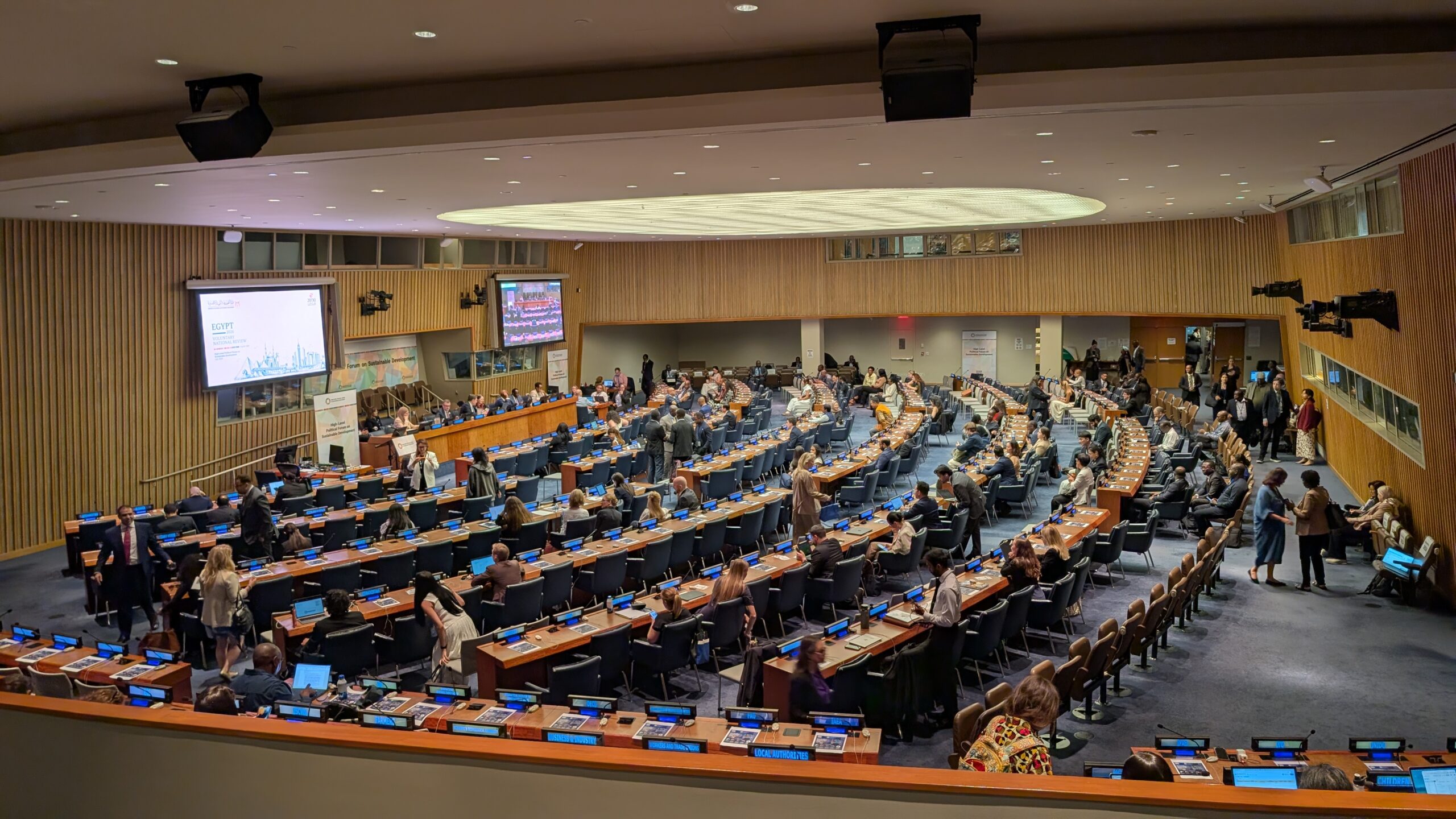
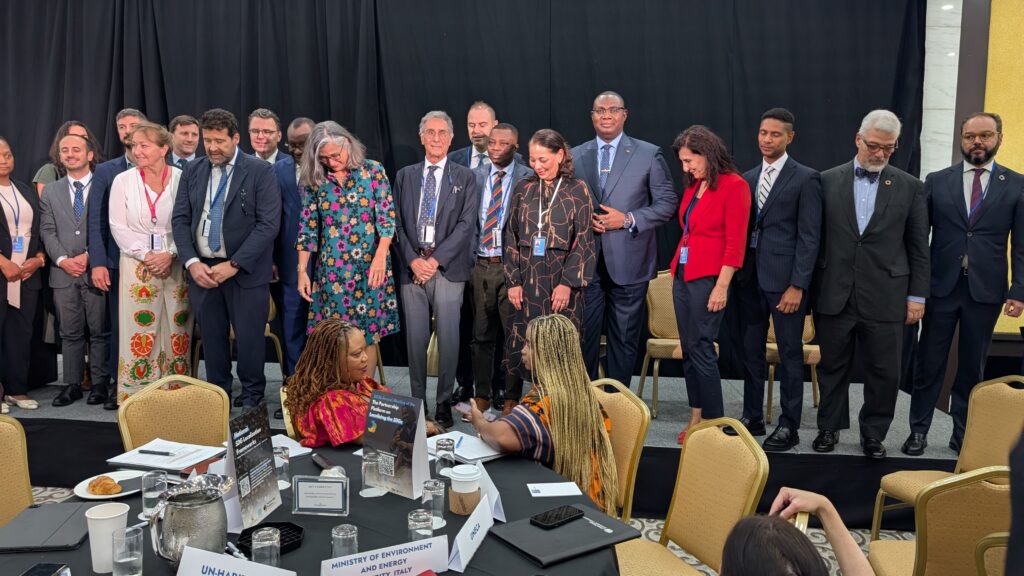
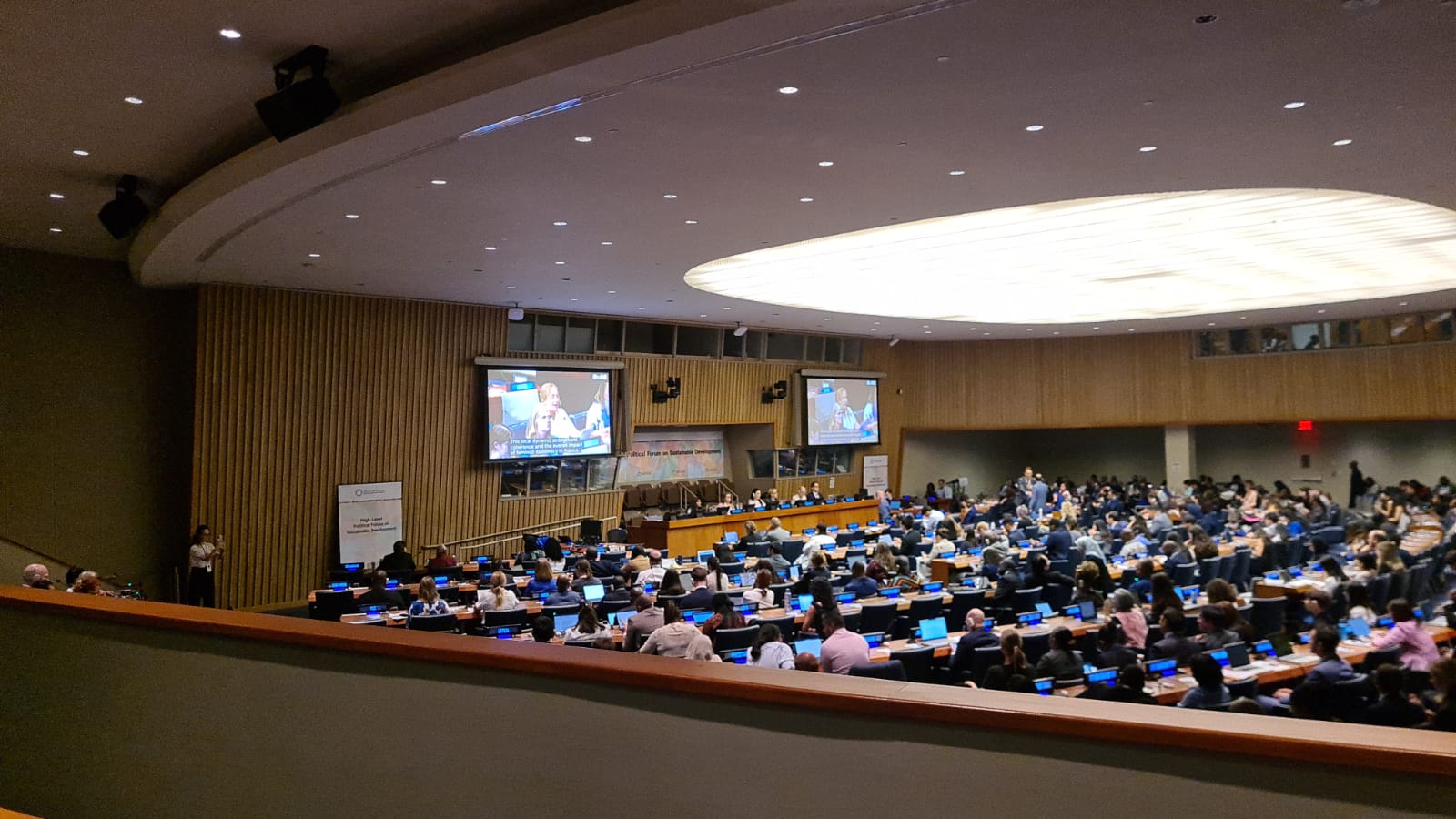
More than 15 European mayors and local leaders dominated the stage this week in New York. They run from one session to another at the UN High-Level Political Forum (HLPF) on Sustainable Development to defend the role of towns, cities and regions in delivering the 2030 Agenda and helping define what comes next. Through various events, mostly co-organised by the Global Task Force of Local and Regional Governments led by UCLG, European local leaders took the floor more than 50 times.
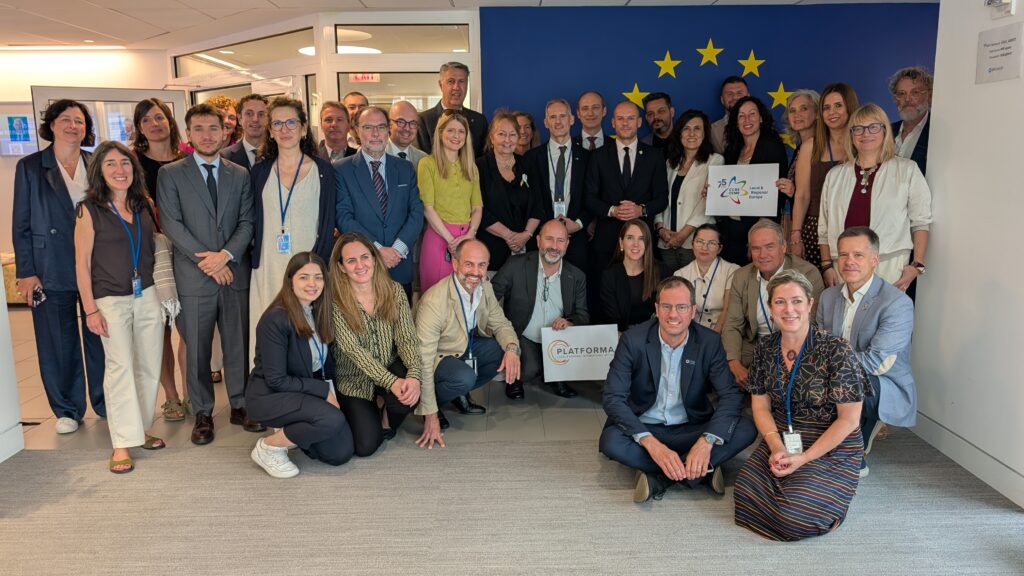
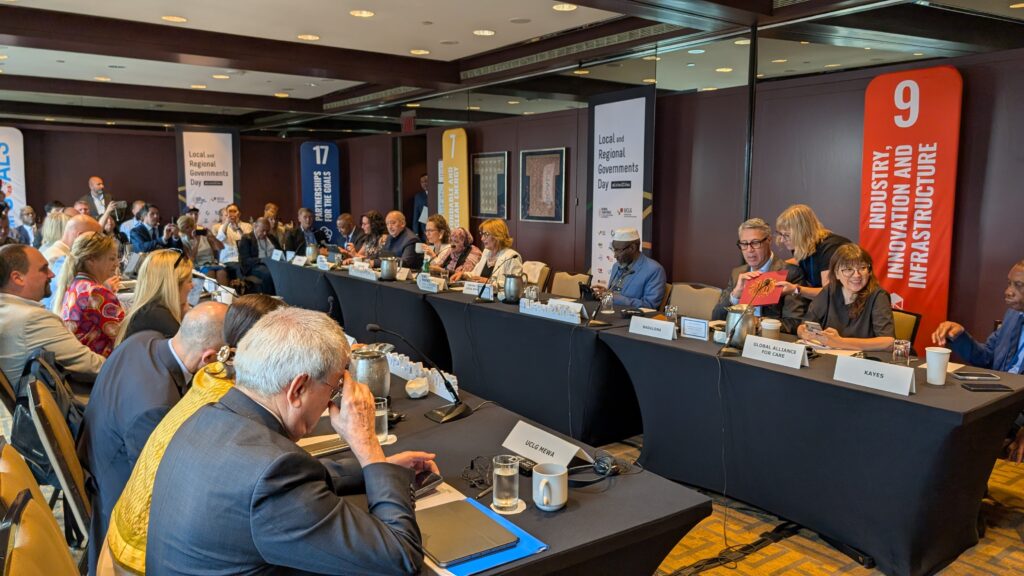
With only four years to go until 2030, the clock is ticking to implement as much as possible the Sustainable Development Goals (SDGs), but also to shape their future. During the UN-proofed Local and Regional Governments Forum, but also the Global Task Force Local and Regional Governments Day, and the CEMR-PLATFORMA meeting with the EU Delegation in New York, mayors and local leaders gave examples and ideas on how to implement the 2030 Agenda from the ground. They all asked the United Nations (UN) to deepen local and regional governments’ engagement, stressing that SDG 11 (Sustainable Cities and Communities), among many others, cannot be delivered without empowering towns, cities and regions.
Even if the Local and Regional Governments Forum is officially recognised as being part of HLPF, towns, cities and regions are absent from the final conclusions of the ECOSOC (UN’s Economic and Social Council, a platform to advance the economic, social and environmental dimension of sustainable development), responsible for the organisation of HLPF. However, the numerous UN officials who attended the various sessions all recognised the key role of local and regional governments in achieving the SDGs and defining their future shape.
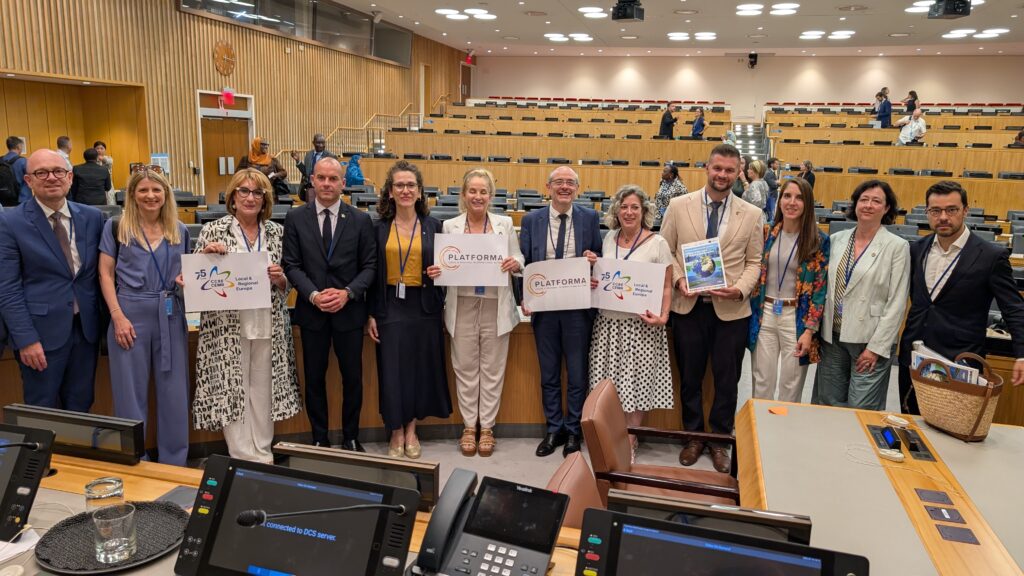
High-Level Policy Forum – CEMR and PLATFORMA, New York 2026
The voice of European local leaders at the United Nations
The future is local
Wim Dries, Mayor of Genk (Belgium), Association of Flemish Cities and Municipalities (VVSG): “Local and regional governments are often invited only after decisions have already been made. We need a stronger role in decision-making, adequate financing, and better coordination. We connect SDGs to budgets. The SDGs will be local or they won’t be.”
Antoine Le Solleuz, Deputy Mayor of Nancy (France), AFCCRE and Cités Unies France: “For me, SDG17 (Partnerships for the goals) is not the last SDG, it’s in fact the first one. We need real commitments to meet the SDGs by 2030. We call on the UN to recognise networks of cities and regions as partners, especially in areas such as the climate crises, to strengthen multilateralism.”
Xavier García Albiol, Mayor of Badalona (Spain), Spanish Federation of Municipalities and Provinces (FEMP): “As we look beyond the 2030 Agenda, we must build on what works. SDG localisation delivers results, but we need stronger financing, partnerships, and empowered governments at the heart of implementation.”
“Housing must be at the centre of the future post 2030 Agenda. The challenge beyond 2030 will depend on how well we deliver on the commitments we have already made. Rather than setting new goals, we need to focus on the areas where implementation is still falling short and where the response has not been sufficient. The years after 2030 will be decisive in turning these commitments into tangible benefits that citizens can clearly see and experience.”
Local leaders in New York for the High-Level Policy Forum 2026
María del Mar Vázquez, Mayor of Almería (Spain), Andalusian Fund of Municipalities for International Solidarity (FAMSI): “We have developed a local plan to localise the 2030 Agenda, with over 70% achieved so far. To face our challenges, we need: real multilevel governance, financing, and stronger cooperation between different spheres of governance.”
Barbara Meyer, Mayor of the City of Saarbrücken, German Association of Cities (DST): “Cities are responsible for more than a third of the Sustainable Development Goals (SDGs). That is why cities should be the focus of the era beyond 2030.”
Eckart Würzner, Mayor of Heidelberg (Germany), Association of German Cities (DST): “We need a step forward: empowering local governments through local development banks and stronger funding mechanisms. We see more and more discussions and support from finance ministers and development banks towards local and regional governments. It is time to ensure this happens. SDG 11 should be at the centre of the future SDGs. If you focus on city diplomacy, you can be the game changer.”
Gunn Marit Helgesen, President of the Congress of Local and Regional Authorities and President of the Norwegian Association of Local & Regional Authorities (KS): “The SDGs won’t be achieved in conference rooms. They will happen within local communities.”
Quality public services and adequate funding
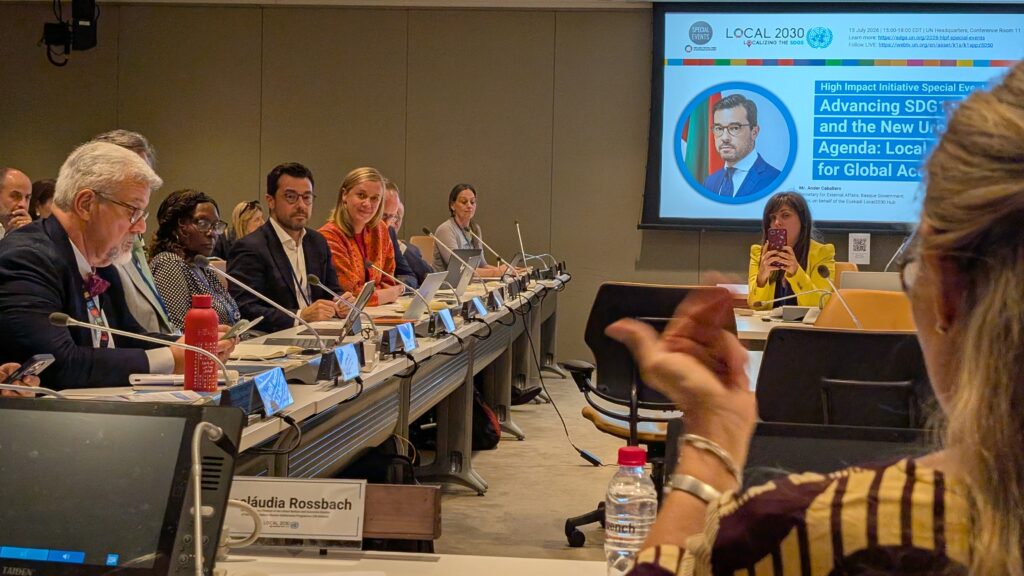
Local 2030 meeting – High-Level Policy Forum in New York 2026
Jordi Castellana, Vice President of the Barcelona Metropolitan Area, Spain: “Quality public services are how people experience the SDGs. Metropolitan governments need stronger multilevel cooperation and direct access to finance to deliver local change.”
Clare Hart, Vice-President of Montpellier metropole (France), Cités Unies France: “Infrastructure alone is never enough. Sustainable public services require strong local governance, skilled public institutions and trust —and maybe even caring— between our partners. This is why investing in territorial cooperation is also investing in the achievement of the Sustainable Development Goals.”
Marek Hudak, Member of the City of Bardejov and Member of Presov Regional Council (Slovakia), Member of CEMR Young Elected Officials Committee (YEOC), Association of Towns and Communities of Slovakia (ZMOS): “Looking beyond 2030, our cities and regions face major challenges. From a Slovak perspective, strengthening decentralisation – with adequate funding, competences and responsibilities – it is essential, especially in the context of the future Cohesion Policy and the next EU budget. At the same time, innovation will be key to keeping our regions competitive and ensuring that young people can build their futures in the places they call home.”
Stronger partnerships
High-Level Policy Forum debate in New York 2026
Ander Caballero, Secretary General for External Action, Basque Government, Spain: “Major global challenges also require responses at the regional and local levels. Systemic challenges cannot be solved in silos. Strong partnerships across all levels of government, academia and communities are essential, because how we work together is just as important as what we achieve.”
Rosanna Laconi, Regional Minister of the Autonomous Region of Sardinia (Italy): “Strong partnerships, robust evaluation and inclusive governance are key to scaling local action and delivering lasting impact.”
Clare Hart, Vice-President of Montpellier Métropole (France), Cités Unies France: “It is equally important that local governments have a voice and a seat at the table here at the United Nations, a highly symbolic place where local voices are finally being heard and where we can contribute directly to shaping our future. Let’s be optimistic about the future, with cities fully engaged as partners in delivering sustainable development for all.”
“We have the imminent end of the 2030 Agenda for the SDGs, and we are not strictly on track. Local governments are responsible for delivering 70–80% of the SDGs, which makes supporting them essential to advancing the SDGs agenda. Sharing ideas is key to accelerating progress and strengthening collaboration.”
Eider Inuntziaga, Councillor for Citizen Attention and Participation, the 2030 Agenda and International Relations and Euskera, Bilbao City Council (Spain): “Localisation is a method. Our strategy embeds the SDGs in our daily work, with a methodology focused on a transformative agenda, action plans to involve communities and developing capacities. The post 2030 Agenda has to go one step ahead.”
Bärbel Kofler, Parliamentary State Secretary to the Federal Minister for Economic Cooperation and Development, Germany: “Localising the SDGs means equipping municipalities with the resources they need to deliver. Through peer learning & partnerships like the Local 2030 Coalition, cities are driving innovation.”
The UN still needs to walk the talk
CEMR and PLATFORMA in New York for the High-Level Policy Forum 2026
Anacláudia Rossbach, Under-Secretary-General and Executive Director of the United Nations Human Settlements Programme (UNHABITAT): “Localising the SDGs is the only way to close the implementation gap. Through the Local2030 Coalition, we are working together to support cities and local governments with the tools, partnerships, and platforms they need.”
Koldo Casla, UN Special Rapporteur on the Right to Adequate Housing: “The right to housing is realised locally. From social and public housing to rent control and land policies, local and regional governments play a central role in protecting human rights & ensuring no one is left behind.”
Sarah Lister, Global Director for Governance, Rule of Law and Peacebuilding, UNDP: “The last five years of the 2030 Agenda demand stronger collaboration across all levels of government. Empowering local governments while reinforcing national-local partnerships will be essential to accelerate progress on the SDGs.”
Dario Liguti, Director, Energy, Housing & Land Management Division, United Nations Economic Commission for Europe (UNECE): “Local and regional governments need to be involved from the outsets in implementing solutions. The Global Taskforce of Local and Regional Governments makes this possible by bringing the organised voices of LRGs to the steering committee of Local 2030″
Amina Mohammed, UN Deputy Secretary-General: “SDGs must be built with local actors. The UN Secretary General’s Report sets out how the UN needs to work. The role of local and regional governments needs to be embedded in how we plan, finance and deliver. Let this Forum be a catalyst for shared solutions”
Lok Bahadur Thapa, President of the UN Economic and Social Council (UNECOSOC): “We need to strengthen local actions through Voluntary Local Reviews, to reinforce the value of local acceleration of the 2030 Agenda. The next phase needs to be defined by delivery, measurable actions, strong partnerships and local action.”
“The next phase of SDG implementation must be defined by delivery – moving from commitments to measurable action, strengthening partnerships across all levels of government, and ensuring solutions reach the communities where they are needed most. The success of the 2030 Agenda will ultimately be measured not by the ambitions we express, but by the realities people experience in their daily lives. That is why local leadership is indispensable.”
To strengthen the role of local and regional governments in the 2030 Agenda and the post‑2030 framework, CEMR and PLATFORMA, together with UCLG, will continue working closely with local leaders and with actors across the multilateral system. They will also keep producing knowledge, including reports like the one presented this year at the HLPF (European Territories Localise the SDGs), which shows how essential towns, cities and regions are to delivering the SDGs.
With less than four years remaining to achieve the 2030 Agenda, a new CEMR–PLATFORMA report highlights a clear message from local and regional governments across Europe: sustainable development will only succeed if cities, towns and regions are placed at the centre of decision-making, financing and implementation.
Published by the Council of European Municipalities and Regions (CEMR) and PLATFORMA at the occasion of the High-Level Political Forum on Sustainable Development (HLPF), the 2026 edition of the report European territories localise the SDGs: Cities at the core of the implementation examines how local and regional governments are contributing to the Sustainable Development Goals (SDGs) and what is needed to accelerate progress during the final stretch to 2030.
The study is based on a survey of 23 respondents from 17 countries, including associations of local and regional governments from 15 EU Member States and two non-EU countries.
Local action is essential for global goals
The report comes at a pivotal moment. As both the UN New Urban Agenda and the Urban Agenda for the EU reach their tenth anniversary, local and regional governments are reaffirming their indispensable role in translating global ambitions into concrete results on the ground.
From mobility and housing to climate resilience and social inclusion, towns, cities and regions are responsible for many of the policies that directly affect residents’ daily lives. According to the report, SDG implementation is not primarily a technical matter but a political one, requiring trust, resources and authority to be devolved to the territorial level.
The publication places particular emphasis on SDG 11 – Sustainable Cities and Communities, one of the goals under review at the 2026 HLPF. It argues that sustainable urban development cannot be achieved without strong local democracy, effective multi-level governance and meaningful involvement of subnational authorities in national and international decision-making processes.
Six recommendations to accelerate SDG implementation
Drawing on the experience of local and regional governments, the report puts forward six recommendations addressed to the United Nations, the European Union and national governments.
Among its key messages, the study calls for:
Reinforcing multi-level governance as a political priority for the 2026–2030 period.
Placing the subnational level at the centre of SDG implementation, including stronger participation of local and regional governments in global review processes and improved access to development finance.
Reaffirming the importance of the UN New Urban Agenda as the main global framework for sustainable urbanisation.
Ensuring that cities and towns remain central to Europe’s sustainable development agenda through stronger alignment between EU and UN urban policy frameworks.
Recognising the role of territories in the upcoming EU Multiannual Financial Framework 2028–2034, with more accessible and place-based funding for municipalities and regions.
Accelerating the localisation of the SDGs by fully involving local and regional governments in the design and implementation of sustainable development policies.
A contribution to the global SDG debate
Beyond policy recommendations, the report showcases good practices from across Europe and explores how local and regional governments are advancing the goals under review in 2026 (SDG 6 – Clean Water and Sanitation, SDG 7 – Affordable and Clean Energy), SDG 9 – Industry, Innovation, and Infrastructure, and SDG 17 – Partnerships for the Goals). It also includes a dedicated focus on housing and the outcomes of discussions linked to the World Urban Forum, reflecting growing concerns about affordability, inclusion and sustainable urban growth.
As the international community approaches the final years of the 2030 Agenda, the report sends a strong and consistent message: the SDGs will be achieved — or missed — at the local level. Empowering towns, cities and regions with the necessary political mandate, resources and partnerships is therefore not optional, but essential.
Sustainable Development Goals – European local leaders at the UN table
A delegation of more than 15 European local leaders is heading to New York next week for the High-Level Political Forum on Sustainable Development (HLPF) organised by the United Nations. There, thanks to the coordination of the Global Task Force of Local and Regional Governments (GTF) led by UCLG,they will take the floor at several high-level events to defend the key role of towns, cities and regions in localising the 2030 Agenda, but also designing its future shape. This includes, among others, the UN Habitat and Local2030 coalition annual event (14 July), UCLG Local and Regional Government Day (15 July) and CEMR-PLATFORMA breakfast meeting at the EU Delegation (16 July).
Under the theme “Transformative, equitable, innovative and coordinated actions for the 2030 Agenda for Sustainable Development and its Sustainable Development Goals (SDGs) for a sustainable future for all”, this year HLPF will concentrate on the review of a crucial goal for local and regional governments: SDG 11 (Sustainable Cities and Communities). It will also focus on SDG 6 (Clean Water and Sanitation), SDG 7 (Affordable and Clean Energy), SDG 9 (Industry, Innovation, and Infrastructure), and SDG 17 (Partnerships for the Goals), where local and regional governments play a key role.
Mayors and councillors will present the CEMR-PLATFORMA annual study: European Territories Localise the SDGs |Cities at the core of the implementation. With examples from 23 associations of local and regional governments, the report highlights concrete local actions supporting the SDGs under review in 2026, while stressing the need for stronger multilevel governance, financing and partnerships to accelerate progress towards the 2030 Agenda.
A special focus on housing and territorial inequalities underlines that achieving sustainable development requires empowering towns, cities and regions, sharing good practices, and ensuring that no community is left behind.
A large delegation of European local leaders
Among CEMR members and PLATFORMA partners’ local leaders attending HLPF this year are:
Rosa del Amo, Third Deputy Mayor of the City of Badalona (Spain), Spanish Federation of Municipalities and Provinces (FEMP)
María del Mar Vázquez Agüero, Mayor of the City of Almeria (Spain), Andalusian Fund of Municipalities for International Solidarity (FAMSI)
Óscar Bleda, Councilor of the City of Almeria (Spain), Andalusian Fund of Municipalities for International Solidarity (FAMSI)
Wim Dries, Mayor of the City of Genk (Belgium), President of the Association of Flemish Cities and Municipalities (VVSG)
Xavier García Albiol, Mayor of the City of Badalona (Spain), Spanish Federation of Municipalities and Provinces (FEMP)
Clare Hart, Vice-President of Montpellier Méditerranée Métropole and President of the Crisis Group of Cités Unies France (CUF)
Gunn Marit Helgesen, President of the Council of Europe’s Congress of Local and Regional Authorities and President of the Norwegian Association of Local and Regional Authorities (KS)
Marek Hudak, Member of the City of Bardejov and Member of Presov Regional Council (Slovakia), Member of CEMR Young Elected Officials Committee (YEOC), Association of Towns and Communities of Slovakia (ZMOS)
Eider Inuntziaga, Councillor for Citizen Attention and Participation, the 2030 Agenda and International Relations and Euskara of the City of Bilbao (Spain), CEMR Spokesperson on Local Democracy, Relations and Euskera
Antoine Le Solleuz, Deputy Mayor of the City of Nancy, President of the Lebanon Country Group of Cités Unies France (CUF)
Michael Maas, Mayor of the City of Pirmasens, German Association of Cities (DST)
Barbara Meyer, Mayor of the City of Saarbrücken, German Association of Cities (DST)
Giorgos Papanastasiou, Mayor, City of Agrinio (Greece) and second Vice President of the Central Union of Municipalities of Greece (KEDE)
André Viola, President of the Aude Departmental Council (France), Cités Unies France (CUF)
Dirk Wurm, Mayor of the City of Augsburg, German Association of Cities (DST)
Eckart Würzner, Mayor of the City of Heidelberg, German Association of Cities (DST)
CEMR is launching a call for proposals for the design and production of the Bridges of Trust Partnerships Award 2026 trophies.
The Bridges of Trust community brings together Ukrainian towns and cities and their European counterparts, fostering cooperation, resilience, recovery, decentralisation and mutual learning. The Bridges of Trust Partnerships Award 2026 will recognise outstanding municipal partnerships and celebrate their contribution to Ukraine’s European integration journey.
To mark these achievements, CEMR will award five municipal partnerships as Bridges of Trust Ambassadors 2026 and is looking for a creative professional or organisation to design and produce the trophies presented during the award ceremony.
What are we looking for?
Artists
Designers
Craftspeople
Studios
Creative agencies
Other qualified professionals
The selected contractor will design and produce ten trophies (two per awarded partnership), inspired by the Bridges of Trust identity and symbolising the connection between partner municipalities.
The trophies should visually reflect the values of Partnership, European Ukrainian cooperation, solidarity and trust, and resilience and reconstruction.
How to apply
Applicants should submit:
A portfolio showcasing relevant work and experience
A short concept proposal
Visual references, sketches or mock-ups
A proposed timeline for design, production and delivery