Matchmaking Platform

CEMR launches a Matchmaking Platform for Twinning cooperation during the Leaders’ Summit in Karlsruhe


  • CEMR launches a new Matchmaking Platform to promote city-to-city cooperation and international partnerships during the Leaders’ Summit in Karlsruhe, Germany
  • The Bridges of Trust Community is launched in partnership between CEMR and U-Lead to foster new partnerships and support international municipal cooperation
  • The CEMR Leaders’ Summit gathered over 200 international leaders from across Europe, emphasising collaboration for sustainable and inclusive development

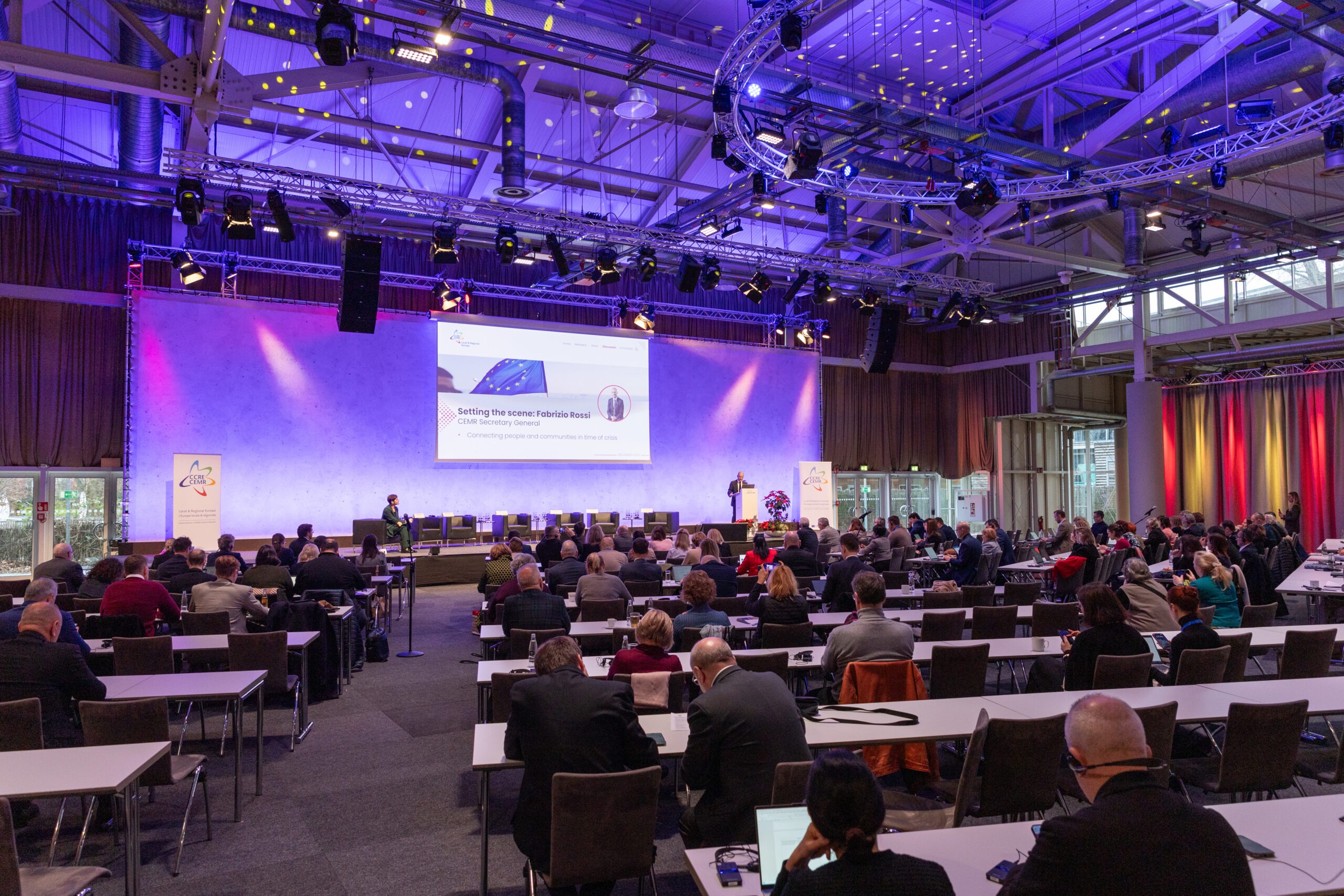
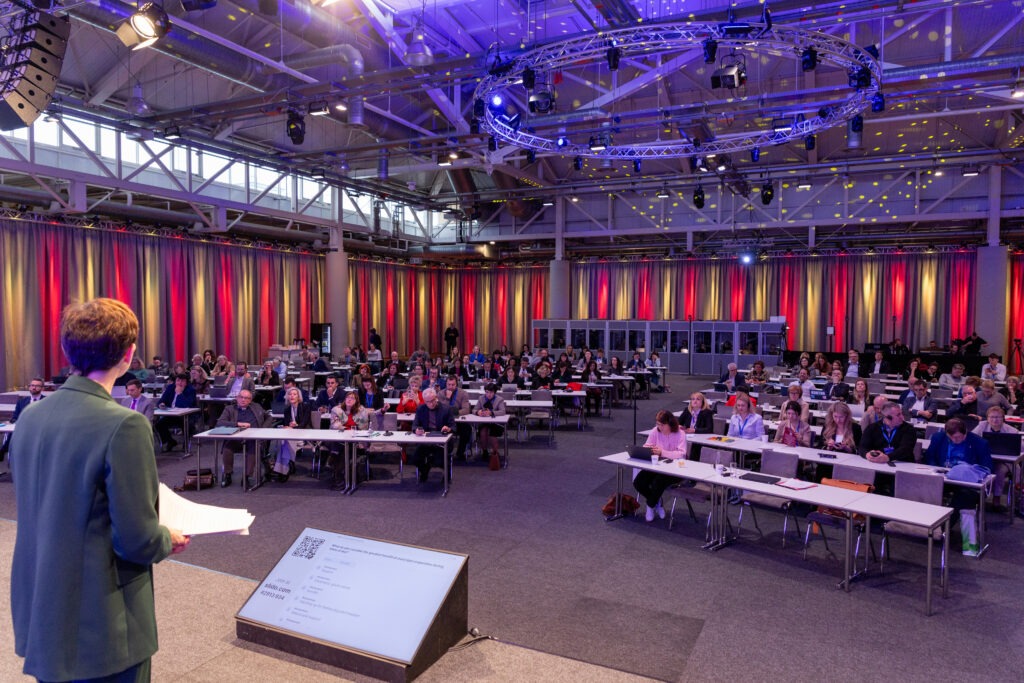
The Council of European Municipalities and Regions (CEMR) unveiled an innovative Matchmaking Platform to enhance city-to-city and local cooperation during its Leaders’ Summit in Karlsruhe. This high-profile event gathered over 200 international leaders, representing towns, regions, and cities from EU and Ukranian countries.

The platform, building on CEMR’s seven-decade legacy of town twinning, allows municipalities, cities, and regions to form partnerships sending a matching request to potential peers across Europe in just a few minutes.

First introduced at the Ukraine Recovery Conference in Berlin and now open to all local governments in Europe, the platform is also meant to strengthen partnerships with Ukrainian municipalities to secure its vital recovery support and advance through its integration into the EU.

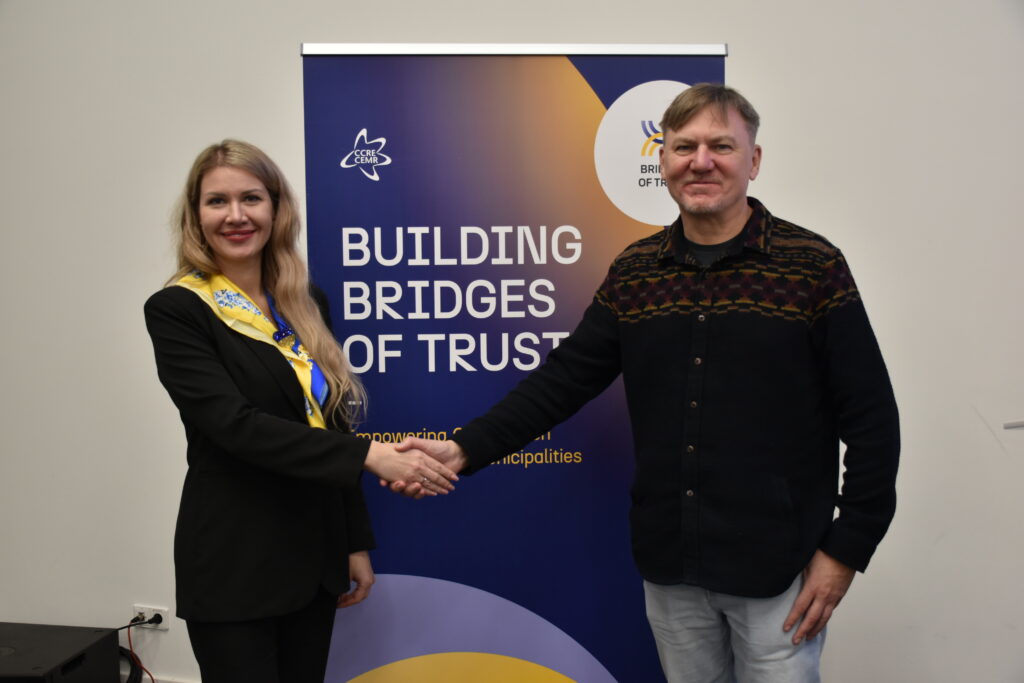
Building on its long-standing collaboration with Ukrainian local governments, CEMR in partnership with U-Lead with Europe have announced the creation of the Bridges of Trust Community. The project’s positive impact expanded beyond its initial scope, demonstrating the need for wider engagement and collaboration.

CEMR President Gunn Marit Helgesen underlined the Matchmaking Platform strategic importance: “Local leaders are at the forefront when it comes to adopting the acquis communautaire — the foundational laws of the EU. It is crucial to support them in this process to ensure it is carried out equitably, avoiding future disparities between urban and rural communities”.

Christoph Schnaudigel, CEMR Co-President, RGRE President and Mayor of Karlsruhe, highlighted: “City-to-city cooperation has already shown its power as a tool for post-war reconstruction, reconnecting people divided by war and cultural gaps, and fostering peace. Today, we are committed to putting our network at the service of every town in Europe, small or large, to connect, share experience, and work on their dream projects together.”

Stefano Poretti, Councillor of Arconate, Italy, a city twinned with the Ukranian city of Zlatopil, emphasized the Bridges of Trust impact: “In a time of growing geopolitical uncertainty, local governments remain steadfast in promoting cooperation and solidarity. Thanks to Bridges of Trust, we have exchanged knowledge and experiences that will leave a lasting mark on my political journey.”

Media opportunities:
Journalists can interview key participants, including mayors and local leaders, and explore the matchmaking platform in detail.

Register to the Platform – here

Twinning – REALISE 2024

Twinning REALISE - News 2024

CEMR Announces Grant Recipients for REALISE 2024 Twinning Programme


The Council of European Municipalities and Regions (CEMR) is pleased to announce the recipients of its grant scheme established under the REALISE project. Funded by the European Commission’s CERV programme, the initiative aims to bolster subnational government Twinning endeavours.

The grant scheme not only supports the promotion of Twinning arrangements but also empowers national associations to undertake related initiatives that address specific challenges. Proposals with merit are eligible for funding of up to €30,000.

CEMR expresses its delight in selecting the following Local and Regional Government Associations for the REALISE 2024 grant programme:

Twinning serves a leading role in fostering connections between Local and Regional Governments. This collaborative approach facilitates the tackling of a wide range of pressing issues, encompassing urban development, climate change, service improvement, social inclusion, and migration.

Additionally, Twinning initiatives promote peace and solidify European values and belonging.

Since its inception in 1951, CEMR has been an advocate for Twinning, recognising its potential to connect communities, cultivate mutual understanding, and drive collaborative efforts. Today, these programmes extend beyond cultural exchanges, encompassing the sharing of best practices and the joint development of solutions to shared challenges.

CEMR extends its sincere gratitude to all associations that participated and submitted compelling proposals. We encourage you to stay informed of forthcoming updates on these exciting projects.

Twinning

Project Proposals Twinning - News 2024

Call for Project Proposals


CEMR is excited to announce the launch of a call for project proposals to enhance Twinning activities among its member associations.

This initiative, part of the REALISE project funded by the European Commission, seeks to promote collaboration, share best practices, and address challenges faced by local and regional governments across Europe.

Read more and fill out the forms below:

EU Elections 2024

A call to action: Europe can only succeed together with municipalities


Christoph Schnaudigel, the Co-President of the German Association of Counties and CEMR (RGRE), Vice-President of the German Section of CEMR (RGRE), and President of the County of Karlsruhe, presents a compelling call to action for the upcoming tenth direct elections to the European Parliament scheduled for June 6 to 9, 2024. Highlighting the crucial role of Europe’s municipalities, Dr. Schnaudigel emphasises the need for collaboration between local authorities and European institutions to effectively address the complex challenges facing the European Union. Touching upon issues such as Russia’s aggression, energy and migration crises, and municipal finances, Dr. Schnaudigel l underscores the significance of local governments in implementing and influencing European policies. Dr. Schnaudigel also calls for a more streamlined and less burdensome regulatory environment, ensuring that European legislation aligns with the needs and capacities of local and regional authorities. Additionally, the editorial addresses the importance of a meaningful regional policy, highlighting the necessity for funds to be allocated based on local needs and emphasising the partnership principle.

A call to action: Europe only together with the municipalities

The tenth direct elections to the European Parliament, which will take place from June 6 to 9, 2024, will also be of great importance for Europe’s municipalities. The European Union (EU) and the world continue to face profound challenges to which national governments alone cannot respond adequately. The effects of Russia’s war of aggression against Ukraine, the energy and migration crises and the pressure on municipal finances are coming up against far-reaching economic and social transformations such as the Green Deal and digitalization.
In order to proactively address these challenges, the Council of European Municipalities and Regions (CEMR) adopted a “Call for Action” at its General Assembly in Prague in December 2023. This formulates demands for a successful municipal European policy, addressed to European institutions, candidates and new members of the European Parliament.
As the most comprehensive European association of local and regional authorities, CEMR has been bringing together one million democratically elected European politicians from 60 member associations in 40 countries since 1951. Its mission is to build a united, peaceful and democratic Europe, based on local self-government, the principle of subsidiarity and the appropriate participation of citizens.
More participation in European decision-making processes: Better regulation for and with local authorities
Local authorities are important public economic, societal and political actors, they are responsible for the development and maintenance of local infrastructure, healthcare, waste disposal and local public transport. In doing so, they directly apply the European regulations on public procurement and state aid law.
However, local authorities are not only responsible for providing important public services. They and their representative associations also build a bridge between Europe and its citizens. On the one hand, they help the inhabitants of counties, cities and municipalities to understand the importance of the EU for their daily lives, and on the other hand, they communicate and convey local interests and needs to the EU and other international decision-makers.

As a result of their responsibilities, local authorities are confronted with a large number of EU initiatives. This currently applies in particular to the European Green Deal. Climate, energy and the environment are areas in which the European legislator has been very active in recent years and still is. However, the successful implementation of a climate-neutral future depends to a large extent on the municipal level, which is closest to the citizens. Local authorities are already implementing around 70% of European legislation. Land use planning for renewable energy, the implementation of mandatory renovation rates for public buildings and the restoration of local ecosystems are just a few current examples of this. 

For this reason alone, districts, cities and municipalities must be involved in the decision-making process at the European level in good time. Local know-how and experience are indispensable for the European legislative process. The model of governance in partnership in Europe, which has already found expression in cohesion policy, is an important instrument for achieving inclusive results that at least attempt to take local needs into account appropriately. 
The next European Parliament and the Commission should therefore commit to a political agenda that fundamentally incorporates local conditions on the ground into their decisions. This includes, above all, strengthening the partnership principle in cohesion policy, as well as a strict review of the subsidiarity and proportionality of new directives and regulations concerning local and regional interests.
It must be taken into account that the local level is already confronted with an almost unmanageable level of overregulation and complexity of standards. This is further exacerbated by the existing shortage of staff and the poor financial resources of local authorities in many places. With a view to future new EU regulations, we must therefore refrain from greater regulation and an excessive density of rules. It will be essential to concentrate European legislation on major issues relevant to the internal market for which European regulations also offer genuine added value. In addition, existing European regulations must be simplified and streamlined and bureaucratic hurdles removed.

A European regional policy that generates real added value on the ground!

For a meaningful and generally recognised regional policy of the EU, it is also necessary that the funds are used according to need. This in turn presupposes that the municipalities, as the level closest to the citizens, are appropriately involved in the decisions on the funding objectives and measures following the so-called partnership principle. This principle already exists but is sometimes interpreted by the administrative authorities of the federal states in such a way that local authorities are only informed about decisions and are not involved in them. For this reason, the CEMR is committed to expanding and specifying the requirements of the principle.

The participation of local authorities of all types and sizes also brings benefits to the European level by making the diversity of the local level visible and highlighting existing strengths and needs. It enables the development of location-based strategies that are better suited to the concerns of the respective local authorities. Centralist approaches based on the motto “one size fits all” must be a thing of the past.

As CEMR, we therefore also demand that European decision-makers adhere to the principle of “do no harm to cohesion” when drafting new and existing legislation. This principle essentially states that European regulations must not adversely affect socio-economic development in areas, as otherwise the effect of the funding will be lost. For example, local authorities should not be obliged to carry out extensive renovations to existing buildings without being provided with the necessary funds.
Furthermore, we encourage the next European Commission to appoint a dedicated Commissioner for Territorial Development with a clear mandate to drive forward the EU’s strategic and long-term cohesion policy. Such a bundling of competencies could, in particular, help to create guidelines that can be implemented in both large cities and rural areas. The sometimes-incoherent support for urban and rural areas must be better coordinated with each other and with the local challenges. We call on the new MEPs to set up an intergroup on public services of general interest that focuses its work on improving local and regional public services.
Systemic approaches and innovative tools for better local cooperation
However, our vision goes beyond the current political debate; it also includes systemic approaches and innovative tools to promote fair, inclusive and sustainable local societies. The European Parliament must support the promotion of digital skills in local administrations. The EU framework must be developed in line with user-centred public services to improve their quality and accessibility for our citizens.
In an increasingly interconnected world, an open and responsible model of international cooperation is indispensable. More than ever, international developments have a concrete impact on the way we live together at the local level. European decision-makers must continue to support decentralized cooperation as a proven tool to promote inclusive international cooperation and democracy.

Municipal partnerships and twinning agreements also play an important role in this context. They promote shared values and contribute to openness and a better understanding between the citizens of Europe. Financing instruments for partnership work should continue to be made available to municipalities on a decentralized basis.
In summary, the 2024 European elections provide an important opportunity for the German Association of Counties and CEMR to advocate for a Europe that listens to its local voices. The implementation of our “Call to Action” can empower the European Parliament and the next European Commission to create a basis for a responsive and citizen-centred European Union that serves all citizens. With our common messages and recommendations, we want to shape Europe together.

EU elections call to action

CEMR advocates for local and regional priorities in call to action ahead of 2024 EU elections


The Council of European Municipalities and Regions (CEMR) is gearing up for the upcoming European Parliament (EP) elections in 2024 by releasing its Call to Action, addressing the unprecedented challenges faced by Europe and the world.

In a time when national governments grapple with complex issues, such as climate change, the revision of its competition model and geopolitical shifts, CEMR and its national associations underscore their unwavering commitment to fundamental values such as democratic governance, human rights, subsidiarity, and sustainability. CEMR emphasises the critical role of local and regional autonomy in the face of re-centralisation trends and attempts to diminish power at the local level.

Fabrizio Rossi, Secretary General of CEMR, highlighted the significance of this Manifesto, stating, “Now, more than ever, it is imperative that local and regional governments actively participate in shaping policies that address the pressing challenges of our time. The upcoming EP elections provide a crucial opportunity for collaboration and co-creation with the new Members of the European Parliament (MEPs).”

CEMR EU Manifesto Four Key Advocacy Points

1. Active Subsidiarity and Multi-level Governance Cooperation:

Subnational governments are responsible for over 50% of public investment, and the involvement of LRGs in implementing EU legislation at the national level is at least 70%. CEMR emphasises the need for greater participation of LRGs at any level of decision-making to ensure the effective deployment of EU legislation, especially concerning the Green Deal package.

2. Systemic Approaches for Equitable, Inclusive, and Sustainable Societies:

LRGs are key enablers of the digital transition and, therefore, need sufficient public and private investment in digital services technologies, infrastructures, and skills to achieve this goal. CEMR urges the next European Parliament to be bold in promoting an enabling environment that supports the digital literacy of local public administrations.

3. Integrated Territorial Approach:

Urban and rural areas should be treated as mutually complementary assets, creating a reinforcing relationship that defines the concept of the urban-rural continuum. To accomplish this synergy, the upcoming EU co-legislators should advocate for appointing a dedicated Commissioner for Territorial Development within the next European Commission, scheduled to assume office in autumn 2024.

4. Open and Responsible Model of International Cooperation:

LRGs have attested to their commitment to fostering shared values and promoting openness within diverse communities through European partnerships, twinning arrangements, and city-to-city cooperation. This dedication extends to the context of EU enlargement. To amplify the impact of LRGs’ territorial diplomacy, it is imperative for EU policymakers to establish ongoing dialogues and involve local elected representatives in high-level meetings, including those convened by the United Nations and European institutions.

As the clock ticks down to the EP elections, CEMR encourages political parties to incorporate these priorities into their programs and candidate lists. CEMR believes that only through collaborative efforts with Europe’s future policymakers can meaningful outcomes be achieved on the ground.

For more information, contact:

Analysis of twinning in Europe 

Twinning Report - News

CEMR survey highlights evolving practices, challenges and opportunities for town twinning in Europe 


Town twinning has long been recognised as a bridge between communities, fostering cultural exchange and mutual understanding. Since 1951, the Council of European Municipalities and Regions (CEMR) has championed this practice, helping municipalities and regions across Europe build partnerships that transcend borders. 

A new CEMR survey, with 315 responses from 27 European countries, reveals how twinning is adapting to today’s challenges. While cultural exchanges remain important, local and regional governments increasingly view twinning as a tool for practical cooperation, from joint projects and workshops to exchanges of best practices. Nearly 80% of respondents expressed their intent to further develop twinning activities, with national associations showing particularly high engagement. 

At the same time, the study identifies three persistent barriers: limited financial resources, shortages of staff, and gaps in knowledge or experience. Respondents highlighted the need for more structured support to help municipalities realise their ambitions. 

Looking to the future, municipalities and associations are especially interested in using twinning to: 

  • Build sustainable networks that go beyond one-off exchanges; 
  • Access and manage EU funding opportunities for joint projects in areas like economic development, agriculture, and new technologies; 
  • Strengthen local capacity through training and guidance

CEMR concludes that twinning remains a relevant and powerful practice, but unlocking its full potential requires a multifaceted approach: more funding, better information on financing opportunities, and dedicated training programmes to empower municipal staff. 

With its long-standing commitment to twinning, CEMR is uniquely placed to drive this renewed agenda, helping towns and regions use partnerships not only to connect communities, but also to advance shared European priorities, from innovation to the localisation of the Sustainable Development Goals

Read the study here 

For more information, contact: 

City Twinning

Twinning - News

City pairings across Europe and beyond


European city-to-city cooperation, including town twinning, is increasingly viewed as a possible solution to current challenges of sustainability as well as a way to promote best practice exchanges at the local level.

City pairings are receiving renewed attention and resources at local, national and European levels as innovative ways to tackle current challenges, boost sustainable development and promote cultural exchanges.

Earlier in January, Italian President Sergio Mattarella and his German counterpart Frank-Walter Steinmeier announced the second edition of an award for city cooperation between the two countries. The prize, first launched in 2020, will reward municipalities cooperating on civic engagement, culture, inclusion and sustainability.

“Twinnings between Italian and German municipalities represent a fundamental instrument to consolidate the friendship between Germany and Italy, deepen our relationship and face together our current and future challenges,” Mattarella said.

Meanwhile, at the EU level, the European Commission is funding several initiatives to boost city cooperation, such as the International City Partnerships matching European and third-country cities on sustainable development. It also recently published a €4 million call for 2023 for towns working together to promote intercultural dialogue and European citizenship.

Neighbouring cities

According to Lucian Zagan, mobility project coordinator at Eurocities, city partnerships benefit local governments.

“Cities need to cooperate to advance their interests at national and EU level,” he told EURACTIV, adding that municipalities often collaborate on areas of mutual interest.

For instance, Helsinki and Tallinn, which are divided by an 82 km strip of sea, have been cooperating since the 1990s and are now working together on cleaning up the Baltic Sea.

“We, as twin cities, are initiating together this campaign on cleaning the sea for all the cities around the Baltic Sea,” said Krista Kampus, who leads the work of Tallinn as European Green Capital for 2023.

While neighbouring countries often share a similar culture and needs, territorial proximity is not a prerequisite for collaboration, according to Zagan.

Long-distance cooperation

Despite the distance separating them, many European towns are currently cooperating with cities in third countries.

For instance, the Italian city of Palermo, recently launched an initiative to exchange best practices with the twin town of Sekondi-Takoradi, in Ghana. The aim of the initiative, called “Twin cities in Sustainable Partnership”, is to support urban and sustainable development processes.

Meanwhile, the city of Zaragoza in Spain established a partnership with Ounck, a small Senegalese town, to support the local production of spirulina, a food supplement that plays a key role in malnutrition.

According to Fabrizio Rossi, secretary general of the Council of European Municipalities and Regions (CEMR), these city partnerships can provide a “long-term systematic approach” to solve global challenges, “far away from geopolitical tensions” which might arise at the national level.

Networks of cities

European municipalities are also joining forces on specific issues, such as sustainable mobility and health, through networks of cities.

Tallinn, for instance, is part of the NetZeroCities partnership, which aims to promote Europe’s transition to net zero emissions, and the CIVITAS network, which fosters sustainable urban mobility.

Article published on Euractiv.

CERV programme

Twinning - News 2

Discover the next funding opportunities!


Check out the European Commission’s (DG JUST) priorities for 2023 and 2024 and discover the next funding opportunities!

The CERV programme is ​the biggest EU fund ever available for promoting and protecting EU rights and values (1.55 billion over 7 years). Together with the Justice programme (305 million euros over 7 years), it contributes to building a Union of Justice, Rights and Values.

Europe Day 2022

European Parliament - News

Conference on the future of Europe: What direction should Europe take?


Every 9 May, Europeans celebrate Europe Day. But this year, the celebrations take on a new meaning. Today, one year after it officially began, the Conference on the Future of Europe (CoFoE) comes to a close with 49 proposals being delivered to the presidents of the European Parliament, the Council and the Commission.

This a good time for the Council of European Municipalities and Regions (CEMR) to provide an update on this exercise in participatory democracy and to highlight certain proposals which should define the European Union’s agenda in the coming years.

“People need to take ownership of Europe”, said Manuela Bora, regional councillor for Marche (Italy) and a member of the CoFoE plenary, on 5 May at a meeting organised by our French Association (AFCCRE) and the Strasbourg Eurométropole.

“The most sensible choice, in my opinion, is to make the Conference on the Future of Europe a permanent body within which it is possible to continue to share ideas, especially the most controversial ones”, Ms Bora said. “A participatory debate between local authorities, citizens and the European institutions is the best guarantee for concrete and far-sighted results. And this is why CEMR has developed its six proposals to bring Europe closer to citizens.”

Among these, CEMR called for holding every year on 9 May “a debate on the European project, its benefits and challenges, such as how to build a decarbonised society, in every school and in every municipality and region in Europe.”

Twinning is also a powerful way to bring Europe closer to its citizens. In line with the CoFoE’s proposal of “reinforcing existing EU exchange programme”, CEMR argues for setting up a genuine Erasmus programme for local civil servants through exchanges between municipalities and regions, twinned if possible.

Another proposal promoted by CEMR: the development of European universities beyond the two Colleges of Europe and the teaching of languages such that by 2050 every European speaks at least English and two other European languages, in addition to his own mother tongue.

While ideas are not lacking, these still need to be formalised and consultation with civil society organisations and local governments needs to be made systematic. As Manuela Bora stressed: “If so much has been done in just a year, imagine what could be done in a permanent structured system! And that’s exactly the direction we need to go in.”

On the event

This event, entitled “The Future of Europe: The Vision of Local Governments”,  gathered representatives of local governments and civil society, among which were Antoine Chabal, President of the French section of the European Federalists, Philippe Laurent, the Mayor of Sceaux and the President of AFCCRE, and Jeanne Barseghian, the Mayor of Strasbourg.

Secretaries General

CEMR’s Secretaries General and Directors met to discuss Ukraine and their priorities for the next months


Secretaries General and Directors of CEMR’s member associations took part in an executive meeting to develop a common position on priority issues on the local and international agenda. They exchanged on the war in Ukraine, discussed a base document proposing joint measures on climate neutrality and decarbonisation of towns and cities and presented the actions of the Young Elected Committee. They also discussed statutory, general and internal affairs. This first face-to-face meeting after the pandemic took place from 5 to 6 April in Vitoria-Gasteiz, Spain at the invitation of the Association of Basque Municipalities (EUDEL) and the city’s mayor Gorka Urtaran Agirre. It has been attended by twenty delegates (from Czech Republic, Turkey, Greece, United Kingdom, France, Norway, Spain, Cyprus, the Netherlands…) and the rest of the attendees have participated online.
 
Renewing solidarity and support with Ukraine
Participants, in particular, renewed their full solidarity and support with Ukraine. In this complex international context, they called for unity of local and multilevel action. Marlène Siméon, Operations Director of CEMR explained that “Since its creation in 1951, the CEMR and its members have worked to promote the construction of a united, peaceful and democratic Europe, based on local autonomy, respect for the principle of subsidiarity and the participation of citizens, but also on twinning and solidarity between municipalities on the continent and beyond. This is why the war in Ukraine immediately provoked a reaction from CEMR, with an appeal signed by more than 750 mayors and local or regional leaders from all over Europe, condemning the Russian invasion and pledging to support the municipalities and cities of Ukraine.” She emphasised that “in these times of pain and suffering, the European family of local and regional governments is united. Ukraine is part of Europe and we will continue to support it”.
 
40th Anniversary of EUDEL
The CEMR also participated in the ceremony celebrating the 40th anniversary of EUDEL. Chaired by Iñigo Urkullu, President of the Basque government, the celebration recalled the important milestones in the strengthening and transformation of the municipalities of the Basque country over the last 40 years. The association also paid tribute to the people who have presided EUDEL since its creation in 1982. For 40 years, EUDEL has energetically participated in many of CEMR fields of action. They are strongly involved in policy and advocacy work. For example, EUDEL has contributed greatly to CEMR’s work on local gender equality and, in particular, the revitalisation of the European Charter for Local Equality currently underway. Building on the Basque Country’s long tradition of promoting effective gender equality, EUDEL has been an active player in ensuring the Charter remains a useful and effective tool to mainstream gender equality in Europe’s territories. The whole CEMR is looking forward to many more years of collaboration with its Basque friends!