“Right to Stay” strategy

Right to Stay strategy news

CEMR calls for a place-based “Right to Stay” strategy

468 words
2–3 minutes

In its contribution to the European Commission’s call for evidence on the upcoming “Right to Stay” strategy, the Council of European Municipalities and Regions (CEMR) calls for a politically ambitious, place-based framework that puts local and regional governments at the centre of Europe’s response to territorial, social, economic and demographic imbalances.

For CEMR, the right to stay means that people must be able to live, work and thrive in the place of their choice: whether in a city, a town or a rural area, without being forced away by lack of public services, economic opportunity, poor connectivity or rising living costs.

This is not just a matter of territorial cohesion. It is also a question of fairness, democracy and trust in the European project. If the EU wants to respond to growing territorial inequalities, it must start by investing in the places people call home and by recognising the governments closest to citizens as strategic partners.

In its response, CEMR underlines that there can be no right to stay without access to services, housing and opportunity. Across Europe, too many territories still face shortages in healthcare, education, mobility, childcare, energy and digital infrastructure. At the same time, rising housing costs are pushing people out of cities, while many rural and shrinking areas continue to suffer from depopulation and underinvestment.

CEMR therefore calls on the EU to strengthen support for services of general interest, affordable housing and integrated territorial development. It also stresses the need to create enabling conditions for local economic opportunities in every territory, including through better transport and digital connectivity, support for entrepreneurship, and action to tackle labour shortages in key local public services.

CEMR also highlights the growing importance of climate resilience, sustainable mobility and local energy production for territorial attractiveness and energy security. Investments in adaptation, renewable energy and accessible transport must therefore be part of any credible Right to Stay agenda.

For CEMR, Cohesion Policy must be the main delivery tool of the future strategy. In the next EU budget, the Right to Stay should be recognised as a clear strategic objective, backed by strong funding, integrated territorial instruments and genuine partnership with local and regional governments in the design of national and regional plans.

CEMR also calls for the Right to Stay to be embedded in EU governance, including through the European Semester and stronger territorial impact assessments. Europe cannot continue to shape policies for territories without systematically involving the authorities responsible for delivering them.

The message is clear: the right to stay will only be real if the EU gives territories the means to remain attractive, affordable, connected and resilient. That requires political ambition, long-term investment and a genuine multilevel partnership with local and regional governments.

For more information, contact:

EU budget: Local Alliance action plan

Local Alliance - News Section

Making the next EU budget work for cities and regions: the Local Alliance’s 10-point action plan


The Local Alliance – a coalition of Europe’s leading local and regional governments: ACR+, CEMR, Climate Alliance, Energy Cities, Eurocities, FEDARENE, ICLEI Europe and POLIS, – aims at ensuring that our constituencies have the competencies and resources to implement and reinforce Europe’s resilience, competitiveness and decarbonisation.

We share a common vision for the 2028–2034 Multiannual Financial Framework (MFF) to become a strong, democratic, and future-proof tool that drives cohesion across territories, reinforces Europe’s competitiveness, and enables a just transition towards climate-neutral and resilient transition.

Local and regional governments are Europe’s frontline for delivering change. They are the democratic level closest to citizens, trusted by a majority of Europeans, and directly or through shared responsibility in charge of implementing most EU legislation. They mobilise the bulk of climate-relevant investment, drive innovation and competitiveness, and safeguard cohesion and just transition by ensuring that no community is left behind. Without their leadership, Europe cannot succeed in meeting its green, digital, social, and competitiveness ambitions.

Yet instead of empowering this strength, the Commission’s proposal for the next MFF risks sidelining local and regional governments, who are best placed to deliver. A centralised approach, which does not reflect the local realities and priorities, not only threatens delivery on the ground, but also Europe’s long-term societal, democratic and economic resilience and competitiveness. As the Committee of the Regions’ most recent report highlights, European cities and regions need a budget to help build the Union from the ground up – where local and regional authorities are not only implementers but co-creators of Europe’s future.

With the negotiations already underway, the Local Alliance calls on the European Parliament and the Council of the EU to seize this opportunity to put democracy, territorial cohesion, and competitiveness at the heart of the next MFF by ensuring local and regional governments are recognised as indispensable partners. Europe cannot achieve its strategic objectives without working hand in hand with its towns, cities and regions. For this reason, the Local Alliance presents an 10 point action plan to ensure the EU budget delivers tangible results for people in every territory across Europe and beyond.

For the next MFF, we call on:

1. Stronger multilevel governance mechanisms to deliver both reforms and investments.

2. Stronger partnership principle for the implementation of the MFF.

For the National and Regional Partnership Plans: 

3. Making regional and territorial chapters of the National and Regional Partnership Plans mandatory, with a clear section on cities.

4. Earmarking for a just transition & affordable living for all.

5. A real EU program for cities of all sizes under the proposed EU Facility.

6. Safeguarding mechanism for the local and regional level to guarantee their access to EU funds.

7. Linking performance indicators to EU law implementation and territorial delivery.

For the European Competitiveness Fund and Horizon Europe: 

8. Competitiveness Fund and Horizon Europe should recognise cities and regions explicitly as innovators and investors.

For Horizon Europe:

9. Continuing the Mission approach under Horizon Europe.

For the Global Europe Facility:

10. Stronger support for accession cities and regions for the future of European cohesion.

Read the full position paper here

For more information, contact:

The EU must hear its cities

Cities and regions unite to defend their role in Europe’s next budget


During this year’s European Week of Regions and Cities, Europe’s local and regional leaders sent a clear message: the future of the EU budget must not sideline those who make Europe work.

Through two major events — one under the #CohesionAlliance and another by The European Urban Forum and the Local Alliance — the Council of European Municipalities and Regions (CEMR) and its partners mobilised to defend the role of towns, cities and regions in shaping and delivering the EU’s next long-term budget for the period 2028–2034.

These engagements follow a broader advocacy effort launched right after the European elections, when the new EU institutions began to define the political priorities for the current mandate.

Standing up for partnership and cohesion

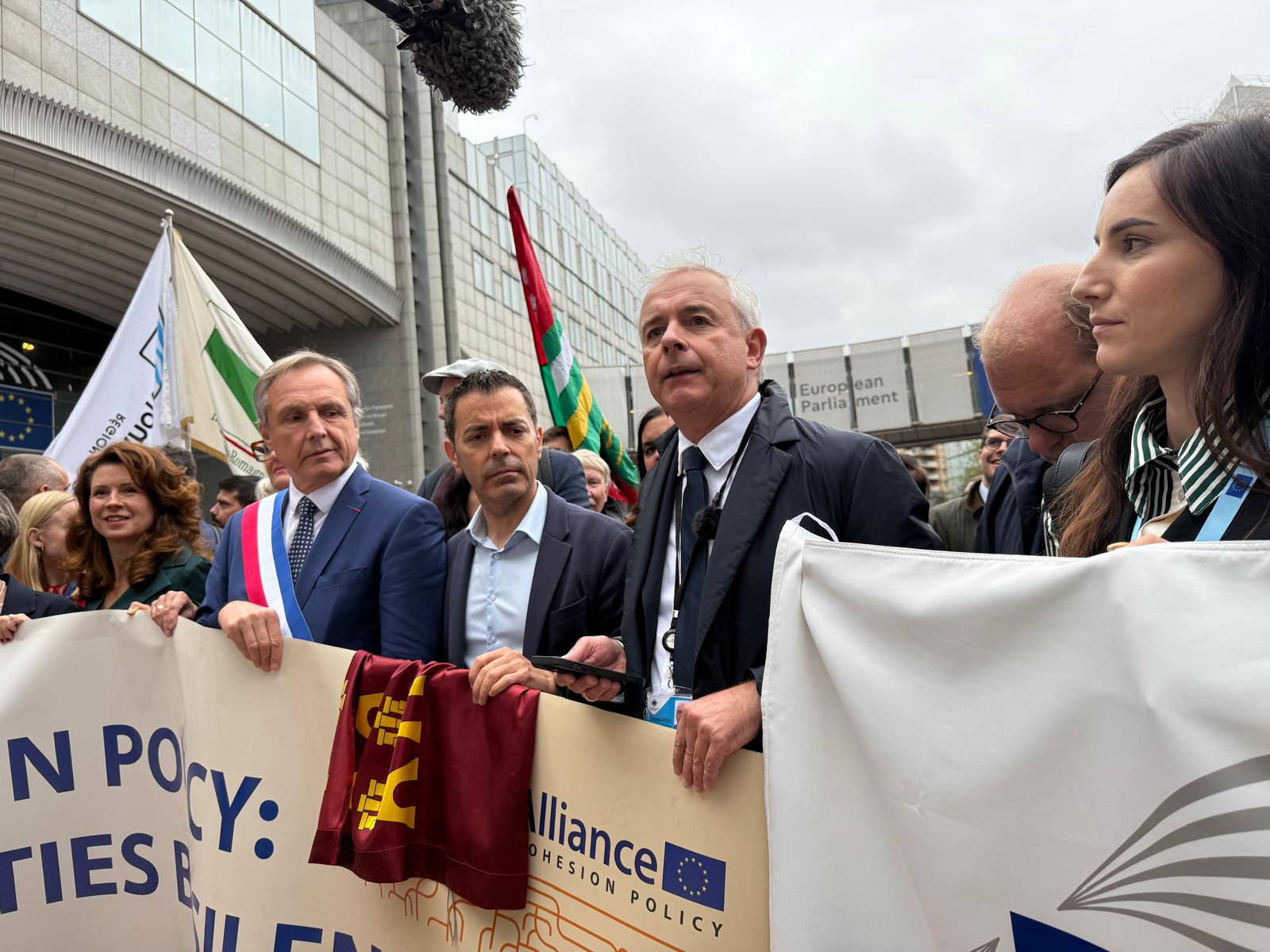
On 15 October, elected representatives from across Europe gathered in front of the European Parliament to call on EU institutions to give local and regional governments full partnership rights in the future Cohesion Policy, and to resist its nationalisation and centralisation.

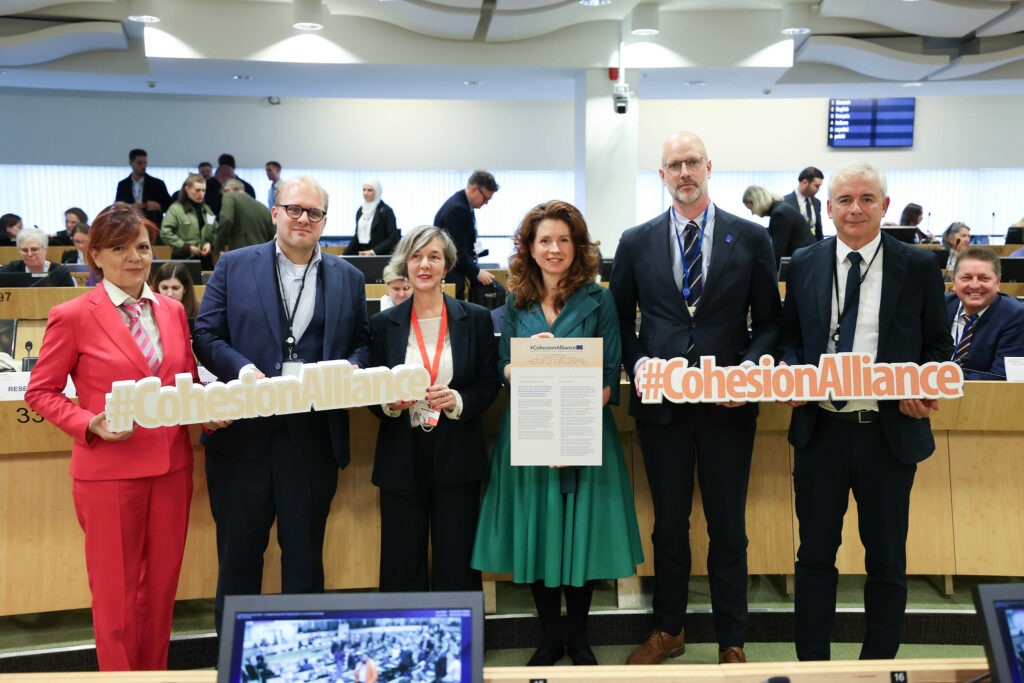
In a symbolic action joined by Members of the European Parliament (MEPs), the European Committee of the Regions and Europe’s territorial associations, the #CohesionAlliance partners adopted a seven-point call rejecting the European Commission’s current proposal .

“Bundling Cohesion Policy with policies on agriculture, defence or migration,” the statement warned, “would force local and regional authorities to compete for funds at the national level.” Such a shift, participants stressed, risks moving decision-making power away from regions and cities — the level where the EU’s goals are actually delivered.

“Competitiveness and cohesion are two sides of the same coin,” said Christoph Schnaudigel, CEMR Co-President and President of the County of Karlsruhe, Germany. “Businesses in our cities need infrastructure, housing, schools, and fibre networks. Cohesion is part of the Treaties — we need competitiveness and cohesion together. Otherwise, the money will disappear before reaching local communities. The European Commission must talk to us. You can’t know what territories need from Brussels or Berlin — we know it at the local level.”, he added.

Cities at the centre of Europe’s priorities

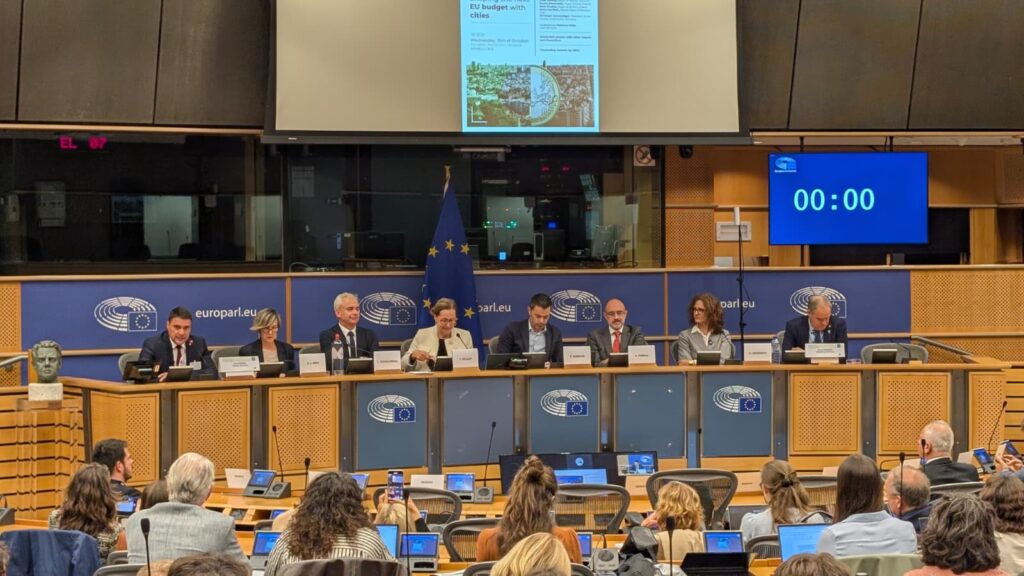
Later the same day, local leaders gathered again in the European Parliament for a debate titled Shaping the Next EU Budget with Cities, convened by the European Urban Forum in cooperation with the Local Alliance.

The message from city leaders, MEPs and European institutions was united: Europe’s priorities — from the green transition to digital transformation — cannot succeed without empowering cities and regions. As CEMR’s Christoph Schnaudigel put it: “You don’t know what the needs are from Brussels. We do — from the local level.”

Pascal Smet, Member of the Brussels-Capital Parliament and the European Committee of the Regions, warned that the proposed setup risks creating “a Europe of nation states”.

Other leaders, such as Peter Dermol, Mayor of Velenja (Slovenia), underlined the dangers of losing citizens’ trust if Europe fails to deliver on its promises in regions undergoing industrial transitions.

From Germany, Eckart Würzner, Mayor of Heidelberg, stressed that “cities are defenders of democracy” and that without adequate resources, “we will stand up” to protect the local dimension of Europe’s future.

Anna Lisa Boni, Deputy Mayor of Bologna (Italy), urged the EU to use the forthcoming Agenda for Cities as “a lighthouse” to ensure the next Multiannual Financial Framework (MFF) strengthens, rather than weakens, the role of local governments.

CEMR’s key asks on the next EU budget

CEMR is already working on an intense advocacy campaign to shape the current EU budget proposal made by the European Commission.

As stated in the document, ‘EU budget 2028-2034: Main changes, challenges and opportunities for local and regional governments’, CEMR has key asks on this topic:

  • Ensuring effective multilevel governance and meaningful partnership in the next MFF
  • Placing cohesion and territorial balance at the core of the next eu budget
  • Guaranteeing fair access to EU funding for local governments across all EU programmes 
  • Enhancing support for local governments in EU enlargement and accession of candidate countries
  • Developing a dedicated EU programme to reinforce local democracy

These proposals echo the sentiment voiced by local leaders throughout the European Week: Europe’s strength lies in its territories. Cohesion and competitiveness can only coexist through real partnership between all levels of government.

For more information, contact:

CEMR inputs for EU agenda for cities

Matchmaking Platform - Launch

Towards an inclusive EU Agenda for cities of all sizes 


As the European Union prepares to shape its next urban strategy, CEMR has published a new input paper calling for a truly inclusive EU Agenda for Cities — one that recognises the vital role of Local and Regional Governments (LRGs) in shaping Europe’s future. 

LRGs are the first responders to many of Europe’s most pressing challenges. From tackling the energy crisis to investing in sustainable mobility and managing public services, cities and regions are not just implementing EU policies — they are innovating, adapting, and delivering results on the ground. Their proximity to citizens places them in a unique position to foster trust, ensure inclusive governance, and respond effectively to the evolving needs of their local communities. 

Yet too often, EU policies are developed without fully engaging the very authorities responsible for delivering them. Over 70% of EU legislation is implemented at the local and regional level. Despite this, subnational governments still lack a formal role in shaping that legislation. 

CEMR’s paper sets out a vision for a new EU Agenda for Cities that is not only inclusive of every territory — from smaller municipalities to major metropolitan areas — but also equipped with the governance mechanisms, funding tools, and institutional recognition to deliver real impact. 

Key proposals include: 

  • Establishing a permanent, structured process for multi-level governance consultations for any new EU regulation proposal that could have an impact on LRGs. 
  • Using the “reforms” component of the next EU structural investment policy to ensure LRGs have the capacities (financial, technical, human) to implement EU regulations. 
  • Streamlining and simplifying access to EU funding, and including a 15% earmark for sustainable territorial development in the next EU budget period, CEMR also calls for greater alignment between EU funding opportunities and local realities, simplifying access and strengthening the administrative capacity of subnational governments. As the paper makes clear, the time has come to transition from fragmented engagement to a systemic approach that incorporates local and regional voices at every stage of the EU policy cycle — from design to implementation. 

The new EU Agenda for Cities presents an opportunity to bridge the gap between ambition and implementation. With the right tools and governance in place, LRGs can power Europe’s green and digital transitions, drive economic resilience, and make the promise of inclusive, sustainable communities a reality for all. 

CEMR will present these ideas at the Cities Forum in Krákow, taking place from 17 to 19 June 2025. Our Secretary General, Fabrizio Rossi, will join the discussion on the Agenda with the Executive Vice-President of the European Commission, Raffaele Fitto. 

Read the full input paper here

For more information, contact:

For more information, contact:

Final call for the EU budget

MFF - Position paper News 2025

Local and regional governments’ final call to EU institutions for a real involvement in the design of the EU budget 


The future of the EU budget is at a crossroads. As the European Commission launches consultations on the post-2027 Multiannual Financial Framework (MFF), local and regional governments across Europe, represented by CEMR, are calling for a fundamental change: an EU budget that is inclusive, decentralised, and truly aligned with the needs of cities, municipalities, and regions.  

This requires that future national plans and investment priorities in each Member State are not imposed from the top-down, but shaped through meaningful consultations with local and regional governments, just as the Partnership Principle ensures in Cohesion Policy. Only in this way can EU investments be fit for purpose and truly serve the people it is intended to benefit. 

CEMR’s newly released position paper on the post-2027 MFF sets out a clear vision for a reformed EU budget that strengthens multi-level governance and empowers local and regional governments as essential partners for effective spending of the EU budget on the ground. With growing social and economic inequalities, the need to accelerate climate adaptation, and increasing geopolitical instability, Europe cannot afford to sideline local and regional governments—the very actors that implement over 70% of EU policies on the ground. 

National plans must include mandatory consultations to local and regional governments 

The roadmap on the next MFF confirmed the European Commission’s ambition to establish single national plans for reforms and investments based on priorities defined at European level. The European Commission mentions the Recovery and Resilience Facility (RRF) as a good example of an instrument linking investments and reforms and points out that two thirds of the EU budget (Cohesion Policy funds and the Common Agricultural Policy) could in the future be implemented according to the RRF approach. In this context, CEMR issues a final warning to the European Commission: the RRF model failed to ensure effective multi-level governance. CEMR found that, since consultation with local and regional governments was not mandatory, it simply did not occur in most of the Member States.  

The European Commission must ensure that national plans and the definition of investment priorities in each Member State are developed through meaningful consultations with local and regional governments, similar to the Partnership Principle in Cohesion Policy. This is the only way to guarantee that EU investments are fit for purpose and meet the real needs of the population.  

The EU is more than its institutions and the 27 states—it belongs to its people, municipalities, cities, and regions. Decisions based solely on macroeconomic trends risk disconnecting it from citizens” — Gunn Marit Helgesen, CEMR President. 

CEMR key priorities for the post-2027 EU budget 

CEMR’s position paper, backed by national associations of local and regional governments across Europe, contains concrete proposals to reform the post-2027 EU budget and enhance its effectiveness: 

  • Empowering municipalities, cities and regions not only as implementers but also as planners 
    The Partnership Principle should be made mandatory across all EU-funded programmes to ensure that the funds effectively reflect the actual needs of local and regional governments. 
  • Decentralising the Cohesion Policy 
    Strengthening the capacity of local and regional governments to manage EU funds will ensure that investments address real local needs and promote balanced territorial development. 
  • Diversifying EU instruments as part of the ambitious policy agenda for cities 
    From shared management funds to increased direct funding, it would allow EU investment to reach local and regional authorities of all sizes, from all types of territories, both urban and rural.   
  • Simplifying and easing EU funding mechanisms  
    to reduce administrative burdens for both Managing Authorities and beneficiaries. CEMR proposals for simplification include: a single set of rules for beneficiaries across the different funds; flexibility in thematic concentration to allow place-based definition of priorities, hence accelerating funds disbursement; and a labelling of auditing processes as compliant with EU rules to avoid multiplication of auditing.
  • Enhancing synergies among EU funds. 
    The next MFF must improve coordination between different EU funding instruments to maximise impact at the territorial level. 

Take part in the public consultation 

Local and regional governments must not be sidelined in shaping the post-2027 EU budget. The European Commission’s consultation must not be reduced to a bureaucratic exercise or a mere checkbox. Consultations alone are not enough. The next EU budget regulations must include a mandatory requirement to involve local and regional governments in defining the investments that will meet the real needs of the population. 

Use this public consultation —open until May 7 2025— to demand a real seat at the table and a budget that truly serves our communities. A stronger, more inclusive Europe starts from the ground up. Speak up before it’s too late. 

Read the full CEMR position paper here

Contribute to the public consultation on the future EU budget here: https://ec.europa.eu/commission/presscorner/detail/en/ip_25_486 

For more information, contact: 

Is the European Semester important?

EU Semester - News 2024

Top level decision – Local consequences
The European Semester explained


Just as the EU Commissioners were officially starting their new mandate – which includes the responsibility to put forward by mid-2025 a proposal for the next EU long-term budget -, CEMR was releasing a timely publication in view of the “cash for reforms” debate: “Top level decision – local consequences: The European Semester explained”.

The release event organised on 2nd December attracted participants from several institutions: European CommissionEuropean Parliament, Permanent Representations of Member States to the EU, in addition to CEMR own members and representatives of cities and regions in Brussels.
On this occasion, CEMR’s Secretariat presented the publication which aims at informing local and regional governments about the functioning and process of the European Semester, how it has evolved over the year and how it is likely to become the next overarching policy coordination framework of the EU.

The study also includes some case studies demonstrating that most of the recommendations included in the EU Semester Country Specific Recommendations have either a direct or indirect impact on local and regional governments. This impact can be on their budget and investment possibilities: the study recalls that subnational finance is included in the national government budget deficit and expenditure efforts monitored by the EU Semester. But it also reveals that some recommendations touch upon areas of competences of local and regional governments in different Member States.

For instance, in Germany, subnational public administrations are the ones targeted by the 2024 Country Specific Recommendation (CSR) to speed up the digitalisation of public administration. For Spain, the 2024 CSRs call for improving water management where water supply is a competence of local governments. In the Netherlands, urban planning and (social) housing is a shared competence between municipalities and national governments, who are therefore both concerned with the recommendation to ensure the affordability and availability of housing.

The event allowed for a multi-level discussion between Joao Nogueira, Head of Unit for Policy coordination at the DG ECFIN of the European Commission, Thomas Prorok, Managing Director at KDZ – Centre for Public Administration Research in Austria, and Michael Schmitz, Deputy Head of the Brussels Office of the German County Association (DLT) who debated on the impact and (lack of) involvement of local and regional governments in the European Semester. The speakers were all invited to react to the recommendations included in the CEMR study, which created a lively discussion and also engaged participants in the room.

This report will be an important piece for CEMR and all representatives of local and regional governments in the coming months to build the narrative on the importance of involving subnational governments in the decisions on investments and reform priorities to be financed by the EU instruments.

Read the study here

For more information, contact:

Participatory Budgeting

Participatory Budget - Youth

Participatory Budgeting for Young People in Vienna


In 2020, Vienna embarked on a groundbreaking initiative with the introduction of its ‘Participatory Children and Youth’ strategy. This forward-thinking approach aims to empower children and young people to shape their futures by becoming key decision-makers in their communities. Central to this strategy is the allocation of municipal budget funds specifically for ideas proposed by young residents. Known as the ‘Participatory Children and Youth Million’, this initiative sets aside €1 million every two years to bring these ideas to life.

Youth Participatory Budgeting

Youth participatory budgeting is designed to actively engage young people in public decision-making processes. By providing platforms for discussion, deliberation, and proposal of projects, it fosters a collaborative environment where young voices are heard and valued. This approach not only encourages dialogue but also builds a strong sense of ownership and partnership between the youth and local government.

The process begins with young people, aged 5 to 20, submitting their ideas either individually or in groups. These submissions are then reviewed in co-creation workshops where participants work with representatives from over 30 municipal departments and district offices. These collaborations ensure that ideas are both innovative and practical. For example, in 2024, a total of 226 ideas were submitted, with 215 being retained for further development.

Public outreach plays a crucial role in this process, aiming to engage not just politically active youth but a broader demographic. In Phase 2, Vienna’s city departments and district administrators review these ideas, requiring clear communication and effective integration with municipal operations. Events and clear timelines are essential to keep the process transparent and inclusive. Proposals must have a minimum budget of €50,000 and be implemented within two years.

As of the May 2024 CEMR webinar, the process had advanced to the voting stage. At this point, 49 projects were presented online for voting, allowing both individual and group preferences to shape the outcomes.

Vienna’s participatory budgeting for children and young people exemplifies a successful model of inclusive governance, demonstrating how cities can harness the creativity and insights of their youngest residents to enhance community life.

Learn more about Participatory Budgeting here

X Budgeting – power of subnational finance

Participatory Budget - Youth

Municipalities and regions explore new approaches to budgeting, from participatory and priority-based models to green and SDG-oriented practices


Municipalities, cities and regions across Europe are at the forefront of delivering essential services, from housing and health to climate action and mobility. Yet, they face increasing financial pressures, recovering from the pandemic’s “scissor effect” of higher costs and lower revenues, and coping with inflation. In this context, how budgets are designed and allocated has become a powerful political tool.

To explore this potential, the Council of European Municipalities and Regions (CEMR) organised a training event on 23 May titled “X-budgeting – the power of subnational finance.” The session brought together experts and practitioners to share knowledge on innovative approaches to local and regional finance.

“X-budgeting” refers to a range of methods that go beyond simple accounting, transforming budgets into instruments for shaping policy and engaging citizens. These include:

  • Priority-based budgeting, aligning spending with political or community priorities rather than repeating last year’s allocations.
  • Process-based budgeting, such as participatory models that involve residents directly in decisions.
  • Green and SDG budgeting, aligning local finances with climate goals and the Sustainable Development Agenda.

Each approach offers opportunities, from fostering transparency and boosting trust to mobilising investment for sustainability, but also poses challenges, such as methodological complexity, resource needs and the demand for strong political support.

By experimenting with new forms of budgeting, municipalities and regions can make financial choices that not only keep services running but also reflect citizens’ voices and accelerate progress towards long-term goals.

Read the study here

For more information, contact:

Future of EU cohesion policy

MFF - Position paper News 2025

Rethinking EU budget design to empower local and regional governments post-2027 


The Council of European Municipalities and Regions (CEMR) highlights the critical role of local and regional governments in shaping Europe’s future Cohesion Policy and the next Multiannual Financial Framework (MFF). Municipalities, cities and regions are at the frontline of delivering essential services, from transport to education and climate adaptation, while also being major drivers of public investment. Yet, the upcoming EU budget debates risk sidelining their role, particularly with the disappearance of the Treaty objective for Territorial Cohesion. 

CEMR calls for a strong, ambitious Cohesion Policy that maintains at least one-third of the EU budget and embeds key principles such as partnership, multi-level governance, and place-based development. Simplification is a top priority: fewer funds, a single set of rules for beneficiaries, and reduced administrative burdens would make EU resources more accessible and effective. Importantly, local and regional governments must be clearly recognised as beneficiaries and implementing partners to ensure funds reach citizens directly. 

A place-based and integrated territorial approach should be at the core of future instruments, designed bottom-up with local authorities defining priorities. CEMR stresses that Cohesion funds must not be redirected towards large corporations without strategic planning, but rather reinforce local and regional capacity for innovation, sustainability, and economic growth. 

For the post-2027 EU budget, the message is clear: no successful European project without local and regional governments at its heart. Territorial cohesion, simplified rules, and genuine partnership are essential to delivering a fair, sustainable, and effective Cohesion Policy. 

Read the position paper here 

For more information, contact: 

Insights on cohesion policy funds

Cohesion Policy - News 2023

CEMR released in-depth study unveiling insights into European cohesion policy funds


The Council of European Municipalities and Regions (CEMR) is pleased to announce the release of its comprehensive study on European Cohesion Policy funds. This illuminating study offers valuable insights into the management and implementation of European Structural and Investment Funds, a cornerstone of the European Union’s investment strategy.

Offers practitioners and policymakers a comprehensive overview of how Cohesion Policy Funds are implemented in different countries.

European Cohesion Policy funds, also known as European Structural and Investment Funds, are pivotal to the EU’s vision of a more prosperous and sustainable continent. These funds reach every corner of Europe, supporting critical initiatives such as job creation, economic growth, sustainable development, green and digital transitions, and the building of inclusive societies. In the funding period from 2021 to 2027, eight distinct funds play a key role:

  1. European Regional Development Fund (ERDF)
  2. European Social Fund Plus (ESF+)
  3. Cohesion Fund (CF)
  4. Just Transition Fund (JTF)
  5. Asylum and Migration Fund (AMIF)
  6. European Maritime, Fisheries and Aquaculture Fund (EMFAF)
  7. Internal Security Fund (ISF)
  8. Border Management and Visa Instrument (BMVI)

However, to truly understand the impact of these funds and their operational dynamics, one must delve deeper. Questions emerge, such as who manages these funds, how Member States approach their administration, and how coordination is ensured to prevent overlap. Additionally, understanding their alignment with non-Cohesion Policy funds, like the Recovery and Resilience Facility, is crucial.

The Cohesion Policy Funds study delves into these fundamental questions. It offers a comprehensive exploration of Cohesion Policy funds for 2021-2027, shedding light on their management, coordination, and impact.
This pioneering study reveals critical insights into:

  • Centralised vs. Decentralised Management: Discover how Member States manage Cohesion Policy funds, whether through centralized, decentralized, or mixed models.
  • Sustainable Urban Development: Explore the rising emphasis on sustainable urban development, a core component of Cohesion Policy, with Member States committing an average of approximately 12%, surpassing the required 8% allocation for this purpose.

CEMR’s study is a valuable resource for policymakers, regional and local authorities, and all stakeholders invested in Europe’s advancement.
Unlock the potential of Cohesion Policy funds and their transformative role in shaping Europe’s future.

Cohesion Policy Fund graph

Read the position paper

For more information, contact: