CEMR and the German Association for Housing, Urban and Spatial Development (DV) hosted a discussion on the role of the territorial dimension in the future Cohesion Policy
On 12 October, during the European Week of Regions and Cities 2026, the Council of European Municipalities and Regions (CEMR) and the German Association for Housing, Urban and Spatial Development (DV), with the support of the German Federal Ministry for Housing, Urban Development and Building (BMWSB), brought together policymakers, practitioners and elected representatives to discuss how to strengthen the territorial dimension of the next EU Cohesion Policy.
With the negotiations on the 2028-2034 Multiannual Financial Framework (MFF) still ongoing, Member States are already advancing their National and Regional Partnership Plans (NRPPs). In this perspective, as no earmark has been foreseen by the European Commission to promote the use of Integrated Territorial approaches such as Integrated Territorial Investments (ITI), Community-Led Local Development (CLLD/LEADER) and other similar tools, CEMR and DV focused the main debate on this matter.
“The Territorial Dimension and its place-based instruments can build on regional strengths through intermunicipal cooperation across the rural-urban continuum. They can make the benefits of European investment visible in everyday life, foster economic innovation and resilience, and bring Europe closer to its citizens.” Dr. Rene Peter Hohmann, Executive Director DV’s EU-Office.
An “operational” and not “symbolical” multilevel governance is needed
Opening the event, CEMR President Christoph Schnaudigel, who is also President of the County of Karlsruhe, called the territorial dimension “not a technical addition to Cohesion Policy” but “a core condition for its success”. He warned that a simpler policy on paper could be less effective in practice if it ignores how differently climate transition, demographic change, affordable housing and access to services play out in a capital city, a small municipality, an island or a mountain area.
He also stressed that partnership and multilevel governance “must be operational, not symbolic”, and that local and regional governments must be genuine partners in preparing, implementing and monitoring the NRPPs rather than only delivery contractors.
The case of Celje (Slovenia): an example of how to include the territorial dimension
Following those words, Matija Kovač, the Mayor of Celje (Slovenia), showed how the territorial dimension works in his town. “The ITI (Integrated Territorial Investment) in Celje is a good example of multi-level governance that is actually run by the cities and for the cities, and, of course, building on two programming periods’ experience since 2014, it has also built strong trust between the national organs, ministries, and the municipalities”, he said at the event.
“I think it is also a new way to include our knowledge and organisation in helping the national states to move on with the territorial decision.”
Predictability, flexibility, formal mechanisms for the NRPPs… different views in one high-level debate
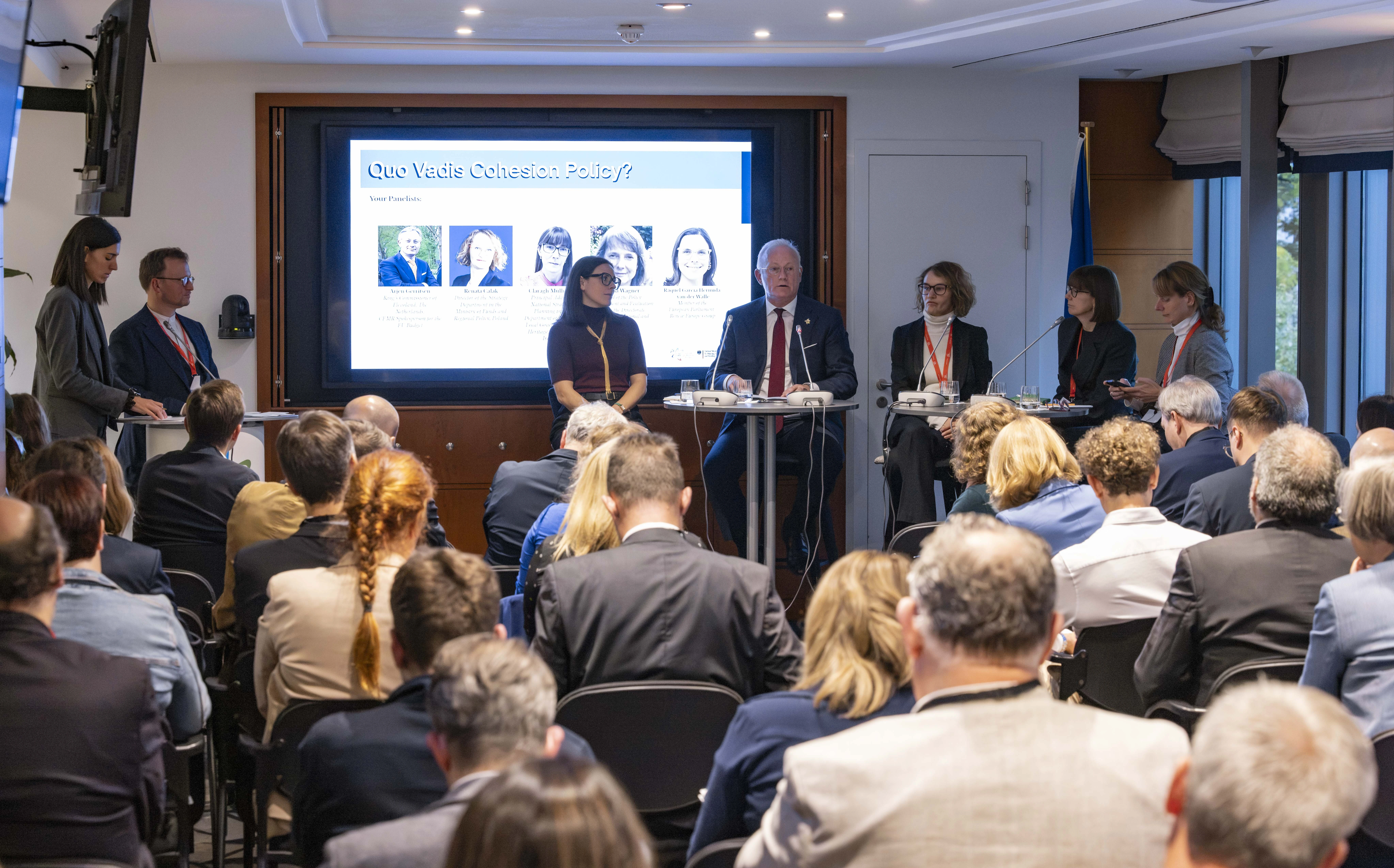
The high-level discussion, “Quo Vadis Cohesion Policy?”, brought together policy makers from the European, national and regional levels, as well as MEPs and local elected representatives
According to Arjen Gerritsen, King’s Commissioner of Flevoland and CEMR spokesperson on the EU budget, the future funding architecture must deliver certainty, respect for territorial diversity, and support for integrated investments. He argued that Cohesion funding must remain identifiable and predictable within the NRPPs.
“We need predictable regional resources, mandatory regional coverage (or chapters), stronger territorial tools, and the right enabling conditions. Together, these elements can help ensure that the Cohesion Policy continues to support economic, social and territorial cohesion across all European regions”, he added.
Renata Calak, Director of the Strategy Department in the Ministry of Funds and Regional Policy in Poland, presented the first national perspective and stressed that “the new framework offers [Poland] both challenges and opportunities. ITIs are not foreseen in the new framework, but [Poland] will create [its] own national instrument to continue the work done on territorial approaches.”
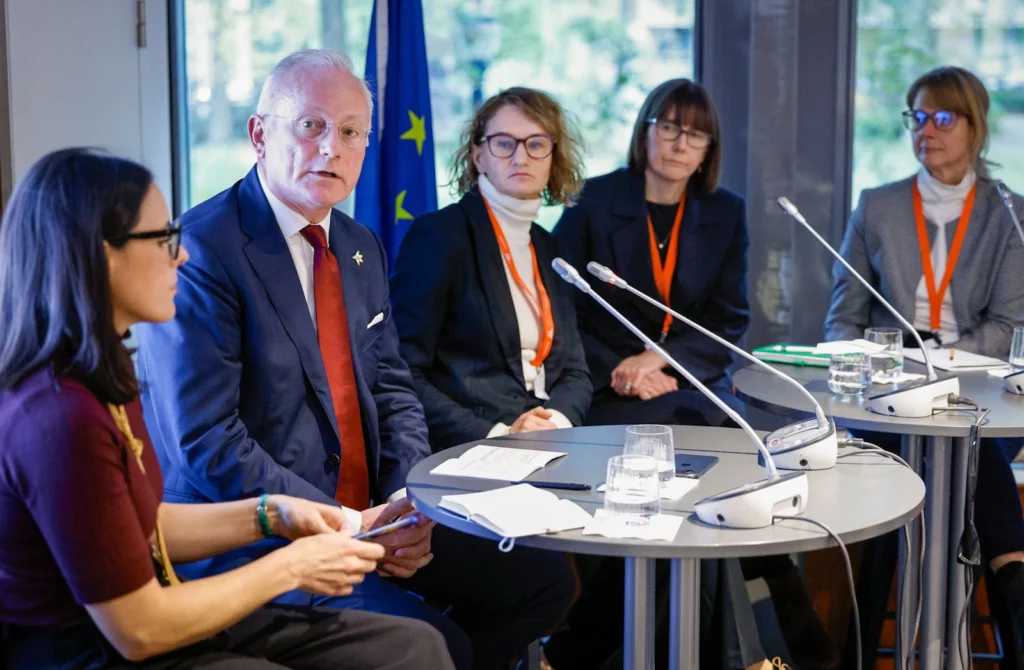
Following the Polish example, Claragh Mulhern, the Principal Adviser in the National Strategic Planning Department of Housing in Ireland, presented the Irish stance.
“In Ireland, we have undertaken a spatial strategy involving a balanced territorial approach. We look at everything across the broad in a coherent strategy, cross-sectors providing an opportunity at a national level to look at what those interventions might be across the country.”
The discussion later turned into a brief debate between Commissioner Anna Wagner, Head of Unit, Regional and Urban Policy, and the Member of the European Parliament Raquel Garcia Hermida-van der Walle.
While Wagner stressed that “the territorial dimension is anchored in the future framework through the European semester process and that for the first time there is a systematic and detailed territorial analysis, that will guide the national and regional partnership plans”, Garcia Hermida-van der Walle reiterated that “the partnership principle, multilevel governance, and the need of the local and regional governments in shared management need to be in the legal text, [as so far it is simply not in it]”. “It needs to be something that if member states don’t abide by the Commission will have to intervene”, she added.
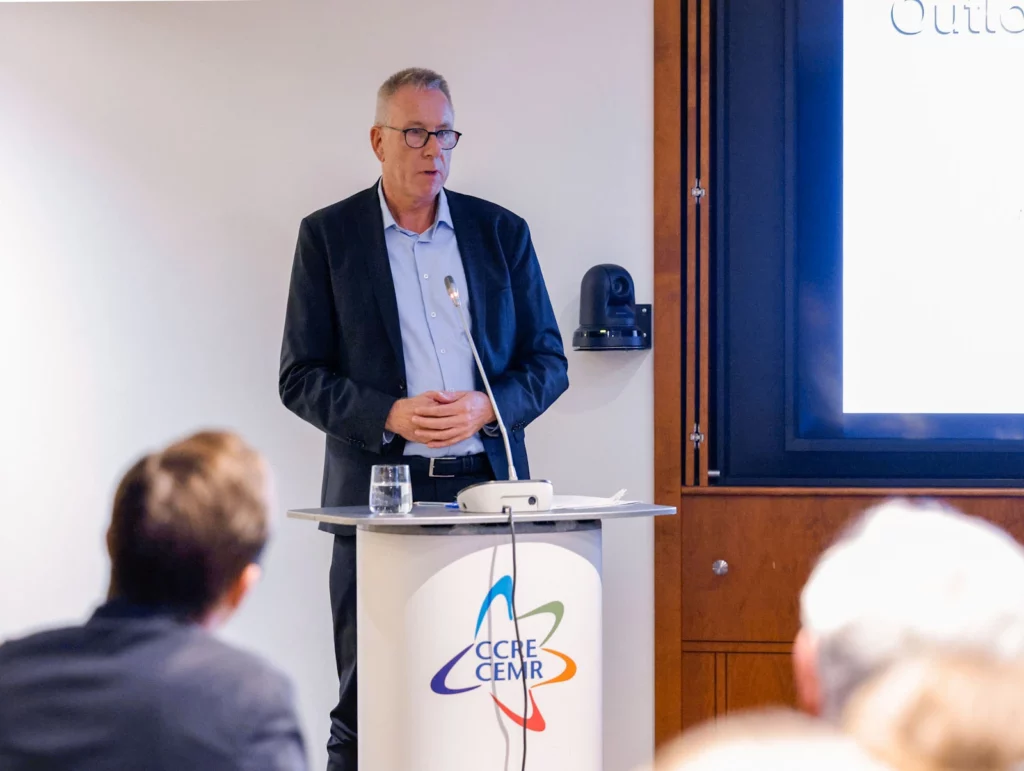
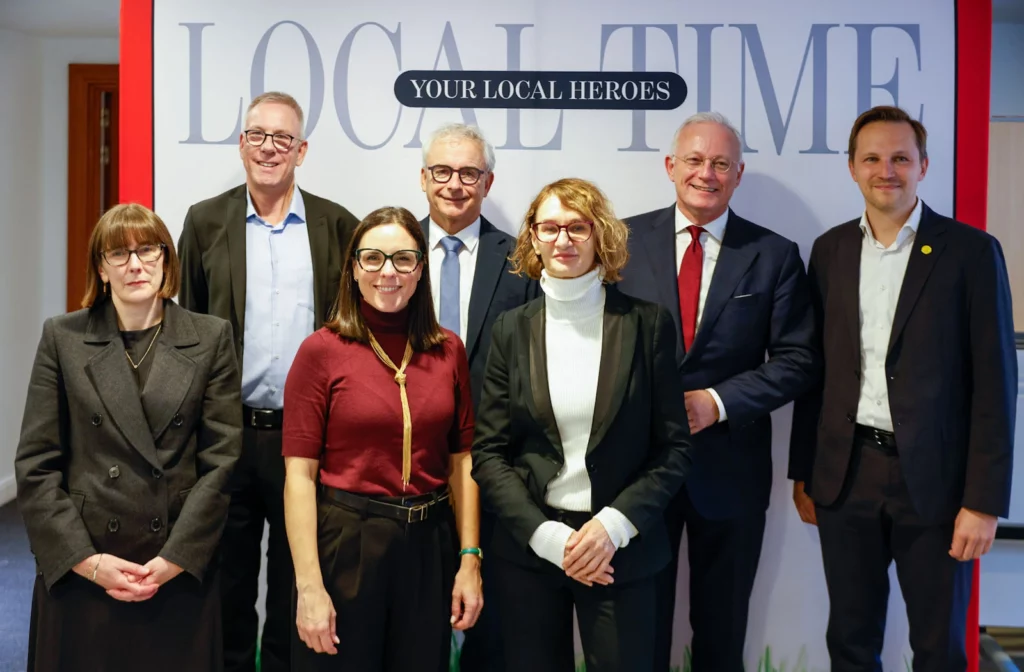
The event was wrapped up by Tilman Buchholz of the BMWSB, who reflected on a shared ambition to build a European coalition for balanced, integrated territorial approaches linking cities with their surrounding areas and complementing urban and rural development, as the MFF and NRPP negotiations move forward.
CEMR will continue to work with the European institutions, Member States and partners to ensure that Europe’s future investment policy is built on the knowledge, legitimacy and capacity of its territories.
For more information, contact:

Advisor – Territorial Cohesion & Local Finances