
Building Europe from the ground up: CEMR marks 75 years of empowering towns, cities and regions across the continent
Seventy-five years after European mayors and local leaders came together in Geneva to lay the foundations of what would become the Council of European Municipalities and Regions (CEMR), the organisation marked its anniversary with a forward-looking discussion on one central question: are Europe’s governance systems equipped to address the challenges of the future?
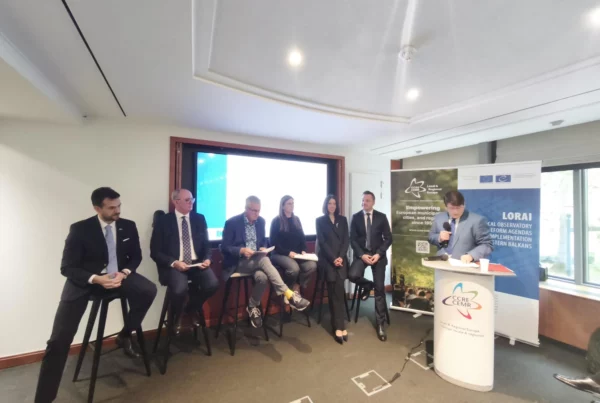
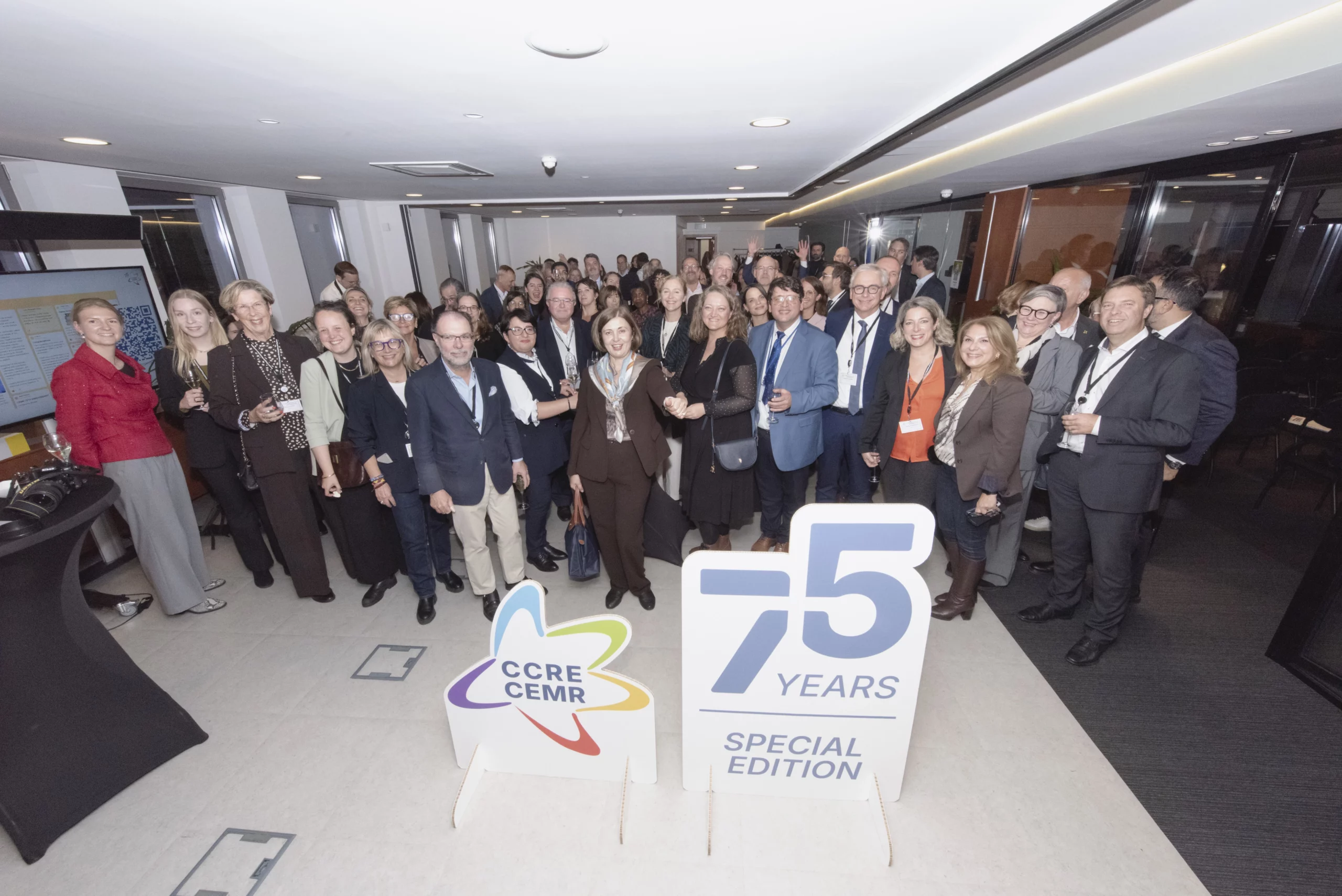
Bringing together more than 100 European, national, regional and local leaders, as well as experts and other stakeholders, the anniversary event combined a reflection on CEMR’s historic contribution to European integration with a debate on how local and regional governments can be empowered to respond to increasingly complex challenges, from competitiveness and demographic change to the housing crisis.
Moderated by journalist Esther Herrera, the event also marked the launch of the TERRI Report 2026, CEMR’s flagship publication on territorial governance. This year’s edition focuses on housing and highlights a broader shift in Europe’s governance debate: the key challenge is no longer who is responsible, but who has the capacity to deliver.

Local governments at the heart of Europe’s future
Opening the event, CEMR President Christoph Schnaudigel recalled the origins of the organisation in the aftermath of the Second World War and emphasised the enduring importance of cooperation between levels of government.
Throughout the afternoon, speakers repeatedly returned to a common theme: Europe increasingly relies on local and regional governments to deliver solutions, yet too often these authorities are asked to do more without receiving the corresponding resources, capacity or influence in decision-making processes.
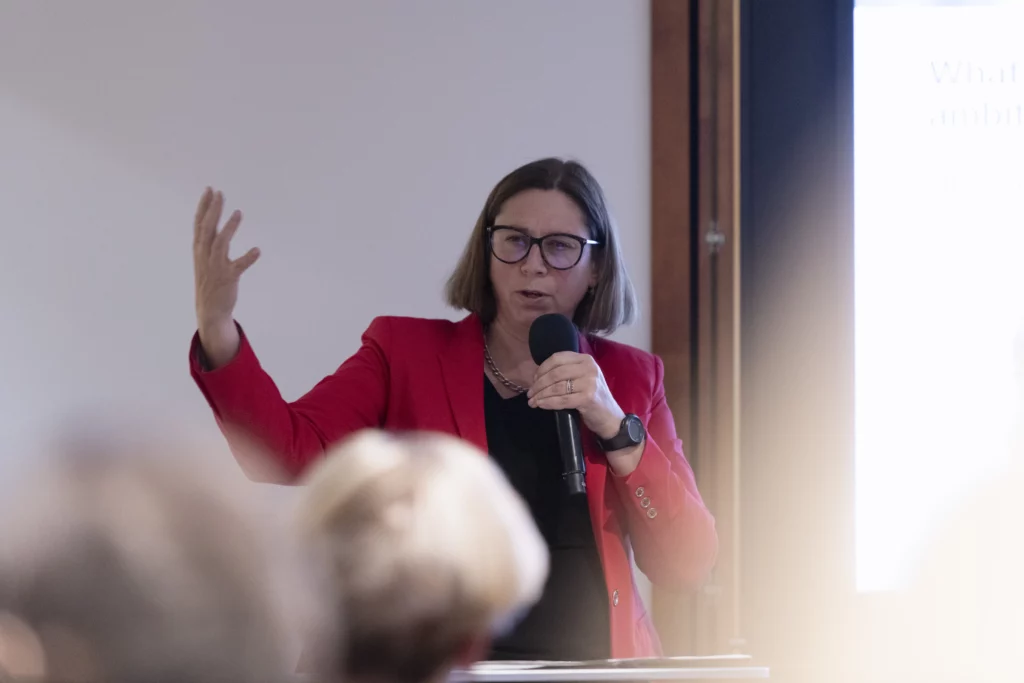
Karen Maguire, Head of the Regional Development and Multilevel Governance Division at the OECD, highlighted the growing pressures facing towns, cities and regions across the world. Local governments are not only managing a wider range of responsibilities, she argued, but are also confronting increasingly complex and interconnected challenges. From demographic change and housing shortages to climate adaptation and economic transformation, many municipalities, particularly smaller ones, struggle to mobilise the expertise and capacity required to respond effectively.
Governance reforms must strengthen capacity, not shift pressure
A recurring message from local leaders was that governance reforms should aim to strengthen local governments rather than simply transfer responsibilities between levels of administration.
Participants stressed that local and regional governments need sufficient financial autonomy, administrative capacity and qualified staff if they are to successfully deliver on European priorities. These concerns closely reflect one of the TERRI Report’s 2026 key conclusions: governance capacity is becoming one of Europe’s most important public policy challenges.
The discussion also highlighted the importance of intermunicipal cooperation, particularly for smaller towns. Examples from Flanders, Austria and Moldova demonstrated how cooperation across administrative boundaries can help local governments deliver services more effectively and address challenges that exceed the capacity of individual municipalities.
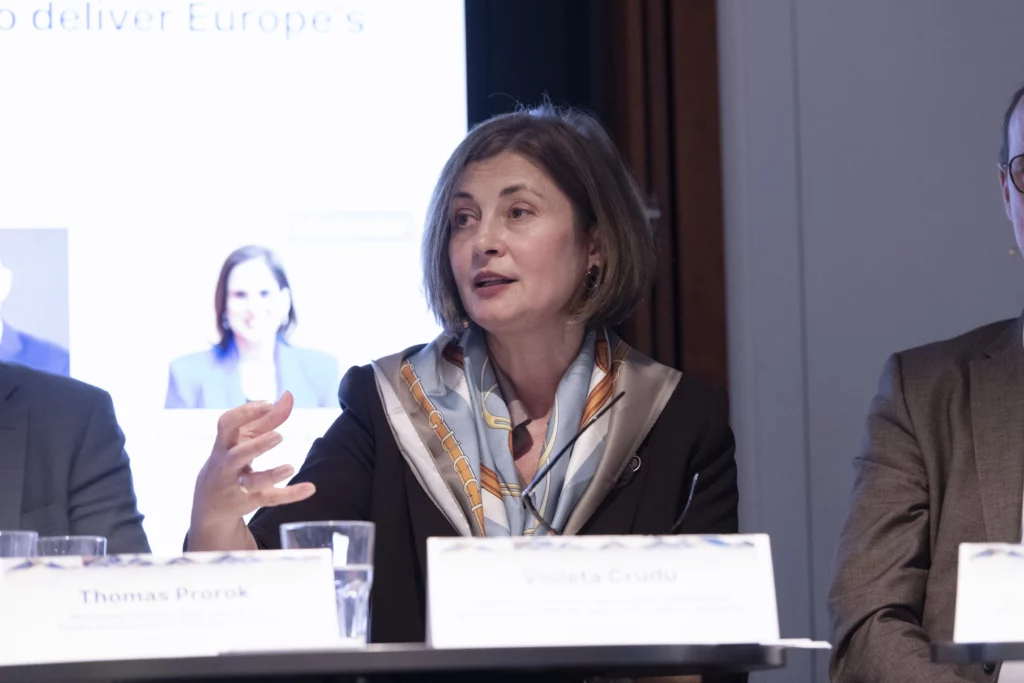
Sharing Moldova’s experience, Violeta Crudu, Mayor of Chisnau municipality and President of the Network of Women Mayors of the Congress of Local Authorities (CALM), explained how cooperation between municipalities has helped address difficult issues such as waste management, illustrating the practical benefits of working together at the territorial level.
A stronger local role in the next EU budget
One of the most anticipated discussions focused on the future of the EU budget and the proposed National and Regional Partnership Plans (NRPPs).
Declan Costello from the European Commission’s SG REFORM outlined the Commission’s objective of simplifying funding structures, reducing administrative burdens and creating a more integrated approach to investment and reform. He argued that the proposed framework could offer greater flexibility and improve the effectiveness of public spending for all the regions across Europe. “The Commission has proposed a quite practical approach for the next EU budget and although it will be up to each Member State if they want to have regional chapters, we are open to engaging in direct negotiations with regional authorities in a flexible way”, he stated.
Local government representatives voiced clear concerns regarding the next EU budget.
Wim Dries, Mayor of Genk (Belgium) and President of the Association of Flemish Cities and Municipalities (VVSG), delivered a direct message on behalf of local and regional government associations across Europe, arguing that towns, cities and regions must be involved in shaping the priorities of the next EU budget and have meaningful access to competitiveness funding. Several speakers warned that without strong local involvement, Europe risks missing opportunities to maximise the impact of investment on the ground.
Housing as a test governance
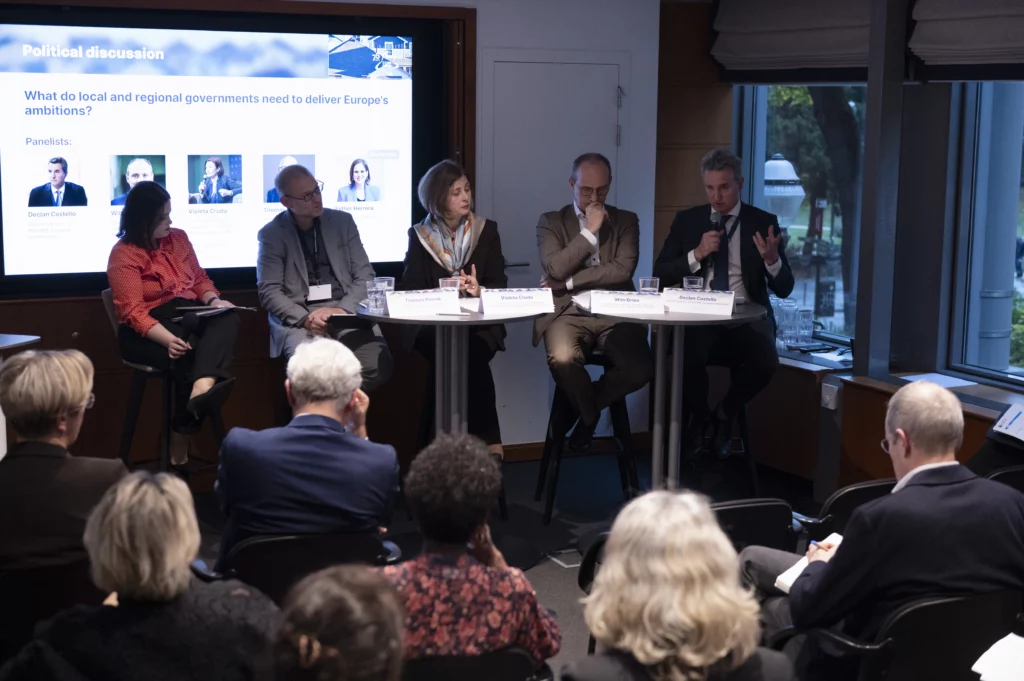
The second part of the event focused on housing, the central theme of the new TERRI Report.
Speakers agreed that housing has moved beyond being a purely local issue and has become a concern across Europe. Affordability pressures, demographic change and social inequalities are affecting territories of all sizes, from major cities to rural areas.
According to the TERRI Report 2026, housing provides one of the clearest examples of the gap that can emerge between political ambition and delivery capacity. While towns, cities and regions are increasingly expected to address affordability pressures and housing shortages, many of the key policy levers remain at national level. Across Europe, different housing systems are facing remarkably similar constraints, including financing difficulties, planning pressures and limited administrative capacity.
Christian Lamouline, Mayor of Brechem-Saint-Agathe (Belgium) and President of Brulocalis, described the growing pressures on housing affordability in Brussels and stressed the importance of combining housing policy with transport, public services, education and urban planning. Creating liveable communities, he argued, requires a coordinated approach rather than isolated policy interventions.
For Francesco Amodeo from the European Commission’s Task Force on Housing, housing illustrates why multilevel governance matters. While responsibilities are distributed across different levels of government, citizens experience the consequences regardless of which authority formally holds competence. He stressed that Europe’s response must involve all relevant actors, from local and regional governments to the construction sector, housing cooperatives and financial institutions.
Several speakers pointed to the need for long-term solutions that extend beyond political cycles and electoral mandates. One of TERRI’s Report 2026 key messages is that housing cannot be considered in isolation. Housing markets are increasingly interconnected with labour mobility, transport systems, demographic change, climate objectives and territorial development. As a result, effective solutions depend on coordination across sectors and levels of government, reinforcing the wider message that multilevel governance remains essential to addressing Europe’s most pressing challenges.
Looking ahead
As the event concluded, participants reflected on the lessons that local democracy can draw from the past 75 years.
Whether discussing housing, competitiveness, territorial cohesion or public administration reform, the same conclusion emerged: effective governance depends on trust, cooperation and strong partnerships across levels of government.
Seventy-five years after its creation, CEMR’s founding conviction remains unchanged: Europe’s future will continue to be built from the ground up through strong local democracy, effective multilevel governance and empowered local and regional governments.
For more information, contact:

Officer – Digital Communication