
Agenda 2030 study for local and regional governments

COVID 19 finances - News

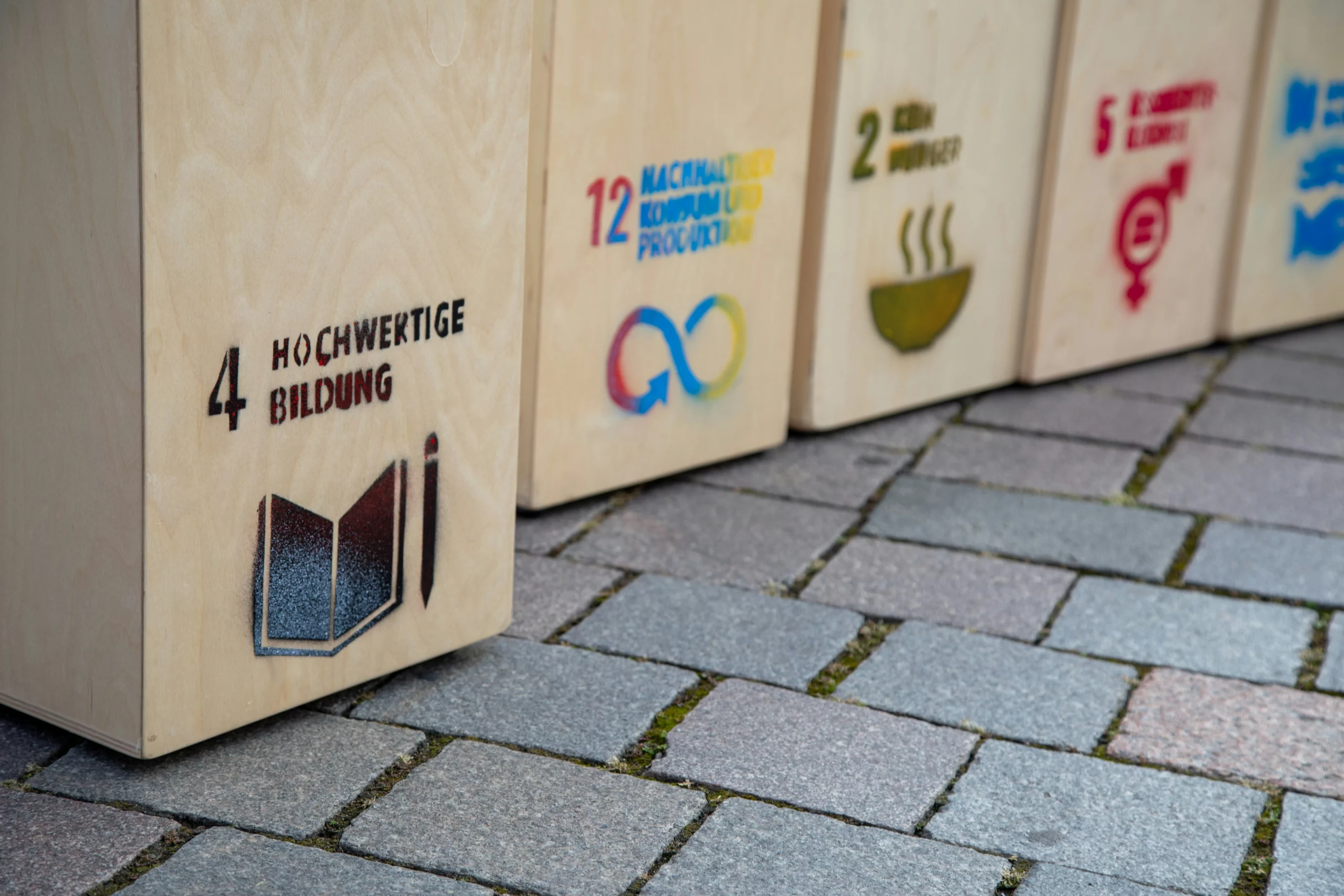
Just out: New study reveals how municipalities, regions and their associations are embracing the SDGs


Caught in the COVID-19 storm, Europe’s local and regional governments and their associations are at risk of losing the progress made in the last few years to achieve the Sustainable Development Goals. Although they are increasingly familiar with the Global Goals, they need further support to bring international ambitions to territorial realities.

This is what emerges from a new study led by the Council of European Municipalities and Regions (CEMR) and PLATFORMA entitled “The 2030 Agenda through the eyes of local and regional governments’ associations”.

In times of COVID-19: the SDGs at a make-or-break moment

The outbreak of the COVID-19 pandemic in Europe and around the world has brought about unprecedented challenges for local and regional governments. In several countries, the pandemic has markedly deepened inequalities and has slowed down efforts to raise awareness and promote the work of the 2030 Agenda at local and regional level.

The current crisis and the uncertain future are a call for action. Every player around the globe has to act now,” said Tine Soens, Member of the City Council of Kortrijk (Belgium), CEMR and PLATFORMA Spokesperson on 2030 Agenda. “Local and regional leaders should not be afraid to take the leap! Our generation of politicians, civil servants and citizens is the generation that has to turn the tide.

The study at a glance

Based on a survey of 34 associations from 28 European countries, the study shows that one third use the SDGs as an important reference in their own development strategies, compared to only one fifth last year. What’s more, four out of five associations are aware of the SDGs.  The trend is clear: year after year, local and regional governments and their associations are increasingly making the efforts necessary to materialise the global agenda at local level.

But have the SDGs also gained traction among central governments? Our study shows that close to 80% of associations indicated that there is an official national strategy to implement the SDGs. For those who indicated that a national strategy has been set up, 59% specified that there is a clear mention of the need to support local and regional action in SDG implementation.

Nevertheless, there is still considerable room for improvement to bring about closer ties between all levels of government and to achieve global progress on sustainable development. To step up our efforts, the study offers a checklist for associations “Know where your members stand in the localisation of the SDGs”, a set of simple steps to contribute to Voluntary National Reporting and several key recommendations.

What’s more, this 40-page publication is packed full of illustrative examples from the ground. Finally, it identifies persisting challenges and new opportunities that municipalities, regions and their associations have been encountering when working with the SDGs. These come at a timely moment as the pandemic continues to spread around the world.

Background information

This new study is based on a joint survey conducted by CEMR and PLATFORMA, designed in collaboration with United Cities and Local Governments (UCLG). It is a follow up to the 2019 study “How local & regional government associations bring the SDGs to life” and the 2018 study “Sustainable Development Goals – How Europe’s towns and regions are taking the lead”.

The study was launched on 15 July 2020 at the occasion of the workshop Localising the Sustainable Development Goals (watch the recording) organised by PLATFORMA during the United Nations’ 2020 High Level Political Forum  on Sustainable Development (HLPF).

PLATFORMA and CEMR are actively taking part in many of this virtual event’s sessions and webinars together with their partners and members.

Please click on this link if you want to get printed copies of our study (Europe only).

For more information, contact:

Global goals into local action  

Localising SDGs study - News

How local and regional government associations turn global goals into local action 


The 2030 Agenda for Sustainable Development and its 17 Goals are often seen as a global framework, but their success depends on local action. Nearly two-thirds of the SDGs must be implemented at the local level, making municipalities, regions, and their associations crucial actors in bringing this agenda to life. 

Local and regional government associations (LRGAs) act as bridges between citizens and higher levels of governance. They support awareness-raising, provide technical expertise, and advocate on behalf of local governments at the national, European, and international levels. Their proximity to communities allows them to translate abstract global objectives into tangible improvements in daily life, from better public services and climate action plans to gender equality policies and local economic development. 

Since the first CEMR-PLATFORMA study in 2018, the role of associations in localising the SDGs has grown significantly. Many are now actively involved in monitoring, reporting, and international advocacy, including through contributions to the UN’s High-Level Political Forum. Voluntary Local Reviews (VLRs) and decentralised cooperation projects have become powerful tools to highlight progress, inspire others, and ensure that local voices are heard on the global stage. 

At the same time, challenges remain. Municipalities and their associations still struggle with limited resources, lack of data, and uneven awareness across regions. In particular, gaps persist between Northern/Western Europe, where SDG implementation is more advanced, and Central/Eastern Europe, where awareness and uptake are still developing. To make the 2030 Agenda truly transformative, multi-level collaboration and inclusive partnerships are essential. 

Despite these hurdles, LRGAs continue to push boundaries. By fostering cooperation between cities and regions, they strengthen international solidarity, enhance capacity-building, and adapt services to better reflect sustainability goals. They are not only localising the SDGs but also giving them credibility and momentum in Europe and beyond. 

In short, associations of towns and regions are proving that the SDGs are more than a global vision: they are a practical tool for creating sustainable, inclusive communities, driven by partnerships and citizen engagement. 

Read the study here 

Check the infographic here 

For more information, contact: 

The future of public services 

People Europe - News

Simpler EU rules needed to empower local service delivery 


Local and regional governments are central to ensuring quality public services across Europe, from transport to childcare and broadband. Yet complex EU rules on competition and procurement are increasingly challenging their ability to deliver these services effectively. 

That’s the core message of the Council of European Municipalities and Regions (CEMR)’s position paper, Strong Public Services through Local Governments

As Europe reflects on its future, CEMR urges policymakers to recognise local governments not as a problem, but as part of the solution. From climate action to social cohesion, local services are key to implementing EU goals on the ground. However, this contribution risks being undermined by overregulation and limited local autonomy. 

“European rules should enable, not obstruct, local governments in meeting community needs,” the paper argues. 

CEMR highlights the need to: 

  • Respect subsidiarity and local self-government; 
  • Simplify procurement and state aid procedures; 
  • Allow local authorities to support their economies through ‘buy local’ criteria; 
  • Improve legal clarity for public-public cooperation; 
  • Reform litigation-heavy procurement processes. 

Despite burdensome procedures, cross-border procurement remains rare, pointing to a mismatch between regulatory effort and actual impact. A more flexible, proportionate system would support innovation and help local governments better serve their communities. 

Read the position paper here 

For more information, contact: 

Towns leading global change  

Sustainable Development Goals - News

How Europe’s towns and regions are turning global sustainability goals into everyday reality 


Since the adoption of the 2030 Agenda for Sustainable Development, it has become increasingly clear that towns and regions are at the forefront of making the global goals a reality. Local and regional governments are responsible for many of the services that directly affect citizens’ lives, education, housing, transport, waste management, and health. Their actions, often taken without reference to international frameworks, already contribute to creating more sustainable communities. 

The Council of European Municipalities and Regions (CEMR) and PLATFORMA highlight the central role of local governments not just as service providers but also as policy shapers, awareness raisers, and partnership builders. By engaging citizens and other stakeholders, municipalities are uniquely placed to embed sustainability principles in everyday governance. 

To support and strengthen this work, four clear recommendations emerge: 

  1. Increase participation – raise awareness among citizens and encourage greater involvement in sustainability initiatives. 
  1. Ensure coherence – integrate local governments into national strategies to avoid fragmented approaches. 
  1. Build capacity – provide technical tools and knowledge so municipalities can implement goals effectively. 
  1. Support partnerships – back international cooperation and exchange between towns and regions to reinforce solidarity. 

Progress is visible, but challenges remain: insufficient resources, difficulties in collecting local data, and the need for stronger national frameworks. Despite these obstacles, municipalities are proving to be powerful drivers of sustainable change. From inclusive policies to decentralised cooperation, they are demonstrating that building a sustainable future must begin at the local level. 

The global goals are not about imposing new tasks on towns and regions, but about offering a common framework and shared language. Europe’s municipalities are showing that sustainability is not abstract: it is local, practical, and essential for the well-being of communities today and tomorrow. 

Read the study here 

For more information, contact: 

Regional actors in economic governance 

EU Semester - News 2024

CEMR–EPSU report maps current involvement of local and regional actors in EU economic governance


The European Semester, created in 2010 in response to the financial crisis, is the EU’s annual cycle for coordinating Member States’ economic, social, employment, and budgetary policies. Its aim is to align national reforms with shared EU objectives, including stability, sustainable growth, and the Europe 2020 strategy. 

While central governments and EU institutions remain the main players, the process increasingly affects local and regional governments (LRGs) and their social partners. From public finance and taxation to health, social care and employment, many Semester reforms directly touch the responsibilities of municipalities and regions, as well as the working conditions of the sector’s employees. 

The joint CEMR–EPSU project “Localising the European Semester” (2018–2020) set out to better understand and strengthen this involvement. The first deliverable, a background report published in February 2018, provided an overview of the Semester’s development, evidence of how LRGs and social partners are engaged, and identified important gaps in knowledge. 

Key findings from the report include: 

  • Limited evidence of structured involvement: While LRGs are often consulted through existing dialogue structures, their influence remains inconsistent across Member States. For social partners, involvement is even less systematic, with sectoral trade unions and employers’ organisations often sidelined in favour of peak-level organisations. 
  • Impact remains unclear: Academic studies assess when countries follow Semester recommendations, for example, during election cycles, under market pressure, or when backed by EU enforcement. However, little research exists on whether reforms are more likely to succeed when LRGs and social partners contribute. 
  • Need for deeper analysis: The extent to which local governments and sectoral social partners shape National Reform Programmes (NRPs) is largely undocumented. Equally, it remains uncertain whether peak organisations fully represent the concerns of the local government sector in national consultations. 
  • Opportunities for good practice: Where involvement does occur, it is often tied to long-standing structures for social dialogue or intergovernmental coordination. The challenge is to turn sporadic consultation into regular, structured dialogue with clear impact. 

The report concludes that strengthening the role of LRGs and their social partners in the Semester is both necessary and possible. By documenting experiences, identifying good practices, and pressing for meaningful engagement, the CEMR–EPSU project aims to ensure that the voices of local governments, employers and workers are better reflected in one of the EU’s most powerful policy coordination tools. 

Read the position paper here 

For more information, contact: 

Making the EU semester inclusive

EU Semester - News

Final declaration of the CEMR–EPSU project calls for stronger involvement of local governments and social partners in the European Semester


The European Semester, once primarily a tool for economic coordination, has evolved into a wide-ranging policy process that shapes social legislation, EU funding priorities, and the implementation of the European Pillar of Social Rights and the Sustainable Development Goals. Yet, its democratic legitimacy remains limited, with insufficient involvement of local and regional governments (LRGs) and their social partners. 

From 2018 to 2020, CEMR and EPSU ran the joint project Localising the European Semester with the support of the European Commission. The initiative explored ways to better involve sectoral social partners of local and regional governments in the Semester cycle. Its findings confirm that around 80% of Country Specific Recommendations have a territorial impact, making the engagement of municipalities, cities and regions essential for their effective implementation. 

The project demonstrated a growing interest from social partner organisations in contributing to the Semester. However, practices across Member States remain inconsistent, and consultation processes are often too formal to be effective. CEMR and EPSU therefore call for clearer standards and stronger mechanisms to ensure meaningful participation. 

Key recommendations include: 

  • Guaranteeing that the views of local and regional social partners are fully taken into account. 
  • Setting EU-wide quality standards for inclusive consultation processes. 
  • Providing dedicated fora and visibility for sectoral social partners in the Semester cycle. 
  • Establishing an ad-hoc grant to support information and consultation at the national level. 
  • Ensuring the Semester becomes an inclusive framework for achieving the SDGs. 

CEMR and EPSU underline that municipalities, cities and regions are vital socio-economic actors, delivering investments, growth and high-quality services. To strengthen the legitimacy and impact of the European Semester, EU institutions and national governments must involve them, and their social partners, much more closely. Only by doing so can the Semester live up to its promise of supporting sustainable and inclusive development across Europe. 

Read the declaration here 

For more information, contact: 

Guidelines for gender equality  

UCLG people banner

Updated CEMR-EPSU framework supports inclusive employment and service delivery 


The Council of European Municipalities and Regions (CEMR) and the European Public Service Union (EPSU) have adopted revised guidelines to help local and regional governments strengthen gender equality in the workplace. These updated guidelines replace the original 2007 version, reflecting new social challenges and priorities, such as the effects of austerity policies and demographic change. 

Recognising the central role that municipalities and regions play as employers and service providers, the guidelines provide a practical framework for developing Gender Equality Action Plans (GEAPs). These plans aim to improve working conditions, promote equal career opportunities for women and men, and support a better work-life balance for all staff. 

“Gender equality is essential to create fair and resilient communities. Local governments can lead by example,” state the social partners. 

The revised guidelines: 

  • Encourage positive action and gender mainstreaming in HR and service provision; 
  • Offer templates and checklists to support the creation of tailored local plans; 
  • Promote cooperation between employers, employees, and trade unions; 
  • Align with existing EU legislation and the ILO’s Decent Work Agenda. 

The document also outlines the importance of political backing, training, and long-term commitment to ensure successful implementation. CEMR and EPSU plan to assess the impact of these updated guidelines through the Social Dialogue Committee in 2019. 

For municipalities, county councils, and regions, this tool is an opportunity to foster more inclusive, equitable workplaces while meeting broader European goals on gender equality. 

Read the position paper here 

For more information, contact: 

Extending social protection rights 

Youth employment - News

CEMR highlights challenges and priorities in ensuring fair access to social protection for all forms of employment 


In June 2017, the Council of European Municipalities and Regions (CEMR) responded to the European Commission’s first-phase consultation of social partners on access to social protection within the framework of the European Pillar of Social Rights. CEMR welcomed the initiative but emphasised that further detail is needed to ensure effective and fair implementation across Europe. 

CEMR underlined that while improving access to social protection is beneficial, implementation must remain balanced between workers’ rights and employers’ needs. The organisation cautioned that additional measures, such as parental leave provisions under the Work-Life Balance Directive, may create significant costs for local governments and should be carefully planned. 

A key challenge lies in ensuring similar social protection rights for similar work, while recognising that not all workers lacking access face the same risks. The main issue arises when individuals have no coverage at all, not when they are already protected through another job. 

For self-employed workers, CEMR identified several priority areas for EU action under social protection, including: 

  • sickness and accident-at-work benefits, 
  • old-age and invalidity benefits, 
  • maternity and paternity benefits. 

In terms of employment services, CEMR stressed the importance of strengthening guidance, counselling, training, and reintegration measures to support workers in transition. 

While CEMR agreed that all self-employed workers should, in principle, be included in such an initiative, it pointed out the particular difficulties faced by small and micro-businesses. A tailored approach is needed, with careful assessment of different employment types. 

CEMR reaffirmed that responsibility for social policy and social insurance design remains with Member States, and that self-governance by social partners must be respected. Any EU initiative on access to social protection should therefore act as a framework for guidance and support, while preserving national competencies and diversity. 

Read the position paper here 

For more information, contact: 

Revision of written statement directive 

Social Dialogue - News 2021

New obligations on short-term contracts could burden local employers 


As the European Commission considers revising the Written Statement Directive (91/533/EEC) to reflect the European Pillar of Social Rights, the Council of European Municipalities and Regions (CEMR) calls for a balanced and flexible approach that takes into account the realities of local and regional government employment. 

In its official response to the Commission’s first-phase consultation of the social partners, CEMR acknowledges that the Commission has correctly identified many relevant issues. However, it expresses concern that expanding the scope of the directive, particularly to cover all atypical and short-term work contracts, could result in disproportionate administrative burdens for local authorities. 

“The introduction of written statements for contracts under one month or eight hours would place a burden on employers that is not proportionate to the benefits for employees,” the response notes. 

CEMR stresses that: 

  • Most local government staff already fall under the existing rules; 
  • Local authorities need flexibility in handling casual and supply contracts, especially in sectors like education; 
  • Contractual elements should remain a matter for national decision-making, not EU regulation; 
  • There is a risk in conflating very different work arrangements, such as traineeships, digital platform work, and genuine self-employment. 

While supportive of fair and transparent working conditions, CEMR does not currently support new EU-level legislation in the areas identified and advises further analysis of the impact on public employers. Should EU-level social partners initiate negotiations under Article 155 TFEU, CEMR affirms its willingness to support the process. 

Read the position paper here 

For more information, contact: 

Strengthening work-life balance 

Work Life - News

Improving equality, labour participation, and social cohesion through better policies on leave, childcare, and flexible work 


Work-life balance remains one of the most pressing challenges in Europe, with direct implications for gender equality, labour market participation, and social cohesion. Despite progress in recent decades, women remain underrepresented in employment, face higher risks of poverty, and continue to carry a disproportionate share of care responsibilities. Addressing these issues is not only a matter of fairness but also an economic necessity, as women’s employment is a key driver of growth. 

Policies that support better reconciliation of work and family life are crucial to close the gender employment gap. Several measures stand out: ensuring high-quality and affordable childcare, promoting equal sharing of parental leave, developing flexible working arrangements, and adopting gender-sensitive budgeting practices. 

Childcare plays a central role in enabling equal participation in the labour market. Meeting the “Barcelona objectives”, with at least 90% of children between the ages of three and school age having access to childcare, is essential. Investment in childcare infrastructure reduces the burden of informal care, often borne by women, and creates conditions for greater economic independence. 

Equally important are leave provisions. While maternity leave remains a cornerstone, extending its duration may sometimes hinder women’s reintegration into the workforce. Alternatives such as affordable childcare, telework options, or flexible work schemes can provide more balanced solutions. Paternity leave, especially when non-transferable, is vital for promoting equal responsibility between parents, while parental leave policies must go further in encouraging fathers’ participation. Carers’ leave also deserves attention, particularly as ageing populations increase the demand for informal care. 

Flexible working arrangements, including telework, temporary reductions in working hours, and adaptable schedules, can further support families. Properly implemented, they improve retention, motivation, and productivity, while helping both women and men manage family responsibilities. 

Finally, transparency in pay structures and the regular monitoring of gender equality measures at all levels can help reduce persistent wage gaps and ensure progress is visible. Sharing good practices and setting benchmarks allows countries and regions to learn from one another and target actions where they are most needed. 

Work-life balance is not just a matter of private concern but a cornerstone of social and economic development. By strengthening childcare, modernising leave policies, and encouraging flexible and equal working arrangements, societies can ensure greater gender equality, reduce poverty risks, and boost long-term growth. Achieving these goals requires commitment across all levels of governance, with local and regional authorities playing a decisive role in turning principles into everyday realities. 

Read the position paper here 

For more information, contact: