Global Europe 2028–2034

Global Europe - position paper

Local and regional governments at the heart of “Global Europe 2028–2034”: our Policy position


As the European Union prepares its next Multiannual Financial Framework (MFF) for 2028–2034, the Global Europe instrument will define the EU’s external action for the years ahead — encompassing development cooperation, humanitarian aid, enlargement support and Global Gateway. Discover PLATFORMA detailed policy position outlining how this strategic instrument should be shaped to foster sustainable global partnerships and advance inclusive governance.

At a time marked by intersecting global crises — from climate breakdown and shrinking development funds to geopolitical instability — the role of local and regional governments (LRGs) is more critical than ever. PLATFORMA’s paper is thus anchored in the belief that effective global action starts from the ground up.

Local and regional governments as co-decision-makers, implementers and partners

PLATFORMA’s position starts from a stark reality: despite their proximity to citizens and deep knowledge of local contexts, LRGs remain under-recognised in EU external action frameworks. The coalition calls for the Global Europe instrument to move beyond symbolic references to “local authorities” and embed mechanisms that genuinely empower LRGs as co-decision-makers, implementers and partners in EU external policies.

Key recommendations

The Policy Paper makes 9 key recommendations to EU decision makers:

  1. Strengthen multilevel governance in Global Europe and place local and regional governments in the driving seat of territorial development
  2. Pair flexibility and simplification with ambitious official development assistance targets, and enhance accountability and transparency mechanisms
  3. Unlock Global Gateway’s potential through the involvement of local and regional governments
  4. Foster EU delegations’ engagement with local and regional governments
  5. Recognise and empower local and regional governments as unique and effective development partners in fragile contexts
  6. Advance the localisation of the Sustainable Development Goals to achieve decarbonised societies and climate justice
  7. Involve citizens through Global Citizenship Education as a key component of decentralised development cooperation
  8. Foster inclusive and participatory local governance: empower youth, women, and disadvantaged and underrepresented groups
  9. Strengthen local governance through the EU Eastern neighbourhood and enlargement strategy

Through these recommendations, PLATFORMA aims to improve the current proposal for the Global Europe instrument, so that it fully recognises, acknowledges, and supports the contribution of local and regional governments to EU external action, notably through decentralised cooperation as a development aid modality.

PLATFORMA also calls on the European Commission to issue an updated Communication on the structured involvement of local and regional governments and their associations in the new (geo)strategic approach to EU external action.

Read the full Policy position

For more information, contact:

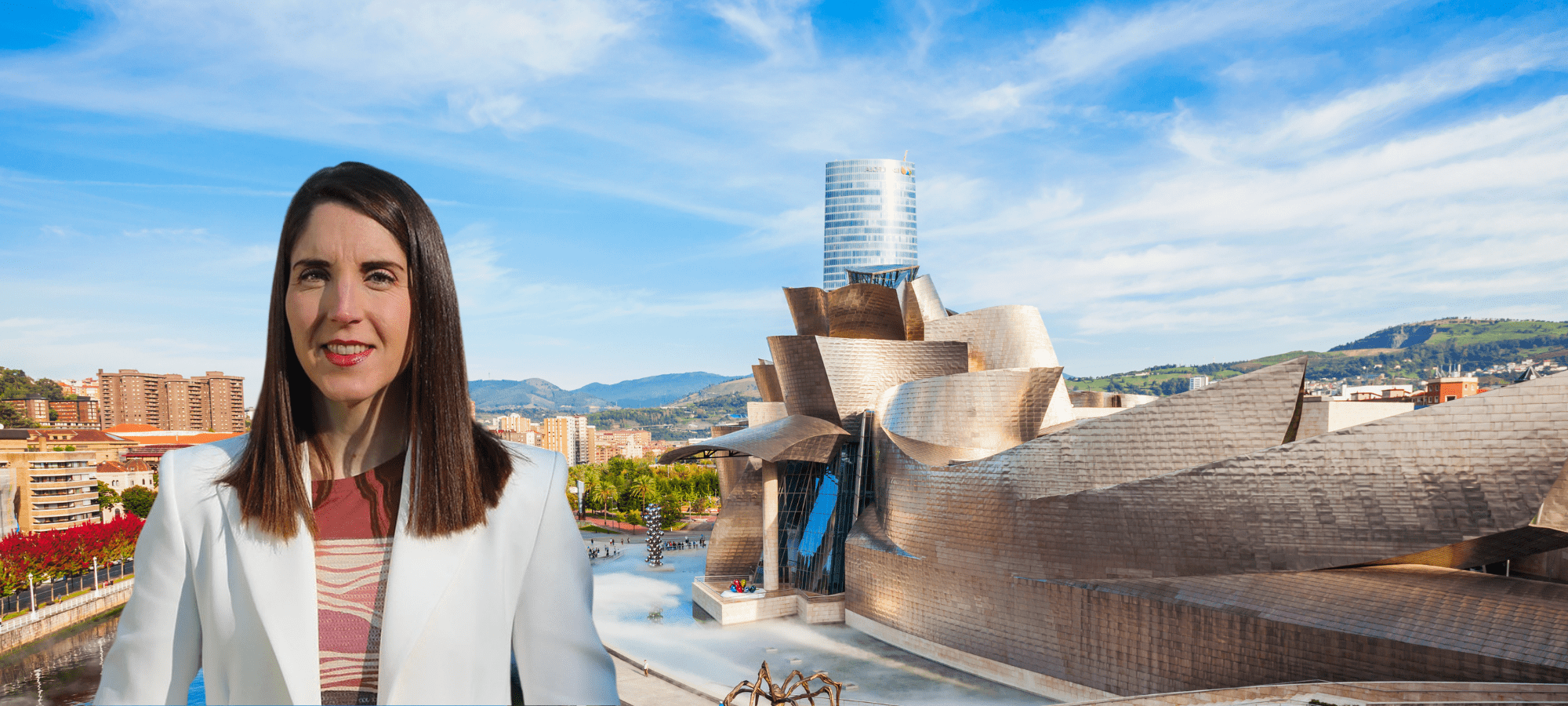
Meet Eider Inuntziaga (Bilbao)

Meet the Local Hero: Eider Inuntziaga, building trust from the streets of Bilbao


When Eider Inuntziaga talks about local government, one word comes up again and again: closeness. 

Since 2023, she has served as a city councillor in Bilbao, after years of political engagement within the Basque Nationalist Party. It is her first public mandate, and the experience has changed how she sees political life. 

Before, she observed politics from the inside. Now, she experiences it daily — in the street, in neighbourhood conversations, and in the direct reactions of citizens to local decisions. The distance between elected representatives and residents is minimal, which makes local politics both uniquely meaningful and uniquely exposed. She also brings this experience to the European level as one of the Council of European Municipalities and Regions’ spokespersons on Local Democracy. 

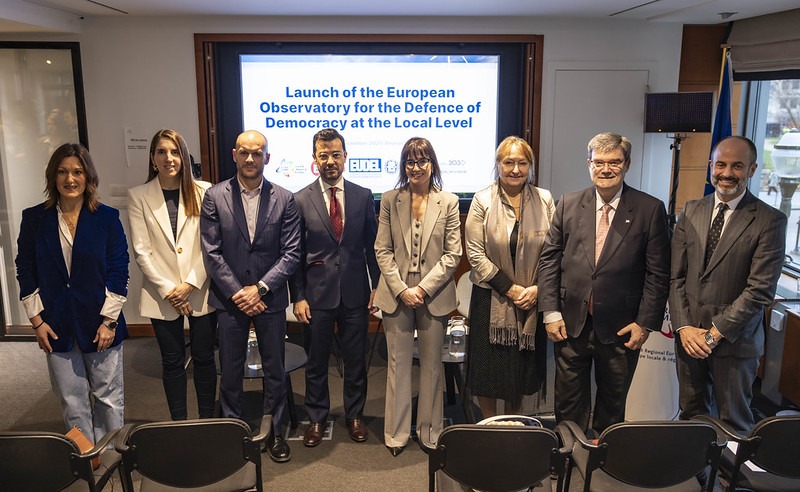
Across Europe, these challenges are increasingly visible. To better understand and address them, CEMR and its partners, including the City of Bilbao, have launched the European Observatory for the Defence of Democracy at the Local Level — an initiative that collects data, documents threats and harassment against local elected representatives, and helps develop practical tools and responses to better protect those serving their communities. 

As she puts it, “local governments are the closest level of administration; we are the face of democracy.” 

That proximity builds trust, but it also concentrates frustration. When people are unhappy, local leaders are often the first — and easiest — target. 

Social media: useful, but risky 

That visibility now extends far beyond the street. 

Inuntziaga describes her relationship with social media as “conflicted.” While it can help connect people and share information, she also sees clear downsides. 

Social media can connect people and stories, and it can be useful—up to a point. But it also creates noise, polarisation, and sometimes hate. It can be dangerous.” 

For local politicians, the effects are concrete. 
“It affects integrity, it affects how we speak, and it can silence people. It can make people leave the work they’re doing—or become afraid of what’s happening.” 

She keeps her presence limited, using Facebook and LinkedIn, and mixing personal and political communication carefully. 

Participation beyond election day 

Despite these challenges, Inuntziaga remains firmly optimistic about the role local governments can play in strengthening democracy. 

Her approach is simple: stay close, listen carefully and involve citizens as much as possible. For her, elections are only the starting point. Day-to-day participation matters just as much. In Bilbao, this philosophy has taken concrete form through participatory initiatives that invite residents to help shape the city’s direction.

One example is “Bilbao City of Values,” a process through which citizens collectively identified a shared set of principles to guide public life. The idea is to create a common framework that strengthens belonging and counters misinformation. The goal, she explains, is not only better policies, but stronger relationships between institutions and the people they serve. 

Learning from Bilbao’s past 

Bilbao’s history has also shaped how she thinks about governance. 

The city has experienced profound transformation over the past decades — from industrial decline and unemployment to renewal driven by long-term planning and cooperation between public institutions, private actors and civil society. For Inuntziaga, this experience shows that change does not happen overnight and that stability requires patience. 

She often points to three elements behind Bilbao’s recovery: cooperation, shared values and long-term vision. Quick fixes rarely work. Instead, consistent decisions taken with the future in mind gradually rebuild trust. 

“Decisions must be made with the long term in mind,” she says, describing democracy and stability as mutually reinforcing. 

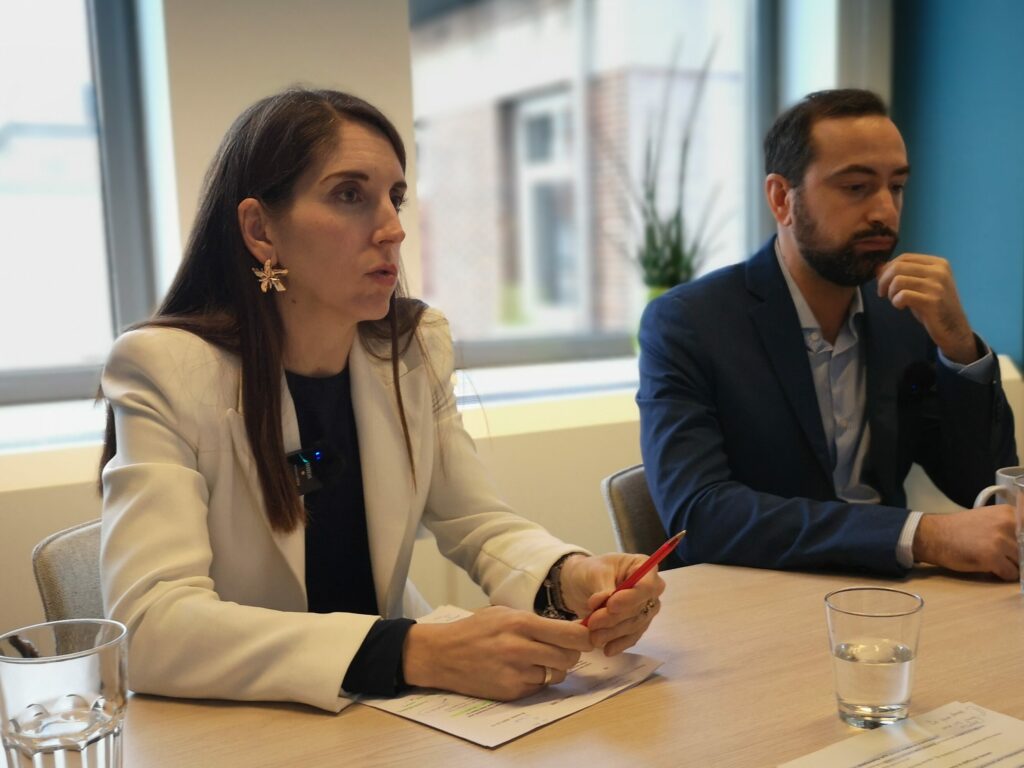
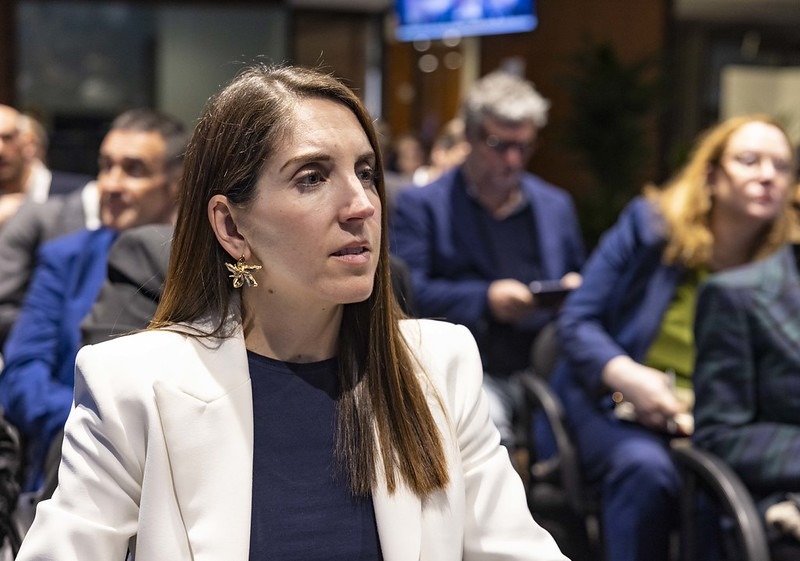
Eider Inuntziaga during the launch of the European Observatory for the Defence of Democracy at the Local Level.

Rooted locally, thinking European 

Although her work is grounded in municipal politics, Inuntziaga keeps a strong European outlook. She follows debates beyond Spain closely and draws inspiration from leaders such as Kaja Kallas, whom she admires for her perspective on Europe’s role in a changing world. 

Still, her focus remains firmly local. For her, cities are where democracy is tested every day — where policies meet real life, and where trust is either built or lost through everyday interactions. 

It is not the most visible level of politics — but, in many ways, it is the one where democracy is felt most directly. 


To hear more from Eider Inuntziaga, you can listen to the full episode of Call Simone, also with Gianmarco Daniele of Bocconi University, . They discuss how growing harassment and disinformation are affecting local leaders across Europe, and how the launch of the European Observatory for the Defence of Democracy at the Local Level can better track threats and protect local democracy. 

For more information, contact:

Mis/disinformation impact on democracy

Local truth study 2025

Empowering cities against mis/disinformation: building capacity, coordination, and trust


According to CEMR’s latest study, nearly half of LRGs report moderate to significant impacts from misinformation, particularly in areas such as public health, personal attacks on officials, and election interference. During the pandemic, for example, false claims about vaccines and public measures severely undermined public trust. 

The personal toll is also growing. One in four local representatives has faced online abuse or intimidation, and over half report being targeted by false claims about their integrity or conduct. These are not abstract challenges, but rather, they erode both individual safety and democratic trust. 

The evidence of CEMR’s study highlighted how misinformation and disinformation spike during crises, for example, around COVID-19, climate policies like low-emission zones, or housing and migration debates. During moments when emotions run high and public debate intensifies, local and regional governments often find themselves on the frontline of these tensions, but many lack the capacity or tools to respond effectively. CEMR’s findings show that 58% of municipalities still lack a formal strategy to counter misinformation and disinformation, and only a quarter are in the process of developing one. Most rely on reactive measures, 58% monitoring social media to spot emerging issues, around a third run awareness campaigns, and a smaller share (4%) collaborate with fact-checkers or pursue legal action (21%). These are useful but insufficient without proactive planning. 

For CEMR, building resilience requires three key actions: 

  1. Strengthen local capacity and trust. Training staff, protecting targeted officials, and using participatory democracy tools such as citizens’ assemblies can help communities become less vulnerable to false narratives. 
  1. Improve coordination and tools. Shared monitoring systems, partnerships, and national or EU knowledge-sharing platforms can help municipalities act faster and avoid duplication. 
  1. Create an enabling framework. National and EU support, through measures like the Digital Services Act, AI Act, and national counter-disinformation laws, can provide resources, clarity, and legal backing. 

Ultimately, misinformation may be a global issue, but its impact is most visible locally. Empowering local governments with the right capacity, coordination, and frameworks is key to protecting communities, safeguarding democracy, and rebuilding public trust. 

Read the study here

For more information, contact:

Concerns over local democracy in Türkiye

Democracy in Turkyie - News 2025

CEMR issues a statement condemning escalating pressure against democratically elected mayors in Türkiye 


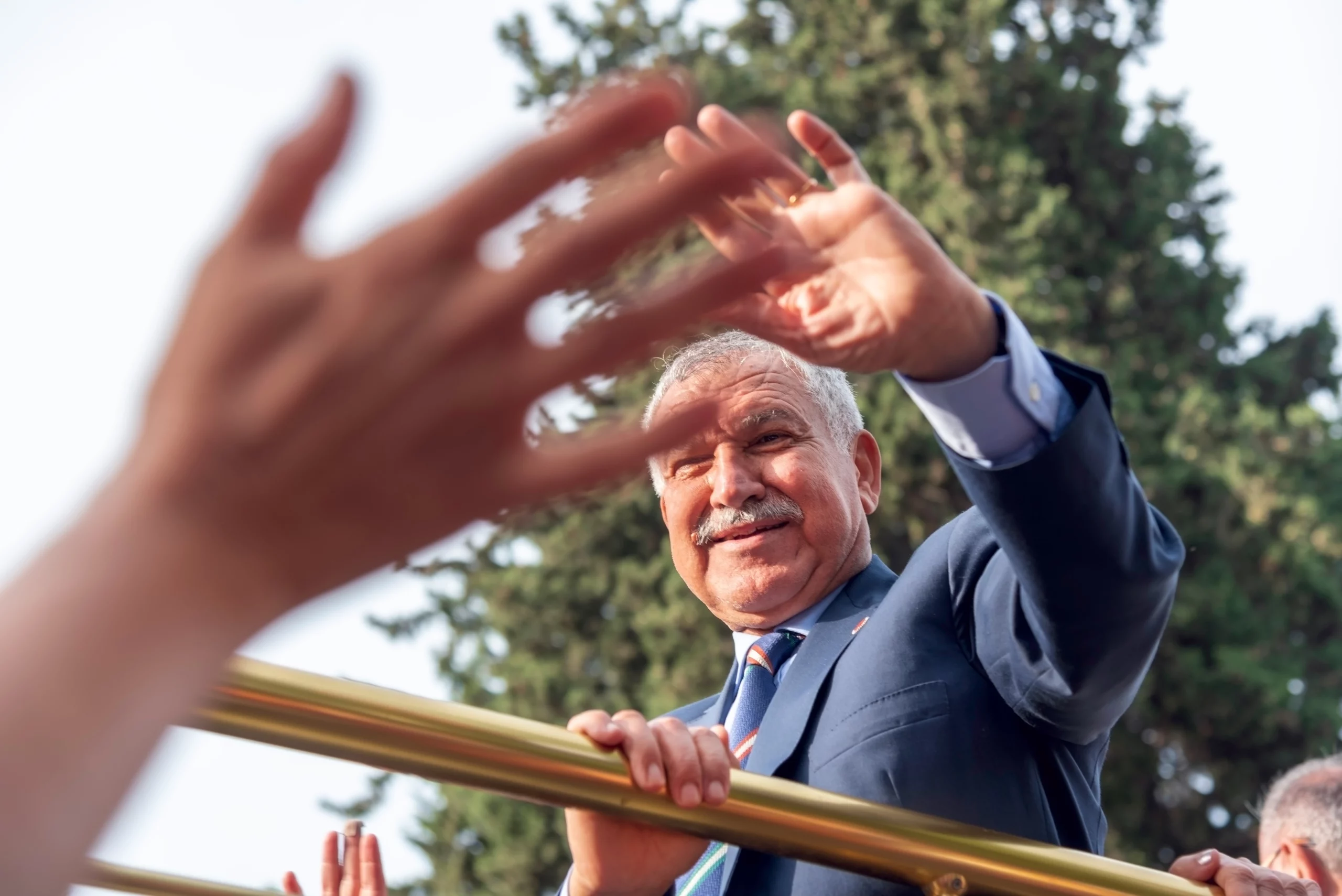
The Council of European Municipalities and Regions (CEMR) has issued a statement expressing its deep concern over the intensifying political pressure on local democracy in Türkiye, following the detention of Zeydan Karalar, Mayor of Adana and Deputy-President of the Union of Municipalities of Türkiye (UMT), CEMR’s member organisation. 

In recent months, an increasing number of opposition-affiliated mayors and staff members of the municipalities have been suspended, prosecuted, or detained in ways that obstruct their ability to carry out their democratic mandates. 

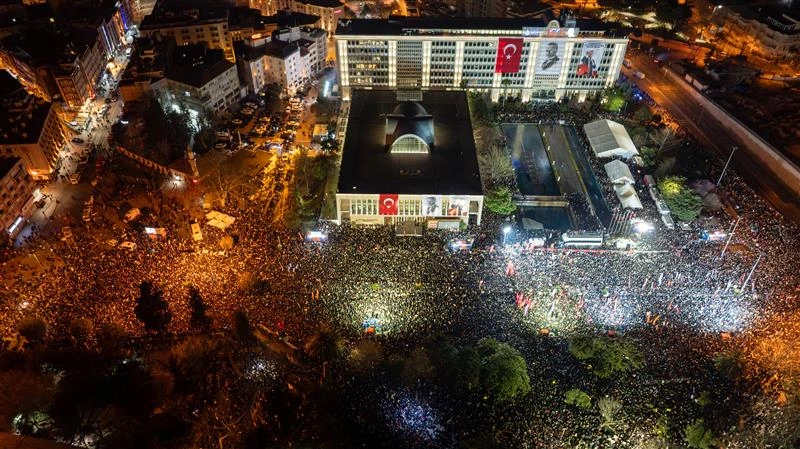
The detention of Mayor Karalar follows the earlier arrest of Ekrem İmamoğlu, former President of UMT. These successive events “risk undermining the principles of local democracy and have potentially far-reaching consequences for stability, democratic resilience, and social cohesion across our continent”. “The legitimacy of democratic governances relies on strong, autonomous local governments, and respect for political pluralism”, defend the signatories.  

CEMR calls on the European and international communities to keep the principles of democracy, the rule of law, and local self-government at the core of their engagement with Türkiye. 

“We respectfully urge the prompt release of all detained Mayors and officials and the full restoration of their rights to perform their democratic functions without fear or interference”, the signatories declare. “Democracy and local self-government cannot and will not be compromised”, they conclude. 

Signatories of this statement include: 

  • Vince Maple, Councillor of Medway, Chair of CEMR Financial Management Committee 
  • Philippe Laurent, Mayor of Sceaux, CEMR Co-President 
  • Christoph Schnaudigel, President of the County of Karlsruhe, CEMR Co-President 
  • Gunn Marit Helgesen, Member of Telemark County Council, CEMR President 
  • Jan van Zanen, Mayor of The Hague, CEMR Executive President 
  • Anders Knape, Councillor of Karlstad, CEMR Executive President 
  • Aleksandra Dulkiewicz, Mayor of Gdansk, CEMR Executive President 

Related content: 

Op-Ed on local democracy in Türkiye

Turkiye democracy - News 2025

Op-Ed on the local democracy in Türkiye co-signed by presidents of the Congress, CoR, ALDA and CEMR


The recent arrests and dismissals of democratically elected mayors in Türkiye, and their replacement by appointed trustees, mark a dangerous turning point for local democracy, not only in Türkiye but for Europe as a whole. At its core, democracy is not just about casting ballots; it is about ensuring that those elected by the people can govern freely, without fear of persecution. The replacement of elected mayors through judicial intervention, without full transparency and due process, raises serious questions about democratic standards and political freedom. 

This is not an isolated event. It is part of a worrying trend of democratic backsliding that threatens the fundamental values upon which modern Europe has been built. From the ashes of World War II, Europe emerged with a commitment to decentralization, democracy, and human rights. The European Charter of Local Self-Government, adopted in 1985, was a direct response to past authoritarianism, ensuring that local governments have the autonomy to serve their communities without undue interference from central authorities. This principle of local self-government is a safeguard against the concentration of power and a guarantee that democracy remains rooted in the daily lives of citizens.  

Yet today, these hard-won principles are being undermined. The detention of local leaders in Türkiye is a blatant violation of the commitments the country made as a member of the Council of Europe. It is a direct assault on the principles enshrined in the Charter and an ominous signal to other governments that such actions might be tolerated.  

Local democracy is the first line of defense for our freedoms. When it is attacked, it is not just a city or a region that suffers—it is the very foundation of democracy. As local elected representatives, mayors are the bridge between national governments and citizens, the leaders who turn democratic principles into tangible actions—whether in public services, social cohesion, or crisis response.  

Ignoring the crackdown on local leaders in Türkiye is not just a failure to support our colleagues—it is a failure to defend democracy itself. If Europe allows the erosion of local democracy anywhere on the continent, it sets a dangerous precedent that could spread.  

EU institutions, together with Member states of the European Union and of the Council of Europe, must take a clear and firm stance. The defense of democracy must not be selective or conditional on political expediency. The right of people to choose their leaders—and for those leaders to govern without fear—must be upheld at all costs.  

Democracy in Europe was never guaranteed; it was built through struggle and commitment. In the face of new threats, we must show the same commitment. The free election of representatives is not a privilege; it is the foundation of a just and stable society. If we fail to defend it today, we risk losing it tomorrow. 

Signatories: 

  • President of the Congress of Local and Regional Authorities of the Council of Europe, Marc Cools 
  • President of the Committee of the Regions, Katta Tüttő 
  • President of ALDA: Nataša Vučković
  • President of CEMR: Gunn Marit Helgesen

*****

This opinion article was published on EU Observer on 15 April 2025. You can read it here

Related content:

For more information or media inquiries, please contact:

Unfair recovery fund distribution

Post-COVID Recovery Fund: centralisation and unfair distribution of resources risk harming cohesion in Europe


A new CoR-CEMR consultation shows that the territorial allocation of funds from the Recovery and Resilience Facility is widely perceived as unbalanced on the ground.

On the eve of a crucial meeting of European heads of state and government focused on competitiveness, the European Committee of the Regions (CoR) and the Council of European Municipalities and Regions (CEMR) unveil the results of their third joint survey on the implementation of the post-pandemic Recovery and Resilience Facility (RFF), which is worth €648 billion.

While the implementation of the RRF is at the halfway point, regions and cities still feel left aside from National Recovery and Resilience Plans (NRRPs). A new consultation conducted jointly by CoR and CCRE-CEMR confirms the highly centralised management of the RRF by the Member States.

Key findings

  • The territorial allocation of RRF funds is broadly perceived as unfair. Nearly half of respondents rate territorial fairness as “poor or very poor” while only a few see it as “good or very good”. And the degree of ownership at local and regional level is also unsatisfactory with significantly more respondents seeing it as “poor or very poor” than “good or very good”.
  • The green and digital transitions stand out as the two objectives supported effectively by the NRRPs, according to respondents in the consultation.
  • Conversely, fully one-third of respondents state that NRRPs do “not at all” effectively contribute to enhancing territorial cohesion, despite this being the legal basis and general objective of the RRF.
  • The involvement of local and regional authorities remains inadequately weak in the various phases of preparation, implementation or monitoring of NRRPs. The specific provisions of REPowerEU to improve the involvement of LRAs do not seem to have yielded concrete results.
  • Almost all respondents encounter barriers to their involvement in the NRRP. The main barrier identified is the national government providing an inappropriate framework for involvement.
  • The share of respondents who consider limited capacity or expertise within their region or city to be a barrier is significantly higher than in the previous consultation. This is likely linked to the higher-than-expected administrative burden of the RRF.
  • Potential overlaps and lack of coordination with cohesion funds remain the highest risk perceived by local and regional governments in the implementation of the RRF.
  • While the overall impact of projects funded by the RRF is rated positively by respondents, they are rather divided regarding its synergies with other funds, its additionality and flexibility.

Christophe Rouillon (FR/PES), Mayor of Coulaines and CoR’s rapporteur on the Mid-term evaluation of the Recovery and Resilience Facility said: “The results of the joint consultation underscore that the RRF is not the silver bullet it was claimed to be. The RRF was the appropriate response in a multi-crises context and will probably have had a positive macroeconomic impact. However, the centralisation it brought about as well as the deficiencies of the performance-based mechanism cannot be extrapolated to the future Cohesion Policy post-2027 if we do not want to put at risk that this policy remains the most efficient EU policy for delivering fair transitions throughout all EU regions.

Kamila Bláhová, Vice-president for European Affairs, Union of Towns and Municipalities of SMOCR (CZ), stated: “The RRF and the national recovery plans of the Czech Republic have a huge potential to support the efforts of local and regional governments aimed at revitalizing the local economy and green infrastructure investments at the local level. However, the issue of administrative capacity and poor synergies between the RRF and other EU funds present significant challenges. It’s crucial to optimize how subnational governments can maximise the use of this substantial funding source and that we address any shortcomings as the RRF moves forward.

Background

The consultation was conducted between January and March 2024, collating the views and experiences of 36 organisations representative of a variety of subnational government levels across 22 EU Member States. The respondents were from Austria, Belgium, Bulgaria, Croatia, Cyprus, Czechia, Estonia, Finland, France, Germany, Ireland, Italy, Latvia, Lithuania, Luxembourg, the Netherlands, Poland, Portugal, Romania, Slovakia, Spain, and Sweden. The geographical composition of the respondents was not identical to that of previous consultations.  Responses received from individual local and regional governments were also taken into account.

Results of the previous CoR-CEMR joint consultations (January 2021 and April 2022)

Read the study here

Contacts:
Matteo Miglietta – CoR
Tel. (+32) 470 895382
Matteo.miglietta@cor.europa.eu

EU elections call to action

CEMR advocates for local and regional priorities in call to action ahead of 2024 EU elections


The Council of European Municipalities and Regions (CEMR) is gearing up for the upcoming European Parliament (EP) elections in 2024 by releasing its Call to Action, addressing the unprecedented challenges faced by Europe and the world.

In a time when national governments grapple with complex issues, such as climate change, the revision of its competition model and geopolitical shifts, CEMR and its national associations underscore their unwavering commitment to fundamental values such as democratic governance, human rights, subsidiarity, and sustainability. CEMR emphasises the critical role of local and regional autonomy in the face of re-centralisation trends and attempts to diminish power at the local level.

Fabrizio Rossi, Secretary General of CEMR, highlighted the significance of this Manifesto, stating, “Now, more than ever, it is imperative that local and regional governments actively participate in shaping policies that address the pressing challenges of our time. The upcoming EP elections provide a crucial opportunity for collaboration and co-creation with the new Members of the European Parliament (MEPs).”

CEMR EU Manifesto Four Key Advocacy Points

1. Active Subsidiarity and Multi-level Governance Cooperation:

Subnational governments are responsible for over 50% of public investment, and the involvement of LRGs in implementing EU legislation at the national level is at least 70%. CEMR emphasises the need for greater participation of LRGs at any level of decision-making to ensure the effective deployment of EU legislation, especially concerning the Green Deal package.

2. Systemic Approaches for Equitable, Inclusive, and Sustainable Societies:

LRGs are key enablers of the digital transition and, therefore, need sufficient public and private investment in digital services technologies, infrastructures, and skills to achieve this goal. CEMR urges the next European Parliament to be bold in promoting an enabling environment that supports the digital literacy of local public administrations.

3. Integrated Territorial Approach:

Urban and rural areas should be treated as mutually complementary assets, creating a reinforcing relationship that defines the concept of the urban-rural continuum. To accomplish this synergy, the upcoming EU co-legislators should advocate for appointing a dedicated Commissioner for Territorial Development within the next European Commission, scheduled to assume office in autumn 2024.

4. Open and Responsible Model of International Cooperation:

LRGs have attested to their commitment to fostering shared values and promoting openness within diverse communities through European partnerships, twinning arrangements, and city-to-city cooperation. This dedication extends to the context of EU enlargement. To amplify the impact of LRGs’ territorial diplomacy, it is imperative for EU policymakers to establish ongoing dialogues and involve local elected representatives in high-level meetings, including those convened by the United Nations and European institutions.

As the clock ticks down to the EP elections, CEMR encourages political parties to incorporate these priorities into their programs and candidate lists. CEMR believes that only through collaborative efforts with Europe’s future policymakers can meaningful outcomes be achieved on the ground.

For more information, contact:

Prague declaration in climate policy-making

Prague Declaration 2023 - News 2023

CEMR Policy Committee in Prague issues a Declaration Advocating Systematic Involvement of Local and Regional Governments (LRGs) in Climate Policy-Making


Policy Committee of the Council of European Municipalities and Regions (CEMR) is meeting in Prague on 6 and 7 December, and the first day of its deliberations culminated in the adoption of a landmark document titled “The Prague Declaration: More Trust in and Stronger Voice for Local and Regional Governments”. This significant political act underscores the pivotal role that local and regional governments (LRGs) play in confronting the formidable challenges facing our municipalities and regions.

“The Prague Declaration” sends a clear message about the imperative need for a stronger voice and a more vigorous partnership between the European Union, national governments, and LRGs. It calls for a more active involvement and consultation with LRGs throughout the entire policymaking process.

Fabrizio Rossi, CEMR Secretary General, expressed his gratitude, stating, “We extend our sincere appreciation to the Union of Towns and Municipalities of the Czech Republic SMO CR for their proactive role in initiating the Prague Declaration. This document reflects our shared commitment to effective governance, sustainability, and the well-being of our communities. Together, we are charting a course toward a more resilient and prosperous future.”

This declaration serves as a roadmap for empowering LRGs to effectively fulfil their responsibilities to citizens, highlighting their strategic role in the implementation of both European and national policies. Only in this way will it be possible to achieve the common goals of climate and social sustainability, preserve our planet for future generations, and ensure prosperity and well-being for the citizens of our towns and cities, municipalities, and regions.

CEMR welcomes media coverage and inquiries related to the Policy Committee meeting in Prague. For further information or to arrange interviews, please contact:

Martina Lehmannová
lehmannova@smocr.cz

CEMR is the broadest European association of local and regional governments that brings together one million democratically elected European politicians, in 60 member associations from 40 countries since 1951.

SMO ČR: The Union of Towns and Municipalities of the Czech Republic is a voluntary, apolitical, and nongovernmental organisation. The Union’s activity is primarily based on the efforts of mayors, lord mayors, and representatives who, beyond their duties, dedicate themselves to general self-government issues.

War on Ukraine first declaration

European local and regional leaders reaffirm solidarity with Ukraine and call for peace, justice, and reconstruction.


On the first anniversary of Russia’s full-scale invasion of Ukraine, local and regional leaders across Europe renew their strongest support for Ukraine, its people, and its democratic institutions. 

Condemning Aggression 
The war has brought devastation to civilians, elected representatives, and essential infrastructure. The abduction of Ukrainian mayors and the ongoing detention of five of them highlight the assault on democracy and the rule of law. These acts are condemned in the strongest terms, with urgent calls for the immediate release of the detained leaders. 

Solidarity and Support 

Local and regional governments across Europe stand firmly by Ukraine. Partnerships such as the Bridges of Trust project, the Eastern Partnership programme, and the European Alliance of Cities and Regions for the Reconstruction of Ukraine are mobilising resources, expertise, and cooperation. These initiatives are not only helping communities recover but also preparing Ukraine for its future as a full member of the European Union. 

Shared Values 
This declaration is a reminder that Europe’s foundations rest on peace, democracy, and respect for international law. As the war continues, European leaders join the international community in reaffirming Ukraine’s sovereignty and territorial integrity, and in urging the Russian Federation to end its illegal war. 

A year into this unjustified conflict, the commitment of Europe’s municipalities, cities, and regions is unwavering: to stand with Ukraine, to defend shared values, and to contribute to rebuilding a peaceful, democratic future. 

Read the declaration here 

For more information, contact: 

Support for Istanbul Mayor

Istanbul Mayor - News 2022

CEMR President voices strong support for Istanbul Mayor Ekrem İmamoğlu


The President of the Council of European Municipalities and Regions (CEMR), Gunn Marit Helgesen, expresses strong support for Ekrem İmamoğlu, Mayor of Istanbul, sentenced to two years and seven months in prison.

“The Council of European Municipalities and Regions (CEMR) is deeply concerned to learn that a Turkish court has sentenced the Mayor Ekrem İmamoğlu of Istanbul to more than two and half years in prison on charges of insulting members of Turkey’s Supreme Electoral Council as widely reported in the international press.

We condemn in the strongest possible terms this conviction handed down to our colleague and furthermore, we denounce the political ban that may lead to his removal from office. Mayor Imamoglu is an elected official whose actions do not warrant this repressive and disproportionate verdict.

CEMR has been following closely events in Turkey the past years and finds the unacceptable treatment of local elected politicians highly disturbing. These events have no place in a democratic society, and we would urge the Turkish judicial system to reverse this unjust decision.

CEMR supports democratically elected politicians whose legitimate mandate stems from their election by their citizens. We stand firmly in solidarity with local leaders in Turkey and across the world in their fight for freedom of speech and local democracy.”

Read the declaration here

For more information, contact: