Green transition

Renewable Energy - News Section

Co-creating the green transition with cities: a conversation with Mayor Sari Rautio of Hämeenlinna


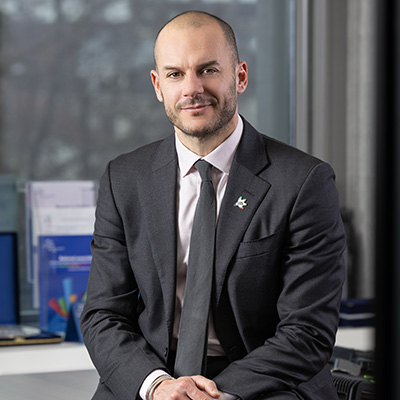
Sari Rautio is chairperson of the city board of Hämeenlinna, a mid-sized city in Finland, and CEMR spokesperson on the environment. She spoke with us to discuss the many actions her city is taking for a sustainable future and the reasons she signed the Green City Accord. Read on to discover one among countless examples across Europe of how the goals of the Green Deal are being realised from the ground up!

How would you describe the city of Hämeenlinna?

Hämeenlinna is the oldest inland city in Finland, rich with history and beautiful nature. We not only have forests but also over 300 lakes within our city limits! We have 70,000 inhabitants and are close to the population centres of southern Finland; so in many ways we combine the advantages of urban and country life.

We have a diversified economy that includes agriculture, traditional industry and new innovative sectors. Many people commute to or from neighbouring areas to work, making traffic and railroad networks very important. So, between the nature, a diverse economy and logistical challenges, we face many environmental issues.

What are you doing for the environment in the city of Hämeenlinna?

Because of our situation we have been taking a wide range of environmental actions. We had already been taking steps to reduce our footprint in the previous years, but at the beginning of 2020 we created the city’s programme to become carbon-neutral.

Heating for example represents 40% of our emissions. Earlier this year we changed the district heating system, which is very popular, so that 95% of the heat comes from renewables, mainly from biomass such as wood. We also have a local company which is making biofuel from waste.

We all have an impact on the environment in some way. But how can local governments engage people to become part of the solution?

I am a strong believer in cocreation with companies and citizens. That’s how we developed our carbon-neutral programme. For example, our city the steel company SSAB has a big plant in our city which plans to become carbon-neutral by 2027. No one can achieve the green transition alone. It’s through such cooperation that we be able to reduce the emissions from heating, traffic and industry.

In addition to action by the municipality and companies, the third big thing is to get people involved to make sustainable choices. We have an old saying in Hämeenlinna: “The big things are small, and the small things are big.” Small actions can have a big impact. That’s why we are working with kids, educating them about the UN Sustainable Development Goals (SDGs) and we can each live more sustainably.

Hämeenlinna has always been a city where people want to do their share but are also very independent-minded. That’s why raising awareness is so important and can have such a big impact.

Hämeenlinna was one of the first 50 cities to sign the Green City Accord, an EU initiative in which cities commit to taking action to become cleaner, healthier and more sustainable. Why did you sign the Green City Accord and what is the added value for cities?

There are several advantages to working with the Green City Accord. First, it’s a way to combine all the big and small things we are already planning on environment into one coherent package.

Second, it’s a way for us to build a community with other cities, compare what each of us has done and learn from each other. It’s important to understand the similarities at European level but also what is different and why things aren’t done the same way everywhere. And it’s important to stress European cooperation.

Third, it’s great to highlight each city’s actions on environment as something people can be proud of. Particularly in these times of isolation with corona, it’s important for people to be proud of their home city and what we achieve together.

The European institutions are passing a huge range of measures as part of the Green Deal, including on climate, energy, transport… What’s your local perspective on these kinds of measures?

The most important thing is that we cannot do these big changes only at one level. National governments and the EU do the legislation but the implementation is local, as are the innovations. That’s not only local governments, but also companies, NGOs and the people. That’s why it’s so important that cities are involved. Cities are the glue that combine all these stakeholders. Cocreation is key here.

In general, European and national legislation should be more about the goals and be less specific about how we achieve them. Local conditions vary a lot and we don’t always know yet what are the best ways of achieving these goals. I hope being goal-oriented will be the new normal in public policy by 2030. This changes the whole system towards more strategic work.

What challenges do you face regarding water management? Do you think the European legislative framework is fit for purpose for local and regional governments?

In Finland, wastewater management is in a very good position. The biggest water issue is the Baltic Sea and the pollution there. In the Committee of the Regions, I started the Baltic Sea Interregional Group as chairperson with members from all states around the Baltic.

Our slogan: “Make the Baltic Sea the first plastic-free sea!” Plastic is a terrible symbol of pollution and the idea of eliminating it from our seas inspires me a lot. And that is something that no country or administration can do on its own! Innovations are crucial here, to collect plastic from the seas, reform our waste system and produce substitutes for plastic.

Finland is one of the few EU countries in which local and regional governments were consulted in the design of their national recovery plan. What kinds of projects did cities and regions propose to further the green transition?

There are 18 regions in Finland and each has done their recovery plan, which were then combined into a national plan. This process has worked well. We are funding a wide variety of measures for railroads new industries, agriculture and digitalisation, which will also have a positive environmental impact.

I am really happy that the recovery package is so strongly intertwined with the Green Deal. We have to stick to that and not let countries do too little or choose the easy way out. What worries me a bit now is actually getting started. How long will it take to actually disburse the funding and materialise the projects?

The recovery plan is a great example of how we can work together to achieve great things. As individual cities and countries, we are too small by ourselves. But together as Europe, we can change how the world flows!

European territories localise the SDGs

Climate - News

Hot off the press: “European Territories Localise the SDGs”


From global to local: PLATFORMA and CEMR are proud to present the 2021 edition of our regular series of publications on how municipalities, regions and their associations are making the UN Sustainable Development Goals (SDGs) a reality on the ground.

Entitled European Territories Localise the SDGs: Continuity and Change in Times of COVID-19, this 46-page report is jam-packed with data, infographics, charts and best practices on how local and regional governments are working on the SDGs in Europe and beyond.

Based on data from 39 local and regional government associations in 29 countries, the study provides a succinct overview of the often-diverse situation across the European continent.

Local governments: key to monitoring and cooperation on the SDGs

The report’s findings are clear: an increasing number of local and regional governments and their associations in Europe are taking the lead in implementing what is still seen by many others as ‘just’ a global agenda. Those on the forefront however know how the 2030 Agenda and its SDGs can transform their daily work, policies and public services with inclusive approaches.

Indeed, 15.4% of associations are now more involved in the SDGs than in 2019. Today, over 3/4 associations have sound knowledge of the SDGs and 1/3 use them as a guiding reference.

The SDGs offer a shared vocabulary and goals, enabling local governments to interconnect with other governments and players, ultimately forming links between citizens and the world. Local governments and their associations have a particularly crucial role in promoting cooperation on and monitoring of progress on the SDGs.

84% of associations are involved in some way in national SDG coordination mechanisms. What’s more, around 4/5 associations have taking action on the SDGs’ international dimension and considers that the SDG framework helps development of partnerships with peers (i.e. decentralised cooperation activities around the 2030 Agenda).

The report also highlights the essential role of local government associations have played during the COVID crisis. This has included sharing information with municipalities and regions, capacity-building, advocating for financial support and participating in national consultations.

Recommendations to realise the 2030 Agenda from the bottom-up

We have long known that the ambitious goals of the 2030 Agenda need to be implemented from the bottom-up. The local level is ideal for experimentation, innovation and acceleration of work on the SDGs. However, the right conditions need to be in place to realise this potential.

The report formulates 5 key recommendations:

  • Increase EU and national funding for SDG localisation
  • Promote mutli-level governance, multi-stakeholder partnerships and policy coherence
  • Local and regional governments and their associations should continue peer learning within and outside Europe
  • National governments should increase recognition and support for SDG localisation (notably to monitor progress)
  • Strengthen human resources and capacities on SDG localisation

The report and its key findings will be presented on 29 June at the 12th Annual Meeting of Cités Unies Frances (CUF), on 8 July during a PLATFORMA-CEMR dedicated webinar taking place in the context of the the UN High Level Political Forum on Sustainable Development (HLPF, registration form) and at other local government events.

More information:

For more information, contact:

Summit Poznan 2021

Renewable Energy - News

Connecting Nature Enterprise 


As the world looks to build back better after the pandemic, innovators are leading to the way towards sustainable business models inspired by nature. That’s why the city of Poznan is hosting the Connecting Nature Enterprise Summit, an online event bringing together mayors, business leaders and policymakers from across Europe, with the support of the European Commission.

The summit will explore the challenges and opportunities of embracing nature-based solutions. Hosted on a virtual platform with panel discussions, presentations, workshops, capacity building sessions and plenty of opportunity to connect with other participants. Get inspired, naturally!

Dates: 29-30 June 2021
Website and programme
Registration
Languages: English and Polish

Localising sustainable goals after COVID19

Localising SDGs - News

How European territories are driving sustainable change amid the Covid-19 crisis 


The Covid-19 pandemic has been a profound shock for municipalities and regions across Europe. Faced with health emergencies, social disruption, and economic slowdown, local and regional governments (LRGs) had to adapt swiftly, protecting essential services, reallocating budgets, and reshaping priorities. Yet, despite the immense challenges, many local authorities did not abandon global commitments. Instead, they turned to the 2030 Agenda for Sustainable Development (SDGs) as a framework to guide recovery and long-term resilience. 

With over 65% of SDGs requiring local implementation, municipalities and their national associations play a decisive role in ensuring progress. Some cities temporarily slowed their SDG-related work, but others actively integrated the Goals into recovery strategies, using them to design inclusive, coherent, and sustainable policies. This approach has strengthened their credibility as leaders in “building back better.” 

National associations of local governments proved to be vital allies. By coordinating efforts, connecting municipalities with resources, and advocating at the national and European levels, they helped ensure that even small and rural communities could advance the SDG agenda. Importantly, awareness and commitment have grown: associations in countries where SDG uptake was once limited are now actively building knowledge, promoting peer learning, and pushing for recognition of local action. 

Another breakthrough is the rise of Voluntary Local Reviews (VLRs) and Voluntary Subnational Reviews, which showcase municipal achievements and give visibility to local actors on the international stage. This not only strengthens city diplomacy but also fosters a shared vocabulary and sense of purpose among local, national, and global partners. 

The Covid-19 crisis has underscored the transformative power of the SDGs: as both a roadmap for sustainable recovery and a catalyst for innovation in governance, partnerships, and service delivery. Still, achieving the Goals requires greater investment and mobilisation of resources. EU initiatives such as the Green Deal, cohesion funds, and Global Europe offer crucial opportunities to scale up local action, alongside new forms of public-private partnerships. 

In short, the SDGs are not an abstract global agenda, they are a practical tool for territories to rebuild stronger, fairer, and greener communities. Even in times of crisis, Europe’s municipalities and their associations are proving that sustainability is not just a long-term ambition, but an immediate necessity. 

Read the study here 

For more information, contact: 

Energy performance in buildings directive

Green City - News Section

CEMR calls for flexible, well-resourced revisions to the EU Energy Performance of Buildings Directive (EPBD)


The European Green Deal aims to make Europe the first climate-neutral continent by 2050, with the revision of the Energy Performance of Buildings Directive (EPBD) as one of its cornerstones. Buildings account for a significant share of Europe’s greenhouse gas emissions, making energy efficiency and sustainable renovation crucial to the Fit for 55 package. In its response to the consultation on the EPBD revision, the Council of European Municipalities and Regions (CEMR) stresses the essential role of local and regional governments (LRGs) in ensuring a successful and fair transition. 

CEMR welcomes the ambition of the European Green Deal but underlines that success depends on proper implementation, adequate financial support, and respect for the principle of subsidiarity. Local and regional authorities are on the frontline of climate action, yet they need flexible frameworks rather than one-size-fits-all obligations. 

Among its key recommendations, CEMR highlights: 

  • Flexibility and subsidiarity: Member States and LRGs should be able to adopt integrated, territorial approaches to emissions reduction, focusing not only on building-level efficiency but also on neighbourhood and system-wide solutions. 
  • Life-cycle perspective: Regulations must take into account emissions from construction materials such as steel and concrete, as well as opportunities for circularity and reuse. 
  • Indicative, not mandatory standards: Minimum energy performance requirements and renovation targets should remain indicative to reflect local contexts, available resources, and socio-economic realities. 
  • Equal treatment of renewable energy: Energy produced on-site and energy delivered via carriers like district heating, renewable gases or electricity grids must be treated on the same footing. 
  • Financing and equity: Investment tools like ELENA must be adjusted to ensure accessibility, particularly for vulnerable households. Measures must avoid creating energy poverty or split incentives between landlords and tenants. 

CEMR also urges the Commission to reduce administrative burdens, ensure consistency between the EPBD, the Renewable Energy Directive (RED) and the Energy Efficiency Directive (EED), and reinforce cooperation across levels of governance. 

Europe’s climate-neutral future depends on a resilient and efficient building sector. Local and regional governments are central actors in achieving this transformation. To succeed, the revised EPBD must provide adequate support, flexibility, and resources while avoiding rigid, burdensome rules. By empowering municipalities and regions to act according to their local realities, the EU can ensure that the green transition delivers both climate impact and social fairness. 

Read the policy paper here 

For more information, contact: 

People first in Europe’s mobility shift

Mobility - News

Sustainable and smart mobility must be built with, not just for, cities and regions


That’s the core message from the Council of European Municipalities and Regions (CEMR) in response to the European Commission’s Sustainable and Smart Mobility Strategy. While CEMR supports the EU’s ambition to link transport policy with the Green Deal and Digital Agenda, it urges stronger recognition of the essential role local and regional governments play in achieving climate and mobility goals. 

CEMR highlights that sustainability cannot come at the expense of connectivity, accessibility, affordability, safety and health. Local authorities must be empowered to strike the right balance between environmental ambition and citizens’ everyday mobility needs, whether in dense city centres, suburbs, or rural areas. 

Key messages from CEMR include: 

  • Partnership across levels of government is vital. Local mobility strategies must be developed in coordination with national and EU institutions, with clear roles, shared responsibilities, and sufficient funding. 
  • Flexible, inclusive planning tools, like Sustainable Urban Mobility Plans (SUMPs), should be strengthened, not standardised. Cities and regions need adaptable frameworks that reflect their unique territorial challenges. 
  • More funding and clearer access are needed for local mobility infrastructure, including investments through the Recovery and Resilience Facility, Connecting Europe Facility, and Horizon Europe mission for 100 climate-neutral and smart cities. 
  • Policy support must go beyond technology. Behavioural change, active mobility, shared mobility and smart spatial planning are just as important as electric vehicles and digital tools. 

CEMR also calls for better regulation on key issues such as alternative fuels, intelligent transport systems, public transport governance, and micromobility. At the same time, it stresses the need for EU-wide data platforms and speed adaptation systems to improve safety and enforcement. 

In short, Europe’s transport transformation will only succeed if local realities shape the road ahead. Sustainable mobility starts where people live, and local governments must have a central seat at the table. 

Read the full position paper  

For more information, contact: 

Local waste water policy 

Water Management - News

CEMR urges a proportionate, flexible and locally tailored approach to EU waste water reforms 


As the European Commission advances its revision of the Urban Waste Water Treatment Directive (UWWTD), the Council of European Municipalities and Regions (CEMR) welcomes the opportunity to modernise the framework in line with the Green Deal and today’s environmental challenges. 

However, CEMR stresses that a one-size-fits-all approach will not work. Instead, the revised directive must reflect the diversity of local conditions, be rooted in risk-based assessments, and align with the subsidiarity principle, allowing national and local authorities to tailor implementation to their context. 

Key concerns raised by CEMR include: 

  • Proportionality and impact: Efforts should focus where they matter most, on larger treatment plants and high-risk areas, rather than extending rigid requirements to small agglomerations or individual systems, which often pose far lower environmental risk. 
  • Stormwater overflows and urban runoff: These should be managed through a coordinated, risk-based approach under existing national plans and the Water Framework Directive, avoiding duplication and overregulation. 
  • Nutrient removal: CEMR supports stricter phosphorus thresholds in sensitive areas and encourages phosphorus recovery but calls for flexibility on nitrogen removal in colder climates where existing targets are technically or economically unfeasible. 
  • Circular economy: The revision should promote pollution prevention at source, enforce the polluter pays principle, and support raw material recovery and energy efficiency across the waste water chain. 

CEMR also calls for coherence across EU legislation, including alignment with the Water Framework Directive, and clear, proportionate reporting obligations for local and regional governments. 

Local best practice: inspiration from the Netherlands 

CEMR highlights Dutch municipalities as a model of innovation in tackling stormwater overflows and integrating water management into urban design. The “water square” in Rotterdam, for example, combines stormwater buffering with vibrant public space, showing how smart spatial planning can enhance both environmental outcomes and quality of life. 

In short, the revision of the UWWTD is a vital opportunity, but success will depend on flexibility, local knowledge, and a commitment to cost-effective, risk-based solutions

Read the full position paper 

For more information, contact: 

Empowering local climate action

Renewable Energy - News Section

CEMR’s Joint Response to the EU Energy Efficiency and Renewable Energy Directive Reviews


The Council of European Municipalities and Regions (CEMR) submitted a joint response to the European Commission’s consultations on the Energy Efficiency Directive (EED) and the Renewable Energy Directive (RED) in early 2021. This contribution reflects CEMR’s deep commitment to achieving climate neutrality by 2050 while safeguarding the role and autonomy of local and regional governments (LRGs).

CEMR supports ambitious climate targets at the EU level, with a focus on greenhouse gas (GHG) reduction. However, it argues that targets for energy efficiency and renewable energy should remain indicative at the national level, respecting the subsidiarity principle and local conditions. The organisation firmly opposes EU obligations that impose rigid requirements on LRGs, particularly concerning building renovations, public procurement, and energy planning.

A key concern is the extension of renovation obligations for public buildings to LRGs. CEMR highlights that such mandates overlook the economic realities, building uses, and planning capacities at the local level, and may burden communities with higher costs and social impacts. Instead, it advocates for flexible, cost-effective approaches tailored to local and regional contexts, supported by adequate funding, technical assistance, and capacity-building.

CEMR also calls for a technology-neutral approach to energy policy, where different forms of renewable and low-carbon energy, whether on-site, from the grid, or district heating, are treated equally. It stresses that regulations should reflect GHG savings and sustainability from a life-cycle perspective, not just the type or source of energy.

The response urges the Commission to recognise the central role of LRGs in the energy transition. This means involving them directly in National Energy and Climate Plans (NECPs), ensuring multi-level governance, and avoiding overregulation that could stifle local innovation and initiative.

In short, CEMR’s response is a strong call for an EU climate framework that is ambitious, but also realistic, inclusive, and enabling, one that empowers cities and regions to lead in achieving a just and effective energy transition.

Full the joint response here

For more information, contact:

EU delegations & local action 

PLATFORMA - banner 2

Exploring how EU Delegations engage with local and regional governments in global development 


As the global landscape of development cooperation evolves, the role of local and regional governments (LRGs) has moved from the margins to the mainstream. No longer seen merely as beneficiaries of aid, LRGs are now recognised as key actors in the design, implementation and ownership of sustainable development policies. 

With over 139 EU Delegations around the world, the European Union plays a pivotal role in supporting governance and development at all levels. This new PLATFORMA study explores how these Delegations are engaging with LRGs, the value of their cooperation, and the road ahead. 

This study highlights the growing political relevance of decentralised cooperation, mayor-to-mayor partnerships, city-to-city exchanges, and collaboration between national associations in achieving sustainable development. EU Delegations, representing the EU in partner countries, manage funding and support development policies aligned with local needs. In this context, their relationship with LRGs is crucial. 

Key insights from the study include: 

  • Local knowledge matters: LRGs are closest to citizens and understand their needs. Their involvement improves governance, ensures better delivery of services, and strengthens citizen engagement. 
  • TALD – Territorial Approach to Local Development: Promoted by PLATFORMA, TALD ensures local development strategies are not only nationally supported, but locally owned and shaped. 
  • From consultation to partnership: The new 2021–2027 EU Multiannual Financial Framework emphasises a permanent policy dialogue with LRGs, beginning with programme design and continuing through implementation and monitoring. 

Yet, the study also reveals a mixed picture. While some Delegations engage actively with local authority associations and decentralised actors, others have limited or no contact, missing opportunities for peer learning and stronger governance. 

The study calls for a deeper and more consistent relationship between EU Delegations and local governments in partner countries. It identifies four key areas where progress can be made: 

  1. Training: EU Delegation staff would benefit from greater awareness of local governance realities, decentralisation processes, and participatory mechanisms. LRGs can offer training and insights rooted in real experience. 
  1. Political closeness: LRGs understand the language of local politics. Stronger ties between EU Delegations and elected representatives could boost trust and effectiveness. 
  1. Networks and awareness: LRGs bring with them local networks and credibility. Their role in development education and public awareness can link global goals with local realities. 
  1. Support to associations: Many national associations of LRGs remain underused. Targeted EU support could enhance their capacity, sustainability and leadership in local development. 

By investing in these relationships, the EU can reinforce its commitment to local ownership, sustainable development and effective international cooperation. Ultimately, localising global agendas such as the 2030 SDGs will only be possible if local voices are not only heard, but also empowered. 

Read the study here 

For more information, contact: 

Building climate-ready cities in Africa 

Sub-Saharan Africa - News Section

Lessons from the Covenant of Mayors in Sub-Saharan Africa on strengthening local capacity for energy access and resilience


The Covenant of Mayors in Sub-Saharan Africa (CoM SSA) has, over its first four years, shown that local leadership is essential in tackling climate change and improving energy access. Supported by the European Union and global partners, the initiative empowers municipalities to design and implement Sustainable Energy Access and Climate Action Plans (SEACAPs), tailored to their contexts. 

Developing Local Capacity 

One of the clearest lessons is the importance of involving African partners early and consistently. Contextualising European approaches to local realities in Sub-Saharan Africa has proven key to success. Peer-to-peer learning, including informal exchanges like WhatsApp groups, has strengthened communities of practice and allowed cities to share knowledge beyond language and geographic barriers. 

At the same time, challenges remain. Sparse data, limited technical expertise, and difficulties in political continuity have slowed progress. Travel barriers, connectivity issues, and shifting national dynamics have highlighted the need for more flexible and innovative support structures. The presence of local intermediary organisations, universities, NGOs, or research centres has emerged as critical in anchoring capacity and ensuring sustainability beyond donor cycles. 

Successes and Lessons 
Despite obstacles, CoM SSA has enabled cities such as Bouaké, Dakar, and Tsévié to make tangible progress on emissions inventories and resilience planning. The development of SEACAP guidelines, adapted through extensive consultation, provided a framework that cities could build upon. Simplified tools and hands-on training helped municipalities overcome initial hurdles, while regional workshops fostered solidarity and collective ambition. 

The first phase of CoM SSA demonstrates that building climate resilience in African cities requires time, trust, and resources. Moving forward, stronger capacity-building, continuous peer exchanges, and deeper involvement of local support organisations will be vital. With growing international momentum on climate action, this initiative has laid the groundwork for a long-term transformation: cities that are not only more resilient but also better equipped to deliver sustainable energy for all. 

Read the study here 

For more information, contact: