Good Local Practices

Renewable Energy - News Section

Welcome to the Saerbeck climate cooperative: when locals invest in a renewable and independent energy future


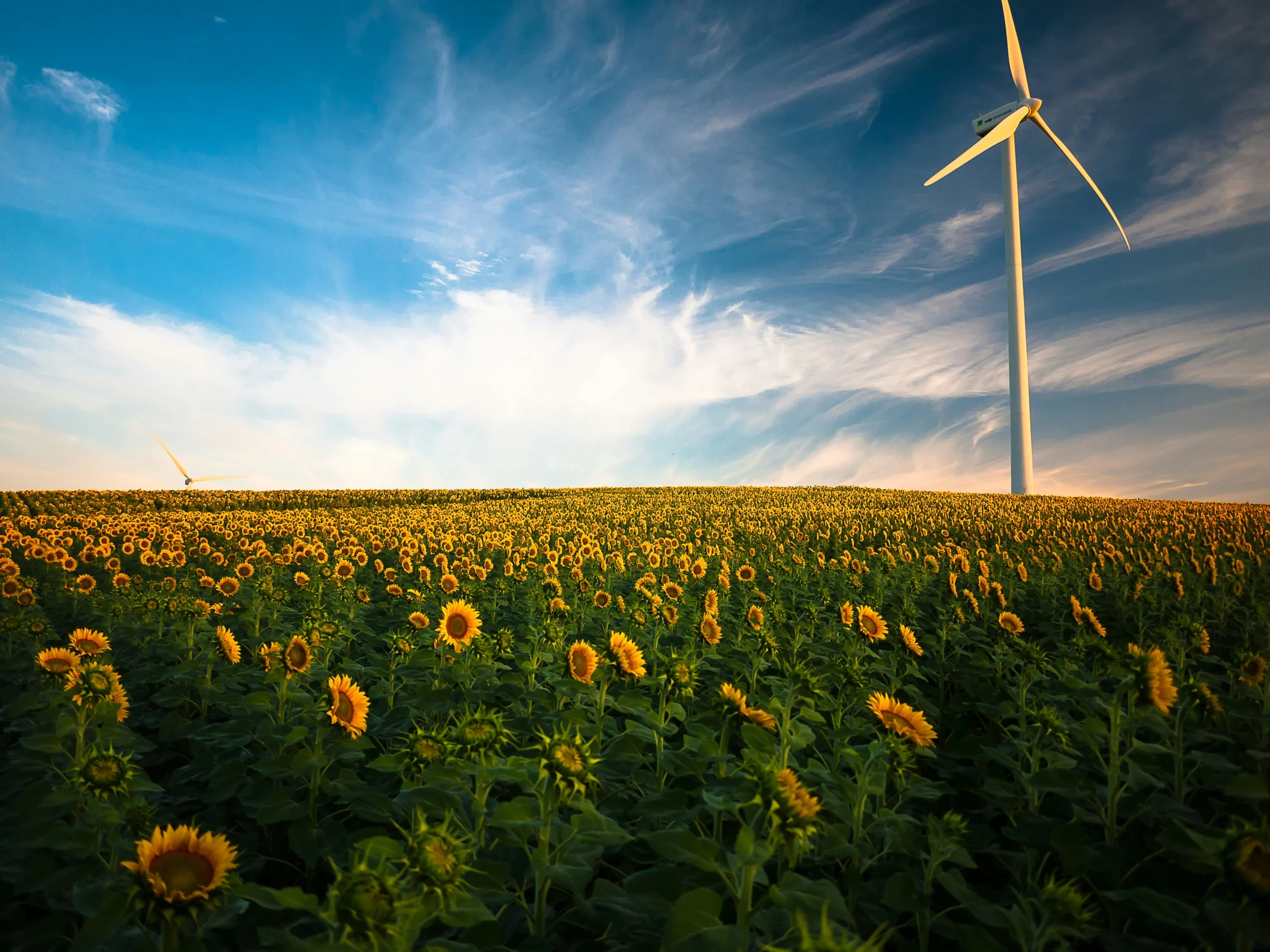
With its 7000 inhabitants, Saerbeck is a small German town with a big environmental ambition: to become an energy self-sufficient “climate community” by 2030. This will be achieved by maximising energy generation from renewable sources such as sun, wind, water and biomass as is consumed in private households and commercial enterprises.

Saerbeck has, since 2009, aimed to become the state of North-Rhine-Westphalia’s model climate municipality of the future. The municipal “climate concept” has since become part of the vocabulary of Saerbeck’s citizens and indeed all inhabitants are encouraged to participate in this effort to locally and sustainably produce all of households’ and enterprises’ energy needs.

In 2010, the municipality acquired an ammunition depot abandoned by the German armed forces. It is being transformed into an energy park with a mix of powerful photovoltaic systems, wind turbines, biogas plants and other innovative projects.

Currently, the Bioenergy Park produces about 2.5 times more renewable electricity than Saerbeck consumes. The CO2 footprint has thus been halved, although work still needs to be done to decarbonise transport and heating.

Threefold benefits: financial, environmental and educational

In the spirit of “thinking globally, acting locally”, Saerbeck’s citizens can directly participate and invest in these local energy projects through a citizens’ cooperative. As of 2020, the cooperative has turned a profit and has even distributed a dividend to its citizen-investors.

So far, almost 400 local shareholders have invested in the cooperative. Ultimately this means twice the benefit for locals: besides the local economic gains, the town is making a great contribution to global climate protection and local energy independence.

All projects are accompanied by numerous educational projects: energy transition starts in the minds.  An experimental school at the Bioenergy Park shows students from all over the world how renewable energies work in reality and what they are good for.

Annual report on SDGs goes digital

PLATFORMA - banner 3

Our annual report on the SDGs goes digital at the UN High-Level Political Forum on Sustainable Development (HLPF)


Available for the first time in an online format, PLATFORMA and CEMR have just published their fifth annual study on the localisation of the Sustainable Development Goals (SDGs). Released on the occasion of the UN High-Level Political Forum on Sustainable Development (HLPF) in New York, discover this innovative publication today on local-sdgs.eu

This study gathers the most recent information on how and to what extent associations and networks of local and regional governments have been involved in the localisation of the SDGs, both in Europe and with their global peers, and in particular during the COVID-19 pandemic. This year’s survey therefore, included questions on the SDGs’ implementation since 2015 and the impact of the COVID-19 crisis. In the last two sections, there were also additional questions regarding Voluntary Subnational Reviews (VSR) and decentralised cooperation.

It gathers 63 answers from 28 European countries, 37 associations of local and regional governments and 18 municipalities and regions.

Main recommendations

Six main recommendations came out of this study, targeting EU institutions, national governments and local and regional governments and their national associations:

  1. The European Commission should report regularly on any progress made in achieving the Sustainable Development Goals (SDGs) at the EU level and indicate how the different levels of governance have contributed to this process.
  2. We encourage associations of local and regional governments to actively take part in the Voluntary Subnational Reviews (VSR) process.
  3. Local and regional governments (LRGs) are calling for the firm recognition and inclusion by national governments of the role of LRGs and their associations in the monitoring and reporting of progress in the implementation of SDGs at the national level.
  4. European states and the EU need to strengthen their dialogue with the subnational levels and include them in any relevant high-level delegation meetings.
  5. Strengthen international cooperation to achieve the 2030 Agenda at the local and regional levels
  6. There is still a need to localise and territorialise the SDGs, through the deployment of appropriate funds and resources

This study will be presented by a PLATFORMA-CEMR delegation at different events during the second week of the High-Level Political Forum on Sustainable Development (HLPF) taking place in New York between 5 and 15 July 2022.

This delegation is composed of:

  • Fabrizio Rossi, CEMR Secretary General
  • José Hila, Mayor of Palma de Mallorca (Spain, FEMP)
  • Hannah-Lea Braun, Member of Maichingen Council (Sindelfingen, Germany) and the CEMR Young Elected Officials Committee
  • Luis Salaya, Mayor of Cáceres (Spain, FEMP)
  • Valérie Dumontet, Vice-President of Aude Region, (France, Cités Unies France)
  • Pilar Díaz, Mayor of Espluges de Llobregat, Deputy to the Presidency, Delegate for International Relations at the Diputació de Barcelona (Spain, Barcelona Provincial Council – DIBA)
  • Jan van Zanen, Mayor of The Hague (Netherlands, VNG International)

Directors, advisers and technicians from CEMR, the City of Paris, DIBA, FEMP, the Norwegian Association of Local and Regional Authorities (KS), UCLG and VNG International are also attending HLPF this year.

More

For more information, contact:

CEMR report of 2021 

Meet Local Leaders - News

Report on the publications, knowledge-sharing, advocacy and communications in 2021 


The Council of European Municipalities and Regions (CEMR) is pleased to present its 2021 Activity Report, which provides an overview of the organisation’s main actions and achievements over the year. Guided by the 2021–2030 multiannual strategy and the 2021–2022 work programme, CEMR focused its work on four objectives: 

  1. Policies and advocacy 
  1. Knowledge sharing and capacity-building 
  1. Pan-European campaigns and visibility 
  1. Internal organisation and sustainability 

All actions were aligned with the aim of advancing the Sustainable Development Goals (SDGs) across Europe’s territories. 

Shaping European and Global Agendas 

Throughout 2021, CEMR actively influenced European initiatives and alerted members to upcoming developments affecting local and regional governments. Activities included: 

  • Monitoring EU initiatives on recovery, resilience, and international cooperation. 
  • Engaging in structured dialogues on cohesion policy, rural development, disability rights, and urban development. 
  • Providing input that shaped OECD analyses, Council Conclusions, and the European long-term vision for rural areas. 
  • Publishing position papers and resolutions on gender equality, migration, the Fit for 55 energy package, water, and digitalisation. 

At the international level, CEMR deepened cooperation with UCLG, the Global Taskforce, OECD, and the Congress of Local and Regional Authorities. 

Building Knowledge and Capacity 

To strengthen understanding of EU policies and empower members to act, CEMR: 

  • Produced publications and webinars, including a new edition of the TERRI Report on decentralisation reforms. 
  • Organised workshops on member participation in national and European processes. 
  • Delivered capacity-building through externally funded projects in areas such as EU funding, climate adaptation, gender equality, migration, and SDG implementation. 

Raising Visibility and Engaging Citizens 

2021 was also a year of celebrations: 

  • 70th anniversary of CEMR and the 15th anniversary of the Equality Charter brought together 500 participants online. 
  • Pan-European campaigns were launched for Europe Day, SDG Day, and equality, highlighting the voices of local leaders and women in politics. 
  • CEMR ensured visibility for its spokespersons through social media, interviews, videos, and participation in international events. 

In numbers: 

  • Over 120 articles published in English and French. 
  • More than 650 tweets reaching 1 million views. 
  • 14 newsletters delivered to the network. 

Strengthening Internal Organisation 

CEMR took concrete steps to become a more sustainable, inclusive, and resilient organisation: 

  • Two online Policy Committee meetings gathered 170 elected representatives to adopt policy positions and validate the strategy. 
  • A new Secretary General selection process was launched. 
  • Internal processes were modernised with digital templates, e-signatures, and reduced paper use. 
  • Staff received training on project management, budget monitoring, public speaking, and team collaboration. 

Milestones and Campaign Highlights 

  • Advocated for local governments to be included in post-COVID recovery plans (#CohesionAlliance). 
  • Shared local leaders’ visions for the Conference on the Future of Europe
  • Continued the #Power2Her and #LocalEquality campaigns on gender equality. 
  • Helped secure recognition of the multilevel cooperative model in the Glasgow COP26 agreement

2021 was a year of adaptation, resilience, and influence for CEMR. Despite the challenges of the pandemic, the network succeeded in shaping European debates, amplifying the voice of local and regional governments, and strengthening internal capacities. With a stronger foundation and renewed strategy, CEMR continues its mission to empower Europe’s municipalities and regions to lead sustainable change. 

Read the study here

For more information, contact:

The Denim Deal

Denim Deal - News 2022

How Amsterdam is reducing emissions by boosting the recycling of textiles


As the birthplace of denim labels and a European hub for global brands, the city of Amsterdam is renowned as an international denim capital. This sense of style is now going hand in hand with a growing environmental consciousness. As part of this, Amsterdam has launched the Denim Deal, an initiative to increase the share of recycled textiles in the city’s denim products.

The goal is that by the end of 2023, three million denim jeans containing 20% post-consumer recycled textiles will have been produced. In 2030, this will lead to reduction of carbon emissions by 2,400 kilotonnes, equivalent to a small coal plant.

The Denim Deal will work towards becoming the new industry standard in the denim industry and it is hoped its approach can be scaled up and replicated in other European municipalities. Indeed, the struggle for a waste-free circular economy cannot be achieved in isolation: work needs to be done with different actors along the whole supply chain.

A milestone contributing to the deal was the development of the automated sorting machine, Fibersort, which divides large volumes of mixed post-consumer textiles by fibre composition and colour. Such fine-grained sorting allows these materials to become uniform inputs for high-value textile-to-textile recyclers.

Multi-level cooperation brings results

The project, launched in 2020 by the City of Amsterdam, the Amsterdam Economic Board, the Dutch Ministry of Infrastructure and Water Management and the Municipalities of Haarlem and the Zaanstad, is a case study in cooperation across different levels of government.

The Denim Deal brings together over 40 partners including denim brands, policymakers, recycling companies and others. The initiative enables precise monitoring of the value chain of denim products and processes in the industry.

The project has been undertaken in the context of REFLOW, an EU-funded innovation project supporting the development of circular cities through the re-localisation of production and the reconfiguration of material flows.

Amsterdam is since 2009 a signatory of the Covenant of Mayors for Climate and Energy – Europe.

Peer learning programme on climate and energy

Covenant of Mayors - News

Apply for the Covenant of Mayors peer learning programme: The deadline extended to 15 April!


Cities and towns have until 15 April 2022 to apply for the Covenant of Mayors for Climate and Energy’s peer learning programme. The programme offers Covenant of Mayors signatories across Europe the opportunity to increase their capacity and knowledge on climate and energy challenges through peer discussions tailored to their needs.
 
In 2021, the Covenant Office supported 45 cities, 6 coordinators, and 4 energy agencies. This year, the Covenant of Mayors offers four programmes to respond to local needs: twinning, expert missions, peer review and technical assistance.
 
Find out more
Peer Learning Programme 2022/2023
Recording of the info session
Selection criteria

Investing in Europe’s future 

Investing in Europe - News

A new EU growth model must empower local services, boost resilience and deliver sustainable investments 


The war in Ukraine and the aftermath of the COVID-19 crisis have placed Europe at a critical crossroads. These overlapping challenges are testing the strength of our democracies, economies and social fabric and call for a bold rethinking of Europe’s economic governance. 

In response, the SGIs Network, bringing together key public service stakeholders, has issued a joint declaration ahead of the Tripartite Social Summit on 23 March 2022. The message is clear: to manage the transition and strengthen the EU’s resilience, Europe must urgently shift towards a more forward-looking, inclusive and investment-oriented growth model. 

A new economic framework 
The current EU fiscal rules are no longer fit for purpose in the face of permacrisis. The declaration calls for a reformed fiscal architecture that reconciles debt sustainability with long-term, growth-enhancing investments. This includes distinguishing productive investments, such as in green infrastructure, digitalisation, healthcare and education, from unproductive spending. 

Empowering local action 
Local and regional governments are essential to achieving a green, digital and fair transition. The declaration stresses the need for their full involvement in implementing the National Recovery and Resilience Plans (NRRPs) and accessing the Next Generation EU funds. Without this multilevel approach, the EU risks missing the full potential of its recovery strategy. 

From temporary response to permanent capacity 
As the NGEU package and current EU budget cycle expire in 2026–2027, the declaration urges leaders to prepare for a longer-term fiscal and investment strategy. A permanent common fiscal capacity will be vital to address future shared challenges, from climate change to geopolitical instability, and avoid deepening inequalities between territories. 

The call from the SGIs Network is not just for more funding, but for better governance and greater solidarity. It is a reminder that investing in public services, social cohesion and local resilience is not a cost. It is the foundation of a stronger, united Europe. 

Read the declaration here 

For more information, contact: 

​Sixth IPCC Report 

Climate - News

UN report: climate change’s impact worsening, multi-level action crucial to adopt


The Intergovernmental Panel on Climate Change (IPCC), the top UN body working on the issue, recently published the second part of its sixth assessment report on the impact of the changing climate on ecosystems and human populations across the world.
 
The report warns that the extent and magnitude of those impacts outpass previous estimates. The authors starkly observe that climate change is human-induced and “a threat to human well-being and planetary health.” At the same time, the IPCC notes that collaboration and planning across levels of government and including all elements of society are crucial to adapting to climate change.
 
It is now likely that global warming will reach or exceed 1.5°C in the near-term. The IPCC warns that if further global action on adaptation and mitigation is delayed, the brief window of opportunity to secure a liveable future will be missed. There is an urgent need for stronger action.
 
Multi-level action needed for climate adaptation and resilience
 
The IPCC stresses that we need multi-sectoral, inclusive and long-term planning to adapt to and attenuate climate change’s impact. Only by involving all levels of government and all segments of society can we hope to take effective action.
 
In this respect, CEMR is proud to be contributing to the Covenant of Mayors for Climate and Energy an initiative which brings together cities to help them reach climate neutrality by 2050. The Covenant enables cities to develop and implement holistic local adaptation plans involving all local players. Participants can also share and learn best practices on how to prepare for climatic events such as heatwaves and floods.
 
The IPCC report also emphasises the notion of climate-resilient development, meaning a model of sustainable development that includes climate mitigation and adaptation. Achieving climate-resilient development will require international cooperation and governments at all levels working with communities, civil society, the private sector and traditionally marginalised groups.
 
Together, these different forms of cooperation tackle structural inequalities and mobilise sufficient financial resources. CEMR is committed to achieving these goals through its participation to different international coalitions and projects, notably PLATFORMA, the Green City Accord and UCLG.
 
The IPCC’s latest report makes for grim reading. The evidence is clear: time is running out. Stronger action, coordinated across levels of government, is needed if we are to overcome this greatest environmental challenge.

European Bauhaus

Environment - News section

Win a prize for your sustainable, aesthetic and inclusive projects


Do you have a finished project or a new concept for local solutions that are aesthetic, sustainable and inclusive? If so, be sure to apply for the New European Bauhaus Prize 2022 before 28 February 2022 at 19:00 CET.

This prize, which is open to local and regional governments, rewards excellent projects completed within the last two years, as well as concepts or ideas from young talents aged 30 or less.

These projects and concepts can enter in the following categories::

  • Reconnecting with nature
  • Regaining a sense of belonging
  • Prioritising the places and people that need it most
  • Shaping circular industrial ecosystems and supporting life-cycle thinking

Winning projects will receive up to €30,000, while concepts can win up to €15,000.

For more information, check out the guide for applications, available in English as well as other official EU languages on the New European Bauhaus website.

Empowering local Europe 

European Town - News

CEMR unveils its vision for stronger, inclusive and sustainable territories across Europe


The Council of European Municipalities and Regions (CEMR) has launched its political manifesto calling for a more inclusive, resilient, and citizen-driven European Union. With over 41 national associations of local and regional governments behind it, the manifesto sets out a roadmap to bring Europe closer to its citizens, starting from the ground up. 

At its heart are six concrete proposals to reinvigorate European democracy: from establishing permanent citizen panels and annual Europe Day debates in schools, to relaunching town twinning and creating an Erasmus-style programme for civil servants. 

CEMR also stresses that a strong Europe must leave no one and no place behind. It calls for renewed efforts to tackle territorial disparities, address depopulation, and ensure that public services, from education to health, are accessible to all citizens, no matter where they live. 

The manifesto also focuses on key priorities for the coming decade, including: 

  • Citizen participation through inclusive local democracy; 
  • Empowered local climate action, as cities and regions lead Europe’s green transition; 
  • Fair and coordinated migration policies, with strong local support for integration; 
  • Digital transformation that bridges the urban–rural divide; 
  • New forms of town-to-town partnerships, especially beyond the EU’s borders; 
  • And financial means to invest in sustainable local infrastructure and innovation. 

CEMR’s proposals emphasise the urgent need for deeper recognition of local and regional governments in European decision-making. This includes a stronger role for the Committee of the Regions, the creation of a local chamber, and systematic consultation of representative associations like CEMR when shaping EU legislation and strategies. 

By calling for a Europe that is democratic, sustainable, and close to its people, the manifesto is a bold invitation to reimagine the Union from the local level up, with municipalities and regions playing a central role in shaping the continent’s future. 

Read the position paper here 

For more information, contact: 

Presenting CEMR

CEMR - News Section

Hot off the Press: “Empowering Local and Regional Europe since 1951”


We are pleased to announce the release of CEMR’s new presentation brochure: “Empowering Local and Regional Europe since 1951”.

This richly-illustrated publication provides a bird’s eye view of CEMR and its work on behalf of Europe’s municipalities, counties and regions. It also takes stock of what has been achieved since its creation in 1951 and draws the lessons of decades of work. The document, available in English and French, features numerous charts, a map and a historical timeline.

“If this publication makes one thing clear”, explains CEMR President Stefano Bonnacini“it is the crucial role of Europe’s complex patchwork of municipalities, counties and regions in so many aspects of life. Behind the words that jump out – basic services, climate change, international development, COVID – there is a human reality: local and regional elected officials and civil servants, working every day for their citizens in an ever-growing sphere of areas.

In particular, you will discover inside:

  • The men and women, elected mayors and local/regional leaders from across Europe, who make up our leadership
  • CEMR’s membership and the diverse territorial organisation of different European countries
  • CEMR’s democratic values, internal organisation and way of working
  • Our thematic work, projects and partners under the headings People, Places, Planet and Partnership
  • CEMR’s rich history since our founding in 1951: from the contribution of town twinning and local autonomy-building in postwar Europe to our expanding work on territorial development, gender equality and environment
  • How to keep in touch with us through our many communications channels tailored to diverse audiences