Talanoa for climate action 

Covenant of Mayors in Africa - News

Inclusive dialogues in Africa driving cooperation to strengthen and raise ambition of national climate commitments 


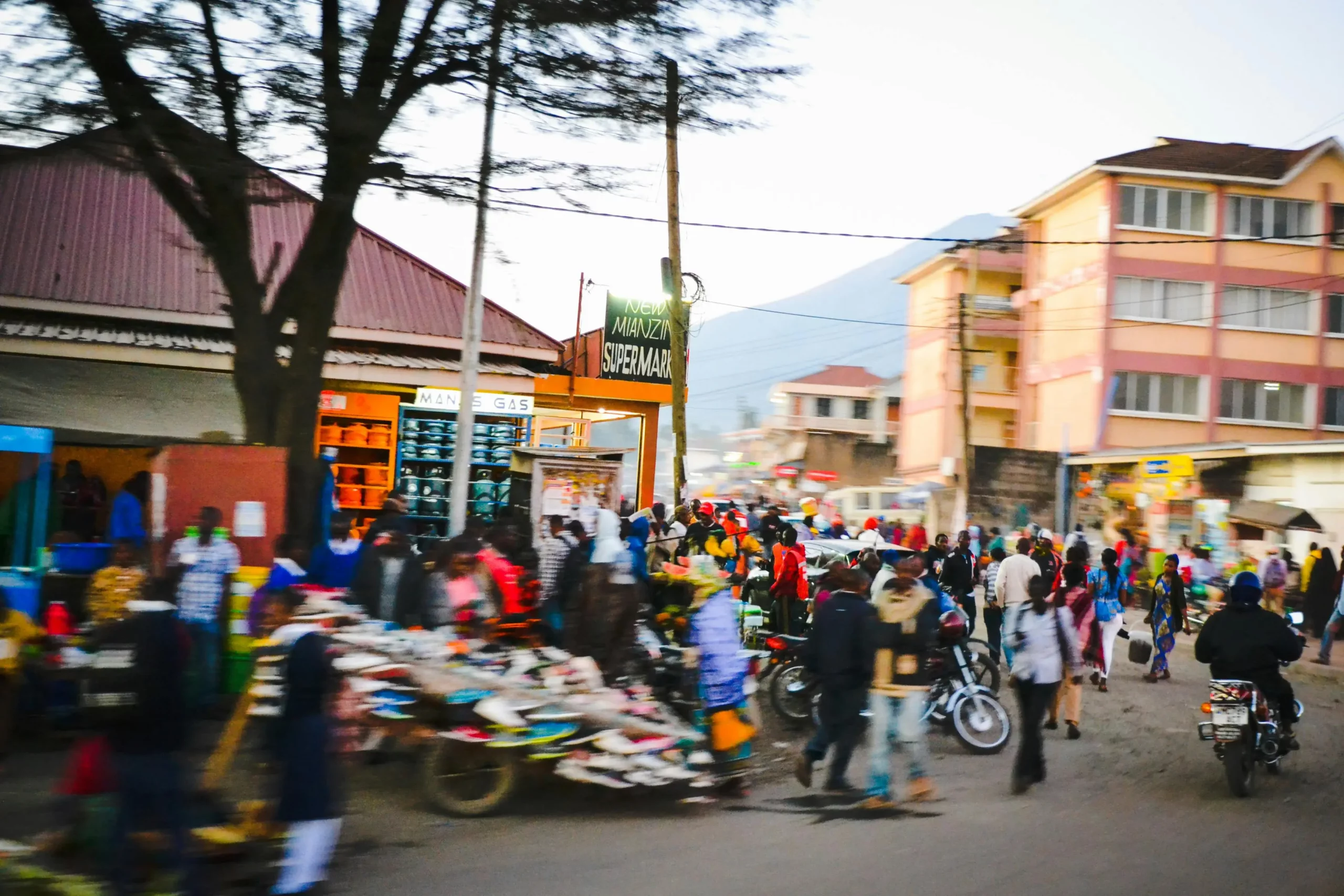
Urban areas contribute up to 70% of global greenhouse gas emissions and are highly vulnerable to climate impacts. Cities in Africa, already hotspots of climate risk, are therefore central to achieving the goals of the Paris Agreement. Recognising this, the Cities and Regions Talanoa Dialogues have emerged as an innovative approach to align national, subnational, and international actors in raising climate ambition. 

The concept of Talanoa, originating in Pacific Island traditions, emphasises open, inclusive, and participatory dialogue. First introduced in the UNFCCC process at COP23, it provides a safe space for stakeholders to reflect, share experiences, and identify pathways forward. ICLEI, together with the Global Covenant of Mayors and UN-Habitat, launched the Cities and Regions Talanoa Dialogues in 2018 to bring this ethos into climate policy discussions. 

By the end of 2018, more than 60 dialogues in 40 countries were held, including eight in seven African countries, convening local leaders, youth organisations, investors, and development agencies. These dialogues addressed three guiding questions: 

  1. Where are we? – assessing current national and local commitments. 
  1. Where do we want to go? – linking climate action to SDGs and urban development policies. 
  1. How do we get there? – identifying joint models for financing, governance, and implementation. 

In Africa, the Talanoa ethos resonated strongly. Participants pointed out similar local traditions of collective storytelling and decision-making, such as oxungt in Namibia. This cultural grounding reinforced the importance of making global frameworks relevant to local realities. 

Key lesson: for NDCs to be both credible and ambitious, regular multi-level engagement is essential. National governments must work hand in hand with municipalities, regional authorities, and civil society to mobilise the technical, financial, and policy resources required for implementation. 

The Talanoa Dialogues in Africa have shown that inclusive storytelling is not just a cultural tradition, it is a practical pathway to more ambitious climate action. 

Read the study here 

For more information, contact: 

Towns leading global change  

Sustainable Development Goals - News

How Europe’s towns and regions are turning global sustainability goals into everyday reality 


Since the adoption of the 2030 Agenda for Sustainable Development, it has become increasingly clear that towns and regions are at the forefront of making the global goals a reality. Local and regional governments are responsible for many of the services that directly affect citizens’ lives, education, housing, transport, waste management, and health. Their actions, often taken without reference to international frameworks, already contribute to creating more sustainable communities. 

The Council of European Municipalities and Regions (CEMR) and PLATFORMA highlight the central role of local governments not just as service providers but also as policy shapers, awareness raisers, and partnership builders. By engaging citizens and other stakeholders, municipalities are uniquely placed to embed sustainability principles in everyday governance. 

To support and strengthen this work, four clear recommendations emerge: 

  1. Increase participation – raise awareness among citizens and encourage greater involvement in sustainability initiatives. 
  1. Ensure coherence – integrate local governments into national strategies to avoid fragmented approaches. 
  1. Build capacity – provide technical tools and knowledge so municipalities can implement goals effectively. 
  1. Support partnerships – back international cooperation and exchange between towns and regions to reinforce solidarity. 

Progress is visible, but challenges remain: insufficient resources, difficulties in collecting local data, and the need for stronger national frameworks. Despite these obstacles, municipalities are proving to be powerful drivers of sustainable change. From inclusive policies to decentralised cooperation, they are demonstrating that building a sustainable future must begin at the local level. 

The global goals are not about imposing new tasks on towns and regions, but about offering a common framework and shared language. Europe’s municipalities are showing that sustainability is not abstract: it is local, practical, and essential for the well-being of communities today and tomorrow. 

Read the study here 

For more information, contact: 

How Europe is taking the lead on SDGs

Localising SDGs - News

Just out: New study on how to assess the UN Global Goals on the ground


Towns and regions still lack the financial resources to monitor the implementation of the Sustainable Development Goals (SDGs). This is one of the problems identified by associations of local and regional governments in a ground-breaking study carried out by PLATFORMA and the Council of European Municipalities and Regions (CEMR) on the evaluation of the actions taken to localise the UN Global Goals.

This study, entitled “Sustainable Development Goals – How Europe’s town and regions are taking the lead”, highlights the main challenges identified by associations of towns and regions, the top three being the lack of financial resources, the lack of data available at the local level and the lack of training.

But this fresh study is not only about identifying obstacles, it also collects good practices taken by associations and makes concrete recommendations on how to monitor the local implementation of the SDGs at domestic and international level. This includes the nomination of local SDG ambassadors, the setting of indicators or awareness raising campaigns.

The study was presented today in New York, at the 2018 UN High-Level Political Forum on Sustainable Development, an 8-day meeting with a central role in the follow-up and review of the 2030 Agenda for Sustainable Development.

Representing CEMR and PLATFORMA, the Mayor of Soria (Spain), Carlos Martínez Mínguez, explains: “Today, cities represent the global leadership which allows people to be at the core of the 2030 Agenda.”

He adds: “There is no doubt that towns and regions, national governments, the European Union and international institutions can overcome obstacles together to achieve the localisation of the SDGs. However, local and regional governments need support, both financially and technically. This is the role that associations of towns and regions are playing, but they can’t achieve this alone.”

For Carlos Martínez, the study shows that by working closer together, everybody wins: on the design, implementation and monitoring of national SDG strategies. He also also called on all EU Member States to follow the Spanish example and include next year a chapter on local governments’ actions to localise SDGs in their Voluntary National Reviews to the UN.

This publication is also available in French.

Background

Based on a survey sent out to national associations of local and regional governments, this study complements the Global Task Force’s 2nd Report to the High-Level Political Forum 2018, to which CEMR and PLATFORMA have also contributed.

This study was developed in the framework of the Strategic Partnership Agreement signed between CEMR-PLATFORMA and the European Commission.

For more information, contact:

CEMR rules of procedure

Leaders Summit - Oslo News

Ensuring transparent, balanced, and effective governance within CEMR


The Council of European Municipalities and Regions (CEMR) operates through a structured and transparent governance framework designed to ensure fair representation, accountability, and effective decision-making across its network. The Rules of Procedure set out how the organisation functions, from membership and institutional structures to decision-making processes and financial management.

CEMR membership is open to national associations of local and regional governments that meet defined criteria. Clear procedures guide applications, cooperation between members within the same country, and the handling of fees, ensuring both inclusiveness and organisational coherence.

The organisation is governed by key statutory bodies, including the Policy Committee, Executive Bureau, and Financial Management Committee. These bodies are responsible for political direction, operational oversight, and financial supervision. Particular attention is given to balanced representation, especially gender equality, reflecting CEMR’s commitment to inclusivity and the principles of the European Charter for Equality of Women and Men in Local Life.

Decision-making processes are designed to be democratic and transparent. Meetings are convened with advance notice, voting procedures are clearly defined, and mechanisms are in place to ensure accountability, including rules on quorum, proxy voting, and financial compliance.

CEMR’s functioning is further supported by committees, expert groups, and spokespersons who contribute to policy development and represent the organisation externally. The Secretary General plays a central role in managing the Secretariat, implementing strategic priorities, and ensuring the smooth running of daily operations.

Financial governance is ensured through structured fee systems, oversight by the Financial Management Committee, and regular auditing. At the same time, cooperation with European and international organisations strengthens CEMR’s role in promoting local and regional self-government globally.

Overall, the Rules of Procedure provide a solid foundation for CEMR’s work, ensuring that the organisation remains democratic, representative, and effective in supporting local and regional governments across Europe.

For more information, contact: