
CEMR agenda for the European Week of Regions and Cities
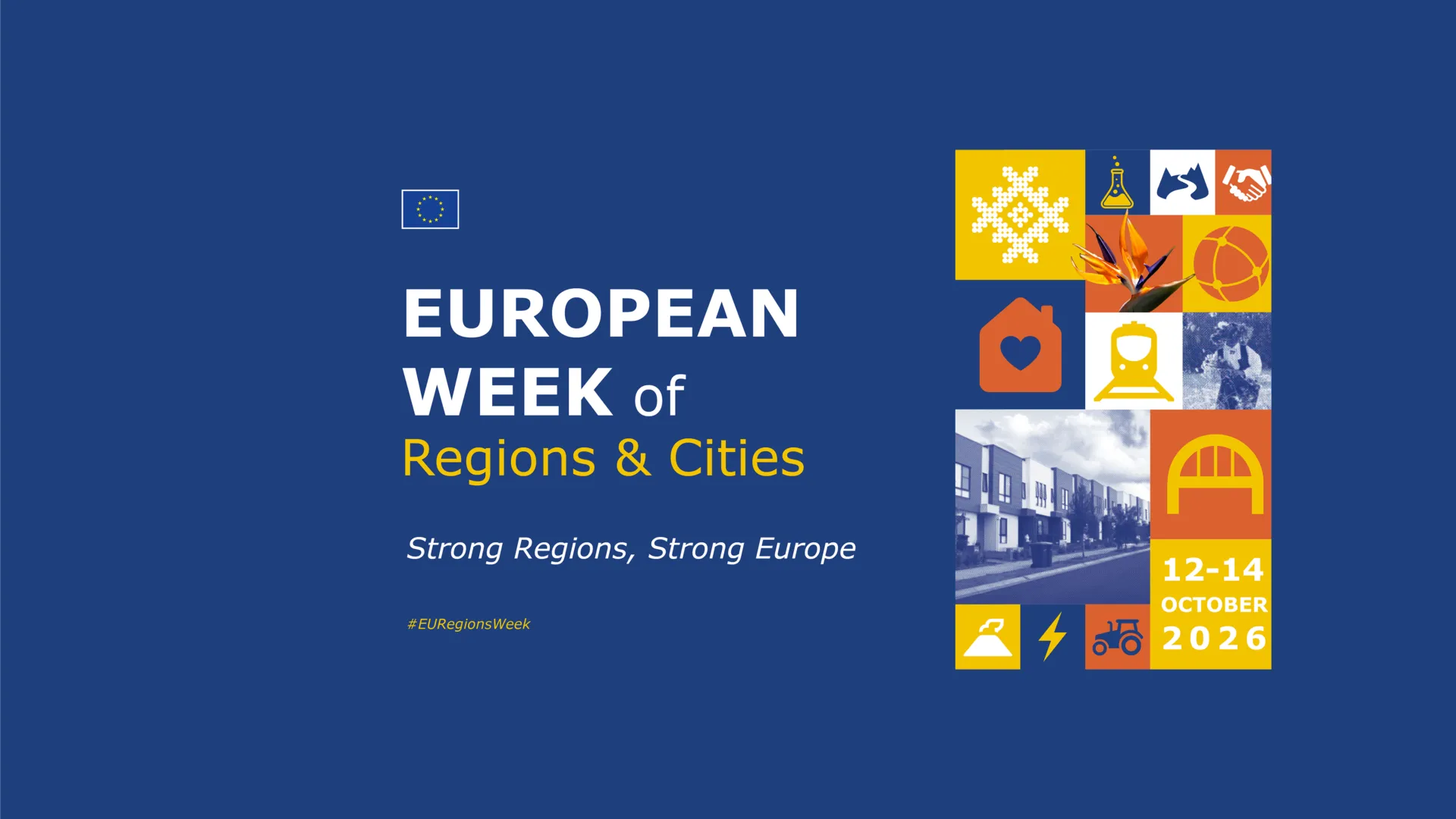
The European Week of Regions and Cities 2026 will take place from 12 to 14 October 2026.
Organised by the European Commission’s Directorate-General for Regional and Urban Policy and the European Committee of the Regions, the European Week of Regions and Cities is the biggest annual Brussels-based event during which cities and regions showcase their capacity to create growth and jobs, implement European Union Cohesion policy, and prove the importance of the local and regional level for good European governance.
If you are a CEMR member and plan to be in Brussels this week, please let us know by completing this form so we can contact you regarding visibility opportunities.
CEMR events taking place during the European Week of Regions and Cities (outside the official programme)
CEMR will organise, co-organise, or take part in several events during the Week, taking advantage of the presence of numerous local leaders in Brussels.
Strengthening the territorial dimension in the future EU Cohesion Policy
- Date and time: 12 October 2026, 17:00 – 20:30 CEST
- Venue: CEMR, Square de Meeûs 1, Brussels
- Organisers: CEMR and the German Association for Housing, Urban and Spatial Development (DV), with the financial support of the German Federal Ministry for Housing, Urban Development and Building
This high-level Brussels event will bring together EU, national and local leaders to discuss the future of Cohesion Policy and its territorial dimension. It will focus on upcoming decisions on the EU budget and investment framework, while promoting balanced, place-based development across urban and rural areas and strengthening cooperation between key European stakeholders.
Making the freedom to stay a reality: The role of services of general interest in strengthening territorial cohesion
- Date and time: 14 October 2026, 16:00 – 17:30 CEST
- Venue: SQUARE Brussels Convention Centre (Mont des Arts), Brussels
Coorganised with SGI Europe and the Community of European Railway and Infrastructure Companies, this policy debate will explore how people can be supported to live and work in the places they call home. It will focus on the role of essential services such as housing, transport, energy and care in making regions more attractive and resilient.
The following speaker will contribute to the session:
Ethem Pekin – Head of Unit, Community of European Railway and Infrastructure Companies
Bouke Arends – Chair of the Netherlands delegation in the European Committee of the Regions and Mayor of Westland (NL)
Nicola De Michelis – Director, European Commission DG REGIO
Maria Elena Nevado Del Campo – MEP, REGI Committee
Local authorities and their associations are invited to join the Coalition for the Freedom to Stay Coalition for the Freedom to Stay to support the SGI Network’s effort to make the freedom to stay a core European objective.
Cohesion Alliance event
- Date and time: 14 October 2026, 16:30 CEST
- Venue: SQUARE Brussels Convention Centre (Mont des Arts), Brussels
- Register here
The conference National and Regional Partnership Plans (NRP plans) with local and regional authorities at the centre: myth or reality? will be held on Wednesday 14 October 2026, from 16:00 to 17:30 at the European Committee of the Regions (Room JDE 52)
The Cohesion Alliance event will focus on the preparation phase of the NRP plans and discuss the extent to which local and regional authorities are being considered in the plans under development.
This event will be divided into 2 sessions:
First session: presentation of studies on the involvement of LRAs in NRP plans
Introduced by moderator (Martin Guillermo Ramírez, Secretary General of the European Association of European Border Regions)
Second session – Cohesion policy 2028-2034: debate with Cohesion Alliance partners
Building on the evidence presented on the planned involvement of local and regional authorities within the NRP plans for the 2028-2034 period – and bearing in mind the ongoing interinstitutional debate on the post-2027 multiannual financial framework and the National and Regional Partnership Plans Fund Regulation (NRPP) – this session will involve a political discussion among Cohesion Alliance partners and contributors from the floor.
The event meeting will be opened by the Committee of the Regions President, Kata Tutto, with the participation of:
- Christoph SCHNAUDIGEL, President of the Council of European Municipalities and Regions (CEMR)
- Joris BENGEVOORD, President of the Association of European Border Regions (AEBR)
- Lilijana MADJAR, Vice-President of the Assembly of European Regions (AER)
- Eugenio GIANI, Vice-President in charge of Cohesion Policy and the EU Budget, Conference of Peripheral Maritime Regions (CPMR)
The final words will be by Emil Boc and Vasco Alves Cordeiro, CoR NRPP co-rapporteur(s) (TBC)
The meeting is public and will be web streamed in EN/FR/IT/PL.
Bridges of Trust Annual Gathering
- Date and time: 14 October 2026, 13:30 – 17:30 CEST
- Venue: CEMR, Square de Meeûs 1, Brussels
- Only open to members of the Bridges of Trust Community
The fourth edition of the Bridges of Trust Annual Gathering will bring together partners from Local and Regional Government Associations, networks, partner organisations and EU institutions to exchange experiences, strengthen cooperation, and shape joint initiatives on international municipal cooperation between European and Ukrainian towns, cities and regions.
Bridges of Trust Award Ceremony
- Date and time: 14 October 2026, 18:00 – 22:30 CEST
- Venue: Les Ateliers des Tanneurs, Rue des Tanneurs 60A, Brussels
- By invitation only
The Bridges of Trust Partnerships Award Ceremony will recognise five leading EU–Ukraine municipal partnerships as “Bridges of Trust Ambassadors” to celebrate their contribution to recovery, resilience, and EU integration at the local level.
EU Covenant of Mayors Ceremony
- Date and time: 15 October 2026, 9:00 – 15:30 CEST
- Venue: Charlemagne Building, Rue de la Loi 170, Brussels
- Organiser: Covenant of Mayors for Climate and Energy Europe
From high-level political dialogue to practical workshops and peer exchanges, the Ceremony will bring together hundreds of local and regional leaders from across Europe alongside high-level representatives of the European Commission and other key stakeholders to discuss how local action is central to achieving European objectives.
CEMR Green Day
- Date and time: 15 – 16 October 2026
- Venue: CEMR, Square de Meeûs 1, Brussels
- Registration here
Day 1 – From climate ambition to green competitiveness, what does the evolving EU agenda mean for local and regional governments?
Thursday 15 October | 16:00-17:45 CEST | Open event – In person at CEMR office
Panel discussion with CEMR spokespersons and external speakers, audience exchange and short “Territorial Spotlights” from members showcasing concrete local and regional practices of connecting competitiveness to territorial green policies, including climate adaptation, energy, circular economy, decarbonisation and clean mobility.
Day 2 – Defining CEMR green priorities for 2027
Friday 16 October | 10:00–13:00 CEST | CEMR members only meeting – In person at CEMR office & online
The second day will focus on CEMR’s internal work and priorities for the year ahead. Spokespersons and Expert Group Chairs will provide brief updates on key policy developments, ongoing CEMR activities, and expected priorities for 2027.
Are you organising an event during the European Week of Regions and Cities 2026?
CEMR members and partner associations are invited to share details of their own events taking place during the Week by completing this form, so we can help promote them and coordinate the wider CEMR agenda for the Week.
For more information, contact:
Communications Officer (matternity leave cover)