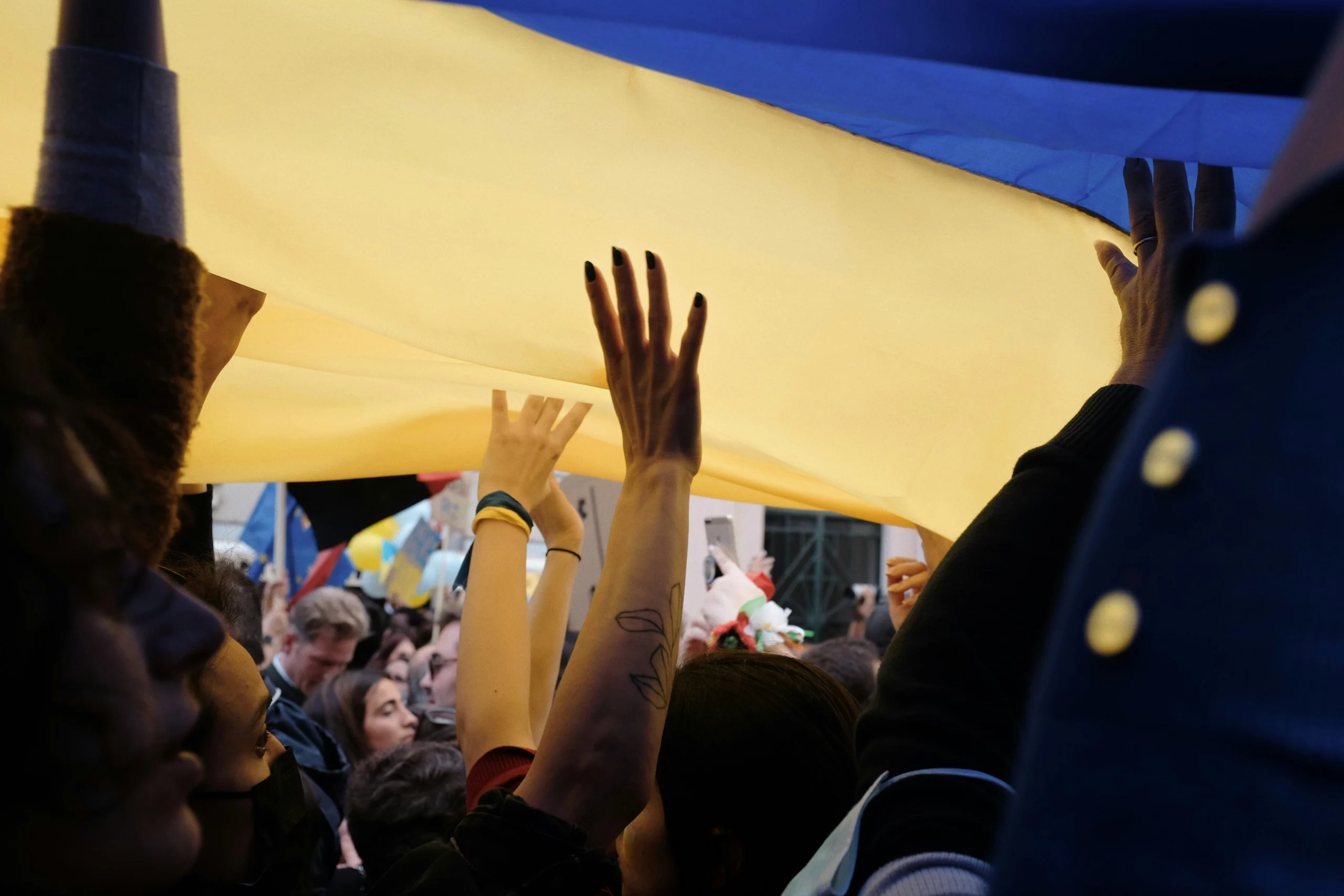
France-Ukraine Solidarity

Bridges of Trust Branding - News 2024

The France-Ukraine Local Solidarity Forum: Together we are stronger!


On the 19th of October, more than 100 participants took part in the Local Solidarity Forum jointly organised by the Council of European Municipalities and Regions (CEMR), PLATFORMA, Association of French Mayors (AMF) and the U-LEAD with Europe Programme.

Twinning and partnerships between Local and Regional Governments were at the centre of the discussions. Cooperation is the only way to bring about Ukrainian reconstruction.

Join un on 28 October, from 09:00 to 12:00 CEST, for the Bridges of Trust Forum to learn more about partnerships between Ukrainian and EU local governments!

Escalation of war against Ukraine

Escalation of war against Ukraine Declaration

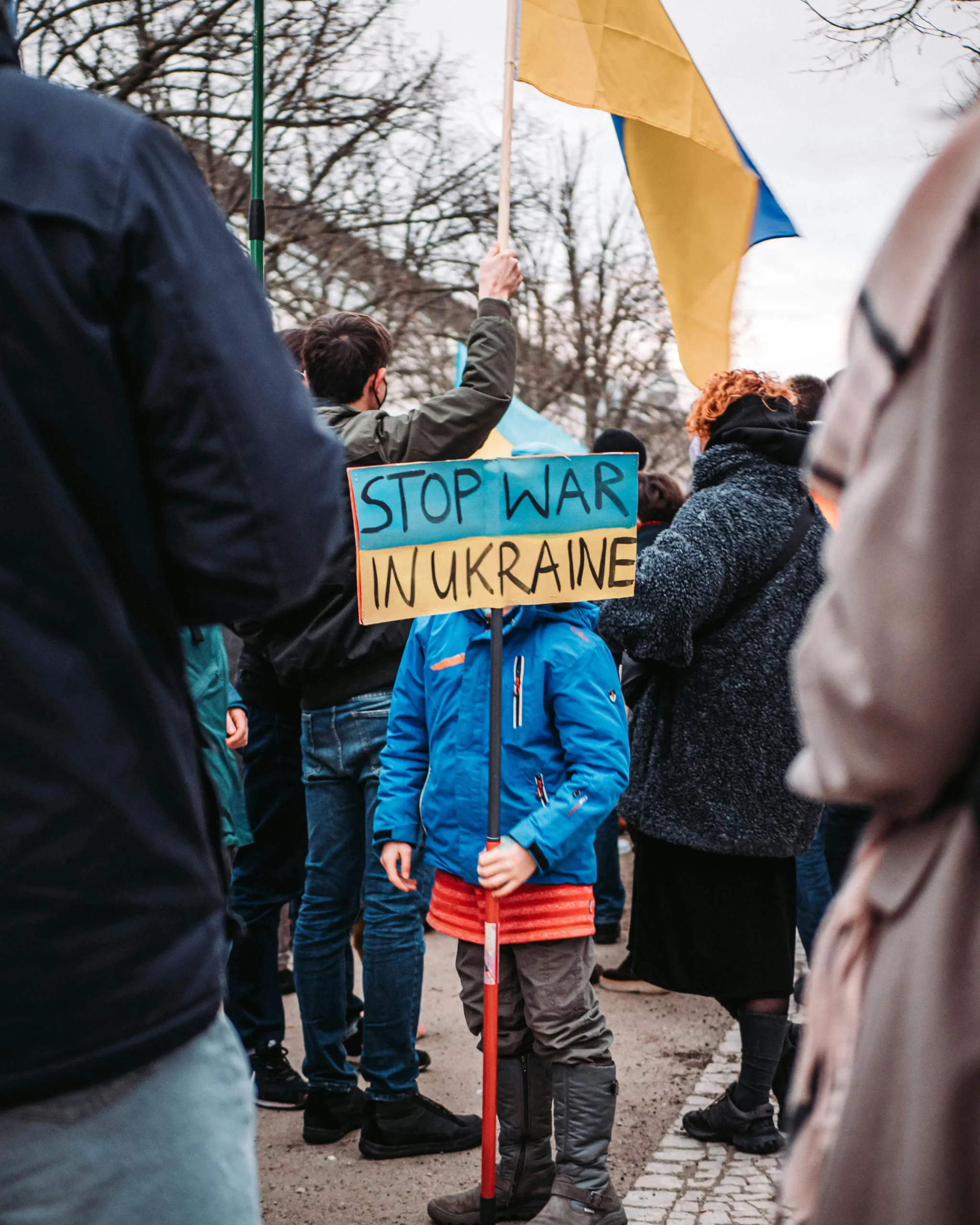
European local leaders condemn renewed Russian attacks and pledge solidarity with Ukrainian cities and communities


Meeting in Daejeon at the 7th UCLG World Congress and Summit of Local and Regional Leaders, European mayors and councillors expressed their deepest indignation at the recent escalation of Russia’s war against Ukraine. The renewed wave of violence continues to bring devastation to civilian populations and destruction to Ukrainian municipalities. 

Condemning Targeted Attacks 
The declaration strongly denounces deliberate strikes on civilians, including women and children, in violation of the Geneva Conventions. Equally condemned is the destruction of essential urban infrastructure, which deprives communities of the basic services needed to survive in wartime. 

Solidarity with Ukraine 
Local and regional leaders across Europe reaffirm their solidarity with Ukraine’s people, mayors, councillors, and associations of local governments who continue their work under extreme conditions. These partnerships are vital to ensuring communities can endure today’s challenges and prepare for tomorrow’s recovery. 

Shared Values 
The declaration recalls the core values upon which Europe is built—peace, democracy, justice, equality, inclusion, and dialogue. By standing with Ukraine, Europe also defends international law and human rights. 

A Call to Action 
European municipalities are invited to strengthen ties with Ukrainian peers through partnerships, twinning, and reconstruction efforts. The declaration also appeals directly to local leaders worldwide, and especially in Russia, to condemn the war and join the call for peace. 

Reconstruction will require joint efforts. The declaration highlights the need for European institutions to support rebuilding Ukrainian infrastructure through city-to-city cooperation, aligning with Ukraine’s Fast Recovery Plan. European local and regional leaders reaffirm their readiness to work hand-in-hand with Ukrainian communities, ensuring that from the ruins of war, democracy and peace prevail. 

Read the declaration here 

For more information, contact: 

​Support for Ukraine

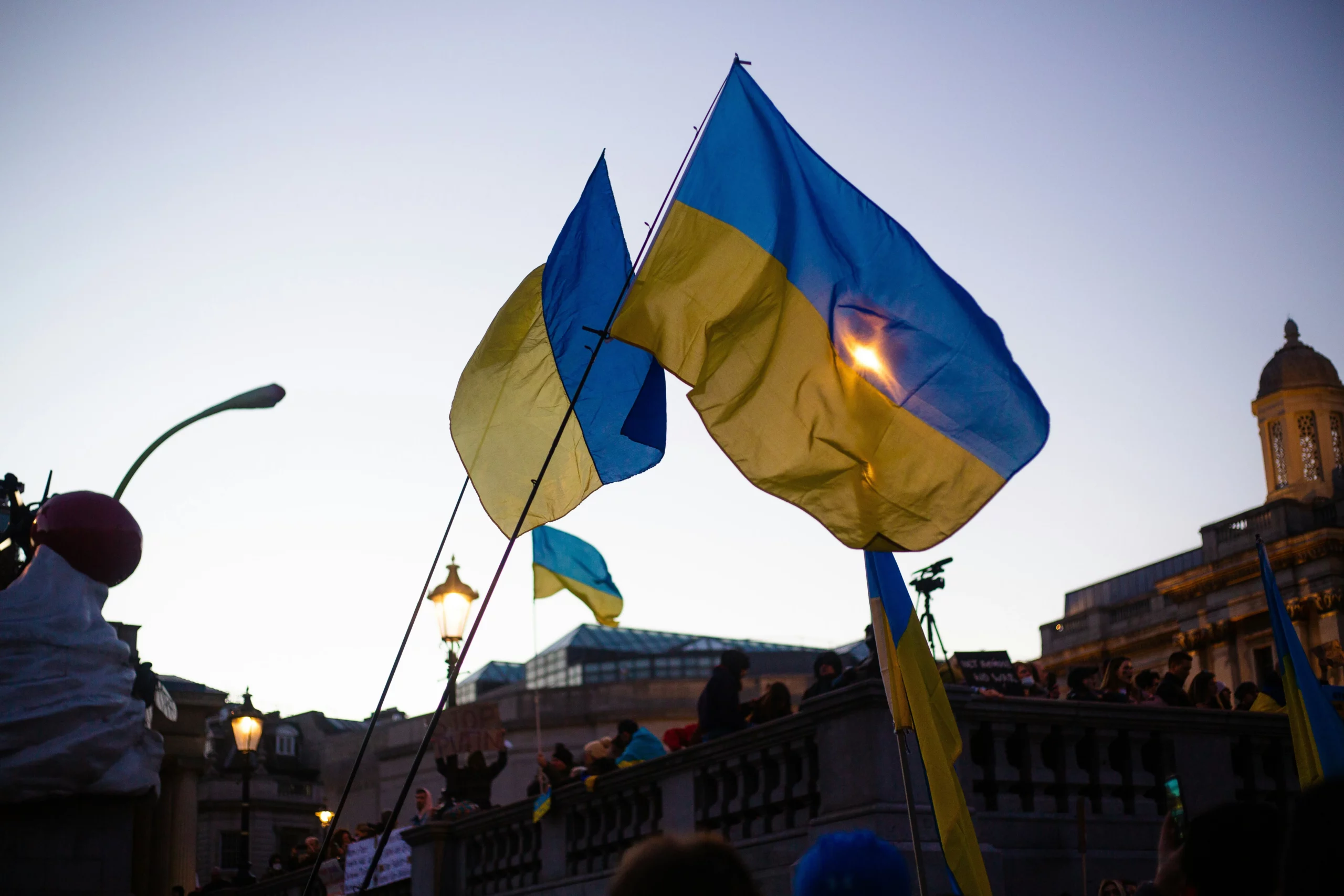
Ukraine flag - News section

The Luxembourg association SYVICOL launches a platform to shed light on local initiatives


What actions are Luxembourg municipalities taking to support Ukraine and its population? How can they gear up their efforts and operate within their means? The association of Luxembourg cities and municipalities, SYVICOL, provides a first set of answers to these questions, while also casting light on initiatives developed locally and on the global stage. 

Entitled “Support for Ukraine“, SYVICOL’s new platform reveals, for example, why elected officials from the city of Esch-sur-Alzette agreed to set up a twinning partnership with Stryi, a Ukrainian city located near the Polish and Slovak borders. Scrolling through the website, you will come across Ukrainescht Haus Stroossen, an initiative led by the municipality of Strassen to give Ukrainians who fled their country, a place to exchange, to spend some time and, if they want, to participate in activities.

The platform also provides municipalities with information it has access to through its relations with various international players and networks, including the CEMR. SYVICOL also collaborates with the Association of Ukrainian Cities and can establish contact between the latter and the Luxembourg municipalities that wish to do so.

Finally, the platform relays official information released by the national government and brings together in one place the contact details of several supporting NGOs.

Available in English and French, the new platform will be regularly updated.

Did you know?

Many of CEMR’s member associations have set up sections of their websites dedicated to Ukraine where you can follow their latest activities. You will find a non-comprehensive list of these sections at the bottom of this page.

EU accession

European Union - News

How can we support Ukraine, Moldova and Georgia’s joining the European Union?


It was a few days after the outbreak of war by Russia: Ukraine, Moldova and Georgia each submitted an official application to join the EU. Since then, Ukraine and Moldova have been granted official candidate status to join the Union, while for Georgia, EU leaders recognised its “European perspective,” a sort of prelude to formal candidacy.

But how can these countries that are betting on a European future prepare themselves? CEMR’s members adopt a declaration on the subject at their Policy Committee meeting, on 5 July 2022.

While it is undeniable that the enlargements of 2004, 2007 and 2013 have mechanically led the EU to play a greater role in Ukrainian, Georgian and Moldovan politics, the road to membership for these countries is still long and perilous.

In this context, local and regional governments and their representative associations can contribute to bringing them closer to the EU. As affirmed in the declaration, CEMR “commits to defending a Trio holistic approach and is ready to accompany the EU accession process of Ukraine, Moldova and Georgia from a local perspective.”

For almost 25 years, CEMR, later supported by PLATFORMA, has been providing unstinting support to local governments in the EU’s eastern neighbours. As the declaration explains, CEMR’s network works continuously “to strengthen local autonomy and institutional capacity and foster multi-level governance reforms.”

In order to accompany the necessary institutional reforms and to ensure a sustainable integration process, CEMR’s members recommend “decentralised cooperation (…) to ensure a sustainable integration process.” And they specify that “peer exchanges, municipal partnerships, mentorship, study visits, twinning, seminars and training” are all levers to bring these three countries closer to the European Union.

While CEMR is ready to “continue to underpin its member associations in Georgia, Moldova and Ukraine in their contribution to the EU accession process”, let’s hope that the European institutions and the relevant authorities fully involve local and regional governments in this process in due time.

As the European Commission points out, “the reform of public administration and the decentralisation process in these three countries are essential components of the EU accession criteria.” Europe is not built from the top down. In order to create a common base, it is necessary to start from the bottom.

Twinning in Ukraine

Mayors in Ukraine - News 2023

Twinning has to be a part of Ukraine’s reconstruction


In a letter to the president of the European Parliament, the Council and the Commission, CEMR calls on the European institutions to set up an initiative to strengthen twinning for the reconstruction of Ukraine.

The letter is signed by the Mayor of Kyiv and President of the Association of Ukrainian Cities (AUC), Vitaliy Klitschko, its Executive Director, Oleksandr Slobozhan, but also by CEMR’s President, Stefano Bonaccini, and its Secretary General, Fabrizio Rossi.

It stresses the willingness of local and regional governments across Europe to contribute to the reconstruction of Ukrainian municipalities and cities. It also invites the institutions to define, in collaboration with CEMR and its Ukrainian association, “strategic and operational aspects of a twinning initiative to launch and implement the reconstruction of Ukrainian cities and towns »

Letter to the President of the European Parliament, Roberta Metsola.
Letter to the President of the European Commission, Ursula von der Leyen. 
Letter to the President of the European, Charles Michel.

Europe Day 2022

European Parliament - News

Conference on the future of Europe: What direction should Europe take?


Every 9 May, Europeans celebrate Europe Day. But this year, the celebrations take on a new meaning. Today, one year after it officially began, the Conference on the Future of Europe (CoFoE) comes to a close with 49 proposals being delivered to the presidents of the European Parliament, the Council and the Commission.

This a good time for the Council of European Municipalities and Regions (CEMR) to provide an update on this exercise in participatory democracy and to highlight certain proposals which should define the European Union’s agenda in the coming years.

“People need to take ownership of Europe”, said Manuela Bora, regional councillor for Marche (Italy) and a member of the CoFoE plenary, on 5 May at a meeting organised by our French Association (AFCCRE) and the Strasbourg Eurométropole.

“The most sensible choice, in my opinion, is to make the Conference on the Future of Europe a permanent body within which it is possible to continue to share ideas, especially the most controversial ones”, Ms Bora said. “A participatory debate between local authorities, citizens and the European institutions is the best guarantee for concrete and far-sighted results. And this is why CEMR has developed its six proposals to bring Europe closer to citizens.”

Among these, CEMR called for holding every year on 9 May “a debate on the European project, its benefits and challenges, such as how to build a decarbonised society, in every school and in every municipality and region in Europe.”

Twinning is also a powerful way to bring Europe closer to its citizens. In line with the CoFoE’s proposal of “reinforcing existing EU exchange programme”, CEMR argues for setting up a genuine Erasmus programme for local civil servants through exchanges between municipalities and regions, twinned if possible.

Another proposal promoted by CEMR: the development of European universities beyond the two Colleges of Europe and the teaching of languages such that by 2050 every European speaks at least English and two other European languages, in addition to his own mother tongue.

While ideas are not lacking, these still need to be formalised and consultation with civil society organisations and local governments needs to be made systematic. As Manuela Bora stressed: “If so much has been done in just a year, imagine what could be done in a permanent structured system! And that’s exactly the direction we need to go in.”

On the event

This event, entitled “The Future of Europe: The Vision of Local Governments”,  gathered representatives of local governments and civil society, among which were Antoine Chabal, President of the French section of the European Federalists, Philippe Laurent, the Mayor of Sceaux and the President of AFCCRE, and Jeanne Barseghian, the Mayor of Strasbourg.

Twinning for Rebuilding

European mayors eye long-term partnerships with counterparts to rebuild Ukraine


Leaders of European cities and towns are moving to support Ukrainian local and regional authorities through peer to peer schemes as sub-national leaders look to rebuild the war-torn country.

Mayors of European cities have been some of the most ardent supporters of placing more pressure on Russia as it continues its devastating war in Ukraine.

By Wednesday, 28 April, 300 mayors, among them leaders of 15 European capitals, joined the call for an immediate full embargo on Russian energy exports.

“Not at the end of this year but immediately”, the mayors said in a joint video message.

In the meantime, European towns are helping their Ukrainian partners with donations. Lithuania’s Šiauliai district was one of the European municipalities that sent humanitarian and material aid worth around €100,000 to Dolyna in western Ukraine. However, they do not plan to stop there.

“I think not long from now, the war will be over, and even after, various forms of support will be necessary,” Mayor Antanas Bezaras told EURACTIV.

Bezaras is now planning to exchange visits with Dolyna to map local forms of self-governance and develop a long-term partnership with the city that his administration met in November 2021 through a project meant to increase cooperation and exchange of best practices, knowledge and skills between municipalities in Ukraine and the EU.

The municipalities met in the framework of the “Bridges of Trust” Initiative, implemented by the Council of European Municipalities and Regions and PLATFORMA with the support of the U-LEAD with Europe programme.

This article was first published by EurActiv. Real the whole text.

Secretaries General

CEMR’s Secretaries General and Directors met to discuss Ukraine and their priorities for the next months


Secretaries General and Directors of CEMR’s member associations took part in an executive meeting to develop a common position on priority issues on the local and international agenda. They exchanged on the war in Ukraine, discussed a base document proposing joint measures on climate neutrality and decarbonisation of towns and cities and presented the actions of the Young Elected Committee. They also discussed statutory, general and internal affairs. This first face-to-face meeting after the pandemic took place from 5 to 6 April in Vitoria-Gasteiz, Spain at the invitation of the Association of Basque Municipalities (EUDEL) and the city’s mayor Gorka Urtaran Agirre. It has been attended by twenty delegates (from Czech Republic, Turkey, Greece, United Kingdom, France, Norway, Spain, Cyprus, the Netherlands…) and the rest of the attendees have participated online.
 
Renewing solidarity and support with Ukraine
Participants, in particular, renewed their full solidarity and support with Ukraine. In this complex international context, they called for unity of local and multilevel action. Marlène Siméon, Operations Director of CEMR explained that “Since its creation in 1951, the CEMR and its members have worked to promote the construction of a united, peaceful and democratic Europe, based on local autonomy, respect for the principle of subsidiarity and the participation of citizens, but also on twinning and solidarity between municipalities on the continent and beyond. This is why the war in Ukraine immediately provoked a reaction from CEMR, with an appeal signed by more than 750 mayors and local or regional leaders from all over Europe, condemning the Russian invasion and pledging to support the municipalities and cities of Ukraine.” She emphasised that “in these times of pain and suffering, the European family of local and regional governments is united. Ukraine is part of Europe and we will continue to support it”.
 
40th Anniversary of EUDEL
The CEMR also participated in the ceremony celebrating the 40th anniversary of EUDEL. Chaired by Iñigo Urkullu, President of the Basque government, the celebration recalled the important milestones in the strengthening and transformation of the municipalities of the Basque country over the last 40 years. The association also paid tribute to the people who have presided EUDEL since its creation in 1982. For 40 years, EUDEL has energetically participated in many of CEMR fields of action. They are strongly involved in policy and advocacy work. For example, EUDEL has contributed greatly to CEMR’s work on local gender equality and, in particular, the revitalisation of the European Charter for Local Equality currently underway. Building on the Basque Country’s long tradition of promoting effective gender equality, EUDEL has been an active player in ensuring the Charter remains a useful and effective tool to mainstream gender equality in Europe’s territories. The whole CEMR is looking forward to many more years of collaboration with its Basque friends!

Peer learning programme on climate and energy

Covenant of Mayors - News

Apply for the Covenant of Mayors peer learning programme: The deadline extended to 15 April!


Cities and towns have until 15 April 2022 to apply for the Covenant of Mayors for Climate and Energy’s peer learning programme. The programme offers Covenant of Mayors signatories across Europe the opportunity to increase their capacity and knowledge on climate and energy challenges through peer discussions tailored to their needs.
 
In 2021, the Covenant Office supported 45 cities, 6 coordinators, and 4 energy agencies. This year, the Covenant of Mayors offers four programmes to respond to local needs: twinning, expert missions, peer review and technical assistance.
 
Find out more
Peer Learning Programme 2022/2023
Recording of the info session
Selection criteria

Twinning funds

Twinning - News

Get funded for town twinning and networks of towns


Do you want to set up a town twinning or a network of towns? The EU’s CERV programme (Citizens, Equality, Rights and Values) can provide up to 30,000 euros for town twinnings and financing with no upper bound for networks of towns.

You have until 24 March 2022, 17:00 CET, to send your request for funding. The results will be shared between June and July 2022 after evaluation of the proposals.

An information session will be held on 8 February between 10:00 and 12:00 (in English). The session aims to explain the content and conditions of the call for proposals, as well as giving participants space to ask questions. You can else get directly in touch with your national CERV contact point.