2021 Ceremony

Green City - News

Registration open: come celebrate cities’ commitment to achieve carbon neutrality


Time: 7 October 2021, 9.30 – 13.00
Place: online… and everywhere in Europe!
Event info | Programme | Registration

The big moment is coming: the 2021 Covenant of Mayors Ceremony “Towards a fairer and climate-neutral Europe for all” will take place next month. Municipalities and local government associations are invited to join us at great event to celebrate  the Covenant Community’s achievements and cities’ ambition to decarbonise by 2050. We will also discuss how to commit, engage and take action for a fairer, climate-neutral Europe. 

The event will be opened by David Sassoli, President of the European Parliament. Speakers include Frans Timmermans, Commission Vice President for the European Green Deal, and Kadri Simson, EU Commissioner for Energy, as well as many mayors and local government representatives. It will also include 4 side sessions addressing the following topics:

  • Climate Adaptation and the Policy Support Facility
  • The Fit for 55 package
  • The Covenant 2050 ambition and how to renew the commitment
  • The European Climate Pact

Von der Leyen backs the Covenant’s boosted 2050 goals

With over 10,000 signatories, the Covenant of Mayors is the world’s largest movement for local climate and energy action. By joining the Covenant, cities, towns and villages commit to reduce their greenhouse gas emissions, adapt to climate change, secure access to affordable and sustainable energy and improve citizens’ quality of life.

In April 2021, the initiative entered a new phase, officially launching its renewed ambition for a fairer and climate-neutral Europe. Under this renewed ambition, Covenant signatories commit to seting a mid-target for 2030 at least as ambitious as their national targets and reaching climate neutrality by 2050.

This new phase of the Covenant has the direct support of EU Commission President Ursula von der Leyen. She invited cities to join in the effort: “Whether you are a long-standing member, a newcomer, or simply considering signing up to the Covenant of Mayors, I would like to invite you to join us to build an ever more ambitious and inclusive movement.”

Every effort counts in implementing the European Green Deal”, she added. “Regardless of the size and capacity of your city, town or village, regardless of where in Europe you are located: you have a key role to play.

Organise your own satellite event

We invite every member of the Covenant Community to organise a Satellite event of the 2021 Ceremony. Organising a Satellite event will give you the opportunity to promote the Covenant of Mayors’ 2050 vision, to discuss with your local / regional community what is needed to step up action and may include a moment to sign the new Political Commitment. Satellite events can take place from September to December 2021 and visibility will be provided the Covenant of Mayors website and social media.

Register national satellite events

IUCN Conservation Congress

Calendar - internal events

Local governments are taking part at the IUCN World Conservation Congress in Marseille


The IUCN World Conservation Congress which will be held in Marseille from 3 to 11 September will be a highlight of the expression and commitment of local authorities in favour of biodiversity, in a context marked by the pandemic and its consequences.

This is a key step for nature conservation and the development of a new global framework for biodiversity at the 15th Conference of the Parties to the Convention on Biological Diversity (COP 15).

On this occasion, it is indeed a question of defining a new global framework for biodiversity after 2020 (following the plan defined at the Nagoya Conference (Japan – 2010), including for the action of local and regional authorities It is a question of ensuring strong recognition of the role of local authorities and of renewing decision X / 22 adopted in Nagoya which defined a specific action plan for sub-national governments, cities and local authorities.

At the initiative of AFCCRE and its spokesperson for climate, environment, sustainable development, Ronan DANTEC, Senator, city councilor of Nantes, and in conjunction with representatives of the IUCN, the French government, together with national and European organisations and global networks of local governments, several sequences devoted to local authorities are scheduled:

  • Friday 3 September (12.00-16.00): The IUCN Local Action Summit is organised by and for the members of IUCN. Those interested can consult: iucnlasummit.org.
  • Tuesday 7 September (8.30-18.00): thematic session led by the Aix-Marseille-Provence metropolis and France Urbaine which will bring together French urban areas wishing to both affirm their commitment to biodiversity and share their initiatives in this area.
  • Wednesday 8 September (10.00-13.00): the networks summit “Local and Regional authorities and their networks on the way to the COP 15” organised by AFCCRE will focus on the contribution of local and regional authorities and their networks to European and international negotiations.
  • Wednesday 8 September (15.00-17.30): session devoted to decentralised cooperation, organised by PLATFORMA, AFCCRE, DAECT, the French Committee of IUCN.

Participation is free on Wednesday 8 September but registration mandatory via this form.

Check the detailed program of these different sequences with local and regional governments.

Follow the conversation on Twitter with #IUCNCongress.

Agenda 2030

UCLG - News

Local and regional governments pave the way for the implementation of Global Goals


“Local and regional governments in Spain and across Europe are paving the way to the active implementation of the global goals”, writes Carlos Martínez Mínguez Mayor of Soria (Spain), CEMR Vice-President & Spokesperson on the 2030 Agenda and the Sustainable Development Goals (SDGs). He signed the foreword of PLATFORMA and CEMR’s joint study “European Territories Localise the SDGs: Continuity and Change in Times of COVID-19“. This opinion piece was originally published in EURACTIV.

Sustainable development is increasingly being linked with a new trending concept: sustainable recovery. The COVID-19 pandemic which hit Europe so hard, and continues to affect us, still requires local and regional governments to be at the forefront of crisis management and recovery planning, touching not only upon health issues but also social, environmental and economic priorities for citizens and local governments.

For us to build back better together towards a stronger and more resilient Europe, we need to fully harness and foster the power of the 2030 Agenda and all the values it showcases: inclusiveness and diversity; fostering new multi-sectoral and multi-level partnerships; policy coherence; gender equality; and territorial cohesion, with a particular focus on depopulated Europe. For effective localisation to take place, it is imperative to address all of the Sustainable Development Goals (SDGs) as a whole, as an indivisible set of objectives that need to be achieved from the bottom-up.

New localisation strategies need to be addressed to promote synergies between the 2030 Agenda and the New Urban Agenda, as this political commitment will lay down the foundations for the holistic urban and rural design of Europe 2030: i.e. territories for better lives.

This year, Spain is presenting a Voluntary National Review at the United Nations High Level Political Forum that includes the recently approved Sustainable Development Strategy 2030, recognising and promoting the essential role of Spanish local governments to make the Sustainable Development Goals possible in the decade of action that lies ahead.

At the local level, periodical reports have been published (such as the Voluntary Local Review by Valencia, Barcelona, Diputación de Córdoba and Málaga, among others). Progress has been made in the definition of indicators, both with the Secretary of State for the 2030 Agenda of the Spanish Government and with a national think tank (Red Española para el Desarrollo Sostenible). All this with the strong support our national association, the Spanish Federation of Municipalities and Provinces (FEMP).

Local and regional governments in Spain and across Europe are paving the way to the active implementation of the global goals, but we need to have a dedicated space in these national and international reports and decision-making processes to showcase the realities of our territories: our differences, our challenges and most of all our strengths.

IncluCities Interview

Inclucities Interview - News 2022

“The city is what unites us, regardless of where we came from”


Fuenlabrada is a Spanish municipality located in the Madrid metropolitan area. The IncluCities mentor city has experienced rapid population growth because of migration. In response, the municipal authorities developed policies of social cohesion and equality that have become a reference for effective inclusion practices.

Francisco Javier Ayala Ortega has extensive experience in the field of public policies and held various positions in the Fuenlabrada City Council before being elected mayor in 2018. He chairs the International Relations Commission of the Spanish Federation of Municipalities and Provinces (FEMP) and is CEMR Spokesperson for Employment. With a degree in law and a passion for the Andalusian dance, he promotes equal rights, active participation and collective work as the foundations of inclusive cities.

In the past year marked by COVID, mayors of cities across the world have faced unprecedented challenges. How did the city of Fuenlabrada manage the pandemic?

We had a clear strategy from the very beginning: making the municipal budget available to support the city hospital and to reach out to people most affected by the lockdown, especially the elderly and children. I am proud that within only a few days, we were able to set up an effective field hospital for COVID patients next to the city’s hospital centre.

The world is being rocked by challenging issues – the pandemic, recovery, climate change, migration. How do you see the role of cities in tackling them?

There is no doubt that local governments are the ones who are the closest to the citizens and, therefore, the ones who know best about their needs and understand the reality of their territories. Of course, the challenges are global, and they require the collaboration of the international community in order to create common efforts and achieve global goals. But the answers, the ways we reach these common objectives of recovery, the fight against climate change or the way we deal with migration, must be adapted to the population on the ground. In this process, the local governments play an essential and leading role.

The population of Fuenlabrada has grown in the past 40 years because of migration. The population tripled, and the average age of the population is now 6 years lower than the national average. How did the city adjust?

In my view, there are two main keys to addressing this challenge: one is civil participation and the other is social cohesion policies. Fuenlabrada is an important point of reference when we talk about citizens’ participation. We’ve managed to develop the participation of citizens through their involvement in transformation processes with a common goal of improving our city and the lives of the citizens. We’ve also been seen as a successful example of cohesion policies in the past decades. In parallel with the population growth, we have developed innovative programmes that helped us decrease the unemployment rate and improve inclusion.  

What is the current migrant situation in Fuenlabrada?

Currently, the foreign population represents slightly less than 13.5 per cent of the city’s population, and the majority are people between 20 and 49 years old. Most of them come from Romania, Morocco, Nigeria, Equatorial Guinea, Colombia and China. On integration, our efforts are focused on adequate municipal services responding to the basic needs of the newcomers. Furthermore, we support the development of intercultural and transversal integration projects. Our aim is also to promote the associations that best represent migrants, to motivate them to actively participate in city ​​life and to search for solutions to common problems. Thanks to all of these efforts, we established an important network of citizen participation. Among more than 400 registered entities, there are around 60 migrant-led or pro-immigration organizations.

How can we prevent social exclusion, especially among vulnerable groups such as migrants, if unemployment is already particularly high among less skilled young people?

In recent years, Fuenlabrada has developed an EU-funded project called MILMA, which was selected among hundreds of projects across Europe. Its objective was to foster collaboration among the public administration, companies and other organisations. More concretely, MILMA enables job seekers to connect with potential employers. With the development of efficient and innovative models to access employment, we managed to include the unemployed people, both nationals and migrants, in the city life in Fuenlabrada. The response in participation was beyond our expectations, and we intend to turn it into a model that could be exported to other cities across Europe.

What role is played by the narrative about migrants in the integration process? How do you tackle negative attitudes and disinformation in your city?

For years Fuenlabrada has participated in the Anti-Rumours Network. This programme is one of our best practices in tackling racism and xenophobia. It aims to teach children and adults the value of truth and warns against false harmful rumours and prejudice in the local community and society at large. In addition, we take part in an already well-established project like the Coexistence Board (Mesa por la Convivencia), where dozens of neighbourhoods and social or migrant organisations work together. This initiative has also launched a Solidarity Network to help people affected by the pandemic. This showcased how we can all work together side by side if we have a common goal – to fight the pandemic and help all fellow citizens, making sure no one is left behind.

As a mentor in IncluCities, you work together with the Greek city of Levadia to improve its integration practices and develop tools for decent employment of refugees and migrants. What do you expect from this participation?  

We will learn a lot from Levadia’s experience, its policies and its activities, as well as from the other cities, municipalities and associations participating in the project. On the other hand, working on an action plan to improve local integration of migrants and refugees, and sharing experiences, is a very good methodology that will allow us to assess our own actions and improve them.

Do you think that people are where they come from? How much, for instance, did the fact that you were born in Córdoba mark you as a person or as a politician in Fuenlabrada? Do you still visit the Andalusia regional house and dance “sevillanas”?

People have many dimensions. We are influenced by where we were born and where we spent our childhood, and we are also impacted by the places where we spend our lives. We are shaped not only by places but also by people. I was born in Córdoba, I spent part of my childhood in Almería and, since I was 6, I have been a neighbour of Fuenlabrada. I partially represent all those people whose parents came to this city 30 or 40 years ago from Andalusia, Extremadura or Castilla La Mancha in search of a better future. You see, I understand people coming from other countries with the dream of a better life. However, I can say I am from Fuenlabrada, and the city is what unites us regardless of where we come from. Yes, Andalusian blood also runs through my veins, and you can notice this too, especially when I dance.

How do you maintain contact with your city fellows?

Daily, I deal with many people, individuals who approach me on the street or address me through social media. I walk around my city every day. It is essential not to lose direct and permanent contact with citizens. However, it is also important to keep in touch with the space, the streets, the squares and the parks.

Climate-neutral territories

Green City - News Section

Host your own Covenant of Mayors satellite event


Get ready for the premier event promoting local climate action in Europe: EU leaders, mayors and regional presidents active on climate change and citizens will come together on 7 October 2021 for the Covenant of Mayors – Europe Ceremony.

This fully digital event will be a key moment to celebrate the achievements of the Covenant community and debate on how to commit, engage, act and network towards a fairer, climate-neutral Europe.

Covenant signatories and supporters can organise their own satellite events to accompany the Ceremony. This will give you the opportunity to promote the Covenant of Mayors’ 2050 vision of a Europe in which we all live in decarbonised and resilient cities with access to affordable, secure and sustainable energy.

You will be able to discuss your local or national community what is needed to step up action and may include a moment to sign the new Political Commitment to decarbonise their territory.

These events can be organised at local, regional or national level by signatories, coordinators, supporters and other members of the Covenant community. Your event should take place between September and December 2021 and have no admission fees.
Multiple types of event can be registered:

  • An awareness-raising action around the Covenant of Mayors’ vision to promote the 2050 Political Commitment to local leaders and local communities.
  • A mini-signing ceremony with local leaders and elected representatives.
  • A climate and energy event open to the general public, for example: an exhibition, debate or study visit.
  • A networking session around climate and energy issues tackled as part of the Covenant movement.
  • And more!

Go to this page to find more information and submit your event. Events should be submitted at least two weeks before they take place.
We encourage everyone to submit their events as early as possible to increase their visibility and promotion. A report of the event must be submitted within 10 working days after taking place.

The Covenant of Mayors – Europe Office will support you with templates, communications materials and promotion in our online calendar and social media. Events submitted before 1 October will also receive visibility in the main Ceremony.

Get involved and become part of the bottom-up movement for the climate transition and a healthy planet!

European territories localise the SDGs

Climate - News

Hot off the press: “European Territories Localise the SDGs”


From global to local: PLATFORMA and CEMR are proud to present the 2021 edition of our regular series of publications on how municipalities, regions and their associations are making the UN Sustainable Development Goals (SDGs) a reality on the ground.

Entitled European Territories Localise the SDGs: Continuity and Change in Times of COVID-19, this 46-page report is jam-packed with data, infographics, charts and best practices on how local and regional governments are working on the SDGs in Europe and beyond.

Based on data from 39 local and regional government associations in 29 countries, the study provides a succinct overview of the often-diverse situation across the European continent.

Local governments: key to monitoring and cooperation on the SDGs

The report’s findings are clear: an increasing number of local and regional governments and their associations in Europe are taking the lead in implementing what is still seen by many others as ‘just’ a global agenda. Those on the forefront however know how the 2030 Agenda and its SDGs can transform their daily work, policies and public services with inclusive approaches.

Indeed, 15.4% of associations are now more involved in the SDGs than in 2019. Today, over 3/4 associations have sound knowledge of the SDGs and 1/3 use them as a guiding reference.

The SDGs offer a shared vocabulary and goals, enabling local governments to interconnect with other governments and players, ultimately forming links between citizens and the world. Local governments and their associations have a particularly crucial role in promoting cooperation on and monitoring of progress on the SDGs.

84% of associations are involved in some way in national SDG coordination mechanisms. What’s more, around 4/5 associations have taking action on the SDGs’ international dimension and considers that the SDG framework helps development of partnerships with peers (i.e. decentralised cooperation activities around the 2030 Agenda).

The report also highlights the essential role of local government associations have played during the COVID crisis. This has included sharing information with municipalities and regions, capacity-building, advocating for financial support and participating in national consultations.

Recommendations to realise the 2030 Agenda from the bottom-up

We have long known that the ambitious goals of the 2030 Agenda need to be implemented from the bottom-up. The local level is ideal for experimentation, innovation and acceleration of work on the SDGs. However, the right conditions need to be in place to realise this potential.

The report formulates 5 key recommendations:

  • Increase EU and national funding for SDG localisation
  • Promote mutli-level governance, multi-stakeholder partnerships and policy coherence
  • Local and regional governments and their associations should continue peer learning within and outside Europe
  • National governments should increase recognition and support for SDG localisation (notably to monitor progress)
  • Strengthen human resources and capacities on SDG localisation

The report and its key findings will be presented on 29 June at the 12th Annual Meeting of Cités Unies Frances (CUF), on 8 July during a PLATFORMA-CEMR dedicated webinar taking place in the context of the the UN High Level Political Forum on Sustainable Development (HLPF, registration form) and at other local government events.

More information:

For more information, contact:

Sustainable Development Goals

Promoting the Global Goals - News 2023

Hot off the press: “European Territories Localise the SDGs”


From global to local: CEMR and PLATFORMA are proud to present the 2021 edition of our regular series of publications on how municipalities, regions and their associations are making the UN Sustainable Development Goals (SDGs) a reality on the ground.

Entitled European Territories Localise the SDGs: Continuity and Change in Times of COVID-19, this 46-page report is jam-packed with data, infographics, charts and best practices on how local and regional governments are working on the SDGs in Europe and beyond.

Based on data from 39 local and regional government associations in 29 countries, the study provides a succinct overview of the often-diverse situation across the European continent.

Local governments: key to monitoring and cooperation on the SDGs

The report’s findings are clear: an increasing number of local and regional governments and their associations in Europe are taking the lead in implementing what is still seen by many others as ‘just’ a global agenda. Those on the forefront however know how the 2030 Agenda and its SDGs can transform their daily work, policies and public services with inclusive approaches.

Indeed, 15.4% of associations are now more involved in the SDGs than in 2019. Today, over 3/4 associations have sound knowledge of the SDGs and 1/3 use them as a guiding reference.

The SDGs offer a shared vocabulary and goals, enabling local governments to interconnect with other governments and players, ultimately forming links between citizens and the world. Local governments and their associations have a particularly crucial role in promoting cooperation on and monitoring of progress on the SDGs.

84% of associations are involved in some way in national SDG coordination mechanisms. What’s more, around 4/5 associations have taking action on the SDGs’ international dimension and consider that the SDG framework helps development of partnerships with peers, namely for decentralised cooperation activities centered around the 2030 Agenda.

The report also highlights the essential role of local government associations have played during the COVID crisis. This has included sharing information with municipalities and regions, capacity-building, advocating for financial support and participating in national consultations.

Recommendations to realise the 2030 Agenda from the bottom-up

We have long known that the ambitious goals of the 2030 Agenda need to be implemented from the bottom-up. The local level is ideal for experimentation, innovation and acceleration of work on the SDGs. However, the right conditions need to be in place to realise this potential.

The report formulates 5 key recommendations:

  1. Increase EU and national funding for SDG localisation
  2. Promote mutli-level governance, multi-stakeholder partnerships and policy coherence
  3. Local and regional governments and their associations should continue peer learning within and outside Europe
  4. National governments should increase recognition and support for SDG localisation (notably to monitor progress)
  5. Strengthen human resources and capacities on SDG localisation

The report and its key findings will be presented on 29 June at the 12th Annual Meeting of Cités Unies Frances (CUF), on 8 July during a PLATFORMA-CEMR dedicated webinar taking place during the UN High Level Political Forum on Sustainable Development (HLPF, registration form) and at other local government events.

Local leadership for equality

Gender equality Declaration - News

European local and regional leaders reaffirm support for Polish municipalities committed to the Charter for Equality of Women and Men in Local Life


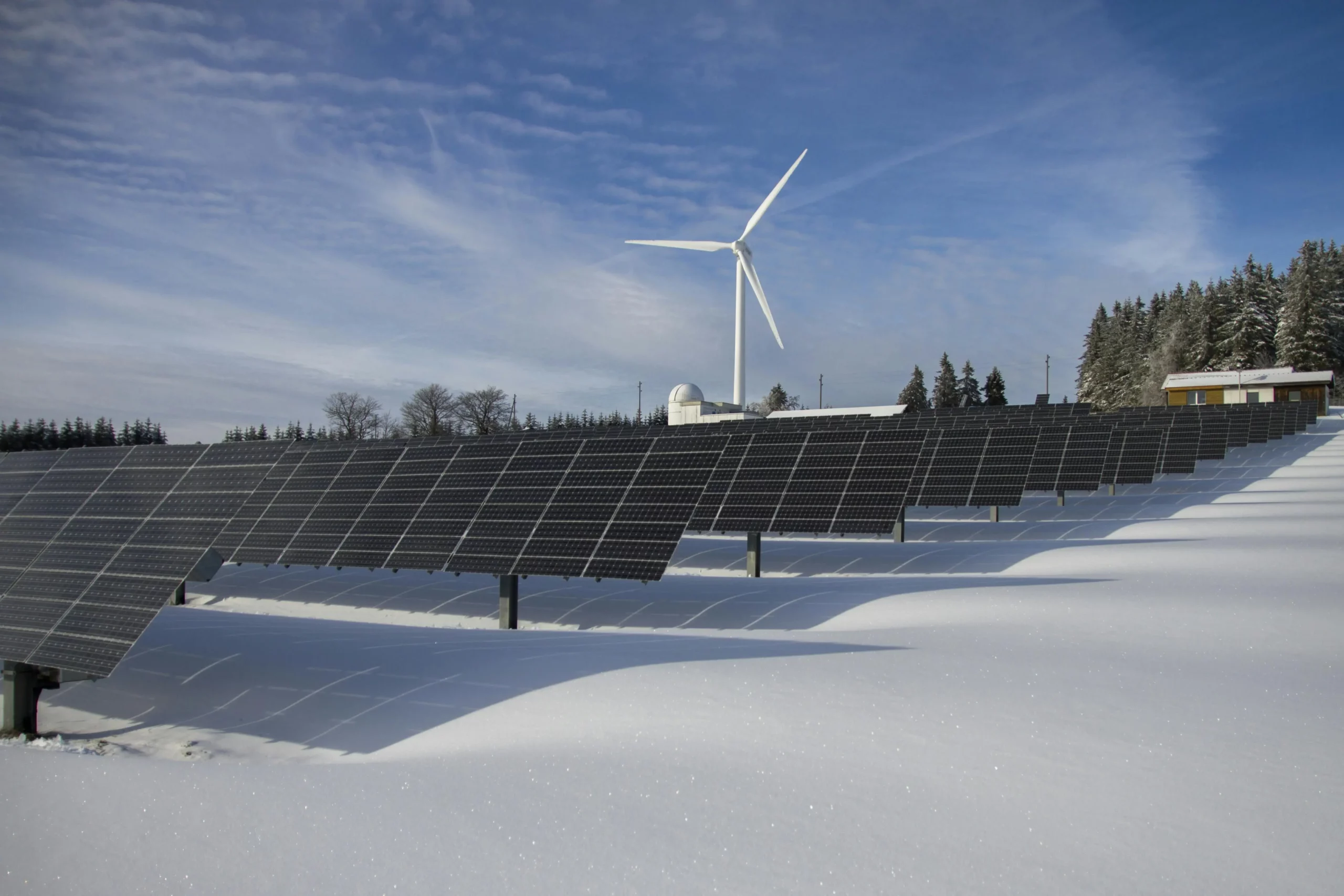
Europe is at a turning point. To reach climate neutrality by 2050, the EU must drastically expand renewable energy and electricity grids. This challenge is also an opportunity: renewables are cheaper than fossil fuels, can reduce biodiversity risks, and bring local economic benefits. Yet progress remains too slow, hampered by lengthy permits, weak community dialogue, and a lack of perceived value for citizens. 

To overcome these barriers, European stakeholders have united behind a set of baseline principles for fast and fair deployment of renewables and grids. These principles underline that projects must be shaped with communities, not imposed on them. Early engagement with mayors and citizens, transparent communication, and mechanisms for feedback are central to building trust. 

Equally important is ensuring that local communities share in the value of new projects. This means creating jobs, offering benefit-sharing schemes such as funds or co-ownership, and guaranteeing that revenues are used transparently for local improvements, from transport to housing. The principles also commit to nature-positive deployment, applying strategies to avoid or minimise harm and, where possible, enhance biodiversity. 

Finally, the consensus highlights the need to empower community-led initiatives, giving citizens and municipalities fair access to the energy market and the grid. By creating space for local ownership, Europe can ensure that the energy transition is not only fast but also fair. 

Together, these principles form a European consensus: a shared roadmap to accelerate the transition while protecting ecosystems and ensuring citizens see real, tangible benefits. 

Read the declaration: English | French | Polish

For more information, contact: 

Localising sustainable goals after COVID19

Localising SDGs - News

How European territories are driving sustainable change amid the Covid-19 crisis 


The Covid-19 pandemic has been a profound shock for municipalities and regions across Europe. Faced with health emergencies, social disruption, and economic slowdown, local and regional governments (LRGs) had to adapt swiftly, protecting essential services, reallocating budgets, and reshaping priorities. Yet, despite the immense challenges, many local authorities did not abandon global commitments. Instead, they turned to the 2030 Agenda for Sustainable Development (SDGs) as a framework to guide recovery and long-term resilience. 

With over 65% of SDGs requiring local implementation, municipalities and their national associations play a decisive role in ensuring progress. Some cities temporarily slowed their SDG-related work, but others actively integrated the Goals into recovery strategies, using them to design inclusive, coherent, and sustainable policies. This approach has strengthened their credibility as leaders in “building back better.” 

National associations of local governments proved to be vital allies. By coordinating efforts, connecting municipalities with resources, and advocating at the national and European levels, they helped ensure that even small and rural communities could advance the SDG agenda. Importantly, awareness and commitment have grown: associations in countries where SDG uptake was once limited are now actively building knowledge, promoting peer learning, and pushing for recognition of local action. 

Another breakthrough is the rise of Voluntary Local Reviews (VLRs) and Voluntary Subnational Reviews, which showcase municipal achievements and give visibility to local actors on the international stage. This not only strengthens city diplomacy but also fosters a shared vocabulary and sense of purpose among local, national, and global partners. 

The Covid-19 crisis has underscored the transformative power of the SDGs: as both a roadmap for sustainable recovery and a catalyst for innovation in governance, partnerships, and service delivery. Still, achieving the Goals requires greater investment and mobilisation of resources. EU initiatives such as the Green Deal, cohesion funds, and Global Europe offer crucial opportunities to scale up local action, alongside new forms of public-private partnerships. 

In short, the SDGs are not an abstract global agenda, they are a practical tool for territories to rebuild stronger, fairer, and greener communities. Even in times of crisis, Europe’s municipalities and their associations are proving that sustainability is not just a long-term ambition, but an immediate necessity. 

Read the study here 

For more information, contact: 

CEMR – 70 years

Brussels - Image

Celebrating 70 years of local and regional Europe


500 mayors, regional and local leaders, and EU officials from 50 countries are gathering on 28 January 2021 to celebrate the 70th anniversary of the Council of European Municipalities and Regions (CEMR). 

The attendants – including the Mayors of Paris, Lisbon and Gdansk, the EU commissioner for environment, MEPs and many more – will also reflect on the role of local and regional governments in the transformative decades to come.

Today, the Council of European Municipalities and Regions looks back on a proud history representing and federating local and regional Europe”, said Stefano Bonaccini, President of CEMR and of the Emilia-Romagna Region. 

From the first steps promoting town twinning and local democracy to later work on territorial development and regional representation at EU level, CEMR and our member associations have time and again been trendsetters for Europe”, added President Bonaccini. “In our current context, marked by the pandemic, climate change and other major challenges, municipalities and regions are again playing a critical role.

We have steadily expanded in every respect over the years”, said CEMR Secretary General Frédéric Vallier. “CEMR has grown to embrace 60 associations covering 41 countries, making it by far Europe’s broadest local government organisation.

Vallier added: “So too we have increased our areas of action, to include issues such as rights, gender equality, territorial development, public services, international cooperation and climate change, thanks to our highly professional and devoted staff and members. That is why we can look to the future with confidence: local and regional Europe is ready for the great changes of this momentous century!

A few of CEMR’s achievements

• Defence of local democracy and self-governance: The adoption of the European Charter of Municipal Liberties in Versailles in October 1953 affirmed the conditions for municipalities’ genuine administrative and financial self-government. The text notably served as a basis for the European Charter of Local Self-Government, which has been ratified by all 47 states of the Council of Europe.

• The recognition of local and regional governments as an integral part of Europe’s model of governance, notably with the creation of EU Committee of the Regions and the Council of Europe’s Congress of Local and Regional Authorities.

• Launch of the European Charter for Equality of Women and Men in Local Life in 2006: this political document aims to secure firm commitments from towns and regions to take concrete measures to promote gender equality in their territories. Over 1,850 signatories have thus committed to taking action.

• Participating in the creation and operation of the Covenant of Mayors for Climate and Energy in 2008: the Covenant’s signatory territories commit to reducing CO2 emissions by at least 40% by 2030 and to increase the use of renewable energy.

• Creation of PLATFORMA, the network of 34 local and regional governments and their associations engaged in international development, working on further growing the practice of decentralised cooperation.