
Adoption of the nature restoration law

Green City - News Section

Cities and regions urge swift adoption of EU Nature Restoration Law to combat climate and biodiversity crises


As Europe faces intensifying environmental challenges, from biodiversity loss to climate-driven heatwaves and pollution, cities and regions are stepping up their call for action. Partners of the Urban Agenda for the EU Partnership on Greening Cities, including many local and regional governments, have issued a joint letter urging EU Member States to swiftly adopt the long-delayed Nature Restoration Law. 

Local authorities are often at the frontline of environmental crises. With over 70% of Europeans living in urban areas, the need to restore green spaces is not only a climate priority but also a public health and quality-of-life imperative. The proposed law would provide a long-awaited framework to strengthen biodiversity, adapt cities to rising temperatures, and support sustainable land use. 

Delays in the law’s adoption not only undermine urgent environmental action but also threaten democratic trust in EU decision-making. A provisional agreement between the European Parliament and Council was reached months ago, and failure to finalise it now would send the wrong signal, both to EU citizens and the global community. 

CEMR and its partner’s stress: restoring nature is not optional. It is essential! Local governments stand ready to deliver, but they need the political will at the EU level to match their ambition. 

For more information, contact: 

Local Alliance for the Green Deal

Local Alliance: city and regional networks urge EU to stay the course on Green Deal implementation


Eight leading networks of European cities and regions – ACR+, CEMR, Climate Alliance, Energy Cities, Eurocities, FEDARENE, ICLEI Europe and POLIS – have come together to form the Local Alliance. 

In a joint letter, the Alliance calls on EU leaders to find new ways to effectively roll out the European Green Deal at the local level. The EU must “stay the course on the European Green Deal under this and the next mandate of the European Commission, the networks have stated.

Recent challenges, such as the passage of the Nature Restoration Law, which still languishes with the European Council, or the last-minute setbacks suffered by the internal combustion engine phase out, are undermining the Green’s Deal objectives. As the European elections approach, the EU must ensure it remains a global beacon for climate leadership.  

Given the more complicated arena for climate legislation that lies ahead, local leaders are adamant that the EU’s commitment to achieve climate neutrality by 2050 should remain a top priority, delivering a just transition that works for people and planet. 

Cities and regions are where at least 70% of the European Green Deal legislation must be implemented. European local and regional governments have already embarked on the journey to climate neutrality and started to transform European cities and regions, as well as ways of living, heating and cooling, housing, mobility, producing and consuming for millions of citizens. Today, the EU’s subnational governments mobilise around 58% of climate-significant public expenditures, surpassing their central governments. 

“Through this Local Alliance, we call on the EU institutions to listen to cities and regions that are already localising the Green Deal objectives by implementing 70% of the EU legislation. Putting the experience of local governments at the centre means prioritizing effective transition policies that will ensure fairness and acceptance of the Green Deal for all European citizens” – Fabrizio Rossi, Secretary General, CEMR.

In the letter sent to EU leaders, the Local Alliance highlights that Europe’s pace of success in achieving the Green Deal objectives will depend on the following help for cities and regions:  

  • More joined up support for investments from the EU, national and regional funds across different funding programmes and actors, which are more responsive to locally developed integrated and holistic action and investment plans. This would also be a prerequisite for creating local jobs and markets for the European green industry.   

Local leaders highlight that partnership between all levels of government is key as “Financing the local transition to climate neutrality will require mobilising the EU and national budgets.” 

  • Cities and regions need adequate in-house skills and a workforce to successfully do their part of the climate neutrality transition and by doing so, to create demand for European businesses and industries.   

“These opportunities are the best way to create local investment potential for European industry, and to share the transition benefits for all EU citizens,” say the Local Alliance leaders.

  • Establishing structured dialogues with the local and regional levels at the EU and national level will be critical to achieving the necessary transformation and societal resilience at scale in Europe.  

It is only with cities, regional and local governments on board – the closest level of government to people and the one responsible for implementing most of the European Green Deal legislation – that we can fully meet the objective of a climate neutral Europe by 2050. 

The Local Alliance further repeats its commitment to work with national governments, the European Council, the Commission, and the Parliament to turn the European Green Deal into reality for every citizen across Europe. 

For more information, contact:

Prague declaration in climate policy-making

Prague Declaration 2023 - News 2023

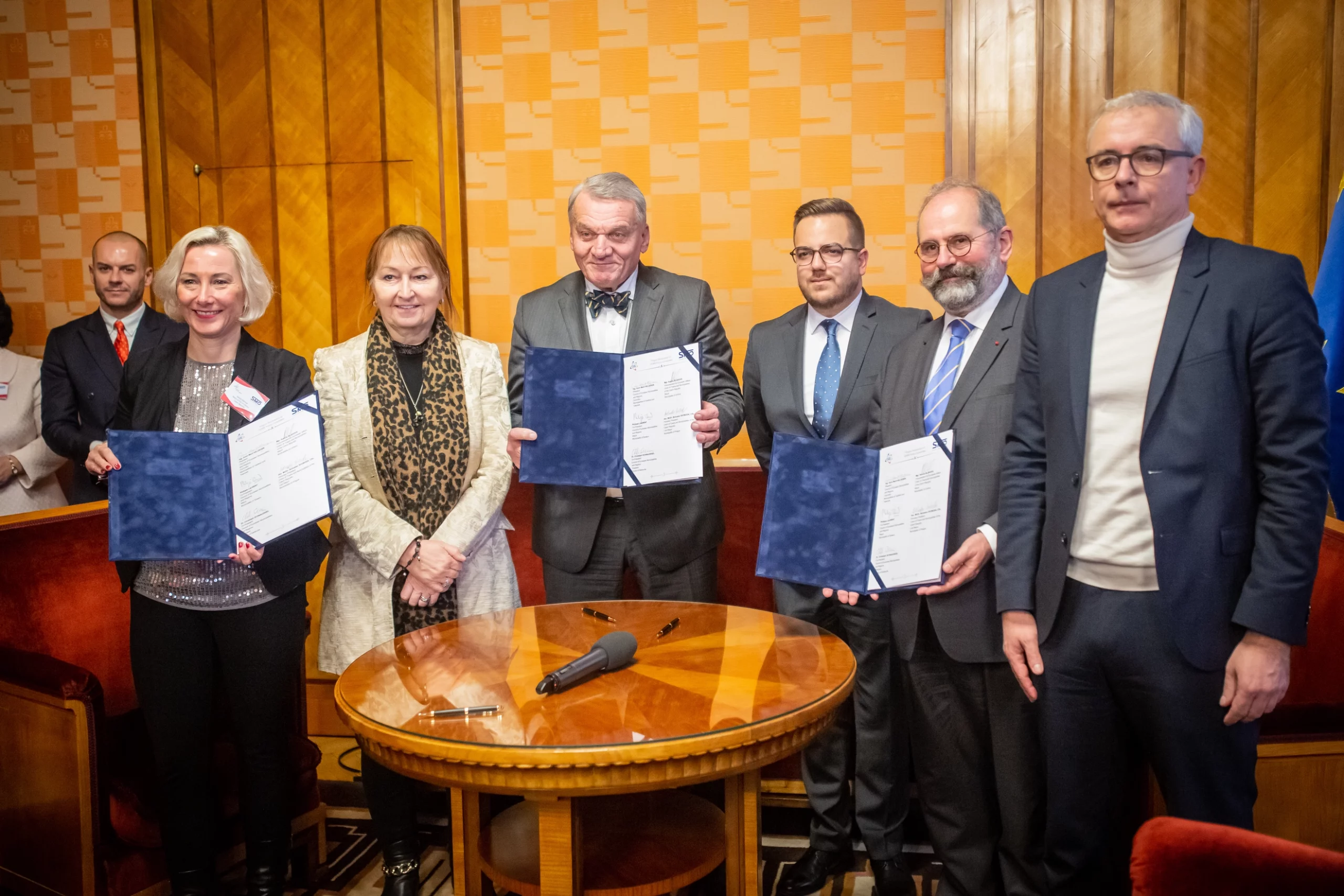
CEMR Policy Committee in Prague issues a Declaration Advocating Systematic Involvement of Local and Regional Governments (LRGs) in Climate Policy-Making


Policy Committee of the Council of European Municipalities and Regions (CEMR) is meeting in Prague on 6 and 7 December, and the first day of its deliberations culminated in the adoption of a landmark document titled “The Prague Declaration: More Trust in and Stronger Voice for Local and Regional Governments”. This significant political act underscores the pivotal role that local and regional governments (LRGs) play in confronting the formidable challenges facing our municipalities and regions.

“The Prague Declaration” sends a clear message about the imperative need for a stronger voice and a more vigorous partnership between the European Union, national governments, and LRGs. It calls for a more active involvement and consultation with LRGs throughout the entire policymaking process.

Fabrizio Rossi, CEMR Secretary General, expressed his gratitude, stating, “We extend our sincere appreciation to the Union of Towns and Municipalities of the Czech Republic SMO CR for their proactive role in initiating the Prague Declaration. This document reflects our shared commitment to effective governance, sustainability, and the well-being of our communities. Together, we are charting a course toward a more resilient and prosperous future.”

This declaration serves as a roadmap for empowering LRGs to effectively fulfil their responsibilities to citizens, highlighting their strategic role in the implementation of both European and national policies. Only in this way will it be possible to achieve the common goals of climate and social sustainability, preserve our planet for future generations, and ensure prosperity and well-being for the citizens of our towns and cities, municipalities, and regions.

CEMR welcomes media coverage and inquiries related to the Policy Committee meeting in Prague. For further information or to arrange interviews, please contact:

Martina Lehmannová
lehmannova@smocr.cz

CEMR is the broadest European association of local and regional governments that brings together one million democratically elected European politicians, in 60 member associations from 40 countries since 1951.

SMO ČR: The Union of Towns and Municipalities of the Czech Republic is a voluntary, apolitical, and nongovernmental organisation. The Union’s activity is primarily based on the efforts of mayors, lord mayors, and representatives who, beyond their duties, dedicate themselves to general self-government issues.

Sustainable textile waste management 

Textile Waste - News

Strengthening EU Waste Legislation Through Local Collaboration and Producer Responsibility 


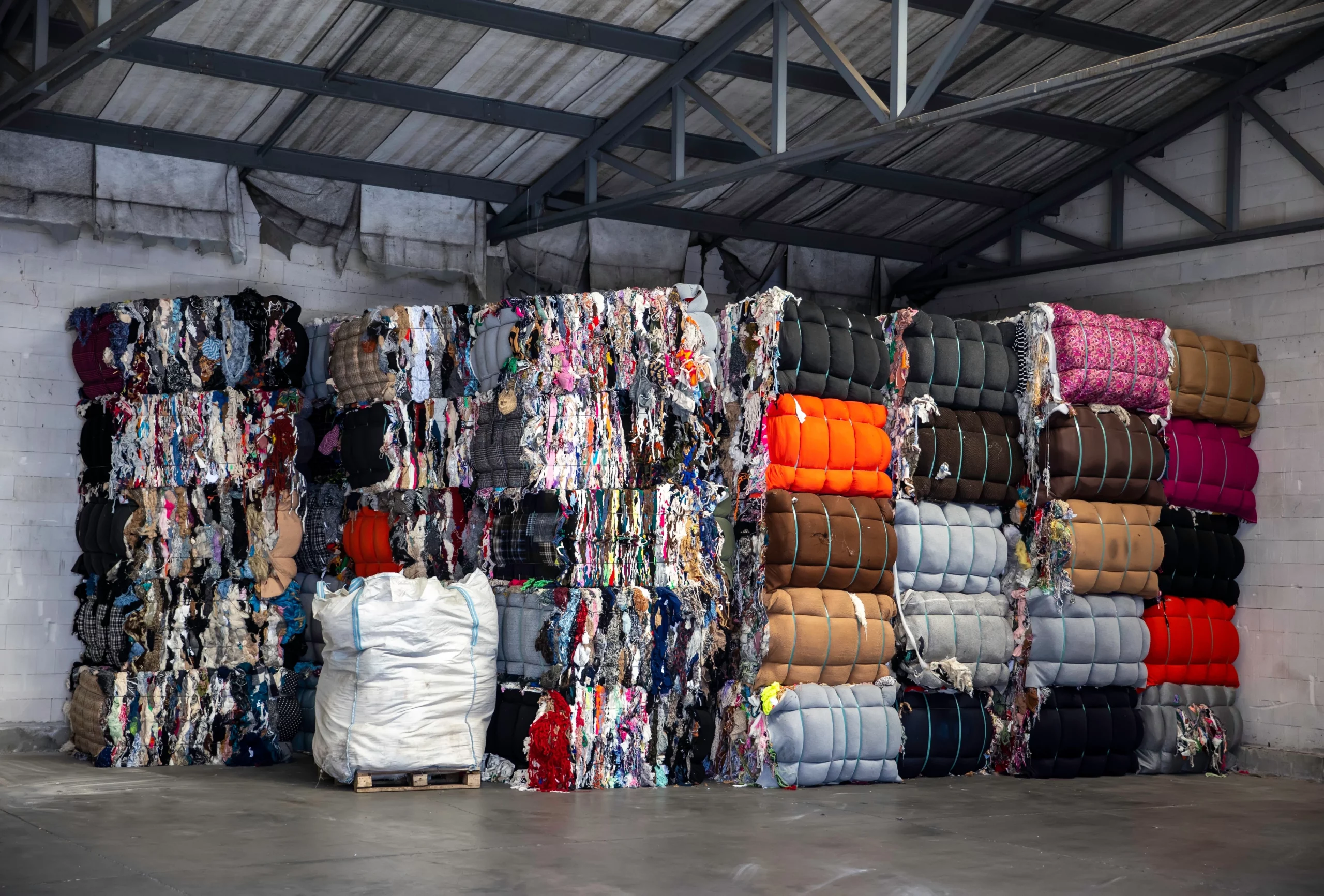
As the EU prepares to implement key provisions of the revised Waste Framework Directive, including mandatory separate collection of textiles by January 2025, the Council of European Municipalities and Regions (CEMR) calls for urgent improvements to ensure fairness, clarity, and efficiency in textile waste management. Drawing from on-the-ground experience and policy best practices, particularly France’s Extended Producer Responsibility (EPR) scheme, CEMR offers targeted recommendations to close critical legislative gaps and empower local governments in achieving sustainable waste solutions. 

1. Expand the Definition of Textile Waste 

The current directive focuses narrowly on ‘household textiles,’ excluding significant sources of textile waste from commercial and institutional settings such as hotels, hospitals, restaurants, offices, and schools. CEMR recommends a broader, more inclusive definition of ‘textile waste’ that reflects its diverse origins and aligns with the Polluter-Pays Principle. 

2. Clarify the Role of Social Enterprises 

Social enterprises play a vital role in collection, sorting, reuse, and resale of textiles. These actors must be fully recognised within the waste legislation and EPR frameworks, with fair access to funding and partnership opportunities. Their unique contributions can enhance the circular economy while delivering strong social outcomes. 

3. Strengthen Extended Producer Responsibility (EPR) for Textiles 

a) Align Implementation Deadlines 

There is currently a mismatch between the 2025 obligation for separate textile collection and the proposed EPR deadline, which may not come into effect until 2027 or 2028. CEMR calls for the EPR scheme to be implemented simultaneously with the collection obligation, and for producers to retroactively reimburse municipalities for collection-related costs from January 2025. 

b) Recognise Local Authorities as Key Partners 

Municipalities are central to waste collection and citizen engagement, yet their role is not clearly defined in the proposed EPR framework. CEMR urges mandatory collaboration between Producer Responsibility Organisations (PROs) and municipalities to ensure streamlined collection systems and cohesive public communication. 

c) Ensure Full Cost Coverage 

EPR funding must comprehensively cover not only infrastructure and operational costs, but also continuous public communication campaigns, which are critical to successful sorting and reuse. Additionally, producers should bear partial responsibility for textiles that remain in mixed waste streams, incentivising better product design and citizen behaviour. 

d) Include Unsold Textiles in EPR Obligations 

To align with the Ecodesign Regulation for Sustainable Products, which bans the destruction of unsold goods, CEMR advocates for including unsold textiles in the scope of EPR. A clear definition should be added to the directive to ensure these products are managed responsibly and transparently. 

4. Introduce Clear Measures to Prevent Textile Waste 

Overproduction and fast fashion are key drivers of Europe’s textile waste crisis. The revised directive must go beyond waste management and address prevention at the source. This includes incentives for sustainable design, extended use, reuse systems, and anti-overproduction regulations. 

Case Study: France’s “Refashion” EPR Scheme 

France’s pioneering EPR program, “Refashion,” offers a proven model. Since 2007, it has tripled the collection and recycling rates of post-consumer textiles. In 2020 alone, it engaged over 4,000 producers and allocated €36 million toward sorting, community projects, and innovation. Nearly 40% of textiles placed on the market were collected, up from 27% in 2013, with a 90% material recovery rate and 50% direct reuse. 

This success story demonstrates how producer accountability, coupled with strong public-private cooperation, can drive significant progress. However, challenges such as labour-intensive sorting and the difficulty of recycling blended fibres remain and must be addressed at the EU level. 

Conclusion 

With the right revisions, the updated Waste Framework Directive can become a powerful tool in reshaping Europe’s approach to textile waste. CEMR urges EU institutions to act decisively by aligning deadlines, empowering municipalities, and ensuring that both social and environmental responsibilities are shared equitably across the textile value chain. Only then can the EU truly advance toward a circular, fair, and sustainable future. 

Read the position paper here 

For more information, contact: 

Fixing Textile Waste

Textile Waste Management - News

CEMR calls for a stronger local role and producer responsibility in EU textile waste reforms


In response to the European Commission’s proposal to revise the Waste Framework Directive, the Council of European Municipalities and Regions (CEMR) has published key messages to ensure that local and regional authorities are central to a fair and effective textile waste management system.

The revision, which includes mandatory Extended Producer Responsibility (EPR) schemes for textiles, is welcomed by CEMR. However, urgent improvements are needed to ensure timely implementation, comprehensive cost coverage, and clearer roles for public authorities and social enterprises.

CEMR’s recommendations highlight several critical areas:

  • Broaden the definition of textile waste to include non-household sources such as hotels, hospitals, and offices.
  • Clarify the role of social enterprises and ensure they are fully integrated into EPR schemes.
  • Align deadlines for separate collection (due by 2025) with the establishment of EPR schemes to avoid unfunded obligations for municipalities.
  • Guarantee full cost coverage for collection, sorting, treatment, and public awareness campaigns.
  • Include unsold textiles under EPR rules, in line with the upcoming Ecodesign Regulation.
  • Promote prevention, especially by tackling overproduction and fast fashion.

Drawing on best practices from France’s “Refashion” scheme, CEMR shows how EPR can drive higher collection and reuse rates, stimulate innovation, and improve cooperation across the value chain, but only when properly implemented.

CEMR urges EU institutions to embed these recommendations into the revised directive to ensure that local governments can continue to lead on circular economy goals without being burdened by unfunded mandates.

For more information, contact:

Study on SDGs localisation

Energy Behaviour Forum - image 1

Discover our new study on progress made by local governments in promoting the Global Goals


The Council of European Municipalities and Regions (CEMR) and PLATFORMA are releasing today (12 July) their annual study on the localisation of the Sustainable Development Goals (SDGs) at a United Nations special event in New York. The study is presented by CEMR President Gunn Marit Helgesen at the 6th Local and Regional Governments Forum on the 2030 Agenda, organised in the framework of the High-Level Political Forum (HLPF), the United Nations annual event on the SDGs.

The report collects data from 41 associations of local and regional governments from greater Europe and makes seven recommendations. As estimates show, 65% of the 169 targets underpinning the 17 SDGs cannot be achieved without the involvement of local and regional governments.

One more time, this report resonates as a strong call to national and European institutions to further recognise and include in their reports progress made by municipalities and regions in achieving the SDGs. More than ever, decentralised cooperation and partnerships are crucial instruments to achieve the 2030 Agenda at the local and regional levels.

“We are fast approaching the halfway point on the road to the 2030 Agenda and the implementation of the Sustainable Development Goals (SDGs), meaning there are only six summers left!” warns Gunn Marit Helgesen, CEMR President, in the foreword of the study.

The 6th Local and Regional Governments Forum on the 2030 Agenda is organised by UN DESA, the Global Taskforce of Local and Regional Governments (GTF), UN-Habitat, UNDP and Local 2030.

Mayors have a say

This year, the European delegation of local and regional governments is composed of several mayors and councillors:

  • Gunn Marit Helgesen, CEMR President and Councillor of Vestfold and Telemark, President of the Norwegian Association of Local and Regional Authorities (KS)
  • Magda Kostava, Member of Kutaisi Municipal Council, Georgia (NALAG), member of the CEMR Young elected officials committee
  • Wim Dries, VVSG President and Mayor of the City of Genk
  • Luisa Salgueiro, President of the National Association of Portuguese Municipalities (ANMP) and Mayor of Matosinhos, Portugal
  • Manueal Alvares, Councillor in the Municipality of Matosinhos, Portugal
  • Stephan Neher, Mayor, City of Rottenburg am Neckar, Germany
  • Anne-Marie Jean, Vice-President of Eurométropole de Strasbourg (CUF)
  • André Viola, Councillor, Department of Aude (AFCCRE)

Fabrizio Rossi, CEMR Secretary General, Emilia Saiz, UCLG Secretary General, Lucy Slack, CLGF Secretary General, Unai Tellería, Delegate of the Basque Government (Spain) in the United States, Leen Verbeek and Mathieu Mori, respectively President and Secretary General of the Congress of Local and Regional Authorities of the Congress of Europe are also attending HLPF and parallel dedicated to local and regional governments.

More information:

For more information, contact:

Electricity market design reforms

Electricity Market - News 2023

Reforming the European Electricity Market: Priorities and Challenges


In March, the European Commission proposed a regulation to improve the EU’s electricity market. The reform is important for local and regional governments, since they play a central role as suppliers, distributers and consumers of electricity. While the current internal market for electricity has brought positive effects and lower prices, reforms are needed to address decarbonization of the electricity sector and gas shortages caused by Russia’s energy weaponization in the Ukraine conflict.

The past winter has made it clear for all Europeans that ensuring the security of supply and lower prices of electricity were top priorities for the years to come. The EU and Member States must increase both the production of electricity and their capacity in terms of energy storage. They also need to take strong measures to decarbonize the electricity sector in order to achieve climate neutrality by 2050. In other words, the European electricity market is at a crossroads: to move forward, the EU needs to take strong actions and work together with local and regional governments.

Facilitate local and regional governments’ work driving investments in renewable energy

Local and regional governments have important roles to play in changing the electricity sector. They are responsible for finding suitable locations for production, distribution and transmission; they also must speed up permitting, manage spatial planning, invest in energy companies, and enable consumers and energy communities.

Furthermore, they possess valuable insights due to their direct engagement with local communities, and are therefore essential in ensuring citizens’ acceptance of the rollout of renewable energy. Considering all these factors, local and regional governments must be key partners in the reform of an efficient, sustainable European electricity market.

Make electricity prices less reliant on short-term fossil fuel costs

It is important to offer the option of long-term contracts, including to individuals and smaller consumers. This helps protect them from high and unpredictable prices, especially until more renewable energy production at lower generation prices is available.

Keep emergency measures as permanent features of the Electricity Market Design

During periods of excessively high electricity prices, it is advisable to maintain certain emergency measures. These measures can include price caps, taxes on windfall profits, and reimbursements for consumers. However, they should only target fossil fuel and other phased-out energy sources to encourage investment in renewable energy. These measures should not discourage energy savings or flexibility.

Encourage better consumer empowerment and protection

Efforts should be made to empower and protect consumers, particularly vulnerable ones, when implementing renewable energy sources and energy efficiency measures. Support schemes, loans, and technical assistance can help achieve this goal. Moreover, regional and municipal energy providers, acting as a “supplier of last resort,” should receive adequate financial compensation from national or European funding to support vulnerable households and enterprises.

Promote efficient multi-level governance solutions and financial support

Collaboration among different levels of governance, following the principles of subsidiarity and multilevel governance, is crucial for success. Platforms like the Covenant of Mayors facilitate cooperation, knowledge exchange, and the sharing of good practices at EU, national, and regional levels.

Finally, to successfully implement changes at local and regional levels, it is important to provide financial resources and supportive measures, while avoiding excessive regulations and administrative burdens.

In conclusion, the Commission’s proposed regulation offers an opportunity to address challenges in the European electricity market. To achieve climate neutrality and ensure a secure energy supply, increasing production and storage capacities, promoting renewable energy sources, and involving local and regional governments are crucial. Collaboration, financial support, and efficient governance will contribute to a sustainable European electricity market.

To learn more about the measures proposed by CEMR, read the full position paper.

For more information, contact:

Smarter building rules in Europe

Housing - News

EPBD revision: Local flexibility and long-term planning key to success, say CEMR and Housing Europe


EPBD revision: Local flexibility and long-term planning key to success, say CEMR and Housing Europe 

The Council of European Municipalities and Regions (CEMR) and Housing Europe have joined forces to publish a set of recommendations on the European Commission’s proposal to recast the Energy Performance of Buildings Directive (EPBD). While both organisations fully support the ambition to decarbonise buildings across the EU, they warn that the proposal must better reflect the realities on the ground. 

Local and regional governments, as well as providers of public, social, and cooperative housing, are critical actors in delivering the EU’s climate objectives. But a one-size-fits-all approach will not work. 

The joint position paper outlines three key recommendations: 

  1. Respect local differences through subsidiarity and adaptability 
    The EPBD must allow member states and local authorities to tailor building codes to their own context. Setting EU-level definitions for zero-emission buildings without a clear methodology risks creating uncertainty and undermining national efforts. Other areas, such as fire safety and asbestos removal, should remain the competence of national or local governments. 
  1. Provide a stable and realistic framework for renovations 
    Renovating buildings is a long-term process that requires careful planning. The proposed EPBD introduces tight deadlines and shifting labelling systems, making it nearly impossible for local authorities and property owners to comply effectively. CEMR and Housing Europe argue for a more predictable timeline that reflects labour shortages, market dynamics, and tenant affordability. 
  1. Support zero-emission construction with energy system flexibility 
    While new buildings must meet high standards, member states should retain the freedom to choose their energy sources. That includes not only on-site renewables, but also low-carbon energy from the grid, waste heat, and energy recovery, all in line with the EU waste hierarchy. 

Ultimately, the success of the EPBD will depend on how well it enables local and regional actors to deliver results. CEMR and Housing Europe are clear: the path to climate-neutral buildings must be ambitious but flexible, fair and grounded in local realities

Read the full policy paper here  

For more information, contact: 

Territorial leaders in action at the COP 27

Climate - News Section

10 key points to prevent the inexorable march toward utter climate disaster


It’s now or never. We must gear up for climate action and advance the Sustainable Development Goals on the ground. This is the core message that PLAFTORMA and CEMR will bring to the COP27 taking place in Sharm El-Sheikh, Egypt.

In a joint position, PLATFORMA and CEMR put forward 10 key points for delegates and representatives from the UN, the EU and national governments who will sit around the COP27 negotiation table. Among the important points raised in the position are the need for a supportive regulatory and governance framework to implement subnational climate action, and the need for sustainable subnational financing.

Read the position paper

For more information, contact:

Annual report on SDGs goes digital

PLATFORMA - banner 3

Our annual report on the SDGs goes digital at the UN High-Level Political Forum on Sustainable Development (HLPF)


Available for the first time in an online format, PLATFORMA and CEMR have just published their fifth annual study on the localisation of the Sustainable Development Goals (SDGs). Released on the occasion of the UN High-Level Political Forum on Sustainable Development (HLPF) in New York, discover this innovative publication today on local-sdgs.eu

This study gathers the most recent information on how and to what extent associations and networks of local and regional governments have been involved in the localisation of the SDGs, both in Europe and with their global peers, and in particular during the COVID-19 pandemic. This year’s survey therefore, included questions on the SDGs’ implementation since 2015 and the impact of the COVID-19 crisis. In the last two sections, there were also additional questions regarding Voluntary Subnational Reviews (VSR) and decentralised cooperation.

It gathers 63 answers from 28 European countries, 37 associations of local and regional governments and 18 municipalities and regions.

Main recommendations

Six main recommendations came out of this study, targeting EU institutions, national governments and local and regional governments and their national associations:

  1. The European Commission should report regularly on any progress made in achieving the Sustainable Development Goals (SDGs) at the EU level and indicate how the different levels of governance have contributed to this process.
  2. We encourage associations of local and regional governments to actively take part in the Voluntary Subnational Reviews (VSR) process.
  3. Local and regional governments (LRGs) are calling for the firm recognition and inclusion by national governments of the role of LRGs and their associations in the monitoring and reporting of progress in the implementation of SDGs at the national level.
  4. European states and the EU need to strengthen their dialogue with the subnational levels and include them in any relevant high-level delegation meetings.
  5. Strengthen international cooperation to achieve the 2030 Agenda at the local and regional levels
  6. There is still a need to localise and territorialise the SDGs, through the deployment of appropriate funds and resources

This study will be presented by a PLATFORMA-CEMR delegation at different events during the second week of the High-Level Political Forum on Sustainable Development (HLPF) taking place in New York between 5 and 15 July 2022.

This delegation is composed of:

  • Fabrizio Rossi, CEMR Secretary General
  • José Hila, Mayor of Palma de Mallorca (Spain, FEMP)
  • Hannah-Lea Braun, Member of Maichingen Council (Sindelfingen, Germany) and the CEMR Young Elected Officials Committee
  • Luis Salaya, Mayor of Cáceres (Spain, FEMP)
  • Valérie Dumontet, Vice-President of Aude Region, (France, Cités Unies France)
  • Pilar Díaz, Mayor of Espluges de Llobregat, Deputy to the Presidency, Delegate for International Relations at the Diputació de Barcelona (Spain, Barcelona Provincial Council – DIBA)
  • Jan van Zanen, Mayor of The Hague (Netherlands, VNG International)

Directors, advisers and technicians from CEMR, the City of Paris, DIBA, FEMP, the Norwegian Association of Local and Regional Authorities (KS), UCLG and VNG International are also attending HLPF this year.

More

For more information, contact: