
CEMR – 70 years

Brussels - Image

Celebrating 70 years of local and regional Europe


500 mayors, regional and local leaders, and EU officials from 50 countries are gathering on 28 January 2021 to celebrate the 70th anniversary of the Council of European Municipalities and Regions (CEMR). 

The attendants – including the Mayors of Paris, Lisbon and Gdansk, the EU commissioner for environment, MEPs and many more – will also reflect on the role of local and regional governments in the transformative decades to come.

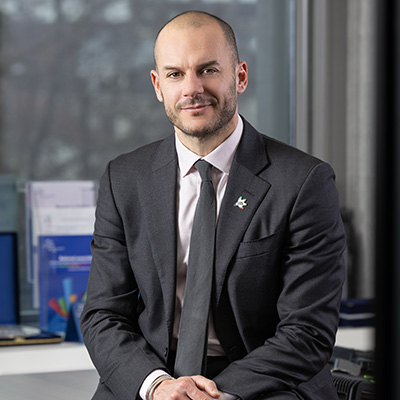
Today, the Council of European Municipalities and Regions looks back on a proud history representing and federating local and regional Europe”, said Stefano Bonaccini, President of CEMR and of the Emilia-Romagna Region. 

From the first steps promoting town twinning and local democracy to later work on territorial development and regional representation at EU level, CEMR and our member associations have time and again been trendsetters for Europe”, added President Bonaccini. “In our current context, marked by the pandemic, climate change and other major challenges, municipalities and regions are again playing a critical role.

We have steadily expanded in every respect over the years”, said CEMR Secretary General Frédéric Vallier. “CEMR has grown to embrace 60 associations covering 41 countries, making it by far Europe’s broadest local government organisation.

Vallier added: “So too we have increased our areas of action, to include issues such as rights, gender equality, territorial development, public services, international cooperation and climate change, thanks to our highly professional and devoted staff and members. That is why we can look to the future with confidence: local and regional Europe is ready for the great changes of this momentous century!

A few of CEMR’s achievements

• Defence of local democracy and self-governance: The adoption of the European Charter of Municipal Liberties in Versailles in October 1953 affirmed the conditions for municipalities’ genuine administrative and financial self-government. The text notably served as a basis for the European Charter of Local Self-Government, which has been ratified by all 47 states of the Council of Europe.

• The recognition of local and regional governments as an integral part of Europe’s model of governance, notably with the creation of EU Committee of the Regions and the Council of Europe’s Congress of Local and Regional Authorities.

• Launch of the European Charter for Equality of Women and Men in Local Life in 2006: this political document aims to secure firm commitments from towns and regions to take concrete measures to promote gender equality in their territories. Over 1,850 signatories have thus committed to taking action.

• Participating in the creation and operation of the Covenant of Mayors for Climate and Energy in 2008: the Covenant’s signatory territories commit to reducing CO2 emissions by at least 40% by 2030 and to increase the use of renewable energy.

• Creation of PLATFORMA, the network of 34 local and regional governments and their associations engaged in international development, working on further growing the practice of decentralised cooperation.

EU delegations & local action 

PLATFORMA - banner 2

Exploring how EU Delegations engage with local and regional governments in global development 


As the global landscape of development cooperation evolves, the role of local and regional governments (LRGs) has moved from the margins to the mainstream. No longer seen merely as beneficiaries of aid, LRGs are now recognised as key actors in the design, implementation and ownership of sustainable development policies. 

With over 139 EU Delegations around the world, the European Union plays a pivotal role in supporting governance and development at all levels. This new PLATFORMA study explores how these Delegations are engaging with LRGs, the value of their cooperation, and the road ahead. 

This study highlights the growing political relevance of decentralised cooperation, mayor-to-mayor partnerships, city-to-city exchanges, and collaboration between national associations in achieving sustainable development. EU Delegations, representing the EU in partner countries, manage funding and support development policies aligned with local needs. In this context, their relationship with LRGs is crucial. 

Key insights from the study include: 

  • Local knowledge matters: LRGs are closest to citizens and understand their needs. Their involvement improves governance, ensures better delivery of services, and strengthens citizen engagement. 
  • TALD – Territorial Approach to Local Development: Promoted by PLATFORMA, TALD ensures local development strategies are not only nationally supported, but locally owned and shaped. 
  • From consultation to partnership: The new 2021–2027 EU Multiannual Financial Framework emphasises a permanent policy dialogue with LRGs, beginning with programme design and continuing through implementation and monitoring. 

Yet, the study also reveals a mixed picture. While some Delegations engage actively with local authority associations and decentralised actors, others have limited or no contact, missing opportunities for peer learning and stronger governance. 

The study calls for a deeper and more consistent relationship between EU Delegations and local governments in partner countries. It identifies four key areas where progress can be made: 

  1. Training: EU Delegation staff would benefit from greater awareness of local governance realities, decentralisation processes, and participatory mechanisms. LRGs can offer training and insights rooted in real experience. 
  1. Political closeness: LRGs understand the language of local politics. Stronger ties between EU Delegations and elected representatives could boost trust and effectiveness. 
  1. Networks and awareness: LRGs bring with them local networks and credibility. Their role in development education and public awareness can link global goals with local realities. 
  1. Support to associations: Many national associations of LRGs remain underused. Targeted EU support could enhance their capacity, sustainability and leadership in local development. 

By investing in these relationships, the EU can reinforce its commitment to local ownership, sustainable development and effective international cooperation. Ultimately, localising global agendas such as the 2030 SDGs will only be possible if local voices are not only heard, but also empowered. 

Read the study here 

For more information, contact: 

Building climate-ready cities in Africa 

Sub-Saharan Africa - News Section

Lessons from the Covenant of Mayors in Sub-Saharan Africa on strengthening local capacity for energy access and resilience


The Covenant of Mayors in Sub-Saharan Africa (CoM SSA) has, over its first four years, shown that local leadership is essential in tackling climate change and improving energy access. Supported by the European Union and global partners, the initiative empowers municipalities to design and implement Sustainable Energy Access and Climate Action Plans (SEACAPs), tailored to their contexts. 

Developing Local Capacity 

One of the clearest lessons is the importance of involving African partners early and consistently. Contextualising European approaches to local realities in Sub-Saharan Africa has proven key to success. Peer-to-peer learning, including informal exchanges like WhatsApp groups, has strengthened communities of practice and allowed cities to share knowledge beyond language and geographic barriers. 

At the same time, challenges remain. Sparse data, limited technical expertise, and difficulties in political continuity have slowed progress. Travel barriers, connectivity issues, and shifting national dynamics have highlighted the need for more flexible and innovative support structures. The presence of local intermediary organisations, universities, NGOs, or research centres has emerged as critical in anchoring capacity and ensuring sustainability beyond donor cycles. 

Successes and Lessons 
Despite obstacles, CoM SSA has enabled cities such as Bouaké, Dakar, and Tsévié to make tangible progress on emissions inventories and resilience planning. The development of SEACAP guidelines, adapted through extensive consultation, provided a framework that cities could build upon. Simplified tools and hands-on training helped municipalities overcome initial hurdles, while regional workshops fostered solidarity and collective ambition. 

The first phase of CoM SSA demonstrates that building climate resilience in African cities requires time, trust, and resources. Moving forward, stronger capacity-building, continuous peer exchanges, and deeper involvement of local support organisations will be vital. With growing international momentum on climate action, this initiative has laid the groundwork for a long-term transformation: cities that are not only more resilient but also better equipped to deliver sustainable energy for all. 

Read the study here 

For more information, contact: 

Inclucities – Hiring

BoT Expertise - News 2023

We are recruiting a Project Officer – Migration and Integration


The Council of European Municipalities and Regions (CEMR) is recruiting an Officer for IncluCities (full-time contract at the CEMR Secretariat in Brussels until January 2023).

Find all the details in the Job description.

Please send your CV and application letter, telling about your motivation and interest to application@ccre-cemr.org before 10 January 2021 – 23:59. Please put ‘Project Officer – IncluCities’ in the title of the email.