
Digital local and regional governments

Digital transition - News 2022

How Europe’s municipalities and regions can drive an inclusive, secure and people-centred digital transformation


Local and regional governments are at the heart of Europe’s digital transformation. As the public authorities closest to citizens, they deliver services such as healthcare, education, transport, social support and broadband deployment, all increasingly shaped by EU digital legislation. Their role is essential to ensure that digitalisation remains inclusive, sustainable and accessible to everyone. Yet many local and regional governments still face major obstacles: unequal access to digital infrastructure, insufficient financial and human resources, cybersecurity risks, and widening gaps in digital skills.

Across Europe, disparities in connectivity and digital access disproportionately affect rural and remote areas, low-income households and vulnerable groups. These inequalities threaten territorial cohesion and limit citizens’ ability to participate fully in digital society. To make digital public services truly accessible, digital solutions must follow inclusive design principles and remain complemented by in-person service options for those who cannot or prefer not to use digital channels.

Cybersecurity has become an increasing concern as local authorities manage sensitive public data and critical infrastructure, often without sufficient expertise or funding to meet growing EU requirements such as those under the NIS2 Directive. Smaller municipalities, in particular, lack the resources to implement robust cybersecurity measures, respond to incidents or comply with complex regulatory frameworks. Reinforced cooperation, simplification of rules and sustainable financial support are essential to strengthen local resilience.

Skills development remains another pressing challenge. To implement new EU digital policies, including those related to artificial intelligence, interoperability and data governance, local administrations need staff trained to oversee digital systems, maintain human oversight, and ensure ethical, transparent and fair use of technologies. At the same time, strengthening digital literacy among citizens through lifelong learning and community-based initiatives helps build trust, inclusion and participation. Cooperation between municipalities and across regions also accelerates innovation and avoids fragmentation by enabling the exchange of best practices and common solutions.

A Call for Stronger EU Support

To ensure a fair, secure and inclusive digital transition, CEMR calls on European institutions to reinforce investment in digital infrastructure, especially in underserved regions; provide technical and financial support for accessible digital public services; maintain non-digital access to essential services during the transition; facilitate public-private partnerships to expand connectivity; and offer tailored guidance, capacity-building and long-term funding to help local and regional governments strengthen their cybersecurity and digital skills. Europe’s digital future depends on empowering the actors closest to citizens: its municipalities, cities and regions!

Read the position paper here

For more information, contact:

Workshop on Gender Equality Action Plans

Women - News Section

Training on gender equality at the local level: from commitment to actions


On 18 November, CEMR organised the online workshop “From commitment to action: Training on gender equality action planning”. The event brought together around 60 participants from more than 10 countries, including France, Germany, Belgium, the Netherlands, North Macedonia, Romania, Ukraine, Greece, Poland, the United Kingdom and Austria. Municipal representatives, national coordinators and experts joined to strengthen their capacity to design, update and implement Gender Equality Action Plans (GEAP) in line with the European Charter for Equality of Women and Men in Local Life.

As the Charter approaches its 20th anniversary in 2026, the session provided practical guidance, tools and inspiration to support renewed commitment at local and regional levels.

Gender equality action planning: tools and approaches

The workshop started with inputs on the importance of gender mainstreaming as a core tool for local gender equality strategies. Miguel Hernandez Littlewood from DG REGIO presented the EU’s strategic framework, relevant funding mechanisms and the new gender-tracking methodology.

Aline Burni research fellow at the think tank ODI Europe shared findings from the GAP III report and offered practical guidance on conducting needs assessments, securing financial resources, ensuring leadership commitment and developing monitoring systems focused on impact rather than activities.

The experience of the Charter’s signatories

Several Charter signatories shared their experiences and challenges in developing their Action Plans.

Nataliya Lazarenko, on behalf of the Association of Ukrainian Cities, and Alina Khaletska, member of the Expert Council on Gender Integration of the City of Kyiv (Ukraine), presented their unique experience with the Charter, recalling that the first Ukrainian signatory was Vinnytsia (Ukraine) in 2017 and explaining how the context of war has intensified gender equality concerns.

Pascale Douineau, elected official responsible for gender equality from the City of Quimperlé (France), shared her work on the visibility of women in public spaces, while also highlighting the specific challenges faced in rural areas.

They emphasised the importance of strong political commitment, noting that signing the Charter is a concrete signal to take action, and that Action Plans are essential tools for implementing equality measures in daily life.

The workshop offered participants the chance to work through a practical exercise to design an action plan based on the Charter’s articles, including Article 22 on gender-based violence, which encouraged the exchange of good practices. Participants also discussed the need for an integrated approach, the challenges of securing adequate financial resources, and the importance of setting dedicated budget targets. Finally, the relevance of effective monitoring tools emerged as a key point of reflection.

The main takeaways from the workshop highlight that an assessment of gender needs is indispensable for identifying priorities and ensuring that measures are not generic but reflect local realities. Sustainable implementation requires adequate financial resources, committed leadership, and long-term structures. Ultimately, the discussions made clear that a single model for gender equality action planning does not exist. Each approach must be tailored to local contexts, and Gender Equality Action Plans are essential tools to translate these commitments into concrete, measurable actions.

Preparing for the Charter’s 20th anniversary

As next year 2026, we move toward the 20th anniversary of the Charter, CEMR will keep working alongside towns, cities and regions to advance their gender equality strategies. Participants are encouraged to take forward the tools and insights gathered during the workshop, embed them in their local plans, and remain active partners in the collective push for gender equality.

For more information, contact:

Town Hall COP webinar

TOWN HALL COP - News

Town Hall COP: Faster climate action and multilevel governance to tackle climate change


Strengthened local action and multilevel governance to meet climate targets is one of the key messages defended by CEMR and PLATFORMA. On 19 November 2025, both networks organised their first Town Hall COP, a community-led climate dialogue aimed at reinforcing partnerships across levels of government. Participants insisted on linking climate efforts with broader global agendas such as the Sustainable Development Goals (SDGs). The event took place online while COP30 negotiations are expected to conclude by the end of the week in Belém (Brazil).

COP30 negotiations update and progress made since COP21

Intervening from Belém, the Director for Intergovernmental Support and Collective Progress at UNFCCC Cecilia Kinuthia-Nienga provided an update on the COP 30 negotiations, highlighting the presidency’s focus on multilateralism, building trust, and moving “from commitments to implementation.”

She discussed the importance of clear governance structures, investment pipelines, and support for developing countries to ensure credible Nationally Determined Contributions (NDCs) implementation.

Just back from COP30, Bridgette Burken-Holder, Director of International Program at the European Climate Foundation, emphasised the evolution of the 2015 Paris Agreement as a “living instrument” and the progress made in reducing emissions in cities, but also the growing recognition of subnational governments in climate policy. She noted that 80% of submitted NDCs now include cities and regions as key partners.

Paraphrasing a COP30 participant, she said: “As local governments, we don’t need just a seat at the COP table, we need to rebuild the table to make sure that we can fit everyone we need.”

CEMR Spokesperson on environment and Senator for Loire-Atlantique (France) Ronan Dantec, also discussed the evolution of local governments’ role in climate governance over the past 20 years, emphasising the importance of their involvement for reaching climate targets.

Thysia Tchekouteff, Policy Assistant at the European Commission Directorate-General for Climate Action, reminded the European Union’s climate goals: to become the first climate-neutral continent by 2050, with a 55% reduction in greenhouse gas emissions by 2030 and a 90% reduction by 2040.

She emphasised the importance of multi-level cooperation, highlighting the EU’s endorsement of the Coalition of High Ambition Multi-Level Partnerships (CHAMP) and its commitment to working with subnational governments.

Climate action: political, financial, and citizen engagement

“Climate change does not wait for the next election,” stressed Emil Brogn, Mayor of Cluj-Napoca (Romanian Municipalities Association), who called for reinforced political support, blending financial resources, and making green choices easy for citizens. The mayor named “three key elephants in the room”: political support, finance, and citizen engagement.

He stressed the importance of communicating climate change actions in a way that resonates with citizens. A comment shared by Siri de Vrijer, Policy advisor on environment to MEP Gerben-Jan Gerbrandy (Renew Europe – Netherlands), who said: “we must show citizens what’s in it for them.” She discussed the need for a narrative that aligns with citizens’ perspectives and policy makers’ responsibilities.

This was also supported by Nadia Pellefigue who presented the Committee of the Regions’ opinion on COP30. “Without multi-level governance, ambitions remain theoretical. With it, ambitions become reality,” stated the Vice-President of the Occitanie Region (France). She called for a formal multi-level governance dialogue within the UNFCCC.

National perspectives from Moldova and Croatia

Marina Lungu, Head of Climate Change section at the Ministry of Environment of Moldova presented her country’s newly submitted NDC, which emphasises multi-level governance and includes institutional mechanisms for climate policy coordination across all levels of government.

Miljenko Sedlar, Head of climate in the Northwest Croatia Regional Energy and Climate Agency, presented Croatia’s approach to climate action. He also mentioned a new EU27 project called National Adaptation Hubs, which aims to shift from reactive to systemic adaptation and resilience across EU member states.

Local climate action initiatives

“80% of what can be done is under the influence of local governments,” said CEMR spokesperson for climate Marianne Overton, who discussed the challenges of climate change and the importance of local government in addressing it. The Councillor of North Kesteven and Lincolnshire (UK) highlighted the need “to make green choices easier for residents” and shared examples of successful initiatives, such as solar installations on council housing and energy-efficient building designs.

Overton emphasised the role of local municipalities in achieving climate targets and mentioned a motion passed by over 200 councils aiming for net zero by 2030.

Ola Nord, Head of the City of Malmö (Sweden) EU Office presented his city’s Town Hall COP initiative, which engaged 40 citizens to identify key climate action areas, resulting in 26 proposals focused on city planning, transport, democracy, just transition, lifestyle, and energy. “Change is happening, there’s a lot of positive developments, but it needs to be sped up and made stronger,” he said.

Looking towards 2027

Risto Veivo, Climate director at Central Administration of the City of Turku (Finland) provided an update on the IPCC Special Report on Cities to be presented at COP27. The report, involving approximately 100 lead authors will focus on various aspects of urban climate change, including solutions by city types and regions globally.

The results of CEMR-PLATFORMA Town Hall COP will now be shared with the large community of the Local Governments and Municipal Authorities (LGMA) Constituency of the United Nations, of which CEMR is a member. Ahead of COP30, CEMR endorsed the LGMA Joint Position, a joint call for COP30 leaders to empower cities and regions as key drivers of global climate implementation.


More information

For more information, contact:

Workshop on social dialogue

Lab event - News

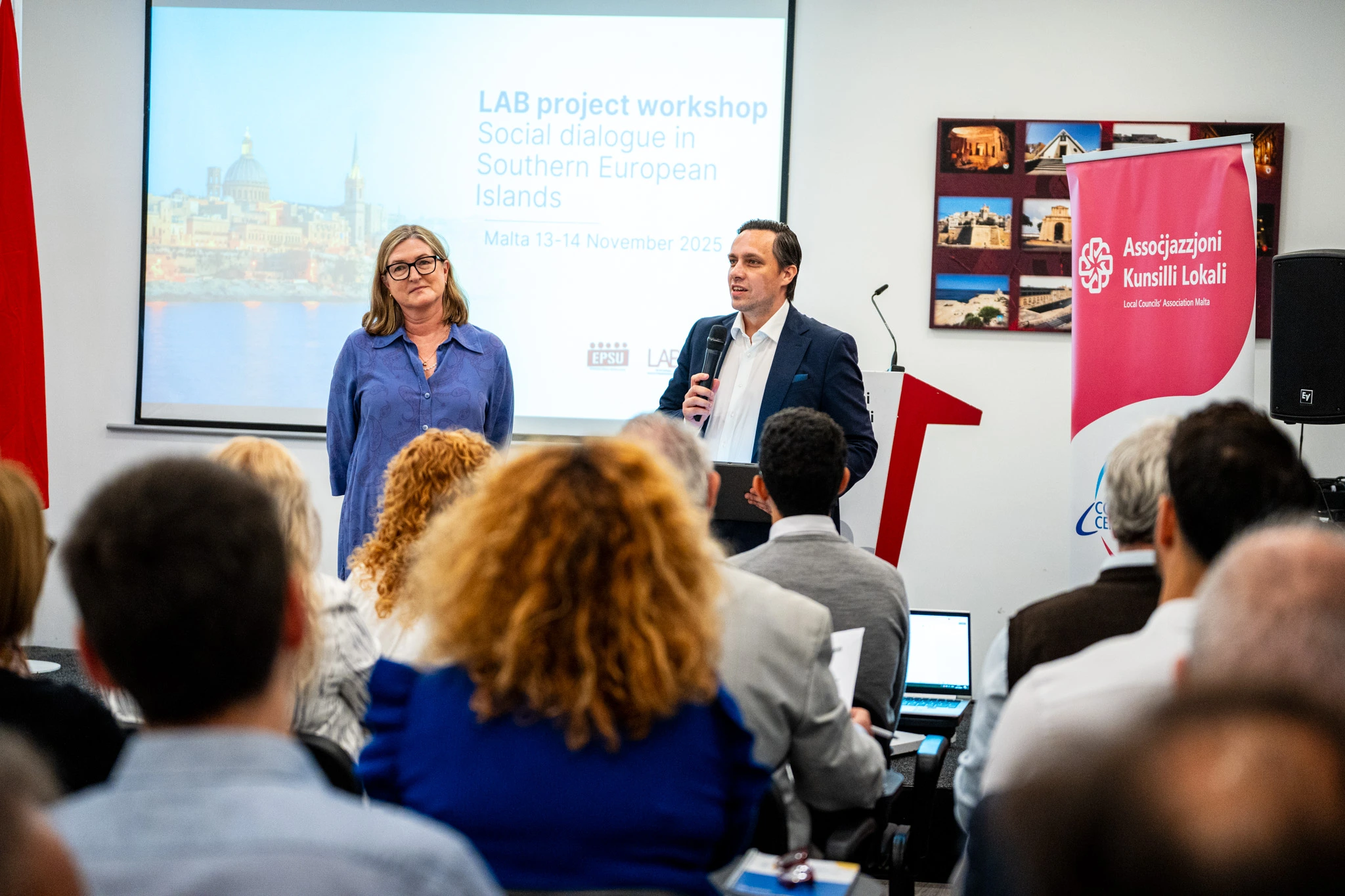
CEMR-EPSU Workshop on social dialogue in Southern European Islands


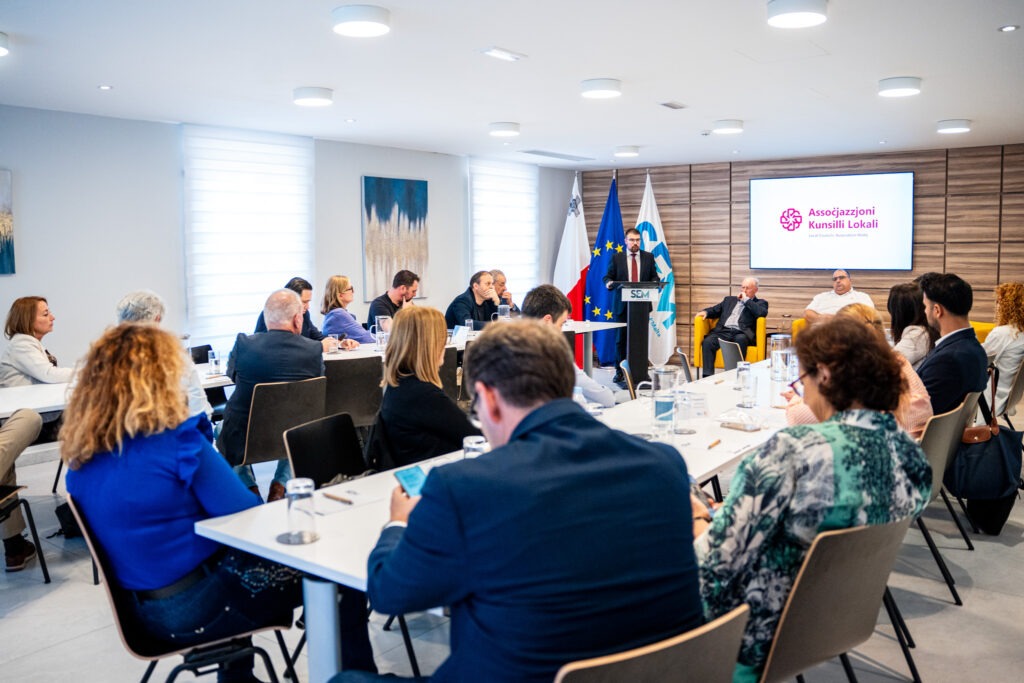
CEMR and EPSU hosted a workshop in Malta focusing on social dialogue in Southern European islands. The event brought together participants from Malta, Cyprus and Greece to discuss current challenges and opportunities for national and EU level social dialogue.

Social dialogue means all types of negotiation, consultation or exchange of information between, or among, representatives of governments, employers and workers, on issues of common interest relating to economic, employment and social policy.

The workshop included interventions by the Head of the European Commission’s Representation in Malta, Maria-Elena Despot and the Director General of the Department for Industrial and Employment Relations in Malta, Diane Vella Muscat. It also featured a meeting with the Maltese government’s representative to the Malta Council for Economic and Social Development, Rodrick Zerafa.

The workshop featured examples of best practices for social dialogue by speakers from Germany, Estonia and Sweden. These included German practices to ensure staff retention and upskilling in collective bargaining agreements to address the need for new skills arising from the green and digital transition.

A representative from the Swedish trade union TCO presented the Swedish labour market model as an example of effective social dialogue leading to industrial peace and a high level of collective agreement coverage.

In their presentation on the digital transition in Estonian local governments, the Association of Estonian Cities and Rural Municipalities highlighted that “the digital transition can become a driver for dialogue, because it affects everyone’s work”.

This workshop marks the first of three regional events organised under the LAB project, an EU-funded initiative led by CEMR and EPSU. The project aims to strengthen social dialogue across Eastern and Southeastern Europe, candidate countries and Southern European islands by equipping local and regional social partners with the tools and knowledge to engage constructively at both national and EU levels.

These regions often experience challenges to active participation in national and EU level social dialogue due to limited capacities of the social partners and underdeveloped social dialogue frameworks. Social dialogue is becoming an increasingly important tool to address not only employment and social policy, but also to find inclusive and effective solutions to other challenges, such as the green and digital transitions. 

For more information, contact:

EU budget: Local Alliance action plan

Local Alliance - News Section

Making the next EU budget work for cities and regions: the Local Alliance’s 10-point action plan


The Local Alliance – a coalition of Europe’s leading local and regional governments: ACR+, CEMR, Climate Alliance, Energy Cities, Eurocities, FEDARENE, ICLEI Europe and POLIS, – aims at ensuring that our constituencies have the competencies and resources to implement and reinforce Europe’s resilience, competitiveness and decarbonisation.

We share a common vision for the 2028–2034 Multiannual Financial Framework (MFF) to become a strong, democratic, and future-proof tool that drives cohesion across territories, reinforces Europe’s competitiveness, and enables a just transition towards climate-neutral and resilient transition.

Local and regional governments are Europe’s frontline for delivering change. They are the democratic level closest to citizens, trusted by a majority of Europeans, and directly or through shared responsibility in charge of implementing most EU legislation. They mobilise the bulk of climate-relevant investment, drive innovation and competitiveness, and safeguard cohesion and just transition by ensuring that no community is left behind. Without their leadership, Europe cannot succeed in meeting its green, digital, social, and competitiveness ambitions.

Yet instead of empowering this strength, the Commission’s proposal for the next MFF risks sidelining local and regional governments, who are best placed to deliver. A centralised approach, which does not reflect the local realities and priorities, not only threatens delivery on the ground, but also Europe’s long-term societal, democratic and economic resilience and competitiveness. As the Committee of the Regions’ most recent report highlights, European cities and regions need a budget to help build the Union from the ground up – where local and regional authorities are not only implementers but co-creators of Europe’s future.

With the negotiations already underway, the Local Alliance calls on the European Parliament and the Council of the EU to seize this opportunity to put democracy, territorial cohesion, and competitiveness at the heart of the next MFF by ensuring local and regional governments are recognised as indispensable partners. Europe cannot achieve its strategic objectives without working hand in hand with its towns, cities and regions. For this reason, the Local Alliance presents an 10 point action plan to ensure the EU budget delivers tangible results for people in every territory across Europe and beyond.

For the next MFF, we call on:

1. Stronger multilevel governance mechanisms to deliver both reforms and investments.

2. Stronger partnership principle for the implementation of the MFF.

For the National and Regional Partnership Plans: 

3. Making regional and territorial chapters of the National and Regional Partnership Plans mandatory, with a clear section on cities.

4. Earmarking for a just transition & affordable living for all.

5. A real EU program for cities of all sizes under the proposed EU Facility.

6. Safeguarding mechanism for the local and regional level to guarantee their access to EU funds.

7. Linking performance indicators to EU law implementation and territorial delivery.

For the European Competitiveness Fund and Horizon Europe: 

8. Competitiveness Fund and Horizon Europe should recognise cities and regions explicitly as innovators and investors.

For Horizon Europe:

9. Continuing the Mission approach under Horizon Europe.

For the Global Europe Facility:

10. Stronger support for accession cities and regions for the future of European cohesion.

Read the full position paper here

For more information, contact:

A month of advocacy for Ukraine

Ukraine advocacy - News

From Istanbul to Kyiv, Belgrade, and Brussels, CEMR advanced cooperation with Ukrainian peers and the country’s path toward EU accession


October was a month of steady advocacy and engagement for the Council of European Municipalities and Regions (CEMR), underscoring the central contribution of cities and regions in supporting Ukraine.  
 
Since the early 2000s, CEMR has worked closely with its national associations in Ukraine and has also been deepening ties through initiatives such as Bridges of Trust and SUN4Ukraine, and most recently by launching a digital Matchmaking Platform focused on connecting EU and Ukrainian municipalities. 

Throughout October, CEMR intensified its outreach with local and regional governments, as well as European institutions. Working alongside partners, the organisation sought to consolidate efforts, amplify the impact of its support, and promote practical tools that directly benefit communities (see latest Call for Proposals). Discussions focused on topics such as Chapter 22 “Regional Policy and Coordination of Structural Instruments” in the EU enlargement process, successful municipal partnerships in wartime, Cohesion Policy to address disparities, and aligning Ukraine’s recovery with climate and energy goals through local action.  

Together with its members and partners, CEMR co-organised a series of major events, each reaffirming the importance of local cooperation and resilience in times of war: 

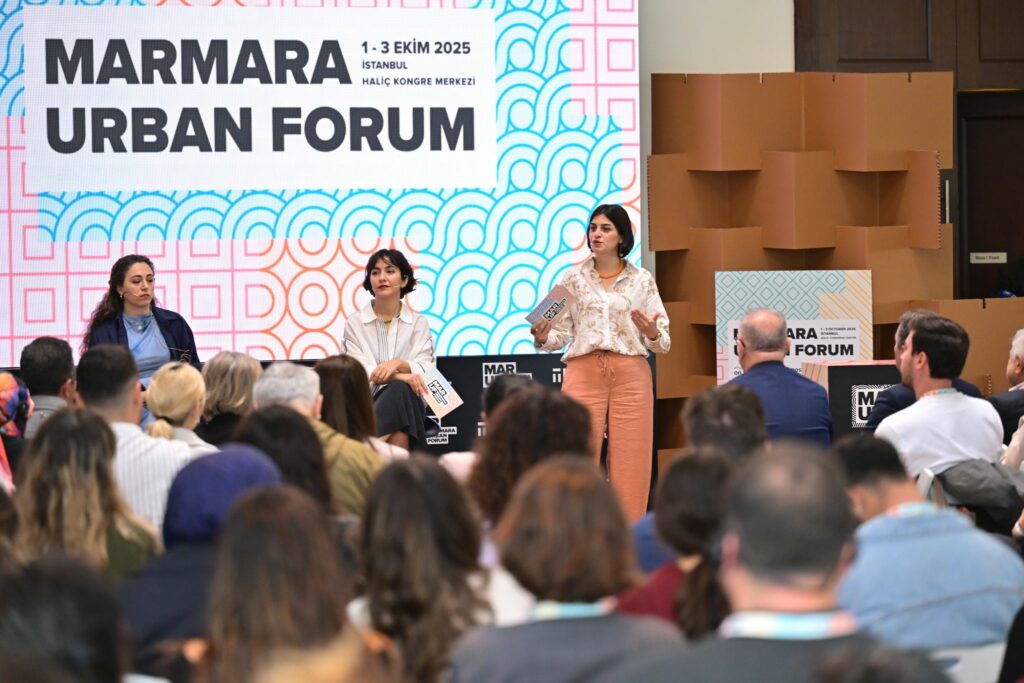
Marmara Urban Forum 
  • Session: “Resilient Local Governance in Wartime – Reform, Decentralisation, and Reconstruction in Ukraine.”  
    Speakers highlighted how decentralisation, stronger local competencies, and international cooperation enable real progress even in wartime. Drawing on lessons from South-East Europe and city partnerships with Ukrainian municipalities, they showed how access to knowledge, tools, and advocacy channels empowers local leaders to influence national decisions and drive recovery as equal partners in rebuilding the country.  
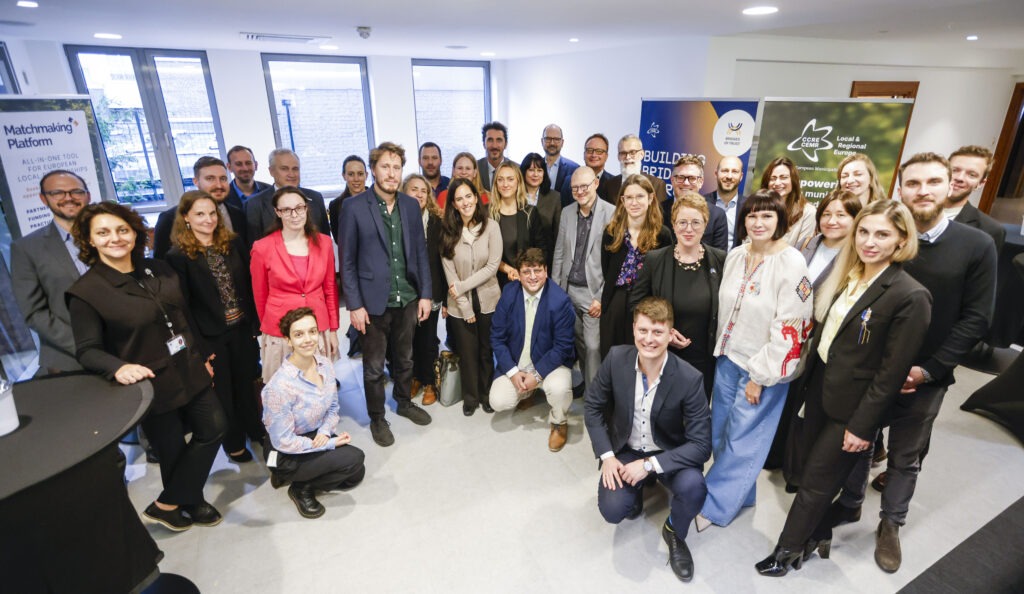
16/10/2025, Brussels – Building Bridges of Trust – COMMUNITY ANNUAL GATHERING © Elio Germani 2025
  • 13 October: Meeting with Ukrainian Mayors Delegation.   
    A delegation of 23 Ukrainian mayors visited CEMR in Brussels for the opening session. The roundtable gave each mayor the opportunity to share experiences from their municipalities and explore initiatives in international partnerships, climate, and smart cities, including PLATFORMA, SUN4Ukraine, the Bridges of Trust Community, and the Matchmaking Platform. The visit aimed to deepen their understanding of EU actors and processes, as well as to learn more about effective advocacy and lobbying. 
  • 15 October: Political session — “Ukraine’s Path to the EU: Municipalities and Partnerships for Cohesion and Growth.” 
    The room was full at the Committee of the Regions, where four representatives from organisations with diverse missions illustrated how Ukrainian municipalities are actively advancing EU integration, aligning with Chapter 22 requirements while deepening cooperation with their European counterparts. As emphasised during the discussion, local governments are driving reforms and influencing national and European policy, showing that localising accession is crucial for Ukraine’s municipalities to be fully engaged in the EU integration process. 
  • 16 October: Bridges of Trust Community Annual Gathering.  
    The European Partnership Hub convened for constructive exchanges aimed at uniting efforts and preventing fragmentation. Over thirty organisations from across Europe participated, all actively engaged in strengthening municipal cooperation between the EU and Ukraine. Notably, all four national associations of Ukrainian cities were represented. 
  • 15–16 October – Kyiv (Ukraine): SUN4Ukraine events 
  • The Multilevel Policy Dialogue brought together Ukrainian and European partners to strengthen multilevel governance processes and align Ukraine’s recovery and EU accession with climate and energy goals. Cities including Rivne, Chernivtsi, Vinnytsia, Konotop, Kalush, Kyiv, and Sumy Region shared how they translate national ambitions into local action. Key national and international institutions actively participated in the discussions.  
  • The Capacity Building sessions equipped 12 Flagship Municipalities to develop their Climate Neutrality Plans, reinforcing local governments’ role in driving a sustainable recovery. 
  • A key highlight was the launch of the SUN4Ukraine Partnership Programme, connecting 12 Ukrainian cities with European Mission Cities under the EU’s “100 Climate-Neutral and Smart Cities” initiative, with Munich and Oslo serving as advisory partners.  
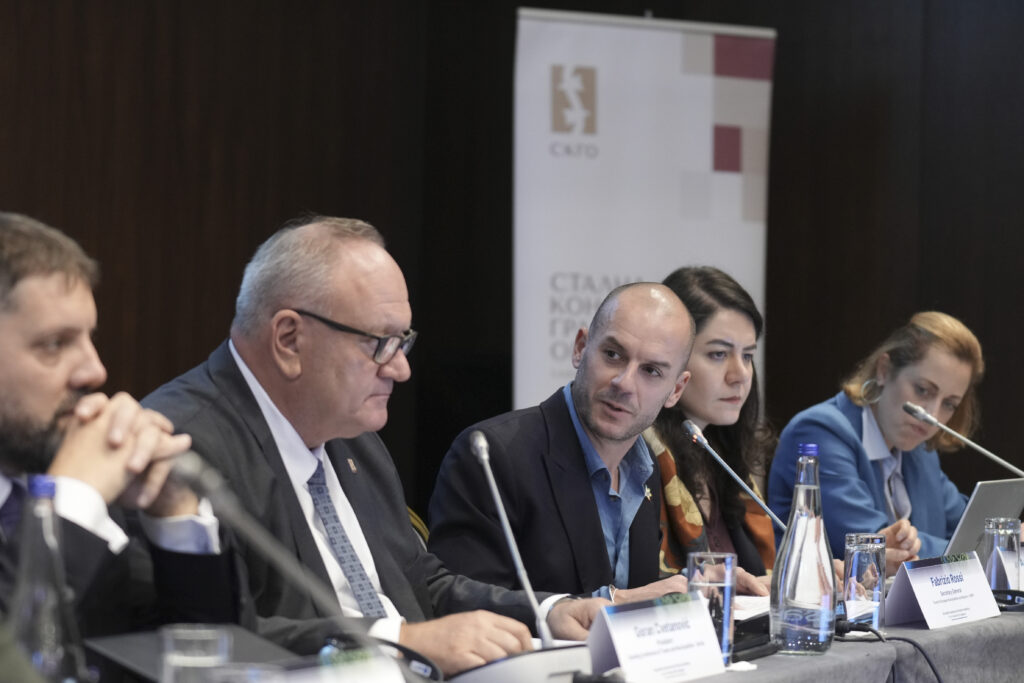
  • 23–24 October – Belgrade (Serbia): CEMR Secretaries General and Directors Meeting 
  • Discussions and exchanges with members focused on opportunities for EU–Ukraine municipal partnerships under the Bridges of Trust call for proposals. Looking ahead, national associations and other partners selected under the Bridges of Trust Community will continue to advance EU–Ukraine municipal partnerships. 

In November, CEMR will continue its advocacy and promotional efforts at the Smart City Expo (4-6 November) and the Salon des Maires Français (18–20 November), where sessions will spotlight international municipal partnerships in Europe and the Matchmaking Platform developed to support them. This all-in-one digital tool connects cities and regions across Europe and already counts over 500 registered Ukrainian municipalities. 
Under SUN4Ukraine, the 12 partnerships between Ukraine and EU cities will meet in Munich on 17-20 November to start their collaborative journey. The moment will also include the second step of the Capacity Building programme to further support the development of Climate Neutrality Plans.  
 
All project partners, including CEMR, will continue facilitating constructive exchanges and supporting partnerships in deepening their cooperation, ensuring that local collaboration remains at the core of Ukraine’s recovery and EU accession efforts. 
 
 For more information, contact: