Paweł Adamowicz Award

European Town - News

Nominations open for Mayor Paweł Adamowicz Award


Nominate your candidate for the 2022 Mayor Paweł Adamowicz Award honouring the work of persons or organisations who advanced human rights, solidarity, cooperation and trust among citizens. To nominate the next winner of the award, please fill this online nomination form by 31 October 2022. 

Metropolis Conference

Migration - News Section

From Berlin to Beirut, “migration is not a problem to be solved but a reality to be managed”


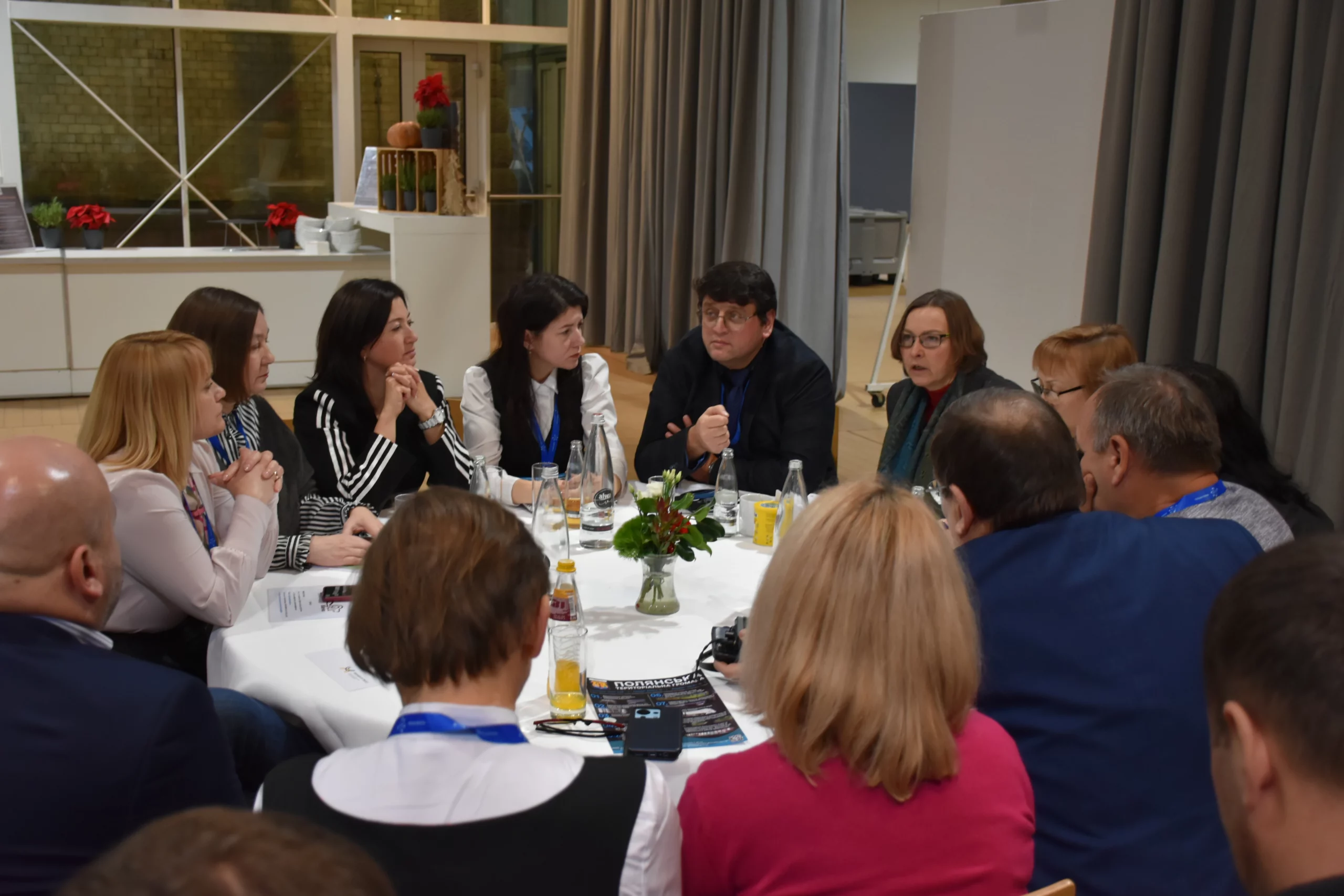
Multiple global crises impacting migration and mobility require immediate and coordinated local responses. What are the main challenges and which solutions have already proven sustainable? CEMR and IncluCities explored these questions at the International Metropolis Conference in Berlin.

Berlin is known as multicultural city where every second child has a migration background. Migrants play an important role in the city and migration affects all levels of political and daily life. Indeed, Berlin was the German state to implement a specific Act on migrant integration, notably boosting their opportunities to work in the public sector.

Local authorities work hand in hand with NGOs and civil society to have a sound understanding of the situation on the ground. In crisis management, the local level is strategic, explained Katarina Niewiedzial, Commissioner of the Berlin Senate for Integration and Migration. “However, we are very slow and still do many things on paper“, she said. “There is still a lot we can learn on digital solutions on migration from other cities, like Warsaw.

Knowledge-sharing goes both ways

Conversely, the city of Warsaw has also learned from Berlin’s best practices and experience to build a more efficient and comprehensive response for migration flows. When 800,000 Ukrainian refugees arrived in Warsaw following the Russian invasion, less than 12 hours were needed for the city to set up a working plan for crisis management.

Despite having minimal or no resources and depending on support from various organisations, civil society and NGOs, they focused on integration and the labour market from the very beginning. “Over half of the adult refugees, mainly women, managed to find a job in the city within four months”, said Tomasz Pactwa, Director of Warsaw’s Projects and Social Affairs Department.

Public attitudes were another vital element they tackled to prevent negative propaganda around refugees. After conducting a survey, city authorities identified and addressed citizens’ fears, such as overcrowding and crime, through communication campaigns. This paid off as the narrative changed and solidarity prevailed.

Instrumentalised by populists

Not all cities have positive stories to tell. Lebanon is the country with the highest number of refugees per capita. They have been facing one of the worst economic and financial crises in decades if not more, with most residents falling under the poverty line and an inflation rate of over 150%.
Refugees in the country are not seen as a problem to be solved but rather a tool for political elites to gain influence through populist rhetoric and spreading misconceptions. “An alarming increase in discrimination, harassment, and violence against refugees is present”, explained Fatima A. Ibrahim, Executive Director of the Refugees=Partners project (Lebanon & Syria).

Changing perceptions of migration

Gaziantep, a big Turkish city near the Syrian border, hosts half a million refugees: one-fifth of the city’s population are newcomers. Since 2015, the local authorities have adapted their services to the situation by establishing local principles on refugee response that leave no one behind and include conflict-sensitive planning.

The city has opened a migration management department, a social research centre, health care units, community centres, art and vocational centres, a women’s solidarity and empowerment shelter and a rehabilitation centre, as well as distributing humanitarian aid. “In Gaziantep, we believe migration is not a problem to be solved, but a reality to be managed,” said Önder Yalçın, Director of the migration department for the city of Gaziantep.

Learning from each other

Inclusion happens at the local level and presents a huge challenge for local communities that lack capacity, knowledge and financial resources. “This is why we have started with the EU IncluCities project, to enable a vivid exchange of best practices among mentor and mentee cities to improve local inclusion”, said Maria Grazia Montella, CEMR migration officer.

The responses from stakeholders on the ground, cities, their support networks, and local and regional government associations are strikingly positive. In two years and a half, cities participating in the IncluCities project have already begun impressive processes of change.
The Belgian #BuddieswithRefugees project is being replicated in the Sicilian town Capaci. A migrant consulting body has been established in the Greek city of Levadia to co-create policies with the newcomers.

Meanwhile, in France, the town of Saint-Jean-de-la-Ruelle has created a women’s house to integrate refugees with a view to their particular needs. And with Russia’s war in Ukraine, Jelgava in Latvia went from having just a handful to over a thousand refugees. The municipality managed to set up from scratch an operational information and reception centre for newcomers.

Everywhere, we can see things happening and that’s the main goal of our project. Every city has different dynamics and structures, yet the fundamentals of addressing migration through a lens of inclusion and respect for human rights form the core of successful management at the local level. Through IncluCities and similar projects, the principles and practices that work in one locale can be replicated and adapted in other places.

International Partnership

International Partnership - News 2022

Local government leaders renew their partnerships with the EU to boost international development


The presidents of the five largest associations of local and regional governments met yesterday (September 12, 2022) in Brussels with Jutta Urpilainen, European Commissioner for International Partnerships, to renew their partnership with the European Union on international development.

The five local government leaders present were:

  • Anne Hidalgo, Mayor of Paris (France), President of the International Association of Francophone Mayors (AIMF)
  • Stefano Bonaccini, President of the Emilia-Romagna Region (Italy) and President of the Council of European Municipalities and Regions (CEMR) & PLATFORMA
  • Innocent Uwimana, President of the Rwanda Association of Local Government Authorities (RALGA) and Board member of the Commonwealth Local Government Forum (CLGF)
  • Jan van Zanen, Mayor of The Hague (Netherlands), Chair of the Board of United Cities and Local Governments (UCLG)
  • Fatimetou Abdel Malick, President of the Regional Council of Nouakchott (Mauritania), President of United Cities and Local Governments – Africa (UCLG-A)

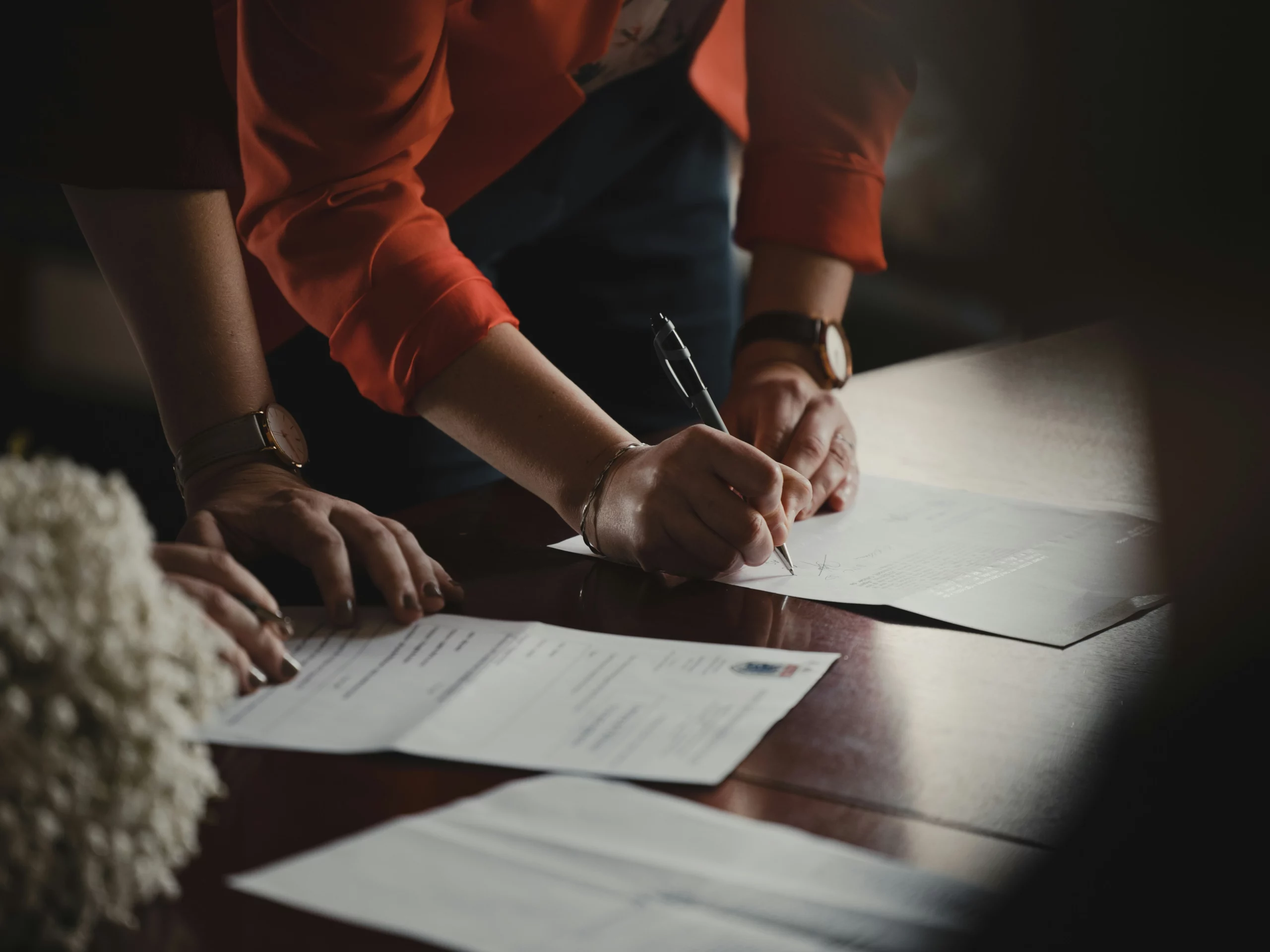
The five presidents signed new framework partnership agreements with the European Union for a period of four years. These agreements notably include financial support to local and regional government associations in designing policies aimed at promoting sustainable development at the international level, with a budget of €50 million under the NDICI-Global Europe financial program.

The agreements also strengthen the associations’ role in coordinating the voices of all development partners at the local level. Beyond aid to associations, development efforts by local governments will also be supported “on the ground” with €500 million, Commissioner Urpilainen said. These funds directly help cities and regions to tackle global challenges such as climate change, rising energy prices, gender equality, and democracy at the local level.

“We believe decentralised cooperation is essential to keep communication channels open and mutually enrich our practices,” said CEMR President Stefano Bonaccini. “The European Union can count on us to implement reforms that contribute to the democratisation of our territories and the revitalisation of our economies.”

The five associations “are committed to strengthening local governments in Europe and in third countries,” notably to implement the Sustainable Development Goals aimed at “making cities and human settlements inclusive, safe, resilient, and sustainable, and revitalising the global partnership for sustainable development.”

The first framework partnership agreements between these five associations and the European Union were signed seven years ago.

The presidents were accompanied by their associations’ respective secretaries-general and met other senior EU officials, including Koen Doens, Director-General of the European Commission’s Directorate-General for International Partnerships (DG INTPA).

See all the photos from the event
Watch the video recording of the ceremony
Watch the interview with the Presidents of the local government associations

Mental Health in Ukraine

Mental Health in Ukraine - News 2022

EU cities mobilise to address mental health toll of war on Ukrainians


European cities and towns are facilitating access to mental health care professionals and psychological support for displaced Ukrainians, on top of practical measures relating to education and housing.

As the war nears its seventh month, refugee activists and mental health experts have also warned that the mental health toll on those who have fled the country must not be overlooked.

According to experts, the sudden displacement caused by the conflict has increased the prevalence of mental health conditions, including post-traumatic stress disorder, depression and anxiety.

In April, the European Commission mobilised €9 million from the EU4Health Programme to aid the Red Cross and other NGOs in offering mental health and trauma support for Ukrainian refugees.

“It is important to see the situation of displaced people in a holistic way, including the need for mental health support,” Commission officials told EURACTIV.

According to the officials, fourteen EU countries currently offer mental health services and psychosocial support to Ukrainian citizens.

However, while “our governments and international organisations do offer a lot of solutions, some issues cannot be solved with a top-down approach,” said Maria Trybus, a young activist from the Polish Youth Council.

In her view, cities and civil society can help refugees by “creating safe spaces where they can talk about their needs, their worries.”

Trybus co-founded ‘You Have A Friend In Me‘, an online platform connecting young Poles and Ukrainians.

The idea behind it is to “create a substitute of normality as well as some sort of impromptu safety net,” she explained during the World Urban Forum in Katowice.

Some European municipalities have also taken the initiative to provide psychological support to refugees, although health competencies generally fall on the national government.

For instance, the city of Milan supports Ukrainian refugees hosted in municipal structures through assistance teams, including psychologists, to address basic needs and mental well-being.

“This allows to monitor the situation and identify possible situations of malaise and unease requiring specific assistance,” Lamberto Bertolé, councillor for welfare and health at Milan municipality, told EURACTIV.

Moreover, the city has organised activities with a local theatre to help Ukrainians process the trauma caused by the war in their home country.

The municipality relies on a network of associations to reach those hosted by families or relatives.

“The essential thing is to reach people because it’s not granted that demand and offer will meet,” the councillor said, adding that offering services in the Ukrainian language is crucial.

This article was first published by EurActiv. Real the whole text.

Muni World 2022

Muni World - News 2021

Save the date: Muni World 2022, an event focusing on smart cities


The Federation of Local Authorities in Israel, Masham, is organising its annual event MUNIWORLD 2022, in partnership with the municipality of Jerusalem. It is taking place from 6 to 8 December, in Tel-Aviv and Jerusalem.

Unique stages for global brainstorming on urban challenges and city innovation, the MUNIEXPO 2022 Exhibition, and the 6th international MUNIWORLD Conference being held as an integral part of it will host exhibitors, decision-makers from Israel and abroad, and thousands of visitors.

Discover last year’s MuniWorld with a short video.

For more information: click here!

International Metropolis Conference

Inclusive Migration - News 2023

Join CEMR at the International Metropolis Conference in Berlin


​From 4 to 9 September 2022, the 25th International Metropolis Conference 2022 is taking place in Berlin, organised by the German Federal Ministry of Labour and Social Affairs in close collaboration with Metropolis International.

Experts, policymakers, researchers and business leaders will bring together multiple perspectives, insights and evidence on migration, integration, inclusion, and diversity. Among the distinguished speakers will be the Director General of the International Organization for Migration (IOM), António Vitorino.

The key themes of this edition of IMC include the impact of various crises on migration and mobility, technological developments and the future of work, climate change and the implications for migration, and the conditions for fair migration. The conference is taking place in person in Berlin and online across the world.

CEMR will participate in a panel on “Global crisis – local responsibilities” on Tuesday 6 September 11:30–13:00. Together with representatives from the cities of Berlin, Warsaw, Beirut and Gaziantep we will discuss how cities respond to multiple crises. You can learn more about the conference and sign up here.

Charter – Translation

IncluCities - News 2023

CEMR is looking for a contractor to carry out translation activities


CEMR is looking for a provider for the translations of two documents related to the update of the European Charter for Equality of Women and Men in Local Life and particularly on the theme of gender equality, diversity and intersectionality. The contractor will translate the two documents into 28 languages. The deadline for the submission of the tender is Tuesday, 13 September 2022

For more information, please refer to the terms of reference.

Communication for Bridges of Trust

Call for Proposals - News 2023

‘Bridges of Trust’ is looking for a contractor to carry out communication activities


CEMR is looking for a provider for a short-term assignment (until 30 October 2022) for communication support and services, to prepare communication materials highlighting the Bridges of Trust project’s results. For more information, please refer to the terms of reference.

High-Level Political Forum (HLPF)

Promoting the Global Goals - News 2023

Hannah-Lea Braun: New generations of local and regional leaders are at the heart of the Sustainable Development Goals


CEMR and PLATFORMA were present at last month’s High-Level Political Forum (HLPF), a key event dedicated to sustainable development held every year at the United Nations headquarters in New York. The delegation was made up of some twenty representatives of national associations of local and regional government and partners, including Hannah-Lea Braun, local councillor for Maichingen (Sindelfingen, Germany) and member of the Committee of Young European Local Authorities.

Together, delegate members expressed the voice of European territories to the local and regional government sessions. These focused on the issues posed by the implementation of the Sustainable Development Goals (SDGs) in the wake of the global pandemic, including those related to access to quality education (SDG4), gender equality (SDG5) and partnerships for the global goals (SDG17).

On the occasion of the Local and Regional Government Day and Forum (11-12 July), Hannah-Lea Braun highlighted the crucial role of local and regional governments in building a more sustainable, inclusive and egalitarian society, starting with gender equality, a topic at the heart of CEMR’s work.

The spotlight was also put on youth during a meeting with Olof Skoog, the European Union’s Ambassador to the United Nations in New York. This year 2022 having been declared “European Year of Youth” by EU Commission President Ursula von der Leyen, Hannah-Lea Braun reminded the audience of the crucial importance of taking into consideration the expectations of European youth. This entails giving the means necessary for the new generations of citizens and local elected representatives to take part in the decision-making process and in the deployment of public policies implementing the SDGs.

The presence of PLATFORMA and CEMR’s members and partners was also an opportunity to highlight the work done to localise the SDGs, documented notably in their recent annual report on the topic.

Africities Summit

Calendar - Conference banner

Youngest Mayor of Portugal: “Young people should be seen as change leaders”


It is essential to better involve young people in politics and decision-making, according to João Fortes, the mayor of the Portuguese city of Mourão and the youngest mayor of Portugalduring the Africities Summit organised by UCLG Africa in Kisumu (Kenya).

The Summit, which took place from 16 to 20 May, gathered local governments and communities, civil society organisations, and development actors from across Africa, as well as many international players. The participants discussed the high stakes involved in the implementation of the UN’s 2030 Agenda. A day dedicated to youth issues highlighted the crucial role that the next generations play in the development of their territories.

Speaking on behalf of PLATFORMA and CEMR’s Committee of Young European Elected Representatives, João Fortes took part in different sessions dealing with sustainable development and challenges faced by young people.

The young elected mayor presented some of the policies being implemented at the European and local levels to move towards a more inclusive and sustainable social model. According to him, young people must be considered “change leaders” in this process.

João Fortes participated in three Africities sessions:

  • A meeting of the partners of the Covenant of Mayors in Sub-Saharan Africa (CoM SSA) on the issues related to sustainable development and climate change
  • The General Assembly of the Network of Young Elected Local Officials of Africa (YELO)
  • A “youth day”, notably dealing with urban policies aiming to better integrate young people

What role for young people in Africa and Europe’s mid-sized cities?

Whereas 2022 is the European Year of Youth, a Eurobarometer survey has found that a large segment of young Europeans consider that they are not sufficiently listened to by public authorities.

Young people face an increased risk of poverty, notably in the post-pandemic context, and there are reasons to fear the disengagement of young citizens from political life. To answer this, João Fortes stressed the need “to provide the conditions for young people to be genuinely involved in decision-making.”

The mayor of Mourão also highlighted several projects being undertaken in his municipality and in Portugal. Indeed, Portuguese youth are also being affected by the consequences of the health crisis and a difficult economic situation.

Mourão is taking numerous initiatives in these areas with the creation of a Local Assembly of Young People, a participatory budget, technical support for youth organisations, strengthened children’s access to medical and dental care, and the development of youth exchanges and volunteering opportunities.

The Summit was also an opportunity to bring together PLATFORMA and CEMR’s Committee of Young European Elected Representatives and YELO members. These two networks of African and European local leaders could soon undertake actions in cooperation to put into perspective the issues encountered in the development of their territories.

Check on Twitter with #Africities9