Annual Report on SDG

SDG Report - News

Our annual report on the Sustainable Development Goals (SDG) goes digital


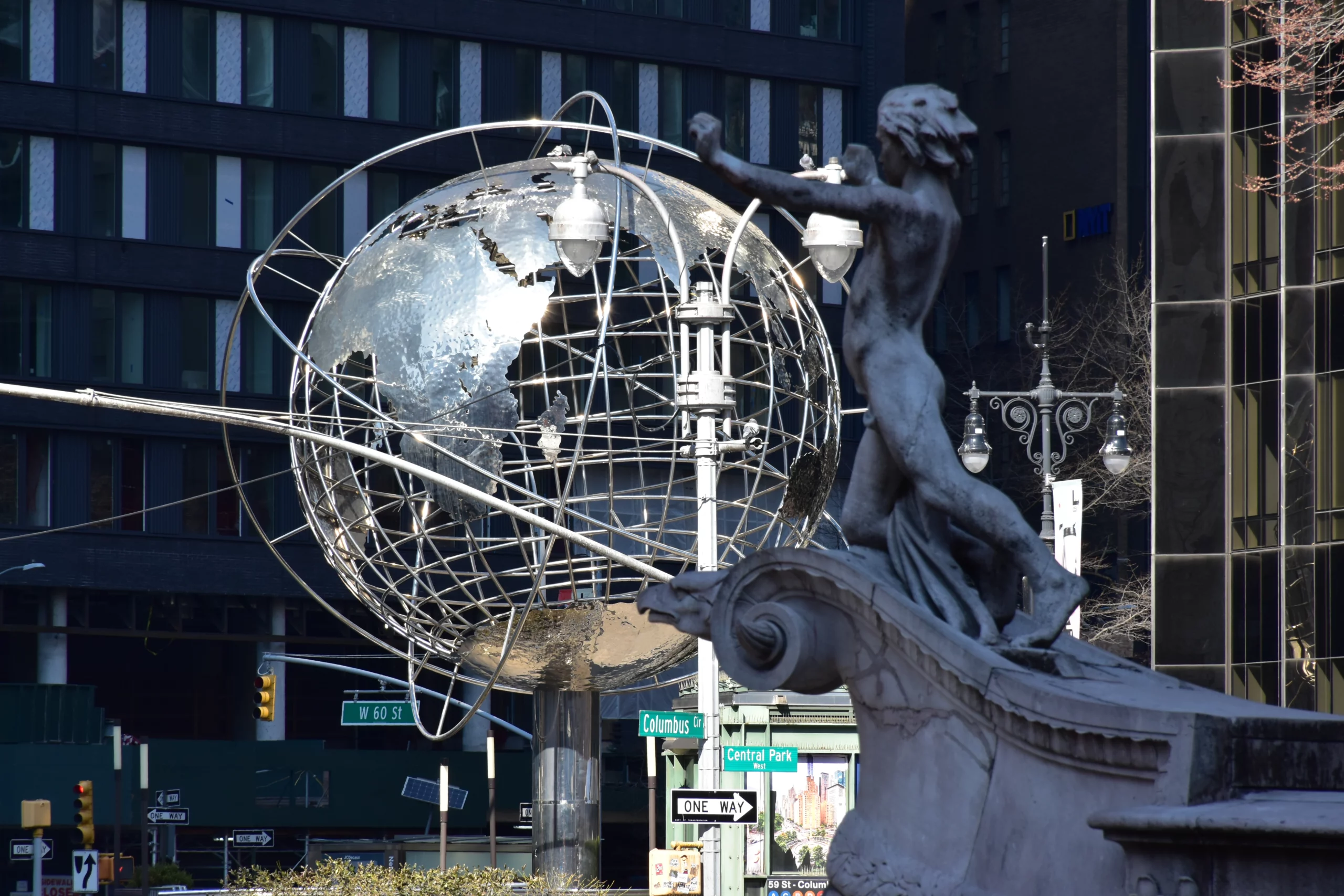
Available for the first time in an online format, PLATFORMA and CEMR have just published their fifth annual study on the localisation of the Sustainable Development Goals (SDGs). Released on the occasion of the UN High-Level Political Forum on Sustainable Development (HLPF) in New York, discover this innovative publication today at local-sdgs.eu

This study gathers the most recent information on how and to what extent associations and networks of local and regional governments have been involved in the localisation of the SDGs, both in Europe and with their global peers, and in particular during the COVID-19 pandemic. This year’s survey therefore included questions on the SDGs’ implementation since 2015 and the impact of the COVID-19 crisis. In the last two sections, there were also additional questions regarding Voluntary Subnational Reviews (VSR) and decentralised cooperation.

It gathers 63 answers from 28 European countries, 37 associations of local and regional governments and 18 municipalities and regions.

Main recommendations

Six main recommendations came out of this study, targeting EU institutions, national governments and local and regional governments and their national associations:

  1. The European Commission should report regularly on any progress made in achieving the Sustainable Development Goals (SDGs)  at the EU level and indicate how the different levels of governance have contributed to this process.
  2. We encourage associations of local and regional governments to actively take part in the Voluntary Subnational Reviews (VSR) process.
  3. Local and regional governments (LRGs) are calling for the firm recognition and inclusion by national governments of the role of LRGs and their associations in the monitoring and reporting of progress in the implementation of SDGs at the national level.
  4. European states and the EU need to strengthen their dialogue with the subnational levels and include them in any relevant high-level delegation meetings.
  5. Strengthen international cooperation to achieve the 2030 Agenda at the local and regional levels.
  6. There is still a need to localise and territorialise the SDGs through the deployment of appropriate funds and resources.

This study will be presented by a PLATFORMA-CEMR delegation at different events during the second week of the High-Level Political Forum on Sustainable Development (HLPF) taking place in New York between 5 and 15 July 2022.
This delegation is composed of:

  • Fabrizio Rossi, CEMR Secretary General
  • José Hila, Mayor of Palma de Mallorca (Spain, FEMP)
  • Hannah-Lea Braun, Member of Maichingen Council (Sindelfingen, Germany) and the CEMR Young Elected Officials Committee
  • Luis Salaya, Mayor of Cáceres (Spain, FEMP)
  • Valérie Dumontet, Vice-President of Aude Region (France, Cités Unies France)
  • Pilar Díaz, Mayor of Espluges de Llobregat, Deputy to the Presidency, Delegate for International Relations at the Diputació de Barcelona (Spain, Barcelona Provincial Deputation – DIBA)
  • Jan van Zanen, Mayor of The Hague (Netherlands, VNG International)

Directors, advisers and technicians from CEMR, the City of Paris, DIBA, FEMP, the Norwegian Association of Local and Regional Authorities (KS), UCLG and VNG International are also attending HLPF this year.

Annual report on SDGs goes digital

PLATFORMA - banner 3

Our annual report on the SDGs goes digital at the UN High-Level Political Forum on Sustainable Development (HLPF)


Available for the first time in an online format, PLATFORMA and CEMR have just published their fifth annual study on the localisation of the Sustainable Development Goals (SDGs). Released on the occasion of the UN High-Level Political Forum on Sustainable Development (HLPF) in New York, discover this innovative publication today on local-sdgs.eu

This study gathers the most recent information on how and to what extent associations and networks of local and regional governments have been involved in the localisation of the SDGs, both in Europe and with their global peers, and in particular during the COVID-19 pandemic. This year’s survey therefore, included questions on the SDGs’ implementation since 2015 and the impact of the COVID-19 crisis. In the last two sections, there were also additional questions regarding Voluntary Subnational Reviews (VSR) and decentralised cooperation.

It gathers 63 answers from 28 European countries, 37 associations of local and regional governments and 18 municipalities and regions.

Main recommendations

Six main recommendations came out of this study, targeting EU institutions, national governments and local and regional governments and their national associations:

  1. The European Commission should report regularly on any progress made in achieving the Sustainable Development Goals (SDGs) at the EU level and indicate how the different levels of governance have contributed to this process.
  2. We encourage associations of local and regional governments to actively take part in the Voluntary Subnational Reviews (VSR) process.
  3. Local and regional governments (LRGs) are calling for the firm recognition and inclusion by national governments of the role of LRGs and their associations in the monitoring and reporting of progress in the implementation of SDGs at the national level.
  4. European states and the EU need to strengthen their dialogue with the subnational levels and include them in any relevant high-level delegation meetings.
  5. Strengthen international cooperation to achieve the 2030 Agenda at the local and regional levels
  6. There is still a need to localise and territorialise the SDGs, through the deployment of appropriate funds and resources

This study will be presented by a PLATFORMA-CEMR delegation at different events during the second week of the High-Level Political Forum on Sustainable Development (HLPF) taking place in New York between 5 and 15 July 2022.

This delegation is composed of:

  • Fabrizio Rossi, CEMR Secretary General
  • José Hila, Mayor of Palma de Mallorca (Spain, FEMP)
  • Hannah-Lea Braun, Member of Maichingen Council (Sindelfingen, Germany) and the CEMR Young Elected Officials Committee
  • Luis Salaya, Mayor of Cáceres (Spain, FEMP)
  • Valérie Dumontet, Vice-President of Aude Region, (France, Cités Unies France)
  • Pilar Díaz, Mayor of Espluges de Llobregat, Deputy to the Presidency, Delegate for International Relations at the Diputació de Barcelona (Spain, Barcelona Provincial Council – DIBA)
  • Jan van Zanen, Mayor of The Hague (Netherlands, VNG International)

Directors, advisers and technicians from CEMR, the City of Paris, DIBA, FEMP, the Norwegian Association of Local and Regional Authorities (KS), UCLG and VNG International are also attending HLPF this year.

More

For more information, contact:

CEMR in Kyiv

Bridges of Trust Branding - News 2024

“Meeting Mayor Klitschko in Kyiv was a true experience”


This op-ed was originally published in Euractiv and was authored by CEMR secretary general, Fabrizio Rossi, upon his return from Kyiv in June 2022. 

When I found myself sitting at the same table with Mr Vitali Klitschko in a rooftop restaurant in Kyiv last June, I was able to measure both the charisma and authenticity of the multiple world boxing champion and current Mayor of Kyiv.

Although I had known about Vitali Klitschko and his brother as sports icons and tough, powerful and extremely technical boxers, before meeting him I had no idea what to expect. After spending half a day with him in Kyiv, I can say that he is a leader that cannot hide: he is totally himself.

It is quite rare to meet a political leader who is not tempted to provide complacent answers to satisfy his audience and interlocutors. Mayor Klitschko seems uninterested in any of this and stirred only by his determination to strive, overcome challenges and move forward.

When I asked him how he managed to keep the Russian forces away when they have already kidnapped more than 50 local elected politicians from across the country, he reacted by instinct: “well, if the Russian come to me, I’ll be ready.” He paused, looked at me resolutely and resumed: “sometimes people call me and say: ‘Vitali, you should hide, they are looking for you.’ But for a person like me it’s hard to hide. Once they called in the middle of the night while I was perlustrating the city with my staff and they told me to hide underground: ‘Russians are looking for you!’ We  found a ruined building and spent the night sleeping on the floor.”

It was at that moment that I realised that Mr Klitschko had again become an icon. This time the tremendous admiration and respect for him comes from local elected politicians all over Europe. These local leaders who indeed cannot hide before the urgent and crucial responsibilities they are facing: from climate change to social inequalities, economic recovery and even war. To them Mayor Klitschko has become a true reference. Someone that leads by example. A leader that walks the talk.

Mr Klischtko may be the most famous of Ukraine’s local leaders, but many more are also selflessly sacrificing and risking their lives every day in this war. Mayors, district leaders and local public workers across Ukraine have continued to heroically serve their people in the most trying of circumstances. Conditions vary greatly by territory. Local governments in areas of heavy fighting work to evacuate residents and provide water and basic supplies despite regular shelling and bombardments.

In territories that have been de-occupied since April, mayors are already beginning the work of reconstruction, the restoration of damaged buildings being especially important to achieve before the onset of winter. Local governments in other parts of the country are coping with the massive influx of internally displaced people and the need to house them and integrate them into local life.

It is humbling to see this work undertaken by mayors and local leaders despite the looming threats of kidnapping and death. Ukraine’s local government associations have also been working hard since the beginning of the conflict: coordinating aid provision, identifying the diverse needs of different territories and facilitating contact with their European supporters.

Local and regional government associations across Europe have been doing their part to support Ukraine during this difficult time. The Association of Towns and Communities of Slovakia has sent thousands of packages of various medical supplies. In the UK, the Local Government Association has called for new powers to lawfully exclude companies supporting Russia from winning public contracts. Meanwhile the Network of Associations of Local Authorities of South-East Europe (NALAS) was among the first to provide emergency financial assistance to the Association of Ukrainian Cities; and many other associations have followed suit. These examples are only the tip of the iceberg when it comes to what has been achieved and undertaken.

Local leaders’ engagement in support of their Ukrainian peers and in handling the direct and indirect consequences of this war is just a further confirmation that in this new era of systemic crisis, territorial leadership is the basis on which to build our responses. At the Council of European Municipalities and Regions (CEMR) we are receiving very encouraging signs of the strong willingness of local and regional governments to play a crucial role in the postwar recovery.

The Mayor of Kyiv is ready to take up the task. “Reconstruction efforts should focus on grassroots projects and be designed by local communities”, he told me. During our bilateral meeting he emphasised the urgent need for short-term support to build key infrastructures in the Kyiv city area such as new fire stations.

This is one of the projects we at CEMR are gathering support for. Our taskforce on the war against Ukraine meets regularly to coordinate local and regional governments’ support to Ukraine and ensure political, material and financial aid is meeting the most urgent needs on the ground.

Hopefully, many other projects will be discussed at the occasion of my next visit to Mr Klitschko in Kyiv. The Mayor of Ukraine’s capital invited me to come for a longer visit next time and reassured me in his inimitable style: “If you are concerned about your security, I would like to reassure you, that you’ll have the two toughest bodyguards in town: my brother and myself!”

Solidarity with Ukraine

Ukraine flag - News section

Bridges of Trust partner-municipalities, Ukmergė and Korosten, meet in person for the first time


As part of our coverage of the local and regional dimensions of Russia’s war in Ukraine, CEMR is highlighting the help given by European municipalities and regions to their Ukrainian peers. We hope these stories inspire other local and regional governments to heighten their efforts to support Ukraine.

On 27-29 May 2022, a delegation from Korosten traveled to Lithuania to visit their Bridges of Trust partner-municipality Ukmergè, on the occasion of the City Festival for the first time.

The two partner-municipalities first met online in October 2021, in the framework of the Bridges of Trust project, implemented by the CEMR, PLATFORMA and supported by the U-LEAD with Europe programme. If study visits and internships were planned for spring and summer, the war changed this. At the same time, the difficult situation in Ukraine and in Korosten brought the two partners closer.  Ukmergė was among the first to send humanitarian aid to the people and internally displaced in Korosten. In April, the two municipalities also signed a partnership agreement.

In order to thank Ukmergė for their support, the delegation from Korosten travelled 1020 km. The delegation included: Natalia Chizhevska, deputy mayor, Volodymyr Stuzhuk, head of the Economic Department, Mykola Zayets, head of the Health Department and Leonid Yakubovsky, head of the Communal service agency.

Deputy mayor, Natalia Chuzevska, shared her impressions from the visit:

During the visit, the delegation also visited different educational and medical institutions and they hoped to be able to bring some of the best practices from Ukmergė to Korosten. This will be especially important in the reconstruction of some of the buildings that have been destroyed or damaged by Russian shelling.  

Last but not least, the delegation from Korosten met other twin-cities of Ukmergė: Bad Langensalza – Germany, Kiskunmajsa – Hungary, Līvāni – Latvia and Tarnowo Podgórne – Poland.

The cooperation continues and this Lithuanian-Ukrainian partnership is an excellent example and testament to the importance of international municipal cooperation.  

Training on Climate

Elected representatives receive training on climate adaptation and mitigation


CEMR, PLATFORMA together with United Cities and Local Government (UCLG), and the Making Cities Resilient 2030 (MCR2030) initiative, organised two training sessions for politicians dedicated to climate adaptation and mitigation.

The aim of the training academy was to inspire politicians to develop their strategies, plans and actions through the discussion about climate change adaptation, mitigation and resilience in the global and Europe and Central Asia-specific context.  We counted over 120 participants worldwide.

Festival of solidarity

Lithuanian municipality celebrates its Ukrainian peer and paves the way for greater cooperation


This was in early June, under a bright spring sun,  a delegation from Novohuyvinske visited Lazdijai district municipality on the occasion of “Cross border fiesta 2022” and held working meetings on cooperation with their future twin town.

During this year’s festival, solidarity with Ukraine was strongly emphasized. Not only did Lazdijai invite their Ukrainian partner municipalities, Novohuyvinske and Baranivka, to join them for these special days, the official procession was also dominated by the Ukrainian flags.

Tetiana Parfentiieva, Deputy Mayor of Novohuyvinske shared a few thoughts on the visit: “We felt a great support from our Lithuanian friends and appreciate that they provide shelter to our refugees. We have also exchanged best practices. In the Museum of Soviet Occupation, we got a glimpse of how they work with national memory. We visited an equestrian school, educational and cultural institutions, and learned about the tourist sector and its potential.”

Lazdijai district municipality was very quick to respond to the appeal for help in April and provided humanitarian aid to Novohuyvinske in the form of clothes, medicines, non-perishable foods and hygiene products.

Representatives of Novohuyvinske brought with them a photo exhibition about the destruction of Zhytomyr, a region west of Kyiv, by Russian bombs. The exhibition took place in the Cultural Center of Lazdijai district and was open to the public. Eleven foreign delegations were also able to see the photos.

One of the unexpected results of the visit was establishing contact with the Estonian town of Tõrva. After participating in the events of Lazdijai, representatives from Tõrva paid a visit to Novohuyvinske. They also took the photo exhibition with them to Estonia in order to bring even public attention to the destruction and the necessity to support Ukrainian municipalities during this difficult time.

The next step in the cooperation between Novohuyvinske and Lazdijai district will be a signature of a cooperation agreement in August. Following three online meetings, this visit has brought the partners closer together and paved the way for great cooperation between the two communities in areas such as local development, environmental protection and historical heritage.

The two partner municipalities first met in the fall of 2021, in the framework of the Bridges of Trust project, implemented by the CEMR, PLATFORMA and supported by the U-LEAD with Europe programme. 

World Refugee Day

Refugees - News Section

​CEMR marks World Refugee Day with a high-level event


Local and Regional Governments (LRGs) all over Europe are playing a crucial role in the management of this new migration wave as well as in the integration process of the newcomers. But this refugee crisis not only calls for emergency management but also reminds us of the urgency of establishing better-coordinated and more sustainable integration strategies that take into consideration the local perspective as the most relevant one. 

For this reason, the next in the series of IncluCities debates on core issues related to the current migration crisis will cast light on the importance of effective multilevel governance as a key tool to face migration emergencies.  We will discuss with MEPs: Birgit Sippel (S&D), Fabienne Keller (Renew), Damian Boeselager (Green/EFA) and Thomas Liebeig from the OECD. (Agenda) You can still register to follow the event in person or online. 

Statement on Russia’s invasion of Ukraine

Ukraine people - News

European municipalities and regions reaffirm support for Ukraine’s sovereignty and local democracy amid ongoing threats 


The Council of European Municipalities and Regions (CEMR) has voiced deep concern over the ongoing Russian military build-up around Ukraine. Such actions pose new threats not only to Ukraine’s security and sovereignty but also to peace and democracy across the wider region. 

Local Governments Under Pressure 
Ukrainian municipalities and regions face immense challenges: providing public services under the daily threat of military escalation, sustaining decentralisation and governance reforms, and continuing the democratic development of their cities and communities. These pressures are particularly acute in eastern regions, which have already endured the consequences of war since 2014. 

Standing by Ukraine’s Sovereignty 
European local and regional leaders reaffirm their unwavering support for Ukraine’s independence, sovereignty, and territorial integrity within its internationally recognised borders. These principles, rooted in international agreements and European security, cannot be compromised. 

Support from Europe 
CEMR welcomes the European Commission’s emergency financial assistance package to Ukraine and urges EU institutions and national governments to strengthen their support. Local authorities, directly in touch with citizens, continue to deliver essential services despite threats of conflict and energy blackmail. 

Commitment to Cooperation 
Europe’s municipalities and regions remain committed to supporting their Ukrainian peers through decentralised cooperation, city-to-city and region-to-region partnerships, and international solidarity efforts. Strengthening these ties will help ensure Ukraine’s continued development, resilience, and democratic future. 

Read the declaration here 

For more information, contact: 

Local Solidarity Forum

Bridges of Trust - News 2023 2

Join us at the occasion of the Slovakia-Ukraine Local Solidarity Forum


Join us on 9 June, from 10:00 to 12:00 CEST, for a lively online exchange on how to keep the momentum and support Ukrainian municipalities which are the backbone of the national resistance. Taking place online, the event will be conducted in English, Ukrainian and Slovak with simultaneous interpretation in three languages.

The Slovakia-Ukraine Local Solidarity Forum is jointly organised by the Council of European Municipalities and Regions (CEMR), PLATFORMA, the Association of Towns and Communities of Slovakia and the U-LEAD with Europe Programme. It will provide a unique space for dialogue and fostering cooperation among local authorities from Ukraine and Slovakia. 

The aim of this local solidarity forum between Slovakia and Ukraine will be to:

  • Highlight specific challenges of war time local governance from the ground in Ukraine;
  • Present best examples of local support by Slovakia, the challenges that were encountered and addressed;
  • Encourage creation of new municipal partnerships between Slovakia and Ukraine.

The full programme of the Forum can be found here: EnglishUkrainian and Slovak.

To register, please fill in this online form by 7 June 2022. If you have any questions, please contact Yana.Brovdiy[at]ccre-cemr.org.


Форум місцевої солідарності: Словаччинa – Українa

Приєднуйтесь до нас 9 червня (з 11:00 до 13:00 за київським часом / 10:00-12:00 за словацьким часом) для того щоб обговорити, як ми можемо зберегти імпульс і продовжувати допомагати українським громадам, які є хребтом національного опору. Форум пройде онлайн. Трансляція буде доступна українською, словацькою та англійською.

Форум проводиться спільно Радою європейських муніципалітетів та регіонів,  ПЛАТФОРМОЮ
Асоціацією міст і громад Словаччини та програмою  « U-LEAD з Європою ». Він забезпечить унікальний простір для діалогу та сприяння співпраці між місцевими органами влади України та Словаччини. 
Форум місцевої солідарності між Словаччиною та Україною покликаний: 

Висвітлити конкретні виклики місцевого самоврядування під час воєнного часу в Україні; 

  • Представити найкращі приклади підтримки України з боку місцевої влади у Словаччині, проблеми, з
  • якими стикалися та як вони вирішувалися;
  • Сприяти створенню нових муніципальних партнерств між Словаччиною та Україною.

З повною програмою Форуму можна ознайомитися тут.

Щоб зареєструватися, будь ласка, заповніть цю форму до 7 червня 2022 р.

Якщо у Вас виникли запитання, будь ласка, зв’яжіться з нами за адресою Yana.Brovdiy[at]ccre-cemr.org.

Local Solidarity Forum

Bridges of Trust - News 2023

Join us at the occasion of the Poland-Ukraine Local Solidarity Forum


Join us on 14 June, from 10:00 to 12:00 CEST, and learn more about how Polish municipalities support Ukrainian local governments. This online event will be conducted in English, Polish and Ukrainian, with simultaneous interpretation.

Poland has become the main Ukrainian supporter amongst other European countries. Polish municipalities have sent humanitarian aid to their partners across the country and have been welcoming people fleeing the war and trying to offer the best residence conditions possible. Cooperation of local and regional authorities, volunteers, non-governmental organisations and business is an important contributing factor of the Polish actions in support of Ukraine.

The aim of this local solidarity forum between Poland and Ukraine will be to:

1. highlight specific challenges of war time local governance from the ground in Ukraine;
2. present best examples of local support by Poland, the challenges that were encountered and addressed;
3. encourage the creation of new municipal partnerships between Poland and Ukraine.

The full programme of the Forum can be found here: EnglishPolish and Ukrainian.

To register, please fill in this online form. If you have any questions, please contact Yana.Brovdiy[at]ccre-cemr.org

You may also follow the event live on social media.