2021 Ceremony

Green City - News

Registration open: come celebrate cities’ commitment to achieve carbon neutrality


Time: 7 October 2021, 9.30 – 13.00
Place: online… and everywhere in Europe!
Event info | Programme | Registration

The big moment is coming: the 2021 Covenant of Mayors Ceremony “Towards a fairer and climate-neutral Europe for all” will take place next month. Municipalities and local government associations are invited to join us at great event to celebrate  the Covenant Community’s achievements and cities’ ambition to decarbonise by 2050. We will also discuss how to commit, engage and take action for a fairer, climate-neutral Europe. 

The event will be opened by David Sassoli, President of the European Parliament. Speakers include Frans Timmermans, Commission Vice President for the European Green Deal, and Kadri Simson, EU Commissioner for Energy, as well as many mayors and local government representatives. It will also include 4 side sessions addressing the following topics:

  • Climate Adaptation and the Policy Support Facility
  • The Fit for 55 package
  • The Covenant 2050 ambition and how to renew the commitment
  • The European Climate Pact

Von der Leyen backs the Covenant’s boosted 2050 goals

With over 10,000 signatories, the Covenant of Mayors is the world’s largest movement for local climate and energy action. By joining the Covenant, cities, towns and villages commit to reduce their greenhouse gas emissions, adapt to climate change, secure access to affordable and sustainable energy and improve citizens’ quality of life.

In April 2021, the initiative entered a new phase, officially launching its renewed ambition for a fairer and climate-neutral Europe. Under this renewed ambition, Covenant signatories commit to seting a mid-target for 2030 at least as ambitious as their national targets and reaching climate neutrality by 2050.

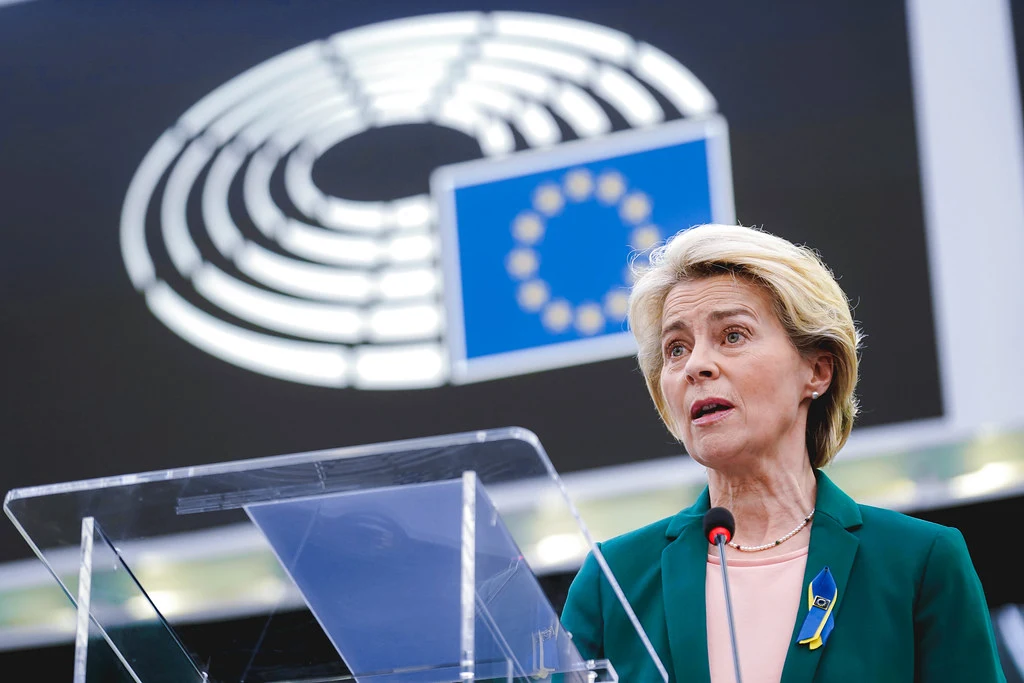
This new phase of the Covenant has the direct support of EU Commission President Ursula von der Leyen. She invited cities to join in the effort: “Whether you are a long-standing member, a newcomer, or simply considering signing up to the Covenant of Mayors, I would like to invite you to join us to build an ever more ambitious and inclusive movement.”

Every effort counts in implementing the European Green Deal”, she added. “Regardless of the size and capacity of your city, town or village, regardless of where in Europe you are located: you have a key role to play.

Organise your own satellite event

We invite every member of the Covenant Community to organise a Satellite event of the 2021 Ceremony. Organising a Satellite event will give you the opportunity to promote the Covenant of Mayors’ 2050 vision, to discuss with your local / regional community what is needed to step up action and may include a moment to sign the new Political Commitment. Satellite events can take place from September to December 2021 and visibility will be provided the Covenant of Mayors website and social media.

Register national satellite events

EWRC

Global - News Section

European Week of Regions and Cities: join us at these events


It’s the highlight of the year for Europe’s local and regional governments: the European Week of Regions and Cities (EWRC).

From 11 to 14 October, thousands of local leaders, experts and citizens will join with their peers around the continent to debate, connect, learn and show the impact of European municipalities and regions today. This year, the events are focused on the green transition, cohesion, digital transition and citizens’ engagement.

CEMR will play an active role in many sessions. Here’s where we will be present either as organisers or participants:

Small and medium sized cities and scaling up the digital transformation
Monday 11 October 2021 | Registration

The New European Bauhaus and its relevance for citizens – Shaping a more beautiful future in Europe (CEMR event)
Tuesday 12 October | Registration

National Urban Policies: drivers for the implementation of the New Leipzig Charter
Tuesday 12 October | Registration

Cohesion for recovery in the Mediterranean: local authorities boosting territorial resilience (organised by the Province of Barcelona, DIBA)
Tuesday 12 October | Registration

Localising the SDGs – A roadmap for recovery (CEMR event)
Wednesday 13 October | Registration

What does it take to mainstream citizen engagement and deliberative democracy in public institutions?
Wednesday 13 October | Registration

How to engage with Europe digitally: lesson learned and opportunities to seize
Wednesday 13 October | Registration

The Covenant Community: a trailblazer for the green transition (CEMR event)
Wednesday 13 October | Registration

Rural connections: green and digital innovation to unlock the potential of rural and remote areas (CEMR event)
Wednesday 14 October | Registration

Green transition in cities as an example of Europe’s legacy from WUF11 in Poland
Thursday 14 October | Registration

Delivering the EU Green Deal Through Circular Procurement
Thursday 14 October | Registration

Navigating the EU maze to finance recovery: 2021-27 funding for the ecological transition
Friday, 15 October | Registration

So sign up today! And be sure to join the conversation on Twitter with the hashtag #EURegionsWeek.

State of the Union 

Ursula von der Leyen - News

President von der Leyen: time for municipalities and regions to be fully engaged in Europe’s recovery


This article was originally published in Agence Europe.

With the launch of the colossal NextGenEU recovery plan, the European Union hopes to accelerate the digital and green transitions. But these will only be achieved together with the players working on the ground: local and regional governments. It is high time that municipalities and regions be fully involved in the implementation and monitoring of the national recovery plans, a measure which would guarantee their success.

These last two years have shown just how vulnerable our societies are, as well as the need to face together these planetary threats: the pandemic, climate change, natural catastrophes and the risks of weakening democracy and respect for human rights.
As representatives of local and regional governments of all sizes, we could only be struck at the degree to which the territorial level has became the leading reference point for action in these times of crisis. Cities and regions have not only provided essential services while limiting the risk of further disruptions in social care, waste management, sanitation, mobility and healthcare, they have also led the way towards the return to ordinary life, with the holding of cultural events, the welcoming of tourists, the maintenance of quality public services and ensuring safe conditions for public workers.

While the crisis has confirmed the crucial role of local and regional governments, the impact on territorial finances has often been devastating. According to our monitoring of local finances, the “scissor effect” has been confirmed with a sharp drop in revenue and a spike in spending, due notably to the provision of social care, the purchase of protective equipment and support to businesses and local associations. In Germany alone, counties and municipalities are taking on such new responsibilities while facing a budget shortfall of over €10 billion.

In this crisis, the European Union quickly stepped up to the plate with an ambitious €800 billion Next Generation EU recovery programme. Now that most the national recovery and resilience plans have been approved by Brussels and support is being to trickle down, we have to think about the medium-term perspective.

How can we ensure that EU support is used wisely and effectively? For us there is no doubt: by fully involving municipalities and regions in the implementation and monitoring of the recovery plans. Local and regional governments, as the public authorities closest to the citizens, have both the know-how, knowledge and trust necessary to make the most of the recovery funds.

Unlike what was requested by the European Commission, most national governments failed to adequately involve municipalities and regions in the definition of investment priorities and the drafting of these national recovery plans.

Since then, we have obtained the requirement that national governments must report on the way municipalities and regions are involved in drafting the plans – but this does not go far enough. Assessment of local and regional involvement must be a priority in the Commission’s mid-term review of the recovery plans in 2022.

Tailor recovery spending to the needs of rural areas

The European countryside is a treasure trove of our continent’s geographical, cultural and agricultural heritage, as well as touristic assets. However, while rural areas represent 80% of the EU’s land area, many face declining populationsand the crisis risks deepening territorial disparities. According to the Commission’s public consultation on rural areas, 56% of inhabitants of rural areas felt “left behind”.

The recovery plans are an opportunity to revitalise the countryside and small and medium size cities, with targeted investments. For example, digitalisation, and in particular the rise of teleworking, can drive the renewal of many rural areas. But getting the right investments means the full participation of the municipalities and regions in question so that the plans actually reflect their needs and those of their people.  Indeed, 79% of Europeans say that there should be consideration of the specific needs of rural areas in the allocation of public spending.

Citizens believe in the role of local government in the green transition

Commission President Ursula von der Leyen’s European Green Deal, and in particular the recent legislative proposals on climate, energy efficiency and renewable energy, are clear signs that the EU is pushing to move forward on the green transition. But no effective results will be achieved without territories on the ground. From Nantes to Constanța and from Andalucía to Lapland, our municipalities, counties and regions are ready and willing to undertake the great environmental and digital transitions this century calls for, if they are properly empowered. 

At least 37% of investment and reform spending under national recovery plans are meant to address climate change. Here too the local dimension is apparent, with municipalities and regions having a decisive role in policies such as mobility and energy efficiency. According to a Eurobarometer survey, 43% of citizens believe that local and regional governments are the right level of action for tackling climate change.

Many top EU officials, including President von der Leyen, have recognised that cities and regions must be involved in the recovery. Now is the time to translate words into actions: the European Commission must make sure local and regional governments are taken on board! This would guarantee that the EU’s recovery programme, one of the most remarkable innovations in the history of European integration, is a resounding success.

Frédéric Vallier, Secretary General of the Council of European Municipalities and Regions (CEMR)

Call for contractor 

Call for Proposals - News 2023

Mission: research and draft a study on local finances in Europe


CEMR is looking for a contractor to research and draft a study on local finances in Europe since 2010, including the impact of COVID-19 and the development of green local finances. The work will take place between the end of October 2021 and April 2022.

Interested bidders should submit their bids by Sunday 17 October 2021 at the latest. For more information on the mission and how to apply, please consult the Terms of Reference and the publication’s Concept Note.

World Conservation Congress

Environment - News

Local and regional governments have a “vital role” in preserving biodiversity


Mayors, regional leaders and local government associations met on Wednesday (8 September) at the IUCN World Conservation Congress in Marseille to affirm the essential role that local and regional governments play in preserving biodiversity. The participants also raised the alarm on the continuing decline of biodiversity, notably given the interdependence between the environment and human health, most strikingly visible with the spread of zoonotic diseases from animals to humans.

The sessions were organised by CEMR’s French Association (AFCCRE) ahead of the Conference of the Parties to the Convention on Biological Diversity (COP15) which will take place on 11 October 2021, in Kunming, China.  The event featured senior officials from different levels of government, including the EU, France, Scotland, Provence-Alpes-Côtes-d’Azur and Marseille. Among the local and regional governments networks present were UCLG, ICLEI and Regions4.

Cities and regions reaffirm their commitment to biodiversity in ‘Marseille Declaration’

During the morning session, networks of local and regional governments adopted a Declaration highlighting “the vital role of local and regional authorities in policies for the protection and restoration of species and natural spaces”. Indeed, municipalities and regions have many powerful levers of action to protect biodiversity, including environmental monitoring, spatial planning, planning of urban and natural spaces, transport, water management and decentralised cooperation with other local governments.

Ronan Dantec, a French senator, Nantes municipal councillor and CEMR spokesperson for climate, explained that “without the mobilisation of local and regional elected officials, it is obvious that we will not meet any of the objectives of reclaiming biodiversity, which depends enormously on the action we take locally”.

The Declaration also recognises the importance of biodiversity for human health and sustainability and calls for the adoption of ambitious targets for protected areas (30% of territories). Finally, the session underlined the challenges of decentralised cooperation and the search for funding.

Local-led actions engage citizens

During the event, Marianne Overton, Lincolnshire County councillor and CEMR spokesperson for environment, highlighted some of the ways local governments can contribute to biodiversity and involve citizens.

Citizens have shown a growing interest in green spaces since the coronavirus lockdowns. Among countless examples of local environmental action, the Forest of Dean District, UK, recently released a toolkit to guide building professionals and homeowners through their Net Zero Carbon housing project.

Councillor Overton observed “many successful actions have already been taken at city level, but a coordinated and comprehensive approach remains a challenge”. That is one reason the European Commission has launched the Green City Accord, an initiative encouraging the exchange of experience between cities working for the green transition.

Decentralised cooperation: municipalities and regions’ international action for biodiversity

That afternoon PLATFORMA and AFCCRE also held a session on decentralised cooperation’s role in protecting biodiversity. Local, regional and European officials discussed how municipalities and regions’ international action in this area, notably in sharing expertise on the causes of biodiversity loss and best practices for finding nature-based solutions.

Green Workshop 

Environment - News section

How cities can meet their environmental commitments


The signatories of the Green City Accord go the extra mile to ensure their citizens enjoy a cleaner and healthier future by planning effective initiatives in five target areas: air, water, nature and biodiversity, waste and circular economy, and noise.

Over 60 cities have signed the Green City Accord so far and many are in the midst of creating innovative blueprints that will help them meet their commitments.

The Green City Accord consortium is excited to organise a workshop on 29 September at 10:00-12:30 CEST entitled ‘The Green City Accord: How to implement your commitment’. This interactive event will introduce the specific steps needed to plan and meet the Green City Accord requirements, in addition to providing cities with an opportunity to express their support needs in this process.

The workshop will be held in English. Signatory cities, soon-to-be signatories and supporter organisations can register here.

IUCN Conservation Congress

Calendar - internal events

Local governments are taking part at the IUCN World Conservation Congress in Marseille


The IUCN World Conservation Congress which will be held in Marseille from 3 to 11 September will be a highlight of the expression and commitment of local authorities in favour of biodiversity, in a context marked by the pandemic and its consequences.

This is a key step for nature conservation and the development of a new global framework for biodiversity at the 15th Conference of the Parties to the Convention on Biological Diversity (COP 15).

On this occasion, it is indeed a question of defining a new global framework for biodiversity after 2020 (following the plan defined at the Nagoya Conference (Japan – 2010), including for the action of local and regional authorities It is a question of ensuring strong recognition of the role of local authorities and of renewing decision X / 22 adopted in Nagoya which defined a specific action plan for sub-national governments, cities and local authorities.

At the initiative of AFCCRE and its spokesperson for climate, environment, sustainable development, Ronan DANTEC, Senator, city councilor of Nantes, and in conjunction with representatives of the IUCN, the French government, together with national and European organisations and global networks of local governments, several sequences devoted to local authorities are scheduled:

  • Friday 3 September (12.00-16.00): The IUCN Local Action Summit is organised by and for the members of IUCN. Those interested can consult: iucnlasummit.org.
  • Tuesday 7 September (8.30-18.00): thematic session led by the Aix-Marseille-Provence metropolis and France Urbaine which will bring together French urban areas wishing to both affirm their commitment to biodiversity and share their initiatives in this area.
  • Wednesday 8 September (10.00-13.00): the networks summit “Local and Regional authorities and their networks on the way to the COP 15” organised by AFCCRE will focus on the contribution of local and regional authorities and their networks to European and international negotiations.
  • Wednesday 8 September (15.00-17.30): session devoted to decentralised cooperation, organised by PLATFORMA, AFCCRE, DAECT, the French Committee of IUCN.

Participation is free on Wednesday 8 September but registration mandatory via this form.

Check the detailed program of these different sequences with local and regional governments.

Follow the conversation on Twitter with #IUCNCongress.

EU values in the digital space 

Digital violence - News 2023

CEMR calls for a digital transition that works for all levels of government 


Local and regional governments must be fully equipped and supported in Europe’s digital transition. That’s the key message from the Council of European Municipalities and Regions (CEMR) in its response to the European Commission’s consultation on EU digital principles. 

As frontline providers of public services and facilitators of digital innovation, local and regional governments (LRGs) are key to making the digital decade a success. However, CEMR warns that this transformation must not impose new burdens or widen digital divides. 

“European initiatives must support, not sideline, local governments. Funding, training and collaboration are vital,” says the organisation. 

CEMR welcomes the goals outlined in the Commission’s “2030 Digital Compass,” especially the focus on digitalising public services. It highlights the importance of digital skills, cybersecurity, smart cities, and interoperability to help municipalities deliver inclusive and user-friendly digital services. 

Local authorities are already investing in e-government, innovation labs, and partnerships with start-ups. But CEMR calls for better coordination between national and EU levels to avoid duplication and ensure all regions, rural and urban alike, can benefit. 

CEMR also emphasises: 

  • The need to strengthen local democracy through inclusive digital participation; 
  • Protecting privacy and personal data under the “once-only” principle; 
  • Supporting socially responsible platforms in the sharing economy; 
  • Promoting open standards and seamless interoperability across administrations. 

The digital transition must not leave anyone behind. From investing in digital education to adapting services for vulnerable groups, local governments play a central role in ensuring a digital Europe that is fair, accessible, and democratic. 

Read the position paper here 

For more information, contact: 

Afghanistan

Afghanistan - News

CEMR expresses solidarity with the people of Afghanistan


The Council of European Municipalities and Regions expresses its major concern regarding the situation in Afghanistan and wishes to express solidarity with the people of Afghanistan.

Echoing the statement of Silvia Baraldi, CEMR spokesperson for Gender Equality, we call for the respect of human rights for all Afghan people and in particular for those whose lives and wellbeing are being jeopardised by the Taliban takeover.  

We support the UCLG statement for human rights to be preserved in Afghanistan, and we ask the international community to take all the necessary measures to protect those who are in need.

Job opening

Call for Proposals - News 2023

Call for applications for the recruitment of CEMR’s Secretary General (2022 onwards)


CEMR has opened a call for the position of Secretary General whose current mandate will end in January 2022. For more information on the position and how to apply, please consult the recruitment pack. Applications must be sent to recruitment.sg[a]ccre-cemr.org by 3 October 18:00.