Paris agreement at the local level

Renewable Energy - News

Glasgow Climate Pact calls for “multilevel and cooperative action”


“Disappointment” was a word on the lips of many at the closing on the COP26 UN climate conference in Glasgow in Saturday (13 November). The outcomes leave open many questions regarding national governments’ commitments. Local and regional governments were able however to effectively mobilise during the conference. Thanks to their advocacy efforts, the importance of municipalities, regions and “multilevel and cooperative action” is recognised in the new Glasgow Climate Pact.

“We, local and regional governments, should be proud that the Glasgow final agreement includes the multilevel cooperative model as a way forward to achieve the Paris Agreement objectives”, said CEMR Secretary General Frédéric Vallier, who was present at the COP. “This is a real achievement for municipalities and regions, regardless of the conference’smixed overall results.

The final text has been signed off by 197 countries (from the big emitters such as China and the United States to the small island nations). It aims to keep global temperatures at 1.5 °C above pre-industrial levels by the end of the century, the aspiration of the Paris Agreement, but fails to be more ambitious.

Room for improvement

Reacting on social mediaLéonore Moncondhuy, Mayor of Poitiers (France), spokesperson of PLATFORMA and representative of Cités Unies France said: “The Glasgow Pact does not at all measure up to the climate emergency. While it was supposed to ‘save the 1.5 ° C target’, it is once again mortgaging our future by subjecting it to states’ diluted and disingenuous commitments. Without immediate action, soon + 2.7 °C.”

Earlier last week, Moncond’huy met with UN Secretary General Antonio Guterres and UN Executive Director Maimunah Sharif in Glasgow, expressing the need to support local governments as frontline workers on climate challenges. Her arguments were later echoed in plenary by Sadiq Khan, the Mayor of London: “The involvement of cities now is like day and night … nothing compared with the past.”

Local and regional governments and their associations were widely mobilised. CEMR, PLATFORMA and the Global Task Force led by UCLG were well represented at COP26 and co-organised numerous side events and bilateral meetings.

Enabling local climate action

The Glasgow Climate Pact recognises “the urgent need for multilevel and cooperative action” as well as the important role of local and regional governments in realising the Paris Agreement. As highlighted by Steven Heddle, Member of Orkney Islands Council (COSLA) and CEMR spokesperson on territorial development, this will require facilitating local governments’ access to climate finance.

Local governments need revenue, resources and long-term loans. With these tools, we can contribute more to the objective of reducing emissions before 2050”, said Ronan Dantec, CEMR spokesperson on climate, French senator and president of Climate Chance, during one of the sessions.

The Pact includes many other provisions, such as developed countries agreeing to double funding for climate adaptation and a first global commitment to cut methane emissions by 2030.

What’s next

The next COP will take place in Sharm El-Sheikh, Egypt. Africa being the world’s youngest and most rapidly-urbanising continent, COP27 will focus on booming demography, sustainable urbanisation and financing green plans for sustainable low carbon development. The United Arab Emirates (UAE) was selected to host the COP28 in 2023.

More:

For more information, contact:

Fit for 55 – local climate transitions

Climate neutrality - News 2024

The Fit for 55 package must empower municipalities and regions to drive Europe’s energy transition 


The European Union has committed to reaching climate neutrality by 2050, with the interim goal of cutting greenhouse gas emissions by 55% by 2030. To deliver on this ambition, the European Commission presented the Fit for 55 package, a comprehensive set of legislative measures across key sectors such as energy, transport and housing. Among these, the proposed revisions of the Energy Efficiency Directive (EED), Renewable Energy Directive (RED) and the Energy Performance of Buildings Directive (EPBD) will directly affect Europe’s municipalities and regions. 

Local and regional governments at the heart of the transition 
CEMR fully supports ambitious climate and energy targets in line with Europe’s Green Deal and the UN Sustainable Development Goals. Local and regional authorities are already leading the way in driving energy efficiency and renewable energy projects on the ground, as demonstrated by initiatives such as the Covenant of Mayors. By planning, investing and engaging with citizens, they play a central role in delivering the EU’s objectives. 

However, success will depend on empowering local governments with the necessary resources and flexibility. While binding targets on greenhouse gas reduction are welcome, CEMR stresses that national contributions to renewable energy and efficiency should remain indicative. Overly prescriptive rules, such as mandatory renovation rates for public buildings or minimum energy performance standards, risk creating administrative burdens without recognising the diversity of contexts across Europe. Instead, the EU should provide technical, financial and policy support, allowing municipalities and regions to pursue tailored solutions. 

Enabling a fair transition 
CEMR highlights three priorities to strengthen the Fit for 55 framework: 

  • Financial support and flexibility: Adequate funding and capacity-building must accompany implementation, avoiding rigid one-size-fits-all obligations.
  • Integrated approaches: Local governments should be empowered to design neighbourhood- and district-level solutions, reflecting the full life cycle of buildings and energy systems. 
  • Collaboration across levels: Stronger cooperation between EU, national, regional and local levels is essential to ensure effective delivery, knowledge sharing and citizen engagement. 

Local and regional governments are indispensable partners in Europe’s journey to climate neutrality. By recognising their central role and ensuring adequate resources, the EU can enable municipalities and regions to lead fair and sustainable energy transitions, making climate neutrality a reality for citizens across Europe. 

Read the policy paper here 

For more information, contact: 

BoT Online Forum

Bridges of Trust - News 2023 2

Online Forum: Strengthening Municipal Cooperation between Ukraine and the EU (10 December)


Join us on 10 December (9:30 to 15:00 EET/ 08:30 to 14:00 CET) for an exciting day of talks and exchanges about municipal cooperation between Ukraine and the European Union. Taking place online, the event will be conducted in Ukrainian and English with simultaneous interpretation in both languages.

The Forum is organised jointly by the Council of European Municipalities and Regions (CEMR), PLATFORMA and the U-LEAD with Europe Programme. It will provide a unique space for dialogue and fostering cooperation among local authorities from Ukraine and the European Union. 

Building on success of the previous municipal partnership activities organised by the U-LEAD with Europe Programme and long-lasting commitment of CEMR PLATFORMA in this field, this Forum will highlight:

  • viable partnership tools and recommendations for municipalities that want to develop their international partnerships
  • successful case studies of EU-Ukraine municipal cooperation and programmes that support it.

Specific attention during the Forum will be given to the 10 municipalities from Ukraine and 10 municipalities from Poland, Slovakia, Lithuania, Latvia and Estonia that have recently started partnerships in the framework of the Initiative “Bridges of Trust”. 

The full programme of the Forum can be found here: English, Ukrainian.
To register, please fill in this online form by 3 December 2021.

If you have any questions, please contact Yana.Brovdiy[at]ccre-cemr.org.

—————————————————————————————————————-

Мости довіри
Посилення муніципальної співпраці між громадами України та Європейського Союзу

Приєднуйтесь до нас 10 грудня (з 9:30 до 15:00 за київським часом / 08:30-14:00 за брюссельським часом) для захоплюючого дня обговорень та  обмінів  про  муніципальну співпрацю між Україною та Європейським Союзом. Форум пройде онлайн. Трансляція буде доступна українською та англійською мовами.

Форум проводиться спільно Радою європейських муніципалітетів та регіонів,  ПЛАТФОРМОЮ та програмою  «U-LEAD з Європою». Він забезпечить унікальний простір для діалогу та сприяння співпраці між місцевими органами влади з України та Європейського Союзу. 

На основі успіхів попередніх заходів на підтримку муніципального партнерства, організованих програмою «U-LEAD з Європою» та досвіду CEMR та PLATFORMA у цій сфері, цей Форум  виділить:

  • Інструменти та рекомендації для муніципалітетів, які хочуть розвивати міжнароднi партнерствa
  • Успішні приклади муніципального співробітництва між Україною та ЄС  та програми, які його підтримують

Особливу увагу під час Форуму буде приділено 10 муніципалітетам з України та 10 муніципалітетам з Польщі, Словаччини, Литви, Латвії та Естонії, які нещодавно розпочали партнерські відносини в рамках ініціативи «Мости довіри».

З повною програмою Форуму можна ознайомитися тут.
Щоб зареєструватися, будь ласка, заповніть цю форму до 3 грудня 2021 р.

Якщо у Вас виникли запитання, будь ласка, зв’яжіться з нами за адресою Yana.Brovdiy[at]ccre-cemr.org.

Council of Europe 

What we do - vision banner 2

Recruitment notice: Secretary General of the Congress of Local and Regional Authorities


The Council of Europe’s Congress of Local and Regional Authorities is looking for a new Secretary General. The role requires extensive senior-level management experience and an understanding of international organisations.

The Congress strengthens local and regional democracy in 47 Member States in accordance with the European Charter of Local Self-Government and promotes human rights and the rule of law at local and regional levels. To find out more and apply, please consult the Recruitment Notice (in English and French).

Recovery and resilience plans

Cohesion Policy - News

MEP Pîslaru: “The Commission’s efforts to determine national governments to be more open, more transparent and to involve regional and local governments have intensified”


With loans and grants worth €750 billion, the Next Generation EU recovery plan constitutes an historic act of solidarity for our continent to face the dramatic impact of the coronavirus pandemic, but also to accelerate the digital and green transitions.

Since its adoption, several MEP have shown their concern about the lack of involvement local and regional governments in coronavirus recovery plan. We have discussed with MEP Dragoş Pîslaru to understand what concrete initiatives is the European Parliament undertaking to ensure that the National Recovery and Resilience Plans (NRRPs) fully involve the local and regional level.

What do you see as being the main priorities for the European Parliament’s Committee on Economic and Monetary Affairs (ECON) over the next 12 months that are of particular importance for local and regional governments? 

Our ECON Committee has been extremely active during the pandemic and I dare say even proactive. But most importantly, Renew Europe was among the first group to understand the importance of finding new methods to create new own resources of the Union. Following the adoption of the Recovery and Resilience Facilities, we start looking at this new instrument as an upgraded model of economic governance. I believe that this is the most important debate we need to see upcoming on the table: how to best shape the EU economic governance, taking into account the design, governance and modus operandi of the RRF. 

The creation of a specific Working Group to monitor the Recovery and Resilience Facility (RRF) is an important means to monitor the implementation of the national plans. How is this Working Group preparing for the mid-term review of the RRF in 2022? How can we ensure that does not become a purely box-ticking exercise?

We thoroughly analysed the plans sent to us by the European Commission, we had regular exchanges with the Commissions’ experts working on the RRF to raise questions for the measures proposed for each pillar. We also had a debate on the involvement of local and regional authorities and civil society organisations in the design and implementation of the national plans. Furthermore, we had several debates in the plenary, one specifically linked to this matter of dialogue between the governments and citizens in the context of the RRF, we adopted several resolutions. Now, we plan to work on a Resolution that will constitute the Parliament’s position for the mid-term review.

How confident are you that the “Recovery and Resilience Dialogue” with the European Commission will enable the European Parliament to access all the information needed to properly conduct its scrutiny role?

This dialogue is of extremely importance to us, as it represents the Parliaments’ possibility to bring to the attention of Executive Vice-President Dombrovskis and Commissioner Gentiloni our conclusions following the exchanges of the working group, our concerns and also our demands. The Dialogue is our tool to understand the Commission’s position and action on several key issues linked to the implementation of the RRF and for the Commission to be transparent. Most importantly, the Dialogue was mainly created for the citizens, so that they can follow themselves what the European Union is doing with the national plans, once they are sent by their countries. 

A year ago, President von der Leyen said that local and regional governments should be at be at the heart of our recovery. What advice would you give to CEMR’s members seeking to play their full role in ensuring that the funds are well targeted and efficiently spent?

I wish to thank CEMR members for their role and help in designing the Facility. I have received numerous requests from local and regional authorities during the RRF negotiations in which they were making proposals on how to improve the Regulation. I positively responded to as many dialogue invitations as I could, as I honestly believe that you play an essential role in the economic and social recovery after this pandemic. My one and only advice is: DO NOT STOP. The same way you urged me to take action on several issues, the same way you should monitor the activity of your national governments, write them, communicate with them and get involved as much as you can. 

In the letter sent earlier this year by the Renew Group to the European Commission, you request that local and regional governments should be better involved in the implementation of the plans and any future changes to the plans. What was the reaction from the Commissioner Dombrovskis?

Indeed, the letter was sent first and foremost with that purpose in mind, to raise the awareness on the fact that a specific provision of the Regulation is not being implemented by national authorities as they should. Executive Vice-President Dombrovskis positively responded to our letter and we also had a dialogue on this matter, in which he explained how the Commission acted in order to ensure that this RRF provision was respected. Following the letter and the exchange, the Commission’s efforts to determine national governments to be more open, more transparent and to involve civil society organisations and regional and local authorities intensified. 

The Covid-19 pandemic has halted the EU’s budgetary rules and allowed Member States greater flexibility on their levels of debt and their expenditure ceilings. How can tighter budgetary ceilings be aligned with the spending needed to set Europe on its path towards green and sustainable recovery?

The rapid evolution of the pandemic highlighted the need for a solid economic governance, but one that also understands and allows flexibility, as designing rules applying for all possible circumstances proved to be tricky, difficult and not manageable. I believe that, once the COVID-19 crisis is over, we need to focus on reducing high public debt ratios, we need public finances that promote public and private investments, combined with reforms. We should also aim to reinforce counter-cyclicality in the EU fiscal framework and to design a strong, simpler and more transparent fiscal framework.

Local green recovery in Europe 

Climate - News

Discover our infographic and key messages for COP26


After much delay and uncertainty to due to COVID crisis, it’s finally happening: the 26th UN summit on climate change (COP26) is taking place in Glasgow, Scotland, from 31 October to 12 November.

On this occasion, CEMR has prepared an infographic on “Ensuring a local green recovery in Europe: 5 key facts for local implementation of the Paris Agreement”. The visual vividly shows why tackling climate change is a human and environmental necessity and why local and regional action are critical to successfully shift to sustainability.

Do not hesitate to share this infographic far and wide! Please contact us if you would like to localise the infographic in your own language.

Key messages to achieve carbon-neutral territories

We have also prepared 6 key messages as the core of our advocacy on behalf of local and regional governments at the COP26 summit. These messages are:

  1. The Paris Agreement needs to be delivered now covering both mitigation and adaptation at all levels.
  2. Local and regional leadership and action are key to strengthening work at international level within UNFCCC and in collaboration with global partners.
  3. Providing appropriate regulatory frameworks, financial and technical resources is essential for the implementation of Local and Regional Governments’ climate action.
  4. The localisation and territorialisation of the Sustainable Development Goals are fundamental to have a positive impact on the ground.
  5. Climate justice and social equity need to go hand in hand to combat climate change inequalities efficiently.
  6. Resilience and recovery should be the opportunity focus to guide society out of the pandemic crisis.

For more detailed information, discover our position paper: “Ready for COP: Key messages for local led implementation of the Paris Agreement”.

CEMR and PLATFORM at the COP

Discover the list of events at which CEMR and PLATFORMA representatives will be speaking.

Bridges of Trust

Ukraine people - News

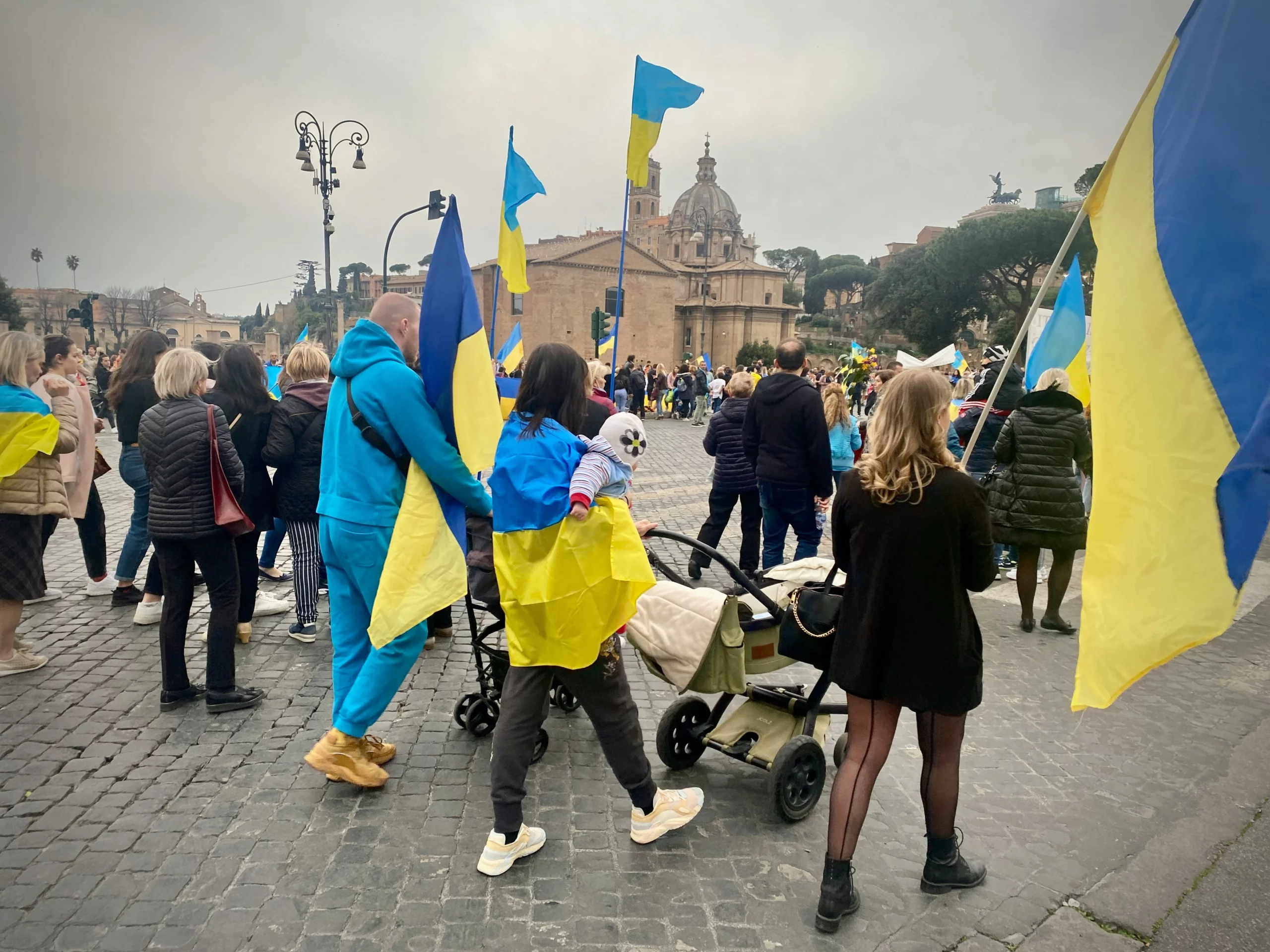
How cooperation opens up opportunities for small Ukrainian and Lithuanian cities


What brings closer two cities, one Ukrainian, the other Lithuanian, separated by 700 km? Some will say their similar demographics or town size. Others will put forward their common urban challenges and opportunities.

This is precisely what the “Bridges of Trust” project is heading at: to increasing cooperation and exchange of best practices, knowledge and skills between municipalities in Ukraine and the EU.

On 22 October 2021, a first exchange between Korosten (Ukraine) and Ukmergė (Lithuania) took place online. Earlier, the two municipalities expressed interest to establish a new partnership in the framework of the project.

During this first meeting, the partners presented their respective municipalities and discussed possible areas of cooperation. Speakers on either side noted with great interest how similar the two communities are, for example, in terms of key business sectors (e.g. woodworking), interest in green tourism, culture and even some joint challenges (e.g. ageing of the population, migration of the young people, investments).

Energy efficiency and rising gas prices, waste management, investments and business attractiveness, digitalization of public services, are just some of the topics that were discussed during this first exchange.

The exchanges will continue to take place online during the next months. In spring 2022, it is planned that representatives of Korosten will visit Ukmergė to learn more about its successful projects and to see what aspects of these projects can be taken, adapted and integrated to the local realities in Korosten.  

As correctly pointed out by the mayor of Ukmergė, Rolandas Janickas, it is always better to see something once, and Ukmergė is looking forward to welcome Ukrainian colleagues next year.

About the “Bridges of Trust” project

The project is implemented by the Council of European Municipalities and Regions and PLATFORMA, and is funded by the U-LEAD with Europe programme, a multi-donor action of the European Union and its member states Germany, Poland, Sweden, Denmark, Estonia and Slovenia.

EU Week of Regions and Cities

Inclucities Interview - News 2022

How the Covenant Community is blazing trails for the green transition


The recent European Week of Regions and Cities 2021 was the occasion to highlight how local governments and their associations are pioneering new ways of fighting against climate change.

The Covenant of Mayors Europe Office and the European Committee of the Regions (CoR) highlighted such local climate action during their workshop “The Covenant Community: a trailblazer for the green transition”, heldon 13 October 2021.

The event was the moment to bring together the Covenant Community of Coordinators, Supporters and National Ambassadors from the CoR to demonstrate how the Covenant of Mayors’ model of cooperation between levels of government works in practice to accelerate the green transition.

The event notably presented the Covenant report “Multi-Level Governance in (Climate) Action – Co-creating policy solutions to tackle climate change”, which makes recommendations for cooperation and highlights examples of how the Community has worked on climate change mitigation, adaptation and energy povery.

Committing and cooperating for net zero

Julije Domac, member of the Covenant of Mayors Political Board and Director of the North-West Croatia Energy Agency (REGEA), opened the event highlighting that “2021 marks new ambitions, new targets, a new Covenant, and indeed, one shared vision: By 2050, all European citizens will be living in climate-neutral, decarbonised and resilient cities with access to affordable, secure and clean energy.”

On behalf of the National Ambassadors, Kata Tutto, Vice Mayor of Budapest and Covenant Ambassador for Hungary, stressed the close cooperation between the Covenant of Mayors and the CoR: “It’s a natural cooperation. The role of the national ambassadors is to help the process, promote and reinforce the Covenant in their own EU Member States, in cooperation with the Covenant of Mayors Office and the European Commission.”

95% of Flemish municipalities to join the Covenant

Local and regional government associations also share their perspectives as CEMR members and Covenant Supporters. During a session on multi-level climate actionMarteen Tavernier of the Association of Flemish Cities and Municipalities (VVSG) presented the Flemish Climate Pact, an idea launched two years ago by the association and developed with the Flemish government.

One of the requirements to participate in the Flemish Climate Pact is to also be a Covenant Signatory. “We think we will end up with more than 95% of local authorities participating in both the Climate Pact and the Covenant of Mayors”, Marteen Tavernier said. The Pact covers both climate change adaptation and mitigation.

Wide-ranging support for local action in Finland

We learned about the Finnish and Latvian contexts during the session on local adaptation to climate change. Pauliina Jalonen of the Finnish Association of Local and Regional Authorities (Kuntaliitto) highlighted that two-thirds of Finnish municipalities have a climate target and 130 out of 309 have a carbon neutrality target.

The Finnish Association is providing concrete and practical support such as by piloting a climate leadership coaching programme for mayors to undertake local climate work, reinforcing knowledge by producing a guide on climate adaptation for municipalities and advocating at national level for funding for climate-proof infrastructure. “The impacts of climate change are happening already,” said Pauliina Jalonen. “So adaptation needs to take place today.

“No regrets” for Latvian municipalities

Agita Kaupuza outlined the actions being taken by the Latvian Association of Local and Regional Governments (LALRG) to support local climate mitigation. LALRG works with municipalities to choose the “no regrets option”, which can feature work on coastal areas, notably erosion prevention, or inland areas. The Association helps showcase and share best practices of local adaptation actions, on issues ranging from urban regeneration in topics that cover from regeneration to water management.

You can also consult the recording of the event.

The Covenant of Mayors campaign for achieving a climate-neutral Europe by 2050 is at full speed. More and more municipalities are renewing their commitments and joining the world’s largest movement for local climate and energy action. As a CEMR member, if you want to organise national events to promote the Covenant and provide capacitybuilding support to municipalities in your country reach out to Pedro Bizarro.

Local finances hit by COVID-19

MFF and COVID recovery - News 2020

CEMR report reveals rising costs and falling revenues for local and regional governments during the pandemic, threatening public services and investments


As the COVID-19 pandemic swept through Europe, local and regional governments (LRGs) were on the frontlines, maintaining public services, managing emergency measures, and supporting vulnerable communities. A new analysis by the Council of European Municipalities and Regions (CEMR) sheds light on how this essential work came at a high financial cost, creating long-lasting challenges for municipalities and regions across Europe.

Based on a survey conducted among 40 national associations in 15 countries, the CEMR report highlights what it calls a “scissor effect”: rising local expenditure paired with declining revenue. While towns and regions had to invest in health, social care, education, and digital tools to respond to the crisis, income from taxes, public service fees, and tourism sharply declined.

Some countries, such as Sweden and Estonia, offered significant support to help offset these financial shocks. Others, including Portugal, provided little to no compensation. The situation varied widely, revealing major disparities in how LRGs were supported at the national level.

The report also underscores the challenges LRGs faced in accessing EU support due to limited consultation, legal constraints, or complex procedures. Despite some flexibility under EU fiscal rules, many authorities remain uncertain about their mid- and long-term financial stability. The risk: cuts to investment in essential areas like climate action, digitalisation, housing, and public transport.

CEMR calls for a long-term rethink of how LRGs are financed and included in national and EU recovery plans. Municipalities and regions have proven their capacity to lead in times of crisis. To continue doing so, they need clear legal frameworks, financial autonomy, and a real partnership with national and European institutions.

The report is a clear reminder: Europe’s recovery depends on strong, resilient local and regional governments. Equipping them today is the key to building a more sustainable, inclusive, and future-proof tomorrow.

Read the study here 

For more information, contact: 

National Distinction in Moldova

Moldova - News Section

NALAS President receives the highest national distinction – Order of the Republic of Moldova


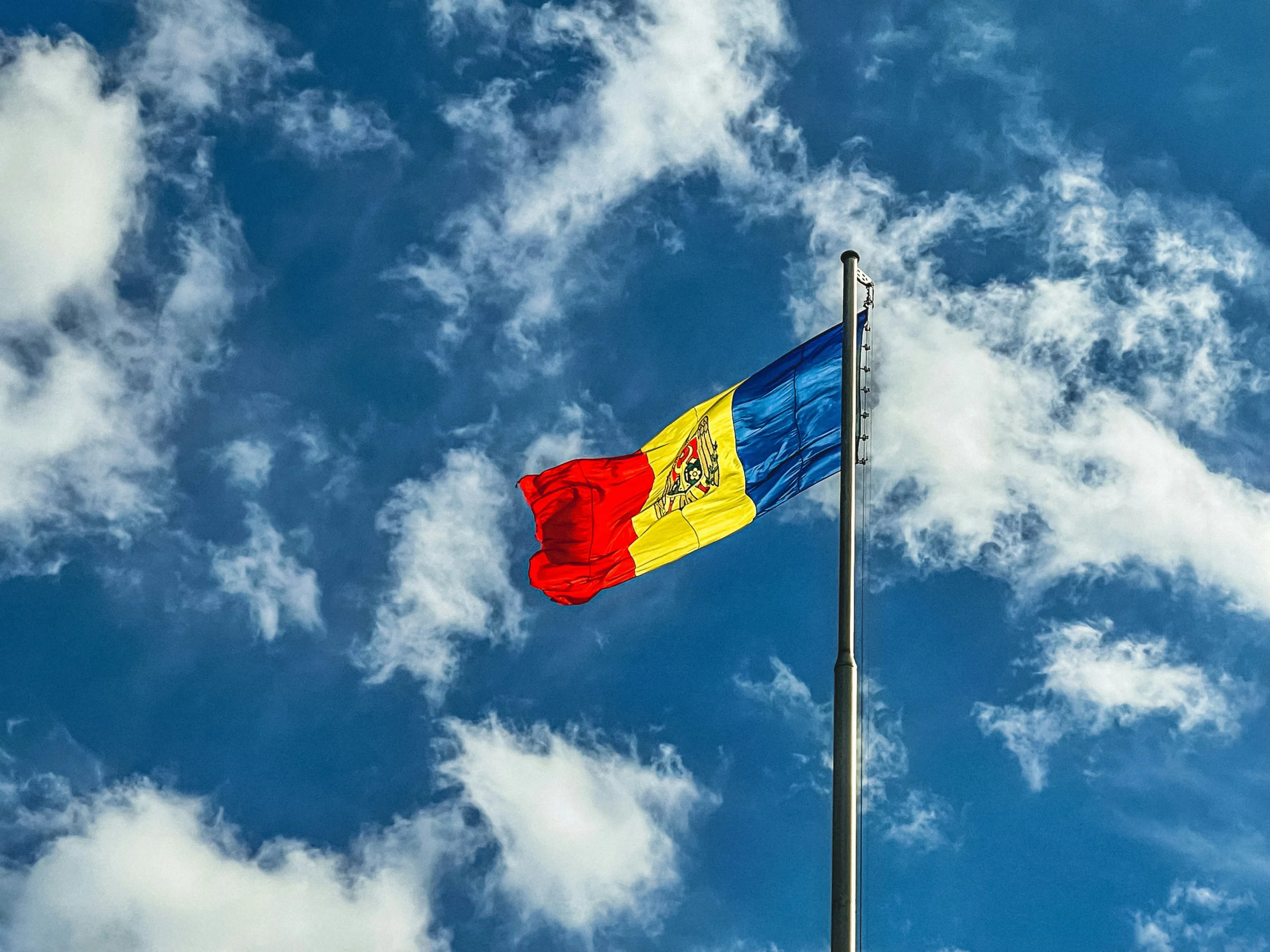
Tatiana Badan, Mayor of Selemet (Moldova), President of the Congress of Local Authorities from Moldova (CALM) and President of the Network of Associations of Local Authorities of South-East Europe (NALAS), was awarded with the highest distinction of Moldova, the Order of the Republic, on 15 October 2021.

This distinction was presented by Moldovan President Maia Sandu “as a sign of high appreciation of special merits to the state, for substantial contribution to asserting interests and promoting the image of the Republic of Moldova in the world, for outstanding professional success, for civic initiative and active participation in advancing reforms”. 

This Prize was handed to Ms Badan on the occasion of the 30th anniversary since the proclamation of the independence of the Republic of Moldova. She has over 28 years of experience in local public administration, serves as a mayor for more than 18 years, in 5 mandates

NALAS is a network of associations of local authorities of South East Europe. The Network brings together 14 associations which represent roughly 9000 local authorities, directly elected by more than 80 million citizens of this region. CALM promotes the interests and rights of local authorities in Moldova. It was established in 2010 and is a member of the CEMR since 2013.