Cohesion Alliance

Cohesion Alliance - News 2020

#CohesionAlliance mobilises to back the European Parliament in the final stretch to secure a strong and participated cohesion policy 2021-2027


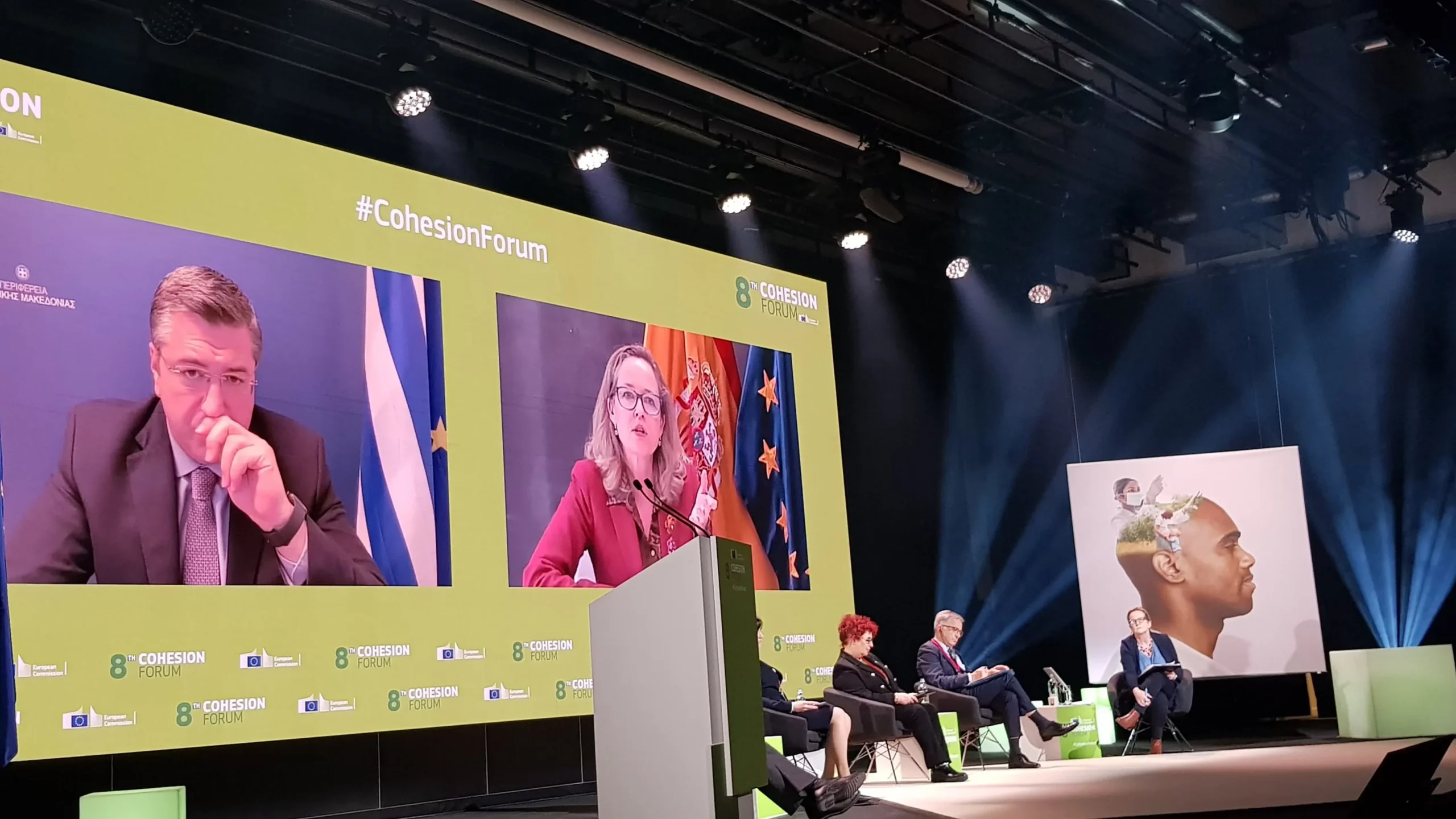
The #CohesionAlliance partner organisations met online to discuss the current state of the trilogue negotiations of the cohesion policy package with representatives from the European Parliament, the European Commission and the German Council Presidency. The partner organisations representing cities, regions and regional assemblies voiced their concern about macroeconomic conditionality, the risk of centralisation and the full implementation of cohesion and REACT EU programmes over the upcoming years.

The negotiations between European Parliament and Council on the rules for cohesion policy 2021-27 are entering the final phase. Cities, townsand regions and the European Parliament have converged on key demands and successfully advocated for strong cohesion policy beyond 2020. 

Concluding the negotiations on all cohesion policy programmes is more urgent than ever. It’s less than one months until Christmas, so national governments should stop playing games and listen to its cities and regions. A delay in the negotiations on the cohesion policy regulation risks a postponement of the start of programmes. This would have a direct impact on our citizens, who urgently rely on the EU support. These funds are essential for local and regional authorities to take action against the impact of the Covid-19 pandemic and accelerate a sustainable and socially-fair recovery“, said Isabelle Boudineau, Chair of the Commission for Territorial Cohesion Policy and EU Budget (COTER) of the European Committee of the Regions.

Younous Omarjee, MEP, Chair of the REGI committee: “The European Union is going through an economic and social crisis on an unprecedented scale. The conditions for recovery in 2021 are unknown. More than ever, cohesion policy must be powerful, because today what is threatening is the distortion of economies and divergence. The logic of cohesion and solidarity must take precedence over that of competition. The principles of cohesion must be at the heart of the recovery, and we must plead for a recovery that is sustainable, but also fair and equitable.”

During the debate with Marc Lemaitre, Director-General DG REGIO, European Commission, and Heinz Hetmeier, Deputy Director-General for European Economic Policy, EU Structural and State Aid Policy, and Twinning at the German Federal Ministry for Economic Affairs and Energy, the #CohesionAlliance partners voiced their concern about some remaining key issues in this last phase of the negotiations. In particular, towns, cities and regions worry that macroeconomic conditionality introduces significant uncertainty on future investment once the Growth and Stability Pact comes back into force. Furthermore, a narrow definition of the scope of the European Regional Development Fund (ERDF) would make key investment ineligible and an ill-conceived flexibility would allow for centralisation and weakening of key tools such as the European Social Fund. 

At the same time, managing authorities will face significant implementation challenges as the new programmes 2021-2027 will run in parallel with the current prolonged programmes 2014-2020. The #CohesionAlliance partners therefore call on the European Parliament and the Council to simplify the new regulations as much as possible as well to speed up their adoption. 

Further interventions from the conference (alphabetical order): 

Magnus Berntsson, President of the Assembly of European Regions (AER): “In this crisis, it is time to practice the leadership that our citizens expect from the EU and national governments. Time to promote new jobs, competitiveness, sustainable and inclusive growth to drive the recovery. To achieve this, funding must reach our regions, villages and cities immediately. And they must have a say in how best to use the funds.”

Wim Dries, Mayor of Genk and member of the Policy Committee of Council of European Municipalities and Regions (CEMR): “Even when all Member States will agree in the Council, Europe’s next long-term budget and Recovery Plan will still have to go through parliaments to become fully adopted and operational. The resulting delay will clash with our urgent needs, in terms of public services delivery and finances. National associations of local and regional governments can help convey the urgency of swift local action to our parliaments.”

Karl-Heinz Lambertz, President of the Association of European Border Regions (AEBR): “The difficulties for recovery in regions with different pre-existing handicaps such as border regions, peripheral, sparsely populated, mountainous, etc., should be considered when planning the allocation of new or extended EU programmes. Territorial cooperation programmes and a new generation of integrated territorial instruments should receive the necessary inputs to accelerate the economic recovery of all territories of the EU and, thus, serve as laboratories for a strengthened European integration. The participation of local and regional authorities and stakeholders in the design and management of these programmes will mean a better identification of the needs to address and the best way to proceed, adding a great value to their implementation while guaranteeing high-quality delivery.

Ricardo Rio, Mayor of Braga and member of the Executive Committee of EUROCITIES: “We can maximise the impact of future investments, if we target the local needs in times of crisis. For this to happen, cities must have a seat at the table when the decisions about programming priorities are taken. When we work closely together across levels of government, we can ensure that cohesion policy is invested where it makes a positive difference to the quality of life locally.

Ana Martinez Vidal, Vice-President of the Conference of Peripheral Maritime Regions (CPMR) and Regional Minister of the Region of Murcia: “As Cohesion Alliance Partners, we should keep our efforts to voice the view of the local and regional authorities. A sustainable economic recovery will only be achieved if local and regional authorities have a central role in designing and delivering the investments under the Recovery and Resilience Facility. The Partnership principle and multilevel governance become more important than ever.”

Empowering Europe’s rural future

Cohesion Policy Alliance - News 2020

CEMR urges inclusive, place-based vision for rural territories 


As the European Union shapes its long-term vision for rural areas, the Council of European Municipalities and Regions (CEMR) calls for a fresh, inclusive approach that recognises rural territories as vibrant, diverse, and essential to Europe’s sustainable future. 

In a context shaped by post-COVID realities, demographic shifts, and the need for climate resilience, CEMR stresses that rural areas must no longer be seen as peripheral or left behind. Over 50% of Europeans live in rural or peri-urban territories, yet these areas still face gaps in investment, connectivity, and access to services. 

CEMR’s position lays out a clear path forward: 

  • Shift the narrative: Rural areas are not just agricultural zones in decline, but places of opportunity, well-being, and innovation. A positive and modern image must be promoted across all levels of government. 
  • Invest in connections: Better transport links, broadband access, and energy infrastructure are key to rural inclusion. Public investment must step in where market failures persist. 
  • Strengthen local governance: Municipalities and regions are best placed to tailor solutions to their rural communities. They must be true partners in designing and delivering EU and national policies. 
  • Support rural services and quality of life: Equal access to health, education, culture, and mobility is crucial to prevent depopulation and ensure territorial cohesion. 
  • Target EU funding more effectively: Cohesion Policy, CAP, Horizon Europe, and recovery instruments must better support rural-specific needs, with simplified access for small municipalities. 
  • Foster youth engagement and gender equity: Making rural areas attractive for young people, women, and families will require tailored policies and investment in social infrastructure. 

CEMR calls on the EU, Member States, and institutions like the OECD and Council of Europe to take these principles seriously and to build rural policies that are integrated, inclusive, and future-focused. From tourism and energy to local governance and public services, rural areas must be seen as full contributors to Europe’s social and territorial fabric. 

Read the position paper here 

For more information, contact: 

Local action for climate at COP26

Climate Change - News Section

Municipalities and regions are essential to implementing the Paris Agreement and achieving the SDGs 


As the world prepares for COP26, the urgency of implementing the Paris Agreement is clearer than ever. Delays are no longer acceptable: ambitious climate action must be delivered across all levels of governance, with municipalities and regions at the forefront. Local leadership, appropriate regulatory frameworks, and decentralised solutions will be crucial to achieving carbon neutrality and advancing the Sustainable Development Goals (SDGs). 

Tackling climate change requires ambitious leadership, and local governments are uniquely positioned to deliver practical results. Cities and regions across Europe are already setting climate targets and developing local solutions to global challenges. Their involvement in international processes, such as through the Local Governments and Municipal Authorities (LGMA) constituency, ensures that local voices shape global action. 

Effective climate policies also depend on appropriate regulatory and financial support. EU and national frameworks must acknowledge the diversity of local realities, enabling tailored solutions. Adequate funding, capacity-building, and investment are necessary to empower municipalities and regions to meet their commitments. Initiatives like the European Green Deal and a just transition should ensure no community is left behind. 

Finally, the localisation of the SDGs is inseparable from the climate agenda. With 65% of SDG targets linked to local action, decentralised approaches and multi-level governance are vital. Embedding the 2030 Agenda into territorial strategies will ensure that global commitments translate into tangible improvements in communities. 

The path to COP26 underscores a simple truth: global goals can only be achieved through local action. By supporting municipalities and regions with resources, recognition, and a genuine role in decision-making, the EU and international community can ensure that the Paris Agreement and SDGs are implemented effectively, delivering a sustainable and resilient future for all. 

Read the position paper here 

For more information, contact: 

Social rights, local action 

Social Rights Labour - News

What are the priorities for implementing the European Pillar of Social Rights with a strong local and regional involvement? 


The Council of European Municipalities and Regions (CEMR) welcomes the European Pillar of Social Rights as a step toward strengthening fairness and equality in Europe. While supporting its ambition, CEMR stresses that the measures linked to the Pillar’s 20 principles should remain non-binding, respecting the diversity of national, regional and local competences. For local and regional governments, the Pillar should serve as a reference framework to inspire reforms, rather than impose uniform rules. 

CEMR identifies key challenges where Europe must act: rising inequality, persistent poverty, gender gaps, and labour market transitions accelerated by digitalisation and COVID-19. Municipalities and regions, as major providers of education, housing, health, social inclusion and employment services, are at the heart of delivering social rights. 

CEMR’s policy priorities include: 

  • Skills and education: investment in training, apprenticeships and digital access to avoid a “lost generation” of young people. 
  • Demographic change: integrating women, older workers, migrants, and disadvantaged groups into the labour market. 
  • Gender equality: boosting women’s participation and addressing work-life balance challenges, especially in the pandemic’s aftermath. 

At the same time, CEMR warns against excessive bureaucracy or additional reporting obligations for local authorities, calling instead for best practice exchange, benchmarks, and adequate funding. 

For the European Pillar of Social Rights to succeed, it must respect subsidiarity, strengthen social dialogue, and involve local and regional governments as essential actors. Municipalities, cities, and regions are indispensable in turning principles into concrete progress, provided they are given the flexibility, resources and recognition needed to deliver. 

Read the position paper here 

For more information, contact: