Climate Chance Summit 2026

Climate Chance Summit 2026

Cities and regions must lead Europe’s climate adaptation 


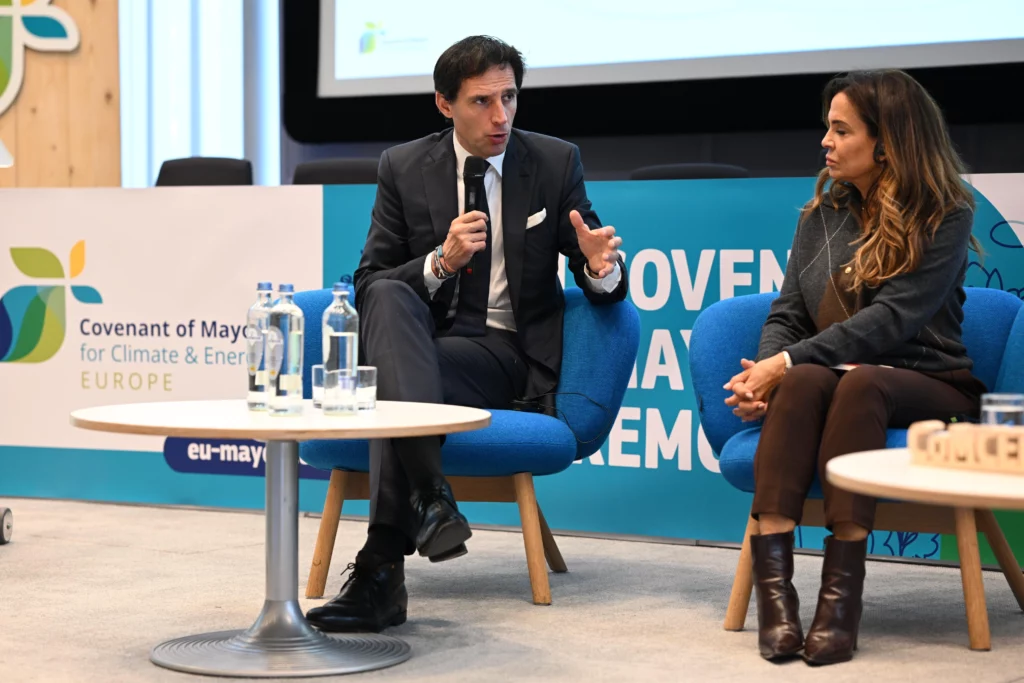
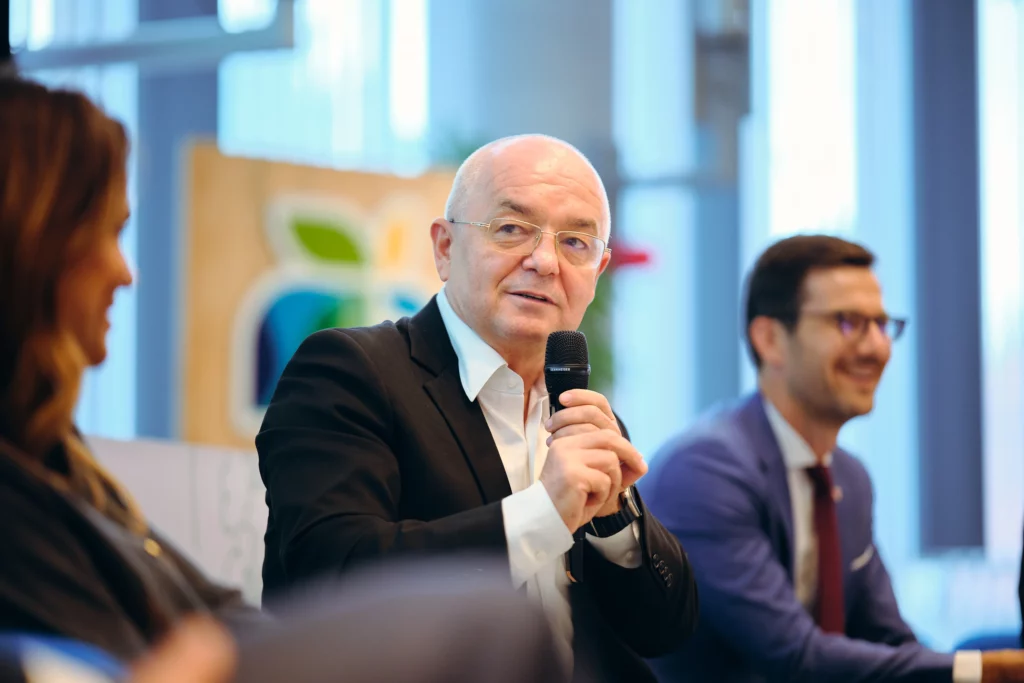
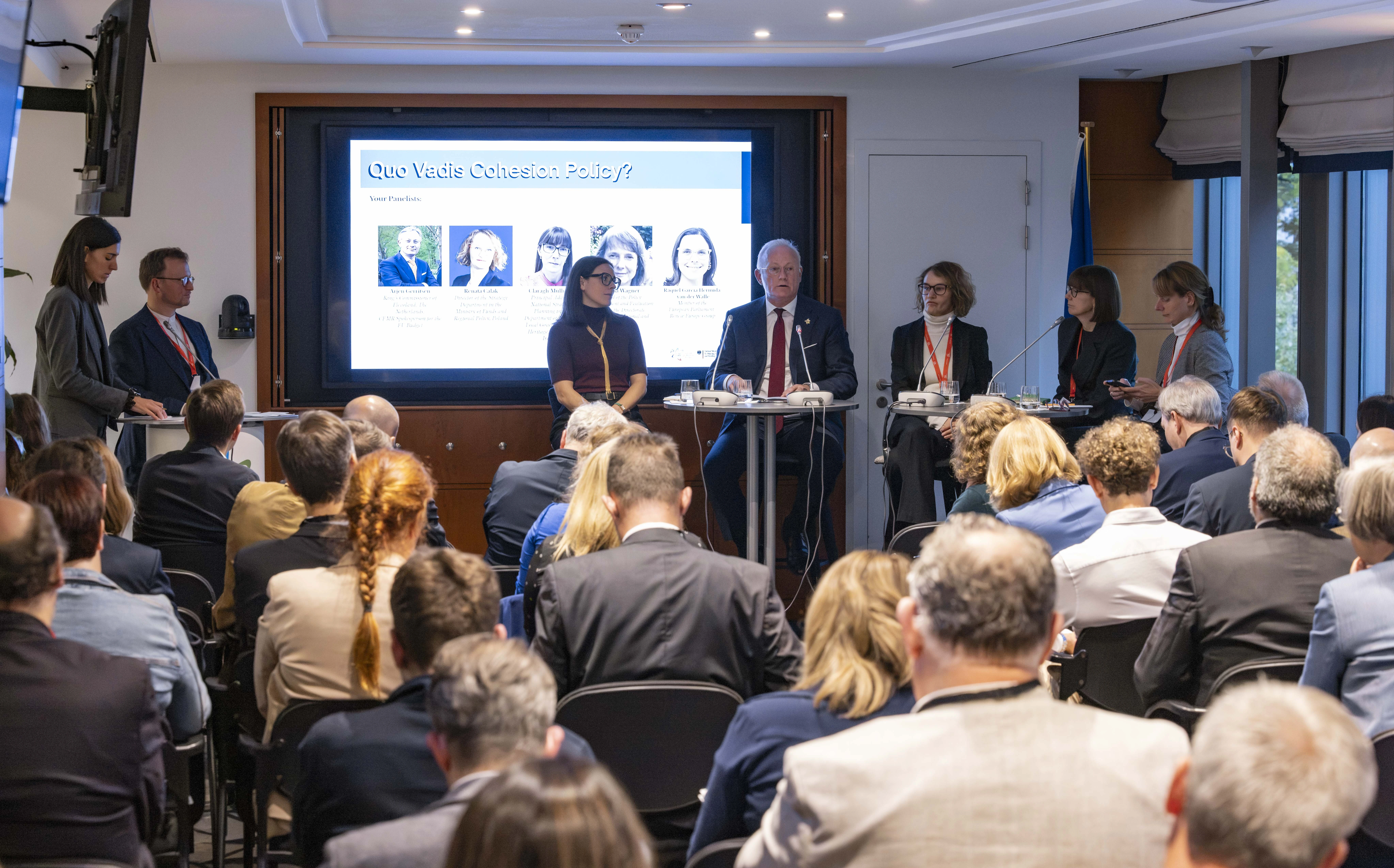
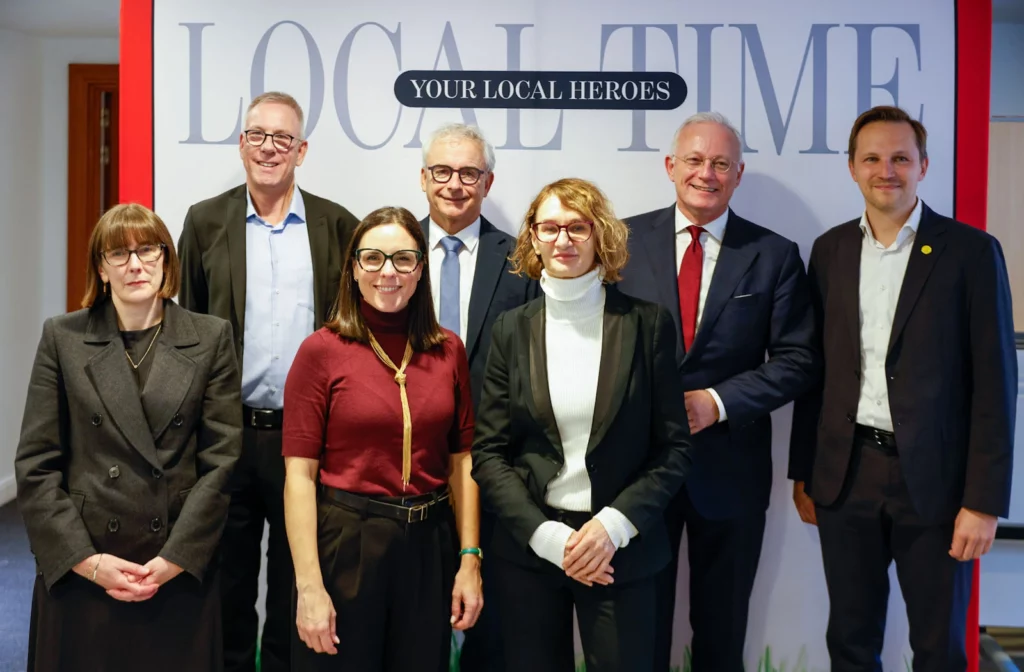
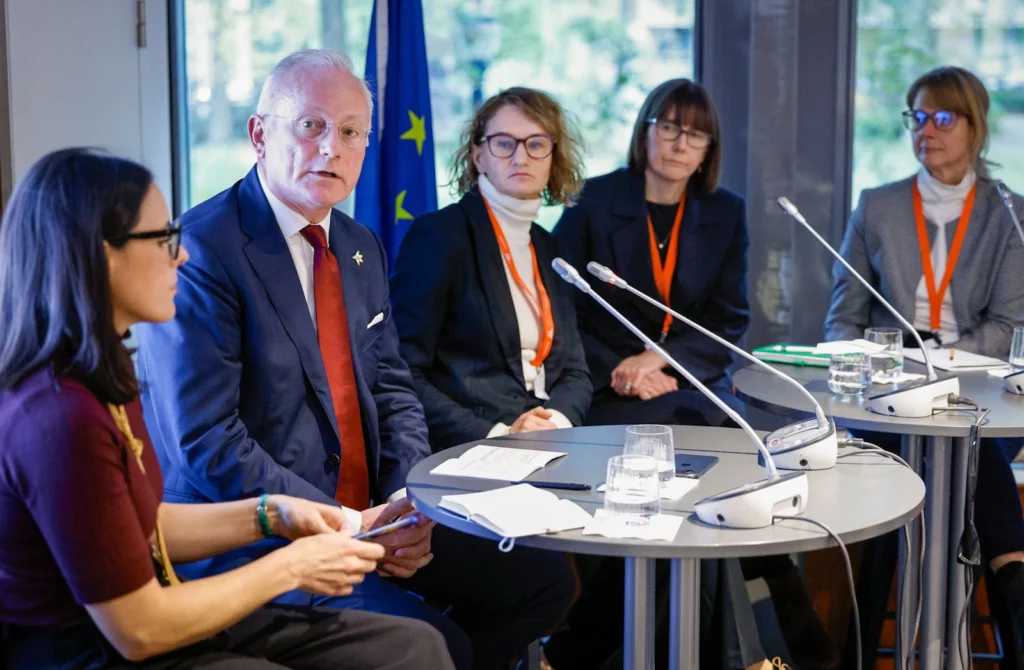
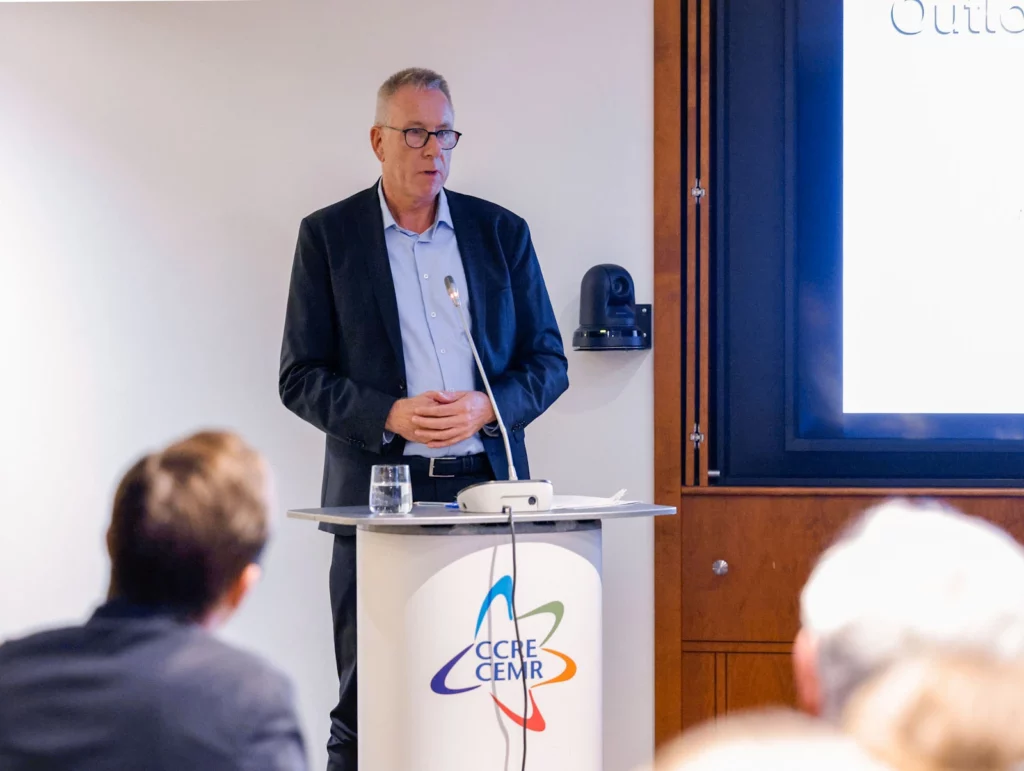
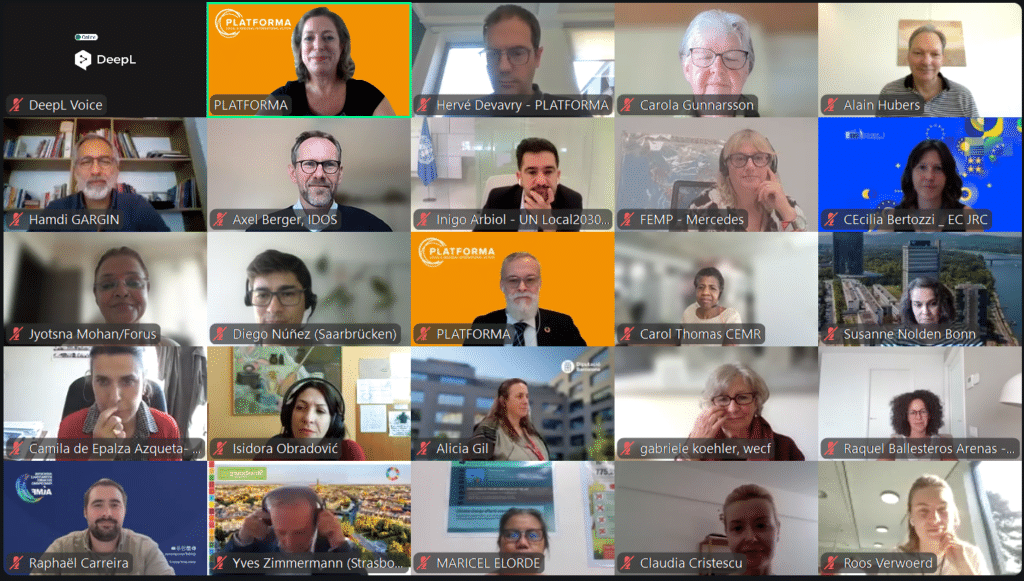
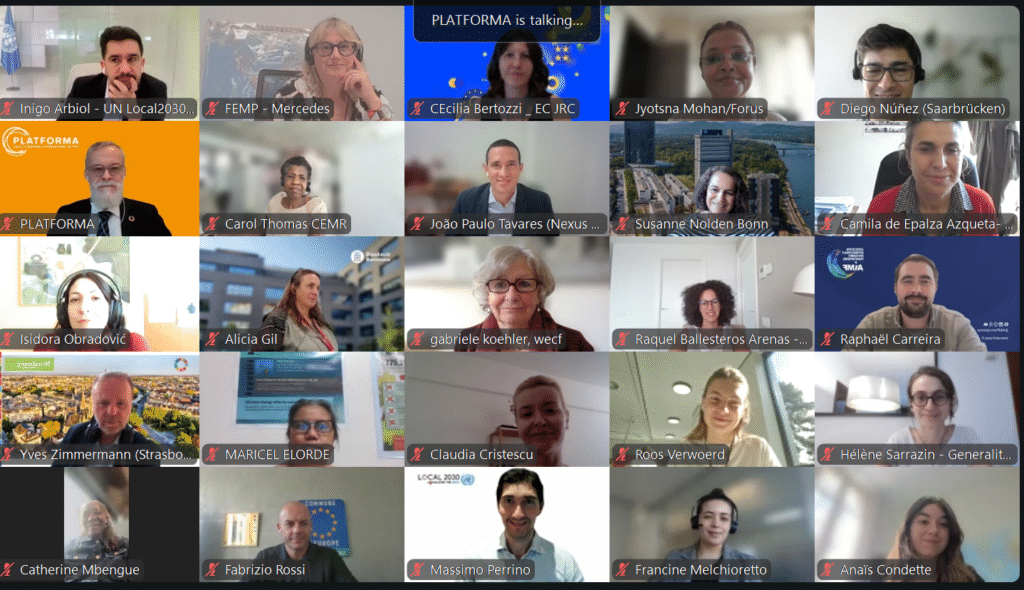
CEMR participated on 3 and 4 of June in the Climate Chance Europe Summit 2026 organised in Brussels by The Climate Chance association. The two-day event brought together local and regional leaders, European institutions, businesses, NGOs and civil society networks around a shared theme: climate adaptation as a lever for resilience and prosperity in Europe.  

The message shared by the Council of European Municipalities and Regions (CEMR) was that towns, cities and regions must be recognised as strategic partners in designing Europe’s climate response, not merely as implementers on the ground.  

The summit echoes the key messages of CEMR’s position paper “Adapting Together – A territorial approach to resilience and risk management”, published in February 2026. In this position paper, CEMR makes a case for a territorial approach to climate resilience, grounded in multi-level governance. A fundamental gap is highlighted: local and regional governments already implement most adaptation measures, yet their role remains insufficiently recognised and supported in EU and national frameworks.  

To close this gap, CEMR continues to flag six priorities:  

  1. Empowering local and regional governments with clear mandates and flexibility to act 
  1. Strengthening local capacity through better access to data and peer learning 
  1. Securing predictable and accessible funding for adaptation investments 
  1. Improving preparedness and disaster risk management 
  1. Restoring ecosystems and scaling nature-based solutions 
  1. Ensuring water resilience through integrated, locally driven water management 

The summit organised by Climate Chance came at a critical political moment. The European Commission is currently developing a new integrated framework for European Climate Resilience and Risk Management, expected to be adopted in the second half of 2026.  

Ronan Dantec, CEMR Spokesperson for Climate: “Climate adaptation will only succeed if local and regional governments are recognised as full partners in the future resilience framework. Territories need a common trajectory, the tools to understand their vulnerabilities and the long-term funding to turn resilience into reality.” 

Discussions at the summit on multi-level governance, funding adaptation and resilience at local level, technical support for LRG to prepare risk management strategies and investments, and solidarity mechanisms all reinforced what our position paper argues: coherent and effective climate action requires local and regional governments at the table from the very beginning — in the design, financing and monitoring of policy, not just its delivery. 

The summit closed with the adoption of the Brussels Declaration of European Non-State Actors on Climate Change Adaptation, signed by a wide range of local government networks, economic actors networks, and NGOs, including: Eurocities, FEDARENE and Association internationale des maires francophones (AIMF). 

It commits all signatories to playing an active role in shaping Europe’s climate resilience policies and calls for adaptation to be built into every level of decision-making, from EU policy down to local plans. 

CEMR will continue to push this message forward in the lead-up to the adoption of the EU framework by the end of the year. Europe’s resilience starts in its territories. 

Connie Heedegard, Chair of the Climate Adaptation Mission and former Commissioner for Climate Action: “Adaptation is crucial for resilience, but it is also key for citizens safety. The EU Adaptation Mission has laid the foundations; now is the time to harvest the fruits and scale up implementation.” 

Read our position paper Adapting Together – A territorial approach to resilience and risk management  

For more information, contact:

New MFF: EU funding and water 

Climate - Water management

Webinar report: EU funding opportunities for water resilience in local governments


How can towns, cities and regions secure the investments needed to strengthen water resilience in the face of climate change, ageing infrastructure and growing regulatory requirements?

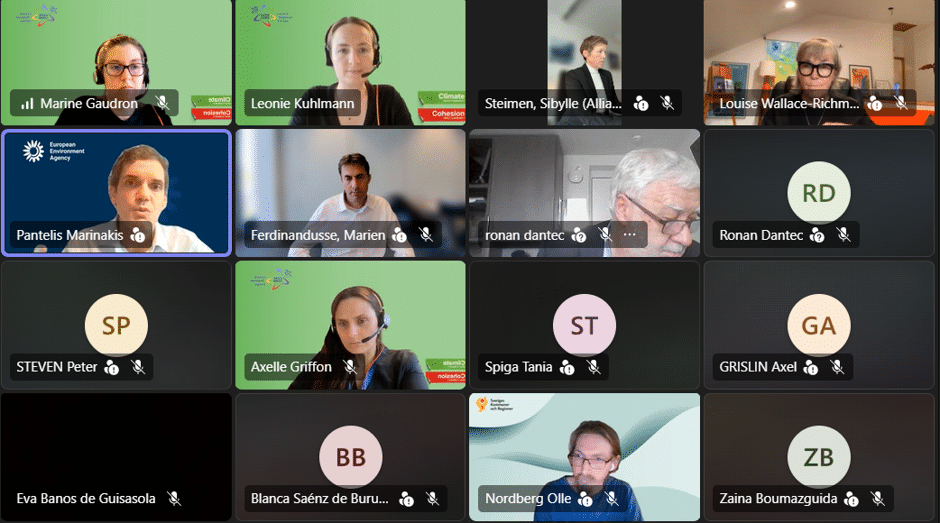
On 13 May 2026, CEMR and Aqua Publica Europea (APE) hosted a webinar bringing together representatives from the European Commission, the European Investment Bank (EIB), local and regional governments, and public water operators to discuss EU funding opportunities for water resilience.

The discussions highlighted both the opportunities available under the current EU budget and the challenges that local and regional governments may face under the future Multiannual Financial Framework (MFF). The key messages and recommendations from the event are now available in a new webinar report jointly published by CEMR and APE.

Water resilience starts locally

Opening the webinar, Andrea Carli, CEMR spokesperson for Environment and Regional Councillor of Friuli Venezia Giulia, highlighted the growing pressures facing towns, cities and regions across Europe. From droughts and water scarcity to flooding, local and regional governments are increasingly at the forefront of climate adaptation while also facing rising investment needs.

For CEMR, this reinforces the need for strong governance frameworks, technical support and sufficient financial resources to ensure sustainable and affordable water services for all communities.

Financing remains the key challenge

A central message emerging from the discussions is clear: financing remains the main barrier to achieving Europe’s water policy objectives.

APE and CEMR highlight the significant investment gap identified by the European Commission, while also pointing to governance and capacity challenges that can limit access to available funding. Although water resilience has been recognised as a priority area in the mid-term review of cohesion policy, many local and regional governments and water operators continue to struggle to secure the resources needed for critical investments.

Looking ahead to the next MFF

With negotiations on the next Multiannual Financial Framework (MFF) underway, the webinar explored how the proposed future funding architecture could affect water investments.

While the new National and Regional Partnership Plans (NRPP) may offer greater flexibility, they also raise important questions about the involvement of local and regional governments in setting investment priorities. CEMR continues to advocate for a strong cohesion policy and meaningful participation of towns, cities and regions in shaping and implementing the future EU budget.

New opportunities through the EIB

During the webinar, participants also heard about EIB’s growing role in supporting water investments, including the forthcoming Sustainable Water Advisory Facility. The initiative aims to help local and regional governments and water operators access financing and advisory support more easily, strengthening the preparation and delivery of water projects across Europe.

As discussions on the future EU budget continue, achieving Europe’s water resilience objectives will require long-term investment, strong local governance and a central role for towns, cities and regions.

Read the webinar report to discover the main conclusions from the discussion, the latest funding opportunities, policy developments and recommendations for local and regional governments.

Read the article on APE´s website here: APE and CEMR host webinar on EU funding opportunities for Water Resilience | Aqua Publica Europea

 Check the presentations used during the event:

For more information, contact:

Municipal energy solutions

Municipalities demonstrate the value of locally powered homegrown energy


In a time of geopolitical uncertainty, municipalities are key to Europe’s energy independence by advancing local renewables with communities. The EU Covenant of Mayors is mobilising local leaders to scale community energy and keep benefits local. 

Over the past five years, geopolitical conflicts have twice driven up energy prices for Europeans, exposing Europe’s fossil fuel dependence and vulnerability. European Commission President Ursula von der Leyen has warned that the recent war in Iran is costing the EU 500 million euros per day. As oil and gas prices climb, households and businesses across Europe feel the consequences.

The answer is becoming increasingly clear for Europe: producing more renewable energy at home.

This vision is clearly outlined in the European Commission’s recently released AccelerateEU communication, responding to the EU’s rising energy costs on volatile fossil fuel markets and aims to accelerate the clean energy transition and strengthen our energy resilience, one of its pillars being ‘more homegrown energy’.

But this transformation will not happen only at national level. It will also be built locally – in cities, towns, and villages across Europe – where local authorities can work with local communities to build Europe’s homegrown energy future from the ground up.

The local dimension of homegrown energy

Local governments are uniquely placed to turn nearby resources like sun, wind, and water into affordable, reliable power for their communities.

Homegrown energy protects residents from global price shocks by reducing dependence on imported fossil fuels. It strengthens energy security, giving communities more control over supply. It also helps municipalities meet climate goals faster, bringing everyone along in the journey, while keeping the economic value of the energy transition within the local economy.

That means lower and more stable bills, new jobs, and stronger public trust in the transition.

Across Europe, municipalities are dedicated to advancing homegrown energy, using a wide array of tools, as demonstrated by EU Covenant of Mayors signatories.

Community energy: homegrown and powered by us

One of the most effective tools local governments have for this is community energy – where citizens, municipalities, and local businesses produce, co-own, and manage renewable energy together. Community energy is homegrown energy in its purest form. It gives people ownership over their energy future, stable pricing, and a direct share in the benefits.

Recognised in the European Commission’s Citizen Energy Package, more than 8,000 energy communities already exist across Europe. Their potential is enormous: by 2030, they could scale tenfold and help supply 25 to 30 million households.

Community energy projects are often carried by citizens, but municipalities can also get involved, help drive the project and at times even lead it. When they do, the impacts tend to be broader and more far-reaching, helping these communities reach their full potential.

Across Europe, local governments of all shapes and sizes – from urban cities and towns to rural villages – are showing how municipal leadership makes community energy stronger.

How municipalities can lead

The first and simplest way for a municipality to lead, is just by making it easier for those driving the project. Setting up an energy community comes with many legal and technical challenges. 

Municipalities can help by simplifying procedures, connect stakeholders, raise awareness, and provide technical guidance.

In Valencia, Spain, a network of local energy offices has helped create ten citizen-led energy communities since 2020 through sustained outreach, expert advice, and direct support for residents.

In Siena, Italy, local authorities supported the development of a local energy community by mapping suitable public spaces and helping to streamline administrative procedures. They also established a technical working group with academic and institutional partners to put in place a stable, non-profit governance structure, playing a key role in setting up the initiative and guiding its early development.

Second and a bit more advanced, municipalities can directly lend a hand and support those establishing the community.

They can unlock public assets, provide financing support, and offer practical resources that communities may lack.

In Heilbronn, Germany, the municipality rented public rooftops to cooperative EnerGeno in exchange for cheaper electricity. What began as a simple arrangement evolved into a long-term climate and energy partnership.

In the rural catalonian village of Bellpuig, Spain, the municipality made rooftops and public space available for solar installations and EV charging, while supporting the cooperative that now produces more than 490 MWh of renewable electricity each year.

To go even further, municipalities can directly get involved and directly lead community energy projects

For those wishing to go the extra mile, they can directly join energy communities and co-invest. When there is limited awareness and proactivity around community energy, municipalities can also themselves initiate and lead the project, setting the example.

In the rural Basque town of Ispaster, Spain, the municipality became a member of its local energy community, reinforcing trust and long-term commitment.  

In Križevci, Croatia, the municipality partnered with a local energy cooperative to launch a crowdfunding campaign for the development of solar power plants in the city centre and library. These campaigns for a solar roof project raised the required funds within days and showed a strong citizen interest in renewable energy.  

When local authorities participate directly, they send a strong signal that community energy is a shared priority.

Beyond community energy

Community energy is one of the strongest tools available, but it is not the only one. Municipalities can also promote homegrown power through strategic procurement, public-private partnerships, flexibility schemes with grid operators, digital energy management, building renovation, demand reduction, and neighbourhood micro-grids.

Valencia, for example, integrates social and green criteria into energy procurement, while Ispaster operates a hybrid microgrid supplying buildings and households with renewable heat and electricity backed by storage.

Meaningful leadership does not need to start large. It can begin with one school roof, one housing block, or one street.

Unlock your power with homegrown energy

Europe’s energy future does not need to be imported. It can be produced locally, owned collectively, and designed to serve communities first – homegrown and powered by us.

Municipalities are uniquely placed to lead this transition. The EU Covenant of Mayors is spotlighting all the ways in which local leadership is powering Europe’s clean, affordable and independent energy future. Follow to find out more.

Is your municipality doing something to promote homegrown energy? 

Join the movement – share your story.

For more information, contact:

Meet Fabien Pérez (Marseille)

Marseille city image

Meet the Local Hero: Fabien Pérez, building Marseille a climate-neutral city


Marseille’s path to climate neutrality

Marseille is in the middle of a major ecological transformation — one that began in 2020, when climate action was placed firmly at the centre of the local political agenda. This renewed momentum emerged at the same time as Europe was strengthening support for cities taking the lead on climate neutrality, creating the right moment for Marseille to accelerate its transition.

The city recognised that its challenges were multidimensional. Reducing greenhouse gas emissions, adapting to climate change or addressing energy poverty were among the urgent priorities. Local leaders understood that climate action could not be separated from social realities.

In February 2026, ahead of the French local elections, we interviewed Fabien Pérez, then Marseille’s councillor responsible for European Funds, to learn more about this experience.

Connecting local vision with European ambition

In 2022, Marseille was selected from 377 candidates to join the 100 cities part of the “EU Mission: Climate-neutral and smart cities”, a moment that Fabien Pérez describes as “the start of a new chapter in Marseille’s ecological transition”.

Two years later, in 2024, the city officially received the “100 climate-neutral cities” label after an evaluation by the European Commission. The distinction not only strengthens the city’s visibility at the European level but also provides access to technical expertise and dedicated funding to accelerate decarbonisation — crucial steps on the path towards Europe’s 2050 climate neutrality goal.

A collective process: building a shared Climate City Contract

One of the cornerstones of this transformation is Marseille’s Climate City Contract, drafted in collaboration with the Aix‑Marseille‑Provence Metropolis, the Region Sud and more than 250 private actors. As Pérez explains, “the Climate City Contract was prepared with citizens, enterprises, associations… a collective roadmap to decarbonise the territory by 2030”.

Behind this roadmap lies a political choice: to move away from a top‑down vision and instead build a shared strategy that tackles various topics such as mobility, building, renewable energy, circular economy and waste, nature in the city, urban agriculture, sea and coastline or education.

The elaboration of the contract also created a new sense of momentum across the territory — a desire to transform the city and accelerate the transition, matched with the need to secure and coordinate the necessary financial resources.

Climate action rooted in Marseille’s realities

Marseille’s ecological transition is shaped by the unique challenges of its territory. Like many European cities, road transport is a major source of emissions. But Marseille also faces additional pressure from industrial activities surrounding the city, emissions linked to air transport or food supply chains, and the geographical reality of being a major port.

Being part of the Mediterranean region also makes this city extremely vulnerable to the effects of climate change. As Pérez explains, Marseille regularly faces extreme weather events, soil fragility, and a coastline that is already evolving — and will continue to change in the coming years. These vulnerabilities have forced the local government to think long‑term and to get ready for tomorrow’s challenges.

Social urgency is another defining factor. Combating energy poverty has become not only an environmental priority but also a way to build social cohesion and support residents in tangible, meaningful ways. “The ecological transition must go hand in hand with social justice”, says Pérez.

From planning to action: relevant projects on the ground

The European label has already helped unlocking new funding for Marseille’s transition. Around €6 million are being invested in concrete, community-centred initiatives, including:

  • A neighbourhood outreach programme (€600,000), sending ambassadors into key districts to work directly with residents and companies on ecological initiatives.
  • Jet cities project, supporting changes in employment and skills caused by green transition (€1.5 million).
  • The “Poséidon” project (€400,000), promoting renewable energy, heat recovery systems and energy‑efficient renovation.
  • The PeriAsty project (€1.2 million), supporting the transition of Europe’s peri-urban areas towards climate-neutral, sustainable and resilient environments in areas such as mobility.
  • Additional support via the ELENA mechanism, helping finance large scale retrofits of public buildings and the expansion of renewable energy solutions.

These early projects illustrate how Marseille is moving from planning to delivery — and how European support can help local authorities turn long-term strategies into visible action.

Marseille also became a signatory of the EU Covenant of Mayors in 2021, an initiative in which CEMR is also involved. Through this initiative, the city has shared various of its case studies such as its plan for zero-euro electricity bills, its strategy to “refresh” public spaces, its heat strategy, and its transformative energy community strategy.

Under the umbrella of the Metropole Aix-Marseille-Provence, the city has been involved in the EU Missions Adaptation to Climate Change, another initiative in which CEMR is involved, with a budget of €999,000 budget for a project combining public and private partnerships to reduce CO₂ emissions.

A Mediterranean city that can inspire Europe

Marseille’s initiative in this field, combined with its geography and identity, makes it a compelling example for other European cities. As a major Mediterranean hub with diverse communities and a complex socio‑climatic landscape, it faces many of the shared challenges that cities across Europe are dealing with.

Fabien Perez - Local Hero Marseille

This is why Pérez emphasises the city’s wider relevance:

“Bring forward representative cities like Marseille, with a Mediterranean port, can inspire other cities in Europe to move towards carbon neutrality”.

Marseille is proving that climate neutrality is not only an environmental imperative, but also an opportunity to rethink governance, strengthen social cohesion and build a shared vision for the future. Its initiative shows how cities are already delivering results aligned with the global objectives of achieving the climate neutrality goal by 2050.

Marseille is a member of CEMR’s French association AFCCRE.

For more information, please contact:

Ten years of cities taking climate action

Circular Cities and Regions Initiative - image

Celebrating a decade of driving local climate action in sub-Saharan Africa

The Covenant of Mayors in Sub-Saharan Africa (CoM SSA) is the “regional covenant” of the Global Covenant of Mayors for Climate & Energy (GCoM). It is a bottom-up and voluntary initiative that invites cities to define and meet ambitious and realistic energy and climate targets.

Launched in 2015 and funded by the European Commission, CoM SSA was initially led by the Council of European Municipalities and Regions, in partnership with African and European city networks, national associations of local governments, and civil society organisations.

To mark this decade, the new publication A Decade of Implementation, produced by GIZ in the framework of CoM SSA, brings together reflections from cities, institutional partners, donors and long-standing experts. Combining strategic perspectives with concrete city examples, it documents how more than 400 local governments, representing over 166 million people, have moved from climate planning to implementation and investment. The publication highlights key milestones and results achieved over the past ten years, including the development of the Sustainable Energy Access and Climate Action Plans (SEACAP), support for project preparation for cities, and an increasing focus on implementation, investment and impact.

Over the past decade, CoM SSA has shown that local climate and energy actions can only be effective and sustainable when it is anchored in political ownership and supported by strong associations of local governments and city networks. By empowering mayors and local leaders, and by facilitating peer exchange and collective representation, the initiative has enabled cities to move from commitments to concrete action.

The publication includes a contribution from CEMR, authored by the Director of Projects and Programmes, Durmish Guri, reflecting on the role of national associations of local and regional goverments and networks in anchoring the Covenant politically and ensuring its sustainability, a message that remains highly relevant as reflections on the future of the Covenant of Mayors continue, including in Europe.

“We therefore call upon funders, governments and partners to continue investing in CoM SSA. Anchored in local realities and supported by diverse partnerships, it stands as a cornerstone of climate resilience in Sub-Saharan Africa.”
Durmish Guri, Director of Projects & Programmes, Council of European Municipalities and Regions (CEMR)
Deutsche Gesellschaft für Internationale Zusammenarbeit (GIZ) GmbH, GIZ CoM SSA – 10 Years of Cities Taking Climate Action, p.10-11.

We would like to thank our partners — Climate Alliance, Energy Cities, Environment Development Action in the Third World (ENDA), French Agency for Environment and Energy Management (ADEME), ICLEI – Local Governments for Sustainability (World Secretariat and Africa), International Association of French Mayors (AIMF), Portuguese Energy Agency (ADENE), Sustainable Energy for Africa, and United Cities and Local Governments Africa (UCLG Africa) — for their invaluable collaboration and commitment.

For more information, contact:

Climate adaptation position paper

ODELL - City of Bilbao, main banner

CEMR calls for a territorial approach to Europe’s climate resilience


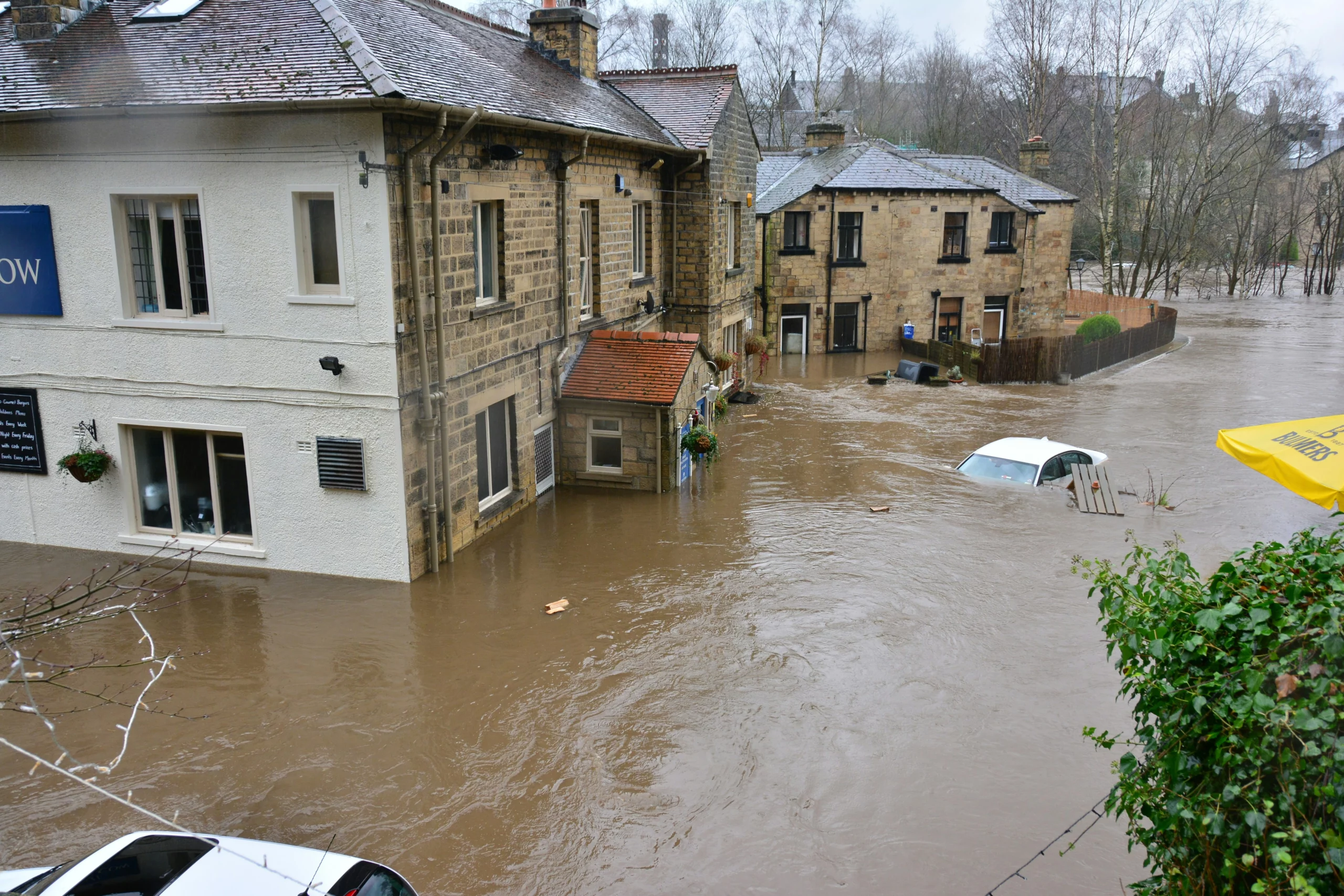
Europe is the fastest-warming continent in the world. Heatwaves, floods, droughts and extreme weather events are already affecting communities, infrastructure and ecosystems across the continent — with impacts that vary widely from one territory to another. In this context, climate adaptation has become an urgent priority for towns, cities and regions, which are on the frontline maintaining essential services and strengthening resilience on the ground. 

While the European Commission is currently developing a new integrated framework for European Climate Resilience and Risk Management, CEMR has published a new policy paper, Adapting Together – A territorial approach to resilience and risk management, setting out concrete recommendations to strengthen Europe’s approach to climate adaptation and preparedness. 

A new policy paper: Adapting Together 

The policy paper highlights a clear reality: local and regional governments already implement the vast majority of adaptation measures, yet their role remains insufficiently recognised and supported in EU and national frameworks. The paper calls for a territorial approach to climate resilience, grounded in multi-level governance and built around six key priorities: 

  • Empowering local and regional governmentswith clear mandates and flexibility to act; 
  • Strengthening local capacity through better access to data, tools and peer learning; 
  • Securing predictable and accessible funding for adaptation investments; 
  • Improving preparedness and disaster risk management; 
  • Restoring ecosystems and scaling up nature-based solutions; 
  • Ensuring water resilience through integrated, locally driven water management. 

By combining horizontal enablers (governance, capacity and finance) with sector-specific recommendations, the paper demonstrates how empowering towns, cities and regions is essential to Europe’s overall resilience. 

Towns, cities and regions at the frontline of adaptation policies  

Ronan Dantec, CEMR spokesperson for Climate, underlines: Today, it is urgent to recognise that adaptation to climate change is pivotal for municipalities and regions of all sizes. Investing in sustainable infrastructure and using our resources more efficiently is not just an option, but an imperative for securing a thriving future for all. 

Climate impacts are inherently local. Even within the same country, risks can differ significantly between urban and rural areas, coastal and inland regions, or northern and southern territories. Towns, cities and regions are therefore best placed to: 

  • Assess local climate risks and vulnerabilities; 
  • Protect vulnerable populations; 
  • Plan and manage resilient infrastructure; 
  • Ensure continuity of essential services such as water, transport and energy; 
  • Deliver nature-based solutions and ecosystem restoration. 

Their proximity to citizens also allows them to integrate social resilience into adaptation policies, ensuring that no one is left behind as climate impacts intensify

Preparing for the EU’s upcoming integrated framework on climate resilience 

CEMR’s policy paper comes at a key political moment, as the new integrated framework for European ClimateResilience and Risk Management is expected to be adopted by the European Commission in the second half of 2026. It will aim to establish a comprehensive and coherent EU approach to climate resilience and preparedness.  

 The ongoing public consultation of the European Commission on the future integrated framework, includes a set of questions covering resilience-by-design across EU policies; harmonised and comparable climate risk assessments; funding for adaptation; support for local and regional level, consideration of climate-related health impacts.  

CEMR is currently developing a response in cooperation with its expert group, requesting that towns, cities and regions are recognised not only as implementers, but as strategic partners in the design, financing and monitoring of this future framework. The consultation is open until 23 February 2026. CEMR encourages its members to participate and make their voices heard. 


For more information contact:

Town Hall COP webinar

TOWN HALL COP - News

Town Hall COP: Faster climate action and multilevel governance to tackle climate change


Strengthened local action and multilevel governance to meet climate targets is one of the key messages defended by CEMR and PLATFORMA. On 19 November 2025, both networks organised their first Town Hall COP, a community-led climate dialogue aimed at reinforcing partnerships across levels of government. Participants insisted on linking climate efforts with broader global agendas such as the Sustainable Development Goals (SDGs). The event took place online while COP30 negotiations are expected to conclude by the end of the week in Belém (Brazil).

COP30 negotiations update and progress made since COP21

Intervening from Belém, the Director for Intergovernmental Support and Collective Progress at UNFCCC Cecilia Kinuthia-Nienga provided an update on the COP 30 negotiations, highlighting the presidency’s focus on multilateralism, building trust, and moving “from commitments to implementation.”

She discussed the importance of clear governance structures, investment pipelines, and support for developing countries to ensure credible Nationally Determined Contributions (NDCs) implementation.

Just back from COP30, Bridgette Burken-Holder, Director of International Program at the European Climate Foundation, emphasised the evolution of the 2015 Paris Agreement as a “living instrument” and the progress made in reducing emissions in cities, but also the growing recognition of subnational governments in climate policy. She noted that 80% of submitted NDCs now include cities and regions as key partners.

Paraphrasing a COP30 participant, she said: “As local governments, we don’t need just a seat at the COP table, we need to rebuild the table to make sure that we can fit everyone we need.”

CEMR Spokesperson on environment and Senator for Loire-Atlantique (France) Ronan Dantec, also discussed the evolution of local governments’ role in climate governance over the past 20 years, emphasising the importance of their involvement for reaching climate targets.

Thysia Tchekouteff, Policy Assistant at the European Commission Directorate-General for Climate Action, reminded the European Union’s climate goals: to become the first climate-neutral continent by 2050, with a 55% reduction in greenhouse gas emissions by 2030 and a 90% reduction by 2040.

She emphasised the importance of multi-level cooperation, highlighting the EU’s endorsement of the Coalition of High Ambition Multi-Level Partnerships (CHAMP) and its commitment to working with subnational governments.

Climate action: political, financial, and citizen engagement

“Climate change does not wait for the next election,” stressed Emil Brogn, Mayor of Cluj-Napoca (Romanian Municipalities Association), who called for reinforced political support, blending financial resources, and making green choices easy for citizens. The mayor named “three key elephants in the room”: political support, finance, and citizen engagement.

He stressed the importance of communicating climate change actions in a way that resonates with citizens. A comment shared by Siri de Vrijer, Policy advisor on environment to MEP Gerben-Jan Gerbrandy (Renew Europe – Netherlands), who said: “we must show citizens what’s in it for them.” She discussed the need for a narrative that aligns with citizens’ perspectives and policy makers’ responsibilities.

This was also supported by Nadia Pellefigue who presented the Committee of the Regions’ opinion on COP30. “Without multi-level governance, ambitions remain theoretical. With it, ambitions become reality,” stated the Vice-President of the Occitanie Region (France). She called for a formal multi-level governance dialogue within the UNFCCC.

National perspectives from Moldova and Croatia

Marina Lungu, Head of Climate Change section at the Ministry of Environment of Moldova presented her country’s newly submitted NDC, which emphasises multi-level governance and includes institutional mechanisms for climate policy coordination across all levels of government.

Miljenko Sedlar, Head of climate in the Northwest Croatia Regional Energy and Climate Agency, presented Croatia’s approach to climate action. He also mentioned a new EU27 project called National Adaptation Hubs, which aims to shift from reactive to systemic adaptation and resilience across EU member states.

Local climate action initiatives

“80% of what can be done is under the influence of local governments,” said CEMR spokesperson for climate Marianne Overton, who discussed the challenges of climate change and the importance of local government in addressing it. The Councillor of North Kesteven and Lincolnshire (UK) highlighted the need “to make green choices easier for residents” and shared examples of successful initiatives, such as solar installations on council housing and energy-efficient building designs.

Overton emphasised the role of local municipalities in achieving climate targets and mentioned a motion passed by over 200 councils aiming for net zero by 2030.

Ola Nord, Head of the City of Malmö (Sweden) EU Office presented his city’s Town Hall COP initiative, which engaged 40 citizens to identify key climate action areas, resulting in 26 proposals focused on city planning, transport, democracy, just transition, lifestyle, and energy. “Change is happening, there’s a lot of positive developments, but it needs to be sped up and made stronger,” he said.

Looking towards 2027

Risto Veivo, Climate director at Central Administration of the City of Turku (Finland) provided an update on the IPCC Special Report on Cities to be presented at COP27. The report, involving approximately 100 lead authors will focus on various aspects of urban climate change, including solutions by city types and regions globally.

The results of CEMR-PLATFORMA Town Hall COP will now be shared with the large community of the Local Governments and Municipal Authorities (LGMA) Constituency of the United Nations, of which CEMR is a member. Ahead of COP30, CEMR endorsed the LGMA Joint Position, a joint call for COP30 leaders to empower cities and regions as key drivers of global climate implementation.


More information

For more information, contact:

EU budget: Local Alliance action plan

Local Alliance - News Section

Making the next EU budget work for cities and regions: the Local Alliance’s 10-point action plan


The Local Alliance – a coalition of Europe’s leading local and regional governments: ACR+, CEMR, Climate Alliance, Energy Cities, Eurocities, FEDARENE, ICLEI Europe and POLIS, – aims at ensuring that our constituencies have the competencies and resources to implement and reinforce Europe’s resilience, competitiveness and decarbonisation.

We share a common vision for the 2028–2034 Multiannual Financial Framework (MFF) to become a strong, democratic, and future-proof tool that drives cohesion across territories, reinforces Europe’s competitiveness, and enables a just transition towards climate-neutral and resilient transition.

Local and regional governments are Europe’s frontline for delivering change. They are the democratic level closest to citizens, trusted by a majority of Europeans, and directly or through shared responsibility in charge of implementing most EU legislation. They mobilise the bulk of climate-relevant investment, drive innovation and competitiveness, and safeguard cohesion and just transition by ensuring that no community is left behind. Without their leadership, Europe cannot succeed in meeting its green, digital, social, and competitiveness ambitions.

Yet instead of empowering this strength, the Commission’s proposal for the next MFF risks sidelining local and regional governments, who are best placed to deliver. A centralised approach, which does not reflect the local realities and priorities, not only threatens delivery on the ground, but also Europe’s long-term societal, democratic and economic resilience and competitiveness. As the Committee of the Regions’ most recent report highlights, European cities and regions need a budget to help build the Union from the ground up – where local and regional authorities are not only implementers but co-creators of Europe’s future.

With the negotiations already underway, the Local Alliance calls on the European Parliament and the Council of the EU to seize this opportunity to put democracy, territorial cohesion, and competitiveness at the heart of the next MFF by ensuring local and regional governments are recognised as indispensable partners. Europe cannot achieve its strategic objectives without working hand in hand with its towns, cities and regions. For this reason, the Local Alliance presents an 10 point action plan to ensure the EU budget delivers tangible results for people in every territory across Europe and beyond.

For the next MFF, we call on:

1. Stronger multilevel governance mechanisms to deliver both reforms and investments.

2. Stronger partnership principle for the implementation of the MFF.

For the National and Regional Partnership Plans: 

3. Making regional and territorial chapters of the National and Regional Partnership Plans mandatory, with a clear section on cities.

4. Earmarking for a just transition & affordable living for all.

5. A real EU program for cities of all sizes under the proposed EU Facility.

6. Safeguarding mechanism for the local and regional level to guarantee their access to EU funds.

7. Linking performance indicators to EU law implementation and territorial delivery.

For the European Competitiveness Fund and Horizon Europe: 

8. Competitiveness Fund and Horizon Europe should recognise cities and regions explicitly as innovators and investors.

For Horizon Europe:

9. Continuing the Mission approach under Horizon Europe.

For the Global Europe Facility:

10. Stronger support for accession cities and regions for the future of European cohesion.

Read the full position paper here

For more information, contact:

Covenant of Mayors Ceremony on climate and energy

Covenant of mayors - Ceremony 2025

500 European mayors gathered to talk about local climate and energy transition


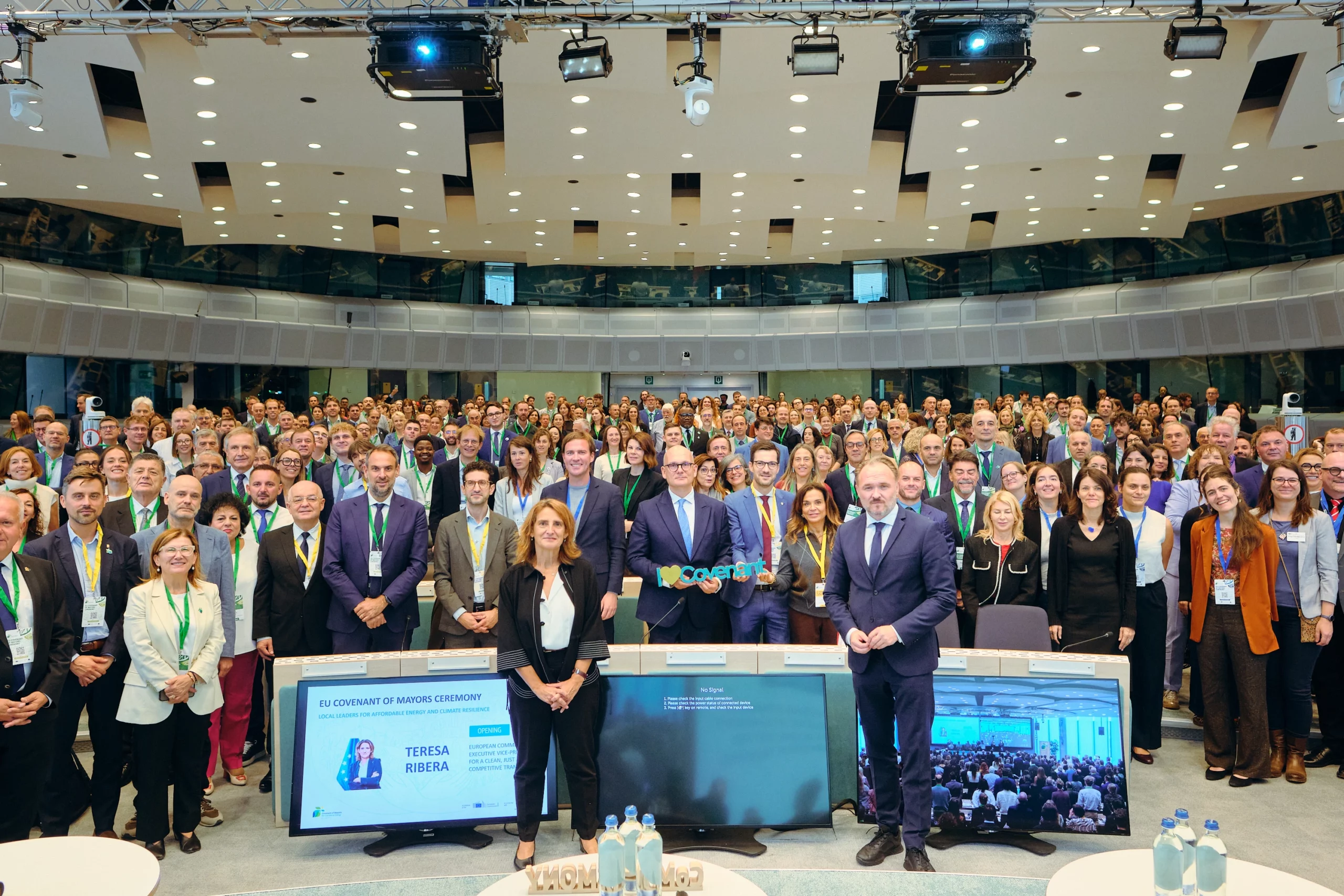
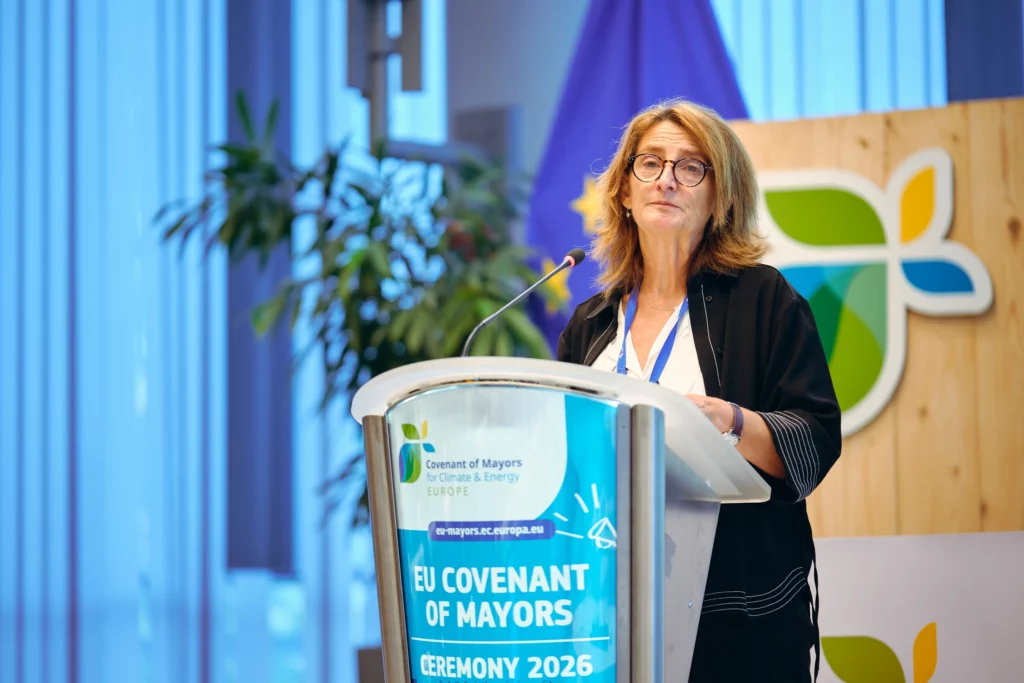
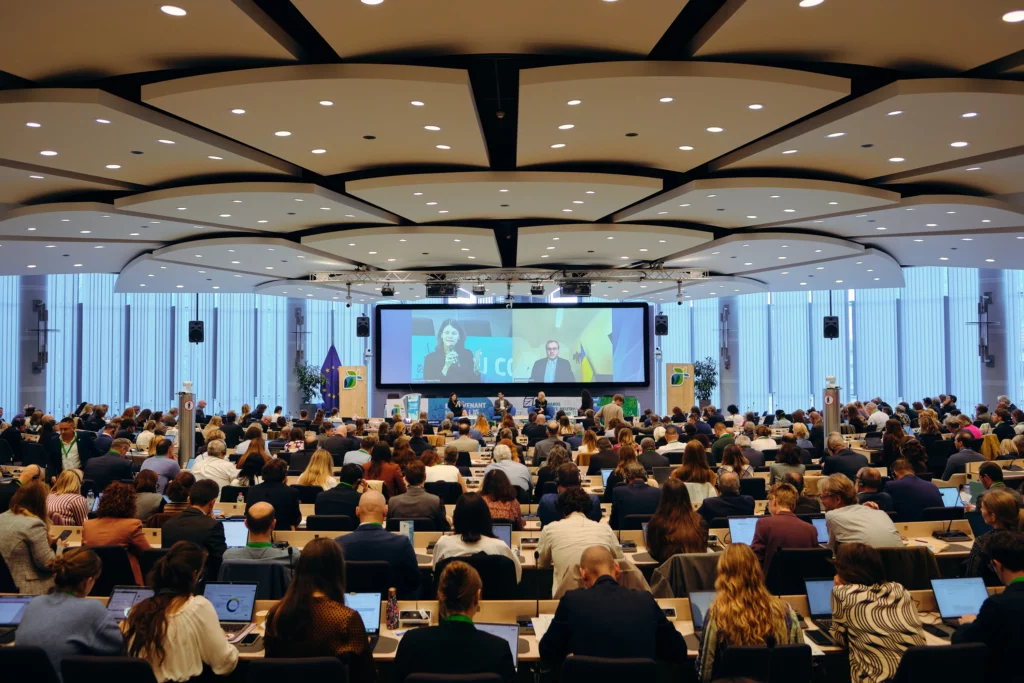
On 16 October, the EU Covenant of Mayors gathered with more than 500 mayors, local and regional representatives, and EU institutions, in the hemicycle of the European Parliament. 

Organised since the launch of the initiative in 2008, the High-level event is the annual gathering of the Covenant signatories invested in securing a safe and sustainable future for their citizens. As an initiative running for more than 15 years, the EU Covenant is mobilising local leaders all over Europe to plan, act and work with their communities to build a more resilient, prosperous and climate-neutral future. 

Both the EU Covenant and the Ceremony are reaffirming the key role of towns, cities and regions in shaping Europe’s vision and future.

Opening session with high-level European leaders

The Ceremony started with an intervention of the President of the European Parliament, Roberta Metsola, who emphasised that Europe is in all cities and regions, that citizens are building Europe every day.

ollowing her welcome, Ursula Von der Leyen, president of the European Commission, shared that “we are on track to achieve our 2030 targets”. For towns, cities and regions to achieve their climate and energy transition, housing and climate resilience are key policies, which are currently tackled by the European Commission. Von der Leyen also welcomed the delegations of Ukraine and Moldova to the Ceremony, reaffirming their belonging to Europe. 

Finally, the President of the European Committee of the Regions, Kata Tüttő, welcomed the local leaders to the Ceek of Regions and cities, key moment of the year. She highlighted how the Covenant of Mayors is a story of and for mayors, regional leaders and their representatives, by highlighting her personal experience.

Covenant of mayors - Ceremony 2025
Covenant of mayors – Ceremony 2025

Celebrating cities leading the way

The Covenant Ceremony is also the occasion to award the successes of many European Cities, and showcase the inspiring and replicable good practices. From Mechelen in Belgium, to Lappeenranta in Finland and Domokos in Greece, European cities are already leading the path towards climate neutrality. 

Local leaders and institutions in dialogue

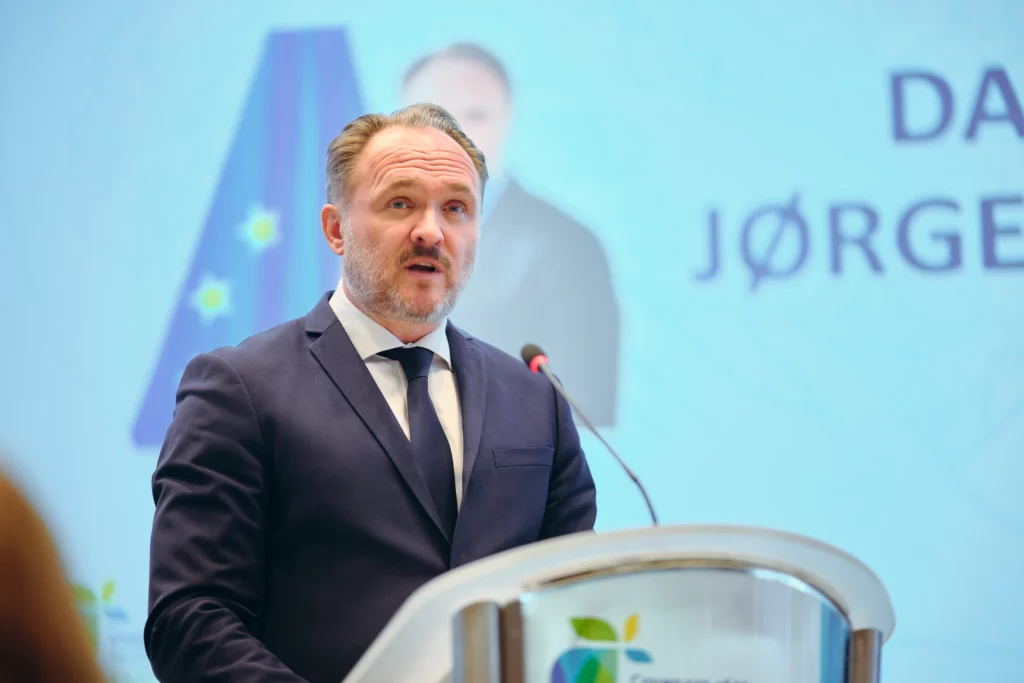
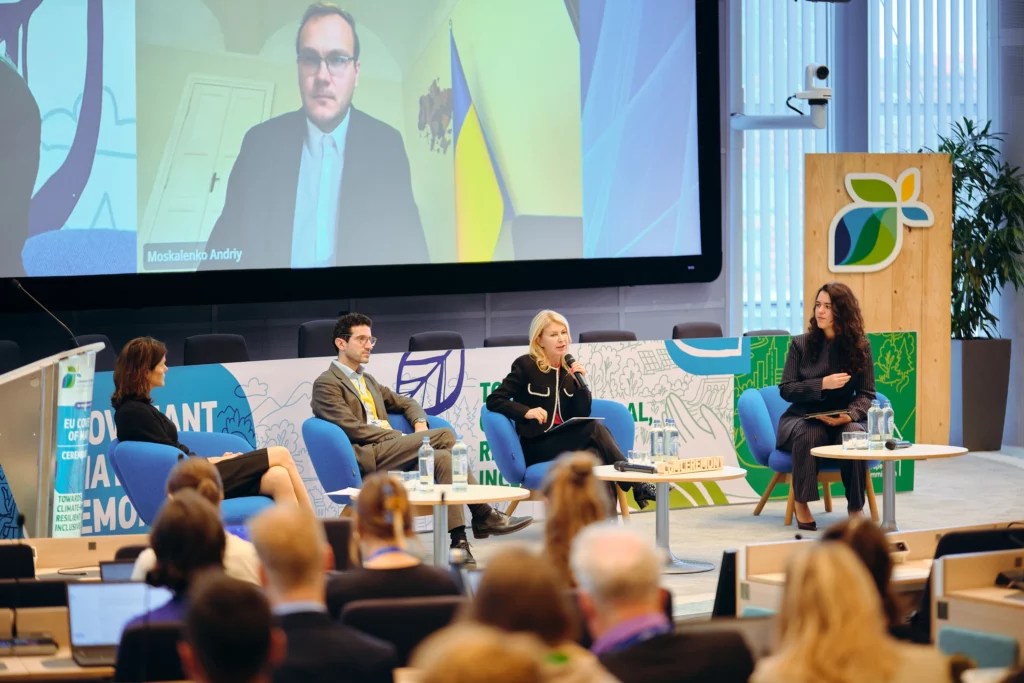
Several panels gathered European local leaders, interacting with representatives of the European institutions. Focusing on “Powering Europe with local, clean and affordable energy” or “Protecting Europe from climate risk through local resilience”, European Commissioners Dan Jørgensen and Wopke Hoekstra shared video messages to reinforce the importance of the EU Covenant of Mayors for their portfolios linked with climate or energy.

Closing session: working together for cohesion and resilience

The closing session focusing on “Cities and the EU working together for a prosperous Europe” was attended by European Commission Raffaele Fitto Executive Vice-President for Cohesion and Reforms, who reaffirmed the importance of Cohesion Policy as a key tool for climate-neutral cities. Read here more about the Cohesion Policy in the next EU budget for 2028-2032.

Covenant of mayors - Ceremony 2025
Covenant of mayors – Ceremony 2025

Looking ahead: stronger cooperation needed

Closing the European Week of Regions and Cities, the EU Covenant of Mayors ceremony is the right occasion to meet local leaders, inspiring and inspired, from all over Europe. The Ceremony came at a critical moment for Europe, when the next EU budget is being negotiated. 

Reaffirming the essential role of local and regional governments in delivering the climate and energy transition, the Ceremony highlighted Europe’s security, resilience, and prosperity can only be achieved through close cooperation with its towns, cities, and regions.  

For more information, contact:

Water management best practices

Water Management - Best Practices

Every Drop Counts: Water Resilience Begins Locally 


“Every Drop Counts” was created to put the spotlight on the essential role of local governments in building water resilience in Europe.
In the face of increasing droughts, floods, and water scarcity, municipalities and regions are already developing concrete, innovative solutions on the ground. Yet, these efforts often remain invisible at the European level.

These graphics respond to this gap by making local actions visible, connecting good practices across borders, and strengthening the voice of local governments in water-related policymaking.

Implementing multifunctional urban plant beds in Graz

Organisation: City Council of Graz

Country: Austria

Title of the initiative: Implementing multifunctional urban plant beds in Graz

Category: Nature-Based Solutions (NbS)

Explanation of the initiative:

  • Underground root zone extensions with biochar-based structural substrates.
  • Infiltration troughs sown with wildflower mixtures.
  • Greening and addressing biodiversity by improvement of the urban water cycle and permanent urban carbon sinks with biochar.
“Behind the village”

Organisation: State Land Office of the Czech Republic

Country: Czech Republic

Title of the initiative: Set of landscape measures “Behind the village”

Category: Stormwater management and flood prevention

Explanation of the initiative:

  • By creating several polders north of the village, part of the built-up area was protected from floods.
  • These landscape features were made possible thanks to the State Land Office, which offers a unique service to municipalities, farmers and landowners – land consolidation.
Climate resilient neighbourhoods

Organisation: Copenhagen

Country: Denmark

Title of the initiative: Climate resilient neighbourhoods

Category: Environmentally responsible water management

Explanation of the initiative:

  • Copenhagen has developed water-sensitive urban design solutions, including rain gardens and green roofs, that capture and reuse rainwater while increasing urban resilience.
Challenge ecod’o

Organisation: Métropole Grand Nancy

Country: France

Title of the initiative: Challenge ecod’o

Category: Citizen awareness and engagement raising

Explanation of the initiative:

  • It reduces water consumption.
  • 77% of participants to Ecod’o surveyed started limiting their consumption after starting.
Etudes de l’État quantitatif des ressources en eau

Organisation: Région Grand Est

Country: France

Title of the initiative: Etudes de l’État quantitatif des ressources en eau du Grand Est : prospective à milieu et fin de siècle et propositions d’actions

Category: Securing Water Supply and climate Resilience

Explanation of the initiative:

Etude de l’état quantitatif des ressources en eau et prospective 2030, 2050 et 2070: ​The study titled “État quantitatif des ressources en eau du Grand Est : prospective à milieu et fin de siècle et propositions d’actions” is a comprehensive initiative aimed at assessing and anticipating the future availability and demand for water resources in the Grand Est region of France. Structured in multiple phases, the study begins with a regional analysis that includes a synthesis of existing data and the definition of homogeneous sectors. Subsequent phases evaluate the balance between water resources and needs for the mid-century (2030-2050) and end-of-century (2080-2100) timeframes. The study identifies areas at risk of water deficits and proposes adaptive measures to address potential imbalances. By providing detailed reports and annexes for each phase, the study serves as a vital tool for policymakers and stakeholders to develop strategies for sustainable water management in the face of climate change and evolving regional demands.
Les gardiennes de l’eau

Organisation: Métropole Européenne de Lille (Lille Métropole)

Country: France

Title of the initiative: Les gardiennes de l’eau

Category: Securing water supply and climate resilience

Explanation of the initiative:

  • Commitment of Lille Metropole and 29 of its municipalities to a water protection project in the southern part of the metropolis.
  • It addresses sustainable development and quality of life by supporting local actors.
  • The initiative rethinks housing, agriculture, mobility, public services, and non-polluting economic activities to protect groundwater.
Préservation de la ressource en eau

Organisation: Tours

Country: France

Title of the initiative: Préservation de la ressource en eau

Category: Smart Infrastructure and technological innovation

Explanation of the initiative:

  • Reorganises water meter management to gain more precise knowledge of water usage and detect leaks.
  • Promotes the use of natural water by reducing impermeable surfaces and planting rain trees.
  • Introduces drought-tolerant vegetation in landscaping projects.
Reuse of the filter backwash water

Organisation: Sete Agglopole Mediterranée

Country: France

Title of the initiative: Reuse of the filter backwash water from the Sète drinking water treatment plant

Category: Water reuse and circularity

Explanation of the initiative:

  • The spring water for Sète is filtered before becoming drinkable.
  • During filter cleaning, around 100,000 m³ of dirty water was previously discarded into the wastewater system.
  • The new system captures and treats this backwash water with a parallel filtration system.
  • The cleaned water is reinjected into the beginning of the treatment process.
  • This saves approximately 80,000 m³ of water per year.
Terres de sources

Organisation: Eau du Bassin Rennais

Country: France

Title of the initiative: Terres de Sources: A local label to reconcile water quality, agriculture and food supply

Category: Protection of water resources and biodiversity

Explanation of the initiative:

It supports agricultural practices and increases the economic value of engaged farms. Based on water analysis, the project orders producers’ specifications. It stimulates product demand issued from municipalities. The label is built collaboratively to bring together citizens and actors in food production around water protection.

Interreg NSR FIER

Organisation: Oldenburg Municipality

Country: Germany

Title of the initiative: Interreg NSR FIER (Floodings, Infrastructure, Evacuation, Resilience)

Category: Stormwater management and flood prevention

Explanation of the initiative:

Development of routines and tools to enable governments, crisis management organisations, and citizens in the North Sea Region to better prepare for, respond to, and recover from climate-induced floods by 2027.

Life goodwater IP

Organisation: Jelgava and Tukums municipalities

Country: Latvia

Title of the initiative: Life goodwater IP

Category: Wastewater management and sanitation

Explanation of the initiative:

  • Improvement of the ecological quality of Latvia’s rivers and lakes by 2027.
  • Targets 530 water bodies at risk by reducing pollution from urban wastewater, agriculture, and forestry.
  • Restores river ecosystems and strengthens water management practices.
  • Promotes stakeholder engagement, capacity-building, and policy improvement.
  • Supports implementation of Latvia’s River Basin Management Plans in line with EU Water Framework Directive goals.
Valmieras ūdens – metering system

Organisation: Jelgava and Tukums municipalities

Country: Latvia

Title of the initiative: Valmieras ūdens – metering system

Category: Smart Infrastructure and technological innovation

Explanation of the initiative:

  • Implementation of an innovative ultrasonic meter system for cold water consumption with remote data reading in Valmiera municipality.
  • Objective is to provide high-quality, convenient, and safe water management services to citizens.
  • Allows remote and accurate data acquisition on water consumption and facility-specific water supply monitoring.
B-WaterSmart

Organisation: Bodø Municipality

Country: Norway

Title of the initiative: B-WaterSmart

Category: Water reuse and circularity

Explanation of the initiative:

  • Part of a European collaboration on smart water management and circular economy models.
  • The project targets reduced reliance on freshwater and better reuse strategies.
Skoppum eco village

Organisation: Horten Municipality

Country: Norway

Title of the initiative: “Miljølandsbyen Skoppum” (The Skoppum eco village)

Category: Water reuse and circularity

Explanation of the initiative:

  • A pilot housing area aiming for complete energy and water self-sufficiency.
  • The project integrates local water reuse, treatment of greywater, and biogas production from waste.
  • Collaboration includes the municipality, local water cluster, and universities.
TransformAr

Organisation: Gjøvik Municipality

Country: Norway

Title of the initiative: TransformAr Project

Category: Smart infrastructure and technological innovation

Explanation of the initiative:

  • Gjøvik is participating in the EU-funded project TransformAr, testing innovative technologies to climate-proof its wastewater infrastructure and protect Mjøsa, a key drinking water source.
  • Workshops brought together participants from various municipal departments, the Innlandet County Council, and other local stakeholders to better understand local context, impacts, and risks.
  • Main climate risks include heavy rainfall and torrential rains, drought and forest fires, erosion, flooding, and subsequent quickclay slides.
Wider uptake

Organisation: Hamar and Stavange

Country: Norway

Title of the initiative: Wider uptake project

Category: Water reuse and circularity

Explanation of the initiative:

These municipalities work with public utility companies to recover resources from wastewater, including nutrients and biogas, supporting a circular and sustainable system.

Saving water

Organisation: The City of Opole

Country: Poland

Title of the initiative: Saving water

Category: Nature-Based Solutions (NbS)

Explanation of the initiative:

Modernisation of The Koras Square through planting tree and plants. Reuse of rain water to water all the plant thanks to two underground tanks build to collect rain water.

Sustainable water management in the Lamus stream valley

Organisation: City of Lodz Office

Country: Poland

Title of the initiative: An innovative and comprehensive concept of urban biodiversity development for local governments in Europe – restoration of the urban water ecosystem of the City of Lodz: Blue-green Lodz: Sustainable water management in the Lamus stream valley. Restoring the Lamus stream in J. Kilinski Park to the city.

Category: Nature-Based Solutions (NbS)

Explanation of the initiative:

The project aims to restorate the urban water ecosystem by shielding the Lamus River bed. It implements innovative methods of collecting rainwater and meltwater to strengthen the river bed. It has a positive impact on mitigating climate change. It will create a new biodiverse space in the city center.

2% é H20

Organisation: Loures Municipality

Country: Portugal

Title of the initiative: 2% é H20

Category: Water reuse and circularity

Explanation of the initiative:

2% is H20 is a water efficiency project developed in the municipal swimming pools, whose equipment daily, by legal requirement, renews 2% of its total volume of water. Every 50 days is reused the water of a complete pool, which represents 7 pools per year. The 2% is H2O provides a new form of water reuse in urban environment, completely integrated into the dynamics of the city.

Açude de Mosteiros

Organisation: Município de Arronches

Country: Portugal

Title of the initiative: Açude de Mosteiros

Category: Stormwater management and flood prevention

Explanation of the initiative:

The project aims to rehabilitate a wooden dam with a new inflatable structure to prevent sudden floods in winter and maintain a water area in summer. Creating green areas with biodiversity, recreational and leisure spaces, valuing nature and enhancing the mobility of users, is a proposal that aims to give new dynamics to the Region through the Rehabilitation of the dam system and urban facilities, in harmony between man and biodiversity.

Água é vida

Organisation: Município da Sertã

Country: Portugal

Title of the initiative: Água é vida

Category: Citizen awareness and engagement raising

Explanation of the initiative:

Water is a precious commodity. In the municipality of Sertã, we live surrounded by this natural treasure: more than 80% of the municipality’s territory is bathed by rivers and streams. Water fuels our economy, gives us more life, and makes this region more beautiful and unique. But excessive and unnecessary consumption of this limited resource can lead to its scarcity. That’s why it’s so important that we know how to save today, so we can have and live tomorrow.

Água para a Vida

Organisation: Mourão

Country: Portugal

Title of the initiative: Água para a Vida

Category: Citizen awareness and engagement raising

Explanation of the initiative:

Awareness-raising actions in the school context.

Águeda Drainage System – Flood Control

Organisation: Municipality of Águeda

Country: Portugal

Title of the initiative: Águeda Drainage System – Flood Control

Category: Stormwater management and flood prevention

Explanation of the initiative:

Every year there are floods in Águeda that cause damage and disruption. The General Drainage Plan for the City of Águeda presents a series of structural and complementary interventions aimed at improving the hydraulic performance of the drainage system, including pumping stations, helping to mitigate the risk of flooding, particularly in the lower part of the city, as well as protecting the city’s riverside areas from flooding when the river reaches higher levels.

Aproveitamento da água das piscinas

Organisation: Câmara Municipal de Coruche

Country: Portugal

Title of the initiative: Aproveitamento da água das piscinas – Sistema de recolha e valorização

Category: Water reuse and circularity

Explanation of the initiative:

Use water, from the water supply resulting from washing the filters of municipal swimming pools, rain from cobertura and transbordos. It is possible to remove all of the battery systems from reusing water.

Aqualastic: educate, reduce and revalue

Organisation: Laboratório da Paisagem

Country: Portugal

Title of the initiative: Aqualastic: educate, reduce and revalue

Category: Protection of water resources and biodiversity

Explanation of the initiative:

It promotes plastic reduction and waste recovery through the installation of an EcoBarrier and custom filters in Guimarães. The project includes environmental education activities, awareness campaigns, and the promotion of circular economy strategies, focusing on single-use plastics and the recovery of waste collected through green infrastructures.

Ave for all

Organisation: Laboratório da Paisagem

Country: Portugal

Title of the initiative: Ave for all

Category: Citizen awareness and engagement raising

Explanation of the initiative:

The project revitalized the Ave River, once one of the most polluted in Europe, promoting sustainable water management and engaging 45,000 residents across 14 parishes in Guimarães. It involved schools, volunteers, and local leaders in ecological restoration and environmental education. With visible improvements in river health and community engagement, it became a model for sustainable development and civic participation.

BluePoint

Organisation: Laboratório da Paisagem

Country: Portugal

Title of the initiative: BluePoint

Category: Water reuse and circularity

Explanation of the initiative:

It tackles marine plastic waste with sustainable, circular solutions. It builds a multi-stakeholder ecosystem to boost innovation, entrepreneurship, and internationalization, unlocking the value of marine plastics. By promoting a replicable circular economy model in the Atlantic region, the project reduces environmental impact, creates new business opportunities, and drives the maritime sector toward a Blue Circular Economy.

Caparide Stream Restoration with Nature-Based Solutions in Cascais

Organisation: Cascais City Council

Country: Portugal

Title of the initiative: Caparide Stream Restoration with Nature-Based Solutions in Cascais

Category: Nature-Based Solutions (NbS)

Explanation of the initiative:

The Renaturalisation of the Caparide Stream relies on nature-based solutions that enable the restoration of the riparian ecosystem and the recolonisation by naturally associated communities, fostering the recreation and development of new natural habitats and increasing biodiversity. It also includes the regulation of water flow, preventing floods and protecting people and property in response to climate change.

CApt2

Organisation: Municipality of Águeda and Laboratório da Paisagem

Country: Portugal

Title of the initiative: CApt2 – Circularity of water, by all and for all

Category: Water reuse and circularity

Explanation of the initiative:

CApt2 is a network project with eight partners in the thematic area of the Urban Water Cycle. The project aimed to improve water efficiency and increase the circularity of water use by applying an effective methodology to develop a plan that meets the main challenges of the different partners. In this context, the Municipality of Águeda has created a Local Action Group, involving citizens, and developed the Local Integrated Action Plan, which comprises nine actions spread over three main themes.

Citizen Awareness sessions – natural engineering

Organisation: Municipality of Leiria

Country: Portugal

Title of the initiative: Citizen Awareness sessions – natural engineering

Category: Citizen awareness and engagement raising

Explanation of the initiative:

The Municipality of Leiria promoted public Awareness Sessions in order to promote a set of basic skills that enable the population to act in areas related to the cleaning of watercourses. The sessions mainly focused on: River, riverbed and banks, Water domain, General implications, Water Law, Responsibility of owners, Measures for the conservation and rehabilitation of the hydrographic network, Importance of riparian vegetation.

CLEANUP4Guimarães

Organisation: Laboratório da Paisagem

Country: Portugal

Title of the initiative: CLEANUP4Guimarães – Innovative CLEANing of unprecedented contamination of plastic waste from rivers in Guimarães

Category: Citizen awareness and engagement raising

Explanation of the initiative:

It tackles river plastic pollution through innovation, active citizenship, and sustainability. In partnership with the Landscape Laboratory and the University of Minho, Guimarães leads an ecological and circular initiative to protect biodiversity, turn waste into value, and inspire the country toward a cleaner, more conscious future.

Comemoração do Dia Mundial da Água 2025

Organisation: Câmara Municipal de Santa Cruz das Flores

Country: Portugal

Title of the initiative: Comemoração do Dia Mundial da Água 2025

Category: Citizen awareness and engagement raising

Explanation of the initiative:

Every year the Municipality of Santa Cruz das Flores marks the water world day. This year,it was organised guided tour to a water reservoir in the municipality. These visits were carried out in collaboration with the Escola Básica e Secundária das Flores and their respective teachers and included 11 classes and more than 100 students, being the largest turnout recorded so far for this type of activity in the Municipality.

Control and monitoring of leaks

Organisation: Municipio do Funchal

Country: Portugal

Title of the initiative: Control and monitoring of leaks in the water supply networks associated with the existing remote management system

Category: Smart infrastructure and technological innovation

Explanation of the initiative:

Need to address the high water losses, unsustainable from both an economic and environmental point of view. Improvement of the hydraulic system, namely by correctly managing pressure, replacing obsolete pipes, sectoring the network and centralising all the information via a command center.

Control of water loss reduction

Organisation: Câmara Municipal de Tavira

Country: Portugal

Title of the initiative: Control of water loss reduction

Category: Environmentally responsible water management

Explanation of the initiative:

The efficient management of water supply systems is currently one of the main objectives of the Municipality of Tavira. In this regard, a series of interventions is being carried out, mainly consisting of the installation of control devices, the reduction of water losses, and the replacement of pipelines with significant leaks.

Drop by Drop, the Waste Stop!

Organisation: Cascais City Council

Country: Portugal

Title of the initiative: Drop by Drop, the Waste Stop! – Smart Water Use in Cascais Schools

Category: Environmentally responsible water management

Explanation of the initiative:

According to the Cascais Water Matrix, municipal schools are responsible for 13% of the municipality’s water consumption. Therefore, the Smart Water Use Project in Cascais Schools is essential to reduce water waste and raise awareness within the school community about water conservation. Water audits are being carried out in 64 schools, and measures are being implemented, such as installing flow reducers on taps and showers, dual-flush toilet systems, and rainwater harvesting for toilet flushing.

Eficiência Hídrica no Combate à Poluição das linhas de àgua no Norte Interior

Organisation: Águas do Interior Norte

Country: Portugal

Title of the initiative: Eficiência Hídrica no Combate à Poluição das linhas de àgua no Norte Interior

Category: Wastewater management and sanitation

Explanation of the initiative:

AdIN – Águas do Interior Norte, has as its corporate purpose the operation and management of water supply and distribution systems for public consumption, as well as the sewage systems of the Municipalities that make up its share capital.

Exhibition: Until the Last Drop at Cascais Museum of the Sea

Organisation: Cascais City Council

Country: Portugal

Title of the initiative: Exhibition: Until the Last Drop at Cascais Museum of the Sea

Category: Citizen awareness and engagement raising

Explanation of the initiative:

With an interactive component,the exhibition “Until the Last Drop” aims to serve as a call to action. It is a futuristic essay, where this life-giving resource becomes inaccessible in its original form, with technological mediation as the only means of access. The proposed setting is one of worship: a space for contemplation. An altar that floats and reacts to interaction, undulating endlessly. This artistic installation opens a space for reflection on the heavy water footprint of the Anthropocene.

Flood-Smart Stream

Organisation: Cascais City Council

Country: Portugal

Title of the initiative: Flood-Smart Stream: Rehabilitation and Renaturalisation of Sassoeiros Stream in Cascais

Category: Stormwater management and flood prevention

Explanation of the initiative:

The Requalification of the Sassoeiros Stream promotes the improvement of river flow conditions through the construction of flood attenuation basins. This intervention, implemented using natural engineering methods, aims to ensure flood control, promoting the safety of people and property. The project also includes the creation of an 11-hectare green infrastructure equipped with rest areas, leisure and fitness facilities, featuring 5km of renaturalised watercourse and 5km of soft mobility pathways.

Heróis da água

Organisation: Empresa Municipal de Água e Saneamento de Beja

Country: Portugal

Title of the initiative: Projeto heróis da água

Category: Environmentally responsible water management

Explanation of the initiative:

It aims to address the efficient use of water as water scarcity is a reality today. It focuses on environmental awareness, ensured through the initiative “EMAS in schools”. It focuses on community engagement, playing an active role in social integration and participation. It promotes innovation, research and development.

In Faro Council public water supply network

Organisation: Faro City Council

Country: Portugal

Title of the initiative: In Faro Council public water supply network

Category: Environmentally responsible water management

Explanation of the initiative:

Installation of District Metered Areas and telemetry of the biggest clients.

Integrated Management of Supply Systems

Organisation: Águas de Santarém – Empresa Municipal, S.A.

Country: Portugal

Title of the initiative: Integrated Management of Supply Systems

Category: Smart infrastructure and technological innovation

Explanation of the initiative:

Over the past two years, Águas de Santarém has been rolling out an advanced system that unifies all field data into a single, intelligent platform for end-to-end water cycle management. By enabling real-time monitoring of network performance, it pinpoints high-pressure zones before they cause ruptures or outages, driving efficiency, sustainability, and a significant reduction in water losses.

LIFE natural adapt 4 rural areas

Organisation: Município de Vila Nova de Famalicão

Country: Portugal

Title of the initiative: LIFE natural adapt 4 rural areas

Category: Environmentally responsible water management

Explanation of the initiative:

It aims to implement innovative climate adaptation measures for sustainable water management in the Ribeira de Fradelos Basin, such as the implementation of wastewater reuse and community engagement. It addresses increasing droughts, flash floods and soil erosion, balancing economic activities with Portuguese and EU environmental goals.

Lisbon parks and gardens

Organisation: Lisbon City Council

Country: Portugal

Title of the initiative: Lisbon parks and gardens: the same green, the water is different. Sustainable irrigation with water

Category: Water reuse and circularity

Explanation of the initiative:

First licensed project in Portugal to reuse water for irrigation in municipal gardens, where reclaimed water started being used in an area of 30 hectares with an annual volume of 300,000 m³ and later extended to a new 38 hectares park rehabilitated to receive the World Youth Day in 2023. Addressing topics of concern such as droughts, greening the city, heatwaves or water efficiency, this was developed under the scope of the Lisbon’s Strategic Water Reuse Plan, enabling to save 3 mm3 of drinking water soon.

Marvão +Sustentável

Organisation: Municipality of Marvão

Country: Portugal

Title of the initiative: Marvão +Sustentável

Category: Governance and partnerships (public-private and public-public

Explanation of the initiative:

25 awareness raising activities among the population of the municipality, economic agents, institutions and youth to promote the consumption of tap water and the protection of water resources.

Mosaic Decorative Panel Project in the Calhau Bathing Area

Organisation: Municipality of Lajes do Pico

Country: Portugal

Title of the initiative: Mosaic Decorative Panel Project in the Calhau Bathing Area

Category: Protection of water resources and biodiversity

Explanation of the initiative:

Work is underway at the Calhau swimming pool, which includes the application of a decorative mosaic panel, with aesthetic value and also an essential ecological purpose. The aim of this project is to prevent the paints used in washing and repainting from being directed into the ocean, thus polluting the environment. The municipality of Lajes do Pico, at the suggestion of Monika Ehrensperger, began work on a decorative mosaic panel in the Calhau bathing area. The design is by Mrs. Mara.

Municipal Water Management Plan of Leiria (PMGA)

Organisation: Municipality of Leiria

Country: Portugal

Title of the initiative: Municipal Water Management Plan of Leiria (PMGA)

Category: Environmentally responsible water management

Explanation of the initiative:

The Municipal Water Management Plan (PMGA) is a planning tool that aims to ensure the sustainable management of water resources at the municipal level. This plan establishes 32 priority measures and actions to guarantee the availability, quality and efficient use of water, taking into account local specificities of Leiria´s territory and the guidelines of national plans.

Ovil river rehabilitation and enhancement

Organisation: Municipality of Baião

Country: Portugal

Title of the initiative: Ovil river rehabilitation and enhancement project

Category: Protection of water resources and biodiversity

Explanation of the initiative:

It requalifies the main watercourses in the municipality in order to conserve biodiversity, protect water resources and adapt to climate change. It is characterised by enormous cultural and environmental potential and is approximately 16 km long, from its source to its mouth on the Douro River.

Palmela: investimento na redução de perdas de água

Organisation: Câmara Municipal de Palmela

Country: Portugal

Title of the initiative: Palmela: investimento na redução de perdas de água

Category: Securing water supply and climate resilience

Explanation of the initiative:

Monitoring abnormal consumption in private networks. Replacement and upgrading of pipelines. Installation of water meters and monitoring of irrigation consumption. Controlling water losses in both public water supply networks and building-level (domestic) networks.

Pateira de fermentelos

Organisation: Municipality of Águeda

Country: Portugal

Title of the initiative: Pateira de fermentelos – rehabilitation and enhancement project

Category: Protection of water resources and biodiversity

Explanation of the initiative:

Clearing the invasive weeds (water hyacinth) from the lagoon, through mechanical removal, using a water harvester; to normalize the natural bed of the Pateira by dredging the excess sediment; rebuilding the small weir located at the confluence of Pateira and Águeda river are some of the measures implemented to promote nature conservation and protection and, consequently, the environmental and landscape restoration of the largest natural lagoon on the Iberian Peninsula – Pateira de Fermentelos.

PERLA – strategic plan for the rehabilitation of watercourses

Organisation: Município de Mafra

Country: Portugal

Title of the initiative: PERLA – strategic plan for the rehabilitation of watercourses in Mafra

Category: Nature-Based Solutions (NbS)

Explanation of the initiative:

Aims to rehabilitate and enhance several watercourses in the municipality of Mafra. Focuses on ecological restoration and the environmental and landscape valorisation of rivers and streams. Promotes the reduction of flood risks, improvement of water quality, and recovery of riparian habitats. Encourages community involvement and environmental awareness. Supports the sustainable management of water resources within a long-term strategic framework.

“Preciosos 1%”; “Água da Torneira com todo o Gosto”; “O Roubo de água é Crime”

Organisation: Municipality of Leiria/ Municipal Water and Sanitation Services of Leiria (SMAS)

Country: Portugal

Title of the initiative: Citizen Awareness campaigns: “Preciosos 1%”; “Água da Torneira com todo o Gosto”; “O Roubo de água é Crime”

Category: Citizen awareness and engagement raising

Explanation of the initiative:

SMAS de Leiria has promoted awareness campaigns aimed for the efficient and rational use of water, and also against the fraudulent use of water, such as: “Água da Torneira com Todo o Gosto”: The aim is to encourage the consumption of tap water in the Leiria region, avoiding bottled water consumption; “Preciosos 1%”: The aim was to alert the population to the scarcity of fresh drinking water on the planet ; “O Roubo de água é Crime” : is part of the plan to detect unauthorised water use.

Rehabilitation of the hydrographic network

Organisation: Câmara Municipal de Albergaria-a-Velha

Country: Portugal

Title of the initiative: Rehabilitation of the hydrographic network

Category: Protection of water resources and biodiversity

Explanation of the initiative:

The project aimed to rehabilitate and enhance several streams that are tributaries of the Antuã and Jardim rivers, as well as the Fontão stream and the Canela estuary. It covered a total length of approximately 7 km, mainly crossing agricultural and forest areas. The project included the planting of 26,000 trees. The investment exceeded €250,000.

River restoration

Organisation: Municipality of Águeda

Country: Portugal

Title of the initiative: River restoration project: promoting the ecological rehabilitation of the river area

Category: Protection of water resources and biodiversity

Explanation of the initiative:

The project aimed to rehabilitate and enhance several streams that are tributaries of the Antuã and Jardim rivers, as well as the Fontão stream and the Canela estuary. It covered a total length of approximately 7 km, mainly crossing agricultural and forest areas. The project included the planting of 26,000 trees. The investment exceeded €250,000.

Serviço Municipal de Proteção Ambiental

Organisation: Municipality of Leiria

Country: Portugal

Title of the initiative: Serviço Municipal de Proteção Ambiental

Category: Protection of water resources and biodiversity

Explanation of the initiative:

The Municipal Environmental Surveillance Service (SMVA) has the mission of protecting and monitoring the environment in our municipality, including water resources. The major goal is to prevent and reduce environmental incidents and violations, thereby contributing to the sustainability of the environment and natural resources in Leiria.

Smart irrigation system of Colinas do Cruzeiro Urbanization

Organisation: Municipality of Odivelas

Country: Portugal

Title of the initiative: Smart irrigation system of Colinas do Cruzeiro Urbanization

Category: Environmentally responsible water management

Explanation of the initiative:

Solem Wi-Fi enables smart irrigation with remote control, real-time monitoring, and integration with urban systems. The management is base on the meterological factors such as temperature, moisture, solar radiation and wind. Solar panels ensure an energy-autonomous, eco-friendly solution aligned with public environmental goals and green space management best practices. With this it is possible to save around 40 to 50% of water consumption. This system is implemented and operating.

Smart Water Reuse System in Cascais Swimming Pools

Organisation: Cascais City Council

Country: Portugal

Title of the initiative: Smart Water Reuse System in Cascais Swimming Pools

Category: Water reuse and circularity

Explanation of the initiative:

About 2% of the total volume of water in public pools must be renewed daily for sanitary reasons.To improve water use efficiency, Cascais City Council has implemented measures in the municipality’s swimming pools: All sanitary facilities were subject to water audits and equipped with more water / Efficient taps,toilet flushes and showers -Pool renewal water is reused for toilet flushing through the implementation of an intelligent water reuse system. These measures have enabled savings of 20%.

Smart Water Reuse System in Cascais Swimming Pools

Organisation: Cascais City Council

Country: Portugal

Title of the initiative: Smart Water Reuse System in Cascais Swimming Pools

Category: Water reuse and circularity

Explanation of the initiative:

About 2% of the total volume of water in public pools must be renewed daily for sanitary reasons.To improve water use efficiency, Cascais City Council has implemented measures in the municipality’s swimming pools: All sanitary facilities were subject to water audits and equipped with more water / Efficient taps,toilet flushes and showers -Pool renewal water is reused for toilet flushing through the implementation of an intelligent water reuse system. These measures have enabled savings of 20%.

Strategic plan for the rehabilitation of watercourses in Leiria (PERLA)

Organisation: Municipality of Leiria

Country: Portugal

Title of the initiative: Strategic plan for the rehabilitation of watercourses in Leiria (PERLA)

Category: Nature-Based Solutions (NbS)

Explanation of the initiative:

Provides a diagnosis of the Leiria municipality’s 1,600 kilometres of water lines, where interventions are planned for recovery and maintenance over the coming years. Establish a strategy for management, protection and restoration of municipal waterways at the 44 critical points and sections identified, namely by establishing measures to reduce sources of pollution, to improve the quality of riparian vegetation and coordinate nature conservation with agricultural and forestry activities.

TRAN Lighthouses

Organisation: Municipality of Lagoa – Azores

Country: Portugal

Title of the initiative: TRAN Lighthouses

Category: Nature-Based Solutions (NbS)

Explanation of the initiative:

Translighthouses aims to understand the strenghts and limitations of NBS design. It integrates 19 European partners, of wich 8 are pilot cases. The pilot case “Janela do Inferno” objective is to set a NBS at a local pedestrian trail, used with the sole purpose of leisure. The trail is over the waterpipe that supplies the Lagoa Municipality. This implies that the NBS must take in to account co-managment of infrastrutures, water security and quality and the preservation of the natural ecosystem.

Urjalândia a circular

Organisation: Município de Amares

Country: Portugal

Title of the initiative: Urjalândia a circular

Category: Nature-Based Solutions (NbS)

Explanation of the initiative:

It occupies a vacant primary school in a low-density area and promotes a circular economy. One of the spaces created is the ‘biological ponds’, which reuse water from irrigation channels, rain, and surrounding drains. This water is stored and reused for irrigation, cleaning, and sanitation. Treatment is carried out using filtering plants, in a sustainable, nature-based solution.

Use of water from alternative sources

Organisation: Municipalité of Loulé

Country: Portugal

Title of the initiative: Use of water from alternative sources for non-potable urban uses

Category: Water reuse and circularity

Explanation of the initiative:

Innovative water reuse system: 500 m³ of high-quality water per month is pumped from access wells to the rock salt mine — water that was previously discharged into the stormwater drainage system. This water is pressurised using photovoltaic energy, stored in a 15 m³ reservoir, and used daily for irrigation and urban cleaning. The initiative reduces the use of potable water and delivers both environmental and economic benefits.

Várzea Urban Park

Organisation: Setúbal Municipality

Country: Portugal

Title of the initiative: Várzea Urban Park

Category: Stormwater management and flood prevention

Explanation of the initiative:

The Várzea Urban Park project, in its final stages of implementation, aims to establish itself as a green and blue infrastructure, combining climate regulation and water flows (controlling urban floods and combating “urban heat islands” through the creation of a climate refuge), the creation of an ecological corridor associated with the Livramento river, promoting ecosystem services, and the development of a recreational and leisure space for the population to enjoy.

Water reuse for production of biofuel

Organisation: Mangualde Municipality

Country: Portugal

Title of the initiative: Water reuse for production of biofuel – Public/Private partnership

Category: Water reuse and circularity

Explanation of the initiative:

Reuse of the water from our two biggest Sewer water treatment plant in the production of Green Methanol for descarbonization of the shipbuilding Industry. Private investment on a Private-Public cooperation providing the tools and the engagment necessary for a wide range of positive impacts not only for the region but also for the country given the project commitment to renewable energy, ecological conservation, sustainable and circular economic prosperity.

Water-Saving Kits for Cascais residents

Organisation: Cascais City Council

Country: Portugal

Title of the initiative: Water-Saving Kits for Cascais residents

Category: Citizen awareness and engagement raising

Explanation of the initiative:

The highest water consumption in Cascais occurs in households, mainly using taps and showers, accounting for 70% of the city’s total water consumption. The Municipality of Cascais has promoted various campaigns to encourage water savings among families and residents. The Water-Saving Kit, which includes 7 flow reducers for taps and showers, was distributed free of charge to 4,000 residents, also raising awareness about adopting good practices to save water in daily life.

Water Wise: Saving Resources in Cascais Municipal Offices

Organisation: Cascais City Council

Country: Portugal

Title of the initiative: Water Wise: Saving Resources in Cascais Municipal Offices

Category: Environmentally responsible water management

Explanation of the initiative:

As part of the Environmental Management System of the Cascais City Council, municipal offices are undergoing studies and water audits to improve water efficiency in the buildings and reduce waste. This is being achieved through the installation of more efficient water devices (taps, showers, and toilet flush systems) and the use of rainwater for toilet flushing and garden irrigation. These water efficiency measures will help reduce water consumption for a total of 1,084 municipal employees.

RESTORIVER

Organisation: Tulcea Municipality

Country: Romania

Title of the initiative: RESTORIVER – Climate resilient, natural water retention focused restoration of riversides and riparian areas adversely affected by human interventions along the Danube and its tributaries within the Danube Region

Category: Nature-Based Solutions (NbS)

Explanation of the initiative:

RESTORIVER increases climate adaptation capacities of riversides and riparian areas – potentially reducing risk of droughts, floods and heatwaves – by harmonising, adapting and connecting higher level water management, climate adaptation and flood protection policies with local interventions, effectively serving complex, transnational water and climate adaptation systems and stakeholder networks.

RESTORIVER

Organisation: The City of Sombor

Country: Serbia

Title of the initiative: RESTORIVER

Category: Nature-Based Solutions (NbS)

Explanation of the initiative:

It increases climate adaptation capacities of riversides and riparian areas. It reduces the risk of droughts, floods and heatwaves by harmonising, adapting and connecting higher-level water management, climate and flood protection policies with local interventions.

AKUAL

Organisation: eLankidetza – Basque Agency for Development and Solidarity

Country: Spain, El Salvador, Costa Rica

Title of the initiative: AKUAL – Interinstitutional Cooperation Programme on Water and Sanitation between Central America and the Basque Country

Category: Technical cooperation North-South-South

Explanation of the initiative:

It improves water and sanitation infrastructure in municipalities in El Salvador, strengthening the capacity of national water utilities in El Salvador and Costa Rica. It incorporates a gender perspective into both components. The third edition of the project will conclude in 2027.

Green water route and Pauleja’s wetland

Organisation: Ayuntamiento Zambrana

Country: Spain

Title of the initiative: Green water route and Pauleja’s wetland

Category: Protection of water resources and biodiversity

Explanation of the initiative:

The goal of the project is to restore this natural gem so that it continues to be a place for biodiversity and also to recover the original path of its waters so that it once again flows into the town’s wash house. Through the Green Water Route, improvements were created, and they range from creating an environmental information point midway along the route, to an amphibian pond and a butterfly oasis, installing insect hotels, cleaning up trash, improving the riverbed or installing nesting boxes for birds.

Municipal programme for the naturalisation of streams

Organisation: City Council of Donostia/San Sebastian

Country: Spain

Title of the initiative: Municipal programme for the naturalisation of streams and waterways in Donostia/San Sebastián

Category: Protection of water resources and biodiversity

Explanation of the initiative:

The aim is to restore the natural morphology of the watercourses and associated ecosystems of streams and waterways that have been artificialised. Bioengineering techniques and nature-based solutions are employed, and native species are planted. Since 2017, work has been carried out on the Atxutxar, Landarbaso, Errekatxulo and Santa Teresa streams, and further work is planned for the coming years. Some of the actions are financed by European LIFE and NextGenerationEU funds.

Naturalisation of the Artikutza reservoir

Organisation: City Council of Donostia/San Sebastian

Country: Spain

Title of the initiative: Naturalisation of the Artikutza reservoir

Category: Protection of water resources and biodiversity

Explanation of the initiative:

The project includes three phases: draining of the Artikutza reservoir (2017-2019); recovery of the stream, the potential habitats of the emerged area and the associated fauna (in progress); and the partial demolition of the dam to ensure the continuity of the stream (work planned for 2026). The entire Artikutza estate is part of the Natura 2000 network as a Special Area of Conservation (SAC) due to its natural values. The second and third phases are financed by European LIFE funds.

The Strategic Project for Economic Recovery and Transformation

Organisation: Lasarte-Oria town hall

Country: Spain

Title of the initiative: The Strategic Project for Economic Recovery and Transformation (PERTE) of Digitalization of the Water Cycle / El Proyecto Estratégico para la Recuperación y Transformación Económica (PERTE) de Digitalización del Ciclo del Agua

Category: Water reuse and circularity

Explanation of the initiative:

The Strategic Project for the Recovery and Economic Transformation (PERTE) of Digitalization of the Water Cycle aims to modernize the water cycle in order to improve the efficiency of the urban water cycle, reducing water losses in distribution systems and improving waste water treatment infrastructures. In order to carry out all this, the DIGURBE project, led by the company Añarbe, S.A (AGASA), with the participation of the municipalities of Errenteria, Hernani, Lasarte-Oria, Pasaia, Oiartzun.

Cloudburst mapping with tips and advice

Organisation: Jönköpings kommun

Country: Sweden

Title of the initiative: Cloudburst mapping with tips and advice

Category: Securing water supply and climate resilience

Explanation of the initiative:

Collection of information about stormwater and how to prevent and protect properties during torrential rain and flooding.

Dagvattenparken (stormwater park – Malmö stad)

Organisation: City of Malmö – Department of roads and parks

Country: Sweden

Title of the initiative: Dagvattenparken (stormwater park – Malmö stad)

Category: Smart infrastructure and technological innovation

Explanation of the initiative:

The stormwater park in Hyllie consists of a 23,000 square metre lawn that invites play and socialising and a stormwater reservoir that will be able to receive a large amount of water in the event of a downpour.

Grönare Möllan

Organisation: City of Malmö – Department of roads and parks

Country: Sweden

Title of the initiative: Grönare Möllan

Category: Nature-Based Solutions (NbS)

Explanation of the initiative:

Möllevången is one of the areas in Malmö with the fewest number of trees, which means that the total of 150 new trees has become a long-awaited addition to the cityscape and our common ecosystem. Trees provide protection against torrential rain35 of the street trees planted on Möllevången are in a plant bed that allows them to receive and store water.

Mammas Park (Rosengård – Radararkitektur)

Organisation: City of Malmö – Department of roads and parks

Country: Sweden

Title of the initiative: Mammas Park (Rosengård – Radararkitektur)

Category: Stormwater management and flood prevention

Explanation of the initiative:

An important part of the design of the site is the premise that it should function as a torrential reservoir during heavy rainfall, also known as a hydrodrome.

Rain playground

Organisation: Swedish Meteorological and Hydrological Institute

Country: Sweden

Title of the initiative: Rain playground in Gothenburg – a playful solution to a wet challenge

Category: Equitable access to water and social inclusion

Explanation of the initiative:

It combines play with water management by involving citizens in its design. The result of the playground is not only fun and safe but also a role model for more inclusive climate adaptation. The playground is equipped with large, leaf-shaped canopies and gutters that collect and direct the rainwater in an educational manner.

Gemeente Vlissingen

Organisation: Gemeente Vlissingen

Country: The Netherlands

Title of the initiative: Herinrichting Coosje Buskenstraat

Category: Stormwater management and flood prevention

Explanation of the initiative:

Implementation of an innovative climate adaptation project by redesigning Coosje Buskenstraat to function as a controlled waterway during extreme weather events. This approach aims to manage the risks associated with rising sea levels and increased storm intensity without resorting to traditional methods like raising dikes, which could necessitate the demolition of existing structures. Coosje Buskenstraat, which connects the elevated boulevard to the lower-lying city center, has been restructured to channel excess seawater safely inland during severe storms. The street’s surface has been contoured to direct water towards its sides, where specially designed parking spaces with raised edges and a zigzag layout slow down the flow, mimicking a meandering river.

Interreg NSR FIER

Organisation: Provincie Zeeland

Country: The Netherlands

Title of the initiative: Interreg NSR FIER (Floodings, Infrastructure, Evacuation, Resilience)

Category: Stormwater management and flood prevention

Explanation of the initiative:

Development of routines and tools to enable governments, crisis management organisations, and citizens in the North Sea Region to better prepare to respond and recover from climate-induced floods by 2027.

Rotterdams WeerWoord

Organisation: Municipality of Rotterdam

Country: The Netherlands

Title of the initiative: Rotterdams WeerWoord – Urban Water Buffer in Hart van Zuid

Category: Water reuse and circularity

Explanation of the initiative:

  • Collection of rainwater from Zuidplein Shopping Centre and Gooilandsingel.
  • Purification of water using natural, plant-based methods.
  • Storage of purified water underground.
  • Reuse of water for non-drinking purposes (e.g. toilet flushing, cleaning).

Benefits:

  • It saves around 20,000 m³ of drinking water per year.
  • It replenishes groundwater.
  • It helps prevent urban flooding.
Wadi Kershage – Vlissingen

Organisation: Gemeente Vlissingen

Country: The Netherlands

Title of the initiative: Wadi Kershage – Vlissingen

Category: Nature-Based Solutions (NbS)

Explanation of the initiative:

One of the newest neighbourhoods in Vlissingen is Claverveld. Located on the northern side of the city, this district is characterized by its very green and spacious design. What makes Claverveld unique is that rainwater is not drained through the sewer system, but instead naturally flows across the paving into watercourses and swales.

Agricultural practices compatible with climate change

Organisation: Antalya Metropolitan Municipality

Country: Türkiye

Title of the initiative: Securing water supply and climate resilience

Category: Wastewater management and sanitation

Explanation of the initiative:

It encourages the use of gray water to avoid water shortages during the summer months. It uses treated water in some areas for landscape irrigation in the city.

Atakoy project

Organisation: Istanbul Metropolitan Municipalitu and ISKI

Country: Türkiye

Title of the initiative: Atakoy project

Category: Wastewater management and sanitation

Explanation of the initiative:

Improving various treatment plants to treat wastewater for use in industrial zones and park irrigation. For example, the Ataköy Advanced Biological Wastewater Treatment Plant plans to use the treated water for park and garden irrigation.

Çiğli advanced biological wastewater treatment

Organisation: Izmir Metropolitan Municipality

Country: Türkiye

Title of the initiative: 4th phase of the Çiğli advanced biological wastewater treatment

Category: Wastewater management and sanitation

Explanation of the initiative:

In Izmir, some of the advanced treated water from the Çiğli Waste Water Treatment Plant is offered for industrial use.

Strengthen the infrastructure of Konak and Karabağlar

Organisation: Izmir Metropolitan Municipality

Country: Türkiye

Title of the initiative: Strengthen the infrastructure of Konak and Karabağlar

Category: Securing water supply and climate resilience

Explanation of the initiative:

Installation of in-building gray water recovery systems in some new housing projects through pilot gray water projects.

Make rain happy

Organisation: Essex County Council

Country: United Kingdom

Title of the initiative: Make rain happy scheme

Category: Nature-Based Solutions (NbS)

Explanation of the initiative:

Use of rain gardens, swale (a shallow grassy drainage channel for water to run through), tree planting, and over 1,300 plants to reduce surface water flooding. It includes a footbridge to the green space, ‘X-grid parking’, and an information board that explains its features.

Making Margate a cooler, greener place

Organisation: Kent County Council

Country: United Kingdom

Title of the initiative: Making Margate a cooler, greener place

Category: Nature-Based Solutions (NbS)

Explanation of the initiative:

It reduces the risk of flooding and the impact of increasing summer temperatures. Over 30 new trees have been planted across two urban residential streets, 11 of which are planted within specialist sustainable drainage (SuDS) tree pit systems. It contributes towards reducing heat stress and surface water flood risk while also providing attractive spaces for residents, visitors and wildlife.

York five-year plan

Organisation: York Five Year Plan

Country: United Kingdom

Title of the initiative: York five-year plan

Category: Stormwater management and flood prevention

Explanation of the initiative:

It details business cases and designs for schemes in 19 flood cells across the city have been delivered. It is an adaptive approach to flood resilience has been created, work programmes to develop increased flood storage and the incentivised delivery of natural flood risk management measures have commenced.

Research collaboration – local and public

Organisation: NALAS

Country: Western Balkans

Title of the initiative: Regional research on collaboration between the local governments and the public utility companies

Category: Governance and partnerships

Explanation of the initiative:

It examines the state of cooperation between local governments and public utility companies in six Western Balkans economies. The research involved piloting methods, desk research, conducting surveys and interviews, and compiling recommendations, from strengthening the institutional frameworks, improving operational coordination, to encourage regionalization through inter-municipal cooperation.

Regional capacity development network for water

Organisation: Network of Associations of Local Authorities of South-East Europe

Country: Western Balkans

Title of the initiative: Regional capacity development network for water and sanitation services

Category: Citizen awareness and engagement raising

Explanation of the initiative:

It connects local governments, water utilities and their associations from Western Balkans to work together on developing capacities of the water and sanitation service sector, helping to increase the effectiveness and efficiency of water and sanitation services. It has developed more than 30 programs in operation and maintenance, integrated asset management, capital infrastructure projects, non-revenue water management, wastewater management and more. It is supported by SECO and BMZ/GIZ.