Towns leading global change  

Sustainable Development Goals - News

How Europe’s towns and regions are turning global sustainability goals into everyday reality 


Since the adoption of the 2030 Agenda for Sustainable Development, it has become increasingly clear that towns and regions are at the forefront of making the global goals a reality. Local and regional governments are responsible for many of the services that directly affect citizens’ lives, education, housing, transport, waste management, and health. Their actions, often taken without reference to international frameworks, already contribute to creating more sustainable communities. 

The Council of European Municipalities and Regions (CEMR) and PLATFORMA highlight the central role of local governments not just as service providers but also as policy shapers, awareness raisers, and partnership builders. By engaging citizens and other stakeholders, municipalities are uniquely placed to embed sustainability principles in everyday governance. 

To support and strengthen this work, four clear recommendations emerge: 

  1. Increase participation – raise awareness among citizens and encourage greater involvement in sustainability initiatives. 
  1. Ensure coherence – integrate local governments into national strategies to avoid fragmented approaches. 
  1. Build capacity – provide technical tools and knowledge so municipalities can implement goals effectively. 
  1. Support partnerships – back international cooperation and exchange between towns and regions to reinforce solidarity. 

Progress is visible, but challenges remain: insufficient resources, difficulties in collecting local data, and the need for stronger national frameworks. Despite these obstacles, municipalities are proving to be powerful drivers of sustainable change. From inclusive policies to decentralised cooperation, they are demonstrating that building a sustainable future must begin at the local level. 

The global goals are not about imposing new tasks on towns and regions, but about offering a common framework and shared language. Europe’s municipalities are showing that sustainability is not abstract: it is local, practical, and essential for the well-being of communities today and tomorrow. 

Read the study here 

For more information, contact: 

How Europe is taking the lead on SDGs

Localising SDGs - News

Just out: New study on how to assess the UN Global Goals on the ground


Towns and regions still lack the financial resources to monitor the implementation of the Sustainable Development Goals (SDGs). This is one of the problems identified by associations of local and regional governments in a ground-breaking study carried out by PLATFORMA and the Council of European Municipalities and Regions (CEMR) on the evaluation of the actions taken to localise the UN Global Goals.

This study, entitled “Sustainable Development Goals – How Europe’s town and regions are taking the lead”, highlights the main challenges identified by associations of towns and regions, the top three being the lack of financial resources, the lack of data available at the local level and the lack of training.

But this fresh study is not only about identifying obstacles, it also collects good practices taken by associations and makes concrete recommendations on how to monitor the local implementation of the SDGs at domestic and international level. This includes the nomination of local SDG ambassadors, the setting of indicators or awareness raising campaigns.

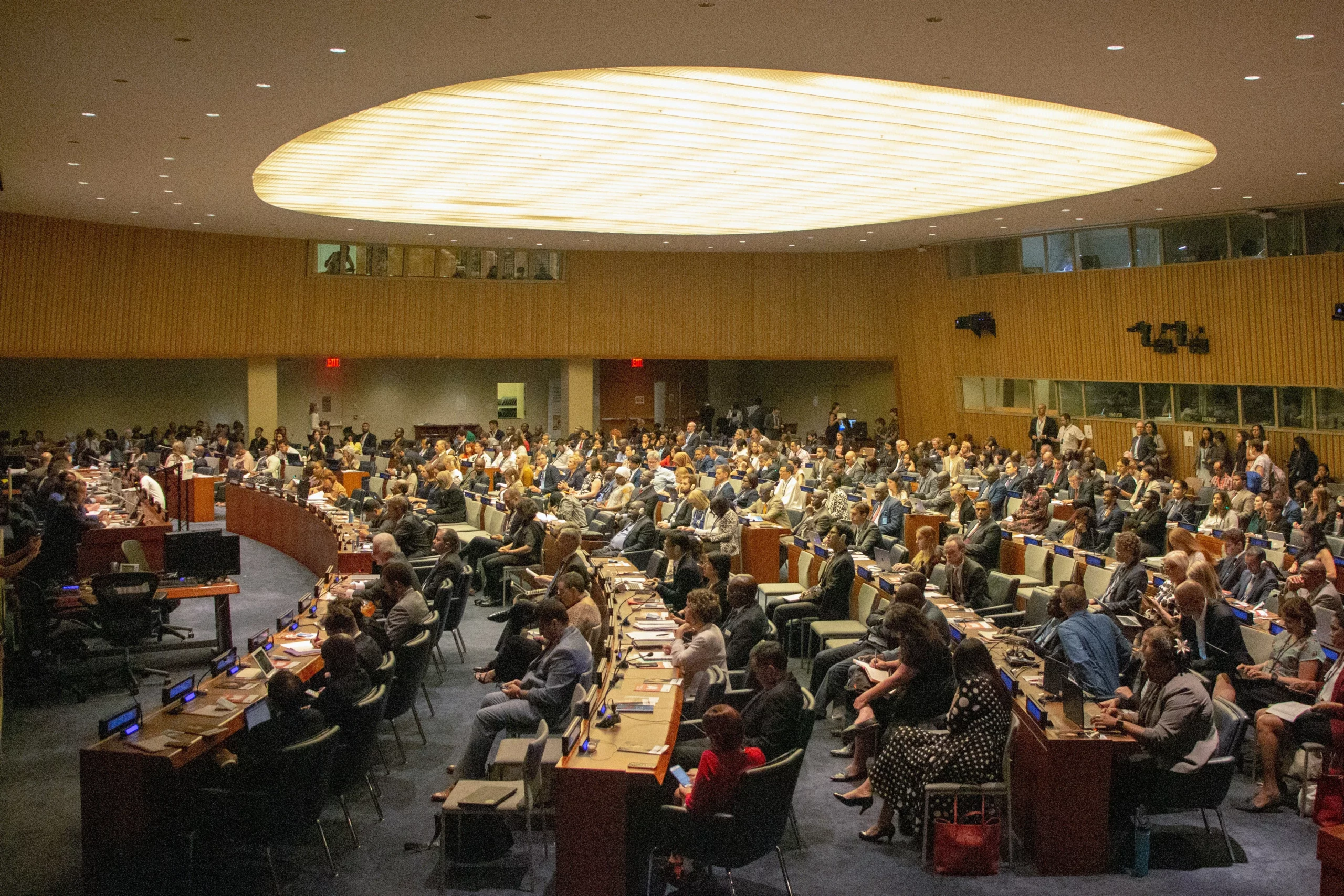
The study was presented today in New York, at the 2018 UN High-Level Political Forum on Sustainable Development, an 8-day meeting with a central role in the follow-up and review of the 2030 Agenda for Sustainable Development.

Representing CEMR and PLATFORMA, the Mayor of Soria (Spain), Carlos Martínez Mínguez, explains: “Today, cities represent the global leadership which allows people to be at the core of the 2030 Agenda.”

He adds: “There is no doubt that towns and regions, national governments, the European Union and international institutions can overcome obstacles together to achieve the localisation of the SDGs. However, local and regional governments need support, both financially and technically. This is the role that associations of towns and regions are playing, but they can’t achieve this alone.”

For Carlos Martínez, the study shows that by working closer together, everybody wins: on the design, implementation and monitoring of national SDG strategies. He also also called on all EU Member States to follow the Spanish example and include next year a chapter on local governments’ actions to localise SDGs in their Voluntary National Reviews to the UN.

This publication is also available in French.

Background

Based on a survey sent out to national associations of local and regional governments, this study complements the Global Task Force’s 2nd Report to the High-Level Political Forum 2018, to which CEMR and PLATFORMA have also contributed.

This study was developed in the framework of the Strategic Partnership Agreement signed between CEMR-PLATFORMA and the European Commission.

For more information, contact:

Regions driving climate action

Environment - News

Municipalities and regions as catalysts for COP22 progress 


COP22 in Marrakesh marked a crucial moment in translating the Paris Agreement into concrete action. For Europe’s municipalities and regions, this summit was an opportunity to showcase their role as catalysts in building sustainable and decarbonised societies. Represented by CEMR and PLATFORMA, local and regional governments brought forward five key messages to ensure that climate policies are inclusive, effective, and grounded in local realities: 

  1. Embedding the subnational level in global climate governance 
    Since COP15, the EU has acknowledged the role of municipalities and regions in combating climate change. At COP22, local leaders urged the EU to formalise a permanent, structured dialogue, allowing subnational governments to join EU delegations in climate negotiations. This would not only strengthen governance but also ensure that national commitments reflect local realities. 
  1. Linking COP outcomes with global agendas 
    COP22 should not stand alone but connect to broader frameworks such as the Sustainable Development Goals, particularly SDG 11, and the Habitat III Urban Agenda. Local financial capacities and legal competences must be assessed early to avoid unrealistic policies or burdensome costs for municipalities. 
  1. Mobilising financial and political resources 
    Successful climate action requires adequate resources. CEMR and PLATFORMA highlighted the importance of EU Structural and Investment Funds, access to global climate financing, and innovative tools like sustainable public procurement. Local politicians’ direct engagement and citizen ownership are vital to building resilient and low-carbon communities. 
  1. Mainstreaming local action into EU and national policies 
    Climate legislation must fully integrate the local dimension. Early recognition of local authorities as legitimate actors is essential. Initiatives such as the EU Urban Agenda, Territorial Agenda 2020, and the Covenant of Mayors show how climate policies can work when municipalities are treated as true partners. 
  1. Encouraging cooperation and knowledge exchange 
    Sharing practices, tools, and joint initiatives among cities and regions is key to accelerating progress. Decentralised cooperation, particularly through the Covenant of Mayors in Sub-Saharan Africa and the Global Covenant of Mayors, demonstrates how European municipalities can support global peers in their transition to sustainable development. 
     

CEMR and PLATFORMA reaffirmed their commitment to climate action by promoting multi-level governance, showcasing local best practices, and strengthening decentralised cooperation worldwide. Their message at COP22 was clear: local and regional governments are not bystanders but central actors in achieving a sustainable, low-carbon future. Climate action is an opportunity for green jobs, growth, and resilience, and municipalities and regions are ready to lead. 

Read the position paper here 

For more information, contact: 

Local voices for climate at COP21 

Environment - News section

Municipalities and regions shaping COP21 success 


In December 2015, the Paris Summit (COP21) became a milestone in global climate governance. For Europe’s municipalities and regions, represented by CEMR and PLATFORMA, it was the moment to demonstrate that climate action succeeds only when local and regional governments are part of the solution. By presenting clear demands, affirming shared values, and committing to concrete actions, local leaders positioned themselves as indispensable actors in the transition to low-carbon societies. 

Developing the Demands and Values 

Local and regional governments brought forward a set of concrete demands to ensure their recognition in climate governance. They called for: 

  • A structured EU dialogue to integrate the subnational dimension into the UNFCCC process. 
  • A formal seat at the COP negotiation table for municipalities, regions, and their associations. 
  • Stronger support for networks, enabling them to deliver unified positions and assist EU institutions. 
  • Mainstreaming climate across all EU and national policies, ensuring local perspectives are embedded from the outset. 
  • Recognition of green public procurement as a driver for innovation and CO₂ reduction. 
  • Links between COP outcomes, the SDGs, and Habitat III, ensuring consistency across global agendas. 
  • Adequate financing and research tools, including access to EU Structural and Investment Funds and international climate funds. 
  • Better EU regulation, with early recognition of local authorities in decision-making. 
  • Support for knowledge exchange at the subnational level in Europe and globally. 

Underlying these demands are shared values: confidence in local governments’ ability to deliver, support for the EU’s climate objectives, and the conviction that climate action is also an opportunity for green jobs and sustainable growth. 

Actions on the Ground 

Municipalities and regions also highlighted how they are already leading by example: 

  • Multi-actor governance: championing bottom-up approaches, engaging with all levels of government and stakeholders to tackle climate change collectively. 
  • Local leadership: through initiatives like the Covenant of Mayors and Mayors Adapt, thousands of cities have set ambitious emission-reduction goals. 
  • Networking for impact: collaborating across European and global networks to amplify messages and coordinate strategies. 
  • Tools for sustainable planning: promoting the Reference Framework for Sustainable Cities (RFSC) to benchmark and guide local sustainable development. 
  • Decentralised cooperation: supporting international partnerships where European municipalities work hand in hand with peers worldwide to advance sustainable urban development. 

At COP21, local and regional governments made clear that the Paris Agreement could only succeed with their full participation. Their message was simple but powerful: municipalities and regions are closest to citizens, already delivering results, and ready to scale up climate ambition. Recognising and empowering them is not optional, it is essential to building a sustainable, low-carbon future. 

Read the position paper here 

For more information, contact: 

Key messages of regions for COP21

Climate - News

From Lyon to Paris: Regions and Municipalities as Catalysts for COP21 Success


As the world prepared for the Paris Climate Summit (COP21), Europe’s municipalities and regions highlighted their crucial role in delivering climate action. Close to citizens and equipped with the political legitimacy to act, they are key to building sustainable and low-carbon societies. 

Local governments are already leading by example. Initiatives such as the Covenant of Mayors, with thousands of signatories, show that ambitious commitments like reducing greenhouse gas emissions by 40% by 2030 are achievable. These successes underline that global climate agendas can only succeed with strong local engagement. 

CEMR and its partners call for genuine recognition of subnational governments in international negotiations. This means giving them a seat at the COP discussion table, integrating their role in EU and national strategies, and ensuring appropriate political and financial frameworks. 

Decentralised cooperation is also vital. Through networks such as PLATFORMA, municipalities and regions share expertise with partners worldwide, ensuring that climate action is effective on the ground and adapted to local realities. 

From Lyon to Paris, towns and regions proved they are catalysts for global climate success. Recognising and empowering them is essential for the achievement of the Paris Agreement and a sustainable future. 

Read the position paper here 

For more information, contact: