G7

Twinning REALISE - News 2024

Urban alliance formed to support German G7 Presidency


The Association of German Cities (DST, a CEMR member), ICLEI and the Global Parliament of Mayors have launched an urban alliance to accompany the German G7 Presidency. The alliance will support the G7 Presidency programme and provide urban perspectives throughout.

The German G7 Presidency began at the beginning of 2022 and will culminate with the G7 summit on 26-28 June in Schloss Elmau (Bavaria). For more information on the urban alliance, please consult the press releases of ICLEI (in English) and DST (in German).

Local support to Ukraine 

Mayors in Ukraine - News 2023

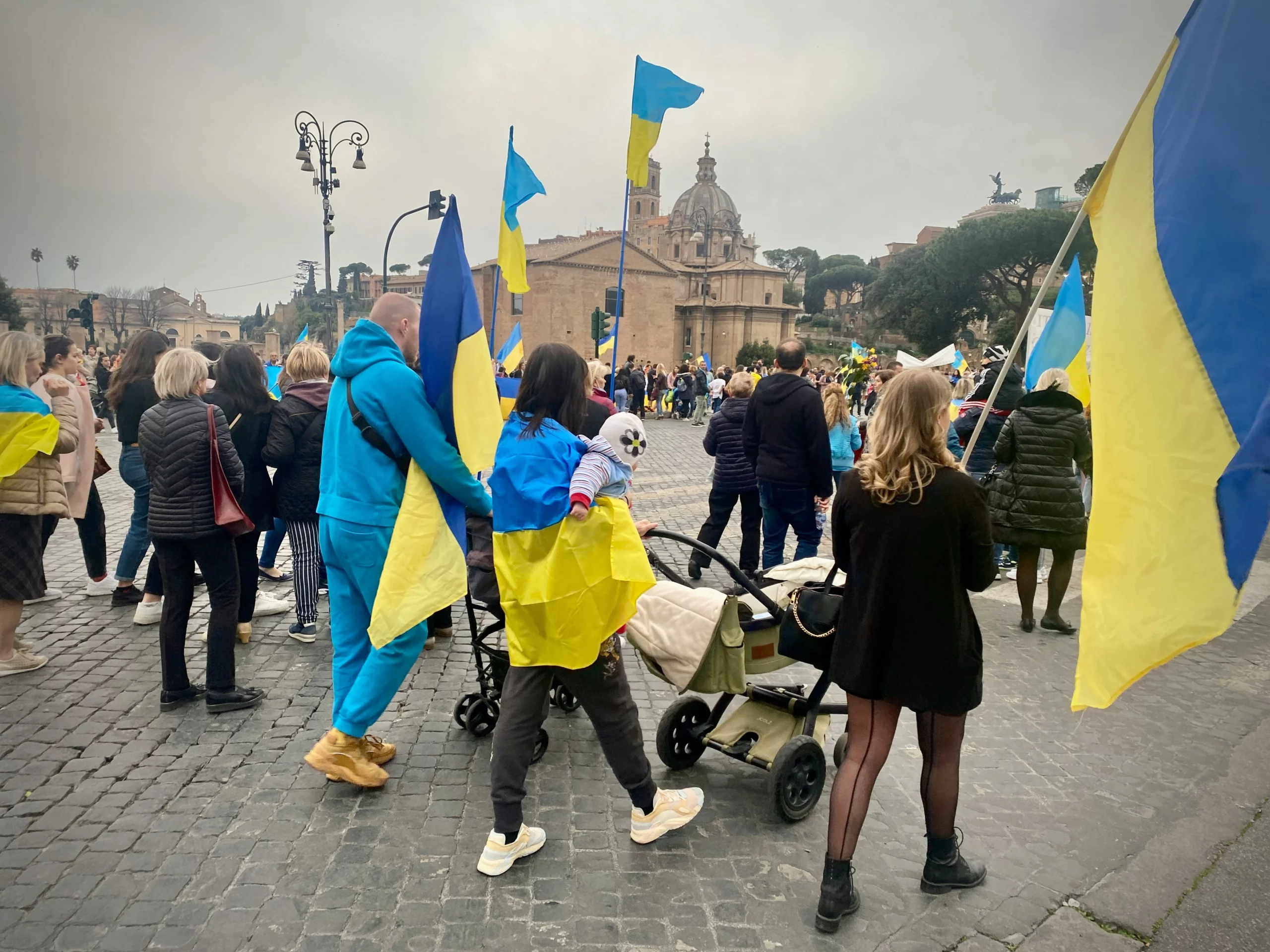
European local and regional governments denounce Russia’s aggression and pledge solidarity with Ukrainian communities 


European local and regional governments have expressed their strongest condemnation of Russia’s repeated attacks and violations of Ukraine’s sovereignty and territorial integrity. They reject any attempt to dismantle a free and democratic state in Europe, stressing that these acts threaten peace and democracy across the continent. 

Solidarity with Ukrainian Communities 
Mayors, councils, and regional leaders stand firmly with their peers in Ukraine, municipalities, hromadas, districts, and their associations, who remain on the frontline providing essential services to citizens under the constant threat of bombings and destruction of infrastructure. 

Commitment to Support 
Local and regional governments across Europe, representing 60 national associations in 40 countries, commit to offering Ukrainian communities the materials, expertise, and assistance needed to face the ongoing crisis. They also prepare to respond to the humanitarian consequences, including the likely arrival of refugees, in close coordination with national governments. 

City Diplomacy for Peace 
Rooted in a tradition of local democracy and city diplomacy since 1951, European municipalities reaffirm their belief in peace and cooperation. They call on Russia to cease its aggression, withdraw from Ukraine, including Donbas and Crimea, and respect international law. 

Looking Ahead 
Despite the violence, local leaders remain convinced that diplomacy between cities can once again be a powerful force for unity, peace, and rebuilding across Europe. 

Read the declaration here 

For more information, contact: 

#DemocracyUnderPressure

Belarus - News 2022

CEMR joins 2022 campaign for democracy in Belarus


The Council of European Municipalities and Regions (CEMR) joins this year’s campaign on #DemocracyUnderPressure in Belarus initiated by the Young European Federalists (JEF). During last year’s campaign, many European cities lit up their town halls in white-red-white, the colours of the flag of free Belarus. The following statement has been adopted by CEMR.

We support the Belarusian people’s wishes for a peaceful democratic transition in the country at all levels – including making local governance systems more democratic. This process follows the Presidential elections of August 2020, which were neither free nor fair.

CEMR recallslast year’s statement and urges the EU institutions and national governments to strengthen assistance to Belarusian civil society, including to organisations promoting local democracy and municipal autonomy, which are a genuine training ground for democratic citizenship and the rule of law.

We express our solidarity towards border cities and regions in Latvia, Lithuania and Poland and we welcome the European Commission’s proposition on the temporary legal and practical measures to address the emergency situation at the EU’s external border with Belarus.

We ask our members, like last year, to illuminate their public buildings in the colour of the Belarusian flag on 25 March unofficial day of freedom in Belarus, celebrated annually by the democratic opposition.

Rights and values

Democracy - News Section

Discover the “rights and values” programme for the period 2021-2027


The presidency of the Council and the European Parliament reached a provisional political agreement on the rights and values programme for the period 2021-2027.

Funding through this programme aims at protecting rights and values enshrined in the EU treaties in order to sustain open, democratic and inclusive societies. It will have a substantial overall budget of maximum €1.55 billion.

The programme will have a budget of €641.7 million, with an additional allocation of maximum €912 million and it sets out four specific objectives:

  • to promote equality and rights, including gender equality, anti-discrimination and the rights of children
  • to promote citizens engagement and participation in the democratic life of the EU and to raise awareness of the common European history
  • to fight violence, notably against children and women
  • to protect and promote EU values

The newly introduced objective to protect and promote EU values will receive a substantial allocation of € 689.5 million. An amount of € 91.2 million will be left unattributed so as to be able to tackle any emerging needs and future challenges.

To achieve this, the programme will support civil society organisations and other stakeholders active at local, regional, national and transnational level, and encourage civic and democratic participation.

The provisional political agreement reached today will have to be approved by the European Parliament and the Council. The necessary steps will be undertaken at the beginning of next year.

Empowering local Europe 

European Town - News

CEMR unveils its vision for stronger, inclusive and sustainable territories across Europe


The Council of European Municipalities and Regions (CEMR) has launched its political manifesto calling for a more inclusive, resilient, and citizen-driven European Union. With over 41 national associations of local and regional governments behind it, the manifesto sets out a roadmap to bring Europe closer to its citizens, starting from the ground up. 

At its heart are six concrete proposals to reinvigorate European democracy: from establishing permanent citizen panels and annual Europe Day debates in schools, to relaunching town twinning and creating an Erasmus-style programme for civil servants. 

CEMR also stresses that a strong Europe must leave no one and no place behind. It calls for renewed efforts to tackle territorial disparities, address depopulation, and ensure that public services, from education to health, are accessible to all citizens, no matter where they live. 

The manifesto also focuses on key priorities for the coming decade, including: 

  • Citizen participation through inclusive local democracy; 
  • Empowered local climate action, as cities and regions lead Europe’s green transition; 
  • Fair and coordinated migration policies, with strong local support for integration; 
  • Digital transformation that bridges the urban–rural divide; 
  • New forms of town-to-town partnerships, especially beyond the EU’s borders; 
  • And financial means to invest in sustainable local infrastructure and innovation. 

CEMR’s proposals emphasise the urgent need for deeper recognition of local and regional governments in European decision-making. This includes a stronger role for the Committee of the Regions, the creation of a local chamber, and systematic consultation of representative associations like CEMR when shaping EU legislation and strategies. 

By calling for a Europe that is democratic, sustainable, and close to its people, the manifesto is a bold invitation to reimagine the Union from the local level up, with municipalities and regions playing a central role in shaping the continent’s future. 

Read the position paper here 

For more information, contact: 

Future of Europe

Democracy - News

Local and EU leaders’ debate: time to strengthen European democracy from the bottom-up!


With the Conference on the Future of Europe, citizens across the continent have a unique opportunity to organise local events and make their voice heard to shape the direction of our Union. But how can we foster citizens’ participation? And what visions do we have for municipalities and regions in the future of Europe?

Last week, ahead of our Policy Committee meeting, local and regional leaders, senior EU official and representatives of civil society took part in a debate to discuss precisely these questions.

Dubravka Šuica, Vice-President of the European Commission in charge of Democracy and Demography, emphasised that European democracy must not be a top-down process. “Once a mayor, always a mayor,” she said. “As a former mayor, I know all politics is local.”

Mayors and regional leaders must make their voices heard at the Conference. The Croatian commissioner said it was impossible to know what the Conference’s outcome would be but that it was important to already look for ways to embed citizens’ participation in decision-making.

Taking local action to involve citizens

Involving ordinary citizens in European debates and decisions is not always easy however. Developments in Brussels and Strasbourg too often seems remote and abstract. That is why the French city of Rennes has invited local citizens to participate through municipal projects.

Flavie Boukhenoufa, Deputy Mayor of Rennes, presented Labo Europe, an organisation helping citizen get involved in and better understand the EU. This year the “Lab” launched a campaign to develop a European Citizens’ Initiative (ECI) for Rennes. Citizens are able to send in their ideas and participate in online debates to create the city’s proposal for a European action.

The final choice will be presented on Europe Day on 9 May. “We aim to speak not with experts but with citizens, even those who have no knowledge about the EU”, said Boukhenoufa. Get inspired by checking out this video and website on Rennes’ citizen initiative

People across Europe can provide their input to the Conference by organising local events and registering these with the official online platformServane Metzger, part of the Cabinet of the French Secretary of State for European Affairs, highlighted the importance of these local events in terms of engaging people and reflecting the sensibilities of different regions.

Metzger raised the possibility of maintaining the platform into the future: “The platform is an extremely powerful tool to map events. It’s really easy to see events that are nearby, that way we reach local people, not only EU specialists.”

What future for Europe?

The health of European democracy is also affected by the state of national and local democracy.  Mayor of Gdansk and CEMR Executive President Aleksandra Dulkiewicz stressed that we cannot take democracy for granted and urged protecting the next European elections from digital threats and outside interference.

Vibrant local democracy can also be a bulwark against negative developments at national level. Dulkiewicz called on the Conference to support NGOs and local and regional governments to counter rising authoritarianism. “These two pillars should be strengthened because threats to democracy, rule of law, human rights and transparency in one EU country can affect the whole community”, she said.

Jordanka Fandakova, the Mayor of Sofia and CEMR Executive President, highlighted the importance of the digital divide, with rural areas in particular often lacking connectivity. She called for making equal Internet access a priority. “Digital strategies should not only be focused on big cities, but also take into consideration the needs of small towns and communities”, she said.

No one can say what will result from the Conference. Eva Maydell, a Bulgarian MEP and President of the European Movement International (EMI), argued that pandemic showed the power of European solidarity, but also the need to strengthen our continent’s autonomy. She stressed that the EU can only maintain trust if the Conference delivers results: “Like every political project, the EU is based on a story and its ability to meet the promises it makes to its citizens.”

Presenting CEMR

CEMR - News Section

Hot off the Press: “Empowering Local and Regional Europe since 1951”


We are pleased to announce the release of CEMR’s new presentation brochure: “Empowering Local and Regional Europe since 1951”.

This richly-illustrated publication provides a bird’s eye view of CEMR and its work on behalf of Europe’s municipalities, counties and regions. It also takes stock of what has been achieved since its creation in 1951 and draws the lessons of decades of work. The document, available in English and French, features numerous charts, a map and a historical timeline.

“If this publication makes one thing clear”, explains CEMR President Stefano Bonnacini“it is the crucial role of Europe’s complex patchwork of municipalities, counties and regions in so many aspects of life. Behind the words that jump out – basic services, climate change, international development, COVID – there is a human reality: local and regional elected officials and civil servants, working every day for their citizens in an ever-growing sphere of areas.

In particular, you will discover inside:

  • The men and women, elected mayors and local/regional leaders from across Europe, who make up our leadership
  • CEMR’s membership and the diverse territorial organisation of different European countries
  • CEMR’s democratic values, internal organisation and way of working
  • Our thematic work, projects and partners under the headings People, Places, Planet and Partnership
  • CEMR’s rich history since our founding in 1951: from the contribution of town twinning and local autonomy-building in postwar Europe to our expanding work on territorial development, gender equality and environment
  • How to keep in touch with us through our many communications channels tailored to diverse audiences

In memoriam

In memoriam - News

The passing away of David Sassoli leaves a “terrible void” in Europe


It is with great sadness that we have learned of the passing away of David Sassoli, president of the European Parliament, at the age of 65.

David Sassoli was first a journalist, and then an excellent politician and a man of the institutions, but he was above all an outstanding human being acting with commitment and passion for a Europe of and for the people, rights and openness”, said Stefano Bonaccini, president of CEMR and of the Emilia-Romagna Region. “His death leaves a terrible void in both national and international politics.

In addition to his deep European commitment and strong support for territorial development, PresidentSassoli will be remembered as the man who steered the Parliament through the worst of the COVID crisis, enabling MEPs to work effectively against and despite the pandemic”, said CEMR Secretary General Frédéric Vallier. “In the name of Europe’s municipalities and regions, CEMRexpresses its condolences to his family, friends and his colleagues in the European Parliament.

After a three-decade career as an Italian journalist, starting out in newspapers then moving to television and becoming a nationally known anchor, David Sassoli became a member of the European Parliament in 2009 as part of the centre-left Progressive Alliance of Socialists and Democrats group. Ten years later, he was elected President of the European legislative body.

Sassoli’s mandate was coming to an end this January. MEPs are expected to hold the first round of voting for his successor on Tuesday next week in Strasbourg.

International Migrants Day

Migration - News Section

How cities are shifting the narrative on migration


Mechelen, Belgium. A middle-aged woman dressed in light colours sits in a public library. It seems like someone interrupted her while she was reading a book, but she doesn’t mind. She looks straight, and you immediately feel there is a story to tell behind those warm brown eyes.

This is Farida, a woman, a mother of three children, a grandmother of five, an accountant. She speaks five languages, likes to cook and loves to read. She lives in Mechelen, but fled from Syria five years ago: she is a refugee. This picture, placed on a window near the public library in Mechelen was part of the ‘People Make the City’ exhibition and Farida’s story is just one of many in the series.

‘People Make the City’ is a storytelling project that translates residents’ stories into public content such as street art, podcasts, exhibitions, images and texts, building a more nuanced narrative of migrants and refugees’ impact on their local neighbourhoods. These features show the diversity and the rich multi-layered identities of people living in the local community.

The people concerned can co-create the way they want to be presented because it’s up to them how they want their story to be told and where. “Listening to a story is the first step to connect with someone you don’t know”, explains Sara Lanoye, the project’s coordinator. Storytelling is a powerful way of strengthening social cohesion by promoting mutual understanding.

Tackling rumours

We tend to make up stories about people we don’t know well. An animated story, ‘It all started accidentally’, sets a mirror to people who spread assumptions about other people without checking the facts first. Such rumours can spread like wildfire and thus contribute to exclusion and discrimination.

This animated video has been made for children and adults alike as part of the Antirumours Project in Fuenlabrada, Spain. It aims to raise awareness about the negative impact of rumours. “If we don’t stop the rumours, they grow into more dangerous forms, which are used to spread fear and misinformation”, warns Juan Carlos Hernandez of the City of Fuenlabrada.

The Spanish city has experienced rapid population growth due to migration over the past 40 years. Therefore, the municipality put social participation and inclusion programmes in place that helped the city become multicultural.

‘Antirumours’ is one such project, bringing together 25 cities to discredit false rumours through the collection of data and the creation of a network of local civil society actors. The project has been running since 2013 as part of the Council of Europe’s Intercultural Cities initiative.

It Takes a Community to shift the narrative

Nowadays, media narratives tend to be reactive, related to specific events or tragedies, and frame migration with negative words such as waves, crisis, invasion. In addition, migrants are portrayed either as dangerous or helpless victims. Personal stories, messages that evoke emotions work better. This is one of the lessons learned from the ‘It Takes a Community’ campaign.

This multilevel campaign showcases how migration enriches our lives by sharing concrete stories of families, friends, neighbours, co-workers or classmates from around the world who are making our local communities a better place. ‘It Takes a Community’ is a collaborative effort of national and local governments, civil society, the private sector, and the International Organization for Migration (IOM).

The international level tries to build upon the richness coming from the local level”, says  Sophie van Haasen of the GFMD Mayors Mechanism.“Engaging with national governments is sometimes difficult. The problem is, the national levels usually don’t have a lot of communication campaigns fostering inclusion and integration of migrants.

Migrants in Europe are sometimes are portrayed as a threat to national identity and economic prosperity, and this is even the predominant political discourse in some countries. However, local and regional governments are taking the lead with campaigns and projects promoting integration and inclusion. These initiatives often achieve better outcomes than overly centralised ones.

Tackling rumours and prejudice, letting newcomers tell their stories, fostering an environment where locals can engage with newcomers and their stories: all these actions can change attitudes towards migration in the local community. However, connecting the dots between different levels of government remains the main challenge in changing the way we frame and shape migration.

Welcoming Europe

Refugees - News

Interview with the mayor of Capaci: “I dream of an inclusive and welcoming Europe”


Migration is a global phenomenon with a strong local impact. Cities bear the burden the migration crisis by receiving newcomers – sometimes providing life-saving support – but also reap the long-term benefits of successful integration. This applies to cities and islands across Europe, in particular in southern Italy.

Ahead of International Migrants Day (18 Dec) we spoke with Pietro Puccio, the CEMR spokesperson on migration and the mayor of Capaci, a Sicilian city taking part in the IncluCities project to improve migrant integration and build more inclusive cities. He shared with us his town’s experience welcoming newcomers, as well his vision of a united Europe that is open and inclusive.

How have Capaci and the Palermo district been affected by migration in recent years? What tools can local communities and local governments use when the main responsibilities and competences are with national governments?

When the responsibilities fall to national governments, local authorities have little room for maneuver. Despite this, we can achieve a lot by mobilising all the local associations through their widespread and active volunteers. In our region for instance, an important solidarity network has been created.

Capaci and Palermo have perhaps been on the margins of immigration in recent years. The main arrival routes have been elsewhere, such as Agrigento, Lampedusa, Ragusa and Syracuse, from where immigrants have been directly relocated to other places.

However, the Port of Palermo also continues to experience significant arrivals. The volunteer associations are playing a fundamental role there in receiving immigrants. Through their work we were able to provide a meaningful response to the rising number of new arrivals. 

You have often said that we should move from the emergency management of receiving immigrants to structured practices of inclusion and integration of newcomers in our societies. Looking at the EU’s migration and asylum policy, and in particular in light of the recent events in Afghanistan, it appears that the EU is trying to keep the migration issue at its external borders. What do you think about this management approach? 

Maintaining the migration emergency at the borders is an illusion. It’s unrealistic. There will be more and more emergencies in the world, simply dictated by the climate crisis. We pass from one emergency to another in Syria, Libya, then Afghanistan…

Europe can do it better. It doesn’t need “gendarmes” at the borders, nor agreements with the illegitimate Libyan government or with Turkey’s Erdogan. If we want to eliminate the shame and the indignity of the reception camps in the Balkans and elsewhere, if we really want to provide a response that looks beyond immediate emergencies, we should build a structured common response at the European level. If Europe doesn’t do it, nobody will. 

United Cities and Local Governments (UCLG) launched the debate on the Charter of Lampedusa, where local and regional governments are reshaping a notion of citizenship that should be defined around dignity, human rights, peace and collective memory, regardless of the status of people on the move. What do you think of this new form of “inclusive local citizenship” UCLG is developing with its members?

Europe is the cradle of world civilisation and must start over based on human dignity and respect for the human rights of all. But there is also a great economic advantage. Let me give you an example: in our area there is a municipality nearby, Balestrate, with hectares of land that are now planted with mangoes. Mangoes are typically a tropical fruit but due to climate change, the weather conditions in Sicily have become appropriate to grow mangoes. The new arrivals can be new consumers. Thus immigration can create new opportunities and new jobs. If Europe wants to provide a general response, it should focus on decent work, job opportunities and respect for human rights.

What is the main thing that Capaci could learn in the IncluCities project? What is the most necessary change that you’d like to start developing in your city?

Capaci is a town with an ancient welcoming culture, but in recent years this culture has been somewhat lost. Fear has taken over, the concern of having a neighbour who is a bit different. By taking part in IncluCities I hope the city will return to being as welcoming as we once were, no longer afraid of those with a different skin colour, those of a different religion or political orientation. I believe that this is a great and unique opportunity for our city. The first thing I would like to see is newcomers no longer hiding inside their homes, but walking around, playing with their children in squares, socialising in public places, also meeting with the citizens of Capaci. This is the most beautiful change I wish for this city.

What is your greatest dream as an Italian citizen and mayor of Capaci for the future of Europe? What role do you think migration should play in the Conference on the Future of Europe?

The theme of immigration is central in the global context. Just look at what’s happening in South America, at the border with the United States of America or every day here in Europe. The topic must have an important, leading role in the discussion at the Conference on the Future of Europe

I dream of the Europe that our founding fathers – Altiero Spinelli, Schuman – dreamed of; a Europe that is inclusive, where everyone can have the right to citizenship and respect for their human rights. The pandemic, which is unfortunately still ongoing, has taught us one crucial thing: how much we need each other. Only if each of us gets vaccinated can we beat COVID. If there is an unvaccinated part of the community, we can’t win. We are all connected.

My dream is that we work together for a Europe that is an inclusive, tolerant, welcoming place. A federal Europe where no one is left behind, where every citizen matters and each opinion counts. The future of Europe is my dream!