European elections manifesto of 2019 

EU Elections - News

Stronger EU policies require the full involvement of local and regional governments to ensure democracy, sustainability, and citizen engagement 


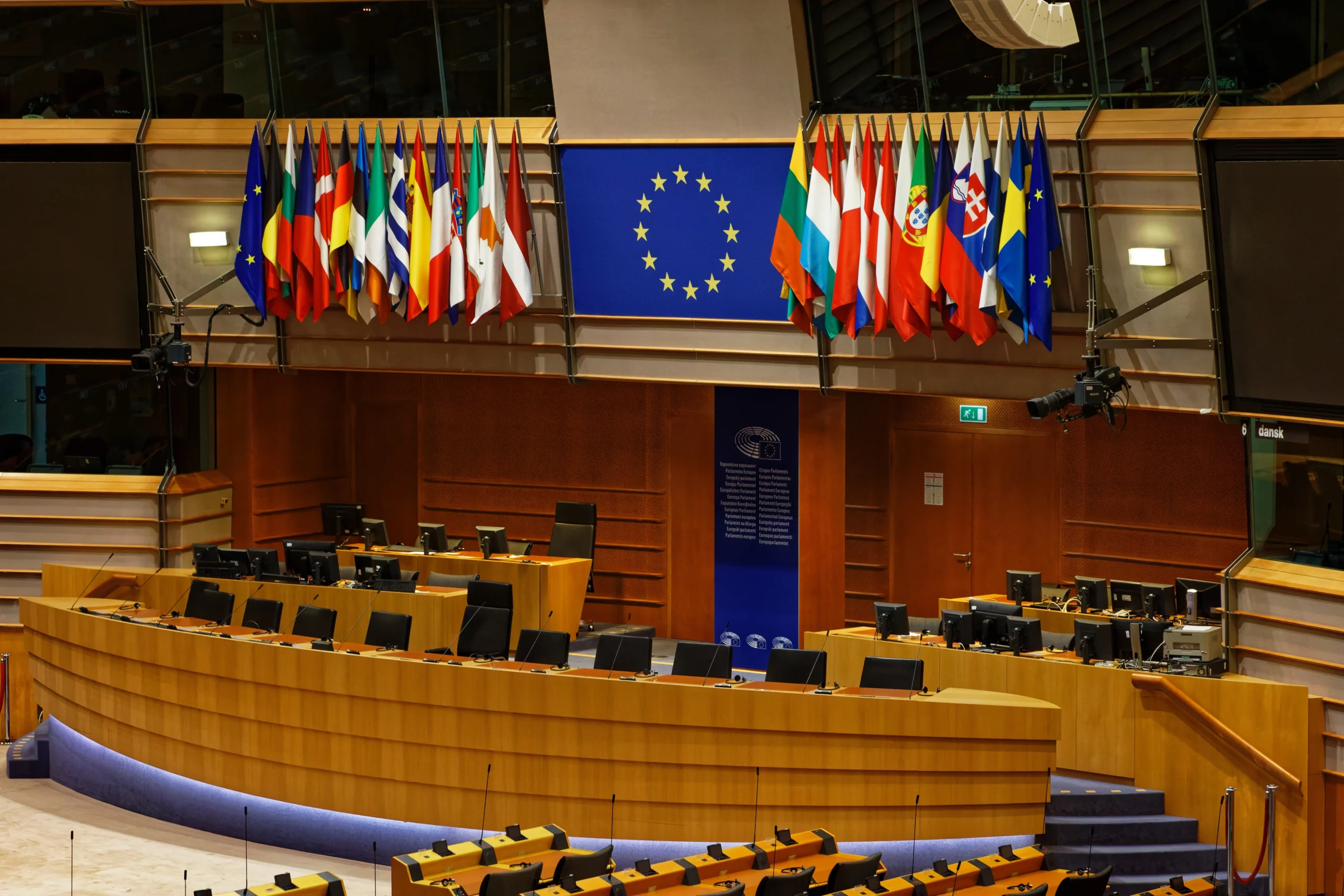
The 2019 European Parliament elections took place at a decisive moment for the Union, marked by global challenges, climate imperatives, and demands for greater transparency. Local and regional leaders stressed that Europe’s future depends on building closer ties between EU institutions and citizens, while ensuring that local governments are recognised as central actors in European governance. 

Local Governments at the Heart of Europe 
Europe’s 130,000 municipalities and regions are indispensable to democracy and public life. They provide services, drive innovation, and implement EU policies on the ground. To meet citizens’ expectations, the EU must adopt governance models that fully recognise the role of local authorities in decision-making, as outlined in Article 4 of the Treaty on the European Union. 

Key Priorities for the Future 
The challenges Europe faces, climate change, sustainable growth, social inclusion, and democratic participation, require a strong partnership across all levels of government. Local and regional leaders have called for: 

  • Strengthened cohesion policy as a central EU priority to reduce inequalities and foster sustainable development. 
  • Citizen-centred democracy, including local dialogues between communities and EU institutions and greater transparency in decision-making. 
  • Education for Europe, such as promoting the EU Charter of Fundamental Rights in schools and ensuring every pupil has the chance to visit EU institutions. 
  • Climate and global commitments, with local governments mobilising to achieve the Paris Agreement and the 2030 Agenda for Sustainable Development. 
  • Inclusive governance, with clearer recognition of the representative role of local associations and easier cooperation across borders, including with UK local governments post-Brexit. 

A stronger European Union can only be built in partnership with its cities, municipalities, and regions. By embedding local governments into EU governance, supporting their projects, and fostering open dialogue with citizens, Europe can remain democratic, resilient, and united in the face of today’s challenges. 

Read the position paper here 

For more information, contact: 

Cohesion policy at risk 

Cohesion Policy Alliance - News 2021

CEMR outlines 10 key messages on the future of cohesion policy and calls for stronger territorial and partnership approaches 


The Council of European Municipalities and Regions (CEMR) has set out ten key messages on the European Commission’s proposals for the future of cohesion policy. While welcoming steps towards simplification, CEMR warns against funding cuts, weakened territorial approaches and the exclusion of rural development from cohesion policy. 

Protecting territorial and partnership principles 

CEMR stresses that the Partnership Principle must be enforced across all regulations, ensuring that local and regional governments have a meaningful role in designing and implementing programmes. Equally, the territorial approach should not be sidelined but mainstreamed across all policy objectives of cohesion policy, including ESF+ and CAP rural development. 

Ensuring flexibility and capacity 

The proposals must safeguard the possibility of multi-fund approaches such as Community Led Local Development (CLLD) and Integrated Territorial Investments (ITI). Local and regional governments also need more flexibility to set investment priorities according to local needs, backed by sufficient resources for capacity building and technical assistance. 

Avoiding harmful reductions 

CEMR warns that cohesion policy risks losing its integrated character if funding is fragmented or reduced. Particular concern is raised over cuts to European Territorial Cooperation (INTERREG), which plays a vital role in fostering cross-border, transnational and interregional cooperation. 

Conclusion 

CEMR calls on EU institutions to ensure that the next Multiannual Financial Framework preserves cohesion policy as a strong, place-based instrument, rooted in partnership and territorial development, capable of addressing Europe’s diverse challenges. 

Read the position paper here 

For more information, contact: 

Review of clean vehicles directive

Mobility - News section

Rethinking EU Clean Vehicles Rules: Why CEMR Calls for Flexibility, Funding, and Local Autonomy 


With road transport accounting for nearly a quarter of Europe’s greenhouse gas emissions, the EU is pushing for cleaner mobility solutions across all sectors. But in its current form, the proposed revision of the Clean Vehicles Directive could undermine the very public transport systems it aims to green. The Council of European Municipalities and Regions (CEMR) raises serious concerns about the directive’s scope, rigid procurement quotas, and potential to impose disproportionate costs on local and regional governments. 

Rather than empowering local authorities, the directive risks creating new financial burdens, administrative complexity, and counterproductive outcomes, such as reduced services or higher fares that could drive citizens away from public transport. 

Key messages include: 

  • Public authorities are not the problem. Local public transport is already among the cleanest transport modes. Efforts must focus more on vehicle manufacturers and private transport operators, not just municipalities. 
  • Procurement must remain flexible. While green public procurement should be encouraged, mandatory environmental or social criteria for public contracts would conflict with the subsidiarity principle and public procurement law. Local governments must retain the freedom to balance cost, service needs, and environmental goals. 
  • Technology neutrality is essential. The directive should avoid favouring specific technologies. Instead, a life-cycle emissions approach should guide definitions of “clean vehicles,” including real-driving emissions and biofuels. Special-purpose vehicles such as snow ploughs and waste trucks should be excluded. 
  • Quotas may backfire. Mandatory targets for clean vehicle procurement risk creating a vicious cycle: higher costs for local authorities may lead to service cuts, higher fares, and reduced public transport use, ultimately undermining climate goals. 
  • Funding must follow ambition. The transition to cleaner fleets requires substantial investment. CEMR calls for EU support, including a “golden rule” exempting public transport investment from Maastricht deficit rules, and more targeted funding. 
  • Reporting must be simplified. New national-level monitoring and reporting rules must not overload the over 100,000 local authorities across the EU. CEMR urges a streamlined, risk-based approach to limit bureaucracy. 

Ultimately, CEMR opposes the directive in its current form and urges amendments that respect local autonomy, enable cost-effective transition, and support sustainable transport without penalising the public sector already leading the way. 

Read position paper here

For more information, contact:

Funding migration integration 

Migration - News Section

How EU funds can better support local and regional governments in managing migration and long-term inclusion 


Migration continues to shape Europe’s future, bringing both challenges and opportunities. While national governments define migration policies, it is local and regional governments that carry the responsibility of welcoming newcomers, providing housing, schools, healthcare, and jobs. Yet, access to EU funds that support integration remains complex and often out of reach for municipalities that need it most. 

Towards Smarter EU Funding 

The post-2020 EU budget framework is an opportunity to rethink how migration funds are designed and accessed. Local governments call for: 

  • More resources for integration: A larger share of the Asylum, Migration and Integration Fund (AMIF) should be earmarked for integration, rising from 20% to at least 30%. 
  • Direct access to funding: Cities and regions should be able to apply directly to the EU for integration projects, especially when dealing with urgent pressures. 
  • Simpler, fairer rules: Current procedures are often overly bureaucratic, leaving small and medium-sized municipalities excluded. Simplification and flexibility would allow more actors to take part. 
  • Block grants and blending facilities: Innovative funding tools combining multiple EU resources (AMIF, ESF, ERDF) with loans or microfinance could deliver integrated, long-term solutions tailored to local realities. 
  • Better coordination: Strengthening the partnership principle would ensure that municipalities are involved in programming, avoiding duplication and ensuring EU resources meet real needs on the ground. 

From Emergency to Long-Term Strategy 

Too often, EU migration funds are designed for short-term emergencies rather than sustainable integration. But integration is not a one-off response; it is a long-term process requiring education, job creation, social cohesion, and community investment. Aligning EU funds with local priorities and recognising integration as a shared responsibility will ensure better outcomes for both migrants and host communities. 

Migration is a European challenge, but its solutions are local. By improving access to EU funds, simplifying procedures, and investing in long-term integration strategies, Europe can empower municipalities and regions to turn migration into a driver of social cohesion and sustainable development. The future EU budget must make this shift a reality. 

Read the position paper here 

For more information, contact: 

EU strategy on climate change

Climate Change - News

Why Local Governments Must Be Central to the EU’s Climate Resilience Strategy


As the EU evaluates its 2013 Adaptation Strategy, the Council of European Municipalities and Regions (CEMR) highlights a critical gap: climate resilience cannot succeed without fully involving local and regional governments. In its response to the Commission’s consultation, CEMR stresses that municipalities are already adapting to the effects of climate change, but current EU and national frameworks fail to empower them with the resources, recognition, and flexibility they need.

From floods and droughts to infrastructure strain, local authorities are on the frontlines of climate impacts. Yet too often, policies are shaped top-down, with insufficient consultation and support for those who must implement solutions on the ground. CEMR calls for a strengthened multi-level governance model, dedicated funding streams, and enhanced city-to-city cooperation to ensure the EU’s adaptation ambitions translate into effective, community-driven action.

Read the position paper here

For more information, contact:

Permanent platforms for energy dialogue 

Energy - News

Integrating local governments into national climate and energy planning through multilevel dialogue 


The transition towards a sustainable, decentralised and decarbonised energy system is a collective endeavour. Local and regional governments across Europe are already demonstrating leadership, delivering a significant share of the EU’s climate objectives. Yet, despite their strong track record and growing involvement, their role in shaping national climate and energy strategies remains fragmented. Ongoing negotiations on Energy Union Governance open the door to correcting this imbalance by establishing permanent Multilevel Climate and Energy Dialogue Platforms

Building on local experience 
Cities and regions have proven to be persistent drivers of Europe’s energy transition, with research showing they contribute to more than a third of the EU’s 2020 climate target. Initiatives like the Covenant of Mayors have showcased how local ambition can exceed European targets, but without a formal structure, their contributions risk being underutilised. The European Parliament’s proposal for dialogue platforms would ensure local authorities, alongside civil society and business stakeholders, are systematically involved in drafting, monitoring, and reviewing National Energy and Climate Plans (NECPs) and Long-Term Strategies. 

Such platforms would offer multiple benefits: continuous political support, feedback loops between delivery agents and policymakers, shared responsibility across sectors, stronger policy implementation, and the spread of best practices across Member States. 

National examples to inspire Europe 

Several countries already provide valuable models. In the Netherlands, municipalities and provinces negotiate national energy strategies with the government and social partners, resulting in formal agreements and regional climate plans. France has institutionalised citizen and stakeholder involvement through its Public Debate Commission, engaging the public directly in shaping energy programmes. Sweden demonstrates the value of capacity-building, with national agencies supporting local governments in setting and implementing climate objectives aligned with national goals. 

These examples show that permanent platforms for dialogue are both feasible and effective. Institutionalising multilevel dialogue under the Energy Union Governance would not only ensure that the EU benefits from the proven ambition of local authorities but also strengthen the democratic legitimacy and efficiency of Europe’s energy transition. Local governments are ready to contribute, what is needed now is a framework that guarantees their voice is heard at every stage. 

Read the position paper here 

For more information, contact: 

Regional actors in economic governance 

EU Semester - News 2024

CEMR–EPSU report maps current involvement of local and regional actors in EU economic governance


The European Semester, created in 2010 in response to the financial crisis, is the EU’s annual cycle for coordinating Member States’ economic, social, employment, and budgetary policies. Its aim is to align national reforms with shared EU objectives, including stability, sustainable growth, and the Europe 2020 strategy. 

While central governments and EU institutions remain the main players, the process increasingly affects local and regional governments (LRGs) and their social partners. From public finance and taxation to health, social care and employment, many Semester reforms directly touch the responsibilities of municipalities and regions, as well as the working conditions of the sector’s employees. 

The joint CEMR–EPSU project “Localising the European Semester” (2018–2020) set out to better understand and strengthen this involvement. The first deliverable, a background report published in February 2018, provided an overview of the Semester’s development, evidence of how LRGs and social partners are engaged, and identified important gaps in knowledge. 

Key findings from the report include: 

  • Limited evidence of structured involvement: While LRGs are often consulted through existing dialogue structures, their influence remains inconsistent across Member States. For social partners, involvement is even less systematic, with sectoral trade unions and employers’ organisations often sidelined in favour of peak-level organisations. 
  • Impact remains unclear: Academic studies assess when countries follow Semester recommendations, for example, during election cycles, under market pressure, or when backed by EU enforcement. However, little research exists on whether reforms are more likely to succeed when LRGs and social partners contribute. 
  • Need for deeper analysis: The extent to which local governments and sectoral social partners shape National Reform Programmes (NRPs) is largely undocumented. Equally, it remains uncertain whether peak organisations fully represent the concerns of the local government sector in national consultations. 
  • Opportunities for good practice: Where involvement does occur, it is often tied to long-standing structures for social dialogue or intergovernmental coordination. The challenge is to turn sporadic consultation into regular, structured dialogue with clear impact. 

The report concludes that strengthening the role of LRGs and their social partners in the Semester is both necessary and possible. By documenting experiences, identifying good practices, and pressing for meaningful engagement, the CEMR–EPSU project aims to ensure that the voices of local governments, employers and workers are better reflected in one of the EU’s most powerful policy coordination tools. 

Read the position paper here 

For more information, contact: 

Local and regional leaders at COP23

Green City - COP News

Driving decarbonisation through cooperation, finance and multilevel governance


At COP23, European towns and regions reaffirm their commitment to building decarbonised and sustainable societies. Local and regional governments are already on the frontlines of the climate transition, implementing concrete measures that bring global climate goals to life at the community level. As Mayor Juan Espadas of Seville and Mayor Furio Honsell of Udine underline: 

Towns, regions and countries should all stand side by side to reach a sustainable planet. At COP23, let’s work together to achieve a decarbonised and sustainable future for everyone.

Key Messages from Local and Regional Governments 

  1. Global climate agendas are only achieved with local action 
    Cities and regions are essential for turning international commitments into reality. Localising the Agenda 2030 and strengthening multilevel alliances ensures that national and international targets translate into measurable change on the ground. 
  1. Appropriate financial and political frameworks are crucial 
    Ambitious local climate action depends on strong frameworks that provide resources and recognition. National governments must formally acknowledge local authorities as legitimate partners and equip them with the means to lead mitigation and adaptation efforts. 
  1. Governing together for a stronger impact 
    Tackling climate change requires collaboration at all levels. Early involvement of towns, cities and regions in national and international policymaking strengthens implementation and creates unity of purpose. Global initiatives such as the Covenant of Mayors demonstrate the power of collective local action. 
  1. Europe’s global responsibility 
    Europe must reinforce its role as a leader in protecting the planet by working hand in hand with local and regional governments. Their active participation in shaping climate policy will ensure effective, democratic and sustainable results at both the EU and global levels. 
  1. Decentralised cooperation accelerates decarbonisation 
    Cities have already developed extensive expertise in sustainable planning and international partnerships. Through decentralised cooperation, European towns and regions support their peers worldwide to implement climate projects, strengthening the global movement towards decarbonised societies. 

The withdrawal of the US from the Paris Agreement highlights the need for all other actors to step up. Local and regional governments across Europe are ready to intensify their cooperation, within Europe and globally, to keep the world on track towards a sustainable, decarbonised future. 

Read the position paper here 

For more information, contact: 

Guidelines for gender equality  

UCLG people banner

Updated CEMR-EPSU framework supports inclusive employment and service delivery 


The Council of European Municipalities and Regions (CEMR) and the European Public Service Union (EPSU) have adopted revised guidelines to help local and regional governments strengthen gender equality in the workplace. These updated guidelines replace the original 2007 version, reflecting new social challenges and priorities, such as the effects of austerity policies and demographic change. 

Recognising the central role that municipalities and regions play as employers and service providers, the guidelines provide a practical framework for developing Gender Equality Action Plans (GEAPs). These plans aim to improve working conditions, promote equal career opportunities for women and men, and support a better work-life balance for all staff. 

“Gender equality is essential to create fair and resilient communities. Local governments can lead by example,” state the social partners. 

The revised guidelines: 

  • Encourage positive action and gender mainstreaming in HR and service provision; 
  • Offer templates and checklists to support the creation of tailored local plans; 
  • Promote cooperation between employers, employees, and trade unions; 
  • Align with existing EU legislation and the ILO’s Decent Work Agenda. 

The document also outlines the importance of political backing, training, and long-term commitment to ensure successful implementation. CEMR and EPSU plan to assess the impact of these updated guidelines through the Social Dialogue Committee in 2019. 

For municipalities, county councils, and regions, this tool is an opportunity to foster more inclusive, equitable workplaces while meeting broader European goals on gender equality. 

Read the position paper here 

For more information, contact: 

Extending social protection rights 

Youth employment - News

CEMR highlights challenges and priorities in ensuring fair access to social protection for all forms of employment 


In June 2017, the Council of European Municipalities and Regions (CEMR) responded to the European Commission’s first-phase consultation of social partners on access to social protection within the framework of the European Pillar of Social Rights. CEMR welcomed the initiative but emphasised that further detail is needed to ensure effective and fair implementation across Europe. 

CEMR underlined that while improving access to social protection is beneficial, implementation must remain balanced between workers’ rights and employers’ needs. The organisation cautioned that additional measures, such as parental leave provisions under the Work-Life Balance Directive, may create significant costs for local governments and should be carefully planned. 

A key challenge lies in ensuring similar social protection rights for similar work, while recognising that not all workers lacking access face the same risks. The main issue arises when individuals have no coverage at all, not when they are already protected through another job. 

For self-employed workers, CEMR identified several priority areas for EU action under social protection, including: 

  • sickness and accident-at-work benefits, 
  • old-age and invalidity benefits, 
  • maternity and paternity benefits. 

In terms of employment services, CEMR stressed the importance of strengthening guidance, counselling, training, and reintegration measures to support workers in transition. 

While CEMR agreed that all self-employed workers should, in principle, be included in such an initiative, it pointed out the particular difficulties faced by small and micro-businesses. A tailored approach is needed, with careful assessment of different employment types. 

CEMR reaffirmed that responsibility for social policy and social insurance design remains with Member States, and that self-governance by social partners must be respected. Any EU initiative on access to social protection should therefore act as a framework for guidance and support, while preserving national competencies and diversity. 

Read the position paper here 

For more information, contact: