Enlargement Day – Local Action

EU Enlargement Article - News

Enlargement Day: Local Action Driving European Integration


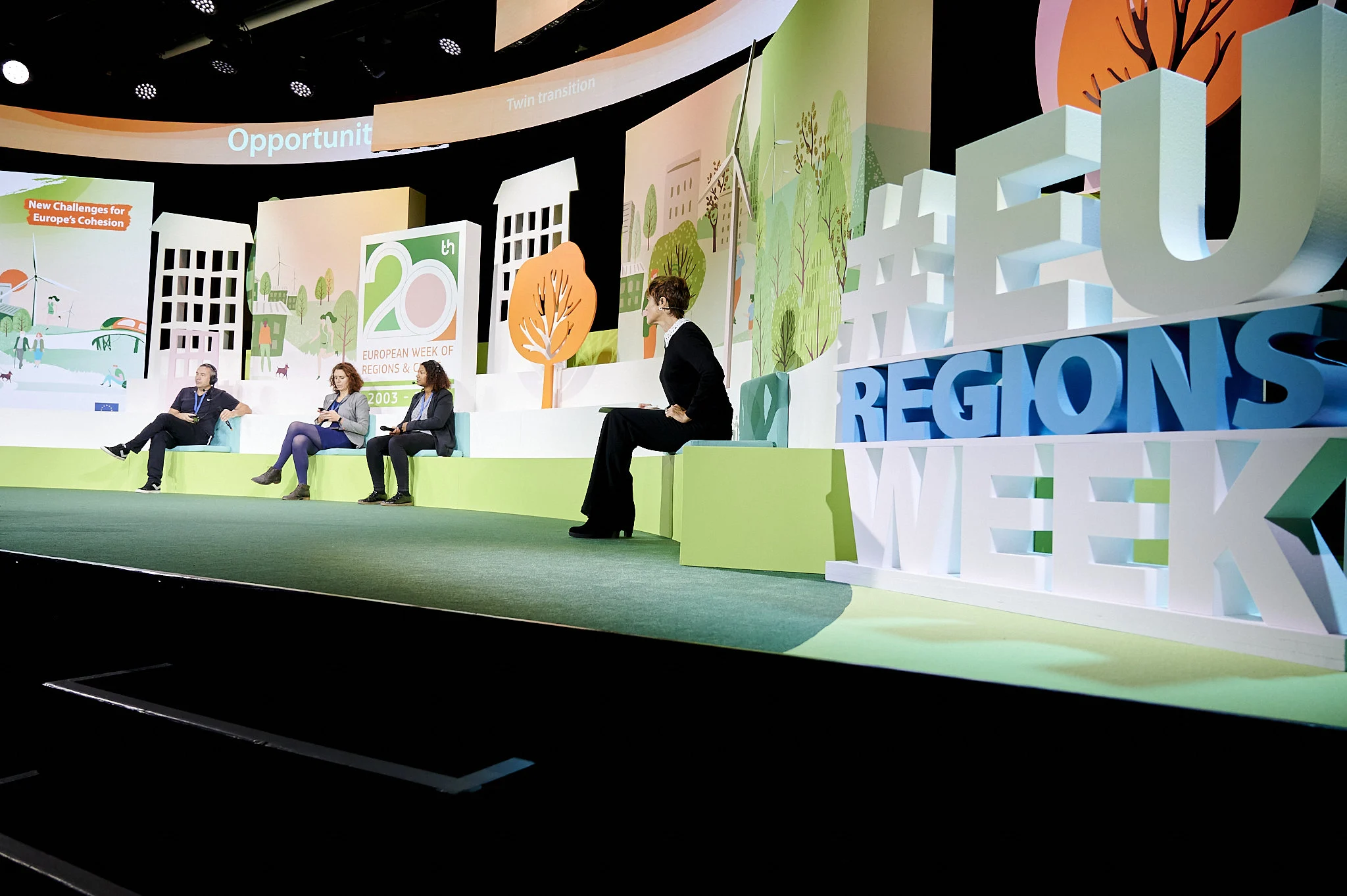
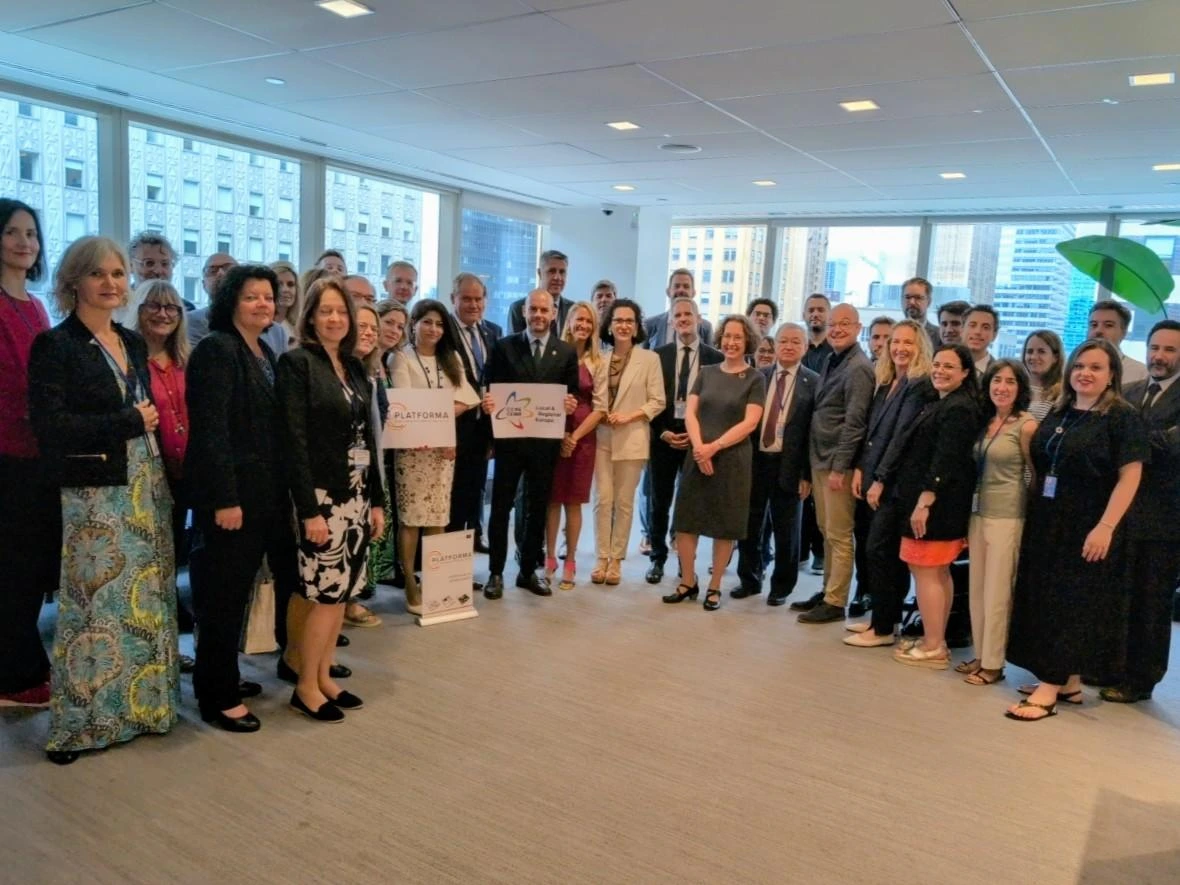
Today marks the start of Enlargement Day, the European Committee of the Regions’ flagship event on EU enlargement and local best practices. On this occasion, CEMR showcases how Local and Regional Governments actively contribute to the enlargement process through partnerships, peer learning, and sustained policy dialogue.

Since 1951, CEMR has worked across Europe, including with associations from all EU candidate countries: Albania, Bosnia and Herzegovina, Georgia, Kosovo*, Moldova, North Macedonia, Serbia, Türkiye, and Ukraine.

Through political declarations, partnerships, hands-on tools, and regular dialogue with EU institutions, we strengthen local governance, reinforce reform efforts, and support the enlargement process from the local level.

Explore our brochure to discover:

 🔹 CEMR’s engagement with EU candidate countries
 🔹 Key projects, tools, and local partnerships
 🔹 Latest policy recommendations and advocacy
 🔹 Recent and upcoming enlargement-related events

Save the date:

1 July 2025 – CEMR Webinar | Local Governments’ Dialogue on the Road to EU Enlargement


*This designation is without prejudice to positions on status, and is in line with UNSC 1244 and the ICJ Opinion on the Kosovo declaration of independence

Consultation on the EU Budget

MFF - Position paper News 2025

CEMR contributions to the European Commission consultation on the EU budget  


From 12 February to 6 May, the European Commission opened a public consultation to collect feedback on its roadmap towards the next Multiannual Financial Framework. The Council of European Municipalities and Regions (CEMR) shared the following key messages for a reformed EU budget in partnership with Local and Regional Governments (LRG).  

1 – From the ground up: multi-level governance at the core 

A rebalanced governance model—one that embeds LRGs in the planning, not just the implementation, of EU investment priorities. The next MFF must strengthen multi-level governance processes at both the EU and national levels to ensure that EU funding addresses the real and diverse needs of European municipalities and regions. 

2 – Smarter funding: simpler, more flexible, more accessible 

 CEMR calls for a simplified and harmonised approach when it comes to access to fundings with reduced bureaucratic burdens, a unified rulebook across funds, and streamlined audit systems. Strict thematic concentration and fragmented administrative processes have made EU funds difficult to access and adapt at local level. Flexibility from the programming stage will allow further predictability, essential for beneficiaries’ uptake of the funds.  

3 – Cohesion and competitiveness, hand in hand 

CEMR underlines that cohesion and competitiveness are not contradictory goals. A fair and inclusive EU budget must tackle regional disparities while strengthening the single market. High-quality local public services are essential for a competitive Europe and must be properly supported by the MFF. 

Therefore, the next budget must: 

  • Strengthen LRGs’ capacities, boost small and medium enterprises (SMEs) competitiveness, and expand access to essential digital and green services. 
  • Recognise LRGs as strategic actors in shaping local economic development and regional attractiveness for start-ups and businesses. 
  • Strengthen the public workforce: labour shortages are holding back LRGs’ ability to deliver innovation and services—this must be urgently addressed. 

4 – Local action, global impact 

Empowering LRGs through a decentralised management of EU funds will not only align investments with local priorities but also unlock greater impact, from social cohesion to digital transformation. Supporting local supply chains, the circular economy, and skills development across all regions will be critical in achieving Europe’s digital and green transitions. The next MFF must contribute to the achievements of  SDGs, both in Europe and through international cooperation. The EU’s budget has a key role in closing the gender gap, enhancing democracy and transparency and inclusive societies. At the international level, LRGs and their associations are untapped assets for the EU’s external action agenda. Their role must be elevated in initiatives like the Global Gateway and Team Europe, including as key actors in fragile contexts, decentralisation reforms, and infrastructure sustainability. 

Find here CEMR contributions to the open public consultations:  

EU–Ukraine Municipal Partnerships Forum

Bridges of Trust - Committee of Regions 2025

Local and Regional Leaders building bridges for Ukraine’s Recovery and EU Path


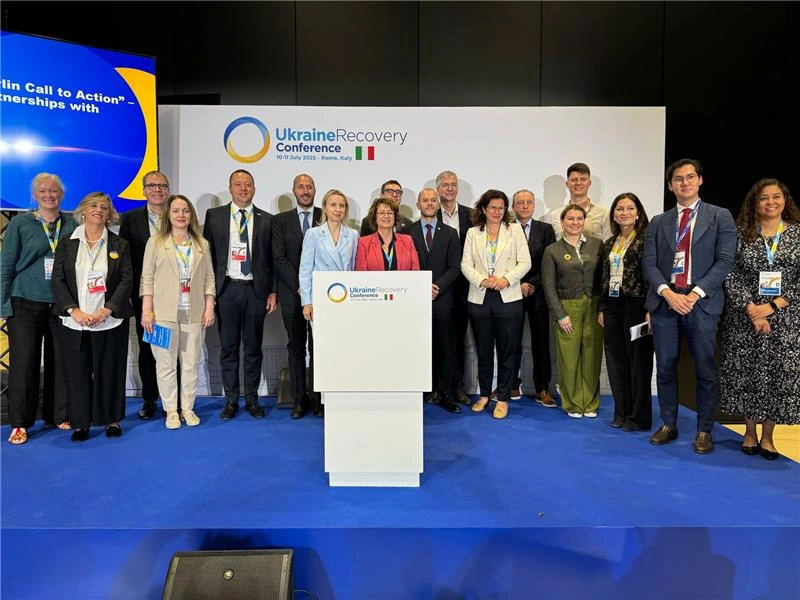
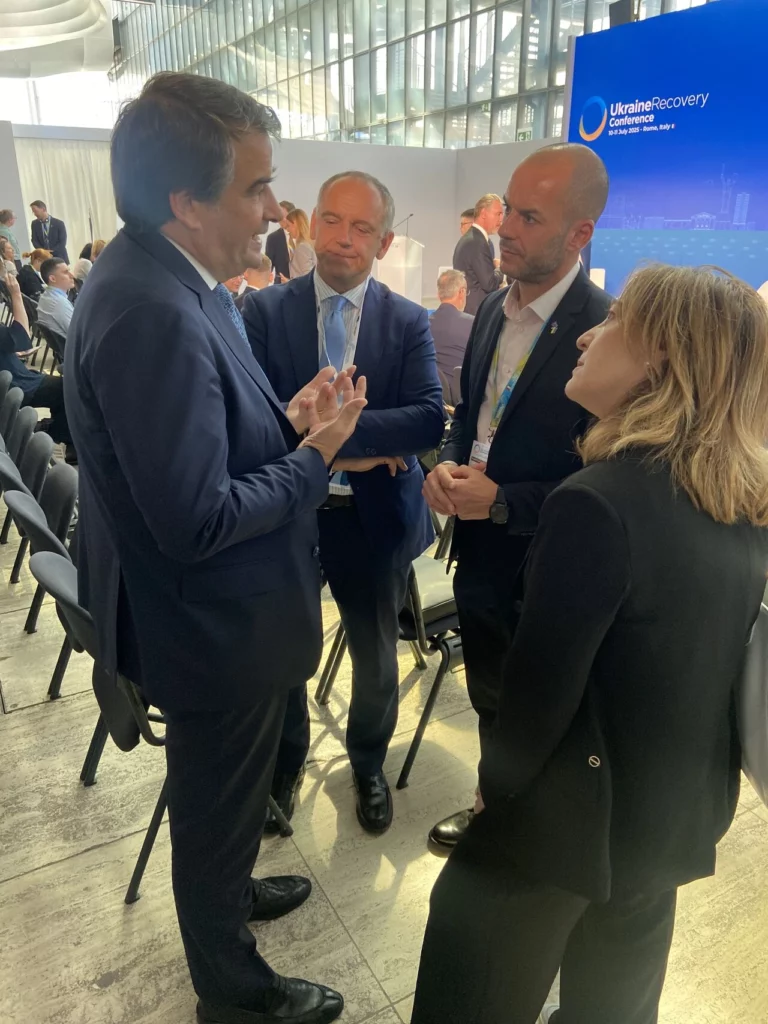
Brussels, 15 May 2025 – The European Alliance of Cities and Regions for the Reconstruction of Ukraine gathered its core members and Ukrainian and EU delegations at the European Committee of the Regions in Brussels to accelerate cooperation ahead of the Ukraine Recovery Conference (URC) in Rome this July. 

This high-level forum brought together municipalities from across Europe and Ukraine, alongside institutional partners, to exchange on Ukraine’s evolving territorial needs and to foster meaningful, lasting partnerships. At the heart of the discussions was a shared goal: empowering local governments to co-lead reconstruction, support reforms, and drive the local dimension of Ukraine’s EU accession process. 

CEMR’s Contributions: Tools for Lasting Cooperation 

Speaking at the forum, Durmish Guri, CEMR’s Director of Projects and Programmes, presented two key initiatives from CEMR designed to foster long-term collaboration between EU and Ukrainian municipalities: 

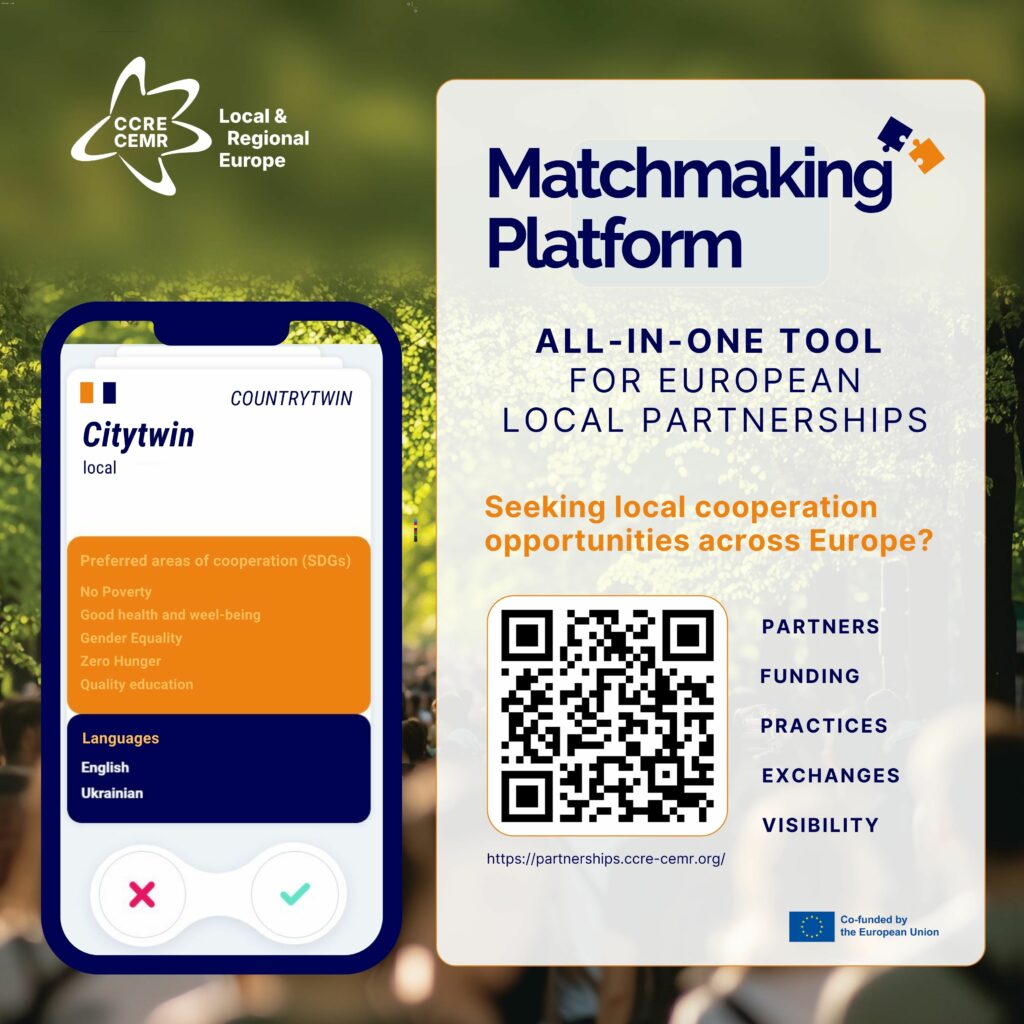
🔹 The Matchmaking Platform: This digital tool connects municipalities across Europe, helping them identify shared priorities, explore cooperation opportunities, and launch joint projects. With a special focus on Ukraine, the platform supports deeper partnerships with the rest of the continent, accelerating both recovery efforts and Ukraine’s EU integration process.  
Learn more → https://partnerships.ccre-cemr.org/  

🔹 The Bridges of Trust Community: Evolving from a project into a growing community, Bridges of Trust brings together local leaders from Ukraine and across the European Union, alongside national associations and institutional partners. This consolidated community is committed to strengthening local partnerships by supporting municipalities in co-designing practical solutions in areas of common interest. By reinforcing bonds from the ground up, it empowers municipalities, accelerates Ukraine’s EU integration, and contributes directly to its recovery. 
Learn more → https://ccre-cemr.org/bridges-of-trust  
 
Political Level meeting 
 
The core members of Alliance adopted the Joint Statement on Empowering Local and Regional Governments for the Reconstruction and Future EU Accession of Ukraine to which CEMR contributed. In particular, CEMR put forward two key recommendations: 

  • Establishing a one-stop shop to coordinate and scale up municipal partnerships; 
  • Ensuring stronger access for local governments to financial resources and decision-making processes, particularly within the Ukraine Donor Platform. 

These proposals aim to amplify the voice of local and regional governments, ensuring that municipalities remain central actors in Ukraine’s reconstruction and path to EU integration. 

Memorandum of Understanding  
 
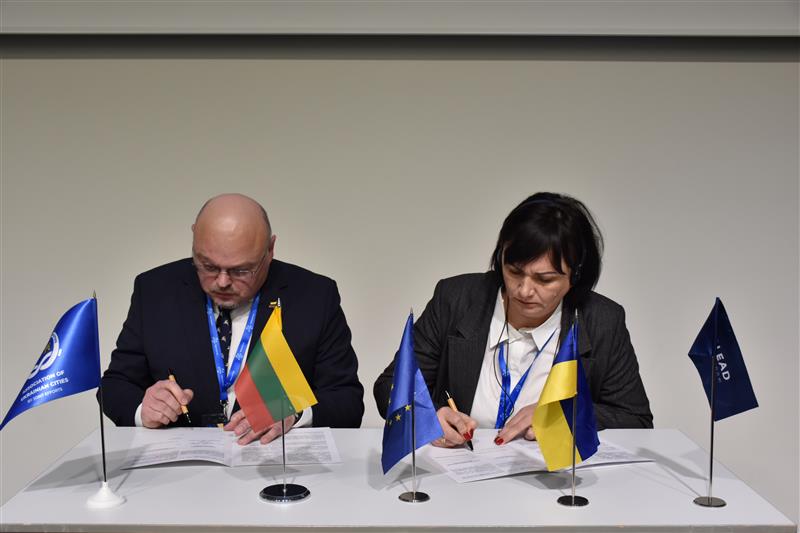
A key highlight came with the signing of a new partnership between Kassel (Germany) and Zhytomyr (Ukraine)—a symbolic and practical demonstration of how municipal cooperation is directly shaping Ukraine’s recovery on the ground. 

A Shared Mission 

CEMR expresses deep appreciation to all co-organisers for hosting a timely and impactful dialogue. Special thanks go to the European Alliance of Cities and Regions for the Reconstruction of Ukraine for championing this process and uniting dedicated partners around a common cause.  

The presence of committed, action-driven leaders— including Magali Altounian, Aleksandra Dulkiewicz, Andrej Horvat, Svitlana Blinova, Vadim Boychenko, Oskar Chmiel, Antonella Valmorbida, Alberto Rini, Kata Tüttő, Oleksii Riabykin, Davide La Cecilia, Pekka Toveri, and many more  – demonstrated the collective energy powering this growing movement of cooperation. 

Game Launch for Europe’s Day

European Union - News section

CEMR creates the “Guess EU” game to celebrate Europe Day 


This year marks the 75th anniversary of the Schuman Declaration – the historic moment that set Europe on the path toward peace, prosperity, and unity. 

To celebrate, CEMR is challenging you to a game that puts your EU knowledge to the test. 

Introducing “Guess EU” – our special Europe Day game created with Open Guesser. Do you think you know where EU-funded projects have made an impact? Take a guess and find out how well you really know your Europe! 

From green mobility in Italy to digital innovation in Latvia, the EU is everywhere – and now it’s your turn to explore it in a whole new way. 

👉 https://openguessr.com/maps/community/guess_eu and join us in celebrating 75 years of European cooperation, solidarity, and local achievements! 

Happy Europe Day! 

Call for tenders – Social Dialogue

Call for Tender: Research Expertise on Social Dialogue Systems in Eastern Europe, Southern Islands, and EU Candidate Countries


The Council of European Municipalities and Regions (CEMR), in partnership with the European Federation of Public Service Unions (EPSU), is pleased to announce a call for tender for subcontracting external expertise to conduct research on social dialogue systems and practices within local and regional governments across a wide range of countries in Eastern and Southeastern Europe, Southern European islands, and EU candidate countries.

This call is part of the “LRG-SD Capacity Building” (Project LAB) initiative, co-funded by the European Commission, which aims to address the current underrepresentation and limited engagement of social partners in national and EU-level social dialogue in the local and regional government sector.

The selected contractor will:

  • Produce a desk research report offering a comprehensive overview of social dialogue systems in the target countries.
  • Document and synthesise the findings from three international workshops and three twinning activities.
  • Draft concise and informative reports (2–15 pages) in English, summarising the discussions, conclusions, and best practices exchanged during all project events.
  • Attend and report on project activities (online and in-person), providing valuable insights and comparative analysis.

Target countries include:
Eastern Europe (e.g. Poland, Hungary, Slovenia), Southeastern Europe (e.g. Romania, Bulgaria), EU candidate countries (e.g. Albania, Ukraine, Türkiye), and Southern European islands (Malta and Cyprus).

Expertise Required

Applicants must demonstrate:

  • Strong academic background in EU labour and social policy.
  • Proven experience with trade unions and employer organisations at the local, national, or European level.
  • Ability to work in multilingual and multicultural settings.
  • Skilled in conducting desk research and reporting on multi-stakeholder events.
  • Capacity to manage tight deadlines and coordinate with multiple project partners.
  • Availability for occasional travel to project events.

Budget and Timeline

  • Maximum budget: €28,925 (excluding VAT)
  • Contract duration: From June 2025 (upon appointment)
  • Deadline for submission: 30 May 2025, 12:00 (noon)
  • Submission email: application@ccre-cemr.org
    Please include the subject line: “Application – Project LAB”

For more information, contact:

Protecting Clean Water

Head Banner - SUN4UKRAINE

Local and Regional Governments call on European Commission to safeguard the EPR Scheme in the Urban Wastewater Treatment Directive


As the European Parliament gathers in Strasbourg for a decisive vote on the EU Water Resilience Strategy, CEMR, along with 11 other European organisations representing Local and Regional Governments, public utilities, environmental NGOs, trade unions, and water professionals, has sent a joint letter to European Commission President Ursula von der Leyen. The signatories urge the Commission to firmly uphold the Extended Producer Responsibility (EPR) scheme introduced by the revised Urban Wastewater Treatment Directive (UWWTD), which entered into force on 1 January 2025.

The updated Directive sets ambitious targets for removing micropollutants from wastewater, achieving energy neutrality, improving transparency and sanitation access, and promoting water reuse and circular economy practices. A cornerstone of this legislative package is the EPR scheme, which requires producers of pharmaceuticals and cosmetics—responsible for 92% of micropollutants, according to the European Commission’s impact assessment—to cover at least 80% of the costs of the advanced ‘quaternary treatment’ process.

Local and Regional Governments, alongside wastewater operators, are already working to implement these new measures. However, concerns have emerged about potential efforts to revise or weaken the EPR scheme through future simplification packages or other instruments not foreseen by the Directive itself.

The EPR scheme reflects a balanced and fair compromise that ensures polluters contribute to the costs of pollution removal, rather than shifting this burden to water users and public budgets,” said Fabrizio Rossi, Secretary General of the Council of European Municipalities and Regions (CEMR). “This provision is a strong driver for eco-innovation and the development of more sustainable products. It doesn’t have to raise costs for consumers—by preventing pollution at the source, companies can lower treatment expenses and ease the financial burden on the public.

The signatories highlight that the EPR scheme:

  • Aligns with the EU Treaty’s polluter-pays principle (Article 191(2) TFEU)
  • Protects water affordability for households in line with SDG 6
  • Encourages eco-innovation and sustainable product design
  • Helps improve the quality of treated water and supports circular water solutions

The economic impact on industry is expected to be limited. According to the Commission’s analysis, the price of affected products would increase by a maximum of 0.59%, or companies could absorb the cost by reducing profit margins by up to 0.7%.

The letter concludes with a strong call to the European Commission to maintain its commitment to the Directive as adopted, and to resist any pressure to alter the scope or ambition of the EPR scheme. Doing so is vital to protect Europe’s water resources, public health, and the long-term resilience of local services.

The joint letter was signed by:

  • Aqua Publica Europea (Bernard Van Nuffel, President)
  • Council of European Municipalities and Regions – CEMR (Gunn Marit Helgesen, President)
  • EurEau (Oliver Loebel, Secretary General)
  • Eurocities (André Sobczak, Secretary General)
  • European Anglers Alliance – EAA (Mark Owen, President)
  • European Environmental Bureau – EEB (Patrick ten Brink, Secretary General)
  • European Federation of Public Service Unions – EPSU (Jan Willem Goudriaan, General Secretary)
  • European Water Association – EWA (Arthur Guischet, Secretary General)
  • Health Care Without Harm – HCWH Europe (Erik Ruiz, Programme Manager)
  • SGI Europe (Valeria Ronzitti, General Secretary)
  • Surfrider Foundation Europe (Eric Morbo, CEO)
  • Water Europe (Durk Krol, Executive Director)

You can read the full letter here

For more information, contact:

Guidelines signed for work safety

TPVH News - 2025

Guidelines to Prevent and Tackle Third-Party Violence and Harassment Related to Work (TPVH)


The Council of European Municipalities and Regions (CEMR), along with 8 European sectoral social partners representing Local and Regional Governments, hospitals and healthcare, education, hotels, restaurants and cafés (hospitality), and Central Governments, have adopted and updated the European Multi-sectoral Guidelines to Prevent and Tackle Third-Party Violence and Harassment Related to Work (TPVH).

CEMR led the employers’ delegation in the six-month round of negotiations held in 2024, which resulted in these guidelines. The European Commission financially supported these negotiations.

The revised draws upon the ILO Violence and Harassment Convention (No.190), existing policies, and collective agreements at the national level to address pressing challenges, considering the increase of third-party violence and harassment at work following the COVID-19 pandemic and a change in the workplace.  

They offer to the trade unions and employers:

  • Key elements for a TPVH policy devised by management and workers’ representatives and trade unions, anchored in social dialogue, occupational safety and health, gender equality and non-discrimination with an intersectional approach.
  • Practical tools and measures for health risk assessments, for example, psychosocial risks and staffing levels, prevention, and responses, such as social dialogue, awareness raising, training and clear reporting and complaint procedures.
  • Definitions and principles on fostering a culture of respect and zero tolerance to violence and harassment, including by learning from previous incidents and cooperating with relevant public authorities.
  • Remedies to support victims and hold perpetrators accountable, including support and transparent investigations.

On behalf of the employers’ delegation, Fabrizio Rossi, our Secretary General, has stated:

By concluding these updated guidelines, employers reaffirm their commitment to fostering workplaces where safety and respect are at the core, ensuring that both workers and the services delivered to citizens are protected”.

CEMR would like to thank the other signatories, namely its counterparts EPSU, HOSPEEM, HOTREC, EFEE, EUPAE, CESI, ETUCE, and EFFAT, for their collaboration over the past year leading to this adoption.

Read more about the European Multi-sectoral Guidelines to Prevent and Tackle Third-Party Violence and Harassment Related to Work here.

For more information, contact:

EU Budget Event – key messages

EU Budget Event - News

Main conclusions of the EU Budget event at the European Parliament 


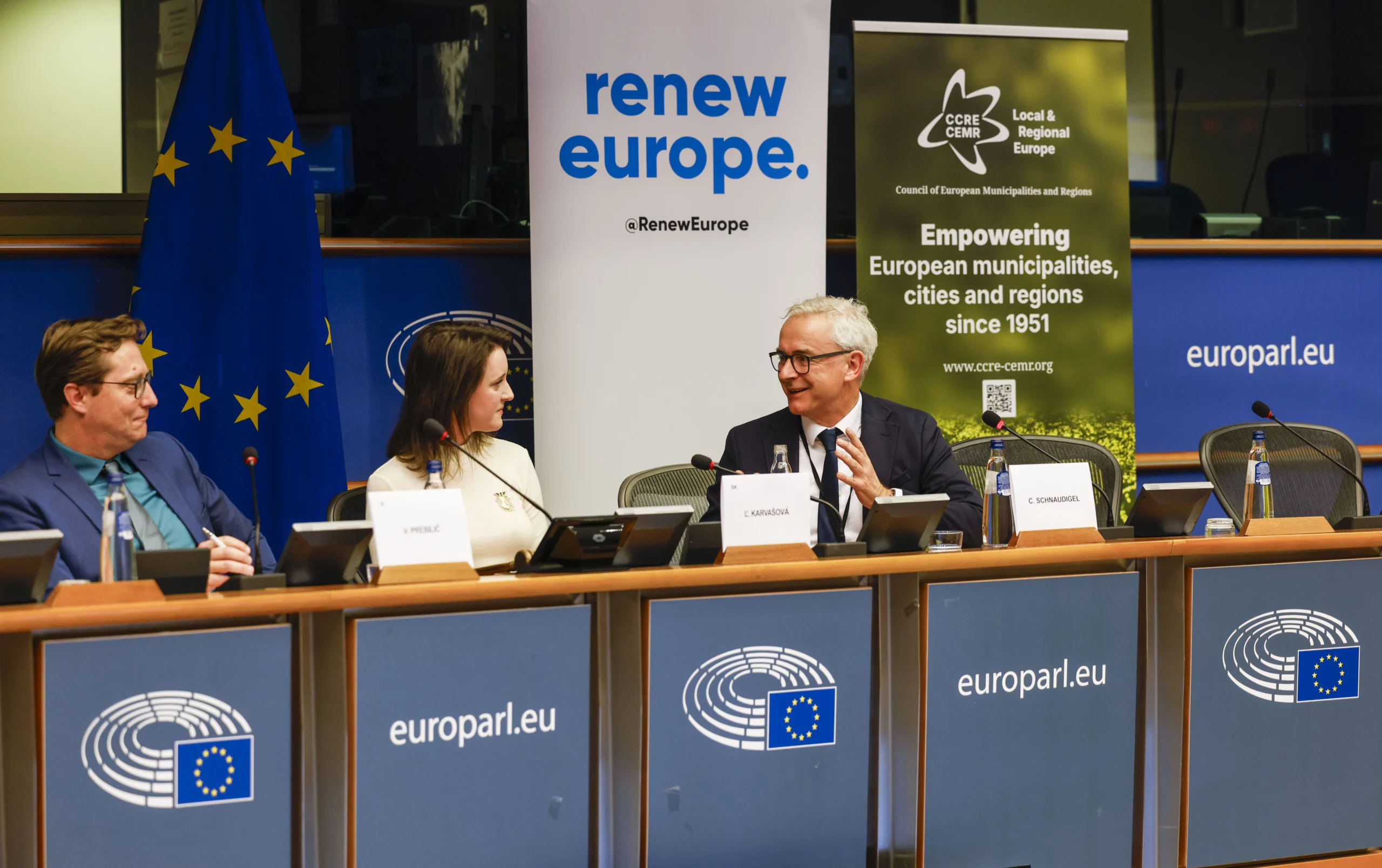
As the European Commission lays the groundwork for the next Multiannual Financial Framework (MFF) beyond 2027, the role of Local and Regional Governments has taken centre stage in Brussels. On 24 April, CEMR joined forces with Members of the European Parliament Vladimir Prebilič and Ľubica Karvašová to organise the high-level event EU Budget: What Does the Future Hold for Multi-Level Governance? 

The discussion comes in the wake of the Commission’s strategic communication, “The Road to the Next Multiannual Financial Framework”, which signals a potential shift in the architecture and the approach to the EU budget. What will the future EU budget look like, and how will EU funds be managed and by whom? These and other questions were discussed in this event, taking place at the European Parliament. 

Strong calls for local and regional involvement 

During the opening session, Vladimir Prebilič synthesised the next steps for the MFF proposal, focusing on the centralisation trends and the need to keep the regions at the centre of the design and implementation of Cohesion Policy, which must retain its long-term rationale and not be used for short-term crises. 

His view was echoed by L’ubica Karvašová‘s discourse, who underlined the need for the EU to work on both a global pillar, with defence and trade policies, and a socio-economic pillar, where Cohesion Policy is at the forefront. 

CEMR Co-President Christoph Schnaudigel recalled the central role of the Local and Regional Governments in the implementation of Cohesion Policy, and thus the need to be co-designers. 

Aligning EU priorities with local and regional needs 

The first panel discussed the interactions between EU-level priorities and local and regional governments’ investment priorities in view of the next long-term budget. 

Florentine Hopmeier, Deputy Head of Cabinet of Commissioner Serafin, confirmed that Commissioner Serafin is touring Europe to meet beneficiaries of EU funds and collect as much feedback and proposals as possible, but also insisted that the immediate challenge lies in the successful delivery of the current programming period. She recalled the difficult financial context lying ahead, with new priorities to be funded, together with the need to repay NextGeneration EU. The Commission must therefore work on the assumption of more constrained financial resources available. Hopmeier insisted on the need for more flexibility and the lessons learned from the Recovery and Resilience Facility (RRF), including the new approach linking investments and reforms. Finally, she concluded by reaffirming the Commission’s willingness for Local and Regional Governments to be involved and for the continuation of the Partnership Principle even in the presence of a single national plan

Maria Teresa Fabregas Fernandez, Director of the Task Force on Reform and Investment at the European Commission, came back on the lessons learned from the RFF, highlighting the added value of the holistic approach linking investments on EU priorities to reforms improving the impact of investments. She confirmed that the Commission has been warning Member States to involve Local and Regional Governments when reforms affect subnational authorities. 

Ester Borràs, from the Catalan government Delegate to the EU, warned about the risks of centralising decision-making with a single plan. She called for simplification, while recalling that centralisation is not simplification, and for harmonisation in the now fragmented EU funds. 

L’ubica Karvašová concluded the panel by suggesting a focus on impact rather than performance, and a two-tiered single plan: a national tier and a second tier for individual regional plans, using the Integrated Territorial Investment (ITI) model. She also pleaded for the institutions to reach a bigger budget in view of the increased investment needs of the Union, and emphasised that investments in social and educational infrastructure also contribute to competitiveness. 

Ensuring efficient implementation of the EU’s investment policy 

The second panel on ensuring both rapid and efficient implementation of the EU’s investment policy opened with Vasco Alves Cordeiro, Chair of the European Committee of the Regions’ (CoR) COTER Commission, presenting the CoR’s priorities for the next MFF, which can be summarised as “flexibility with predictability“. These include ceilings and rules to allow for the reallocation of funds, simplifying the work of managing and auditing authorities, and the need for qualitative criteria to assess the results of cohesion policy. Finally, he stressed the need to maintain the long-term investment perspective of cohesion policy. 

Kadri Uustal, Head of Unit for Cities, Communities and People at DG REGIO in the European Commission, provided additional information on the upcoming “ambitious policy agenda for cities”, as it will aim at supporting cities, not only in the framework of the Cohesion Policy, but even beyond. One of the first challenges for this will be to bring clarity to beneficiaries on the different programmes and initiatives targeting cities.  Uustal explained that the Commission is also exploring a better involvement of cities in EU legislation, given the important role of subnational governments in the effective implementation.  

CEMR co-president Christopher Schnaudigel recalled that Cohesion Policy is part of the EU treaties and must therefore remain a priority. He also warned that “we cannot achieve competitiveness without investing in the regions”. He recommended that Local and Regional Governments are closely associated in the drafting of the single national plans, pointing to the existing Partnership Agreements in the current Cohesion Policy framework as the model to follow in order to develop an investment plan that is both consistent at the national level, and fit for purpose at local and regional levels.  

Vladimir Prebilič started by recalling the benefits Cohesion Policy has brought to the many territories where it has been invested. He then shared insights from his ongoing work as rapporteur on the Committee on Regional Development in the European Parliament for the report on simplification of the Cohesion Policy funds. As solutions to be explored, he proposed improved and more systematic territorial impact assessments, a single set of rules for funding, and a stronger distinction between errors and fraud in auditing. 

Alva Finn, Executive Director of the European Liberal Forum, former member of the Commission’s expert group on the future of Cohesion Policy, suggested a full rebranding of the Cohesion Policy to increase its effectiveness and by in from citizens. Cohesion Policy is still the largest and most successful investment policy in the world, but it does need to be updated, using, for instance, smart conditionality. She advocated for cross-border and inter-European infrastructures to connect Europe and suggested integrating the place-based approach with a people-based one. 

In closing remarks, Karvašová called for co-responsibility, building on Cohesion Policy to fight Euroscepticism and gaining people’s support for the European project. This message was supported by Prebilič‘s appeal to the democratic decision-making model and by Schnaudigel, who concluded by recalling CEMR’s position paper on the subject and the launch of CEMR’s new campaign on the topic. 

Op-Ed on local democracy in Türkiye

Turkiye democracy - News 2025

Op-Ed on the local democracy in Türkiye co-signed by presidents of the Congress, CoR, ALDA and CEMR


The recent arrests and dismissals of democratically elected mayors in Türkiye, and their replacement by appointed trustees, mark a dangerous turning point for local democracy, not only in Türkiye but for Europe as a whole. At its core, democracy is not just about casting ballots; it is about ensuring that those elected by the people can govern freely, without fear of persecution. The replacement of elected mayors through judicial intervention, without full transparency and due process, raises serious questions about democratic standards and political freedom. 

This is not an isolated event. It is part of a worrying trend of democratic backsliding that threatens the fundamental values upon which modern Europe has been built. From the ashes of World War II, Europe emerged with a commitment to decentralization, democracy, and human rights. The European Charter of Local Self-Government, adopted in 1985, was a direct response to past authoritarianism, ensuring that local governments have the autonomy to serve their communities without undue interference from central authorities. This principle of local self-government is a safeguard against the concentration of power and a guarantee that democracy remains rooted in the daily lives of citizens.  

Yet today, these hard-won principles are being undermined. The detention of local leaders in Türkiye is a blatant violation of the commitments the country made as a member of the Council of Europe. It is a direct assault on the principles enshrined in the Charter and an ominous signal to other governments that such actions might be tolerated.  

Local democracy is the first line of defense for our freedoms. When it is attacked, it is not just a city or a region that suffers—it is the very foundation of democracy. As local elected representatives, mayors are the bridge between national governments and citizens, the leaders who turn democratic principles into tangible actions—whether in public services, social cohesion, or crisis response.  

Ignoring the crackdown on local leaders in Türkiye is not just a failure to support our colleagues—it is a failure to defend democracy itself. If Europe allows the erosion of local democracy anywhere on the continent, it sets a dangerous precedent that could spread.  

EU institutions, together with Member states of the European Union and of the Council of Europe, must take a clear and firm stance. The defense of democracy must not be selective or conditional on political expediency. The right of people to choose their leaders—and for those leaders to govern without fear—must be upheld at all costs.  

Democracy in Europe was never guaranteed; it was built through struggle and commitment. In the face of new threats, we must show the same commitment. The free election of representatives is not a privilege; it is the foundation of a just and stable society. If we fail to defend it today, we risk losing it tomorrow. 

Signatories: 

  • President of the Congress of Local and Regional Authorities of the Council of Europe, Marc Cools 
  • President of the Committee of the Regions, Katta Tüttő 
  • President of ALDA: Nataša Vučković
  • President of CEMR: Gunn Marit Helgesen

*****

This opinion article was published on EU Observer on 15 April 2025. You can read it here

Related content:

For more information or media inquiries, please contact:

Cohesion Policy Mid-Term Review

MFF - Position paper News 2025

Cohesion Policy mid-term review: is the glass half empty or half full? 


The rationale for the Commission’s latest communication “A modernised Cohesion Policy: the mid-term review” is clear and compelling: the operational programmes of the Cohesion Policy  funds were negotiated four years ago: before a global pandemic, before the paradigm shift of massive EU joint borrowing, and before Russia’s war of aggression on Ukraine and its dramatic impact on inflation and cost of living. 

As Executive Vice President Raffaele Fitto reminded Members of the European Parliament’ Regional Development Committee on 9 April: the world has changed, and so too must the Union’s priorities and policies. 

This new proposal – yet another amendment to Cohesion Policy regulations in the last five years – intends to offer new spending possibilities for Managing Authorities. It does so by creating new specific objectives, expending the scope of eligible expenditures and beneficiaries in line with  five new key priorities identified by the Commission: 

  1. Competitiveness and decarbonisation of industry 
  1. Defence and security 
  1. Affordable housing 
  1. Water resilience 
  1. Energy transition 

These are undeniably pressing issues: Mayors have long raised awareness on the housing crisis, and recent dramatic floods across Europe highlighted the urgency of climate-resilient water management systems.  

At the same time, it also reflects the new Commission’s political priorities: competitiveness and defence. One could be satisfied that including them within Cohesion Policy underlines the role of local and regional governments in fostering Europe’s competitiveness, driving strategies for local economic development and creating attractive environment for business to settle in European municipalities and regions. 

And yet… 

Despite its forward-looking intention, the mid-term review feels like a glass half empy or half full: the proposal does open new funding possibilities, to be used on voluntary basis by Member States or regions – depending on who the managing authority is. But the potential uptake of the amendments, at this advanced stage of the programming period, is likely to be limited – raising questions on the real added value of the entire proposal. It is also a risk to undermine previously agreed priorities with the addition of new eligible activities and eligible beneficiaries – with very attractive conditions (pre-financing, 100% co-financing from the EU), but without any additional budget. 

The Commission seems haunted by its initial decision to reduce the timeline for completion of programmes to two years (N+2) after the end of the period, down from the current programming period N+3 rule. This despite the assurance of Managing Authorities that they are still on track to spend all their budget – based on decades of experience managing Cohesion policy funds. For the Commission, it is still not fast enough. With this new proposal, the Commission not only opens new eligible investment areas, but also further opens the door to large enterprises, notably  defence companies to apply to Cohesion Policy funding, without requiring justifications on how these beneficiaries will contribute to the economic, social and territorial cohesion where they are located, thanks to EU funded investments. 

And this last point could be the most dramatical change to Cohesion Policy as we know it. While the uptake of this new reform is likely to remain low given that most of the funds are already committed, it should be seen as a preview of the Commission’s proposal for the next budget period: It is the return of “EU structural investment policy” except that the focus will be much less on the treaty objectives of economic, social and territorial cohesion, but more on the political priorities of the moment. Less on the partnership principle and multi-level governance, more on the private sector that has the capacity to spend large sums fast.  

This communication is not reassuring in terms of respect for the multi-level governance and partnership principle. As we saw with the Recovery and Resilience Facility, it’s not enough to mention “in partnership with national, regional and local authorities”. The Commission must put in place methodologies and binding requirements for the multi-level governance to actually take place. Yet in this mid-term review, the Commission does not even encourage Member States and managing authorities to discuss the reprogramming opportunities together with the stakeholders.  

Lessons learned 

A serious structural investment policy cannot afford to be subject to constant regulatory changes within a programming period. Real flexibility should not come from the Commission’s possibility to periodically change its own political priorities; but from the very design of the programmes where investments priorities would be defined from a bottom-up perspective, driven by local and regional governments who best understand their territories’ long-term and specific needs.  

While the EU certainly define broad strategic goals such as decarbonisation of the society, increasing competitiveness of all European territories or strengthening the resilience of public administration at all levels; it must avoid overly narrow thematic concentrations that limit the investment opportunities in municipalities and regions, and are not always fit for purpose on the ground.  

Only then can the next EU budget deliver both on common European objectives and the unique needs of each territory.